The Country-mans new care away.
Reading edition
To the Tune of, Love will find out the way.
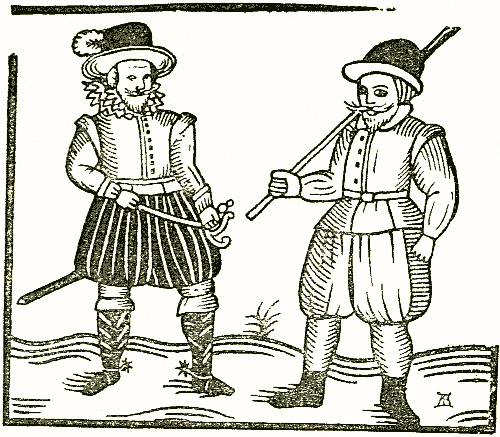
[125.]If there were imployments for men, as have beene, And Drummes, Pikes and Muskets in th' field to be seene, And every worthy Souldier had truely their pay, Then might they be bolder to sing, Care away. If there were no Rooking, but plaine dealing used, If honest Religion were no wayes abused, If pride in the Country did not beare sway, The Poore and the Gentry might sing, Care away. If Farmers consider'd the dearenesse of graine, How honest poore Tradesmen their charge should maintaine, And would bate the price on't to sing, Care away We should not be nice on't of what we did pay. If poore Tenants, Landlords would not racke their rents, Which oft is the cause of their great discontents, If, againe, good house-keeping in th' Land did beare sway, The poore that sits weeping might sing, Care away. If Spendthrifts were carefull and would leave their follies, Ebriety hating Cards, Dice, Bowling-Alleyes, Or with wantons to dally by night or by day, Their wives might be merry, and sing, Care away. If Children to Parents would dutifull be, If Servants with Masters would deale faithfully, If Gallants poore Tradesmen would honestly pay, Then might they have Comfort to sing, Care away. There is no contentment to a conscience that's cleare, That man is most wretched a bad mind doth beare, To wrong his poore Neighbour by night or by day, He wants the true comfort to sing, Care away. But he that is ready by goodnesse to labour, In what he is able to helpe his poore Neighbour, The Lord will ever blesse him by night and by day, All ioyes shall possesse him to sing, Care away. Would wives with their husbands, and husbands with wives In love and true friendship would so lead their lives, As best might be pleasing to God night and day, Then they with hearts easing might sing, Care away. No crosse can be greater unto a good mind, Than a man to be matched with a woman unkind, Whose tongue is never quiet but scolds night and day, That man wants the comfort to sing, Care away. A Vertuous woman a husband that hath, That's given unto lewdnesse, to envy and wrath, Who after wicked women does hunt for his prey, That woman wants comfort to sing, Care away. Like true subiects loyall, to God let us pray, Our good king so Royall, to preserve night and day: With the Queen, Prince and Nobles, the Lord blesse them aye, Then may we have comfort to sing, Care away.
[82.] There was a lusty young Scholler preferred to a Benefice in the Country, and commonly on Sundayes and holy dayes after evening prayer hee would have a dozen bouts at cudgels with the sturdiest youths in his parish: The Bishop of the Diocesse hearing of it, sent for the parson, telling him this beseemed not his profession and gravity, and if that he did not desist from that unmeet kind of exercise, hee would unbenefice him. Good my Lord, (said the Parson) I beseech you to conceive rightly of mee, and I doubt not but my playing at cudgels will be counted tollerable; for I doe it of purpose to edifie the ruder sort of my people. How so, said the Bishop. Marry, my Lord, (quoth the Parson) whatsoever I do teach them at morning and evening prayer, I doe beat soundly into their heads with cudgels afterward, for their better remembrance.
[94.] He that buys a Horse in Smithfield, and does not look upon him with a pair of Spectacles, before he buys him, makes his Horse and himself a pair of sorrowful Spectacles for others to look at.
[110.] Upon a time Maister Hobson lying in saint Albones, there came certaine musitions to play at his chamber doore, to the intent as they filled his eares with their musicke, he should fil their purses with mony: whereupon he bad one of the servants of the Inne (that waited upon him) to goe and tell them that hee could not then indure to heare their musicke for he mourned for the death of his mother, so the musitians disapoynted of their purpose went sadly all away. The fellow heard him speake of mourning, asked him how long agoe it is since he buried his mother; truely (quoth maister Hobson) it is now very neare forty yeares agoe. The fellow understanding his subtilty, and how wittily he sent away the musitians, laughed very hartely.
[52.] On a Winters evening a Country husband man went to fetch his wives kine home to milk, and driving them into the back side, hee forgot to shut the gate, and hee comes into the house, sits him down by the fire side. The kine finding the gate open, ranne trotting and lowing downe the durty lane, toward the field, and the mans daughter looking forth at the doore and seeing them, cries out to her mother, Faith my father is a fine man, I think the kine are gone to the devill, shall I goe after them? No (quoth her mother) daughter, you are too forward: Let your father goe, he's fitter, he has his hie shoone on.
A Song.
[121.]Sir Francis, Sir Francis, Sir Francis his Son, Sir Robert and eke Sir William did come, And eke the good Earl of Southampton March't on his way most gallantly; And then the Queen began to speak, Youre welcome home Sir Francis Drake. Then came my Lord Chamberlain, and with his white staffe, And all the people began for to laugh.
The Queen's Speech.—
Gallants all of British bloud, Why do ye not saile on th' Ocean flood? I protest ye'are not all worth a Philberd Compared with Sir Humphrey Gilberd.
The Queen's Reason.
For he walkt forth in a rainy day,
To the new-found Land he took his way,
With many a gallant fresh and green;
[82.] A Justice of the Peace was very angry with a country yeoman, because hee came not to him at his first sending for him; and after he had bountifully bestowed two or three dozen of knaves upon him, hee said to him, Sirrah, I will make you know that the proudest knave that dwels under my command shall come before mee when I send for him. I beseech your worship said the man, to pardon mee, for I was afraid: afraid of what? said the Justice. Of your worship answered the fellow. Of mee? said the Justice, why wast thou afraid of mee? Because your worship lookes so like a Lyon, said the man. A Lyon? quoth the Justice, when didst thou see a Lyon? May it please your worship (the fellow replyde) I saw a Butcher bring one but yesterday to Colebrooke market, with a white face and his foure legs bound.
This fellow was a knave, or foole, or both, Or else his wit was of but slender growth: He gave the white fac'd Calfe the Lyons stile, The Justice was a proper man the while.
[4.] One that was Born in the Parish of St Giles Cripplegate said: When I dye, I'll be Buried in Cripple Church Yard, an't please God I live.
[26.] A Notable Fellow, that, as 'tis said would not be drunk above seven days in the week; and when he was drunk was so besotted that he knew not what he did. Once his Prentice was sent by his Wife to fetch him home, and when he found him out, he found him reeling ripe also. And as they came down Ludgate Hill, in a Moon-shiny night, saw the reflection of the Bell-Savage sign post upon the ground, and it seems took it for a Block, and went to lift his Leg over it, his Prentice having him by the Arm for his supporter, askt what he meant by that? Why, says he, to go over this Block. He told him 'twas not a Block. What is it then? says he. 'Tis a Sign, says the Boy. What Sign, I prithee? Why Master 'tis a Sign you are drunk.
[17.] One who was deep in debt, and forced to keep within all day for fear of Serjeants and Bailiffs would yet at night adventure abroad in some back Lanes and Alleys. Passing one night through the Butchers Shambles, going in hast, one of the Tenter Hooks catcht hold of his cloak. He thinking it had been a Serjeant which had thus shoulder clapt him, looking back, said, At whose Suit I pray you?
[105.] When Scogin should ride home againe, his bootes were nought, and hee could not tell what shift to make. At last he devised what he might doe: whereupon he sent his man for a shoo-maker to bring him a paire of Bootes. The shoo-maker brought the bootes, and when hee had pulled on the right foot boote, and was pulling on the other boot, Scogin said, it was marvellous strait, and that it did pinch his leg: wherefore hee prayed him to carry it home, and set it on the laste an houre or two: for (quoth he) I have a thing to write that will hold mee two houres, and all that time I will sit and write, & keepe this other boote on my leg still untill that be ready. The shoomaker tooke the boot and went home, as Scogin had bidden him. When the shoo maker was gone, hee sent his man for another shoo maker, and caused one to pull off the boot which the first shoo maker had pulled on. When the other shoo maker was come, Scogin caused him to pull on the left boot, and when hee was pulling on the right foot boot, Scogin found fault with it, as he did with the first shoo maker, and sent him away in like sort. When he was gone, hee caused his man to make ready their horses, and hee pulled on the boot againe, which the first shoo maker had left behinde him, and so he rode away with the two bootes of two shoo makers: shortly after, the shoomakers came and enquired for Scogin, but hee and his man were gone, almost an houre before.
[82.] Two Playsterers being at worke for mee at my house in Southwarke, did many times patch and dawbe out part of their dayes labour with prating, which I, being digging in my garden did over heare that their chat was of their wives, and how that if I were able (quoth one) my wife should ride in pompe through London, as I saw a Countesse ride yesterday. Why, quoth the other, how did shee ride I pray? Marry, said hee, in state, in her Horslitter. O base, quoth the other, Horslitter: I protest as poore a man as I am, I would have allowed my wife a three-peny trusse of cleane Straw.
[26.] Henry Martin the great Rumper, for you know all Martins are Birds, and he being so, flew so high before; but after the King's most happy Restauration, was brought so low, as to kneel at the Bar of the Lord's House; though 'tis thought he never came into the Lords House before, unless it were to see a handsome Girl there. But at the Lords Bar he was askt what he could say, that Judgment should not pass upon him? My Lords, says he, I understood that the King's Proclamation extended to favour of life, upon rendring myself, which I then did. And, withal, my Lords, I do let you to know, and I do ingeniously confess it, that I never obey'd any of his Majesty's Proclamations before, but this; and I hope I shall not be hang'd for taking the King's word now.
[94.] One sitting by the Fire to take Tobacco, said the Fire was his friend, and presently spit into it: To which one replied, You do not well to quench your friends love by spitting in his face.