A pleasant new Ballad to sing both Even and Morne, Of the bloody murther of Sir John Barley corne.
Reading edition
[76.]As I went through the North Countrey I heard a merry greeting: A pleasant toy, and full of joy, two noble men were meeting. And as they walked for to sport, upon a Sommers day, Then with another nobleman they went to make a fray. Whose name was sir John Barley Corne, he dwelt downe in a dale; Who had a kinsman dwelt him nigh, they cal'd him Thomas Goodale. Another named Richard Beere, was ready at that time Another worthy knight was there call'd sir William White Wine. Some of them fought in a blacke Jacke some of them in a Can, But the chiefest in a black pot, like a worthy noble man. Sir John Barley-corne fought in a Boule, who wonne the victorie; And made them all to fume and sweare that Barley-corne should die.
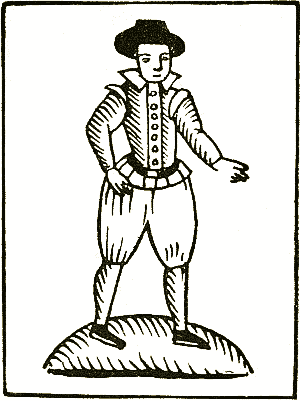
Some said kill him, some said drowne, others wisht to hang him hie, For as many as follow Barley-corne, shall surely beggers die.
Then with a plough they plowed him up and thus they did devise, To burie him quicke within the earth, and swore he should not rise.
With horrowes strong they combed him, and burst clods on his head; A joyfull banquet then was made when Barly-Corne was dead.
He rested still within the earth, till raine from skies did fall, Then he grew up in branches greene, which sore amaz'd them all.
And so grew up till Mid-sommer, which made them all afeard, For he was sprouted up on hie, and got a goodly beard.
Then he grew till S. James tide, his countenance was wan, For he was growne unto his strength, and thus became a man.
With hookes and sickles keene
They Cut his legs off by the knees
and made him wounds full wide.
Thus bloodily they cut him downe from place where he did stand, And like a thiefe for treachery, they bound him in a band.
So then they tooke him up againe according to his kind; And packt him up in severall sackes, to wither with the wind.
And with a pitch forke that was sharpe they rent him to the heart, And like a thiefe for treason vile, they bound him in a cart.
And tending him with weapons strong unto the towne they hye, And straight they mowed him in a mow and there they let him lie.
Then he lay groning by the wals, till all his wounds were sore, At length they tooke him up againe, and cast him on the floore.
They hyred two with holly clubs, to beat on him at once, They thwacked so on Barly-corne, that flesh fell from the bones.
And then they tooke him up againe, to fulfill womens minde, They dusted him, and they sifted him, till he was almost blind.
And then they knit him in a sacke,
which grieved him full sore,
for three days space and more.
And then they took him up againe, and laid him for to drie, They cast him on a chamber floore, and swore that he should die.
They rubbed him and they stirred him, and still they did him turne, The malt man swore that he should die, his body he would burne.
They spightfully tooke him up againe,
So dried him there with fire hot
and thus they wraught their will.
Then they brought him to the mill, and there they burst his bones, The Miller swore to murther him, betwixt a pair of stones.
Then they tooke him up againe, and serv'd him worse than that, For with hot scalding liquor store they washt him in a Fat
But not content with this, God wot, that did him mickle harme; With threatening words they promised to beat him into barme.
And lying in this danger deep, for feare that he should quarrell, They tooke him straight out of the fat, and tunn'd him in a barrell.
And then they set a tap to him, even thus his death begun; They drew out every drain of blood, Whilst any drop would run.
some brought bill and bow,
And every man his weapon had,
Barly-Corne to overthrow.
When sir John Goodale heard of this he came with mickle might, And there he took their tongues away, their legs or else their sight.
And thus sir John in each respect so paid them all their hire, That some lay sleeping by the way, some tumbling in the mire.
Some lay groning by the wals, some in the streets downeright, The best of them did scarcely know what they had done ore night.
All you good wives that brew good ale
But if you put too much water in
the devill put out your eyne.
FINIS.
A very slight comparison with Robert Burns' poem on this subject will show how much he was indebted to this version, having plagiarised, almost verbally, in many parts.
How Tarlton tooke Tobacco at the first comming up of it.
[77.] Tarlton, (as other Gentlemen used) at the first comming up of Tabacco, did take it more for fashion's sake than otherwise, & being in a roome, set between two Men overcome with Wine, and they never seeing the like, wondred at it; and seeing the vapour come out of Tarlton's nose, cryed out Fire, fire, and then threw a Cup of Wine in Tarlton's face. Make no more stirre, quoth Tarlton, the fire is quenched: if the Sheriffes come, it will turne to a fine, as the Custome is. And drinking that againe, Fie, sayes the other, what a stinke it makes, I am almost poisoned. If it offend, saies Tarlton, let's every one take a little of the smell, and so the savour will quickly goe: but Tobacco whiffes made them leave him to pay all.
[5.]Dick had but two words to maintain him ever, And that was, Stand; and, after, stand—Deliver. But Dick's in Newgate, and he fears shall never Be blest again with that sweet word, Deliver.
[12.]A tall Man void of wit, We may compare him fit To a House six Stories high at least; Where commonly we see That the upper Rooms be Worst furnish'd than any of the rest.
[78.] One hearing a Usurer say he had been on the pike of Teneriff (which is supposed to be one of the highest hils in the worlde) asked him why he had not stay'd there, for he was perswaded hee would never come so neere heaven againe.
[32.] I consume my mother that bare me, I eat my nurse that fed me, then I dye leaving all blind that saw me.
Solution. Meant of the flame of a Candle, which having consumed both wax and weeke, goeth out leaving them in the dark that saw by it.
The following shows the extent to which political satire can be carried, and its wit and rarity must be my apology for introducing it:—