CHAPTER 6
Reading edition
New Directions
All the services developed new racial policies in the immediate postwar period. Because these policies were responses to racial stresses peculiar to each service and were influenced by the varied experiences of each, they were, predictably, disparate in both substance and approach; because they were also reactions to a common set of pressures on the services they proved to be, perhaps not so predictably, quite similar in practical consequences. One pressure felt by all the services was the recently acquired knowledge that the nation's military manpower was not only variable but also limited in quantity. Military efficiency demanded, therefore, that the services not only make the most effective use of available manpower, but also improve its quality. Since Negroes, who made up approximately 10 percent of the population, formed a substantial part of the nation's manpower, they could no longer be considered primarily a source of unskilled labor. They too must be employed appropriately, and to this end a higher proportion of Negroes in the services must be qualified for specialized jobs.
Continuing demands by civil rights groups added to the pressure on the services to employ Negroes according to their abilities. Arguing that Negroes had the right to enjoy the privileges and share the responsibilities of citizenship, civil rights spokesmen appeared determined to test the constitutionality of the services' wartime policies in the courts. Their demands placed the Truman administration on the defensive and served warning on the armed forces that never again could they look to the exclusion of black Americans as a long-term solution to their racial problems.
In addition to such pressures, the services had to reckon with a more immediate problem. Postwar black reenlistment, particularly among service men stationed overseas, was climbing far beyond expectation. As the armed forces demobilized in late 1945 and early 1946, the percentage of Negroes in the Army rose above its wartime high of 9.68 percent of the enlisted strength and was expected to reach 15 percent and more by 1947. Aside from the Marine Corps, which experienced a rapid drop in black enlistment, the Navy also expected a rise in the percentage of Negroes, at least in the near future. The increase occurred in part because Negroes, who had less combat time than whites and therefore fewer eligibility points for discharge, were being separated from service later and more slowly. The rise reflected as well the Negro's expectation that the national labor market would deteriorate in the wake of the war. Although greater opportunities for employment had developed for black Americans, civilians already filled the posts and many young Negroes preferred the job security of a military career. But there was another, more poignant reason why many Negroes elected to remain in uniform: they were afraid to reenter what seemed a hostile society and preferred life in the armed forces, imperfect as that might be. The effect of this increase on the services, particularly the largest service, the Army, was sharp and direct. Since many Negroes were poorly educated, they were slow to learn the use of sophisticated military equipment, and since the best educated and qualified men, black and white, tended to leave, the services faced the prospect of having a large proportion of their enlisted strength black and unskilled.
The Gillem Board Report
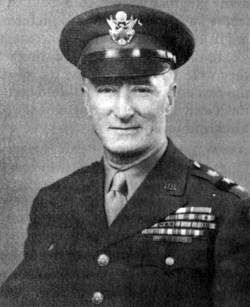
General Gillem
It was necessary, the board declared, to avoid repetition of this experience. Advance planning was needed to develop a broader base of trained men among black troops to provide cadres and leaders to meet national emergencies more efficiently. The Army had to realize and take advantage of the advances made by Negroes in education, industry, and government service. The wide range of skills attained by Negroes had enhanced their military value and made possible a broader selectivity with consequent benefit to military efficiency. Thus, the Army had to adopt a racial policy that provided for the progressive and flexible use of black manpower "within proportions corresponding to those in the civilian population." This policy, it added, must "be implemented promptly ... must be objective by nature ... must eliminate, at the earliest practicable moment, any special consideration based on race ... and should point towards the immediate objective of an evaluation of the Negro on the basis of individual merit and ability."
The board made eighteen specific recommendations, of which the following were the most important.
"That combat and service units be organized and activated from the Negro manpower available in the postwar Army to meet the requirements of training and expansion and in addition qualified individuals be utilized in appropriate special and overhead units." The use of qualified Negroes in overhead units was the first break with the traditional policy of segregation, for though black enlisted men would continue to eat and sleep in segregated messes and barracks, they would work alongside white soldiers and perform the same kind of duty in the same unit.
"That Negro units organized or activated for the postwar Army conform in general to other units of the postwar Army but the maximum strength of type [sic] units should not exceed that of an infantry regiment or comparable organization." Here the board wanted the Army to avoid the division-size units of World War II but retain separate black units which would be diversified enough to broaden the professional base of Negroes in the Regular Army by offering them a larger selection of military occupations.
"That in the event of universal training in peacetime additional officer supervision is supplied to units which have a greater than normal percentage of personnel falling into A.G.C.T. classifications IV and V." Such a policy had existed in World War II, but was never carried out.
"That a staff group of selected officers whose background has included commanding troops be formed within the G-1 Division of the staffs of the War Department and each major command of the Army to assist in the planning, promulgation, implementation and revision of policies affecting all racial minorities." This was the administrative machinery the board wanted to facilitate the prompt and efficient execution of the Army's postwar racial policies.
"That reenlistment be denied to regular Army soldiers who meet only the minimum standards." This provision was in line with the concept that the peacetime Army was a cadre to be expanded in time of emergency. As long as the Army accepted all reenlistments regardless of aptitude and halted black enlistments when black strength exceeded 10 percent, it would deny enlistment to many qualified Negroes. It would also burden the Army with low-scoring men who would never rise above the rank of private and whose usefulness in a peacetime cadre, which had the function of training for wartime expansion, would be extremely limited.
"That surveys of manpower requirements conducted by the War Department include recommendations covering the positions in each installation of the Army which could be filled by Negro military personnel." This suggestion complemented the proposal to use Negroes in overhead positions on an individual basis. By opening more positions to Negroes, the Army would foster leadership, maintain morale, and encourage a competitive spirit among the better qualified. By forcing competition with whites "on an individual basis of merit," the Army would become more attractive as a career to superior Negroes, who would provide many needed specialists as a "nucleus for rapid expansion of Army units in time of emergency."
"That groupings of Negro units with white units in composite organizations be continued in the postwar Army as a policy." Since World War II demonstrated that black units performed satisfactorily when grouped or operated with white combat units, the inclusion of a black service company in a white regiment or a heavy weapons company in an infantry battalion could perhaps be accomplished "without encountering insurmountable difficulties." Such groupings would build up a professional relationship between blacks and whites, but, the board warned, experimentation must not risk "the disruption of civilian racial relationships."
"That there be accepted into the Regular Army an unspecified number of qualified Negro officers ... that all officers, regardless of race, be required to meet the same standard for appointment ... be accorded equal rights and opportunities for advancement and professional improvement; and be required to meet the same standard for appointment, promotion and retention in all components of the Army." The board set no limit on the number of black officers in the Army, nor did it suggest that black officers be restricted to service in black units.
On some fundamental issues McCloy thought the board did "not speak with the complete clarity necessary," but he considered the ambiguity unintentional. Experience showed, he reminded the secretary, "that we cannot get enforcement of policies that permit of any possibility of misconstruction." Directness, he said, was required in place of equivocation based on delicacy. If the Gillem Board intended black officers to command white officers and men, it should have said so flatly. If it meant the Army should try unsegregated and mixed units, it should have said so. Its report, McCloy concluded, should have put these matters beyond doubt. He was equally forthright in his rejection of the quota, which he found impractical because it deprived the Army of many qualified Negroes who would be unable to enlist when the quota was full. Even if the quota was meant as a floor rather than a ceiling, McCloy thought it objectionable. "I do not see any place," he wrote, "for a quota in a policy that looks to utilize Negroes on the basis of ability."
If the Gillem Board revealed the Army's willingness to compromise in treating a pressing efficiency problem, detailed comments by interested staff agencies revealed how military traditionalists hoped to avoid a pressing social problem. For just as McCloy and Gibson criticized the board for failing to spell out concrete procedures toward integration, other staff experts generally approved the board's report precisely because its ambiguities committed them to very little. Their specific criticisms, some betraying the biases of the times, formed the basis of the standard traditionalist defense of the racial status quo for the next five years.
The deputy commander of the Army Air Forces, Lt. Gen. Ira C. Eaker, agreed with the board that the Army should not be "a testing ground for problems in race relationships." Neither did he think the Air Forces should organize units for the sole purpose of "advancing the prestige of one race, especially when it is necessary to utilize personnel that do not have the proper qualifications in order to keep these units up to strength." Black combat units should be limited by the 10 percent quota and by the small number of Negroes qualified for tactical training. Most Negroes should be placed in Air Forces service units, where "their wartime record was the best," even though such placement would leave the Air Forces open to charges of discrimination. The idea of experimental groupings of black and white units in composite organizations might prove "impractical," Eaker wrote to the Chief of Staff, because an Air Forces group operated as an integral unit rather than as three or four separate squadrons; units often exchanged men and equipment, and common messes were used. Composite organizations were practical "only when it is not necessary for the units to intermingle continually in order to carry on efficiently." Why intermingling could not be synonymous with efficiency, he failed to explain. The inference was clear that segregation was not only normal but best.
Yet he advocated continuing integrated flying schools and agreed that Negroes should be stationed where community attitudes were favorable. He cited the difficulties involved in stationing. For more than two years the Army Air Forces had tried to find a suitable base for its only black tactical group. Even in northern cities with large black communities—Syracuse, New York, Columbus, Ohio, and Windsor Locks, Connecticut, among others—officials had vehemently protested against having the black group.
The commanding general of the Army Service Forces claimed the Gillem Board Report was advocating substantially the same policy his organization had followed during the war. The Army Service Forces had successfully used an even larger percentage of Negroes than the Gillem Board contemplated. Concurring generally with the board's recommendations, he cautioned that the War Department should not dictate the use of Negroes in the field; to do so would be a serious infringement of command prerogatives that left each commander free to select and assign his men. As for the experimental groupings of black and white units, the general believed that such mixtures were appropriate for combat units but not for the separate small units common to the Army Service Forces. Separate, homogeneous companies or battalions formed during the war worked well, and experience proved mixed units impractical below group and regimental echelons.
To its original report the board added a statement at once the hope and despair of its critics and supporters.
The Initial Objectives: The utilization of the proportionate ratio of the manpower made available to the military establishment during the postwar period. The manpower potential to be organized and trained as indicated by pertinent recommendations.
The Ultimate Objective: The effective use of all manpower made available to the military establishment in the event of a major mobilization at some unknown date against an undetermined aggressor. The manpower to be utilized, in the event of another major war, in the Army without regard to antecedents or race.
When, and if such a contingency arises, the manpower of the nation should be utilized in the best interests of the national security.
The Board cannot, and does not, attempt to visualize at this time, intermediate objectives. Between the first and ultimate objective, timely phasing may be interjected and adjustments made in accordance with conditions which may obtain at this undetermined date.
The board based its ultimate objective on the fact that the black community had made important advances in education and job skills in the past generation, and it expected economic and educational conditions for Negroes to continue to improve. Since such improvement would make it possible to employ black manpower in a variety of ways, the board's recommendations could be only a guide for the future, a policy that must remain flexible.
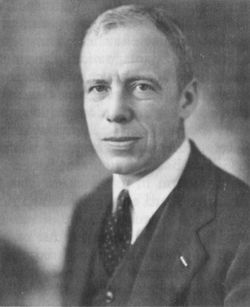
Secretary Patterson
To the specific objections raised by the reviewing agencies, the board replied that although black units eventually should be commanded by black officers "no need exists for the assignment of Negro commanders to units composed of white troops." It also agreed with those who felt it would be beneficial to correlate Army racial policies with those of the Navy. On other issues the board stood firm. It rejected the proposal that individual commanders be permitted to choose positions where Negroes could be employed in overhead installations on the grounds that this delegation of responsibility "hazards lack of uniformity and makes results doubtful." It refused to drop the quota, arguing it was needed for planning purposes. At the same time the board did admit that the 10 percent ratio, suitable for the moment, might be changed in the future in the interest of efficiency—though changed in which way it did not say.
The board rejected the proposition that the Army Service Forces and the Army Air Forces were unable to use small black units in white organizations and took a strong stand for elimination of the professional private, the career enlistee lacking the background or ability to advance beyond the lowest rank. Finally, the board rejected demands that the color line be reestablished in officers' messes and enlisted recreational facilities. "This large segment of the population contributed materially to the success attained by our military forces.... The Negro enjoyed the privileges of citizenship and, in turn, willingly paid the premium by accepting service. In many instances, this payment was settled through the medium of the supreme sacrifice."
Given the composition of the Gillem Board and the climate of opinion in the nation, the report was exemplary and fair, its conclusions progressive. If in the light of later developments the recommendations seem timid, even superficial, it should be remembered to its credit that the board at least made integration a long-range goal of the Army and made permanent the wartime guarantee of a substantial black representation.
Nevertheless the ambiguities in the Gillem Board's recommendations would be useful to those commanders at all levels of the Army who were devoted to the racial status quo. Gillem and his colleagues discussed black soldiers in terms of social problems rather than military efficiency. As a result, their recommendations treated the problem from the standpoint of how best Negroes could be employed within the traditional segregated framework even while they spoke of integration as an ultimate goal. They gave their blessing to the continued existence of segregated units and failed to inquire whether segregation might not be a factor in the inefficiency and ineffectiveness of black units and black soldiers. True, they sought to use qualified Negroes in specialist jobs as a solution to better employment of black manpower, but this effort could have little practical effect. Few were qualified—and determination of qualifications was often done by those with little sympathy for the Negro and even less for the educated Negro. Black serviceman holding critical specialties and those assigned to overhead installations would never amount to more than a handful of men whose integration during duty hours only would fall far short even of tokenism.
To point out as the board did that the policy it was recommending no longer required segregation was meaningless. Until the Army ordered integration, segregation, simply by virtue of inertia, would remain. As McCloy, along with Gibson and others, warned, without a strong, explicit statement of intent by the Army the changes in Army practice suggested by the Gillem Board would be insignificant. The very acceptance of the board's report by officials traditionally opposed to integration should have been fair warning that the report would be difficult to use as a base for a progressive racial policy; in fact it could be used to justify almost any course of action. From the start, the War Department encountered overwhelming difficulties in carrying out the board's recommendations, and five years later the ultimate objective was still out of reach.
Despite these shortcomings, the work of the Gillem Board was a progressive step in the history of Army race relations. It broke with the assumption implicit in earlier Army policy that the black soldier was inherently inferior by recommending that Negroes be assigned tasks as varied and skilled as those handled by white soldiers. It also made integration the Army's goal by declaring as official policy the ultimate employment of all manpower without regard to race.
Even the board's insistence on a racial quota, it could be argued, had its positive aspects, for in the end it was the presence of so many black soldiers in the Korean War that finally ended segregation. In the meantime, controversy over the quota, whether it represented a floor supporting minimum black participation or a ceiling limiting black enlistment, continued unabated, providing the civil rights groups with a focal point for their complaints. No matter how hard the Army tried to justify the quota, the quota increased the Army's vulnerability to charges of discrimination.
Integration of the General Service
The Navy's postwar revision of racial policy, like the Army's, was the inevitable result of its World War II experience. Inundated with unskilled and undereducated Negroes in the middle of the war, the Navy had assigned most of these men to segregated labor battalions and was surprised by the racial clashes that followed. As it began to understand the connection between large segregated units and racial tensions, the Navy also came to question the waste of the talented Negro in a system that denied him the job for which he was qualified. Perhaps more to the point, the Navy's size and mission made immediately necessary what the Army could postpone indefinitely. Unlike the Army, the Navy seriously modified its racial policy in the last year of the war, breaking up some of the large segregated units and integrating Negroes in the specialist and officer training schools, in the WAVES, and finally in the auxiliary fleet and the recruit training centers.
Yet partial integration was not enough. Lester Granger's surveys and the studies of the secretary's special committee had demonstrated that the Navy could resolve its racial problems only by providing equal treatment and opportunity. But the absurdity of trying to operate two equal navies, one black and one white, had been obvious during the war. Only total integration of the general service could serve justice and efficiency, a conclusion the civil rights advocates had long since reached. After years of leaving the Navy comparatively at peace, they now began to demand total integration.
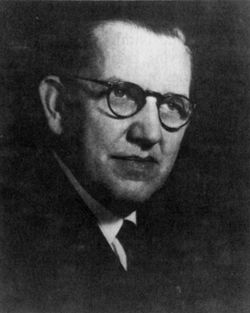
Admiral Denfeld
With the enlistment of the Chief of Naval Personnel in the cause, the move to an integrated general service was assured. On 27 February 1946 the Navy published Circular Letter 48-46: "Effective immediately all restrictions governing types of assignments for which Negro naval personnel are eligible are hereby lifted. Henceforth, they shall be eligible for all types of assignments in all ratings in all activities and all ships of naval service." The letter went on to specify that "in housing, messing, and other facilities, there would be no special accommodations for Negroes." It also directed a redistribution of personnel by administrative commands so that by 1 October 1946 no ship or naval activity would be more than 10 percent Negro. The single exception would be the Naval Academy, where a large contingent of black stewards would be left intact to serve the midshipmen's meals.
The editors had every reason to be wary: integration was seriously circumscribed in the new directive, which actually offered few guarantees of immediate change. Applying only to enlisted men in the shore establishment and on ships, the directive ignored the Navy's all-white officer corps and its nonwhite servants branch of stewards. Aimed at abolishing discrimination in the service, it failed to guarantee either through enlistment, assignment guidelines, or specific racial quotas a fair proportion of black sailors in the postwar Navy. Finally, the order failed to create administrative machinery to carry out the new policy. In a very real sense the new policy mirrored tradition. It was naval tradition to have black sailors in the integrated ranks and a separate Messman's Branch. The return to this tradition embodied in the order complemented Forrestal's philosophy of change as an outgrowth of self-realized reform. At the same time naval tradition did not include the concept of high-ranking black officers, white servants, and Negroes in specialized assignments. Here Forrestal's hope of self-reform did not materialize, and equal treatment and opportunity for Negroes in the Navy remained an elusive goal.
What Forrestal said was true, but the translation of the Navy's postwar racial policy into the widespread practice of equal treatment and opportunity for Negroes was still before him and his officers. To achieve it they would have to fight the racism common in many segments of American society as well as bureaucratic inertia. If put into practice the new policy might promote the efficient use of naval manpower and give the Navy at least a brief respite from the criticism of civil rights advocates, but because of Forrestal's failure to give clear-cut direction—a characteristic of his approach to racial reform—the Navy might well find itself proudly trumpeting a new policy while continuing its old racial practices.
The Marine Corps
Because of the similarities in organization and mission between the Army and the Marine Corps, the commandant leaned toward the Army's solution for racial problems. The Army staff had contended that racially separate service was not discriminatory so long as it was equal, and through its Gillem Board policy it accepted the responsibility of guaranteeing that Negroes would be represented in equitable numbers and their treatment and opportunity would be similar to that given whites. Since the majority of marines served in the ground units of the Fleet Marine Force, organized like the Army in regiments, battalions, and squadrons with tables of organization and equipment, the formation of racially separate units presented no great problem.
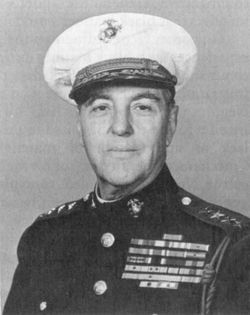
General Thomas
The development of a postwar racial policy to carry out the Navy Department's nondiscrimination order in the Marine Corps fell to the Division of Plans and Policies and its director, Brig. Gen. Gerald C. Thomas. It was a complicated task, and General Thomas and his staff after some delay established a series of guidelines intended to steer a middle path between exclusion and integration that would be nondiscriminatory. In addition to serving in the Steward's Branch, which contained 10 percent of all blacks in the corps, Negroes would serve in segregated units in every branch of the corps, and their strength would total some 2,800 men. This quota would not be like that established in the Army, which was pegged to the number of black soldiers during the war and which ultimately was based on national population ratios. The Marine Corps ratio of blacks to whites would be closer to 1 in 30 and would merely represent the estimated number of billets that might be filled by Negroes in self-sustaining segregated units.
The policy was in effect by January 1947. In the end the Marine Corps' white-only tradition had proved strong enough to resist the progressive impulses that were pushing the other services toward some relaxation of their segregation policies. Committed to limiting Negroes to a token representation and employing black marines in rigidly self-contained units, the Marine Corps could not establish a quota for Negroes based on national racial proportions and could offer no promise of equal treatment and opportunity in work assignments and promotions.
Thus all the services emerged from their deliberations with postwar policies that were markedly different in several respects but had in common a degree of segregation. The Army, declaring that military efficiency demanded ultimate integration, temporized, guaranteeing as a first step an intricate system of separate but equal treatment and opportunity for Negroes. The Marine Corps began with the idea that separate but equal service was not discriminatory, but when equal service proved unattainable, black marines were left with separatism alone. The Navy announced the most progressive policy of all, providing for integration of its general service. Yet it failed to break the heavy concentration of Negroes in the Steward's Branch, where no whites served. And unlike the segregated Army, the integrated Navy, its admission standards too high to encourage black enlistments, did not guarantee to take any black officers or specialists.
None of these policies provided for the equal treatment and opportunity guaranteed to every black serviceman under the Constitution, although the racial practices of all the services stood far in advance of those of most institutions in the society from which they were derived. The very weaknesses and inadequacies inherent in these policies would in themselves become a major cause of the reforms that were less than a decade away.