TOXOSTOMA REDIVIVA.—(Gambel.) The Curved-billed Thrush. PLATE XLII. Adult Male.
Reading edition
The bird now before the reader is one of the most admired songsters of the western countries of North America. By competent judges, as we shall see in the course of the present article, he has been pronounced worthy of favorable mention, even when compared with our great sylvan vocalists, the Mocking Bird, and the Rufous Thrush, to both of which he can claim relationship, not distant.
Viewed as the representatives of principles embodied, as it were, in the various forms or rather classes of animal life, a consideration by no means to be overlooked in the present age of zoological science, birds are the especial exponents of the principles of the beautiful, and, of all classes of animals, appeal most directly to the higher faculties of the human mind. Entire symmetry and elegance of form, gracefulness of motion, agreeable and varied colors, and the fact that of the vast circle of animal life, they alone possess vocal powers which are musical, have recommended this class, and tended to perpetuate its high estimation in all civilized countries.
The flight of birds, never yet successfully imitated by the ingenuity of man (unlike in that respect the motions of fishes in their element), is a means of locomotion so entirely peculiar as always to have attracted attention, and, in past ages, wonder, even to such extent as to have assumed an aspect of superstition, not entirely ignorant nor reprehensible, because founded on facts of nature, manifesting itself in auguries and divinations, which commanded respect for centuries erroneously, but expanded into truth at last by the aid of the light of Inductive science. The conclusions of the learned and cultivated nations of antiquity, however apparently erroneous, are rarely without some foundation in and relation to truth, and in many cases are the origin of modern science. So the augurs were the first ornithologists, as the astrologers were the first astronomers.
The poets have found in birds the most attractive of animals. There is scarcely one from the great Grecian era of taste and poetry to the present day, in whose productions passages do not occur, recognised as beautiful and deriving their essential character from this class of objects. Hebrew and Greek were alike in this respect, whether in the derivation of sacred symbols or of imagery in poetic allusion; the Dove of the former is of the same general character as the Peacock of Juno, or the Sparrows of Venus, poetic and truthful to nature and of the same origin. The Greek poets found in birds suitable accompaniments for the most sublime creations of their genius, their Deities. The greatest of Hebrew poets rejoices in the assurance that “the time of the singing of birds is come, and the voice of the Turtle is heard in the land.”
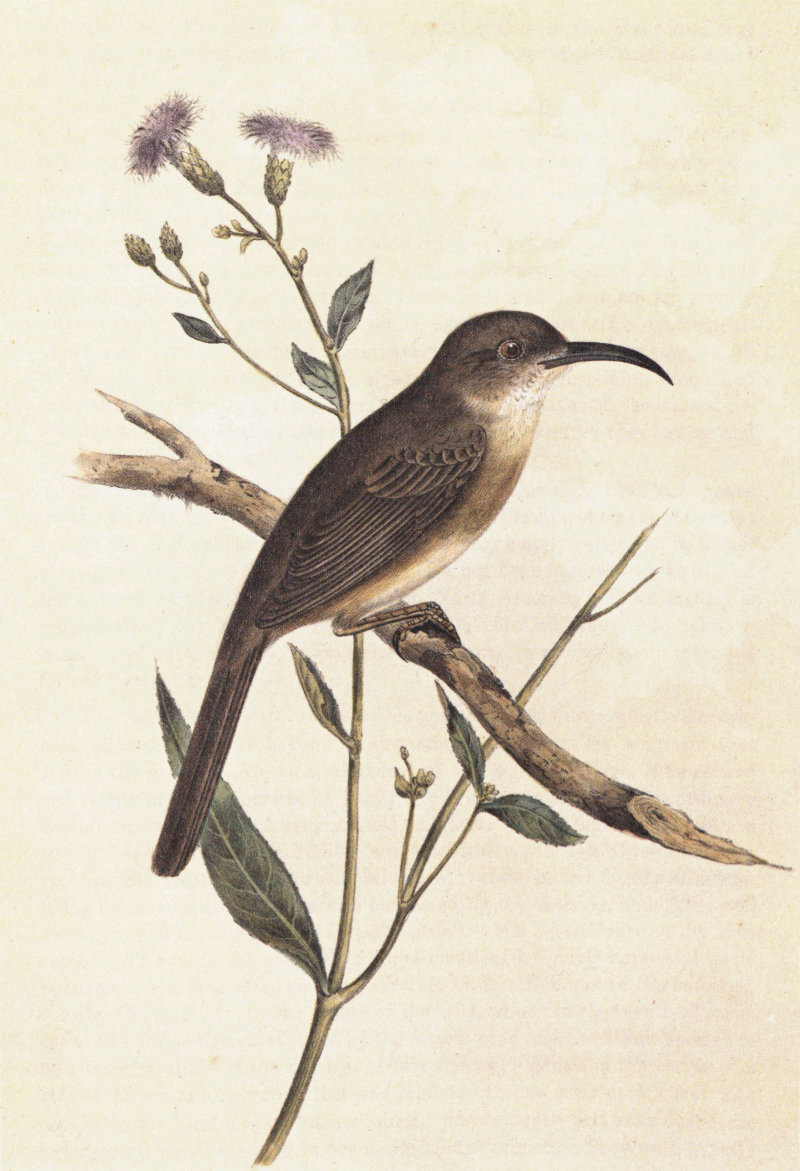
Plate 42 The Curved-billed Thrush Toxostoma rediviva (Gambel)
261
Singing birds belong exclusively to the class of Insessores or Perching birds. One Falcon only (an African species, Falco musicus), is said to possess a musical voice, not making, though we much suspect, any considerable figure in that line. No wading, swimming, or gallinaceous bird makes any pretensions.
The song was long considered as entirely the expression of love during the season, which has its most pleasant analogy in the spring-time of life, but that conclusion admits of some exceptions. Many birds sing in autumn apparently without the pleasant incitement of either actual or prospective attachment. Cases occur, too, as we have sometimes witnessed, of a bird having, to all appearance, failed in securing the object of his choice, remaining alone and solacing himself with a song occasionally for the balance of the season;—possibly somewhat of the nature of deriving comfort from “ends of verse and sayings of philosophers.”
Our present bird belongs to the family of Thrushes, but to a genus which can scarcely be said to be represented in the States on the Atlantic; though the Rufous Thrush (Mimus rufus) is very nearly related to it, if not actually belonging to the group. This bird has been observed by nearly all the naturalists who have visited western North America, and its history is comparatively well known. To our friend, Col. McCall, we have to acknowledge our obligations, as on many former occasions, for a contribution intended for our present article:—
“This remarkable bird, whose dulcet notes, flowing with exquisite smoothness, place him almost beyond rivalry among the countless songsters that enliven the woods of America, or indeed of the world at large, is as retired and simple in his manners as he is gay and brilliant in song. In his ordinary hearing, as well as in the very marked character of his flight, he exhibits a strong resemblance to our humble and unobtrusive, though always welcome vocalist, the Ferruginous Thrush (M. rufus); while in the faculty of modulating sweet sounds he is scarcely surpassed by the dashing, ambitious, and ever-animated Mocking Bird (M. polyglottus). His resemblance to the Ferruginous Thrush in the particulars above mentioned, forcibly impressed itself upon me the first time I saw the California bird. This was on the banks of the Rio Colorado, below the mouth of the Gila, where, in the month of June, the shade and seclusion afforded by the cotton-wood and the willow seemed to be a favorite abode of the species. I saw many individuals in the course of a ride of fifteen miles through this wild region. In one quiet nook I met with a pair ‘in love and mutual honors joined,’ who evidently had some dear little ‘pledges of peace’ secreted in the dense foliage around. They were greatly excited by my approach, deprecating the unlooked-for intrusion with abundant 262 energy and vehemence. It was then that their harsh, scolding notes, their motions, and all their attitudes, reminded me most forcibly of my old friends of the Atlantic groves, although, under other circumstances, the resemblance was sufficiently obvious. But, besides their traits of character, there is a striking resemblance in the organization of the two species; the bill, for instance of M. rufus, when compared with the bills of its congeners, M. polyglottus, M. carolinensis, and others, is found to be greatly elongated and much curved, and in this lengthened and curved bill (to say nothing of the shorter wings and longer tail) may easily be discerned a decided approach to the remarkable form developed in T. rediviva, and other closely allied species. This coincidence of a similarity of organization with a similarity of manners is, I think, sufficiently marked to show a close relationship between the two species; or, in other words, to indicate M. rufus as the connecting link between these two distinct genera.
“The song of the California bird is far superior to that of the Thrush,—though it must be admitted that he has not the powerful voice of our Mocking bird, that prince of songsters, nor his imitative powers; but he certainly has a liquid mellowness of tone united with clearness of expression and volubility of utterance that cannot be surpassed. On the first occasion on which it was my good fortune to hear this bird fairly tune his pipes to sound a roundelay, the performer was perched upon the bare branch of an ancient oak, and his farewell carol to the departing day was delivered with a warmth and pathos so truly wonderful as to fill me with admiration and delight; and though I was then anxious to procure birds for the Museum of the Philadelphia Academy, I scarcely thought of molesting him whose vesper chaunt had just enlivened that wild, secluded vale! I cannot, even now, without a tweak of contrition and self-reproach, acknowledge that the desire to procure a ‘specimen’ prompted me, some time afterwards, to shoot a bird of this species.
“This almost sacrilegious act, I feel bound to confess, met with a just reward; for, having placed my prize on the branch of a neighboring tree, in order to preserve its plumage unruffled, while I continued my pursuit after game (for the larder as well as for the cabinet) I had the mortification, on my return, to find that some savage wild animal, as little impressed by soul-stirring music, I might almost say, as myself, had made a hasty supper off my divine songster, feathers and all.”
Dr. Heermann, in his manuscript notes, through his kindness now in our possession, thus mentions the present bird:—
“This bird is abundant. I have not only seen it in Northern California, but also as far south as Texas, on the borders of the Rio Grande. It is shy and retiring in its habits, and when startled, flies low for some distance, and plunging into a thicket, alights on the ground, and so conceals itself, that it is not again easily found. It runs or hops on the ground with considerable facility and speed.
263
“Among the feathered songsters of Western America, this bird is the most superior, and its song is a striking feature in the localities where it is found. Its notes are equal in harmony to those of the Mocking bird of the United States, though not so varied. To the miners it is well known by the name of the California Mocking bird, and it is with them a great favorite.
“It incubates in California, but the only nest that I ever found contained young in the month of July. This nest was composed of coarse twigs and lined with slender roots, not very carefully constructed, and resembling somewhat those of some other of the Thrushes.”
Dr. Henry has also observed this bird in the vicinity of Fort Fillmore, rather abundantly, particularly during the months of October and November. It has been noticed, too, by nearly all the other naturalists who have visited California and New Mexico.
The figure in our plate is rather less than half the size of life.
The plant represented is a species of Vernonia, from the neighbourhood of Santa Fé, New Mexico, and was raised from the seed by Mr. Robert Kilvington, of this city.
DESCRIPTION AND TECHNICAL OBSERVATIONS.
Genus Toxostoma. Wagler, Isis, 1831, p. 528.
Harpes. Gambel, Proc. Acad., Philada., II. p. 264. (1845.)
Bill long, much curved, somewhat depressed, blunt; ridges of both mandibles strongly defined; wings short, rounded; first quill short, fourth and fifth and sixth longest; tail long; legs robust; toes rather long; claws large, strong; plumage of the upper parts loose; feathers of the rump lengthened. A genus containing four or perhaps five species, all of which inhabit the western and southwestern countries of North America.
Toxostoma rediviva. (Gambel.)
Harpes rediviva. Gamb., Proc. Acad. Philada., II. p. 264. (1845.)
Form. The largest of the genus; bill long, curved; wings short, rounded, first quill subspurious, fifth and sixth slightly longest and nearly equal; tail long, graduated; outer feathers about one inch shorther than those in the middle; tarsi strong; toes long; claws, especially of the hind toes, large, strong.
Dimensions. Total length, male, about 11½ inches; wing, 4; tail, 5¼; bill, 1¾; tarsus, 1½ inches.
Colors. Entire upper parts light brown, slightly tinged with rufous on the rump; quills brownish black, edged on their outer webs with lighter; tail brownish-black, with a reddish tinge, lighter on the under surface; an obscure ashy white superciliary line; auricular feathers dark brown, with central white lines; throat white; breast and sides light brown, tinged with ashy and fulvous; middle of the abdomen, flanks and under tail-coverts rufous, darker on the last; bill black; tarsi lighter; “irides hazel.” Sexes alike?
264
Hab. California. Spec. in Mus. Acad., Philadelphia, and Nat. Mus., Washington.
Obs. There are two other species of this genus, both of which the present bird somewhat resembles, but it can easily be distinguished on comparison by its larger size. From the published descriptions the different species cannot be distinguished so readily, on account of their similarity of form and general characters.
Dr. Gambel regarded this bird as identical with a species mentioned and figured by the distinguished, though unfortunate navigator, La Perouse, and published in “Voyage de La Peyrouse autour du Monde,” Atlas, pl. 37 (Paris, 1797), under the name of “Promerops de la California Septentrionale.” Under this impression, Dr. Gambel gave this bird its specific name, redivivus.
Whether it is the fact, however, that the figure in La Peyrouse represents the present bird, admits of some doubt. To us it is much more like Toxostoma curvirostris, a smaller species.
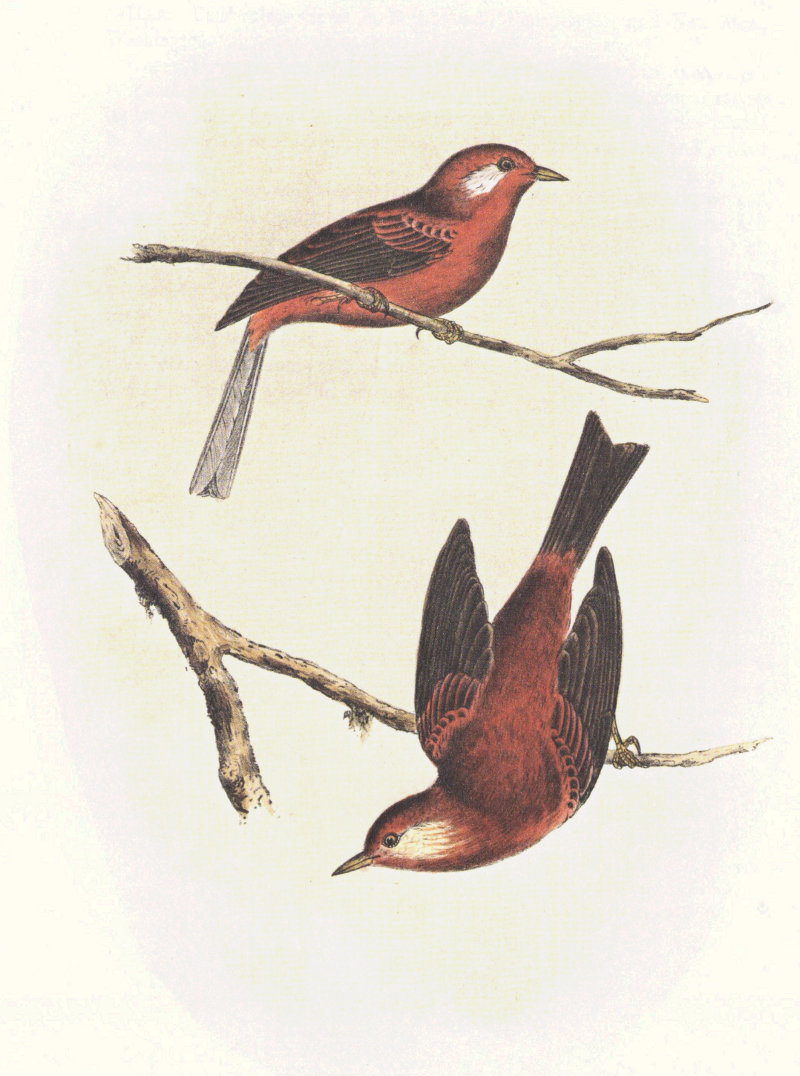
Plate 43 The Vermilion Flycatcher Cardellina rubra (Swainson)
265