SYLVICOLA OLIVACEA.—(Giraud.) The Orange-breasted Warbler. PLATE XLVIII. Adult.
Reading edition
Of this handsome and peculiar-looking Warbler, unfortunately we can say very little. It is known as a bird of Mexico, but has been noticed within the limits of the United States, as yet, in one instance only, having been received from Texas by our friend, Mr. Jacob P. Giraud, Jun., of New York. At the period of its receipt it was unknown to ornithologists, and it was accordingly described by Mr. Giraud, with other new and interesting species, in his “New Species of Birds of North America.”
Since the time of the discovery of this bird, we have looked for it, with constant interest, amongst the many new and little-known birds collected by American naturalists in Texas, but in vain. It has not yet appeared again, and is to be regarded as one of the now numerous birds of our country, of which the history remains to be written by the future naturalist.
The Baron Du Bus, an ornithologist of Belgium, has received this bird from Mexico; and specimens, also from that country, are in the collection of the Philadelphia Academy. The short notice of it by the author just mentioned in the Bulletin of the Royal Academy of Brussels, contains no account of its history or of its habits; nor have we any information from other sources. From the fact of its visiting Texas in the summer, however, we infer that it is a species of which the Southern range probably extends into Central or perhaps South America.
In general appearance, this bird somewhat resembles the Prothonotary Warbler (Helinaia protonotaria), of the United States, but is much darker colored, and it does not belong to the same group or sub-genus.
The figure in our plate is about two-thirds the natural size.
The plant represented is a species of Asclepias from Texas, raised from the seed by our friend, Mr. Kilvington.
DESCRIPTION AND TECHNICAL OBSERVATIONS.
Genus Sylvicola. Swainson. Faun. Bor. Am. Birds, p. 204. (1831.)
Sylvicola olivacea. (Giraud.)
Sylvia olivacea. Giraud. New species of N. A. Birds, p. 14, pl. 7, fig. 2. (1841.)
Sylvia tæniata. Du Bus. Bull. Acad., Brussels, XIV., p. 104. (1847.)
284
Form. About the size of Sylvicola æstiva. Bill slender; wing rather long, pointed; second and third quills longest, and nearly equal; tail moderate, emarginate; tarsi long, slender.
Dimensions. Total length (of skin) about 4¾ inches; wing 3¼; tail 2¼ inches.
Colors. Entire head, neck, and breast, dark orange, inclining to rufous, lighter on the throat; through the eye to the ear, a band of black; back and rump ashy-olive; quills brownish-black, edged on their outer webs with yellowish-olive, and on their inner webs with white; tail brownish-black, the outer feathers with a spot of white on their inner webs near the end; wing coverts brownish-black tipped with white, forming two conspicuous bars on the wing; abdomen and under tail coverts, pale greenish-ashy, nearly white in the middle of the former; under wing coverts white, tinged with ashy; bill dark, lighter at base of under mandible; tarsi dark.
Hab. Texas. Mexico. Spec. in Mus. Acad. Philada.
This bird presents some affinities and resemblance to the Sylvicola protonotarius of the Southern United States, but is much darker colored, and may readily be distinguished from that or any other species with which we are acquainted.
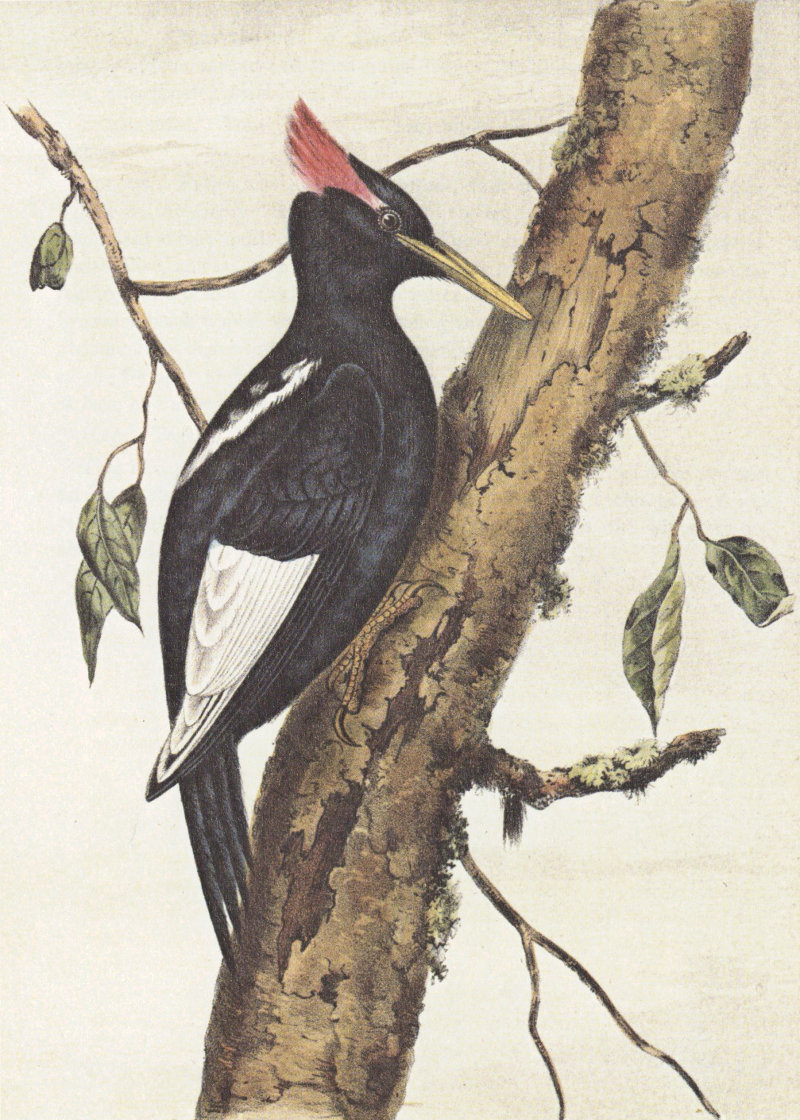
Plate 49 The Great-crested Woodpecker Dryotomus imperialis (Gould)
285