THALASSIDROMA FURCATA.—(Gmelin.) The Gray Storm Petrel. PLATE XLVI. Adults.
Reading edition
The little birds of the group to which that now before the reader belongs, are known to seamen, wherever the English language is spoken, as Storm Petrels, or “Mother Carey’s Chickens,” and have too, a reputation, not without a tinge of superstition, of being the harbingers of the storm and of maritime disaster.
Of the many birds adapted by their organization to a life of adventure on the ocean or its tributaries, and of which in fact during a large portion of their lives they are almost as much inhabitants as fishes, the Albatrosses and the Storm Petrels, or Mother Carey’s Chickens, venture the most boldly. The birds of both these genera, though one contains the largest and the other the smallest of marine birds, are alike in this particular character, and are also alike known as inhabitants of shores very remote from each other, and as wanderers over immense extents of the ocean.
Boldly directing their course far out on the sea, like their gigantic relatives the Albatrosses, our present little birds are frequently to be met with in nearly all latitudes usually traversed by navigators, and are generally tempted to remain for a time in the wakes of vessels, and about them, by the fragments of food to be gleaned from refuse thrown overboard. Flitting as it were before the gale, with it, the appearance of these birds may readily be coincident, or premonitory of its coming, thus acquiring, and perhaps in some degree justly, the attributed character of precursors.
Several species of these birds are found on the coasts of the United States. The most abundant and best known is Wilson’s Storm Petrel (Thalassidroma Wilsonii), a bird which is perhaps to be regarded as more nearly cosmopolite than any other, so extensive are its wanderings over the surface of the ocean. It is of common occurrence throughout the whole extent of the eastern shores of the continent of America, and it has been repeatedly noticed and captured at various points on the coasts of Europe and Africa, thus demonstrating a range over nearly the entire Atlantic Ocean. In the Pacific also it is well known, though it is not so abundant. Mr. Gould gives it as a bird of Australia; and the naturalists of the United States’ Exploring Expedition in the Vincennes and Peacock, record its appearance at various other points in the Pacific Ocean.
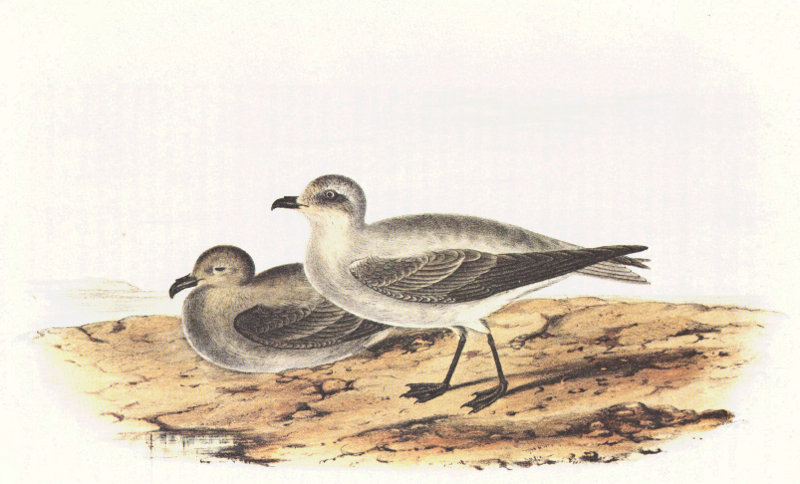
Plate 46 The Gray Petrel Thalassidroma furcata (Gmelin)
275
The histories of this, and of other American species of Storm Petrels, are perhaps as well known as those of the sea-birds generally, and much that is interesting may be found in the articles on them in the works of our predecessors in American Ornithology; but we cannot allow the present occasion to pass without availing ourselves of the kindness of our friend, Charles Pickering, M. D., of Boston, one of the naturalists attached to the Exploring Expedition, and justly ranked with the most eminent of American Zoologists.
With his characteristic liberality, Dr. Pickering has placed at our disposal much valuable information relative to birds observed during the voyage of the Expedition, especially on the western coast of North America, and in other localities of interest, with reference to American species. From his manuscript we copy the following in relation to Wilson’s Petrel, which occurs under date of October 24th, 1838, and from the latitude and longitude given, the nearest land was the coast of Africa:
“A stormy Petrel taken, which proved to be Thalassidroma Wilsonii, and although this species and others of its genus have been constantly seen during the voyage of the Expedition, this is the first specimen that has been captured without having been injured, thus affording whatever facilities can be obtained on shipboard for observing its manners.
“I was rather surprised to observe that this bird was not only entirely incapable of perching, but even of standing upright like birds in general, and as I have seen birds of this genus represented, unless by the aid of its wings. In standing, or rather sitting, the whole of the tarsus (commonly mistaken for the leg) rests on the ground, and it walks in the same awkward position, frequently being obliged to balance itself with its wings. By a more powerful exertion of its wings, however, it was enabled to run along on its toes in the same manner as it does over the surface of the waves. The absence of a hind toe, the nails being but slightly bent and flat, and perhaps I may add, its evidently being unaccustomed to this description of locomotion, seemed to be the causes of its helplessness on its feet.
“These birds have been numerous about us for some days past, and their coursing over the water with flitting wings remind me of the actions of butterflies about a pool. One of them was seen swimming, or at least resting, on the surface. We have seen this species very frequently, indeed almost daily, since leaving America, and scarcely any other sea-birds, except in the immediate vicinity of the islands. It would seem that it scarcely ever visits the land, except for the purposes of incubation, and there can hardly be a better comment on its untiring power of wing than the popular fable amongst seamen that it carries its egg and hatches its young while sitting in the water. It does not sail in the continued manner of the gulls and some other sea-birds, but moves by rapidly flexing its wings something like a bat, and was continually coursing around and in the wake of the vessel, generally in considerable numbers, during much the greater part of the time that the Expedition was in the Atlantic Ocean.”
276
The curious fact that this bird cannot stand upright we do not remember ever before having seen noticed. Of the specimen alluded to, Dr. Pickering gives notes of a minute and evidently very careful anatomical examination, which the limits of our present article will not allow us to insert. They are, however, confirmatory, in most respects, of the account of the anatomy of this species, given by Mr. Audubon, in Ornithological Biography, V., p. 645.
The bird before the reader in the present plate is an inhabitant of the Northern Pacific Ocean, and is an interesting addition to the ornithological fauna of the United States, made by the naturalists of the Exploring Expedition, under command of Captain Charles Wilkes, to which we have previously alluded. Though long known as a bird of the coasts of Asiatic Russia and of Russian America, it had never before been noticed on the more southern coast of Oregon, where it was found in large numbers by the Expedition, and specimens then obtained are now in the National Museum at Washington.
This bird was first noticed by the celebrated Pennant, in Arctic Zoology, Vol. II., p. 255, who called it the “Fork-tailed Petrel.” An accurate description is given by him, but no further account of it than merely stating “taken among the ice between Asia and America.” On the faith of this description, Gmelin, in Systema Naturæ, as cited below, gave the scientific name. Subsequently, Pallas mentions it as an inhabitant of the coasts of Unalaschka and of the Kurile Islands. It is also mentioned in the Zoology of the Voyage of the Sulphur, (London, 1844,) and very handsomely figured from specimens obtained at Sitka in Russian America.
To the journal of Dr. Pickering we have again to acknowledge our obligations for a notice of this bird. First recording its occurrence on the 26th of April, 1840, at sea, the distance from the coast of Oregon being about 200 miles, he subsequently mentions it under date of 29th of the same month, as follows:
“In sight of the coast of Oregon. Great numbers of the gray Thalassidroma are to-day flitting around and in the track of the vessel, very actively engaged in searching for particles of food thrown overboard. Generally, this bird reminds us of T. Wilsonii, but the wings seem longer, and its movements appear to be more rapid, and in fact more like that of the larger Petrels, (Procellaria.) It occasionally sails in its flight, but for the greater part moves by very rapidly flexing its wings in the same manner as the species mentioned.
“These birds proved not difficult to capture, and several specimens were taken with a hook and line. They would dive a foot or two after the bait, and made use of their wings in and under the water, from which they apparently had not that difficulty in rising observable in the Albatrosses. Though their powers of swimming seemed rather feeble, they alighted in the water without hesitation. The dead body of one of their companions being thrown 277 overboard, they clustered around it with as much avidity as around any other food.
“The specimens obtained agree generally in color of plumage, being nearly a uniform pale gray, with the abdomen sometimes paler or nearly white, and generally showing a lighter bar across the wing, when expanded. Uttered a faint note when taken on board.”
At present we have no further information relating to this interesting species.
DESCRIPTION AND TECHNICAL OBSERVATIONS.
Genus Thalassidroma. Vigors. Zool. Jour. II., p. 405. (1825.)
Size small; bill rather wide at base, compressed towards the end, and abruptly hooked; lower mandible shorter; nostril elevated, tubular; wings long, pointed, second quill usually longest; tail moderate, rather wide, usually emarginate or forked; legs long, slender; tibiæ more or less naked above the joint with the tarsi; toes rather short, fully webbed. A genus comprising about twelve species, all of which are strictly marine, and inhabit the various oceans of the world.
Thalassidroma furcata. (Gmelin.)
Procellaria furcata. Gm. Syst. Nat. I., p. 561. (1788.)
Procellaria orientalis. Pallas. Zoog. Ross. As. II., p. 315. (1831.)
Thalassidroma cinerea. Gould.
Form. Wing long; second quill longest; tail forked; legs shorter than usual in this genus; under coverts of the tail long.
Dimensions. Total length (of skin) about 8 inches; wing 6; tail 4 inches.
Colors. Entire plumage light cinereous or lead color; lighter, and in some specimens, nearly white on the abdomen and under tail coverts; lesser wing coverts darker; in some specimens nearly black; quills and tail slightly tinged with brown; greater wing coverts and secondaries pale on their outer edges; primaries nearly white on their inner edges; bill and feet black.
Hab. Coasts of Oregon, Russian America, Northeastern Asia, and the Pacific Ocean. Spec. in Nat. Mus., Washington, and Mus. Acad., Philad.
This bird belongs to a group of the genus Thalassidroma, of which T. marina is the best known species, an inhabitant of the Southern Pacific Ocean, and figured by Mr. Gould as a bird of Australia.
All the species of this group are characterised by cinereous plumage, a strong distinctive character from the greater part of the birds of this genus, which are of dark colors, and in some species nearly black. The present bird does not, in any considerable degree, resemble any other American species, and may be easily recognised.
278