SYNOPSIS OF NORTH AMERICAN BIRDS.
Reading edition
II. ORDER INSESSORES. THE PERCHING BIRDS.
A group containing much the greater number of all known birds, almost impossible to characterise in general terms. The birds of this order are, however, generally organized for perching or living in trees, and have the legs and feet moderately developed and formed for grasping. In this group is found the highest development of the bird-like form of animal life.
I. TRIBE FISSIROSTRES. THE GOATSUCKERS, SWALLOWS, KINGFISHERS, &c.
Bill wide at base; gape very large; feet small, weak; general form adapted to the capture of insects on the wing, and in some of the families to rapid and long-continued flight. This group contains the Goatsuckers (Caprimulgidæ), the Swallows (Hirundinidæ), the Trogons (Trogonidæ), the Bee-eaters (Meropidæ), and the Kingfishers (Halcyonidæ).
I. FAMILY CAPRIMULGIDÆ. THE GOATSUCKERS.
Plumage soft, blended, and owl-like. Species generally nocturnal in their habits, or venturing abroad only in the twilight or in the night.
Bill small, weak, generally furnished at the base with projecting bristles; gape very wide; feet usually slender and weak; wings generally long, adapted to long-continued flight. This family is represented in all temperate and tropical regions of the world.
A.
1. Genus Antrostomus. Gould, Nuttall. Manual of the Ornithology of the United States and Canada, I. p. 739 (second edition, 1840).
General form plump and robust; head large; bill short, weak, opening to beyond the eyes; gape very large; nostrils basal, oval, prominent; eyes large; wing long; somewhat pointed; second and third quills longest; legs and toes short, feeble; claw of the middle toe pectinated; tail moderate, wide, generally even at the end; bristles at the base of the bill rigid, long, 236 usually curved at their ends; throat in males with an uninterrupted collar of white; quills with bars of rufous. An exclusively American genus containing six or seven species, more nearly related to typical Caprimulgus than any other birds of this family inhabiting this continent, and almost nocturnal in their habits, venturing abroad only by twilight or in the night.
1. Antrostomus carolinensis. (Gm.) The Chuck-wills-widow. The great Carolina Goatsucker.
Caprimulgus carolinensis. Gm., Syst. Nat., II. p. 1028. (1788.)
Caprimulgus lucifugus. Bartram, Travels, p. 292. (1793.)
Caprimulgus rufus. Vieill., Ois. d’Am., Sept. 1, p. 57. (1807.)
Caprimulgus brachypterus. Stephens, Gen. Zool., X. p. 150. (1817.)
Catesby’s Carolina, I. pl. 8; Vieill., Ois. d’Am., Sept. 1, pl. 25; Wilson, Am. Orn., VI. pl. 54, fig. 2; Aud., Birds of Am., pl. 52, Oct. ed., I. pl. 41.
Largest of the North American species. General form broad and robust; wing long; second quill longest; tail ample; legs short; bristles at the base of the bill strong; each one ciliated; entire upper parts dark brown, minutely dotted with reddish fulvous, and with many of the feathers having large, longitudinal stripes of black; inferior parts similar to the upper, but more minutely marked with black, and marked with circular fulvous spots; throat with an uninterrupted collar of white, running into a collar of fulvous on the neck behind; quills with irregular alternate bars of reddish fulvous and brownish-black; middle feathers of the tail reddish fulvous, mottled with, and with irregular bars of black; other feathers of the tail similar, but tipped with silky white, frequently tinged with reddish fulvous on their outer-webs. Female like the male, but without white on the tail-feathers.
Dimensions. Total length, about 12 inches; wing, 8½; tail, 5¾ to 6 inches.
Hab. Southern United States. South Carolina (Gibbes); New Mexico (McCall); Cuba (Lembeye); Florida (Bartram). Spec. in Mus. Acad., Philada.
Obs. This fine species is frequently met with in the southern and southwestern States, and is much the largest of the North American birds of this family.
2. Antrostomus vociferus. (Wilson.) The Whip-poor-will.
Caprimulgus vociferus. Wilson, Am. Orn., V. p. 71. (1812.)
Caprimulgus clamator. Vieill., Nouv. Dict., X. p. 234. (1817.)
“Caprimulgus virginianus. Linn. Gm.” Vieill., Ois. d’Am., Sept. 1, p. 65.
Caprimulgus macromystax. Wagler, Isis, 1831, p. 533?
Vieill., Ois. d’Am., Sept. 1, pl. 23; Wilson, Am. Orn., V. pl. 41; Aud., Birds of Am., pl. 82; Oct. ed., I. pl. 42; Nat. Hist. N. Y. Birds, pl. 27, fig. 39.
Smaller than the preceding; wing with the third quill slightly longest; tail ample, rounded; neck with an uninterrupted collar of white before and fulvous behind; head above ashy-gray, with a longitudinal stripe of brownish-black; back and rump dark brown, with minute points and irregular lines of cinereous; under-parts mottled with pale reddish-white and brownish-black, the latter most conspicuous on the breast, the former on the abdomen and under tail-coverts; four middle feathers of the tail mottled with gray and brownish-black, the latter forming irregular bands; external feathers of 237 the tail brownish-black, widely tipped with silky white, and with traces of rufous bars towards the base; quills brownish-black, with interrupted bars of rufous; exposed ends of primaries same as the back. Female rather smaller than the male, with the white collar on the neck tinged with fulvous, which is also the color of the tips of the external tail-feathers.
Dimensions. Total length, about 9½ inches; wing, 6½; tail, 5 inches.
Hab. Eastern North America. Western? Canada (Dr. Hall); Cuba (Mr. Lembeye); Florida (Bartram). Spec. in Mus. Acad., Philada.
Obs. This species is of common occurrence in the States on the Atlantic, and is universally known from its loud and often-repeated notes in the season of pairing and incubation. It is not recorded by our late naturalists and travellers to have been observed in the western regions of this continent, but the specimens described by Wagler as above were from Mexico, and were either this species, or a near relative. To Caprimulgus macromystax we shall more particularly allude under the head of obscure species of this family.
3. Antrostomus Nuttallii. (Aud.) Nuttall’s Whip-poor-will.
Caprimulgus Nuttallii. Aud., Orn. Biog., V. p. 335. (1839.)
Aud., B. of Am., Oct. ed., VII. pl. 495.
Small, aberrant; wing long; third quill longest; legs rather long; tail moderate; upper-parts brownish-black, mottled and spotted with ashy white and reddish fulvous; wing-coverts tipped with pearly ashy white; under-parts with transverse stripes of brownish-black and yellowish-white; under tail-coverts pale reddish fulvous; quills with alternate transverse bars of brownish-black and handsome reddish fulvous; middle feathers of the tail same colors as other upper parts; other tail feathers brownish-black, with irregular bars and lines of dark cinereous, and widely tipped with silky white; collar on the neck before silky white. Female similar, but with the colors paler, and the white of the throat and tail tinged with pale fulvous.
Dimensions. Total length, about 7 inches; wing, 5¾; tail, 3¼ inches.
Hab. Western North America, Rocky Mountains (Audubon); Oregon (U. S. Ex. Exp. Vincennes); Washington Territory (Dr. Cooper); Texas (Mr. J. H. Clark). Spec. in Mus. Acad., Philada., and Nat. Mus., Washington.
Obs. This handsome species, which is the smallest of the birds of this family yet discovered in North America, appears to be a rather common bird in the countries above mentioned. It varies in some degree from the characters of the typical species, and with a small South American bird (A. ocellatus), may form a distinct group. Nothing is recorded of its habits.
II. GENUS CHORDEILES. Swainson, Fauna Boreali Americana, Birds, p. 496. (1831.)
Bill small and weak; gape very wide, without bristles; wing long, pointed, with the first and second quills longest; tail moderate or rather long, usually emarginate; legs short, weak; tarsus usually partly covered with short feathers; toes rather long, slender; claw of the middle toe pectinated. General form stout and heavy, broad. A genus containing about six species, inhabiting North and South America, the North American species of which are less nocturnal in their habits than those of the preceding genus.
238
1. Chordeiles virginianus. (Brisson.) The Night Hawk.
Caprimulgus virginianus. Briss., Orn., II. p. 477. (1760.)
Caprimulgus popetue. Vieill., Ois. d’Am., Sept. 1, p. 56. (1807.)
Caprimulgus americanus. Wilson, Am. Orn., V. p. 65. (1812.)
Edwards, Birds, II. pl. 63.; Catesby, Carolina, II. Appendix, pl. 16; Vieill., Ois. d’Am., Sept. 1, pl. 24; Wilson, Am. Orn., V. pl. 40; Aud., B. of Am., pl. 147; Oct. ed., I. pl. 43; Nat. Hist. N. Y. Birds, pl. 27, fig. 60.
Bill short, weak; gape very wide; wing long, pointed; first and second quills longest, and nearly equal; tail emarginate; legs short; tarsus feathered below the joint, with the tibia; bare part covered with scales; middle toe long, partially united to the outer toe by a web, and with its claw distinctly pectinated. Male.—Throat white; entire upper parts brownish black, every feather more or less mottled and spotted with ashy white and reddish fulvous, the former most conspicuous on the secondaries and wing-coverts, and the latter on the back; neck behind with an irregular collar of reddish; quills brownish-black, with a wide bar of white about their middle, forming a conspicuous transverse bar on the wing; tail feathers brownish-black, all, excepting the two central, with a wide subterminal transverse band of white, and with other irregular transverse narrow bands of ashy white; breast brownish-black, with rounded and irregular spots of ashy white and reddish fulvous; abdomen with transverse bars of ashy white and dark brown; under tail-coverts white. Female with the white stripe on the wing much narrower, and in some specimens confined to the inner-webs; white of the throat less pure, and tinged with reddish-yellow; general plumage paler, and more tinged with ashy and reddish fulvous.
Dimensions. Total length, 9 to 9½ inches; wing, 7½; tail, 4½ inches.
Hab. All of temperate North America, New Mexico (McCall); Oregon (Townsend); California (Heermann); Canada (Hall); Mexico (Rivoli collection); Nicaragua (Barruel); Cuba (Lembeye); Jamaica (Gosse). Spec. in Mus. Acad., Philada.
Obs. An abundant species everywhere in the United States.
2. Chordeiles sapiti. Bonaparte, Cons. Av., p. 63. (1849.)
Not figured.
Very similar in form and general appearance to the preceding, but smaller, and with all the colors paler; bill very short and weak; gape large; wing long; first quill slightly longest; tail moderate, emarginate; tarsus feathered in front somewhat below the point with the tibia; throat white; entire upper plumage brownish-black, mottled, and variegated, with very pale cinereous, which predominates on the back, rump, and coverts of the wings; under-parts with transverse narrow bands of dark brown and yellowish-white; quills brownish-black, with a wide transverse band of white at the distance from their end of about one-third their length, and also with some irregular spots and pairs of spots of rufous in their basal halves. Female paler, and with the white of the throat tinged with pale reddish fulvous.
Dimensions. Total length, about 8½ inches; wing, 7¼; tail, 4½ inches.
Hab. Texas (Mr. Clark, Capt. McCown); New Mexico, Central America. Spec. in Mus. Acad., Philada., and Nat. Mus., Washington.
Obs. This species is nearly allied to the preceding, and also to Chordeiles brasilianus, from both of which it differs in some particulars of form, and also in having its colors much paler. In the latter character it somewhat resembles the C. acutipennis of South America. We regard this bird provisionally under the name above given, but the description as cited is too brief 239 to be satisfactory. It is, however, the only species known to us that can be referred to it.
This bird is abundant in Texas during the summer.
3. Chordeiles Henryi. nobis (new species, January, 1855).
Not figured.
Larger than either of the two preceding species; wing long; second quill longest; tail rather long; emarginate; legs and feet short; tarsus feathered in front slightly below the joint with the tibia; bare part of the tarsus and the toes with very distinct scales; entire upper parts variegated with dark brown and pale reddish fulvous, every feather being tipped and spotted with the latter, which predominates on the back, rump, wing-coverts, and tertiaries; some spots on the tertiaries rufous; breast dark brown, every feather tipped with dull reddish fulvous; abdomen white, tinged with pale reddish-yellow, every feather with transverse stripes of brownish-black; under-coverts dull reddish white, with transverse lines of brownish-black; neck with a large band of white in front; quills brownish-black, tipped with dull reddish-white; primaries with a wide transverse band of white at about half their length; tail with alternate irregular stripes of brownish-black and pale reddish fulvous, the latter mottled with black; under wing-coverts pale reddish-white, with bands and spots of brownish-black. Female. Colors paler, and white of the neck obscure.
Dimensions. Total length of skin, about 10 inches; wing, 8; tail, 4½ inches.
Hab. New Mexico (Dr. Henry, Lieut. Gunnison). Spec. in Nat. Mus., Washington, and Mus. Acad., Philada.
Obs. This bird may be distinguished from other American species by its color, which is lighter and of a different style of variegation, the prevailing tone being a dull, pale reddish and yellowish, somewhat approaching what is called buff or drab color. It is larger than Chordeiles virginianus.
Specimens of this interesting species have been procured at Fort Webster, New Mexico, by Dr. Henry, and by the unfortunate party under command of the late Lieut. Gunnison.
As a token of respect for T. Charlton Henry, M. D., of the United States Army, whose exertions in the investigation of the natural productions of New Mexico, now continued for several years, and the formation of large collections in various departments, which attest his zeal and attachment to zoological science, we propose the specific name above given.
B. OBSCURE OR LITTLE KNOWN SPECIES OF THIS FAMILY.
1. Caprimulgus macromystax. Wagler, Isis, XXIV. p. 533. (1831.)
This species is noticed by Wagler, as above, from a Mexican specimen, and his description is essentially a comparison with the Caprimulgus europæus. It is stated that the bristles at the base of the bill are very long, or “nearly as long as the head without the bill,” and the plumage generally bearing a resemblance to the European species mentioned.
240
There is in the collection of the Philadelphia Academy, a specimen from Mexico, and another from California, differing in shade of color only from the Antrostomus vociferus, and from which the distinctive characters are too slight to establish a separate species. We regard these specimens as C. macromystax. The length of the bristles in Wagler’s description applies as well to A. vociferus, and we think it probable that his name is a synonyme.
The following is a translation of Wagler’s description or notice as above cited, and is at the end of an elaborate and valuable paper, in which he describes several new American species of birds:—
“At the conclusion of these descriptions of birds, I will yet remark that we have received from Mexico, also, a Caprimulgus (which specimen unfortunately is without the tail), that nearly resembles ours in size and color, but which nevertheless may be distinguished at a glance; the tarsi on their upper sides are hardly feathered to the middle, and the bristles on both sides of the upper mandible are uncommonly stiff, and longer than in any other American Night Swallow, nearly as long as the head without the bill, and are turned rake-like obliquely downwards. I have named it, therefore, Caprimulgus macromystax. The feet are short, as in ours; also as in ours, the claw of the middle toe on its inner border is pectinated, the primaries are small, the second, third, and fourth, externally from their middles to their ends, are strongly sinuated; they are brown-black, without white spots, but have internally and externally rust-red angular dots.”
2. Caprimulgus minor. Forster. Catalogue of the Animals of North America, p. 13. London, 1771.
A name given without being accompanied by a description, though probably applicable to Antrostomus vociferus, which was known to some of the older naturalists, and, previous to the introduction of the binomial nomenclature, was called minor, in distinction from the Caprimulgus europæus.
The catalogue by Forster above referred to is a pamphlet, and is, so far as We know, the first attempt at an enumeration of the species of all classes of animals inhabiting North America. There is also a catalogue of the Plants of North America by the same author.
3. Antrostomus californianus. Bonaparte, Cons. Av. p. 61. (1849.)
The description by the Prince of Canino, as above, is as follows:—
“(Confer Capr. nuttalli, Aud. Am. Orn., 2d edit., t. 495,) ex California, Vix Turdi magnitudine. Mas. Griseus, nucha fulvescenti, abdomine cervino, nigro undulato; gula macula utrinque alba nigro terminata: remigibus fuscis, macula mediana alba, rectricibus lateralibus nigricantibus, extima late ad apicem candida.”
The characters here given differ so essentially from those of any other species of Antrostomus, that we much suspect that the bird alluded to neither belongs to this genus, nor is an American species.
241
4. Caprimulgus europæus. Linn.
This name occurs in several of the older authors on American Natural History, which is to be attributed to the fact that the Whip-poor-will (Antrostomus vociferus) was regarded by Linnæus as a variety only of the European Goatsucker. President Jefferson, in Notes on the State of Virginia, p. 117 (London edition, 1787), gives both of the then known North American birds of this group as two varieties only of the European bird. Professor Barton, in Fragments of the Natural History of Pennsylvania, p. 14, under the head of Caprimulgus europæus, says: “This, or a variety of it, is certainly a native of Pennsylvania. So that now all the fifteen species of this genus (mentioned by Gmelin) are known to be natives of America.” Both of these distinguished and venerated fathers of American zoological science adopted the opinion of Linnæus, and the name of the European bird is given also on the same authority by some others of the earlier American writers.
The European Goatsucker has never been observed on the continent of America.
Professor Barton’s observation above quoted is singularly suggestive. Linnæus, at the date of his last edition of the Systema Naturæ, knew two species only of the genus Caprimulgus. Gmelin, in the edition of the same work, edited by him, and published in 1788, extended the list to fifteen species, and was, when Professor Barton wrote, in 1799, recent and high authority. So greatly has the knowledge of species of birds been extended, that at this time (1855) there are at least ninety known birds of the family Caprimulgidæ, all of which would have been regarded by Linnæus and Gmelin as belonging to the genus Caprimulgus. There are seventy-four species of this family in the collection of the Philadelphia Academy. Though, as Professor Barton observes, all of those known to Gmelin (except Caprimulgus europæus), are American, others are now ascertained to inhabit all the temperate and tropical regions of both of the great divisions of the globe, and the whole of Australia.
Of this family of birds, the only species that have been ascertained or supposed by naturalists to inhabit that part of North America within our limits, are given in the preceding pages. The group is, however, represented in South America not only by other species of the genera above given, but by various other genera and species, amongst which are some curious and interesting forms. The genus Steatornis, containing a single species, first brought to notice by the celebrated Humboldt (Steatornis caripensis, Humboldt), is remarkable for its near approach to the Owls, and would, to a casual observer, scarcely be regarded as belonging to any other than that family. The genus Nyctibius, which is also South American, contains some species as large as the Crow of the United States, and which are amongst the largest birds of this group. Another genus, Hydropsalis, or the Scissors-tailed Goatsuckers, as they are termed by Azara (an enthusiastic and accurate Spanish writer on 242 South American Natural History), are remarkable for having tails of singular forms, and of great length in some species. Hydropsalis torquatus has the two outermost feathers of its tail long, and the two middle feathers also long, leaving the intermediate comparatively short. Hydropsalis lyra, Bonaparte, has the outermost feathers of the tail very long, and curved inwards at their ends. Two species, first described by us, Hydropsalis limbatus and segmentatus (in Proc. Acad., Philadelphia), have that appendage several times the length of their bodies.
About thirty-five species of Caprimulgidæ inhabit South and Central America and Mexico. The largest birds of this group are natives of Australia.
We are inclined to the opinion that this family (and the Swallows also) properly belong to the circle of rapacious birds in which they have been arranged by Prof. Reichenbach, in Avium Systema Naturale (Dresden and Leipsic, 1850).[4]
II. FAMILY HIRUNDINIDÆ. THE SWALLOWS.
Plumage compact; size generally small; bill small, much depressed, very wide at base, and suddenly compressed to the tip, giving it a somewhat triangular shape; wings long; tail various, frequently forked; legs and feet short and weak.
These birds form a peculiar and easily-recognized family, species of which inhabit all parts of the world, and in civilized countries are generally regarded with favor. The Swallows are eminently social and gregarious, being almost constantly seen in companies even in the breeding season, and are amongst the comparatively few birds whose numbers are not diminished by the progress of the settlement and cultivation of countries. They subsist exclusively on insects captured on the wing, in the pursuit of which they exhibit extraordinary powers of flight.
A.
1. Genus Hirundo. Linn., Syst. Nat. I. p. 343. (1766.)
Bill depressed, wide at base, compressed to the end, nostrils basal; wing long, pointed, first primary usually longest, secondaries short; legs and feet short and weak; tail moderate, forked or emarginate. General form rather broad, robust; flight protracted, rapid.
243
1. Sub-genus Hirundo.
Tail with the two external feathers disproportionately long; others graduated.
1. Hirundo rufa. Gmelin, Syst. Nat. I. p. 1018. (1788.) The Barn Swallow.
Hirundo horreorum. Barton, Frag. Nat. Hist. of Penna. p. 17. (1799.)
Hirundo americana. Wilson, Am. Orn. V. p. 34. (1812.)
Hirundo erythrogaster. Boddaert, Tab. Pl. Enl. p. 45. (1783.)?
Hirundo cyanopyrrha. Vieill., Nouv. Dict. XIV. p. 510. (1817.)
“Hirundo rustica. Linn.” Aud. Orn. Biog. II. p. 413.
Wilson, Am. Orn. V. pl. 38, fig. 1, 2; Aud., B. of Am. pl. 173, Oct. ed. I. pl. 48; Nat. Hist. N. Y. Birds, pl. 29, fig. 64; Buff., Pl. Enl. 724, fig. 1?
Wings long; tail deeply forked with the two outer feathers much the longest; forehead, throat, and neck in front, chestnut, which color is separated from the paler color of the breast by a partial or rarely perfect collar of dark steel blue; entire upper parts steel blue, with a purple lustre, inclining to green on the wings and tail; breast, abdomen, and under tail coverts, chestnut, very pale in some specimens, but generally darker on the tail coverts; tail with a large spot of white on the inner web of every feather, except the middle two; bill and feet black; sexes very nearly alike.
Dimensions. Total length, 7 inches; wing, 4½; tail, 3½. Female smaller.
Hab. Throughout North America. Canada (Dr. Hall); Oregon (Dr. Townsend); Texas (Dr. Woodhouse); Santa Fé (Col. McCall); Indiana (Dr. Haymond); Long Island (Mr. Giraud); Cuba (Mr. Lembeye).
This is one of the most abundant of the birds of the United States, and known to all classes and ages of the population. It is nearly related to the European House Swallow (Hirundo rustica), but can readily be distinguished on comparison. The European is rather the larger, the under-parts are darker, and the collar on the neck in front complete. In the present bird this collar is imperfect, with very rare exceptions.
2. Sub-genus Petrochelidon.
Tail moderate or short, emarginate, but slightly forked.
2. Hirundo lunifrons. Say., Long’s Exp. to the Rocky Mts. II. p. 47. (1823.) The Cliff Swallow.
Hirundo opifex. Clinton, Ann. N. Y. Lyceum I. p. 161. (1824.)
Hirundo respublicana. Aud., Ann. N. Y. Lyc., I. p. 164. (1824.)
“Hirundo fulva. Vieill.” Aud., Orn. Biog. V. p. 415, and Clinton, as above.
Bonap., Am. Orn., 1. pl. 7, fig. 1; Aud., B. of Am., pl. 68, Oct. ed. I. pl. 47; Nat. Hist. N. Y. Birds, pl. 30, fig. 64.
244
Bill very wide at base, short; wings long; tail rather short, emarginate; forehead white, nearly pure in some specimens, but generally tinged with reddish chestnut; head above and back bluish-black, with a purple lustre; plumage of the back usually edged and streaked with grayish white; rump pale chestnut; throat dark brownish chestnut, which color extends upwards and forms a complete collar around the neck behind; lores and large spot on the neck in front black; entire other under-parts ashy-white, tinged with pale chestnut, especially on the breast; under tail coverts with a green lustre, and tipped with pure white; wings and tail brownish-black; bill and feet dark; sexes very nearly alike.
Dimensions. Total length, 5½ inches; wing, 4⅜; tail, 2 inches. Female rather smaller.
Hab. Throughout North America. Oregon (Dr. Townsend); California (Dr. Heermann); New Mexico (Col. McCall); Texas (Dr. Woodhouse); Indiana (Rufus Haymond, M. D.); Canada (Dr. Hall).
This handsome species is now well known throughout almost the whole of the United States, but is said to have appeared for the first time in the States on the Atlantic seaboard within the memory of persons now living. It builds a curiously-formed nest of the shape of a gourd, faithfully represented in Mr. Audubon’s plates, cited above.
Hirundo fulva, Vieill., is an allied species, but much smaller, and not ascertained to inhabit any part of North America. It is best known as a bird of the Island of Jamaica.
The paper referred to above, in which this bird is named Hirundo opifex, possesses additional interest, from the fact that it was written by the late De Witt Clinton, formerly Governor of the State of New York, who had given particular attention to American Natural History.
3. Hirundo bicolor. Vieill., Ois. d’Am., Sept. 1, p. 61. (1807.) The White-bellied Swallow.
Hirundo viridis. Wilson, Am. Orn. V. p. 44. (1812.)
Hirundo leucogaster. Stephens, Gen. Zool. X. p. 106. (1817.)
Vieill., Ois. d’Am., Sept. 1, pl. 31; Wilson, Am. Orn. V. pl. 38, fig. 3; Aud., Birds of Am., pl. 98, Oct. ed. I. pl. 46; Nat. Hist. N. Y. Birds, pl. 29, fig. 1.
Wings long, exceeding the tail, pointed; tail deeply emarginate; entire upper parts uniform dark green, changing to blue in some lights, very glossy; wings and tail brownish-black, slightly tinged with green; entire under-parts silky-white, generally with a tinge of cinereous; bill black; feet yellow; sexes alike, but the female with the colors duller.
Dimensions. Total length, male, 5½ inches; wing, 4¾; tail, 2¼ inches.
Hab. Throughout North America. Canada (Dr. Hall); Oregon (Dr. Townsend); California, Texas (Dr. Woodhouse); Cuba (Mr. Lembeye); Wisconsin (Dr. Hoy); Northern Ohio (Prof. Kirtland); Long Island (Mr. Giraud).
When in full plumage, this is one of the handsomest of the Swallows of the United States. It is quite abundant everywhere in the States on the Atlantic during the summer.
Specimens from California present some points of difference from the bird 245 of Pennsylvania, being apparently more tinged with blue, and having the bill perhaps slightly large. We regard the two, however, as specifically the same.
4. Hirundo thalassina. Swains., Philos. Mag., 1827, p. 366.
Aud., B. of Am., pl. 385, fig. 4, 5, Oct. ed. I. pl. 49.
Wings long, exceeding the tail, which is rather short and emarginate; entire upper-parts rich grass-green, very glossy, and shaded with purple, especially on the head, and in some specimens approaching to carmine on the back, rump, and upper tail-coverts; entire under-parts silky-white, generally with a tinge of cinereous; bill and feet dark. Female, less glossy, and with the purple generally tinged with brown.
Dimensions. Total length, male, 5 inches; wing, 4½; tail, 2 inches. Female, smaller.
Hab. Western North America. Oregon (Townsend); California (Gambel); Mexico (Swainson); New Mexico (Woodhouse).
This is the most beautiful of the North American birds of this family. It is exclusively an inhabitant of the countries west of the Rocky Mountains and of Mexico.
II. GENUS PROGNE. Boie, Isis, 1826, p. 971.
Form robust and compact; bill wide at base, compressed suddenly to the tip, rather strong; upper mandible overlapping the under; wings long, pointed; first and second primaries longest; tail moderate, rather wide, usually deeply emarginate; tarsi and feet larger and stronger than usual in this family.
Size, largest of American birds of this family. This genus contains about five or six American species, several of which are nearly related to each other, and not well understood, and probably one other (Hirundo borbonica, Gm.), which is a native of Madagascar, and of the Island of Bourbon. All the species, except the last, considerably resemble each other, and are difficult to distinguish in some stages of plumage.
1. Progne purpurea. (Linn.) The Purple-Martin. The House Martin.
Hirundo purpurea et subis. Linn., Syst. Nat. I. p. 344. (1766.)
Hirundo violacea. Gm., Syst. Nat. I. p. 1026. (1788.)
Hirundo cœrulea. Vieill., Ois. d’Am., Sept. 1, pl. 57. (1807.)
Hirundo versicolor. Vieill., Nouv. Dict. XIV. p. 509. (1817.)
Hirundo ludoviciana. Cuv., Reg. An. I. p. 374. (1817.)
Catesby, Carolina I. pl. 51; Vieill., Ois. d’Am., Sept. 1, pl. 26, 27; Buff, Pl. Enl. 722; Wilson, Am. Orn. V. pl. 30, fig. 2, 3; Aud., B. of Am., pl. 22, Oct. ed. I. pl. 45; Nat. Hist. N. Y. Birds, pl. 28, fig. 61.
Bill moderately wide at base, rather strong, curved; wings reaching about to the end of the tail, which is deeply emarginate; legs short; toes rather long. Male.—Entire plumage above and below deep black, with a purple and blue silky lustre; quills and tail 246 less lustrous, and in many specimens plain brownish-black; bill and feet black. Female. Upper-parts same as in the male, but paler; under-parts ashy-brown, dark on the throat and breast; paler and sometimes nearly white on the abdomen; under tail coverts dark brown, every feather edged with ashy-white.
Dimensions. Total length, male, 7½ inches; wing, 5¾; tail, 3 inches. Female slightly smaller.
Hab. Eastern North America. Canada (Dr. Hall); Oregon (Dr. Townsend); Texas (Dr. Woodhouse); Cuba (Mr. Lembeye); Florida (Mr. John Lee Williams).
In mature plumage, a beautiful species. This bird is common throughout the eastern United States, and comes with much punctuality in the spring to take possession of the boxes prepared for its accommodation in the rural districts, and occasionally in the cities. Our esteemed friend, Mr. Thomas Fisher, an eminent mathematician of this city, has been annually visited by a colony of this species for several years, though his residence is in one of the most dense parts of Philadelphia.
This bird is nearly allied to several species of South America and the West Indies. In fact, the genus Progne is one of the most difficult of the family of Swallows.
2. Progne chalybea. (Gmelin.) The Western Martin.
Hirundo chalybea. Gm., Syst. Nat. I. p. 1026. (1788.)
Buff, Pl. Enl. 545, fig. 2.
Size smaller than that of the preceding; bill very wide at base, much longer than in the preceding, gradually compressed to the tip, curved; wings reaching about to the end of the tail, which is deeply emarginate; under tail coverts long; legs short. Male, adult? Plumage of the upper parts dusky black, with a dark green lustre; throat and breast ashy white, running into light smoky brown on the sides of the neck, breast, and flanks; abdomen and under tail-coverts pure white, many feathers having dark lines on their shafts; under wing-coverts and axillaries fuliginous brown. Female? Similar to the male, but less lustrous on the upper parts, and with the entire plumage more tinged with fuliginous; under tail-coverts pure white, many feathers with dark shafts; bill and feet dark.
Dimensions. Total length, about 6¾ inches; wing, 5¼; tail, 3 inches. Female slightly smaller.
Hab. Western North America. South America, California, Panama (Mr. Bell).
This species, long known as a bird of South America, was first ascertained to be entitled to a place in the ornithological fauna of the United States by Mr. John G. Bell, of New York, who noticed it in California, and previously at Panama. We have since seen specimens from various parts of California, and suspect that it is abundant in that and probably in other countries of Western America.
Though closely related to other South American species, the present bird may be distinguished very easily from the Purple Martin of the United States (P. purpurea), by the greater width and much greater length of the bill, and it is smaller in size. We are not confident that we have ever seen the perfectly plumaged adults of this bird, though the specimens above described 247 were obtained by Mr. Bell in the spring, and have the general appearance of maturity, except that the lustre of the plumage is but faint. Little or nothing is known of its habits or history.
III. GENUS COTYLE. Boie, Isis, 1822, p. 350.
Bill small, weak, wide at base, compressed to the tip; wing long, pointed, first and second quills longest; secondaries short, truncate, and emarginate; tail moderate, wide, even or slightly emarginate; legs short, slender; toes rather long, slender; colors dull, usually fuliginous brown of various shades; size of American species smaller than those of either of the preceding genera.
This genus contains about twelve species, inhabiting various regions of both continents, and all, so far as known, more or less terrestrial in their habits. In addition to those about to be described, there are three other American species restricted to the southern division of this continent.
1. Cotyle riparia. (Linn.) The Bank Swallow. The Sand Martin.
Hirundo riparia. Linn., Syst. Nat. I. p. 344. (1766.)
Hirundo cinerea. Vieill., Nouv. Dict. XIV. p. 526.
Wilson, Am. Orn. V. pl. 38, fig. 4; Aud., B. of Am., pl. 385, Oct. ed. I. pl. 50; Nat. Hist. N. Y. Birds, pl. 28, fig. 62.
Bill weak; wing long; first primary longest; tail emarginate; legs short; tarsus with a tuft of short downy feathers near the insertion of the hind toe; entire upper parts and wide band across the breast light fuliginous or grayish brown; quills and tail brownish black; throat, abdomen and under tail coverts white; under wing coverts light fuliginous; bill and feet dark.
Dimensions. Total length, 5 inches; wing, 4; tail, 2 inches. Female slightly smaller.
Hab. The whole of North America. Oregon (Dr. Townsend); California (Mr. Bell); Indiana (Dr. Haymond); Cuba (Mr. Lembeye); Indian Territory, New Mexico (Dr. Woodhouse); Florida (Mr. William Bartram).
Frequently met with, and remarkable for constructing its nest in a hole in the ground, usually by the side of a quarry or stream of water. This is one of the few American birds that appear to be absolutely identical with European species. On close comparison, we can discover no characters in the present sufficient to raise a probability of specific distinction.
Specimens from California, that we have examined, present slight variations from those of the Eastern States. The bill appears to be smaller, and the tail not so deeply emarginated.
2. Cotyle serripennis. (Audubon.) The Rough-winged Swallow.
Hirundo serripennis. Aud., Orn. IV. p. 593. (1838.)
Aud., B. of Am., Oct. ed. I. pl. 51.
Larger than the preceding; wing long; first primary longest; tail emarginate; legs short; outer edge of the first primary furnished throughout its length with a row of reversed hooked bristles, easily apparent to the touch; entire upper parts light ashy white, darker on the breast and flanks, lighter on the throat and middle of the abdomen; 248 under-coverts of the tail white; under-coverts of the wing ashy brown; bill and feet dark. Female lighter in all the colors.
Dimensions. Total length, male, 5½ inches; wing, 4½; tail, 2¼ inches. Female slightly smaller.
Hab. Louisiana, South Carolina (Mr. Audubon); Pennsylvania (Prof. Baird); California (Dr. Heermann).
This remarkable species is easily distinguished from any other North American Swallow by the recurved and stiff bristles of the outer edges of the first primary quills. There is a South American species which has, however, the same character (Cotyle flavigastra).
The present bird considerably resembles that immediately preceding, but is larger, and is quite distinct. It was regarded as a rare southern species, until demonstrated by Professor Spencer F. Baird, then of Dickinson College, Carlisle, Pennsylvania, to be of frequent occurrence in the interior of that State. Dr. Heermann states that it is not uncommon in California. Ornithologists generally, however, have not noticed it, and in the vicinity of Philadelphia, it has been entirely overlooked, or does not inhabit this district.
II. SUB-FAMILY CYPSELINÆ. THE SWIFTS.
Bill less flattened than in the preceding sub-family, very wide at base, short, curved; wings very long, somewhat falcate, flattened; tail short; legs and toes short, strong; claws strong; general form adapted to very swift and vigorous flight, and the capture of insects on the wing.
I. GENUS CYPSELUS. Illiger, Prodromus, p. 229. (1811.)
APUS. Scopoli. MICROPUS. Wolf.
Bill wide at base, curved; nostrils basal, with large membrane; wings very long; pointed shafts of the primaries strong and rigid; first and second primaries longest; secondaries short; tail moderate, with the shafts of its feathers strong and rigid; legs short, strong; tarsus usually feathered; toes short, strong; claws strong, curved, and sharp; hind toe very short, reversible; general form robust; head broad.
This genus includes about twenty species, which are inhabitants of the countries of the old world, except six American and one Australian species. They are remarkable for great swiftness of flight, and live habitually in the crevices of rocks, in caverns, or in hollow trees. The bird now about to be described is the only species of this genus yet observed within the limits of the United States, the others of this continent being confined to South America.
1. Cypselus melanoleucus. Baird, Proc. Acad., Phila., VII. p. 118. (1854.)
Not figured.
Wings very long, exceeding the tail; second primary longest; first primary tapering towards the end; secondaries short, obliquely incised at their ends; tail moderate, emarginate; 249 shafts of the tail-feathers very stiff at their bases; tarsi and toes feathered, short, and very strong; entire plumage above dark fuliginous, paler on the head, nearly black on the back and rump; throat, breast, wide longitudinal stripe down the middle of the abdomen, and large spot on the flank, pure white; sides and under-coverts of the tail dark fuliginous, which is also the color of the plumage of the tibiæ, tarsi, and toes; wings and tail dark fuliginous; secondaries tipped with white; wings at the shoulders edged with white; under-wing-coverts ashy fuliginous; claws light-colored.
Dimensions. Total length of skin, from tip of bill to end of tail, about 5½ inches; wing, 5½; tail, 2½ inches. Female very nearly the same.
Hab. New Mexico (Dr. Kennerly, Dr. Heermann).
Only noticed, as yet, by the two naturalists just mentioned. This is a handsome bird, and an interesting addition to the ornithology of the United States, being the first species of the genus Cypselus discovered within our limits. According to the gentlemen above mentioned, this bird habitually frequents the crevices in rocks, in which it builds its nest and rears its young. Its flight is represented to be exceedingly rapid and long-continued.
This bird is evidently of the same group of species as Cypselus montivagus, D’Orbigny, Voyage dans L’Amerique Meridionale, Ois., p. 357, pl. 42, fig. 1 (Paris, 1844), which inhabits the mountains of Bolivia. The white stripe down the middle of the abdomen distinguishes the present bird.
II. GENUS ACANTHYLIS. Boie, Isis, 1826, p. 971.
CHÆTURA. Stephens. HIRUNDAPUS. Hodgson.
General characters similar to the last genus, but with the shafts of the tail-feathers prolonged beyond the webs, and forming strong thorn-like points; tarsi and toes naked; bill small, curved, wide at base; wings long; tail usually short; legs short, rather slender; claws curved, strong; general form plump and robust. Of this genus there are about fifteen species, two only of which are known to inhabit the United States, though several are natives of South America. Like the birds of the preceding genus, they possess great rapidity of flight, and live in similar situations.
1. Acanthylis pelasgia. (Linn.) The Chimney Bird. The American Swift.
Hirundo pelasgia. Linn., Syst. Nat. I. p. 345. (1766.)
Hirundo cerdo. Bartram, Trav., p. 292. (1791.) Barton, Frag., p. 18.
“Cypselus acutus. Temm., Mus. Lugd.” Bonap., Consp. Av., p. 64.
Vieill., Ois. d’Am., Sept. 1, pl. 33; Wilson, Am. Orn., V. pl. 39, fig. 1; Aud., B. of Am., pl. 58, Oct. ed., I. pl. 44; Nat. Hist. N. Y. Birds, pl. 27, fig. 58.
Wings very long, extending beyond the tail, flattened, somewhat falcate; shafts of primaries rigid; tail short; exserted spines sharp, elastic; tarsi and toes naked; entire plumage above and below fuliginous brown, darkest on the upper parts, and with a slight greenish lustre on the head and back (in mature specimens), much paler on the throat and 250 neck before; quills dark fuliginous; tail lighter; spot in front of the eye black, a very narrow superciliary line ashy-white; shafts and spines of the tail-feathers black; bill and feet dark.
Dimensions. Total length, male, from tip of bill to end of tail, 4¾ to 5 inches; wing, 5¼; tail, 1¾ inches. Female very nearly the same.
Hab. Throughout North America. Canada (Dr. Hall); Florida (Mr. Williams); Indiana (Dr. Haymond); Indian Territory, Texas, New Mexico, California (Dr. Woodhouse).
The Chimney bird is abundant in all the States on the Atlantic, and, according to Dr. Woodhouse, equally so in Texas. It possesses powers of sustaining protracted and rapid flight, perhaps not equalled by any other bird of North America, though characteristic in some measure of all the birds of this family. In Europe, birds of genera nearly allied to the present have received the name of “Swifts” from this fact.
2. Acanthylis Vauxii. (Townsend.) Vaux’s Swift.
Cypselus Vauxii. Towns., Jour. Acad., Philada., VIII. p. 148. (1839.)
Not figured.
Smaller than the preceding, but very similar to it in form and general appearance; wings very long, exceeding the tail, which is short; exserted spines of the tail-feathers sharp, slender, and not so rigid as in the preceding species; tarsi and toes rather slender, naked; plumage above fuliginous brown, lighter on the rump and upper tail-coverts, darker, and tinged with greenish on the head and back; quills dark fuliginous, with a greenish lustre; tail lighter fuliginous; under-parts pale fuliginous, nearly white on the throat, darkest on the abdomen; shafts and spines of the tail-feathers black; bill and feet dark.
Dimensions. Total length of skin, sex unknown, 4¼ inches; wing, 4½; tail, 1½ inches.
Hab. Columbia River, Oregon (Dr. Townsend).
This species, though apparently totally distinct from the common Chimney bird of the United States, has never been noticed since its discovery by Dr. Townsend. It is probably a bird exclusively inhabiting the countries west of the Rocky Mountains. The original specimen brought by Dr. Townsend remains unique in the collection of the Philadelphia Academy.
The name of this species was given in honor of Mr. William S. Vaux, of this city, and is a just compliment to one of the most active and valuable members of the Academy.
B. OBSCURE AND DOUBTFUL SPECIES OF THIS FAMILY.
1. Hirundo unalaschkensis. Gm., Syst. Nat. I. p. 1025. (1788.)
Hirundo aoonalaschkensis. Lath., Ind. Orn., II. p. 577. (1790.)
Originally described by Latham from a specimen in the Leverian Museum, as follows:—
251
“Length four inches and a half; bill very short, dusky; the plumage above dull black, without gloss; beneath and sides of the head dusky ash color, the last darkest; rump dirty white; tail forked, each feather round at the end; legs dusky. Inhabits Aoonalashka.” Gm., Syn. II. p. 571.
This species is unknown to ornithologists of the present day, and from the above description and the evident similarity of the bird to other small species of this family, would not be recognized without difficulty, unless obtained in the locality as given. It appears to belong to the genus Collocalia, Gray, a very remarkable group of small Swallows, that inhabit caves, and are found in several islands in the Pacific Ocean. A species of this genus is the Esculent Swallow of authors (Collocalia esculenta), the nests of which are so highly esteemed as an article of food by the Chinese, and are the principal constituent in the somewhat celebrated “Bird’s-nest soup,” a prominent feature in Chinese entertainments. It is probable, too, that the nests of other species of these birds are used for the same purpose.
No species of the genus alluded to has been discovered on the continent of America, nor in either of the American islands, except the above.
2. Hirundo phenicephala. Rafinesque, Annals of Nature, p. 4. (Lexington, Kentucky, 1820.)
“Head scarlet; back grey; belly white; bill and feet black. A fine and rare Swallow, seen only once by Mr. Audubon, near Hendersonville, in Kentucky; it must have been a wanderer, and is probably a native of Louisiana or Mexico.”
“Head scarlet”—enough said; Professor Rafinesque brings our ornithological ideas to a stand immediately. We never heard of a Swallow with the head of that color, exactly. But as Mr. Audubon’s name is brought in as authority, we think it possible that the bird alluded to in this description may have been a straggling specimen of a South American species, which has the head of a rufous color (Cortyle fucata, Temm., Pl. Col. 161, fig. 1). Rafinesque apparently gave his description and name without ever having seen the bird, or made further inquiry, and probably misunderstood or partly forgot the statement of Mr. Audubon respecting the color of the head.
Several instances of South American birds having been captured in the United States have come to our knowledge. We ought to have said, though, previously, that many more South American birds inhabit Mexico than are recorded in the books. Several specimens of Crotophaga sulcirostra have come under our notice, the last one of which was shot on an island in the Delaware, opposite to the northern portion of this city. Its plumage was perfectly mature and uninjured, showing evidently that it had never been caged.
252
3. Acanthylis saxatilis. Woodhouse, Sitgreave’s Report of an Expedition down the Zuni and Colorado Rivers, Zoology, p. 64 (Washington, 1853).
“Head and rump white; back, tail, wings, and side, black; beneath white; upper tail-coverts black; under tail-coverts white. About the size of A. pelasgia, and in its mode of flight the same.”
“This beautiful Swift I saw whilst encamped at Inscription Rock, New Mexico. Being on the top of this high rock at the time without my gun, I was unable to procure specimens. I had a fair view of the birds at this time, as they flew close to me. I descended immediately and procured my gun, but the birds by this time flew too high for me to be able to procure a shot at them. They were breeding in the crevices of the rocks. I was still in hopes of seeing them again along our route, but I had not that pleasure, it being the only place that I have observed them.”
This bird has not been noticed since the publication of the above description by Dr. Woodhouse.
4. Hirundo cinerea. “The Ash-bellied Swallow.” Ord, in Guthrie’s Geography, II. p. 317. (1815.)
This name occurs, without a description, in Mr. Ord’s Catalogue of the Birds of North America, in Guthrie’s Geography, as above.
Hirundo cinerea, Gmelin, is a native of Tahiti and of the Marquesas Islands, but has not to our knowledge ever been detected on the continent of North America. It belongs to the genus Collocalia, Gray. The Bank Swallow (Cotyle riparia) also was named Hirundo cinerea by Vieillot, but is given in Mr. Ord’s list as distinct from the present.
5. Hirundo rupestris. “The Rock Swallow.” Ord, in Guthrie’s Geog., II. p. 317. (1815.)
This name also occurs in Mr. Ord’s Catalogue, cited above. Hirundo rupestris, Scopoli, inhabits Europe and Asia, but we have never been informed of its appearance in America. It is a Cotyle.
We have now given all the species of Swallows known or supposed to inhabit the continent of America, north of Mexico.
As stated in a preceding page, Swallows are found in all countries except the Arctic regions, and are, so far as known to naturalists, birds of very considerable similarity of habits and of general characters. The various groups usually regarded as sub-families and genera are perhaps as easily distinguished in this family as in any other of the entire class of Birds, and it is one in which it is remarkable that almost every country produces species which belong to the genus (Hirundo) which is the type and apparently primary form of the family, besides forms peculiarly its own.
253
The types of great groups apparently more pre-eminently characterize the ornithology of Europe than that of any other division of the globe. In other words, Europe appears to produce the greatest number of species of birds exhibiting the fullest development of the especial characters of the groups to which they belong. It is very remarkable, too, that species are found almost throughout the world slightly aberrating, as it were, from European forms, or as though a typical form was produced with a greater or less degree of imperfection. Of this description of birds, the various species nearly allied to the House Swallow of Europe (Hirundo rustica), are a striking illustration. The American Hirundo rufa, and several Asiatic and African species, are only distinguished from that bird by characters of inferior value in specific identification. Australia, too, produces species, which, though apparently farther removed, are still similar. There are many other European birds which appear to occupy the same relative positions. The Goatsucker, Raven, Crow, Jay, and Peregrine Falcon, are instances. Of the European Conisostral birds, nearly every species has nearly allied forms in other regions.
In connection, however, with this subject, there are two considerations by no means to be lost sight of: Firstly, the extent to which the entire science of ornithology may be regarded as having been derived from European birds; those having been studied, and ornithological science being in some measure an induction from them by the fathers and founders of this branch of Zoology. Secondly, whether in reality the production of the higher developments in birds is not peculiar to the western portions of the two great hemispheres, at least in the northern regions of these divisions of the globe. We regard it as evidently the case in the Old World, and not less so in America. That the ornithology of western North America produces the highest developments of forms in this class of animals that are to be found on this continent, we think fully demonstrable. But at present we regard it as true that Europe produces marked ornithological types of divisions strictly natural.
There are about one hundred known species of Swallows, of which eighty-five are in the collection of the Philadelphia Academy. The South American birds of this family, for the greater part, belong to genera represented in North America. Of the genus Progne there are several species peculiar to that portion of this continent, several of which possess habits and manners very similar to those of the Purple Martin. The same may be said of several species of Acanthylis, two or three of which considerably resemble our Chimney Bird. Of the Bank Swallows (Cotyle), there are also several South American species.
III. SUB-FAMILY HALCYONIDÆ. THE KING-FISHERS.
General form short, thick, and robust; bill usually long, sharp, and adapted to striking and seizing their prey, which, in the greater part of the 254 species, consists of fishes; wings generally long, and adapted to quick though not long-continued flight; tail usually short; legs short, frequently very strong; toes long, frequently partially joined together and flattened on the soles.
Of this extensive family, species are distributed throughout all the temperate and tropical regions of the world, though much more abundant in the latter. Many species habitually frequent the vicinity of the water, and subsist on fishes and small aquatic animals of other classes, but there are birds of this family that are found in the recesses of forests and other comparatively dry localities.
Two species only of King-Fishers have as yet been discovered in the United States.
I. GENUS CERYLE. Boie, Isis, 1828, p. 312.
Form stout and strong; head large; bill long, straight, wide at base, and suddenly compressed to the point, which is sharp; aperture of the nostrils large; wings long; second and third quills usually longest; tail rather short, wide; legs short; tarsi very short; toes moderate, united at their bases, flattened and padded beneath.
The two species which inhabit North America within the limits of the United States belong to this genus, and it contains also various others of different parts of the world. They are, however, most numerous in South and Central America and Mexico.
1. Ceryle alcyon. (Linn.) The Belted King-Fisher.
Alcedo alcyon. Linn., Syst. Nat., I. p. 180. (1766.)
Ispida ludoviciana. Gm., Syst. Nat., I. p. 452. (1788.)
Alcedo jaguacati. Dumont, Dict. Sci. Nat., I. p. 455. (1816.)
Alcedo guacu. Vieill., Nouv. Dict., XIX. p. 406?
Buffon, Pl. Enl., 593, 715; Catesby’s Carolina, I. pl. 69; Wilson, Am. Orn., III. pl. 23, fig. 1; Aud., B. of Am., pl. 77, Oct. ed. IV. pl. 255.
Form robust; head large, with the feathers of the crown and occiput lengthened, crest-like and erectile; wings long; second quill longest; tail moderate; tarsus very short; tibia longer; entire upper-parts, cheeks, and a wide transverse band or belt on the breast, light ashy-blue, generally with minute white spots on the wing-coverts and secondaries; throat and abdomen, and a small spot before the eye, white; flanks, and frequently the sides, ashy-blue, with white spots; quills black, more or less marked with white on their inner webs; secondaries widely edged on their outer webs with ashy-blue, uniform with other upper parts, and tipped narrowly with white; tail bluish-black, outer feathers edged externally with light ashy-blue, and middle feathers almost entirely of that color, and all having about ten to twelve narrow transverse bands of white, and narrowly tipped with white; under wing-coverts white. Younger, with the pectoral band light reddish chestnut, and frequently with a second and sometimes with a third band across the abdomen, and the sides and flanks of the same color; bill and feet dark. Sexes alike? Specimens occur with the wide pectoral band in all stages of change, from the light red to light ashy-blue.
Dimensions. Total length, male, about 12 inches; wing, 6¼; tail, 3⅓ inches.
255
Hab. Throughout North America. Oregon (Dr. Townsend); California (Dr. Heermann); Texas (Dr. Woodhouse); Canada (Dr. Hall); Florida (Mr. Williams).
Frequently met with in all parts of the United States, frequenting streams of water. It is a sprightly and handsome bird, and was until recently considered as the only North American species of the extensive family of King-Fishers. That honor must now, however, be partially shared with the succeeding.
2. Ceryle americana. (Gmelin.) The Texan Green King-Fisher.
Alcedo americana. Gm., Syst., I. p. 451. (1788.)
Alcedo viridis. Vieill., Nouv. Dict., XIX. p. 413. (1818)?
Buff., Pl. Enl. 591.
Much smaller than the preceding; bill straight; wing rather long, third quill longest; tail moderate; tarsus very short; legs rather slender; two outer toes united at base; entire plumage above dark shining green, darker and generally tinged with brownish on the head, and with numerous very small spots or points of white on the forehead; quills brownish-black, edged with green on their outer-webs; secondaries white at their bases, and all the quills with white spots on their outer-webs, regularly disposed, and forming three transverse bands on the wing; outer feathers of the tail white, irregularly marked on both webs with green; middle feathers green; breast bright reddish chestnut, forming a wide transverse band; throat, and ring around the back of the neck and abdomen, white; sides, flanks and under tail-coverts spotted with green; inferior wing-coverts white, with green spots; bill dark; feet lighter. Younger or female? Like the preceding, but with the pectoral band green, uniform with the color of the upper parts; white of the throat tinged with dull yellow.
Dimensions. Total length of skin, 7¼ inches; wing, 3¼; tail, 2½ inches.
Hab. Texas, Rio Grande (Capt. McCown, Mr. Clarke); Mexico (Lieut. Couch); South America.
This handsome little King-Fisher, though well known as a bird of South America, has, within the limits of the United States, only been observed on the Rio Grande in Texas. Several naturalists, however, mention having heard of a small species of King-Fisher in Southern California, and it is probable that the present bird will yet be found inhabiting that State.
This bird may very readily be distinguished from the common species of the United States by its small size and different colors; but there are other South American species of the same genus which it resembles. There is a group of these birds, the species of which, in fact, bear so great similarity to each other in form and in colors also, that they can be distinguished specifically mainly by their size. This group embraces Ceryle amazona, inda, superciliosa, Cabanisii, and the bird now before us. The first is as large as our Belted King-Fisher (Ceryle alcyon), and has been found in Mexico. All of these species are colored very much like the present bird, though, as above intimated, presenting marked difference in size.
The King-Fishers are most abundant in the southern regions of the world, and the preceding two species are all that have ever been noticed within the limits of the United States, though several others inhabit Mexico. Two 256 species also are known as birds of Europe, though one of them (Ceryle rudis), like our second species in the United States, is a visitor only in the southern countries of that division of the globe.
In Asia and the Asiatic islands, and in Australia, numerous species of these birds are found. Some of the Australian species are the largest of this family, being of the size of or larger than the Crow of the United States, and are remarkable for their loud and discordant voices. They belong to the genus Dacelo of naturalists. Great diversity of size occurs in this family. There are other species (of the genera Ispidina and Ceyx), which are not larger than the Chipping Sparrow of this country, though, to all intents and purposes, regularly established King-Fishers, and probably preying on fishes of a size accordingly.
Though many of the birds of this family are partially aquatic in their habits, and subsist exclusively on fishes, there are species principally inhabiting the islands in the Pacific, and Australia, which are stated to live habitually in forests, subsisting on reptiles and small terrestrial animals of other classes. These birds belong to the genera Todiramphus and Dacelo of authors.
Naturalists enumerate about ninety species of King-Fishers, of which specimens of seventy-seven are in the collection of the Philadelphia Academy.
We find recorded no species of King-Fishers to be considered as doubtful or obscure birds of that portion of North America within our prescribed limits.
With this family we close that division of the Perching Birds classed by ornithologists as Fissirostres. Two other families, the Trogonidæ and the Meropidæ, are not represented by species inhabiting the United States or the more northern countries of this continent. Of the Trogonidæ, however, several species are found in Mexico, one of which (Trogon mexicanus) was observed by Lieut. Couch, in the northern part of that country, and will very probably yet be found within the present limits of this confederacy. All the American Trogons are birds of remarkable beauty, and one of them (Calurus resplendens) can scarcely be surpassed in any country. It inhabits Central America, and is the sacred bird of the aborigines, and mentioned by Mr. Stephens and other travellers in the countries which it inhabits. Its plumage, and that of many other American species, is of fine metallic golden green and scarlet.
Of the Meropidæ, or Bee-eaters, no species inhabits America. Those birds are almost restricted to Asia and Africa, one species only being European.
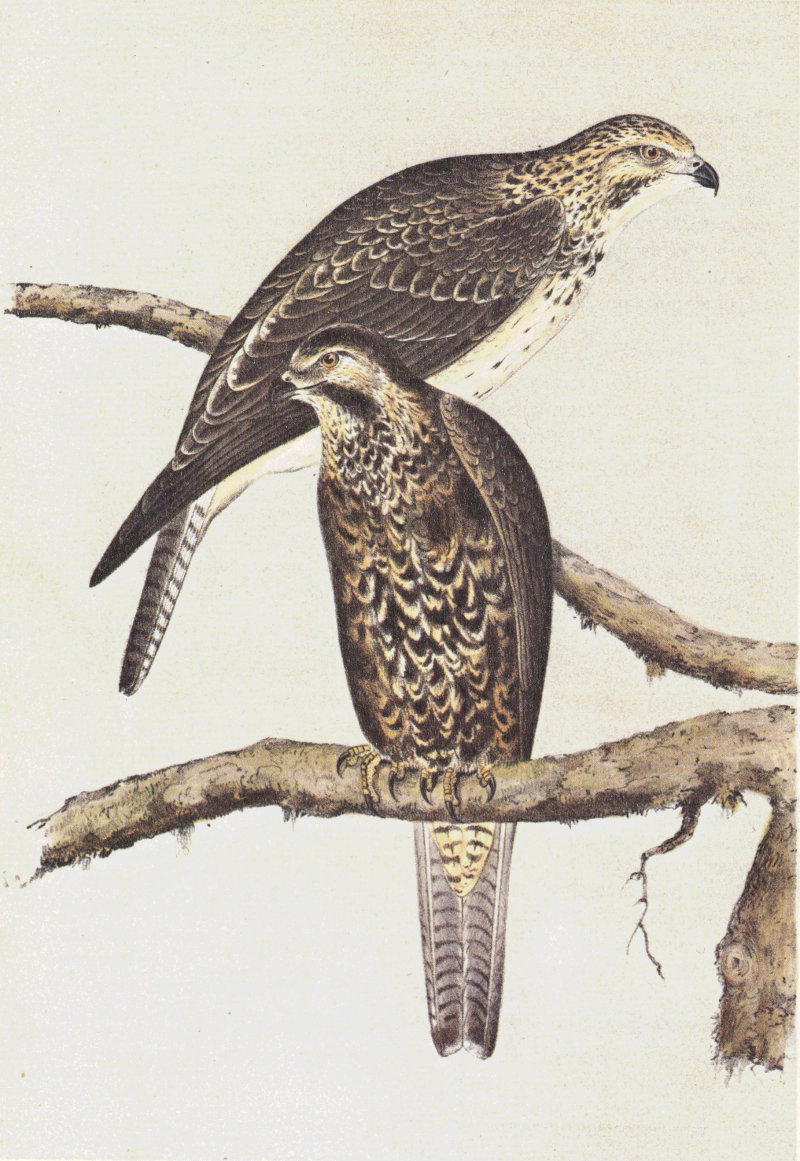
Plate 41 Baird’s Buzzard Buteo Bairdii (Hoy)
257