PTILOGONYS NITENS.—Swainson. The Black Flycatcher. PLATE XXIX.—Adult Male and Female.
Reading edition
This gracefully formed, but sombre-colored little bird was first added to the Ornithological fauna of the United States, by our valued friend, Colonel George A. McCall, Inspector General in the Army of the United States, who observed it, and obtained numerous specimens, while on a tour of duty in California, in 1852. It had previously been known as a Mexican species, having been described by Mr. Swainson, in 1838, from specimens sent from that country.
This bird belongs to a small group of Fly-catchers, containing not more than five or six species, all of which are inhabitants of either Western North America, Mexico, or the southern portion of this continent. They appear to possess the habits of true Fly-catchers, and are remarkable for their slender but active forms, in which the long and ample tail and the elongated feathers of the head, capable of being erected into a handsome crest, are generally conspicuous. The best known North American species is Ptilogonys obscurus, La Fresnaye (which is Ptilogonys Townsendii, Audubon), a bird that is now brought from the far west by nearly all collectors.
Respecting the curious little species which is the subject of our present article, we have the pleasure of laying before the reader the following notes very kindly furnished by Col. McCall.
“The first opportunity that I had for observing the manners of this bird, was afforded me in 1852, while travelling from Valle-cita to El Chino, in California. On that occasion, as I left the country bordering the desert, and began to ascend the hills, my route followed the course of a mountain brook, whose clear waters were at intervals shaded with gnarled and scrubby oaks. In approaching one of these clumps of trees, I remarked a number of dark-colored birds, which afterwards were found to belong to this species, darting upwards from the topmost branches, and after diving and pitching about in the air for a moment, returning again to the dead branches with the lively port that proved them to be engaged in the agreeable pastime of taking their insect prey. A nearer approach showed them to be light and graceful on the wing; but less swift and decided in their motions than most of the true Fly-catchers. There were about a dozen in company, and they presented a pleasing sight, as three or four together were constantly either pitching upwards to a considerable height in the air, or gliding silently back to their 170 perches. In these ærial evolutions, the bright spot on the wing, which is formed by broad patches of white on the inner webs of six or seven of the quill feathers, and is visible only when the wing is spread, gleamed conspicuously in the sunshine, and formed a fine contrast with the glossy black of the general plumage. I sat upon my horse, watching their movements for some time, and I now perceived that two of their numbers were of a dusky hue, and without the wing spot to which I have referred; but I could discover no difference in their manners or their style of flight. I, therefore, had little doubt of their being adult females; for although at that period of the year, (June 20) the young birds might have been well grown, yet there is generally a want of decided character in the unpractised flight of young birds, which betrays them to the Sportsman’s eye. In fact, these birds agreed with Swainson’s description of the female in general terms; and my only regret is that I was not able to satisfy myself by dissection whether these to which I now refer were in reality adult females, or young males in their first plumage.
“However, on my attempting to approach still nearer, these birds became alarmed, and winging their way to the hill-side, alighted on the scraggy bushes scattered among large projecting rocks, where they resumed their sport, rising lightly into the air and darting about after insects, which seemed to be abundant. I followed—but they were now on the qui vive, and, without permitting me to get within gun-shot, flew from bush to bush, as I advanced, keeping all the while in a loose irregular flock, and still pursuing their sport of fly-catching. In this way they continued to ascend the hills, until the broken character of the ground abruptly stopped my horse. Having, however, dismounted, I clambered over the rocks, and at last succeeded in killing two of them. These were alike in plumage—black, with the wing spot; and one of them, which I dissected, proved to be a male.
“As I journeyed on towards the Sierra Nevada, I met, during several days succeeding, these birds, either in small companies, or singly; and subsequently I found a few individuals between El Chino and Los Angeles; but they were invariably black, with the white wing spot. And I never on any occasion, except the one I have referred to, saw one of those clad in dusky garments, which I had supposed were females.
“The localities in which I found these birds, were either on the mountainsides, or in the timbered borders of mountain streams.
“The measurements of the fresh specimen were as follows—length, 8 inches; wing, 3½; tail, 3½.
“The figure slender—the feet rather strong.”
This bird has also been noticed by Dr. Heermann, in various parts of California, and by Dr. Henry, and Dr. Kennerly, in New Mexico. To the former gentleman, we are indebted for the following contribution, intended for our present article:
171
“This bird is seldom found in the northern part of California, though I procured both adults and young on the Consumnes river, in 1851. Since then, however, a naturalist and friend of mine residing there has not seen a single other specimen, though giving much of his attention to ornithology, and to the migratory habits of such birds as pass through that section of country.
“I was therefore surprised to meet with this species after sixty miles of travel on the Colorado desert near the Little Lagoon. It was perched on a Mesquite tree, jerking its tail almost incessantly, as do various other species of Fly-catchers, and dashing occasionally in irregular curves and angles high into the air in pursuit of insects. On approaching the Colorado, this Fly-catcher became quite abundant, as I frequently saw companies of twenty or thirty together, many of which would be on the wing at the same time, engaged at their usual employment. At Fort Yuma, this species was also met with in considerable numbers late in November, when they were migrating southward. Its note is a low, plaintive whistle. This bird undoubtedly incubates in California, as I have seen specimens which were certainly very young birds, though I have not been so fortunate as to discover its nest.”
Near Fort Webster, in New Mexico, Dr. Henry has seen this bird, though he considers it of rather rare occurrence. Dr. Kennerly noticed it in abundance during the months of February and March, on the route of Lieut. Whipple’s party, from the Big Sandy creek to the Great Colorado river.
Our plate represents the adult male and female about two-thirds of the size of life.
DESCRIPTION AND TECHNICAL OBSERVATIONS.
Genus Ptilogonys. Swainson, Zool. Jour. III. p. 164. (1827.)
Bill, moderate, wide at base, upper mandible curved towards the end, and distinctly notched; wings, moderate or rather long, first primary very short, or rudimentary; tail, long; legs and feet, moderate. General form, rather slender; head frequently with elongated crest-like feathers. Contains several species of birds, all of which are American.
Ptilogonys nitens. Swainson. Lardner’s Cab. Cy. Birds, Pt. III. p. 285. (1838.)
Form. Slender; crest-like feathers of the head much elongated; wings with the fifth and sixth quills longest and nearly equal; tail, long, graduated.
Dimensions. Total length (of skin) about 7½ inches; wing, 3¾; tail, 4 inches.
Colors. Male.—Entire plumage glossy black, with a greenish lustre, except a spot on the inner web of each primary quill, occupying about the middle third of its length, which is pure white. Bill and feet, black.
Female.—Entire plumage, except the tail, cinereous, tinged with olive on 172 the back and abdomen; superior wing coverts, and inferior tail coverts, edged and tipped with white. Quills, dark-brown—secondaries edged with white; tail, black, without lustre. Young—like the female; but in the males, with the spot on the primaries discernable, though more or less obscure.
Hab. California, New Mexico and Mexico. Spec. in Mus. Acad. Philada., and Nat. Mus., Washington city.
Obs. A remarkable resemblance exists between the bird now before us and two other species of Fly-catchers of another genus, Fluvicola comata (Licht.), and Fluvicola nigerrima (Vieill), both of which are natives of South America, and we have seen the latter also from Mexico. The three birds resemble each other in general form in a very considerable degree, and in colors are almost absolutely the same, the prevalent black of the plumage differing only in shade. Generic and specific distinctions can, however, readily be made out on comparison of specimens. Fluvicola has the bill longer and not so wide at the base and with much stronger bristles; the wings are differently constructed, the first primary being long and well developed, not short or rudimentary as in Ptilogonys. In those two species of Fluvicola, which differ from each other materially only in size, the white spot is more at the base of the wing feathers than in Ptilogonys nitens, in which it occupies the middle third of the primaries. Fluvicola comata is the same as Blechropus cristatus, Swainson, in Naturalist’s Library, Flycatchers, p. 99, plate 7. No other species of Ptilogonys is black.
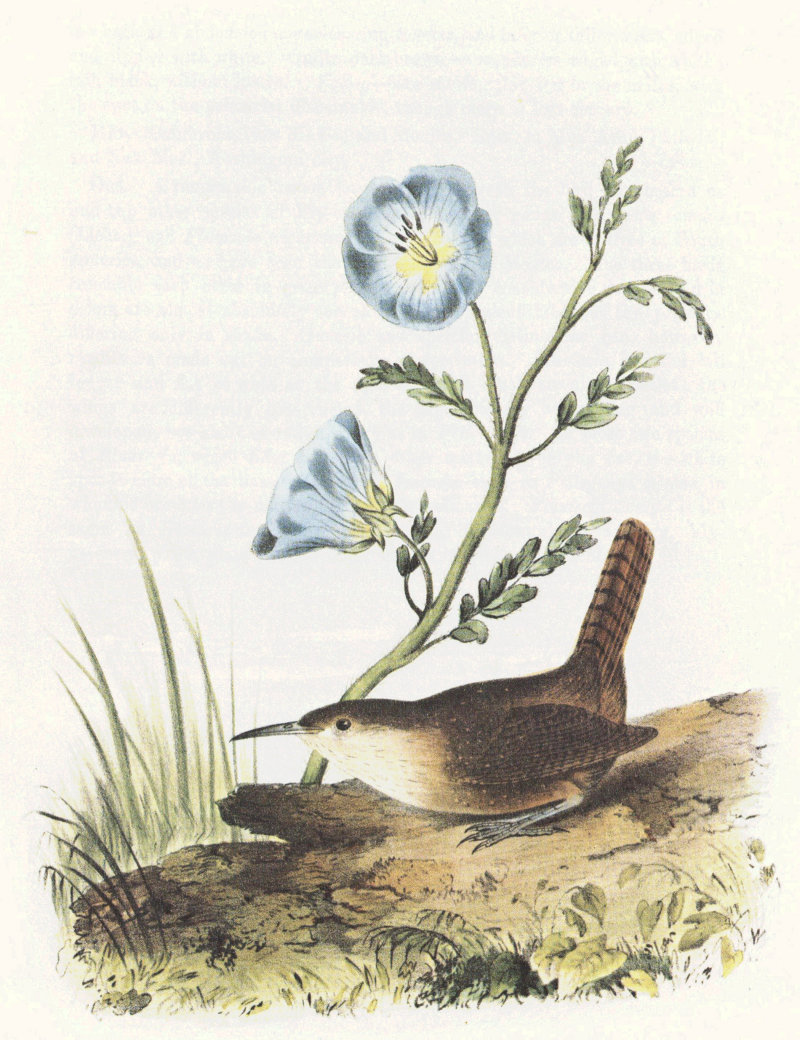
Plate 30 The Mexican Wren Troglodytes mexicanus (Swainson)
173