BUTEO INSIGNATUS.—(Cassin.) The Brown Buzzard. PLATE XXXI.—Adult Male and Young Female.
Reading edition
One of the most remarkable facts in the geographical distribution of the birds of western and northwestern North America is, that many species extend their range in northern latitudes almost or quite to the shores of the Atlantic ocean, while not a single instance is on record of the same species having been observed in either of the middle or southern States of the Union. The Magpie, which on the Pacific is commonly found southwardly as far as Mexico, has been noticed by Dr. Hoy, at Racine, in the State of Wisconsin. The Lark Bunting (Emberiza grammaca), another western bird, has also been ascertained by the same gentleman to be abundant in the State just mentioned; and the only specimen that we have ever seen of the Stone Chat of America (Saxicola œnanthoides), a bird discovered some years since on the coast of Oregon, was obtained in the vicinity of Halifax, Nova Scotia.
Many instances tending to demonstrate this extensive and remarkable migration might be produced, but we have unfortunately to acknowledge ourselves unable to offer a theory or even hypothesis attempting to account for it, and must regard the facts as remaining among many in natural history with which naturalists are for the present under the necessity of resting, without inference or application to any established general principles. Important results will yet reward American naturalists who may engage in this interesting field of scientific research.
Instinct is little or nothing more than inherited memory. But we are by no means satisfied that any definition which we have yet met with of the faculty known by the latter name is strictly correct. Whatever memory is, that inherited we are disposed to regard as instinct. And that the impressions on this faculty are transmissable in animals from parents to their offspring, we regard the migration of young birds, particularly those of a first brood, when the parents remain to attend to a second, as clearly substantiating.
The bird now before the reader is a species that appears to perform the extended northward migration to which we have alluded, and is one of the most remarkable instances that has come to our knowledge. It was first described by us from a specimen obtained in the vicinity of Montreal, Canada, and the only instance of its having been observed since, has been by Dr. Heermann, in California; though if ever occurring in the middle or southern States on the Atlantic, in the same latitude as on the Pacific, it has escaped the researches of all previous naturalists or travellers.
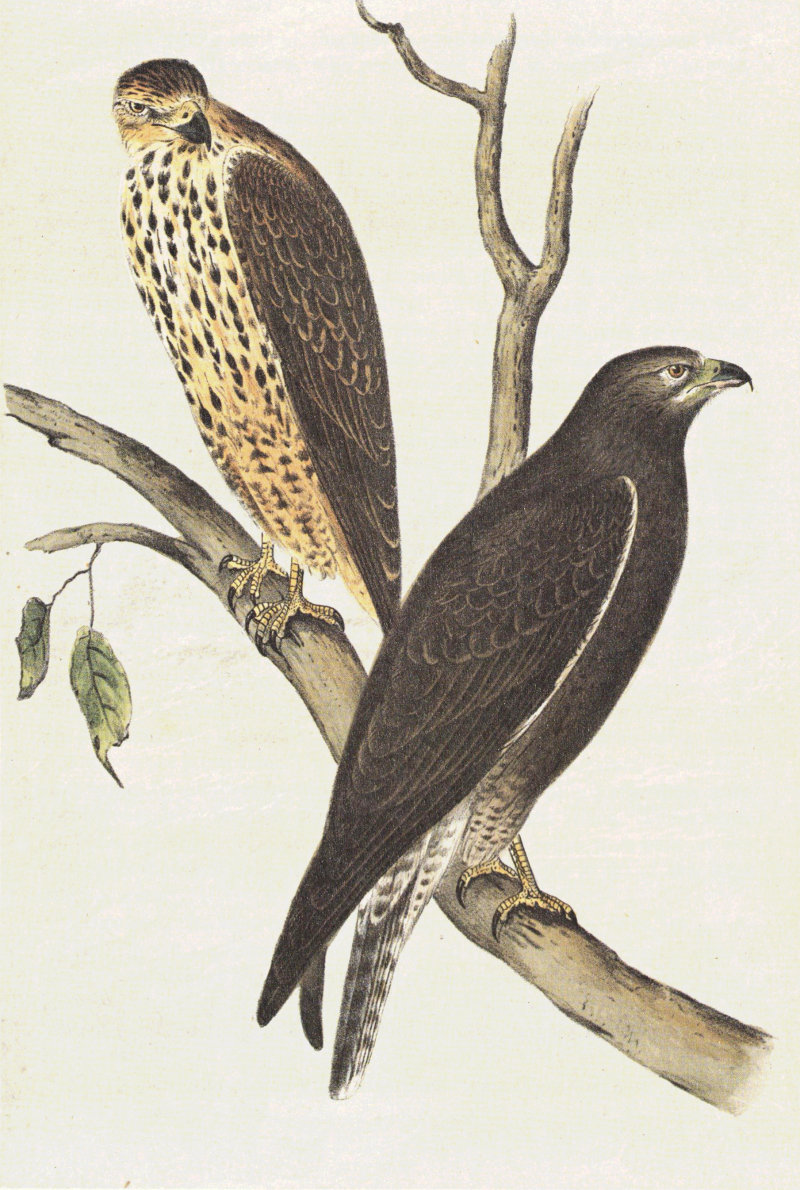
Plate 31 The Brown Hawk Buteo insignatus (Cassin)
199
Adult and young birds of this species were observed, and specimens were obtained by Dr. Heermann, who ascertained that it reared its young in California.
For an opportunity to examine the specimen originally described by us in the present volume (p. 102), we are indebted to our lamented friend and correspondent, M. McCulloch, M. D., a naturalist of extensive acquirements, and an eminent physician, late of Montreal, but, we much regret to add, now recently deceased, and to John Pangman, Esq., of Grace Hall, in the vicinity of that city. Mr. Pangman had the kindness to interest himself, in conjunction with Dr. McCulloch, so much as to obtain the loan of the specimen from the Natural History Society of Montreal, in the museum of which it was deposited, and to bring it for our inspection to Philadelphia, and we shall not soon forget his evident and enlightened gratification, nor our own great pleasure, when we assured him that it was a bird hitherto unknown as an inhabitant of North America, and, as we then supposed, very probably an undescribed species, which we subsequently ascertained to be the case.
This is one of the most remarkable of the rapacious birds which have been recently added to the ornithological fauna of the United States. It differs entirely in color from any previously-known American species, unless it may be supposed to approximate in that character to the little-known Harlan’s Buzzard of Audubon. It bears also some distant resemblance to one stage of plumage of the Black Hawk.
The only information relative to the habits of this bird that we have in our power at present to lay before the reader, is the following from the Journal of Dr. Heermann:
“I first remarked this species at the crossing of Graysonville ferry, on the San Joaquim river, California, and continued to meet with it occasionally until we had crossed Kern river. Owing to the lateness of the season, I was able to ascertain but little respecting its propagation; the only nests which were found having been forsaken some time previously by the young. These nests, composed externally of coarse sticks, and lined with roots, were built in the topmost branches of oaks, which grow abundantly on the banks of the large water-courses.
“This bird, like the rest of its genus, appears sluggish in its habits, perching for hours in a quiescent state on some tall tree, and permitting the hunter to approach without showing any signs of fear. This apparent stolidity may, however, be owing to the fact that it is seldom molested, and has not yet learned to mistrust a gun, as do the birds of prey in more settled portions of the country.”
The specimens brought by Dr. Heermann are now in the national collection at Washington city.
200
DESCRIPTION AND TECHNICAL OBSERVATIONS.
Genus Buteo. Cuvier, Regne Animal, I., p. 323. (1817.)
Buteo insignatus. Cassin, Birds of California and Texas, I., p. 102. (1854.)
Form. Short and robust; wing long; third quill longest, secondaries emarginate at their tips; quills wide; tail moderate or rather short, somewhat rounded; under coverts of the tail long; tarsi rather short, feathered in front below the joints, with the tibiæ naked behind, and having in front about ten transverse scales; claws rather long, moderately curved; bill short; upper mandible slightly festooned.
Dimensions. Adult male.—Total length of skin, 17 inches; wing, 14½; tail, 7½ inches.
Colors. Under coverts of the wing and tail white, the former striped longitudinally with pale ferruginous, each feather having a central dark line, and the latter transversely with reddish-brown; edges of wings at the shoulders nearly pure white; plumage of the tibiæ rufous, mixed with brown; throat and a few feathers of the forehead white, each feather having a line of dark brown, nearly black; entire other plumage above and below dark brown, nearly every feather having a darker or nearly black central line; quills above brown, with a slight purple lustre, beneath pale cinerous, with their shafts white, and with irregular and indistinct transverse bands of white; tail above dark brown, with an ashy or hoary tinge, and having about ten transverse bands of a darker shade of the same color; beneath nearly white, with conspicuous transverse bands of brown, the widest of which is subterminal; tip paler; bill dark; cere, tarsi, and feet yellow. Adult male.
Young. Entire upper plumage dark brown; on the back of the head and neck white at base, and edged with reddish; scapulars and greater coverts of the wing with large partially-concealed rufous spots; under parts reddish-white, every feather with a large terminal oblong spot of dark brown, and on the abdomen and tibiæ with numerous transverse bands of the same color; under tail coverts very pale reddish-white, with a few transverse spots and lines; inferior coverts of the wing pale reddish-white, with large brown spots.
Hab. Canada and California. Spec. in Nat. Mus., Washington city.
Obs. There is no other North American Buzzard with which there is any probability of the present bird being confounded by the student, on account of the peculiarity of its colors. In this character it bears a resemblance to some stages of plumage of Circus hudsonius, or to the European Circus æruginosus. It also is somewhat similar in colors, especially those of the young bird, to Buteo pennsylvanicus, but is much larger, and readily distinguished.
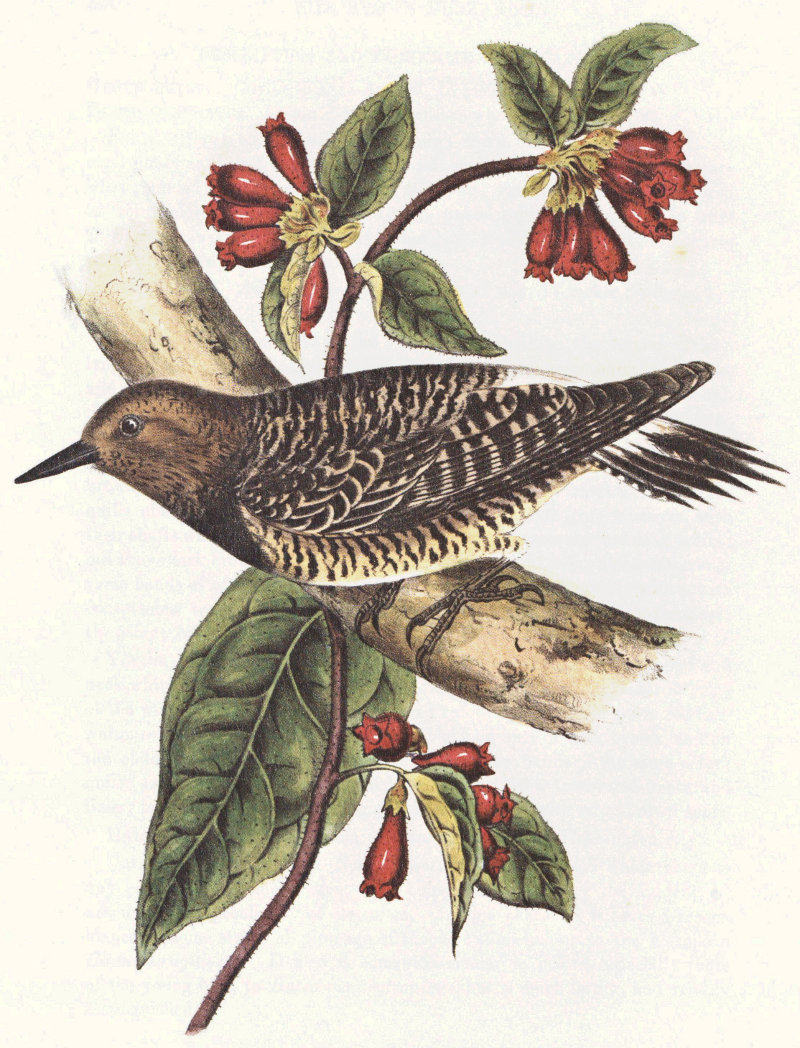
Plate 32 The Black-breasted Woodpecker Melanerpes thyroideus (Cassin)
201