PARUS SEPTENTRIONALIS.—Harris. The Long-tailed Chickadee. PLATE XIV.—Male Adult.
Reading edition
The form and general appearance of this little bird resemble those of its congeners, the Black-capped Chickadee (P. atricapillus) and the Carolina Chickadee (P. carolinensis). It is, however, larger than either of those species, and presents other characters which not only fully demonstrate it to be entitled to specific distinction, but, very probably, to possess features in its history different in some respects from any of its relatives.
Its bill is longer and more strongly developed, indicating perhaps a different race of insects as its food. Its tail is unusually long, and its entire organization stronger and larger than either of the species above mentioned, with the larger of which (P. atricapillus), it has erroneously been considered identical by some European authors.
This little bird is strictly a western species, and for its discovery and the first description of it, we are indebted to Edward Harris, Esq., of New Jersey, well known as one of the most eminent cultivators of Zoological science in America. It was discovered by Mr. Harris during a visit to the Upper Missouri and Yellow Stone rivers, in company with the late Mr. Audubon, and which was the last journey ever performed by the latter distinguished gentleman. The description, with some valuable observations on other species of the genus Parus, was first published in the Proceedings of the Philadelphia Academy, Vol. II. p. 300, (Dec. 1845,) from which we make the following extract:
“A single specimen of this bird was procured on the 26th of July on the Yellow Stone river, about thirty miles above its junction with the Missouri. It is evidently a bird of the season, with immature plumage, to which may be attributed the dullness of the black on the head and throat. On comparison of this bird with P. carolinensis and P. atricapillus, it will be perceived that, beginning with the smallest bird, the parts which are black, decrease, and the white parts increase in size and intensity, in ascending. In septentrionalis the outer web of the lateral tail-feather is entirely white, except a small portion at the base, where there is a slight tinge of grey next the shaft; and the quills, secondaries and all the tail-feathers are margined more broadly and with a purer white than in the other species.
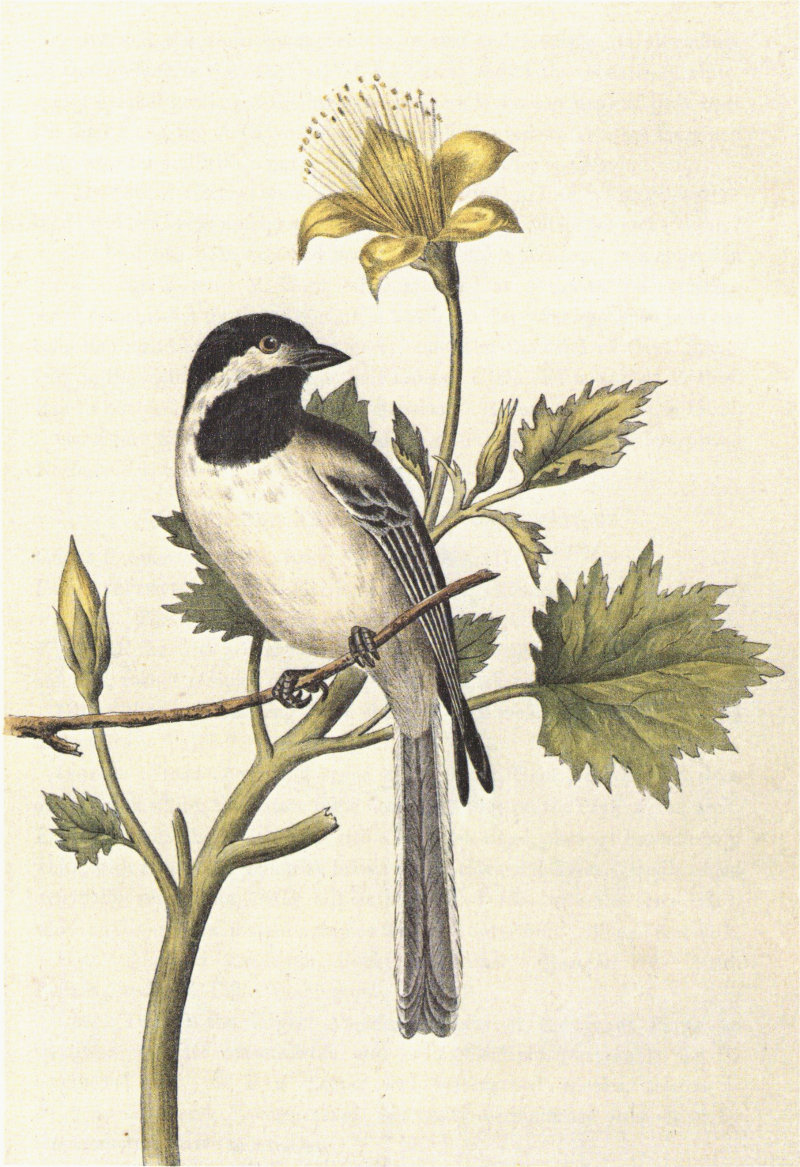
Plate 14 The Northern Chickadee Parus septentrionalis (Harris)
81
“The note of this bird is similar to that of P. atricapillus, but its voice more liquid and less harsh and querulous in the utterance. Bill longer and stouter.”
This bird has been received at the Philadelphia Academy in a collection made by Mr. Edward M. Kern, while attached as Artist to the exploring party commanded by Col. Frémont in 1846. A very fine specimen is in the collection made by the surveying party under the command of Capt. Stansbury in the vicinity of the Great Salt Lake of Utah, and is noticed in Prof. Baird’s Zoological appendix to Capt. Stansbury’s Report, p. 316. (June 1852.)
Our figure is of the size of life, and the plant represented is Microsperma Bartonioides, a native of Western America.
DESCRIPTION AND TECHNICAL OBSERVATIONS.
Genus Parus. Linnæus, Syst. Nat. I. p. 340, (1766.)
Parus septentrionalis. Harris, Proc. Acad. Philada., II. p. 300, (1845.)
Form. The largest species of typical Parus yet discovered in America. Wing with the fifth primary longest; tail, long, somewhat fan-shaped; tarsi and toes, rather strong; claws, large, flattened, sharp.
Dimensions. Total length (of skins) 5½ to 6 inches; wing, 2¾; tail, 2¾ to 3 inches.
Colors. Head above and space on the throat, black; cheeks and sides of the neck white, the latter color nearly meeting on the back of the neck. Entire plumage above cinereous with a brownish tinge, plumage beneath only white, with touches of yellowish brown on the sides and flanks. Quills edged externally with white, outer tail-feathers edged also with the same color, which on the external feather occupies the entire outer web. Bill and feet dark.
Hab. Missouri and Utah, Rocky mountains. Spec. in Mus. Acad. Philada., and Nat. Coll. Washington.
Obs. This is the largest American species of the genus Parus (as restricted by late naturalists), and is particularly remarkable for its lengthened tail. It is a distinct and well-marked species, related to P. atricapillus and P. carolinensis, but easily distinguished from either by the characters above mentioned.
82