DIOMEDEA NIGRIPES.—Audubon. The Black-footed Albatross. PLATE XXXV. Adult Male.
Reading edition
Those birds whose homes are the sea-coasts and islands, and whose lives are spent in gleaning a subsistence amongst the billows or by the shores of the ocean, have always been objects of interest both to the naturalist and the general observer. Idly reposing on the rocky crag or the sand-bank, or boldly sweeping the surface of the waters alike in the calm and amidst the fury of the tempest, few having the opportunity have failed to mark the sea-birds as a feature in the wild scenery peculiar to the localities for which they are fitted by nature, and perhaps to associate them with the adventurous character of our useful fellow-men whose profession it is, in the beautiful language of the liturgy, to “go down upon the deep.”
The large majority of the many birds that derive their subsistence from the productions of the Ocean, live habitually on its shores, or venture only short and easily-regainable distances from the land. This is the case with the numerous genera comprising the Ducks, Swans, and Geese, as well as the Pelicans, Cormorants, Penguins, and others. These, for the greater part, frequent the margins of the bays and estuaries, and many of them are almost as much birds of the land as of the sea. The Penguins in fact having but rudiments of wings, and incapable of flight, are necessarily restricted, though performing very remarkable migrations by swimming. These extraordinary birds are peculiar to the southern hemisphere, and have been met with amongst the ice and snow of the highest latitudes which navigators have succeeded in reaching within the Antarctic circle.
The bird which is the subject of our present article, is one of a group of species which, possessing great powers of flight and swimming with facility, do not content themselves with the vicinity of the coast, but venture boldly out to sea. The largest and best known species, the Wandering Albatross, has been observed by voyagers at a distance of two thousand miles or upwards from land; and it is even supposed that it performs a flight across the Atlantic from Cape Horn, or about its latitude, to the Cape of Good Hope. The smaller species, of which the present is one, do not venture on so long flights, but several voyagers have recorded their having been seen at two to five hundred miles out at sea.
On the sea-coast of America, on the Atlantic, the Albatrosses are found inhabiting only a portion of the shores of the southern division of this continent north of Cape Horn, but on the Pacific they are abundant throughout the extent of the continent.
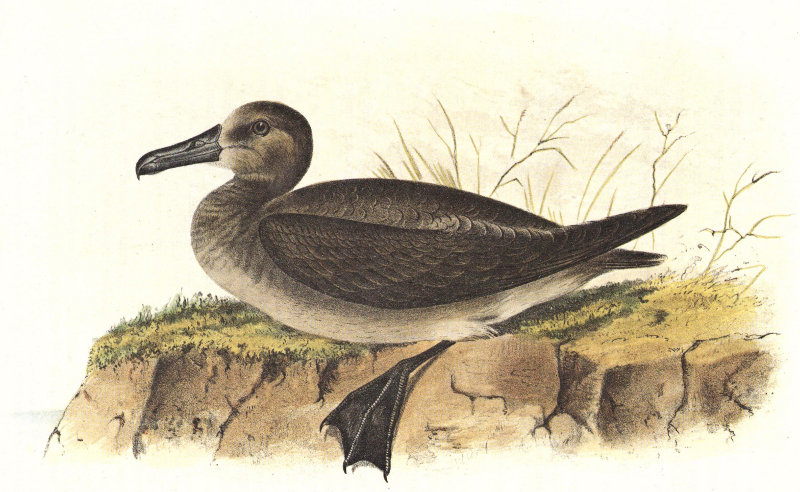
Plate 35 The black-footed Albatross Diomedes nigripes (Audubon)
211
The species that we present to the reader in the present plate, was discovered on the coast of California by the late John K. Townsend, M. D., and was first brought to notice by Mr. Audubon, in his Ornithological Biography, V., p. 327, but the specimen appears to have been accompanied by no notice of its history.
Since the period of its discovery, this bird has been again observed only by Dr. Heermann, who has kindly furnished the following note from his Journal:—
“The Black-footed Albatross abounds on the coast of California and southward, as do several other species of this genus. It is commonly to be seen skimming over the waves in its flight, and following in the wake of vessels, to pick up the refuse scraps thrown overboard. With the voracity characteristic of these birds, it seizes with little discrimination on whatever is thrown into the water, and of this propensity advantage may be taken by baiting a hook, by which, when seized, the bird is easily secured. From the stern-ports of our ship, during a voyage by sea to California, I have thus captured eight or ten specimens of this and other species of this genus in a single morning. All the species much resemble each other in habits, so far as my observations extend.
“On the coast of California, I observed a White Albatross much smaller than the large Diomedea exulans, but not having succeeded in procuring it, I cannot designate the species.”
The small white species alluded to by Dr. Heermann, is probably new to the ornithology of North America. Of the species known as inhabitants, we may say of the Pacific ocean, several have not heretofore been noticed by naturalists on the shores of the United States.
DESCRIPTION AND TECHNICAL OBSERVATIONS.
Genus Diomedea. Linnæus, Syst. Nat. I., p. 214. (1766.)
Size large; general form short and compact; wings very long; bill straight, much compressed, hooked at the tip; both mandibles usually with lateral grooves; apertures of the nostrils tubular; first primary longest; secondaries short; tail short; legs moderate; feet large.
Diomedea nigripes. Audubon, Ornith. Biog. V., p. 327. (1839.)
Form. Medium sized or rather small for a bird of this genus; bill straight, hooked at the tip; upper mandible expanded on the forehead, its basal edge forming a crescent very distinct from the frontal feathers; tubular nostrils prominent; wing long; first quill longest; tail short, nearly square at the tip; tarsi short; feet large; tibia naked above the joint with the tarsus.
Dimensions. Total length of skin, 26 inches; wing, 19; tail, 5 inches.
Colors. Plumage at the base of the bill pale brownish-white, of which color there is also a spot behind and under the eye; entire other plumage 212 above and below sooty brown, darkest on the back and wings, lighter on the under parts, and having a gray tinge on the breast; bill dark; tarsi and feet black.
Hab. Western Coast of North America. Spec. in Mus. Acad., Philada.
Obs. This species much resembles in colors and general appearance the Dusky Albatross (Diomedea fuliginosa, Gm., which is D. fusca, Aud.), but may at once be distinguished by the color of the feet, which in the present bird are black, and in the other yellow. In D. fuliginosa, the tail is much longer and wedge-shaped, and the upper mandible extends in a point into the plumage of the head in front, instead of being as above described in the species now before us.
It is a species apparently peculiar to the western coast of America; but as illustrative of the very extensive range of these birds, we may mention that several species, which are common on the Pacific coast of this continent, are also met with on the shores of Australia. The Great Wandering Albatross, the Dusky Albatross, and the Yellow-nosed Albatross (D. exulans fuliginosa and chlorhynchus), are given as birds of that continent in Mr. Gould’s magnificent work, “The Birds of Australia,” and are now well known to be inhabitants of the western shores of the continent of America.
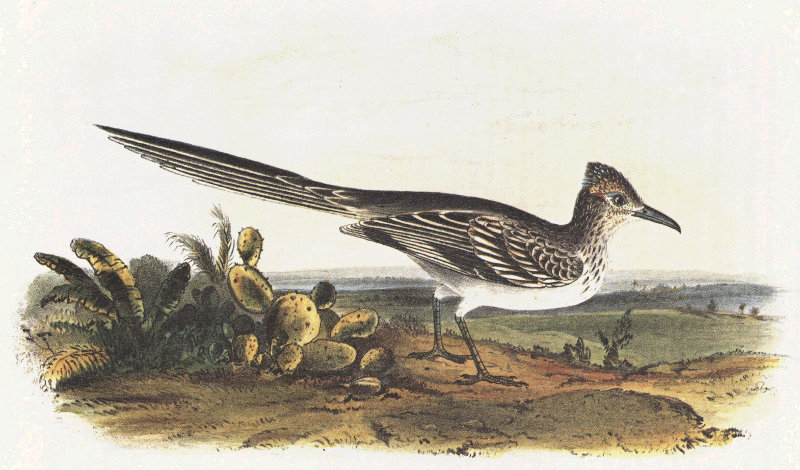
Plate 36 The Ground Cuckoo Geococcyx mexicanus (Gmelin)
213