BERNICLA NIGRICANS.—(Lawrence.) The Black Brant. PLATE X.—Adult Male.
Reading edition
This is a very remarkable and distinct species of Brant, first noticed by our esteemed friend Mr. George N. Lawrence, an Ornithologist of great ability and accuracy, of the city of New York. It was described by him in a paper read before the Lyceum of Natural History of that city, and published in its Annals, IV. p. 171, (1846.)
Mr. Lawrence states in the paper alluded to: “I have taken the above description and figure from an adult female, procured at Egg Harbour, N. J., in January. Since then two others have been obtained at the same place, one of which I have in my possession. On dissection it proved to be a male. It agrees in markings with the female, but is evidently a younger bird, being somewhat lighter in the colour of its plumage. From this, I infer, they become darker by age. It is a little larger than the female, the bill being also stouter, measuring seven-eighths of an inch high at the base.
“When on a shooting excursion some years since at Egg Harbour, I noticed a bird flying at some distance from us, which our gunner said was a Black Brant. This was the first intimation I had of such a bird. Upon further inquiry, he informed me that he had seen them occasionally, but that they were not common. I have learned from Mr. P. Brasier, who has passed much time at that place, that, speaking to the gunners about them, they said they were well known by the name of Black Brant, and one of them mentioned having once seen a flock of five or six together.
“From these facts it appears to be known to gunners, but has heretofore escaped the notice of Ornithologists. With all my inquiries I have not been able to procure a specimen before this winter. I think it a good and well marked species.”
We have had the pleasure of seeing the specimen described by Mr. Lawrence, and entirely coincide with him in his conclusion. It is precisely similar to others that have come under our notice, and all presenting the same peculiar specific characters.
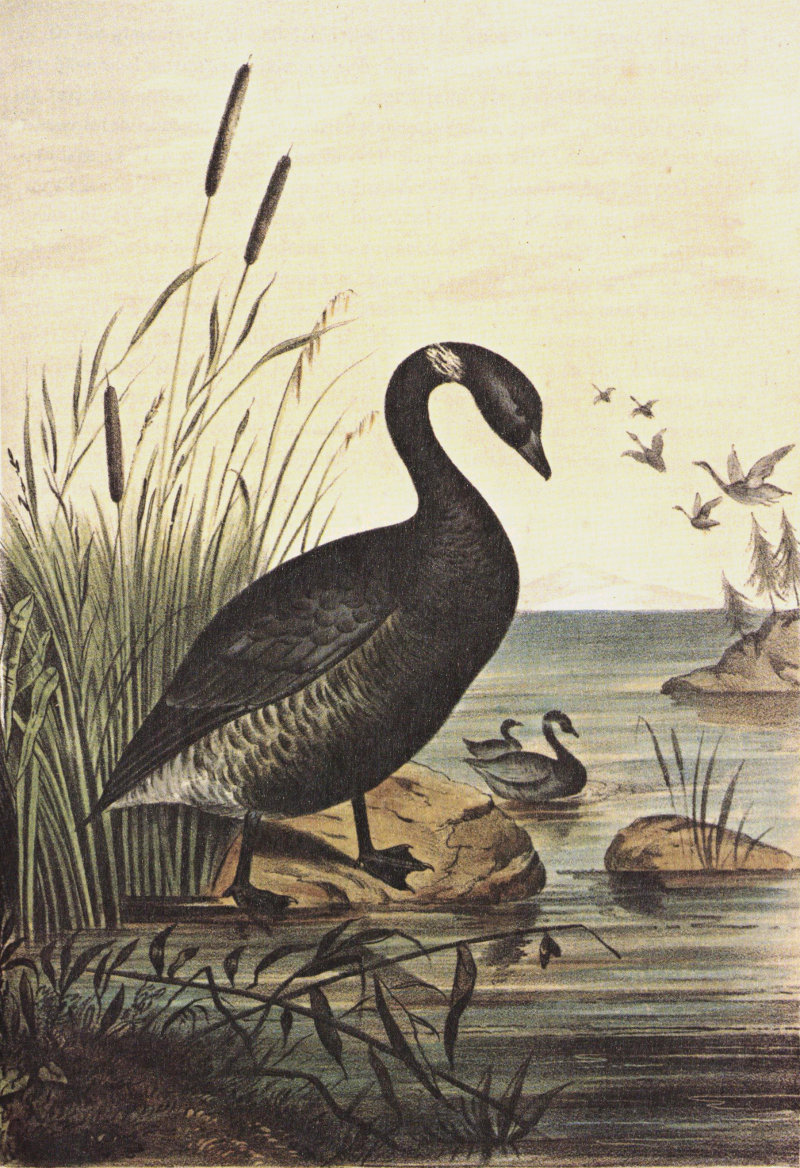
Plate 10 The Black Brant Bernicla migricans (Lawrence)
53
To the gunners of Philadelphia this bird is known by the same name, and we have seen several specimens which have been shot in Delaware Bay, and at various points on the sea-coast. Our friend Mr. John Krider, Gunsmith, whose establishment is a favourite place of resort of the Ornithologists and gunners of this city, and who is well acquainted with American birds, and very successful in obtaining specimens of rare species, has had several specimens of this Brant brought to him within the last two or three years. It must, however, be considered as a species of rather unusual occurrence on the Atlantic coast, but perhaps not more so than the Snow Goose, and others which are well known. As is the case with the birds just mentioned, it is probable, too, that the migration of this Brant does not commonly reach so far southward as the latitude of either of the large cities on the Atlantic.
Several species of Geese, which appear to be unknown to Naturalists, have been noticed by travellers in various parts of North America, but especially in the northern and Arctic regions. Of these we shall give an account, somewhat in detail in a succeeding article; at present, we are acquainted with one allusion only, which we think it not improbable has reference to the species now before us. It is in Sir John Richardson’s “Arctic Searching Expedition,” a journal of a Boat voyage through Rupert’s land and the Arctic Sea, in search of the discovery ships under command of Sir John Franklin, London, 1851, New York, 1852. In citing an account of the valley of the Yukon river, in about lat. 66° north, long. 147° west, contained in a letter to him from Mr. Murray, a resident in that country, the following statements occur (American edition, p. 305): “White Geese (Snow Geese, Chen hyperboreus) are also passengers here; and there are likewise Black Geese, which I presume you have never seen. A few of them pass down Peel’s River, but they are more abundant on the Yukon. They are very handsome birds, considerably smaller than the White Geese, and have a dark brown or brownish black colour, with a white ring round the neck, the head and bill having the shape of that of the Bustard (the Canada Goose, Anser Canadensis). The Black Geese are the least numerous, and the latest that arrive here. They fly in large flocks with remarkable velocity, and generally pass on without remaining as the others do, some days to feed. When they alight, it is always in the water; and if they wish to land, they swim ashore. They are very fat, and their flesh has an oily and rather disagreeable taste.
“Bustards, Laughing Geese, Ducks, and large Gulls, make their appearance here from the 27th to the 29th of April; Snow Geese and Black Geese about the 15th or 16th of May, when the other kinds become plentiful. They have mostly passed by the end of the month, though some, especially the Bustards, are seen in June. The White Geese and Black Geese breed only on 54 the shores of the Arctic Sea. They return in September, and early in October, flying high, and seldom halting.”
Sir John Richardson seems inclined to the opinion that the common Brant is here alluded to; which, however, we cannot consider so probable as that it is our present bird. So well acquainted with the water birds of Europe and America as he is, it could scarcely have been supposed by Mr. Murray that he had never seen so abundant a species as the common Brant. Besides, the white ring round the neck, as described, is exactly applicable to the Black Brant now before us, and its uniting on the front of the neck forms a peculiar character sufficient to distinguish it from any other species.
DESCRIPTION AND TECHNICAL OBSERVATIONS.
Genus Bernicla. Stephens, Continuation of Shaw’s Zoology, XII. p. 45, (1824.)
Bill, small, shorter than the head, upper mandible elevated at the base, tip with a broad nail, margins of both mandibles finely serrated. Wings, long, pointed; tail, very short, rounded; tarsi, moderate; toes, rather short. Probably contains six or eight species, inhabiting various parts of the world.
Bernicla nigricans. (Lawrence.)
Anser nigricans. Lawrence, Annals N. Y. Lyceum, IV. p. 171, (1846.)
Form. Bill and head, and feet, rather small; wings, with the second quill longest; tail, short, composed of sixteen feathers; coverts, both above and below, long, reaching almost to the end of the tail.
Dimensions, according to Mr. Lawrence. Total length 22½ inches, alar extent 44, bill along the ridge 1³/₁₆, from gap 1⅜, lower mandible 1¼, length of tarsus 2¼, middle toe 2, outer 1⅞, inner 1½, weight 3 lbs.
Total length of skin from Delaware Bay, from tip of bill to end of tail about 22 inches, wing 13¾, tail about 5 inches.
Colours. Male. Neck almost completely encircled by a band of white, broadest immediately in front, and narrowest behind. Head, neck, breast and abdomen, glossy black, having on the latter a brownish tinge. Upper parts of the body umber brown, nearly black on the rump, some of the feathers with paler margins; quills and tail feathers brownish black. Feathers on the sides and flanks tipped with white; upper and under tail coverts, and ventral region, white. Bill and feet dark, nearly black.
Hab. Atlantic coast, New Jersey. Spec. in Mus. Acad., Philada.
Obs. The Black Brant is nearly related to the common Brant (B. brenta), 55 but can readily be distinguished by the uniform black colour of the inferior parts of the body, and the ring on the neck uninterrupted in front, and not separated into two white patches on the sides of the neck, as in the common species. It appears also to bear some resemblance to the Bernicla glaucogastra, Brehm. Handb. Vogel Deutschlands, p. 849 (Ilmenau, 1831), but may be distinguished from it also by the characters just mentioned.
56