EMBERIZA BILINEATA.—Cassin. The Black-throated Finch. PLATE XXIII.—Adult Male.
Reading edition
This curious little Finch was discovered in Texas, in 1849, by Mr. John W. Audubon, a son of the celebrated ornithologist, and himself a naturalist and zoological draughtsman of high merit and accomplishments.
It appears to be extensively diffused throughout Mexico, Texas, and New Mexico, and in the former country is a common species. In the States last mentioned, it has been noticed by nearly all the naturalists who have visited them; though, as a bird of the United States, little beyond the fact of its existence in those regions has been placed on record, or has otherwise come to our knowledge.
In Mexico, this bird was found by Lieut. Couch to be numerous in some parts of Tamaulipas, Nueva Leon, Coahuila, and other States on the Rio Grande, immediately south and west of the limits of the territory of the United States. For our present article, this gentleman has very kindly furnished the following interesting communication, for which and other similar favors we beg to tender our grateful acknowledgments:—
“This bird was first seen at Santa Rosalio, and specimens were obtained. Though a month had been spent at Brownsville, in Texas, only about twenty miles distant, it had not been observed. At Charco Escondido, forty miles farther in the interior, it was very plentiful, and early in March, seemed to have already reared a breed of young; one specimen procured, having the appearance of being a young bird but a few weeks old.
“Its favourite home appears to be the scattered Mesquite or Acacias that sprinkle the plains east of the Sierra Madre. Like many other birds of its family, it does not seek the shade during the warmer hours of mid-day, but may always be found chirping and hopping from one bush to another, apparently as much for the pleasure of enjoying the society of its fellows as to seek for food.
“After striking south from Cadorcita, this little bird suddenly disappeared, much to my regret, as I had become so accustomed to seeing it constantly during my daily marches, that I almost regarded it as a travelling companion. But after nearly a month’s absence, I again recognized it among some flowering Leguminosa, between Pesqueria and Rinconada. I afterwards ascertained that it would thus be entirely absent from districts of considerable extent, but always reappeared again throughout my journey, and was always welcome.
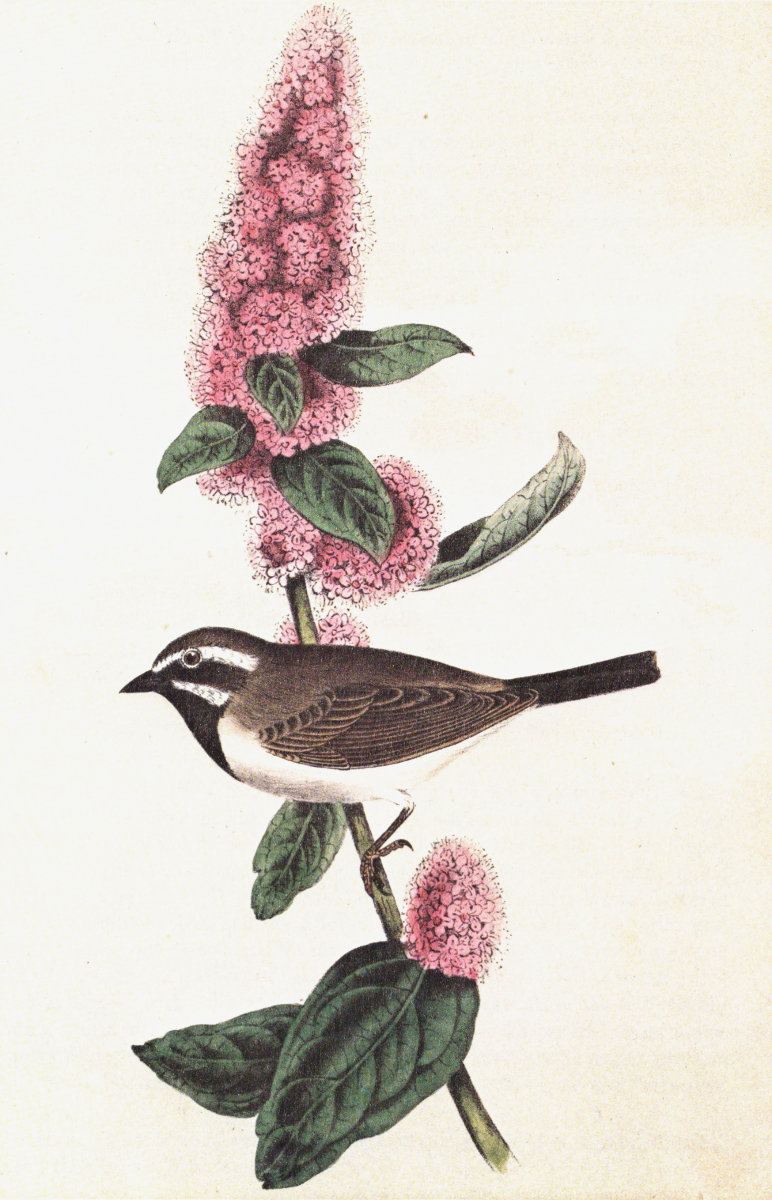
Plate 23 The Black-throated Finch Emberiza bilneata (Cassin)
151
“The usual note of this bird at the season in which I saw it, is a simple chirp; but one day, having halted during a norther, in the State of Tamaulipas, I amused myself watching a party of adult and young birds of this species, in the neighboring bushes. One gay little black-throated fellow, who was probably the father, showed unusual uneasiness at my presence, which fact led me particularly to observe him. After carefully reconnoitering and apparently satisfying himself that there was no immediate danger, he flew off a few yards to the top of a yellow mimosa then in bloom, and, regardless of the bitter wind still blowing, gave utterance to a strain of sprightly and sweet notes, that would have compared favorably with those of many a more famed songster of the feathered race. This was the only time that I ever heard this species indulge in anything more than a single chirp.”
This little Finch was observed at various localities in Texas by gentlemen attached to the commission for running the boundary line between the United States and Mexico.
The figure in our plate, which is that of an adult male from Lieut. Couch’s collection, is about two-thirds of the size of life.
The plant represented is Spirea Douglasii, a native of western North America.
DESCRIPTION AND TECHNICAL OBSERVATIONS.
Genus Emberiza. Linnæus, Syst. Nat., I. p. 308. (1766.)
Emberiza bilineata. Cassin, Proc. Acad., Philada., V. p. 104. (Oct. 1850.)
Form. Rather short and compact; fourth quill slightly longest, but nearly equalled by the third and fifth; legs rather long and robust; tail moderate.
Dimensions. Total length, about 5⅛ inches; wing, 2½; expanse from tip to tip, 8; tail, 2⅜ inches.
Colors. Adult.—Superciliary stripe over the eye, and another from the corner of the lower mandible, white. Large space on the throat and neck before black, which is also the color of the lores. Cheeks and entire upper parts brownish-cinereous, darker, and tinged with olive on the back; quills hair-brown, with nearly white external edgings; tail feathers brownish-black, the two central palest, and the external feather, with its outer web, white, and with a large spot of white on its inner web, near the tip,—in some specimens the two outer tail feathers are largely tipped with white. Entire under parts white, tinged with ashy and olive, especially on the sides and flanks; bill dark bluish or horn color; feet dark. Young.—Throat and other under parts white, with some longitudinal stripes of brownish-black; upper parts as in adult, but more tinged with brown; wing-coverts edged with brownish-white.
Hab. New Mexico and Texas; Mexico. Spec. in Mus. Acad., Philada., and Nat. Mus., Washington city.
152
Obs. This Finch resembles no other species known to us, in such a degree as would render it liable to be confounded with it. It may be easily recognised when adult by its black throat, bordered on each side by a conspicuous white stripe, and having also another equally conspicuous and well-defined stripe over the eye. In the young there is no vestige of the black throat, that part being of a uniform color with the under parts of the body, but bears a strong general resemblance to the adult. It is related to the group designated Euspiza by authors, though it is probably the type of a distinct subdivision.
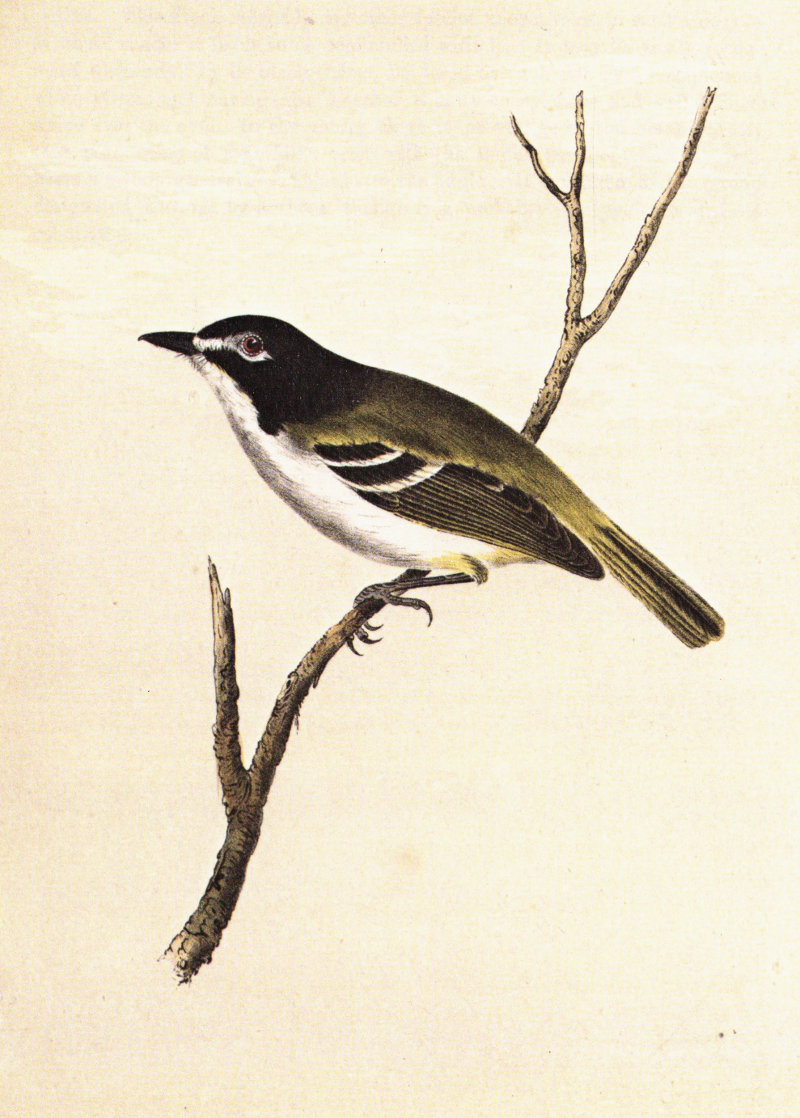
Plate 24 The Black-headed Vireo Vireo atricapillus (Woodhouse)
153