AMMODROMUS ROSTRATUS.—(Cassin.) The Long-billed Swamp Sparrow. PLATE XXXVIII. Adult Male.
Reading edition
Of this bird we can give but a very imperfect history. It is one of a group of Sparrows, of which other species inhabit North America, characterized in some measure like the present, by the length and large size of their bills, and their partiality for the vicinity of salt water. Two species, the Sea-side Finch, and the Sharp-tailed Finch (Ammodromus maritimus and caudacutus), are of frequent occurrence on the shores of the Atlantic, almost throughout the extent of the coast of the temperate regions of North America,—and in New Jersey may be met with in the summer season in considerable numbers, wherever there are salt marshes, or that description of vegetation peculiar to the shores of the ocean, or within reach of its tides. In those localities, frequently of difficult access, these birds rear their young in comparative safety, subsisting on seeds and insects, and seldom attracting attention. They may occasionally be seen, too, on the bare sands of the beach, searching for small marine animals thrown up by the waves.
The present bird is a representative of this group on the shores of the Pacific, and from the notice by its discoverer, which we shall give directly, it appears to be very similar in its habits. It was first observed by Dr. Heermann, near San Diego, California, during his first visit to that country, and has since that time been again noticed only by him. Specimens in excellent plumage and preservation, from his collections, are in the National Museum, Washington city, and in the collection of the Academy of Natural Sciences of Philadelphia.
This bird was first described in the Proceedings of the Philadelphia Academy, VI. p. 184 (Oct., 1852). For our present article, Dr. Heermann has kindly permitted us to make the following extract from his Journals, kept during his former and recent visits to California:—
“In 1851, I procured this bird on the shores of the Bay of San Diego, where, in company with other species, it appeared to be engaged in searching for grass-seeds. During the late Pacific Railroad survey by the party under command of Lieut. Williamson, I again saw it in considerable numbers at Santa Barbara and San Pedro. At the latter places, as at San Diego, it frequents the low, sandy beach, and the heavy sedge-grass which abounds on the shores, feeding on marine insects and seeds thrown up by the tides on the former, and in the latter, finding quick and easy concealment when alarmed or pursued. It appears to be a quiet, unsuspicious bird, and I heard it utter only a short, sharp chirp during the limited time that I had to observe it.”
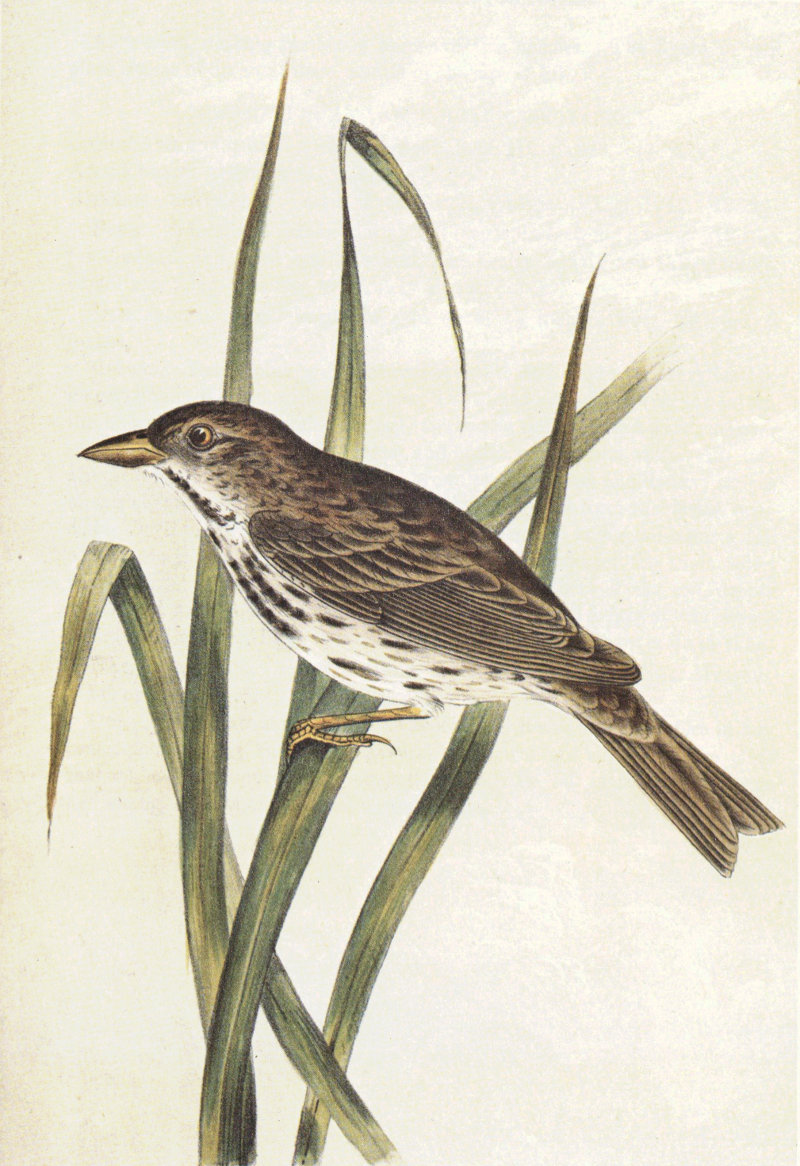
Plate 38 The Long-billed Marsh Sparrow Ammodromus rostratus (Cassin)
227
At present, nothing further is known of this species. The figure in our plate is that of an adult male, and is of the size of life.
DESCRIPTION AND TECHNICAL OBSERVATIONS.
Genus Ammodromus. Swainson, Zool. Jour. III. p. 348. (1827.)
Ammodromus rostratus. (Cassin.)
Emberiza rostrata. Cassin, Proc. Acad., Philada., VI. p. 184. (1852.)
Form. Short, and rather heavy; bill lengthened, strong; wings with the first, second, and third quills longest, and nearly equal; tail rather short, emarginate; legs and feet moderately strong.
Dimensions. Total length of skin, about 5¼ inches; wing, 2¾; tail, 2 inches.
Colors. Entire plumage above dull-brownish and cinereous, every feather longitudinally marked with the former, and tipped and edged with the latter, the brown stripes being most strongly marked on the head and back; narrow superciliary lines ashy-white; throat and entire under-parts white, with longitudinal stripes, and arrow-heads of brown on the breast and flanks; stripes of this character forming lines on the sides of the neck from the lower mandible, above which are stripes of white; abdomen and under tail-coverts dull white; wings and tail brown, edged with paler shades of the same color, nearly white on the outer-webs of the external feathers of the tail, deeper and tinged with rufous on the wing-coverts and exposed edges of the secondaries; bill and feet light-colored, the former brownish above (in dried skin).
Hab. California. Spec. in Mus. Acad., Philada., and Nat. Museum, Washington.
Obs. We are acquainted with no species which this bird resembles in any considerable degree, though its general characters are similar to the birds that we have mentioned in the present article. Its bill is remarkably large and strong, and its entire organization robust.
228