SYNOPSIS OF THE NORTH AMERICAN SPECIES OF THE SUB-FAMILY PARINÆ.
Reading edition
I. GENUS PARUS. Linnæus. Syst. Nat. I. p. 340. (1766.)
Not crested, bill short, rather strong, conic, entire, nostrils at the base of the bill and concealed by projecting feathers. Wings moderate, with the first quill spurious, fourth and fifth usually longest and nearly equal, tail rather long, legs and feet rather robust, claws curved and sharp. Colors usually cinereous and black.
This genus originally included all the birds now usually regarded as constituting a family of many genera, species of which inhabit nearly all the countries of the world. As restricted, it appears properly to embrace numerous species without crests found in Asia, Europe, and America; nearly all of which have the upper part of the head and throat black. A further division has however been made by Professor Kaup, of Darmstadt; and all the American, with some European and Asiatic non-crested species, form his genus Pœcila.
The American species are as follows:
1. Parus atricapillus. Linn. Syst. Nat. I. p. 341 (1766). The black-capped Chickadee.
Length (of skin) about 5 inches. Head and neck above and large space on the throat black, cheeks and sides of the neck white, entire plumage of the body above cinereous, slightly tinged with brownish olive, below ashy white tinged with brownish. Bill and feet dark. Sexes alike.
Hab. Northern and Middle States of North America. Spec. in Mus. Acad. Philada.
2. Parus carolinensis. Audubon Orn. Biog. II. p. 341, (1834.) The Carolina Chickadee.
Length (of skin) about 4¼ inches. Head and neck above and large space on the throat black, cheeks and sides of the neck white. Entire plumage of the body above cinereous, slightly tinged with brownish olive, below ashy white tinged with brownish. Bill and feet dark. Sexes alike.
Hab. Middle and Southern States of North America. Spec. in Mus. Acad. Philada.
Obs. Very similar to the preceding, but easily recognized by its smaller size.
3. Parus septentrionalis. Harris, Proc. Acad. Philada. II. p. 300, (Dec. 1845.) The long-tailed chickadee.
Length (of skin) about 6 inches. Head above and space on the throat black, cheeks and sides of the neck white. Entire plumage of the body above cinereous, strongly tinged with reddish brown, below ashy white, tinged with yellowish brown, especially on the sides and flanks, external web of outer tail feathers nearly pure white. Bill and feet dark. Tail comparatively longer than in either of the preceding species.
Hab. Missouri and the Rocky Mountains. Great Salt Lake. Spec. in Mus. Acad. Philada. and in the National Collection, Washington city.
18
Obs. A species related to, but quite distinct from either of the preceding. It is larger, and the specimens which I have seen have the bill longer and more pointed, the tail much longer, the black space on the head more restricted, and the general coloring more tinged with brown. The white outer edges of the external tail feathers is a well-marked character.
4. Parus montanus. Gambel, Proc. Acad. Philada. I. p. 259, (April, 1843.)
Length (of skin) about 5 inches. Head and neck above, line through the eye, space on the throat and upper part of the breast black. Line over the eye, large space on the cheeks and side of the neck white. Body above cinereous, below ashy white tinged with brownish on the flanks, bill and legs dark.
Hab. California. Spec. in Mus. Acad. Philada.
Obs. This western species is readily distinguished from all others of North America by the broad white line over the eye. Its bill is longer than in the typical species.
5. Parus hudsonicus. Forster, Philosoph. Trans. lxii. p. 430, (London, 1772.)
Length (of skin) about 5 inches. Head and neck above deep ferruginous brown, large space on the throat brownish black, cheeks white. Body above brownish cinereous, below ashy white, sides and flanks deep reddish chestnut brown, bill and feet lead colored. Sexes very similar.
Hab. British America, and Northern States of the Union. Spec. in Mus. Acad. Philada.
Obs. Quite a distinct and well-marked species, erroneously supposed by some European writers to be the young of P. atricapillus. It has been found breeding in the State of Maine, by our friend Dr. Brewer of Boston.
6. Parus rufescens. Townsend Jour. Acad. Philada. vii. p. 190, (1837.)
Length (of skin) about 4½ inches. Head and neck above, large space on the throat and breast deep blackish brown, cheeks and sides of the neck white, body above and sides below bright chestnut, medial portion of the body below ashy white. Bill and legs lead color.
Hab. Oregon and California. Spec. Mus. Acad. Philada.
Obs. A beautiful little species, which appears to inhabit a large extent of country west of the Rocky Mountains. It is easily recognized by the bright chestnut color of the superior parts of the body.
II. GENUS LOPHOPHANES. Kaup. Skiz. Entw. Eur. Thierw. (1829.)
Crested, bill moderate, strong, conic, entire, upper mandible rather the longer and slightly curved, nostrils basal, rounded and concealed by projecting feathers. Wings rather long, with the fourth and fifth primaries usually longest, tail rather long, legs and feet robust, the latter rather large, and provided with curved, strong and very sharp claws. Prevailing color of all known American species, cinereous.
This genus comprises the crested species of Europe and America, which were formerly included in the genus Parus, Linn., but which evidently form a natural and easily characterized group, fully entitled to generic distinction.
1. Lophophanes bicolor. (Linn) The crested Chickadee.
Parus bicolor. Linn. Syst. Nat. I. p. 340, (1766.)
19
Length about 6½ inches. Front black, crest and body above dark cinereous, tinged with greenish on the back, below ashy white, flanks reddish brown. Bill and legs nearly black. Sexes alike.
Hab. Eastern North America. Spec. in Mus. Acad. Philada.
2. Lophophanes atricristatus. (Cassin). The black-crested Chickadee.
Parus atricristatus. Cassin, Proc. Acad. Philada. V. p. 103, (Oct. 1850.)
Length (of skin) about 6 inches. Male—front, ashy white, crest black, entire plumage above cinereous, beneath ashy white, flanks reddish brown. Bill and legs black. Female, with the crest ashy, not black. Young, like the female, but with crest tinged with brown.
Hab. Texas and Mexico. Spec. in Mus. Acad. Philad. and in the National Collection Washington city.
3. Lophophanes inornatus. (Gambel). The plain-crested Chickadee.
Parus inornatus. Gambel. Proc. Acad. Philada. II. p. 265, (Aug. 1845.)
Length about 5½ inches. Front, crest and entire plumage above cinereous, strongly inclining to olive, below uniform whitish, cinereous. Bill and legs lead-colored. Sexes alike.
Hab. California. Spec. in Mus. Acad. Philada.
Obs. A plainly-colored species abundant in California, easily recognized by the uniform cinereous color of its plumage.
4. Lophophanes Wollweberi. Bonaparte, Comptes rendus, Acad. Paris, xxxi. p. 478. (Sept. 1850.) The Texan Chickadee.
Parus annexus. Cassin, Proc. Acad. Philada. V. p. 103. (Oct. 1850.)
Lophophanes galeatus. Cabanis Cat. Heine’s coll. p. 90. (1851.)
Length (of skin) about 5 inches. Anterior feathers of crest, cinereous, succeeding and most elongated, black, others margined with white, short occipital feathers black. Throat black, line commencing behind the eye, thence curving and uniting with the space of the same color on the throat, black. Line above the eye running into the crest and around on the neck, white. Entire plumage above cinereous, tinged with olive, below ashy white, bill and feet dark.
Hab. Texas. Spec. in Mus. Acad. Philada.
Obs. This species considerably resembles Lophophanes cristatus, (Linn.) a common European bird. I have no doubt that the names given above are synonymous; that applied by us being about one month later than the publication of the description by Bonaparte as cited.
III. GENUS PSALTRIA. Temminck. Pl. Col. III.
Bill very short, thick, upper mandible curved, entire, nearly of the same thickness as the lower, nostrils basal, concealed by projecting feathers, wings rather short, first quill spurious, fourth and fifth longest and nearly equal, tail long and slightly wedge-shaped. Tarsi long and slender, feet rather strong, claws curved and acute, that on the posterior toe strongest. Not crested, colors of all known species principally cinereous and white.
This genus was established by the celebrated naturalist Temminck, of Leyden, (in Planches Coloriees, vol. iii.) with a little bird as its type named by him Psaltria exilis, which inhabits 20 Java. The bird discovered by Dr. Townsend in Oregon, and now well known to American Ornithologists as Parus minimus, Townsend, not only belongs to this genus, but only materially differs in size from Psaltria exilis. Temm. Its colors and general appearance much resemble it.
The American species are:
1. Psaltria minima. (Townsend) Townsend’s Chickadee.
Parus minimus. Townsend, Jour. Acad. Philada. vii. p. 199. (1837.)
Length (of skin) about 4 inches. Head above deep cinereous, inclining to purplish brown, body above cinereous, with a tinge of olive. Throat and breast whitish, abdomen and flanks cinereous, tinged with purplish brown, bill and feet black. Female rather smaller.
Hab. Oregon and California. Spec. in Mus. Acad. Philada.
Obs. As frequently turns out to be the case with birds to which such names as minor and minimus are applied, this little bird is considerably larger than its near relative, P. exilis, Temm. which otherwise it much resembles. It is now frequently brought in collections from California.
2. Psaltria melanotis. (Sanbach.) The black-eared Chickadee.
Parus melanotis. Sandb. Proc. Brit. Ass. for Adv. Sci. vi. p. 99. (1837.)
“Parus melanotis. Sandb.” Hartlaub, Rev. Zool. 1844, p. 216.
Psaltriparus personatus. Bonaparte, Comptes Rendus Acad. Paris, xxxi. p. 478. (Sept. 1850.)
Length (of skin) about 4 inches. Male, broad stripes on each side of the head under the eye, and uniting on the occiput, deep black with a green metallic lustre. Head above pale cinereous, body above cinereous brown, throat and neck white, below ashy white, with a purplish tinge, bill and legs dark. Female, with the ears brown.
Hab. Texas and Mexico. Spec. in Mus. Acad. Philada.
Obs. This pretty little bird has the bill longer and more compressed than either the preceding species, or Psaltria exilis, Temm. It is, however, we think, a true Psaltria, in which respect we coincide with Prof. Westerman, who gives a description and excellent figure of it in Contributions to Zoology, (Bijdragen tot de Dierkunden,) Amsterdam, 1851.
A few other names have been given to American species of the old genus Parus by the earlier authors, all of which are undoubtedly synonymes for those of species previously described, and which we have enumerated. We have in all cases given the authority for the first description and its date.
Chamæa fasciata. (Gambel) a bird of California—though described originally, but as Dr. Gambel expressly states provisionally only, as a Parus, we regard as properly belonging to the family of Wrens (Troglodytidæ.)
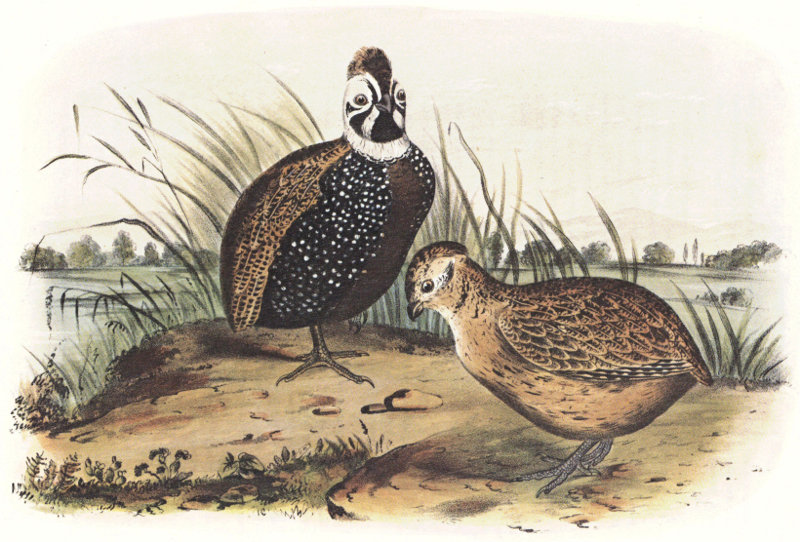
Plate 4 The Massena Partridge Cyrtonyx Massena (Lesson)
21