SYNOPSIS OF NORTH AMERICAN BIRDS. (continued 2)
Reading edition
13. Falco doliatus. Shaw, Gen. Zool., Aves., VII. p. 77. (1809.)
“Length ten inches; bill violet; cere, irides, and legs, yellow; tail marked with whitish bars more apparent beneath than above; under tail-coverts and flanks brown, with two or three round white spots on each side of the shaft; thighs ferruginous, with black shafts. Inhabits Carolina, observed by Bosc.” (Shaw, as above.)
Probably the young of either Hypotriorchis columbarius or Accipiter fuscus, but quite impossible to identify from such a meagre description.
120
14. Falco glaucus. Bartram, Travels, p. 290. (1791.) Barton, Fragments of the Nat. Hist. of Penna., p. 11. (1799.)
“The sharp-winged hawk, of a pale sky-blue color, the top of the wings black.” (Bartram, as above.)
This insufficient description has been supposed to be intended for the adult of the Marsh Hawk (Circus hudsonius), but Barton (as above) applies it to the Nauclerus furcatus. It is probably one or the other.
15. Falco subceruleus. Bartram, Travels, p. 290. (1791.)
“The sharp-winged hawk, of a dark or dusky blue color.” (Bartram, as above.)
Impossible to identify, from its brevity. It may be either the Mississippi Kite (Ictinia mississippiensis), the Fork-tailed Hawk (Nauclerus furcatus), or the adult Marsh Hawk (Circus hudsonius).
16. The following names have been given without descriptions, by the authors cited:—
Falco regalis. The great Gray Eagle. Bartram, Trav., p. 290. Barton, Frag. Nat. Hist. Penna., p. 11.
Falco gallinarius. The Hen Hawk. Bartr. Trav., p. 290.
Falco pullarius. The Chicken Hawk. Bartr. Trav., p. 290.
Falco ranivorus. The Marsh Hawk. Bartr. Trav., p. 290.
Falco piscatorius. The Fishing Eagle. Bartram, Trav., p. 290. Barton, Frag. Nat. Hist. Penna., p. 2, 17.
Falco cæsius. The Blue Hawk. Ord., Zool. N. A., in Guthrie’s Geog, I. p. 315.
The above embrace all the names and descriptions of birds of this family that have come under our notice, except those of such as are now well ascertained to inhabit other countries exclusively, and for which nearly allied species of North America have been mistaken. Of the latter we may more particularly mention the European Falco rusticolus (Linn.), which is given by Fabricius as a bird of Greenland, but stated by Holboll to have been the young of F. anatum, and Buteo vulgaris and Hypotriorchis æsalon, both of which are also European species, and have never been found in America to our knowledge, though there are species which are nearly related to them.
The student may advantageously bear in mind that of those above, which were originally described by Pennant, in English, abstracts or compilations only, in Latin, are given by Gmelin in his edition of the Systema Natura of Linnæus. These abstracts are mostly very short, and not always to be relied on as conveying strictly the sense of the originals. Nor are they at all improved by Turton in his edition of Linnæus, in which, so far as relates to these species, he merely retranslates into English the Latin text of Gmelin without reference to Pennant. In the study of the obscure species alluded to, the original descriptions only can be consulted without risk of error.
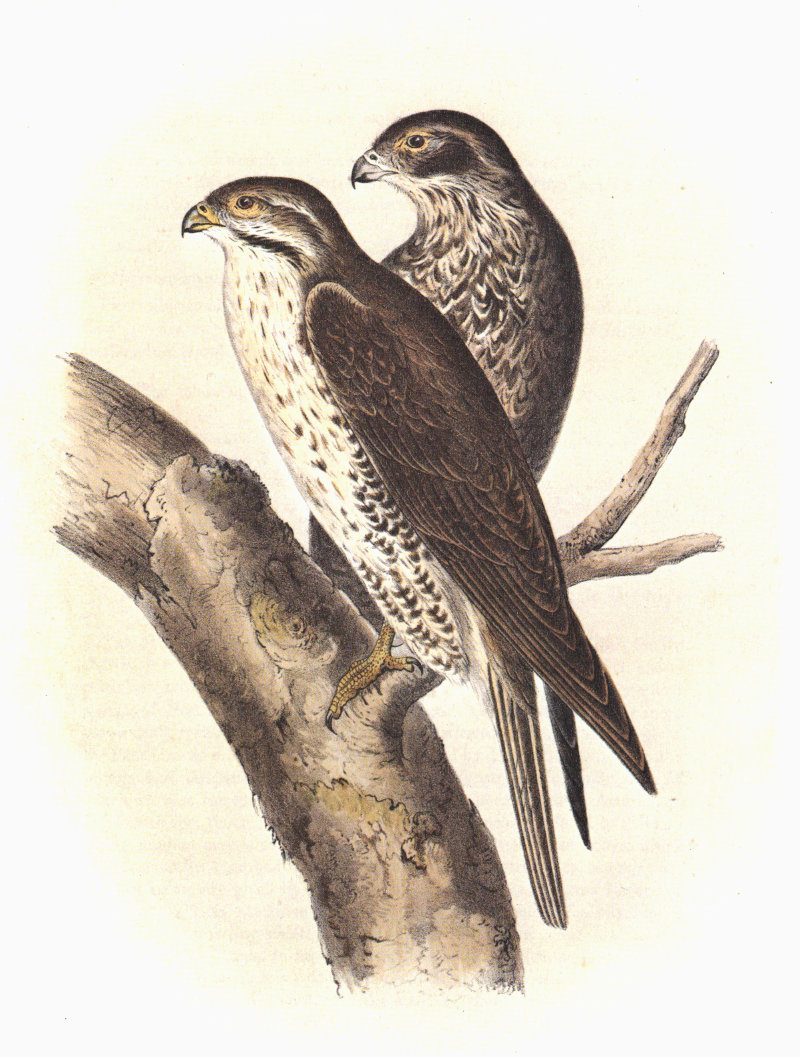
Plate 16 The American Lanier Falco polyagrus (Cassin)
121