ICTERUS CUCULLATUS.—(Swainson.) The Hooded Oriole. PLATE VIII.—Male and Female.
Reading edition
Some of the most beautiful of the American Orioles are inhabitants of Mexico. Of these, we present, in the plate now before the reader, one of the smallest of the species, which, though it cannot compete with many others of its more richly coloured relatives, is still entitled to make considerable claims. The various shades of the richest yellow colours are almost exhausted in the splendid species of these birds which are found in Mexico, and in South America, and as an accompaniment to the luxuriant vegetation of those countries, they form, necessarily, a most agreeable and interesting feature.
The birds of this family represented in the northern portion of this continent, by the Baltimore Oriole, are remarkable for their skill in constructing elaborately formed and pendent nests, frequently of large size. Several of the South American species make them of grasses, intricately and substantially woven, and shaped like a purse or bag, with the entrance sometimes from the top, but more frequently ingeniously inserted in the side, near the lower end. They are usually suspended from the pendent branches of trees, and often near the habitations of men. The Baltimore Oriole builds a nest sufficiently similar to afford an idea of the general character of the nests of these birds, but those of several of the southern species are much more artfully and elaborately constructed.
The handsome little bird at present before us, was first described from Mexican specimens, by Mr. Swainson, in the Philosophical Magazine, 1827, p. 436, (London.) It is an inhabitant, also, of Texas, where it was repeatedly observed by our friends Col. McCall and Capt. McCown, the latter of which gentlemen has most kindly communicated the following with other valuable notices:
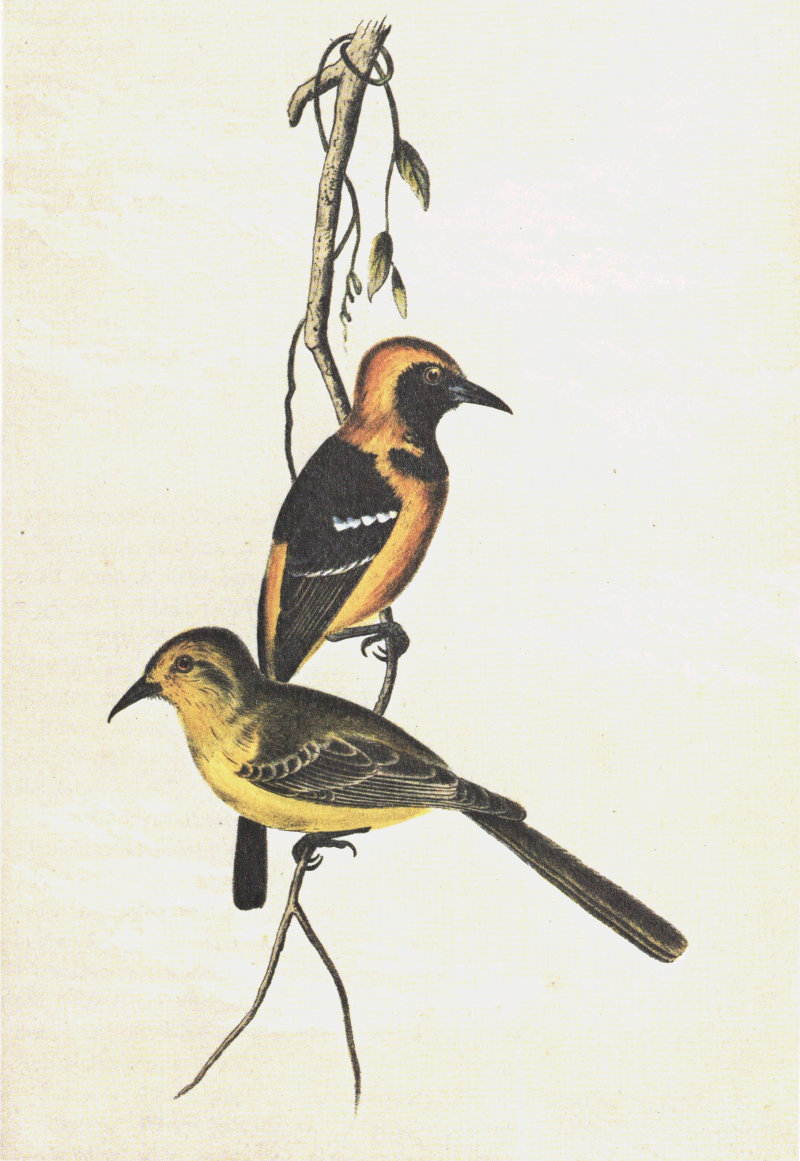
Plate 8 The Hooded Oriole Icterus cucullatus (Swainson)
43
“This beautiful Oriole is quite common on the Rio Grande, where it raises its young. When met with in the woods, and far away from man’s abode, it is shy, and seems rather disposed to conceal itself, yet a pair were constant visitors, morning and evening, to the vicinity of my quarters (an unfinished building at Ringgold Barracks, Texas.) They became so tame and familiar that they would pass from some ebony trees that stood near by, to the porch, clinging to the shingles and rafters, frequently in an inverted position, prying into the holes and crevices, apparently in search of such insects as could be found there, which, I believe, were principally spiders. They would sometimes desist for a moment from this occupation, to observe my movements, and if I happened to be enjoying a cigar after dinner, seemed to watch the smoke with great curiosity. I often offered them such hospitality as was in my power, but could never induce them to touch any food, in which respect they were very different from the large black birds, whose acquaintance I also cultivated. I have seen the nests of this species, but never had an opportunity to examine them.”
DESCRIPTION AND TECHNICAL OBSERVATIONS.
Genus Icterus. Brisson Ornithologie, II. p. 85, (quarto, Paris, 1760.)
Bill, conic, straight, or slightly curved, and entering the frontal plumes, point acute, nostrils basal partly covered by a membrane. Wings, rather long and pointed; tail, long; tarsi moderate, slender, covered with scales. Colours, generally yellow and black. About twenty-five species known, all of which are natives of America.
Icterus cucullatus. Swainson in Philos. Mag., 1827, p. 486.
Form. Slender and delicate; bill, very acute, curved; wing, rather short, with the third quill longest; tail, rather long, graduated; tarsi and feet, slender.
Dimensions. Total length (of skin) from tip of bill to end of tail, about 7½ inches; wing, 3½; tail, 4 inches; female, slightly smaller.
Colours. Male. Narrow frontal band, throat and neck in front, and space extending to the eye, back, wings and tail, glossy black. External edges of the quills, and tips of wing coverts white, the latter forming two white bars on the wing. Upper part of the head and neck, rump and upper tail coverts, and all the under parts, fine golden yellow, paler on the abdomen. Inferior wing coverts, and tail feathers at their basis, pale yellow. Bill, bluish horn colour.
Female. Entire upper parts, olive green, tinged with yellow on the head and rump. Wings, pale brown; coverts, tipped with white, and quills narrowly edged with white; tail, above, yellowish green. Entire under parts, greenish yellow.
Hab. Texas and Mexico. Spec. in Mus. Acad. Philada.
44
Obs. This species does not intimately resemble any other of its group, though partaking of their general style of colouring, and can be readily recognized by the student. Very fine specimens were obtained in Texas by Capt. McCown, which are now in the collection of Mr. George N. Lawrence, of New York, to whom we are indebted for an opportunity to figure the female. The latter does not resemble the male in colour.
Our figures are about two-thirds of the natural size.
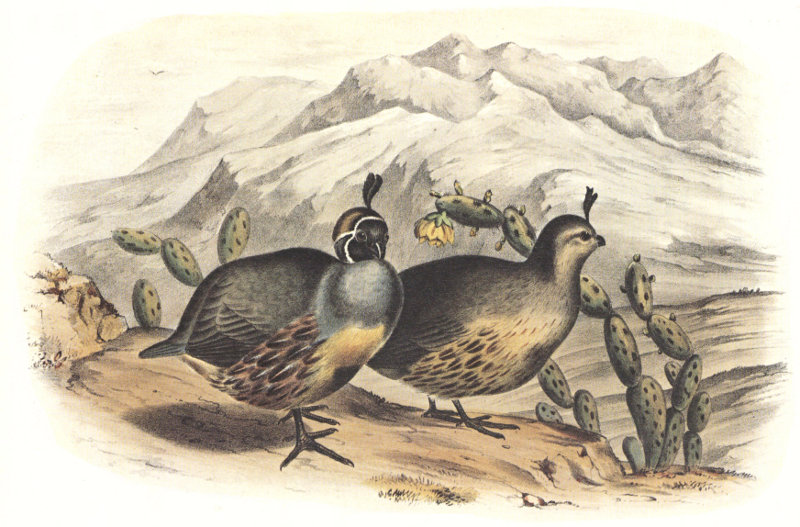
Plate 9 Gambels Partridge Callipepla Gambellii (Nuttall)
45