GEOCOCCYX MEXICANUS.—(Gmelin.) The Ground Cuckoo. The Prairie Cock. The Paisano. The Corre-camino. PLATE XXXVI. Adult Male.
Reading edition
Of the many birds of Western America, the history of which has been brought to light by the recent researches of our countrymen and fellow-laborers in the great field of zoological science, that now before the reader is one of the most curious and interesting. Its existence has been known to naturalists since the time of Hernandez, who, as early as 1651, in his “New History of the Plants, Animals, and Minerals of Mexico,” gives a short account of it, as one of the most remarkable of the birds that came under his observation. Though partially known for so long a period, and having received various names from European naturalists, who have described specimens met with in museums, there was extant no satisfactory account of this bird previous to the incorporation of countries which it inhabits with the confederacy of the United States, and the consequent facilities afforded to the investigations of American naturalists.
This bird is especially remarkable for great swiftness of foot, and in fact appears to be almost unrivalled in that respect by any other of our North American species, not even excepting the Grouse, Partridges, or any other of the smaller gallinaceous birds. These, though possessing the ability to run short distances very swiftly, are incapable of sustaining a protracted chase like the present bird. In Mexico, and the adjacent portions of the United States, it is not unusual, as a matter of amusement, to try the speed of our bird by pursuing him on horseback, or by chasing him with dogs, under which severe test of his fleetness, he acquits himself very creditably, and makes, as we shall see presently, a longer race than is usually expected by his pursuer. He evidently possesses both speed and bottom, unrivalled by any fair competition in ornithological pedestrianism, so far as its annals are chronicled, or the present writer’s information on that subject extends.
Clothed in plumage of agreeable and unusual colors for a Northern species, and habitually frequenting the ground, walking or running with its long tail carried erect, and assuming a variety of grotesque attitudes, it is not surprising that this bird has attracted the attention of nearly all our naturalists and travellers who have visited its native regions. Through their exertions, it is now to be found in nearly all our museums and private collections, and many facts respecting it have been placed on record.
Though terrestrial in its habits, and exhibiting in some degree the manners and habits of the gallinaceous birds (the Pheasants, Partridges, Grouse, &c.), 214 this bird is by no means to be classed in that division of the ornithological kingdom. It is a Cuckoo, and a relative of the celebrated bird of Europe so long known as to have become classic, and of the unobtrusive and plain-plumaged little birds of the United States, of the genus Coccyzus, popularly known by the name of Cow-birds, or Rain-birds. Our present bird is a representative of the gallinaceous form, in the family of Cuckoos. Throughout the animal and vegetable kingdoms, and in every division or subdivision of whatever character, five primary groups or forms present themselves. In birds and all their groups, these are: the typical, or bird-like form; the predatory, or rapacious; the gallinaceous, or walking; the grallatorial, or wading; and the natatorial, or swimming form. In the group of Cuckoos, which is quite extensive, and species of which are found in nearly all parts of the world, the bird now before us belongs to the subdivision comprising the gallinaceous or walking Cuckoos, and is a striking example of that peculiar form in the great circle of birds, and of the prevalence of a law which is universal, and not difficult to demonstrate.
The first American naturalist who observed the bird now before the reader, was Dr. William Gambel, and a description by him will be found in the Proceedings of the Academy of Natural Sciences of Philadelphia, Vol. II., p. 263. (1845). Subsequently, it has been noticed by nearly all naturalists who have visited California, New Mexico, or Texas, and interesting contributions to its history are contained in their publications relating to the ornithology of those countries.
Our esteemed friend, Col. George A. McCall, with his usual clearness and scientific accuracy, gave the first satisfactory account of this bird, in the Proceedings of the Philadelphia Academy, III. p. 234 (July, 1847.):
“Although the toes of this bird are disposed in opposite pairs, as in other species of his family, yet the outer toe being reversible, and of great flexibility, is in either position aptly applied in climbing or perching, as well as on the ground. Thus he at times pitches along the ground in irregular but vigorous hops; and again, when the outer toe is thrown forward, he runs smoothly, and with such velocity, as to be able to elude a dog in the chaparral, without taking wing. He feeds on coleoptera, and almost every description of insects, and near the river Nueces, where the snail (Lynnæus stagnalis) abounds, it is also greedily eaten. These he snatches from the ground, or plucks from the low branch of a bush; and as he rarely wanders far from his abode, the prize is carried to a particular spot, where the shell is broken with his strong bill, and the animal devoured. Piles of these shells are often found that would fill half a hat crown.
“Although dwelling principally on the ground, he is ready and expert in catching his prey in the air, in which act his movements are full of animation,—bounding from the ground with a sudden impulse to the height of eight or ten feet; his wings and tail are seen expanded for a scarcely appreciable 215 instant, and his bill is heard to snap as he takes his prey, when he drops as suddenly to the spot from which he sprang. Here he will stand for a moment, his legs apart, and his tail flirted on one side with a wild and eccentric expression of exultation in his attitude, before he scampers off under cover of the thick chaparral. At first, I thought,—as is the general impression among the Mexicans,—that his powers of flight were extremely limited; but he will, when suddenly alarmed in open ground, rise with a light, quick motion, and continue his flight over the bushes for some hundred yards, apparently with an ease that would argue the ability to sustain a longer flight.
“Though fond of solitude and shade, he will, at an early hour in the morning, climb to the top of a straight leafless branch, there to sit and enjoy the first rays of the sun.
“He is said by the Mexican rancheros to build his nest of loose sticks, either in a low, thick bush, or in close cover on the ground. The eggs are said by them to be two or three in number, and of a whitish color.”
We have again to express our obligations to Col. McCall for the following contribution to our present article:—
“I never was so fortunate as to find the nest of this bird, yet I had frequent opportunities of witnessing its manners and habits in Texas, in New Mexico, and in California, between the years 1846-52.
“Of shy and retiring disposition, the G. viaticus is most often met with singly. I have, however, frequently seen the male and female associated during the later period of the year, as well as in spring and summer; the former, at all seasons, being easily distinguishable by his larger size and more brilliant plumage. Whether the pairs I thus met were mated for life, or for the year, or were merely accidentally living in company, I am unable to say—I simply state the fact; and I well recollect my fruitless efforts, in Texas, for several successive days in autumn, to secure a pair that inhabited a large chaparral near which I happened to be encamped at the time. The male was a remarkably fine bird, but evidently an old and cautious fellow; he would come just without the thicket, followed by the female—and there, with neck outstretched, cast a searching glance around; then, if an enemy appeared, even in the distance, he would instantly retreat to his impenetrable abode trebly fenced with thorns. In a little while, he would re-appear at another point, where, if the coast seemed clear, he would, closely followed by his mate, begin to search for grass-hoppers and other insects, but never venture more than a few paces from the border of the thicket. Thus it was impossible to approach him in open ground; and such was his constant caution and vigilance that, although I more than once lay in wait for the couple, which I regularly saw in the morning hours, I never succeeded in getting within gunshot.
“When suddenly surprised, I have seen this bird rise on wing and fly considerable distances, in order to gain close cover, the flight being effected by 216 regular flappings, and executed, apparently, with ease; though the bird did not rise more than six or eight feet from the ground.
“The individuals that I killed in the fall and winter seasons, invariably were excessively fat, and their crops were usually filled with snails and various coleoptera. I do not recollect that I ever found in their stomachs the remains of lizards or other reptiles.
“The Paisano (countryman), as this bird is called by the Mexicans, or Corre-camino (run-the-road), as the native Californians designate it, is often met in the unfrequented roads that traverse forests of low brushwood, being enticed from its sombre retreats to the openings, in search of its favorite food. And here is often afforded the traveller an opportunity of witnessing its surpassing swiftness of foot. I have several times tested its speed with a good horse under me, and I have in truth been astonished at the almost incredible rate at which it passed over the ground. On one occasion, when approaching Limpia creek (W. Texas), with a small party, on my way to El Paso, I discovered a fine male Paisano in the open road, about one hundred yards in advance. For amusement, I put spurs to my horse and dashed after him, followed by one of my men. For full four hundred yards, I ran him along a road level and smooth as a floor; and over which, with straightened neck and slightly-expanded wings, he swiftly glided, seeming scarcely to touch the ground. And when, at last, he deemed it prudent to seek shelter in the thicket alongside, I had not reduced the distance between us more than fifty yards.
“I was told on the frontier that the Mexican rancheros do sometimes run down and capture the Paisano when they find him wandering on more open ground; and such I think is probable, for the one to which I have just referred was going, even to the moment at which he took cover, at a rate of speed that could not possibly have been much longer sustained; nor could he, I think, when so nearly ‘blown,’ have risen on wing. Such, at least, is the case with the wild turkey, which I have repeatedly captured in the same way, although his power of flight is greater than that of the Paisano.”
Capt. John P. McCown, of the United States Army, also observed the Paisano in Texas; and in his observations on the birds of that State, in the Annals of the New York Lyceum of Natural History, VI. p. 9, we find the following:—
“Often in my wanderings through the chapparel on the Rio Grande, I observed piles of broken snail shells, and always near some hard substance, such as a bone, or hard piece of wood, which had evidently been used in breaking the shells. I made many conjectures as to the probable animal, but never suspected that a bird had left these evidences of its peculiar habits. I heard, also, at times, generally in the morning or evening, a sound very similar to that made by some Woodpeckers, rapidly beating their bills upon an old dry tree. This was also a mystery, as I could find no Woodpeckers 217 near the place where the sound came from. Upon inquiry of a Mexican, I was told that it was the Paisano breaking the snail-shells to get at the snail, which explained at once both the noise and the mutilated shells. I was afterwards so fortunate as to see a bird so occupied. It took the snail in its bill and beat it upon the hard substance, striking faster and faster, until the shell broke.
“A few of these birds are to be found on the Rio Nueces. They run with great speed, seldom taking to wing. I have seen them on trees apparently observing the vicinity. I had a young bird of this species, about half-grown, but it refused to eat, and soon died; and I have seen some in coops, and have been informed that they have been tamed.
“When approached, this bird runs very swiftly until near cover, when it stops and reconnoitres the intruder, gives its tail a flirt, and away it goes again.
“In 1846, on the mountains between Monterey and Saltillo, I saw a pair of birds much like these, but much smaller. I observed them for some time, and feel satisfied that they were another species. The snail that seems to form the principal food of these birds is found sticking to almost every bush, and some are literally covered with them.”
In California, this bird was frequently noticed by Dr. Heermann, from whose manuscripts in our possession we have permission to make the following extract:—
“We found this bird throughout California inhabiting the most arid portions of the country. It often crossed our path, or ran before us for a short distance on the road, dashing, when alarmed, immediately into the chapparel, in which its swiftness of foot enabled it to readily elude pursuit. It may, however, be overtaken when followed on horseback over the vast open plains in which it is found, if no friendly bush offers it a shelter. When closely chased, if on an elevated point, it will sometimes fly, but appears to prefer sailing downwards. I once saw a specimen captured by a couple of dogs, their appetites whetted by recent success in overtaking and bringing down a Prairie wolf, or cayote.
“The stomachs of all the specimens that I examined of this bird were filled with the grass-hoppers and large black beetles found on the plains. The nest, built on the branches of the cactus, is formed of loose sticks, thrown negligently together, in the same manner as that of the yellow-billed Cuckoo of the United States (Coccyzus americanus). It contains two large, nearly spherical, white eggs.
“I have never witnessed the following, but was gravely assured of its truth by several old Californians: It is said that this bird, on perceiving the rattlesnake coiled up asleep, will collect the cactus and hedge him around in a circle, out of which he is prevented from escaping by the prickly points 218 opposing him on every side; and becoming enraged, strikes himself, and dies from the effects of his self-inoculated venom.
“This bird is common in Western Texas and on the Rio Grande.”
This remarkable bird has been found in the vicinity of Fort Webster, New Mexico, by Dr. Henry, and was also noticed in that country and in Texas by Mr. Clark, Mr. Schott, and Dr. Kennerly, and in Mexico by Lieut. Couch.
Though neither of the authors above cited have mentioned that this bird devours reptiles as well as insects and snails, that fact is stated by Dr. Gambel in his paper on the Birds of California, in the first volume of the quarto Journal of the Philadelphia Academy, and it is so represented in some spirited sketches by Mr. Arthur Schott, now attached to the United States and Mexican Boundary Surveying party, whose drawings of this bird made in its native wilds are in the possession of our valued friend, Professor Baird, of the Smithsonian Institution. It is probable that although it may prefer insects, other small animals afford suitable food.
Lieut. D. N. Couch, of the U. S. Army, to whom we have been indebted for other valuable contributions, has, with his usual kindness, added to our present article the following interesting notice of this bird as an inhabitant of Northern Mexico:—
“This bird was first met with in Southwestern Texas, near the Rio Grande, where it is called ‘Prairie Cock’ by the inhabitants. Few or no opportunities occurred for me to observe it carefully, until I found myself in the dreary chapparel districts of Tamaulipas, and next beyond the Sierra Madre.
“The chapparel is its home. Equally avoiding the forests of high trees or the open prairies,—in the former of which its short wings would preclude an easy flight to the branches, and in the latter, for the same reason, it would be unable to escape from the numerous hawks of various species that are ever hovering over the arid wastes of that region. Once only I saw it perched near the top of a stout Mesquite tree, though not many feet from the ground.
“So far as I have observed, this bird rarely takes to wing, but with head lowered and tail nearly horizontal; crouching to the ground, it runs without using its wings, with incredible swiftness; stopping suddenly, its long and beautiful tail is raised and depressed with as much grace as a fan in the hand of an accomplished senorita.
“In one of my excursions, I saw a wolf chase a hare (Lepus texianus), but was distanced in a few seconds, in the short race, a bird of this species was started, and the wolf in turn tried its fleetness, with the same result very distinctly arrived at. Apparently much disappointed, he looked at me for a moment, with an expression that seemed to say, “I have half a mind to try you;” but he turned off sulkily and trotted away, leaving me quite satisfied with his conclusion.
219
“Pa-i-san-o is the name by which this bird is known to the Mexicans. They hold it in high estimation on account of its enmity to the rattlesnake, which it usually succeeds in killing in fair combat. Notwithstanding that it is by no means deficient in courage, there is scarcely one of the feathered tribe that is so quiet and harmless in its habits. I have never noticed any note except a weak scream, and that very seldom. It is apparently not social, never occurring in flocks, not a wanderer to much extent, and though almost a hermit, is the most pleasing and friendly-looking inhabitant that lives only in the chapparel.”
DESCRIPTION AND TECHNICAL OBSERVATIONS.
Genus Geococcyx. Wagler, Isis, 1831, p. 524.
General form lengthened and rather slender; bill long, straight, strong, compressed, curved at the tip; wings short, rounded; fourth and fifth primaries longest; first short; tail long, graduated; legs long, especially the tibiæ; tarsi covered with wide transverse scales, very distinct in front; toes moderate, covered with scales; claws curved, flattened laterally. An American genus, containing two or three species only, all of which inhabit California, Texas, and Mexico.
Geococcyx mexicanus. (Gmelin.)
Phasianus mexicanus. Gm., Syst. Nat., II. p. 741. (1788.)
Geococcyx variegatus. Wagler, Isis, 1831, p. 524.
Diplopterus viaticus. Boie, Isis, 1831, p. 541.
“Cuculus viaticus. Licht. Mus. Berol.” Wagler and Boie, as above.
Saurothera marginata. Kaup, Isis, 1832, p. 991, pl. 26.
Saurothera californiana. Less, Ann. du Mus., Paris, 1835, p. 121, pl. 9.
Leptostoma longicauda. Swains., Cab. Cy. Birds, II. p. 325. (1837.)
“Saurothera Bottæ. Blainville.”
Upupa mexicana. Gm., Syst. Nat., I. p. 467?
Form. Head above with elongated, erectile, crest-like feathers. A large bare space around and behind the eye extending towards the occiput; wings short; tail long; legs long, stout; tarsus with about eight or nine wide and strong scales in front.
Dimensions. Male.—Total length of skin, about 22 inches; wing, 6½; tail, 11 inches. Female, smaller.
Colors. Male.—Space around and behind the eye, in the living bird, yellow, with a large red spot on its most posterior part; plumage of the head above dark blue, with a metallic lustre, every feather edged with reddish fulvous and white; entire other upper parts dark metallic green, darkest on the neck behind and on the back; lightest on the wings and central feathers of the tail; all the upper plumage edged with white, and very narrowly with pale fulvous; primary quills dark brown, with a green metallic lustre, and edged 220 with white on their outer webs; upper coverts of the tail and two central tail feathers green, with metallic lustre, and edged with white; other feathers of the tail deep shining blue, narrowly edged, and widely tipped with white, and having in some lights a green lustre; under parts white, slightly tinged with ashy and very pale yellowish; and on the throat and neck before with longitudinal stripes of dark greenish-brown; bill and feet light bluish. Female similar, but with the colors less vivid.
Hab. California, New Mexico, Texas, and Mexico. Spec. in Mus. Acad., Philada., and in Nat. Mus., Washington city.
Obs. As the reader will have discovered from our preceding synonymes, an unusual superabundance of names has been proposed for this bird. We have no doubt, however, that it is the Hoitlallotl of Hernandez (Nova, plantarum, animalium et mineralium Mexicanorum, Historia, p. 25. Folio, Rome, 1651), whose description is cited by both Buffon and Latham. On the faith of the notice by the latter (Synopsis of Birds, II. p. 723), Gmelin gave the name Phasianus mexicanus as cited above. The description by Hernandez is short and not very accurate; but we could mention many species of birds, the original descriptions of which are quite as much so, both ancient and modern. Prof. Wagler, in his description of Geococcyx variegatus, above alluded to, expresses the opinion that his bird is the same as that described by Hernandez; and Mr. Strickland, in Ann. and Mag. of Nat. Hist., VIII. p. 544 (1842), arrives at the same conclusion.
We regard it as at least possible, too, that this bird is the Upupa mexicana (Gmelin, Syst. Nat., I. p. 467), which is the “Mexican Promerops” (Latham, Syn., II. p. 691). The descriptions are founded on a figure in Seba (pl. 45, fig. 3), that about as accurately represents this species as any other; which can also be said of his description. In Seba’s figure it will be observed that three toes are directed forward, which might appear to be a difficulty; but in reference to that point we ask attention to Col. McCall’s valuable contribution in a preceding page. There is, too, some peculiarity intended or attempted to be represented in the figure to which we allude.
The sexes of this bird differ in size very considerably; and there are, also, variations in size and measurements, such as comparative lengths of their bills and tails between different specimens. We have seen a large number of specimens, from various localities, but of one species only. Though we have been constantly on the watch for it, we have never detected the smaller species alluded to by Captain McCown, which is very probably Geococcyx affinis, described by Dr. George Hartlaub, of the State Museum of Bremen, one of the most learned and accurate of European ornithologists. That species may be more an inhabitant of the mountainous or hilly country than the subject of our present article.
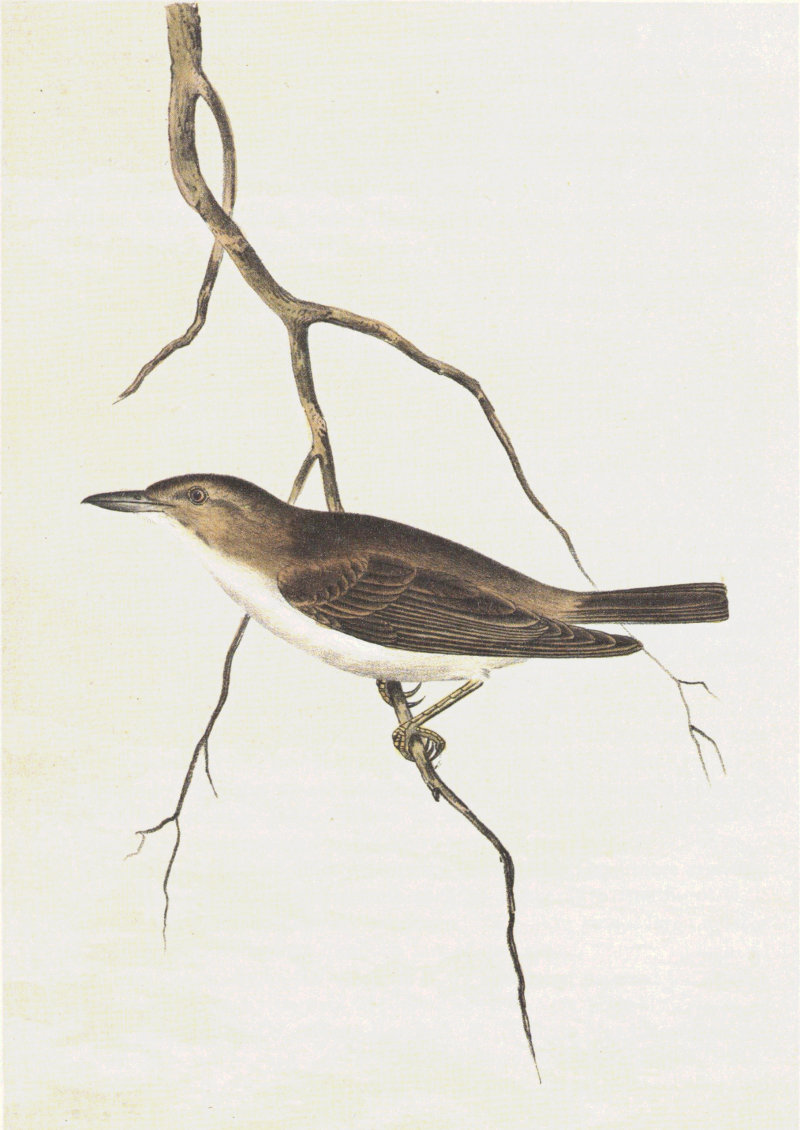
Plate 37 The Whip-Tom-Kelly Vireosylvia altiloqua (Vieillot)
221