PICOLAPTES BRUNNEICAPILLUS.—La Fresnaye. The Brown-headed Creeper. PLATE XXV.—Adult Male.
Reading edition
This is a species belonging to a large family of birds, very numerous in the tropical and southern regions of the American continent, though of which not more than two species are known to venture so far north as to come within the limits of the United States. They subsist on insects, which they capture on the trunks and branches of trees, or, in the countries where such plants abound, on the large species of Cactus, and others of a similar character.
Some of the larger birds of this group have very long and singularly curved bills, which it is supposed are peculiarly adapted to searching for insects in the deep furrows or interstices of the rough barks of trees. All have more or less strong feet and claws, designed for their manner of creeping on trees, somewhat similar to that of the Woodpeckers, but more like the Nuthatches, or little Sapsuckers, as they are commonly designated in the United States, and the Brown Creeper of our woods (Certhia americana). The latter is in fact the only northern representative of the family to which our present species belongs, but so small, that it conveys but a faint idea of the form and colors of these birds generally. They are, however, for the greater part, birds of plain colors, frequently brown of various shades, or snuff-colored.
The bird figured in the present plate was first noticed in Texas, by Capt. J. P. McCown, of the United States Army, and is given by Mr. Lawrence as an addition to the ornithology of the North in the Annals of the New York Lyceum of Natural History, V. p. 114 (1851), but with no account of its habits. Since that time, it has been again observed by Mr. Clark at several localities in Texas, and is known to be of frequent occurrence in the States of Mexico immediately south of the Rio Grande, and in other parts of the same country.
The Brown-headed Creeper was seen by Dr. Heermann in Mexico, and in his paper in the Journal of the Philadelphia Academy, II. p. 263, he thus mentions it:—
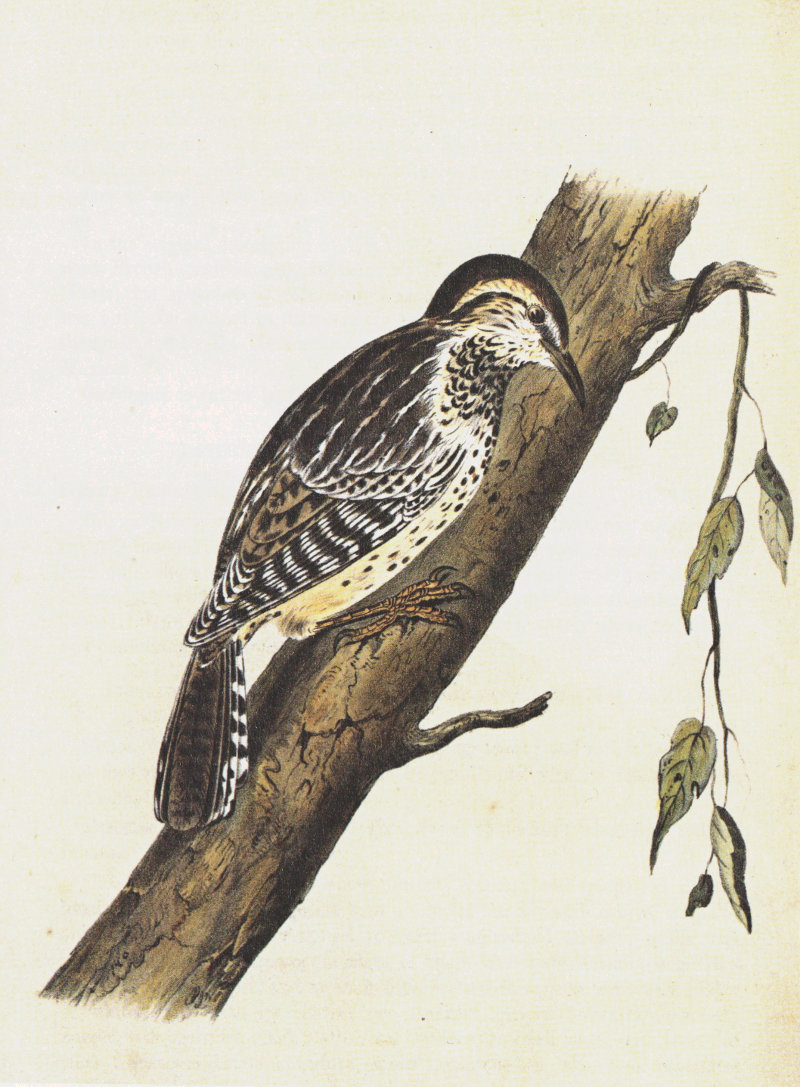
Plate 25 The Brown-headed Creeper Picolaptes brunneicapillus (La Fresnaye)
157
“I found this bird in the arid country back of Guaymas, on the Gulf of California. The country itself is the picture of desolation, presenting a broken surface, and a confused mass of volcanic rocks, covered by a scanty vegetation of thorny bushes and cacti. In this desert I found several interesting species, which enter into our fauna as birds of Texas, and this species was one of the number. It appeared to be a lively, sprightly bird, uttering at intervals a clear, loud, ringing note. The nest, composed of grasses, and lined with feathers, was in the shape of a long purse, laid flat between the forks or on the branches of a Cactus. The entrance was a covered passage, varying from six to ten inches in length. The eggs, six in number, are of a delicate salmon color, very pale, and often so thickly speckled with ash and darker salmon-colored spots, as to give a rich cast to the whole surface of the egg.”
In the original description of this bird by the Baron La Fresnaye, an eminent French ornithologist, in Guerin’s Magazine of Zoology, 1835, p. 61 (Paris), his specimen is represented as being probably from California. It has not been noticed in that country by either of our American naturalists, though found by Dr. Heermann, as above stated, near Guaymas, in Northern Mexico.
Our figure is rather less than two-thirds of the size of life.
DESCRIPTION AND TECHNICAL OBSERVATIONS.
Genus Picolaptes. Lesson, Traité d’Ornithologie, I. p. 313. (1831.)
Bill moderate, or rather long, curved, rather wide at base, but compressed towards the end; apertures of the nostrils large; wings rather short, rounded; first quill short; fourth, fifth, and sixth, usually longest and nearly equal; tail moderate, or rather long, soft at the end; legs and feet rather large and robust; claws curved, sharp. An American genus, nearly allied to others, and containing numerous species.
Picolaptes brunneicapillus. La Fresnaye, Guerin’s Mag. de Zoologie, 1835, p. 61.
Form. Bill curved; culmen distinct; wings short; tail rather long; tarsi and toes strong, and covered with scales; tail wide, with its feathers broad and soft.
Dimensions. Total length of skin, about 8¼ inches; wing, 3½; tail, 3½ inches. Female rather smaller.
Colors. Entire plumage above, brown, darkest and unspotted on the head; but on other upper parts with every feather having a central stripe or oblong spots of white, disposed to form longitudinal stripes; quills with numerous spots of white on the edges of their outer webs, forming somewhat regular oblique stripes, and on their inner webs with regular transverse stripes of white; tail, with its central two feathers, grayish-brown, transversely barred with brownish-black; other tail feathers brownish black, with irregular wide transverse bands of white, more numerous on the two outermost feathers.
158
Under parts white, tinged with fulvous on the flanks and abdomen; feathers of the throat and neck before tipped with black; those of other under parts with circular or oblong spots of black, large on the under tail-coverts; bill and feet horn-color. Sexes alike.
Hab. Texas and Mexico. Spec. in Mus. Acad., Philada., and Nat. Mus., Washington.
Obs. This bird somewhat resembles several of its genus, but is not difficult to distinguish. In many specimens, especially of the male bird, the black predominates on the throat and neck before, so as to present an almost uniform color.
Several late writers have placed this species in the genus Campylorhynchus (Spix).
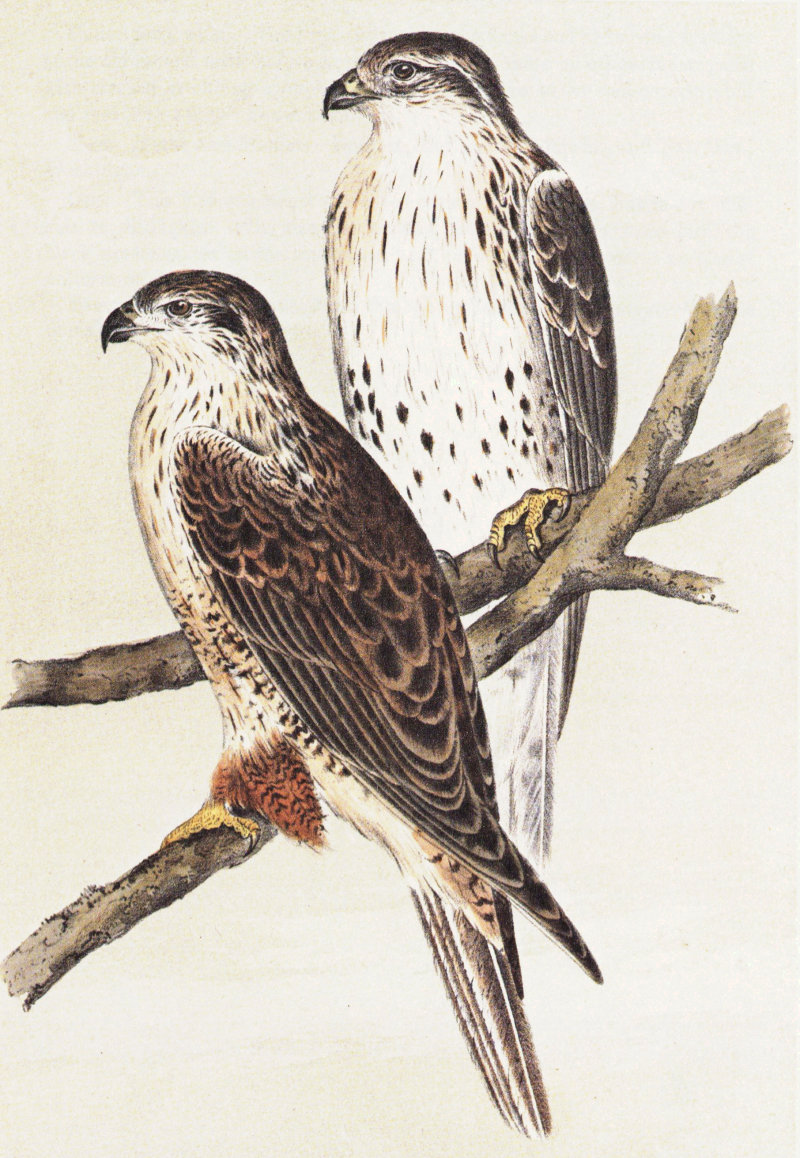
Plate 26 The Ferruginous Buzzard Archibuteo ferrugineus (Lichtenstein)
159