SYLVICOLA KIRTLANDII.—Baird. Kirtland’s Warbler. PLATE XLVII. Adult.
Reading edition
Of the smaller birds of North America, no group exceeds that of the Warblers, in variety and richness of color. It is, too, one of the largest of the groups of our birds, embracing not less than forty species, besides several which are South American.
Migrating in the spring, and again in the autumn, these little birds are known in the Middle and Southern States, for the greater part as visitors only, though various species are residents during the summer, which have been supposed to continue their journey much further north, before undertaking the duties of incubation. The Blackburnian Warbler (Sylvicola Blackburniæ), the Chestnut-sided (S. icterocephala), the Yellow-backed (S. Americana), and several others, breed in the mountains of Pennsylvania. The Prairie (S. discolor), the Blue-winged (Helinaia solitaria), and two or three other species, are to be met with every summer in the neighborhood of Philadelphia. The greater number of species proceed further north, but much the majority of all known as North American rear their young within the limits of the United States, as well as in more northern countries; but by no means exclusively in the latter, as is to be inferred from the representations of various authors. The Black-poll (S. striata), raises its young in the State of Maine.
These birds are great favorites with collectors. Coming northward, as many species do in the months of April and May, when excursions to the woods are attended with such agreeable accompaniments, the short period of their stay is the most deeply interesting of the ornithological season, whether the object be to study birds in the fields and woods, or only to procure choice specimens for the cabinet. In either case, the observer or collector will find himself greatly tempted by these attractive little birds, to the exclusion, probably, of others, not so gay, perhaps, in plumage, but equally interesting in other respects.
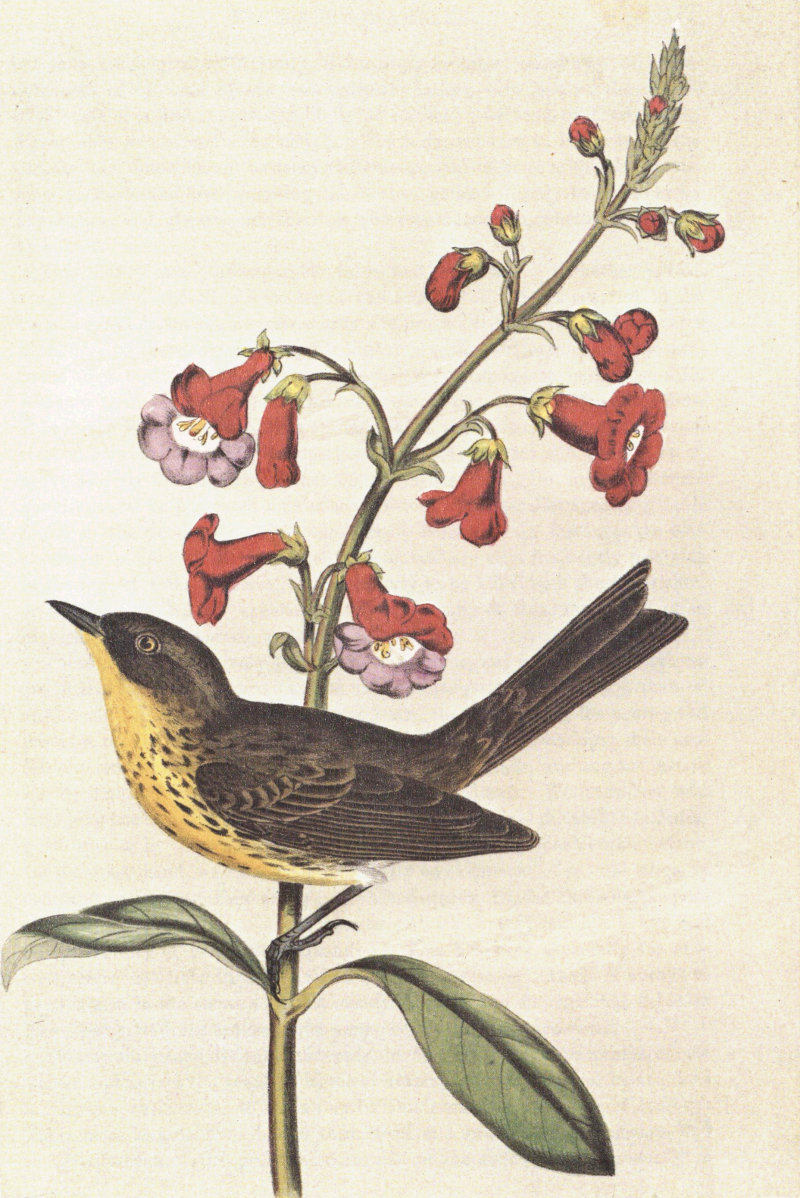
Plate 47 Kirtland’s Warbler Sylvicola Kirtlandii (Baird)
279
Bird-collecting is the ultimate refinement,—the ne plus ultra of all the sports of the field. It is attended with all the excitement, and requires all the skill, of other shooting, with a much higher degree of theoretical information and consequent gratification in its exercise. Personal activity, not necessarily to be exerted over so great a space as in game-bird shooting, but in a much greater diversity of locality, coolness, steadiness of hand, quickness of eye and of ear, especially the latter;—in fact, all the accomplishments of a first-rate shot, will be of service; and some of them are indispensable to successful collecting. The main reliance is, however, on the ear, for the detection of birds by their notes, and involves a knowledge, the more accurate and discriminating the better, which can only be acquired by experience, and always characterizes the true woodsman, whether naturalist or hunter.
This ability is of incomparable value to the collector. Whether in the tangled forest, the deep recesses of the swamp, on the sea-coast or in the clear woodlands, on the mountain or in the prairie, it advises him of whatever birds may be there, or affords him a higher gratification, announcing the presence of a bird that he does not know. We recognise no more exquisite pleasure than to hear a note that we are not acquainted with in the woods. It is in the latter case, too, that the cultivated quickness of eye of the experienced collector is especially important, and his coolness and steadiness of nerve is fully tested. It will not do to be flustered. But in fact all these qualities must be possessed for the acquirement of the smaller species of birds found in the woodlands. Some species of Warblers, for instance, are constantly in motion in the pursuit of insects, and are most frequently met with in the tops of trees, and are, moreover, only to be killed with the finest shot, or they are spoiled for specimens. The obtaining of these little birds often requires the most accurate and skilful shooting.
There are comparatively few superior ornithological woodsmen, though we are inclined to believe more amongst the naturalists of this country, than of any other. There are some who never learn, though shooting for years; and passages constantly occur in the works of authors, notwithstanding their professions, and however honestly such may have been made, exciting immediate suspicion that they were really little skilled in woodcraft. We know men who have long been bird-collectors, but who have never acquired the ability to distinguish species by their notes, nor in fact otherwise to any considerable extent. On the other hand, we have gone repeatedly on excursions of several miles, in company with naturalists and accomplished woodsmen, for the sole purpose of hearing the note of a single species with which they had not before had an opportunity of becoming acquainted. This has been especially the case with reference to the Prairie Warbler (Sylvicola discolor), which is always to be met with in the summer, in the sandy thickets and in neglected fields in New Jersey, and has several notes very peculiar and characteristic.
It is by no means desirable, however, to be exclusively a naturalist of the woods, and in fact the greatest degree of accomplishment that can be acquired in this line, entitles one to but a very humble rank as a cultivator of Zoology. There must be a combination of theoretical and practical acquirements, and the gratification of the practical naturalist or the collector will be exactly in 280 proportion to his scientific or systematic information, to be obtained only in the museum and the library. There is an indescribably pitiful display of ignorance and meanness of idea in arrogating, as some writers have done, a superior position for the “field-naturalist” over the “closet-naturalist.” As well might he who navigates a ship presume on being the greatest of astronomers, or the practical gauger pretend to be the only mathematician. Great is life in the woods, say we, and the greatest of all sports is bird-collecting; but, to become a scientific ornithologist, is quite another business, and a very much more considerable consummation. But we have digressed from the Warblers.
In the neighborhood of the cities, and in fact throughout the Middle and Northern States, during the last of April and the whole of May of every year, numerous species of Warblers are to be found in abundance. It happens occasionally though, that a species, usually common, is scarcely to be seen in the whole season, and sometimes is rare for several seasons in succession. The Black-throated blue Warbler (Sylvicola canadensis), for instance, is generally very abundant in Pennsylvania in May, and so is the Chestnut-sided (S. icterocephala); but we have noticed seasons in which all the collectors of Philadelphia would scarcely obtain a specimen of either. It sometimes happens, too, that a species makes its appearance in considerable numbers, and then is of much less common occurrence for years. This was the case with the Blackburnian Warbler in May, 1840. That beautiful little bird was so abundant, that our early and intimate friend, the late Mr. William R. Spackman, then anxious to collect for the purposes of general study and for exchanges, shot upwards of twenty specimens during a morning’s excursion in company with us near Kaighn’s Point, New Jersey; and had they been wanted, could readily have obtained a much larger number in the afternoon, or, as termed by bird-collectors in common with sportsmen, during “the evening fly.” It continued very plentiful through the entire spring migration, but we have not seen it so abundant more than once since, though fifteen years have elapsed.
Very erroneous impressions relative to the rarity of several species of Warblers, have been created by statements which have found their way into the works of both Wilson and Audubon. For instance, the former of these celebrated authors says of the Chestnut-sided Warbler:—“In a whole day’s excursion it is rare to meet with more than one or two of these birds;”—the latter, at the time of the publication of the first volume of his Ornithological Biography (1831), had met with this bird once only (Orn. Biog. I., p. 306), and so it stands printed in his octavo edition of “The Birds of America,” (II., p. 35, 1840.) These rather extraordinary statements have caused the useless destruction of very many specimens of this little bird, particularly by young collectors, under a false estimate of its scarcity in collections, or value for the purposes of science. There have been few months of May in 281 the last twenty years, in which any person of moderate skill as a collector of birds, could not have obtained, in the vicinity of Philadelphia, as many specimens of the Chestnut-sided Warbler as would have supplied all the Museums in the world.
Again, in the months of September and October, Warblers are abundant in our woods, but the plumage of many species is materially altered from that of Spring. The student of ornithology must by no means, however, neglect to become acquainted with it, and will find this knowledge exceedingly valuable and interesting, as he advances in this branch of science.
The bird represented in the plate now before the reader, is one of the rarest as yet of the North American species of Warblers. Like several others that are well established as species, it has been obtained once only, which was in the vicinity of Cleveland, Ohio, by Professor J. P. Kirtland, of that city, who presented it to Professor Baird, by whom its discovery was first announced in the Annals of the New York Lyceum, as cited below.
This species is related to the Yellow-crowned Warbler, or Myrtle Bird, as it is sometimes called (Sylvicola coronata), a common species of the United States, and to Audubon’s Warbler (S. Auduboni), a Western species, but differs from them in strong and unmistakable characters. It is probably a species inhabiting the more Western regions of the continent of North America.
We are informed by Prof. Kirtland, that the specimen alluded to was shot in the woods near Cleveland, and, so far as observed, was not noticed to differ in habits essentially from S. coronata, or other of our species of Warblers usually found migrating in the Spring. Though it was captured in the Spring of 1852, and the species has been carefully looked for ever since at the same season, it has never again been observed.
The figure in our plate is about two-thirds the size of life.
The plant represented is a species of Penstemon from Texas, raised in the Horticultural establishment of Mr. Robert Kilvington, of this city.
DESCRIPTION AND TECHNICAL OBSERVATIONS.
Genus Sylvicola. Swainson. Faun. Bor. Am. Birds, p. 204. (1831.)
Size small; bill moderate, slightly curved, tapering gradually to the tip, slightly notched; wings rather long; second and third quills usually longest; tail moderate, or rather long, usually emarginate; legs rather long, slender. An American genus, embracing a large number of species, nearly all of which are of bright or gay colors.
Sylvicola Kirtlandii. Baird. Ann. Lyc. Nat. Hist., N. Y., V., p. 218. (1852.)
282
Form. About the size of S. coronata. Rather large for this genus; bill straight; wing moderate; third quill slightly longer than the second; tail rather long, emarginate; legs slender.
Dimensions. Total length (of skin) male, 5½ inches; wing 2¾; tail 2½ inches.
Colors. Entire upper part, bluish-ashy; on the head and back nearly every feather having a longitudinal line of black; front and space before and under the eye, black; quills dark-brown, paler on their outer edges; tail brownish-black, several of the outer feathers having a white spot each on their inner webs; entire under parts pale-yellow, with small spots of black most numerous on the breast and sides, and obsolete on the throat and middle of the abdomen; under tail coverts nearly white; bill and feet dark.
Hab. Northern Ohio.
This bird bears an evident relationship to Sylvicola coronata, and to S. Auduboni, from either of which it may at once be distinguished by the entire absence of the yellow rump which characterises both the species mentioned. It does not, however, resemble either of them to such extent as to render a minute statement of comparative characters necessary. The specimen above described is not in entirely mature plumage.
We most cordially concur in the justice of naming this handsome little bird in honor of our friend, Professor Jared P. Kirtland, M. D., of Cleveland, Ohio; a gentleman who, to a reputation in private life most exemplary and unexceptionable, adds high distinction as a naturalist and pioneer of the Zoological Sciences in the Western United States.
To our friend, Thomas M. Brewer, M. D., of Boston, we are indebted for much valuable information on the incubation and breeding places of many of the Warblers of the United States. This interesting department of Ornithology has been a special matter of research with Dr. Brewer for many years; and we are happy to learn that his great work on the Oology of North America is shortly to appear under the auspices of the Smithsonian Institution. We venture to say that no more valuable contribution to American Zoology has ever appeared.
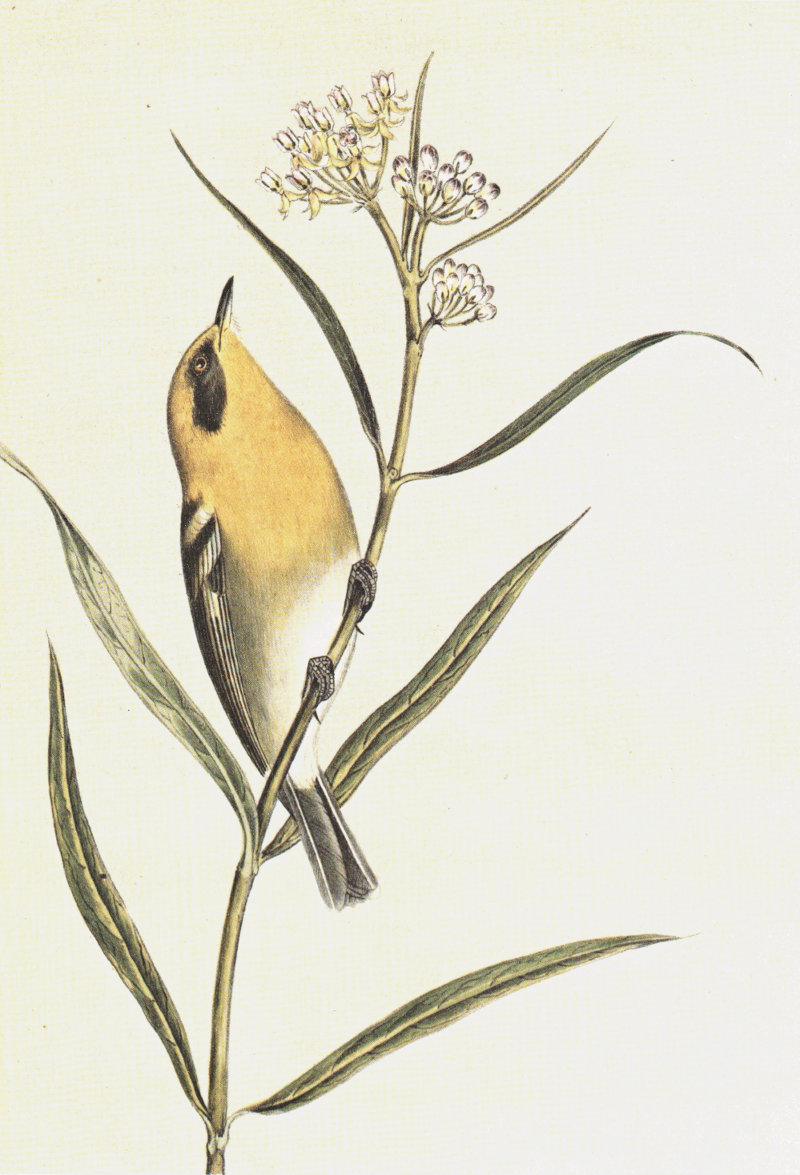
Plate 48 The Orange-breasted Warbler Sylvicola olivacea (Giraud)
283