ARCHIBUTEO FERRUGINEUS.—(Lichtenstein). The Ferruginous Buzzard. PLATE XXVI.—Adult and Young.
Reading edition
This is one of the largest and most handsomely plumaged of the Rapacious birds of North America, though belonging to a division characterized by heavy and comparatively slow flight, and not manifesting any considerable degree of that courage and cunning which are generally so remarkable in this great group of the ornithological kingdom. In fact, on examination of the fine bird now before us, or of the Black Hawk of the Atlantic States, which is nearly related to it, one would scarcely infer that the object of such an admirable organization is nothing more important than the destruction of the smallest and most defenceless of quadrupeds or of reptiles. Yet such is apparently the case; many of the birds of this group, though powerful in structure, and furnished with the usual apparatus of strong and sharp bills and claws, and other accompaniments of predatory habits, rarely attack any animal more formidable than a mouse or ground-squirrel, or in some cases a frog or other of the weaker species of reptiles.
It is, however, entirely erroneous to attribute a noble or generous character to any of the predatory animals, though from an early period of history several species have been so regarded. On the contrary, there is in all these classes, whether of birds or of other animals, a marked absence of the very traits which are in some measure assigned to them, and even more unmistakably so in some of the more celebrated, as the Eagles and Lions, than in the more humble species. Yet the rapacious animals present a study in natural history of deep interest. Owing the sustaining of their existence for the greater part to rapine and violence, yet holding an important place in the great design of the physical universe, they appear to personate a principle, if we may be allowed to use the expression, involving one of the most momentous and mysterious of problems, the existence of evil in the world. The prowling and treacherous Lion, and the robber Wolf, have unfortunately but too strong analogies in that race which is the head of the visible creation, and they and their kind everywhere present the same intrinsic meanness which is characteristic of violence and injustice, of vice and of crime amongst men.
The bird now before the reader is, so far as known, exclusively a Western species. It was first made known to American naturalists by Mr. Edward 160 M. Kern of this city, who, when attached as artist to Colonel Frémont’s Expedition of 1846, obtained it in California and brought home specimens in a collection made by him, of the birds of that country. It had however been previously noticed and described as a bird of California by Professor Lichtenstein, a distinguished European naturalist, in a paper on the natural history of that country, in the Transactions of the Royal Academy of Berlin (1838, p. 428).
Since Mr. Kern, the only American naturalist who has noticed this bird is Dr. Heermann, who has met with it during both of his visits to California, but especially during his connection with a party under command of Lieut. Williamson, of the U. S. Topographical Engineers, which has recently completed an examination and survey for a route for a Railroad to the Pacific Ocean through the southern portion of the territory of the United States. For our present article, Dr. Heermann has with great kindness allowed us to make the following extract from his journal, kept during the survey to which we have alluded:
“During a previous visit to California, I had seen this species in the valley of the Sacramento river, and had considered it as rare in that section of the country, but during the recent survey in which I have been engaged in the southern part of the state, I found it very abundant, and on one occasion saw five or six individuals in view at the same moment, in the mountains, about sixty miles east of San Diego. It was there much more frequently seen than any other species.
“As large tracts of that country inhabited by this bird are often entirely without trees, it alights on the ground or on some slightly elevated tuft of grass or a stone, where it sits patiently for hours watching for its prey. Its food, on dissection, I found to consist almost entirely of small quadrupeds, principally various species of mice, and in one instance the crop was filled with the remains of a ground-squirrel. In plumage it appears to vary as much as its allied species, A. sancti-johannis. One specimen, which was shot by a soldier attached to our party, had the tail strongly tinged with the red color which characterizes that appendage in the red-tailed Hawk, (B. borealis).
“I have several times seen a bird sailing over the prairies, about the size of the present species, but with its entire plumage deep-black and of heavy and continued flight. It was I think certainly of this genus; but never having been so fortunate as to have procured a specimen, I am unable to decide whether it was this bird, the Black Hawk (A. sancti-johannis), or a new species to add to this group. My impression is that it was the Black Hawk, but it may have been the present in a stage of plumage yet undescribed.
“The nest and eggs of the present bird I procured on the Consumnes river, in 1851. The nest was in the forks of an oak and was composed of coarse twigs and lined with grasses; the eggs, two in number, were white, marked with faint brown dashes. This nest was placed in the centre of a 161 large bunch of Misletoe, and would not have been discovered, but having occasion to climb the tree to examine some Magpie’s nests, the Hawk in flying off betrayed her retreat. The eggs of this species are quite different from those of the European A. lagopus, but with those of A. sancti-johannis, I have never had an opportunity of comparing them.”
Mr. Kern’s specimens are marked as having been procured in the Tulavie valley, California, in January, 1846. He observes, in his notes in our possession, that finding this bird remarkably fat and in excellent general condition, some of the party shot it for the mess-kettle whenever opportunity offered, and found it “very good eating.” Possibly under stress of capital appetites.
DESCRIPTION AND TECHNICAL OBSERVATIONS.
Genus Archibuteo. Brehm. in Oken’s Isis, 1828, p. 1269.
Tarsi feathered in front to the toes, but more or less naked behind. General form, compact and heavy; wings, long and broad, formed for long-continued but not very rapid flight; bill, short, curved, edges of the upper mandible festooned; tail, moderate, wide, tarsi rather long; toes, short; claws, moderately strong, curved, very sharp. Contains about six species, three of which are American.
Archibuteo ferrugineus. (Lichtenstein.)
Buteo ferrugineus. Licht. Trans. Berlin Academy, 1838, p. 428.
Archibuteo regalis. Gray, Genera of Birds, 1 pl. 6 (1849, plate only).
Form. Robust and compact; bill, rather large; wings, long, with the third quills longest, all the primaries more or less incised on their inner webs near the end; tarsi feathered in front to the toes, naked and scaled behind; toes, short; claws, strong.
Dimensions. Total length (of skin), female, about 22 inches; wing, 16½ to 17; tail, 9 inches.
Color. Adult.—Tibiae and tarsi bright ferruginous, with transverse stripes of brownish-black, irregular and indistinct on the latter. Entire upper parts with irregular longitudinal stripes of dark-brown and light ferruginous, the latter color predominating on the shoulders and rump. All the upper plumage white at the bases of the feathers, and on the back with concealed irregular transverse stripes of brownish-black. Quills, ashy-brown, lighter on the outer webs, and with a part of the inner webs white, and with obscure brown bands. Tail, above, ashy-white, tinged with pale ferruginous, and mottled obscurely with ashy-brown, in some specimens narrowly tipped with black; tail, beneath, yellowish-white, unspotted. Entire under parts of the body white, slightly tinged with yellowish, with narrow longitudinal lines and dashes of reddish-brown on the breast, and narrow irregular transverse lines of the same color, and others of black, on the sides, flanks, and 162 abdomen; under tail coverts, white; axillary feathers and some of the inferior coverts of the wing, bright ferruginous; toes, yellow; bill and claws, dark.
Young.—Entire upper parts dark umber-brown, a few feathers edged and tipped with pale ferruginous; upper coverts of the tail white, spotted with dark-brown; entire under parts pure white, with a few longitudinal lines and dashes of dark brown on the breast, and arrow-heads or irregularly shaped spots of the same color on the sides and abdomen, larger and more numerous on the flanks. Tibiæ and tarsi white, irregularly spotted with dark-brown; axillary feathers, white, with large subterminal spots of brown; under wing coverts and edges of the wings white, with a few brown spots; under tail coverts, white.
Hab. California. (Mr. Kern, Dr. Heermann.) Spec. in Mus. Acad., Philada.
Obs. This very distinctly characterized species somewhat resembles some stages of plumage of the Rough-legged Hawk and of the Black Hawk (Archibuteo lagopus and sancti-johannis) but not sufficiently to render it necessary to point out differences. It has, as yet, only been observed in California, but will, very probably, like many other species of Western birds, be found to inhabit also the northern regions of this continent.
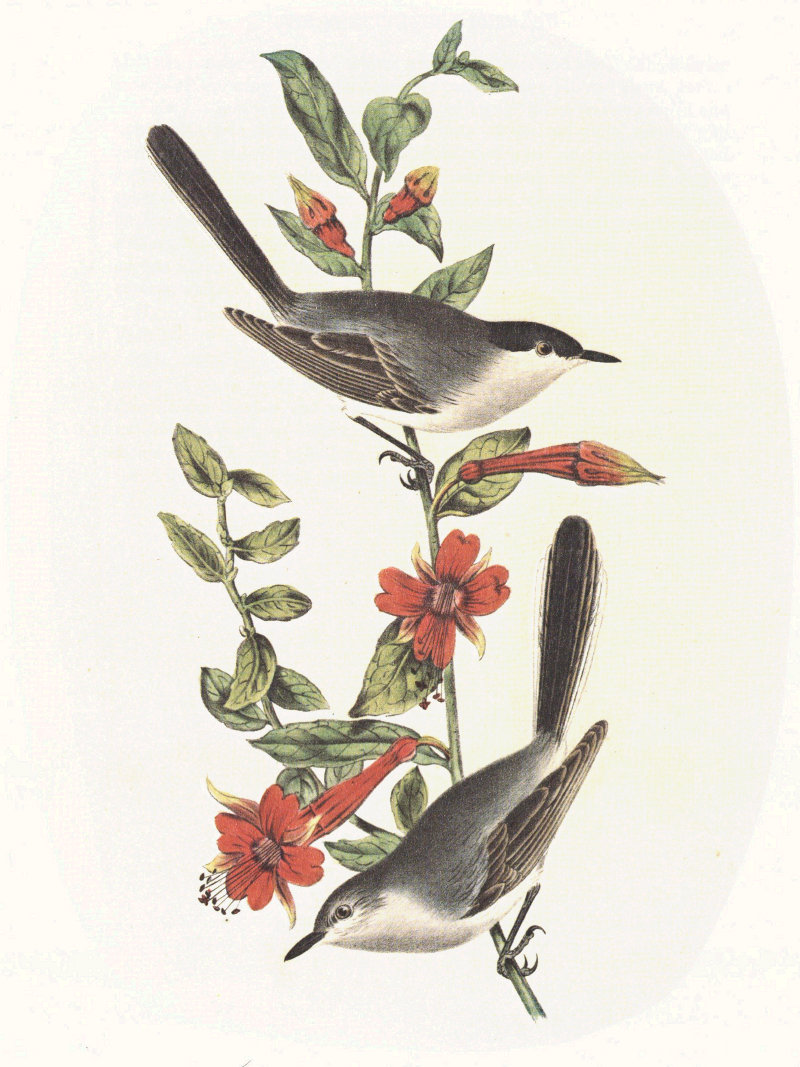
Plate 27 The Black-headed Gnat-catcher Culicivora atricapilla (Weill)
163