CULICIVORA MEXICANA.—Bonaparte. The Black-headed Gnat-catcher. PLATE XXVII.—Male and Female.
Reading edition
This delicate little bird is an inhabitant of Texas, where it was first noticed by Capt. J. P. McCown, of the U. S. Army. He obtained it near Ringgold Barracks, in 1850, since which period specimens have been brought in the collections of various other officers and naturalists. It is also known as a bird of Mexico.
This species belongs to a small group of little fly-catching birds, of which several others are found in America, though two of them only come within the limits of the fauna of the United States. Of these, one, the little blue gray Flycatcher (Culicivora cœrulea), has been long known as a summer resident in the woods and forests of the Middle and Northern States, and is one of the earliest to return, from its winter journey in the south, to its northern home. The other is the bird now before the reader.
These little Flycatchers are amongst the smallest of our native birds. They almost exclusively inhabit the woods, and are constantly seen actively engaged in the capture of the minute insects on which they feed, in pursuit of which they search very industriously, not only shrubbery, but trees of the greatest height. The present is the smaller of the two northern species, and is represented in our plate of the size of life.
For the following memorandum relating to this little bird we are again indebted to the kindness of Dr. Heermann:
“I first met with this species near San Diego, California, in 1851, and during the recent survey found it abundant in the vicinity of Fort Yuma. Its habits much resemble those of the Blue-gray Gnat-catcher of the Eastern States (Culicivora cœrulea), it is very quick in its movements, searching actively for food, preferring, apparently, the low trees and bushes, and at times darting about in the air in pursuit of small insects. The only note that I ever heard it utter was a chirp, so feeble in its tone that it could be heard but a short distance.
“The last specimen procured by me was shot in a hedge bordering a field cultivated by the Pimos Indians, whose village is situated about two hundred miles above the junction of the Gila and Colorado rivers.”
The figures in the present plate, which we regard as those of adult male and female, are of the size of life.
The plant is Zauschneria californica, a native of California.
164
DESCRIPTION AND TECHNICAL OBSERVATIONS.
Genus Culicivora. Swainson, Zoological Journal, III., p. 359. (1827.)
Small, bill rather long, compressed towards the tip, wider at base, upper mandible somewhat curved, base with about five pairs of rather long, weak bristles; wing, moderate or rather short, first quill very short, fourth and fifth, longest and nearly equal; tail, long, with the feathers graduated, outer shortest; legs, long, slender; toes, rather short. Colors usually cinereous and black. A genus exclusively American and containing several species.
Culicivora Mexicana. Bonap. Cons. Av., p. 316. (1850.)
Form. Small and slender; bill, moderate, rather long; wings, moderate; tail, long, several of the central feathers equal, others shorter and graduated, outer feathers shortest; legs and feet, long and slender.
Dimensions. Total length (of skin) about 4¼ inches; wing, 12¾; tail, 2¼; inches.
Colors. Male.—Head, above, glossy black; upper parts of the body and wings, grayish-cinereous or lead-colored; lower parts very pale ashy-white, deeper on the sides and flanks; quills, brownish-black, edged externally with ashy-white; tail, black, the two outer feathers tipped with white, having their outer webs of that color, the next two also edged on their outer webs with white and tipped with the same, readily seen on the inferior surface of the tail; bill and legs, dark. Female, with the head above uniform with the other parts—not black—otherwise, like the male.
Hab. Texas, Mexico. Spec. in Mus. Acad., Philada., and Nat. Mus., Washington city.
Obs. This species very much resembles the South American Culicivora leucogastra, De Wied, (which is C. atricapilla, Swainson,) but is smaller. We have never seen specimens of the present species with the under parts of such a clear white as is usual in the larger bird just mentioned, though it may assume it in its perfectly mature plumage. The South American bird measures in total length about five inches.
The Prince of Canino’s description of Culicivora mexicana as cited above, we regard as applicable to the female of the present species. All the species of this genus more or less resemble each other, and now require careful revision, having the appearance to us of being rather confused than otherwise, and but imperfectly described.
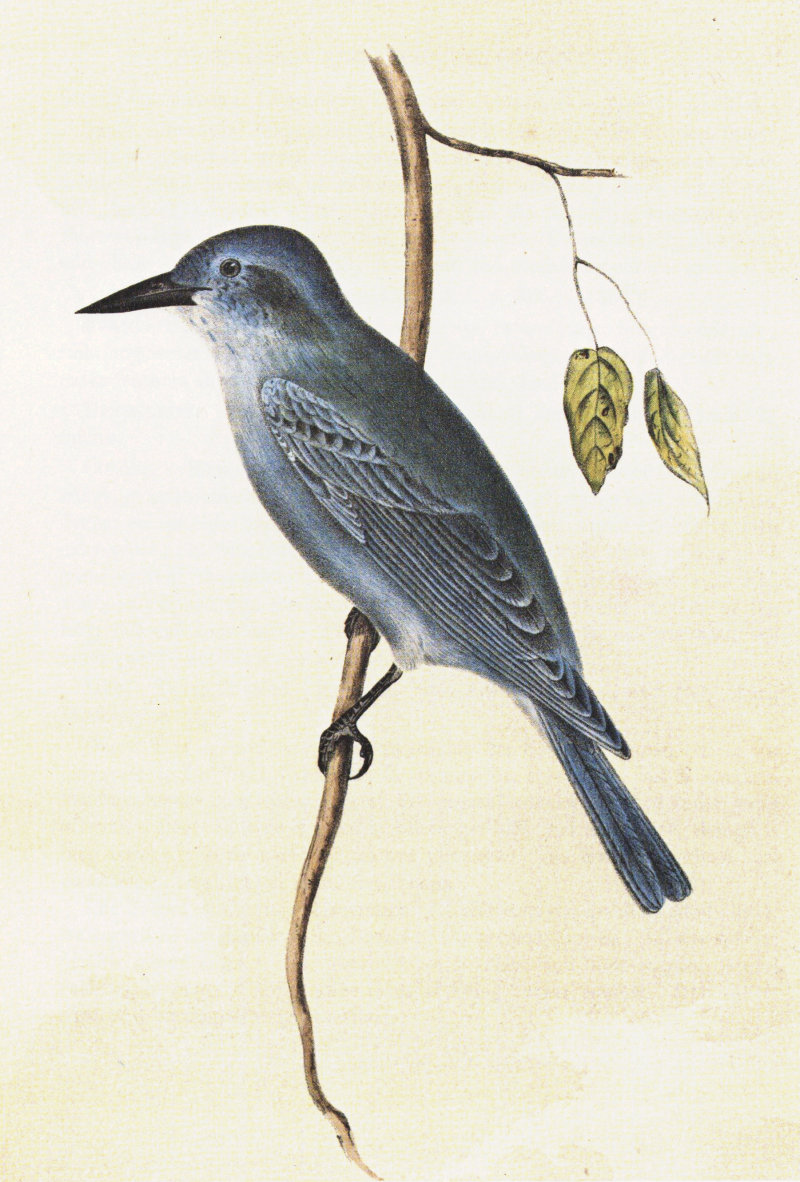
Plate 28 The Prince Maximilian’s Jay Gymnokitta cyanocephala (DeWied)
165