AMMODROMUS RUFICEPS.—Cassin. The Western Swamp Sparrow. PLATE XX.—Adult Male.
Reading edition
The only information that we can present to the reader respecting the bird now before him, is, that specimens were brought from California in the collections made by Mr. Bell and Dr. Heermann. It appears to have been overlooked by all other naturalists,—a circumstance probably not to be attributed to its rarity in its native country, so much as to the character of the localities in which it lives during the greater part of the year, in common with other species of the same family.
The little birds of the group to which this species belongs, of which there are several, are all of humble and unpretending appearance, and live in the vicinity of the shores of the ocean and the margins of streams of fresh water, and hence have been designated Swamp Sparrows. The flats, or other low and level tracts, overgrown with reedy or sedgy vegetation, in the vicinity of the sea-shore, are the favorite resorts of two or three species throughout a large portion of the entire extent of the Atlantic coast of the United States; while somewhat similar localities along rivers or smaller streams, or even swamps and marshes in the interior, afford appropriate habitations for others. In these they subsist mainly on seeds of grasses and such other plants as usually abound in those situations, and occasionally on insects. The Swamp Sparrow, first described by the celebrated ornithologist, Wilson (Ammodromus palustris), is the best known of these birds, and is abundant in all suitable localities, during the summer season, throughout the greater part of the older States of the Union. In winter, it migrates southward, and is found in large numbers along the Mississippi river in the south, and other streams in the southern States. The Swamp Sparrows have no song, other than a few rather remarkable and not unmusical notes.
Dr. Heermann remarks of this bird: “In the fall of 1851, I met with a single specimen of this bird, in company with a flock of Sparrows of various kinds. In the spring of 1852, I found it quite abundant on the Calaveras river, where I procured several specimens. Its flight appeared feeble, and when raised from the ground, from which it would not start until almost trodden upon, it would fly a short distance, and immediately drop again into the grass. Its notes are a ditty, resembling that of our Chipping Sparrow (E. socialis), and were heard towards the spring season.”
In our plate this bird is represented of the size of life.
136
The plant is a western species of Ipomea, which was raised from the seed by our esteemed friend, Mr. Robert Kilvington, of Philadelphia, to whose kindness we are indebted for the privilege of figuring it and other plants for the plates of the present work.
DESCRIPTION AND TECHNICAL OBSERVATIONS.
Genus Ammodromus. Swainson, Zoological Journal, III. p. 348. (1827.)
Size small; bill lengthened, pointed; tip of upper mandible slightly curved downwards; wings very short; the first primary shorter than the succeeding four or five, which are nearly equal; tail moderate, or rather long, with its feathers narrow; tarsi and toes rather long, slender. An American genus, containing six or seven species.
Ammodromus ruficeps. Cassin, Proc. Acad., Philada., VI. p. 184. (Oct., 1852.)
Form. Bill shorter than usual in this genus; wings short, rounded; tail long; tarsi lengthened, slender.
Dimensions. Total length of skin, about 5¾ inches; wing, 2½; tail, 2¾ inches.
Colors. Head above chestnut-brown, which is also the prevailing color of the back and rump, the feathers of both the latter edged with pale cinereous, tinged with olive. Spot in front of the eye white, forming a partial superciliary line. A narrow stripe of black from each side of the lower mandible running downwards, above which is a stripe of white; intermediate space on throat nearly white; other under parts pale ashy, with a tinge of olive; quills brown; primaries edged externally with ashy; secondaries with pale chestnut-brown; tail reddish-brown, with crimped obscure transverse lines; bill dusky horn-color; feet pale.
Hab. California. Spec. in Mus. Acad., Philada.
Obs. Resembles in some measure A. palustris, but can be easily distinguished. It appears to be restricted to California, not having been observed in New Mexico or Texas. Ammodramus is the original orthography of the name of this genus given by Swainson as cited above, but that here given is universally adopted, and is much the most usual in generic names of similar derivation.
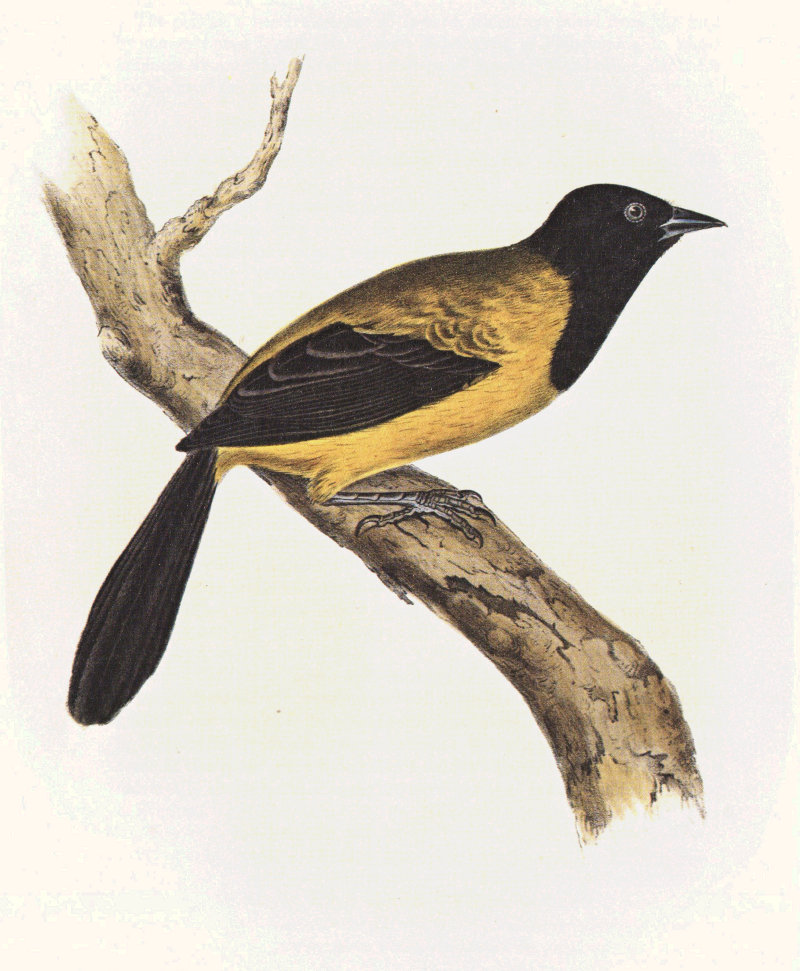
Plate 21 The Black-headed Oriole Icterus melanocephalus (Wagler)
137