SYNOPSIS OF THE SPECIES OF BIRDS INHABITING THE CONTINENT OF AMERICA, NORTH OF MEXICO.
Reading edition
I. ORDER RAPTORES. THE RAPACIOUS BIRDS.
General form, strong, muscular, and capable of vigorous and long continued flight; bill and claws usually curved and strong, and adapted to the destruction of other animals, or for preying on animals already dead. The sense of sight in many species developed in a greater degree than in any other group of the animal kingdom. Habits, in the majority of species, solitary, cautious, and very vigilant. Female larger than the male. Inhabit all parts of the world, and form a well defined and easily recognized order of birds, strikingly analogous to the Rapacious Quadrupeds.
I. FAMILY VULTURIDÆ. THE VULTURES.
Head and neck usually naked, and the former frequently more or less carunculated, or with the skin wrinkled; bill, strong, rather lengthened and strongly hooked; claws, usually moderate, and but slightly curved; wings, usually long and powerful. Size, generally large; body, heavy. General structure adapted to the destruction of dead animals exclusively, but a few species do not hesitate to attack young or feeble animals when living.
Inhabit the temperate and the warm regions of the earth, but are much more numerous in the latter. There are about twenty known species of Vultures.
I. GENUS CATHARTES. Illigee Prodromus, p. 236. (1811.)
CATHARISTA. Viellot Analyse, p. 21. (1816.)
Head and upper part of the neck, naked, or partially covered with short downy feathers; the skin of the former generally wrinkled, or with wart-like excrescences. Bill, rather long, straight, curved at the end; nostrils, large, 57 open, and unprotected, inserted near the middle of the bill. Wings, long, third and fourth primaries usually longest; tail, composed of twelve feathers, usually slightly rounded; legs and feet, moderate, rather strong, covered with scales, middle toe long, hind toe shortest; claws, rather strong, moderately curved, obtuse at their points. Colour of all known species, black.
Of this genus, which is peculiar to America, there are seven species; four of which are natives of the northern, and two of the southern portion of this continent, and one of the West Indies. All of them much resemble each other in their habits, and the two South American species are nearly related to similar species of the North, as will be pointed out in descriptions of the latter now to be given. In all its essential characters, this genus differs very little from Sarcoramphus, which includes the Condor and the King Vulture of South America.
A.
1. Cathartes aura. (Linn.) The Turkey Buzzard. The Turkey Vulture.
Vultur aura. Linn. Syst. Nat., I. p. 122. (1766.)
Cathartes septentrionalis. De Weid Reise, I. p. 162. (1839.)
Catesby Nat. Hist. Carolina, I. pl. 6. Vieill. Ois. d’Am. Sept. I. pl. 2. Wilson Am. Orn. IX. pl. 75, fig. 1. Aud. B. of Am. pl. 151.
Plumage, commencing on the neck with a circular ruff of rather long and projecting feathers. Head and upper part of neck, naked, or with scattering, down-like feathers, especially on the vertex, and with the skin wrinkled. Nostrils, large, oval, communicating with each other; tail, rather long, rounded.
Entire plumage, brownish black, darkest on the neck, back and tail above; many feathers having a purple lustre on the upper and under parts of the body, and with pale brownish borders on the upper parts. Bill, yellowish white; wings and tail, paler beneath. Head and neck, in living bird, bright red.
Total length of skin about 30 inches; wing, 23; tail, 12 inches.
Hab. The entire territory of the United States—rare in New England. Wisconsin, (Dr. Hoy,) Oregon, (U. S. Ex. Exp. Vincennes.) New Mexico, (Dr. Henry.) California, (Dr. Gambel.) Spec. in Mus. Acad. Philada.
Obs. This species is abundant in the Southern, and of quite frequent occurrence in the Middle States of the Union; but it rarely visits the northeastern, or on the Atlantic, is seldom met with north of New Jersey. In the southern part of the State of Delaware, and in Maryland, it is very abundant, migrating farther south in the winter. It subsists entirely on dead animals, which it devours in every stage of decomposition or putridity.
A South American species, long considered as identical with the present bird, is now well ascertained to be distinct, and is the Vultur jota. Molina. 58 This name has been erroneously applied to the Carrion Crow or Black Vulture of the United States. The South American species is the smaller, is more slender in all its members, and all the specimens that we have seen have been of a more uniform clear black colour.
2. Cathartes atratus. (Bartram.) The Carrion Crow. The Black Vulture.
Vultur atratus. Bartram Travels, p. 289. (1791.)
Vultur urubu. Vieill. Ois. d’Am. Sept., p. 53. pl. 2. (1807.)
Wilson Am. Orn. IX. pl. 75, fig. 2. Aud. B. of Am. pl. 106.
Plumage commencing higher on the back of the neck than on its sides or in front, and there consisting of short feathers. Head and naked portion of the neck, warted or corrugated, and thinly covered with short hair-like feathers, bill rather long, nostrils large, and communicating with each other; tail, even; legs, rather long.
Entire plumage, deep uniform black, with a bluish gloss; under surface of primaries nearly white.
Total length (of skin) about 23 inches, wing 16½; tail 8½ inches.
Hab. Southern States, Texas (Audubon), California, Oregon (U. S. Ex. Exp. Vincennes). Spec. in Mus. Acad. Philada.
Obs. Abundant in the Southern States, and gregarious, congregating in large numbers in the cities, where they are of service in the destruction of all descriptions of rejected or waste animal matter.
The South American bird usually regarded as identical with this bird, is the Vultur brasiliensis. Ray. It is considerably smaller, and otherwise quite distinct.
3. Cathartes californianus. (Shaw) The Californian Vulture.
Vultur californianus. Shaw, Nat. Misc. IX. p. 1, pl. 301. (1797.)
Vultur columbianus. Ord. Guthries’ Geog. II. p. 315. (1815.)
Cathartes vulturinus. Temm. Pl. col. I. pl. 31. (1820.)
Aud. B. of Am. pl. 411. Gray Gen. of B. pl. 2. Licht. Trans. Berlin Acad. 1838, pl. 1.
Size, large. Plumage commencing on the neck near the body, with a ruff of long, lanceolate feathers, which are continued on the breast. Head and neck bare, or with a few short feathers on the vertex, and at the base of the upper mandible; bill rather long, nostrils small, communicating with each other; wings long, primaries pointed; tail long, slightly rounded; tarsi and feet very strong.
Entire plumage black, many feathers narrowly tipped with brown, secondary quills with a grayish tinge, greater coverts tipped with white, which forms a transverse bar on the wing. Bill, yellowish white. Iris, carmine. Head and neck, in living bird, orange yellow. (Gambel.)
Total length (of skin) about 45 inches, wing 31, tail 15 inches.
Hab. California, Oregon. Spec. in Mus. Acad., Philada.
59
Obs. This large Vulture is inferior only in this family to the Condor of South America. It is restricted to the countries west of the Rocky mountains, where in the vicinity of rivers it is occasionally abundant, living principally on dead fishes. It appears to be, however, more cautious and timid in its habits than the other birds of this group, and constructs its nest in the remote recesses of the mountains.
B. SPECIES PROBABLY OCCURRING IN THE UNITED STATES.
1. Cathartes burrovianus. Cassin, Proc. Acad. Philada. II. p. 212, (1845.) Burrough’s Vulture.
Resembling C. aura, but much smaller. Plumage on the neck ascending behind, as in C. atratus; bill, rather short; tail, rounded; tarsi, rather long. Entire plumage, deep uniform black, without brown edgings.
Total length of prepared specimen, from tip of bill to end of tail, about 22 inches, wing 18, tail 8½ inches.
Hab. Mexico, Vera Cruz (Dr. Burrough), Mazatlan (Dr. Gambel). Spec. in Mus. Acad., Philada.
Obs. This is the smallest of all known Vultures, and though strictly of the same genus as C. aura, may readily be recognized by its small size. It is very probably to be found in California, and the late Dr. Gambel thought that he had seen it in that country, and at Mazatlan. (Jour. Acad. Philada. I. p. 26, quarto.)
II. GENUS SARCORAMPHUS. Dumeril Anal. p. 32, (1806.)
GYPAGUS. Vieill, Anal. p. 21, (1816.)
Head and neck naked, the former with an elevated fleshy caruncle. In all other characters much resembling Cathartes.
2. Sarcoramphus sacer. (Bartram) The Sacred Vulture.
Vultur sacra. Bartram, Travels in Florida, p. 150, (1791.)
Original description.—“The bill is long, and straight almost to the point, where it is hooked or bent suddenly down, and sharp; the head and neck bare of feathers nearly down to the stomach, when the feathers begin to cover the skin, and soon become long and of a soft texture, forming a ruff or tippet, in which the bird, by contracting his neck, can hide that as well as his head; the bare skin on the neck appears loose and wrinkled, which is of a bright yellow colour, intermixed with coral red; the hinder part of the neck is nearly covered with short stiff hair; and the skin of this part of the neck is of a dun purple colour, gradually becoming red as it approaches the yellow of the sides and forepart. The crown of the head is red; there are lobed lappets of a reddish orange colour, which lay on the base of the upper mandible. The plumage of the bird is generally white or cream colour, except the quill feathers of the wings 60 and two or three rows of the coverts, which are beautiful dark brown; the tail, which is rather large and white, is tipped with this dark brown or black; the legs and feet of a clear white; the eye is encircled with a gold coloured iris, the pupil black.” Bartram, as above, p. 150, 151.
Obs. The identification of the bird here described, may be considered as one of the most important services to be performed in North American Ornithology. Its occurrence has never been noticed since the time of the accurate and veracious naturalist who first described it, and his careful description above quoted seems to clearly indicate it to be a species entirely unknown. The white tail especially is characteristic, and establishes a clear distinction from any other known species. It is related evidently to the King Vulture, (S. papa,) but that species has a black tail, and in case of mistake or misprint in Bartram’s description, it may be presumed at any rate to relate to an occurrence of that species within the United States. There is no more inviting nor more singular problem in North American Ornithology.
C. SPECIES, THE OCCURRENCE OF WHICH IN THE UNITED STATES IS DOUBTFUL.
1. Sarcoramphus gryphus. (Linn.) The Condor.
Bonap. Am. Orn. IV. pl. 22. Temm. pl. col. 133, 408, 464. Zool. Voy. Bonité, Birds, pl. 2, (Paris, 1841.)
Size, large. Head, neck, and large space on the breast, bare. Plumage, black, with a white space on the wing; neck, with a collar or ruff of white downy feathers; plumage of the back, the quills and tail frequently with a gray tinge. Head above with a large caruncle or comb, and others on the sides of the head and neck.
Total length of skin, about 4 feet, wing about 2 feet 6 inches, tail about 15 inches.
Hab. South America.
Obs. The famous Condor of the Andes, though it has been admitted as a North American bird into the works of Bonaparte and Nuttall, cannot at present, in our opinion, be so regarded. The description in the History of the Expedition of Lewis and Clarke, which was supposed to relate to this bird, and has been the sole authority for its introduction by the authors just mentioned, very probably applies to the Californian Vulture. No other travellers have seen the Condor, either at the localities mentioned by Lewis and Clarke, or elsewhere in North America. It is common in the western parts of South America. The most complete descriptions with which we are acquainted are by Humboldt, in Zoological Observations, I. p. 26, (Recuil d’Observationes de Zoologie et d’Anatomie comparée Paris, 1811, quarto,) and by Darwin in 61 Zoology of the Voyage of the Beagle, Birds, p. 3, (London, 1841,) and by the same author in Voyage of a Naturalist, I. p. 234, 238, (American edition, New York, 1846, duodecimo.)
2. Sarcoramphus papa. (Linn.) The King Vulture.
Spix. Av. Bras. pl. 1. Buff. Pl. Enl. 428. Vieill. Gal. pl. 3.
Plumage on the neck, dusky cinereous; wings and tail, glossy black; all other parts, fine pale fulvous. Head and upper part of neck naked, the former with an elevated and conspicuous caruncle arising from the cere.
Total length of skin about 28 inches, wing 18, tail about 9 inches.
Hab. South and Central America. Mexico.
Obs. The King Vulture is the most handsome bird of its family. Though admitted by Nuttall as a bird of the United States (Manuel, I. p. 40, Boston, 1840,) no instance is recorded, or has otherwise come to our knowledge, of its having been observed north of Mexico. It is not improbable, however, that it may yet be found in Texas or in California, or possibly in Florida. It is described by Hernandez as an inhabitant of Mexico, in his “New History of the Plants, Animals, and Minerals of Mexico,” p. 319, (Nova, plantarum, animalium et mineralium Mexicanorum, Historia, Rome, 1651, folio,) and has found a place in the works of all authors on general Ornithology, and been noticed by many travellers.
The above comprise all the Vultures which have been hitherto known or supposed to inhabit America, north of Mexico. There are three other species which appear to be peculiar to South America and the islands of West Indies, (particularly the more southern of them,) all of which more or less intimately resemble our species of the North. They are Cathartes jota (Molina), described in Geog. Nat. and Civil Hist. of Chili, American edition, I. p. 185, (Middletown Conn. 1808, octavo,) Cathartes Brasiliensis, Bonaparte Consp. Av. p. 9, and Cathartes urbicola, Des Murs Rev. and Mag. de Zool. April, 1853. The latter is a large and very remarkable species which has only recently been ascertained to frequent the cities of several of the West Indies.
Nearly all of the American Vultures are remarkable for a disposition manifested, in a greater or less degree, to resort to cities, or even more isolated abodes of men, for the purpose of procuring food. In the southern cities of the United States, the Black Vulture congregates in large numbers; its relative of South America (Cathartes Brasiliensis) possesses the same habit, and is exceedingly abundant in the cities of the countries that it inhabits. Even the gigantic Condor does not hesitate to make its appearance in the vicinity of villages or dwellings in the western countries of South America for the 62 same purpose. In this respect these birds resemble the most common European bird of their family which inhabits southern Europe, and also Asia and northern Africa; the Neophron percnopterus or Egyptian Vulture. The latter is, however, very different in colour, being nearly white when adult, and clean, which is an important consideration in a bird of habitually filthy habits.
Travellers have represented the male of the Condor as larger and as having more handsome plumage than the female. We hope to be excused for here asking attention to this point, should opportunity occur to any of our readers. It is the only known or supposed instance in the order of Rapacious Birds, of the male being the larger, and, if true, of course establishes an exception hitherto not recognized by naturalists. In these birds, and especially in the Falcons and Eagles, the difference in the size of the sexes of the same species is often very remarkable, but the larger is invariably the female.
Further experiments and observations by persons having suitable opportunities and facilities are very desirable for the purpose of ascertaining the degree of development of the senses of sight and smell in the Vultures. Eminent authors have maintained quite opposite views on this subject, some attributing the fact that they perceive objects suitable for their food from a distance, to the acuteness of their sight and others to their power of smelling. This is yet an open question, though there is a very considerable amount of evidence on each side, and may be regarded as presenting an interesting field for further investigation.
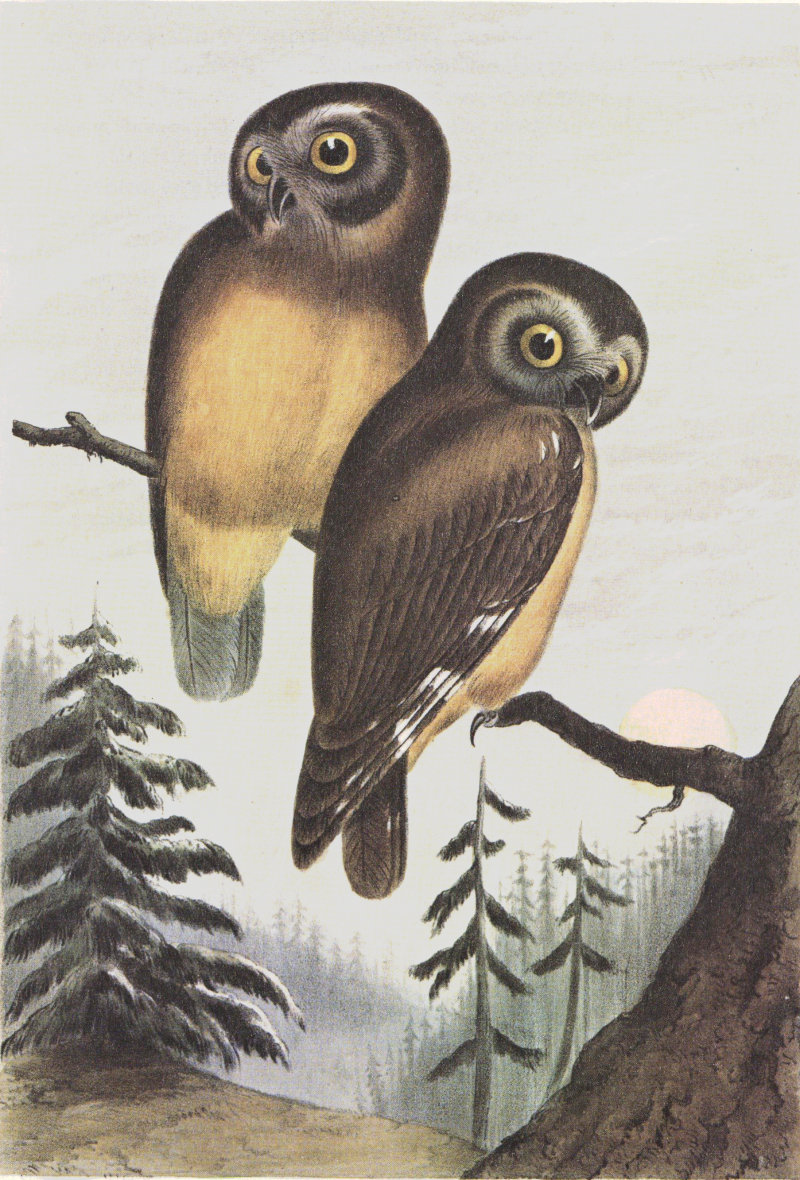
Plate 11 Kirtland’s Owl Nyctale Kirtlandii (Hoy)
63