Part 2 — VI. INSECT STUDY (continued 5)
Reading edition
7. What bee-bread is and its uses.
8. What propolis is and what it is used for.
9. How young bees look and how they are cradled and fed.
10. Does the removal of the honey from the supers in the fall do any harm to the bee colony?
11. How much honey should a good-sized colony have in the fall to winter well?
12. How should the hives be protected in the winter and summer?
What may be seen in the observation hive—13. Describe how a bee works when building honey-comb.
14. How does the bee act when storing honey in a cell?
15. How does a bee place pollen in a cell and pack it into bee-bread?
16. Describe how the nurse bees feed the young, and how the young look when eating.
17. Describe how the “ladies in waiting” feed and care for the queen.
18. Try to observe the queen when she is laying eggs and describe her actions.
19. How do the bee workers keep their house clean?
20. How do they stop all crevices in the hive? If you keep the hive uncovered too long, how will they curtain the window?
21. Describe the actions of the bees when they are ventilating the hive.
22. If there are any drones in the hive, describe how they are fed.
23. How can you tell queens, drones and workers apart?
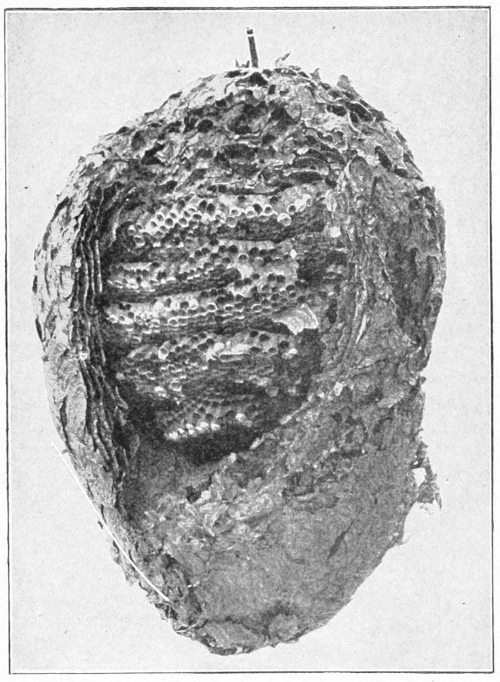
A wasp’s nest with side walls removed.