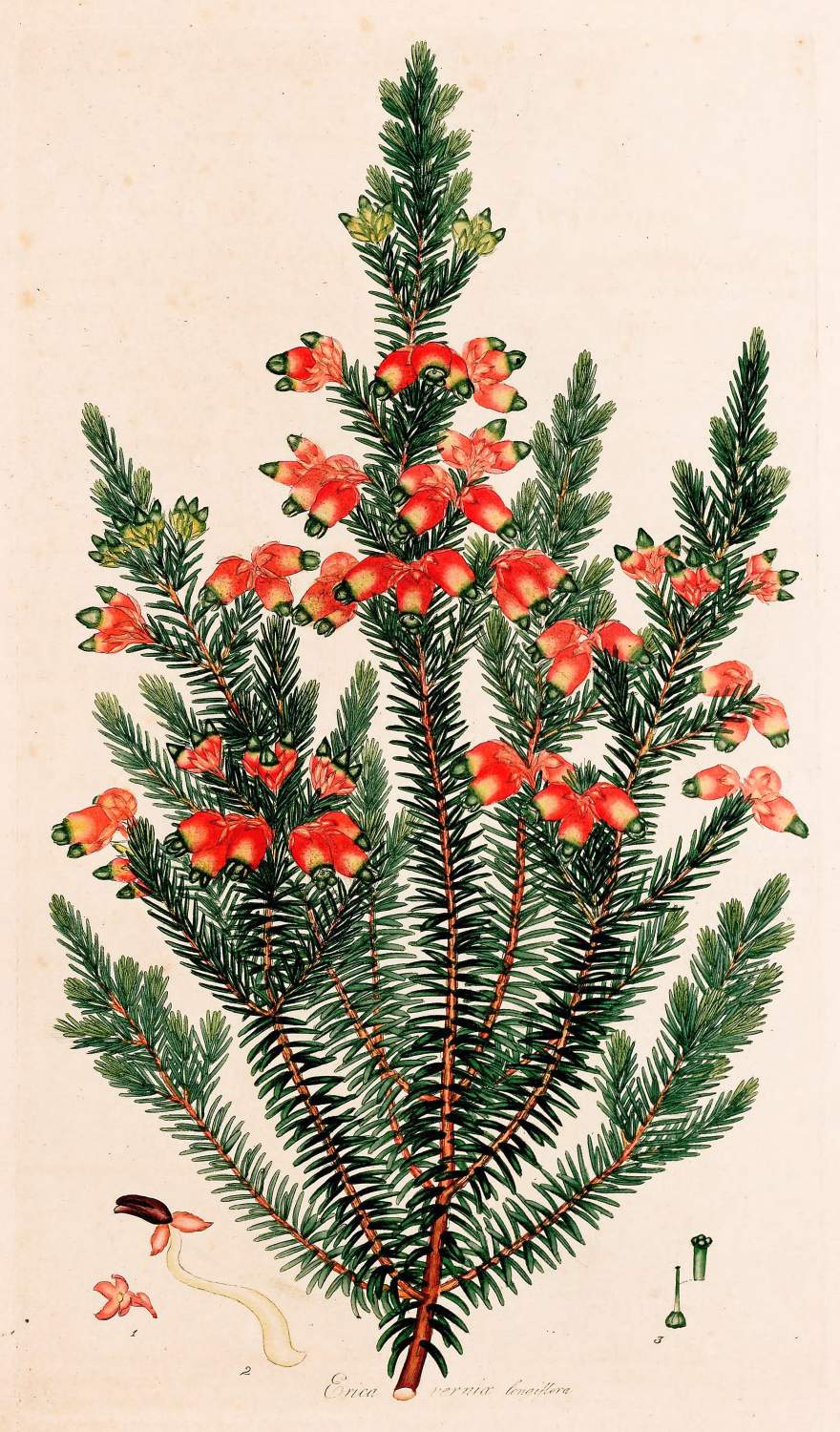
ERICA vernix, longiflora.
Reading edition
CHARACTER SPECIFICUS.
Erica, antheris cristatis, inclusis: floribus ternis, tricoloribus, viscosis, urceolatis: foliis ternis.
DESCRIPTIO.
Caulis erectus, sesquipedalis; ramulis ternis, verticillatis.
Folia ternata, sub-trigona, supra plana, subtus sulco exarata: petiolis longis.
Flores plerumque ternati, cernui, speciosi: pedunculi colorati, bracteis tribus coloratis instructi. Corolla urceolata, glutinosissima, et lucida, colore saturate aurantio: laciniis oris erectis, saturate viridibus: calycis foliolis ovato-acutis, adpressis.
Germen tiaræforme, sulcatum, ad basin nectariis melliferis instructum.
Habitat ad Caput Bonæ Spei.
Floret a mense Februarii in Junium.
REFERENTIA.
1. Calyx. 2. Stamen auctum. 3. Germen et Pistillum, stigmate lente aucto.
SPECIFIC CHARACTER.
Heath, with crested tips within the blossom: flowers grow by threes, are three-coloured, clammy, and pitcher-shaped: leaves by threes.
DESCRIPTION.
Stem shrubby, a foot and a half high: the branches grow by threes in whorls.
Leaves by threes, nearly three-sided, flat on their upper surface, and furrowed beneath: footstalks long.
Flowers grow mostly by threes, nodding and showy: footstalks coloured, furnished with three coloured floral leaves: blossom pitcher-shaped, very glutinous, and shining, of a deep gold colour: segments of the border are upright, and of a deep green: the leaflets of the cup are ovate-pointed, and pressed to the blossom.
Seed-bud turban-shaped, furrowed, and furnished with honey-bearing nectaries at the base.
Native of the Cape of Good Hope.
Flowers from the month of February till June.
REFERENCE.
1. The Empalement. 2. A Chive magnified. 3. Seed-bud and Pointal, summit magnified.
This elegant addition to the extensive family of the Ericæ was raised from Cape seed in the Summer of 1808, by Mr. Knight, Nurseryman, of the King’s Road, Chelsea. The difference between this plant and the E. vernix is easily discernible when they are in flower; but from the great similitude in their habit, stalks, and leaves, it is scarcely possible to distinguish them from each other when out of bloom.