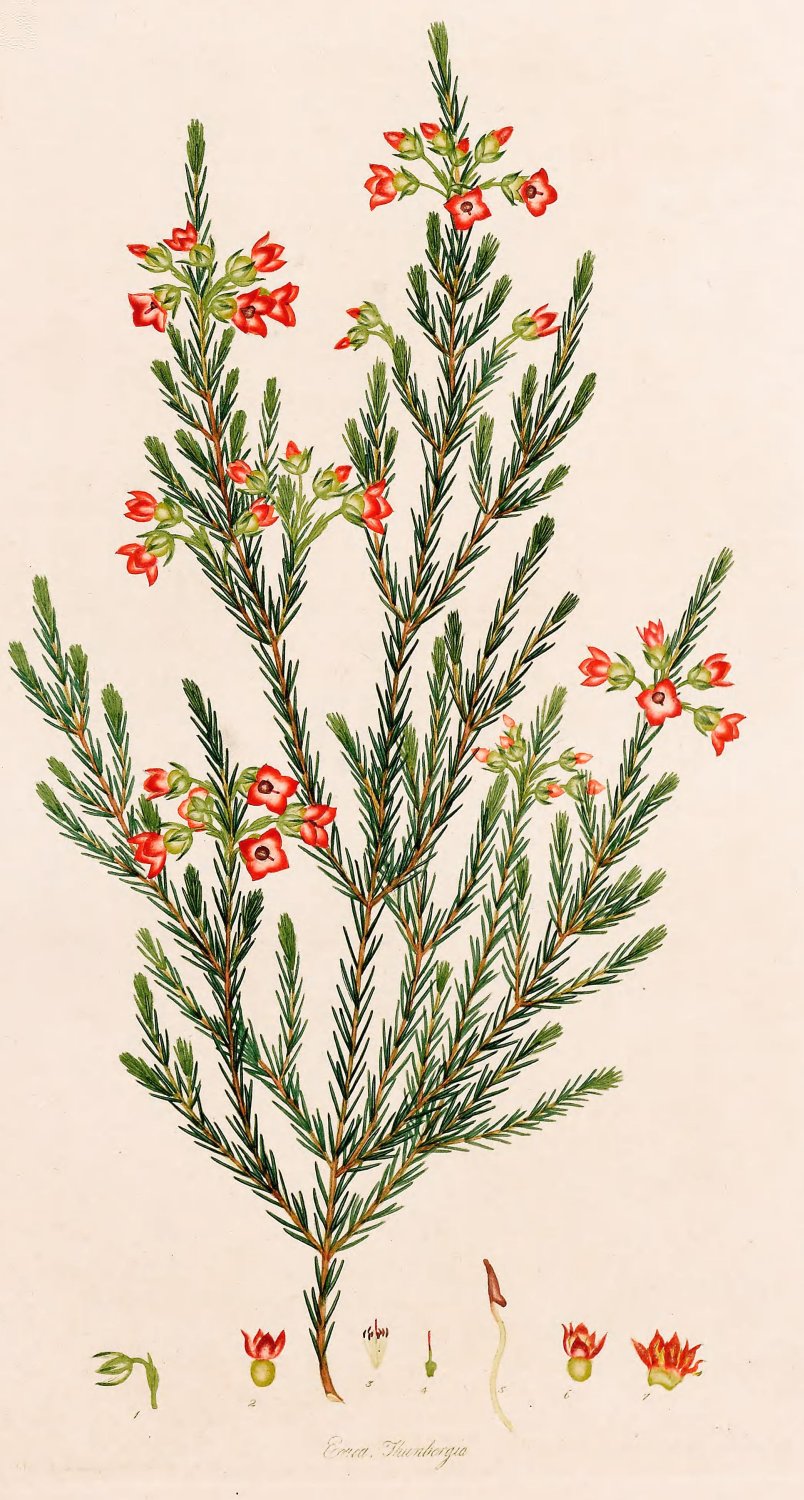
ERICA Thunbergia.
Reading edition
CHARACTER SPECIFICUS.
Erica, antheris muticis, inclusis: stylo sub-exerto: floribus globosis, campanulatis: foliis ternis.
DESCRIPTIO.
Caulis sesquipedalis, erectus: ramis filiformibus, virgatis.
Folia ternata, linearia, erecta, obtusa.
Flores prope apices ramulorum umbellati: pedunculis longissimis: corolla tubo globoso luteo: limbo campanulato: laciniis cordatis, magnis, læte coccineis.
Germen tiaræforme, sulcatum, ad basin nectariis melliferis instructum.
Habitat ad Caput Bonæ Spei.
Floret a mense Februarii ad Julium.
REFERENTIA.
1. Calyx. 2. Corolla. 3. Stamina et Pistillum. 4. Germen et Pistillum. 5. Anthera una lente aucta. 6. Flos plenus vel monstrosus. 7. Idem expansus.
SPECIFIC CHARACTER.
Heath, with beardless tips, within the blossom: shaft just without: flowers globular, and bell-shaped: leaves by threes.
DESCRIPTION.
Stem a foot and half high, upright: branches thread-shaped and twiggy.
Leaves by threes, linear, upright, and blunt-ended.
Flowers grow near the ends of the branches, in umbels: footstalks very long; blossom with a round tube of a yellow colour: mouth of the flower bell-shaped: segments heart-shaped, large, and of a bright scarlet.
Seed-bud turban-shaped, and furrowed, with honey-bearing nectaries at the base.
Native of the Cape of Good Hope.
Flowers from February till July.
REFERENCE.
1. The Empalement. 2. A Blossom. 3. Chives and Pointal. 4. Seed-bud and Pointal. 5. One tip magnified. 6. A double or monstrous Flower. 7. The same spread open.
This Erica is said to be first described by Professor Montin in the Upsal Transactions. It is a very interesting plant, combining beauty with novelty, and perfectly distinct from any other species at present known: it bears the name of that able botanist Thunberg, and was first raised at the Hammersmith Nursery from Cape seed brought by the late F. Masson, Collector to the Royal Gardens at Kew.