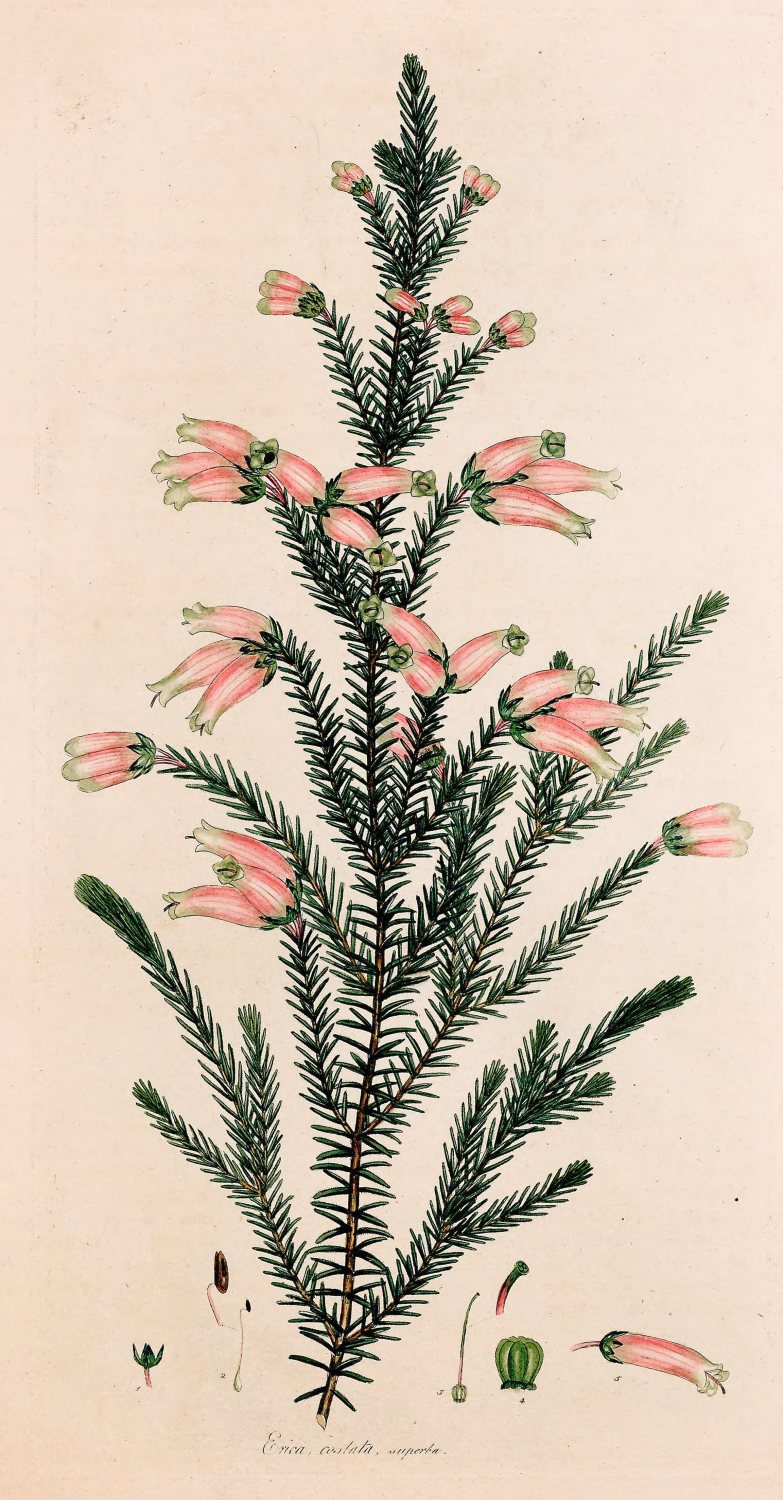
ERICA costata, superba.
Reading edition
CHARACTER SPECIFICUS.
Erica, antheris muticis, inclusis: stylo exerto: floribus terminalibus ternatis: caule erecto.
DESCRIPTIO.
Caulis bipedalis, fruticosus, erectus, ramosus: ramuli frequentissimi, longi.
Folia caulina terna, linearia obtusa, pubescentia: folia ramentacea erectiora, hirsuta.
Flores in ramulis terminalibus plerumque terni, subcernui: corolla cylindrico-clavata, pollicari, pallide carnea, costata: oris laciniis luteo-albentibus.
Habitat ad Caput Bonæ Spei.
Floret a mense Maio ad Julium.
REFERENTIA.
1. Calyx. 2. Anthera una, summitate lente aucta. 3. Germen et Pistillum, stigmate lente aucto. 4. Germen lente auctum. 5. Flos varietatis monstrosæ.
SPECIFIC CHARACTER.
Heath, with beardless tips, within the blossom: shaft without: flowers terminate the branches by threes: stem upright.
DESCRIPTION.
Stem two feet high, shrubby, upright, and branching: small branches numerous and long.
Leaves on the stem by threes, linear obtuse, and downy: those on the smaller branches are more upright, and hirsute.
Flowers terminate the branches, mostly by threes, nearly drooping: blossom cylindrically club-shaped, an inch long, of a pale flesh colour, and ribbed: segments of the border of a whitish yellow.
Native of the Cape of Good Hope.
Flowers from the month of May till July.
REFERENCE.
1. Empalement. 2. A Chive, summit magnified. 3. Seed-bud and Pointal, summit magnified. 4. Seed-bud magnified. 5. Flower of a monstrous variety.
This delicate-flowered Heath was raised at the Hammersmith Nursery in the summer of 1820, under the specific title of E. costata, superba (said to be raised from the seed of the E. costata). There were two plants of it that flowered: one tall, the other short and bushy. We preferred the tall one, being the finest and most in flower, but have given a flower from the other plant, which differed a little in shape, and had also two blossoms on it, like the one represented, a kind of monstrosity that sometimes occurs. Upon dissecting the other, we found all the anthers surmounted by the appearance of an increasing petal, and they seemed to have been produced solely at the expense of their fertility, as the absence of the pollen was all the difference we could discern, neither the shape nor colour having suffered any alteration.