Volume 1 — A FAITHFUL FRIEND:—WARFIELD FOR BELASCO. THE END OF “THE AUCTIONEER.”
Reading edition
Warfield’s second season in “The Auctioneer” began, September 8, 1902, at the Hollis Street Theatre, Boston, and lasted for 39 weeks,—closing at the Victoria Theatre, New York, May 30, 1903. 315 performances were given and the net profits were $70,000. His third season began at the Harlem Opera House, New York, September 28. It was in December, 1903, that Brooks applied to Judge David Leventritt for a receiver for “The Auctioneer.” Warfield, then acting in New Orleans, being apprised of this application, declared that he would “not play under the management of Klaw & Erlanger’s representative, a receiver, or any one but David Belasco.” That declaration, being published in the newspaper press, was construed by Judge Leventritt as an attempt on the part of Warfield to coerce the court in the matter of appointing a receiver and,—remarking that if it had not been for what he deemed to be an attempt at coercion he would have been inclined to appoint Belasco as the receiver,—he named W. M. K. Olcott. Warfield thereupon refused to continue acting, his tour was summarily closed, January 10, 1904,—two weeks’ salary being paid by Belasco to the members of the company, in lieu of notice,—and Warfield returned to New York. Before leaving New Orleans he published this statement:
“When I stated I would not play under the management of any one but Mr. Belasco, I meant just what I said. It was not a threat—simply expression of my honest conviction as to what was just and due to the man who has made me a successful star. ‘The Auctioneer’ was Mr. Belasco’s own investment, every penny of it. It was he who conceived the idea of starring me in a play of this character. From this man Brooks I have received nothing, nor have I from Klaw & Erlanger, who are Mr. Belasco’s partners in ‘The Auctioneer.’ The manner in which they became partners will be shown and proved when this case comes into court for trial. They refused to give Mr. Belasco bookings until he had surrendered 50 per cent. of the concern. I was an unmade star then, and Mr. Belasco was not in the position of power which he holds to-day. We had to divide. But of the profits which Klaw & Erlanger have made from the managers with whom they have booked the attraction, neither Mr. Belasco nor I have received one penny from our partners. As for Brooks, he has never had even carfare, unless Klaw & Erlanger have been more liberal to him than to us.
“The trouble and annoyance which this whole affair has caused me have made me ill. But, sick or well, I absolutely refuse to play in ‘The Auctioneer’ for any one but my own manager, Mr. David Belasco. I defy Mr. Erlanger to deny that he and Mr. Klaw, and not Mr. Brooks, are the real partners of Mr. Belasco in my tour. He told me so with his own lips, when the New Amsterdam Theatre was building last summer. He asked me to come and see how the foundations were getting on. And when I funked, before crossing a rather rickety looking plank, he said ‘I won’t let you get hurt, old man. Remember, I own 50 per cent. of you.’ When Klaw & Erlanger hand over our share of the profits they have made on the side, through booking my play, I will go on with the tour, if my health permits.”
After his arrival in New York, having read the remarks of the judge in appointing a receiver, Warfield made this further statement:
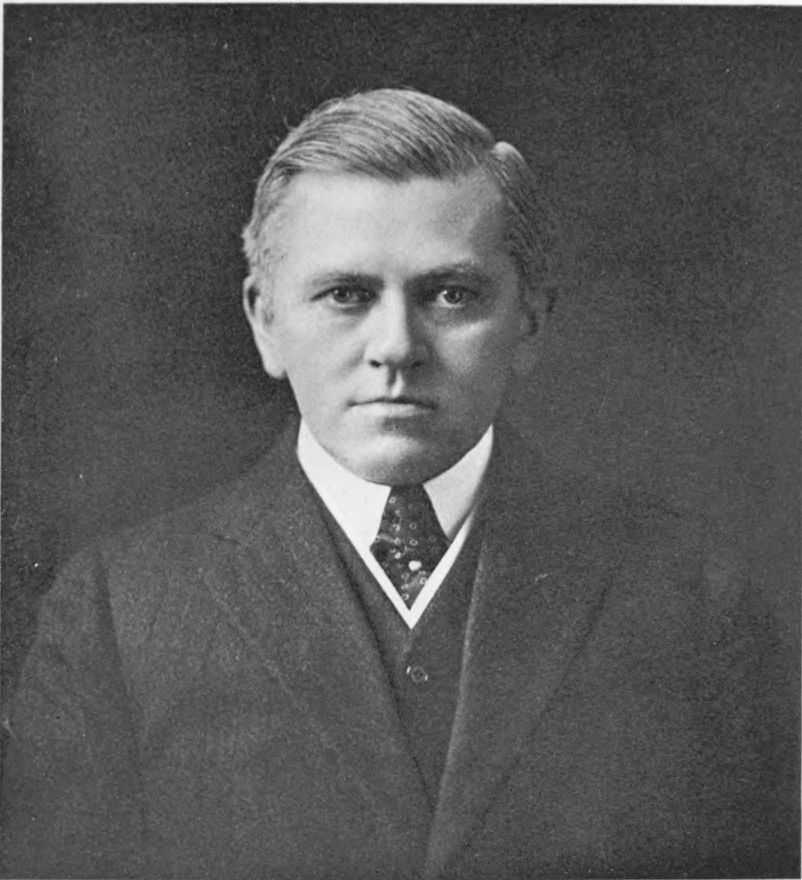
DAVID WARFIELD
Photograph by White. Belasco’s Collection.
“I must disclaim any intention of having attempted to coerce the court into appointing the receiver I desired. Realizing as I did the enormous amount of labor and energy expended by Mr. Belasco in making the tours of ‘The Auctioneer’ a success, and appreciating as I did that without me in the cast it was a grave question whether the success of ‘The Auctioneer’ could continue, I thought it but proper for me to inform the court that conscientiously I could not continue to act unless Mr. Belasco was appointed receiver. I am very sorry that my statement had the effect it did have, but it is pleasing for me to learn that the charges made by Mr. Brooks against Mr. Belasco were unfounded and not believed by the court, because the court in its opinion says that were it not from a desire to rebuke me it might have felt inclined to have appointed Mr. Belasco receiver. That is sufficient satisfaction to us who know Mr. Belasco’s character, because it is certainly fair to assume that the court would not have felt inclined to appoint Mr. Belasco receiver if it believed the charges brought against him.
“I am forced to continue the stand I originally took. I have closed the season of ‘The Auctioneer,’ nor will I continue to act in that play under the management of any person but Mr. Belasco.”
Brooks applied for a mandatory injunction to compel Warfield to continue acting in “The Auctioneer,” under the receivership direction of Mr. Olcott, and arguments supporting and opposing that application were heard before Justice Leventritt in the Supreme Court on January 26, 1904. Counsel for Warfield contended that while the court might enjoin Warfield from acting for any persons outside of his contract, it had no jurisdiction to compel him to act if he declined to do so. Justice Leventritt agreed with that view of the matter and held that a mandatory injunction as prayed for could not issue. Warfield did not act again for eight months.