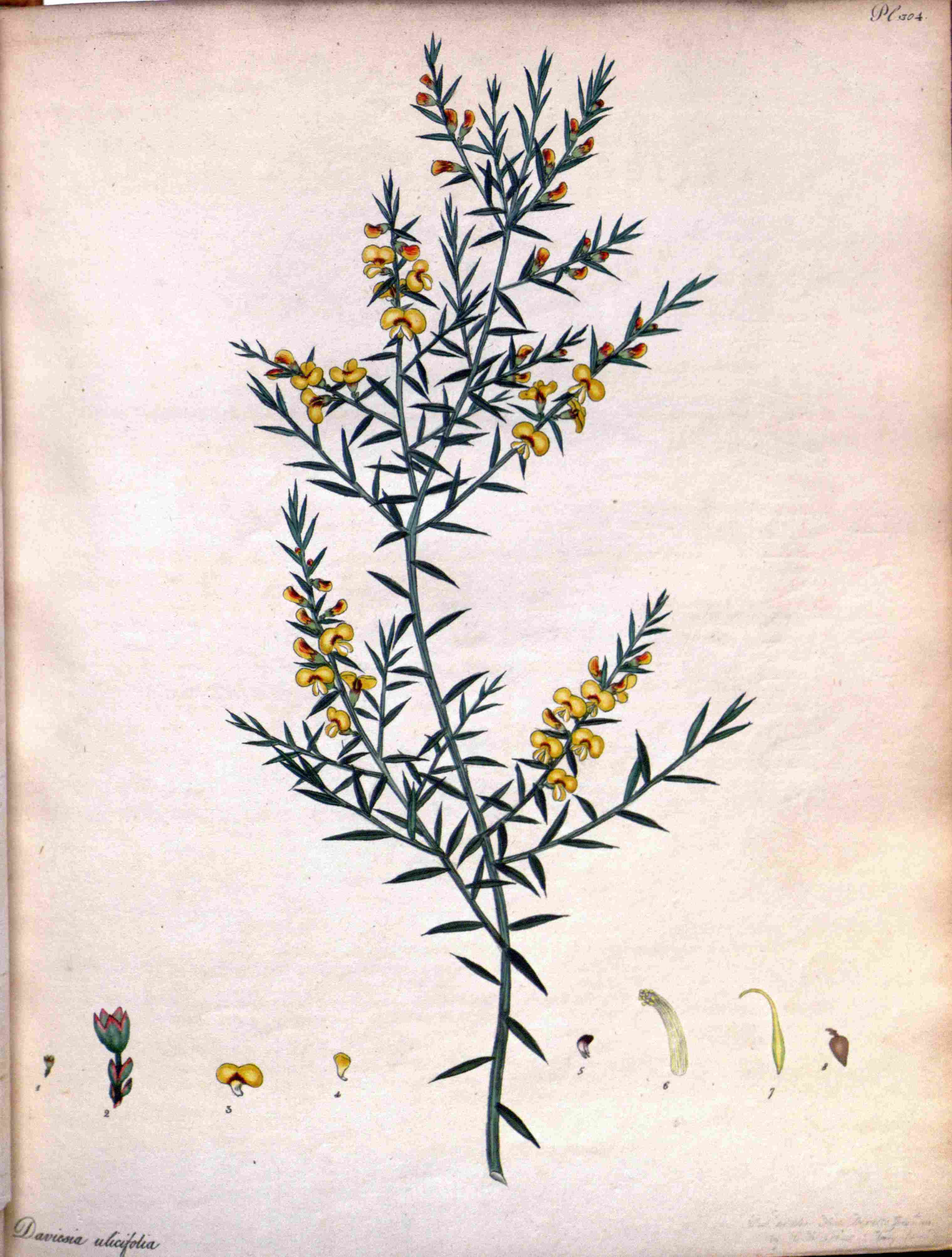
Volume 5 — PLATE CCCIV.
Reading edition
DAVIESIA ULICIFOLIA.
Furze-leaved Daviesia.
CLASS X. ORDER I.
DECANDRIA MONOGYNIA. Ten Chives. One Pointal.
GENERIC CHARACTER.
Calyx. Perianthium monophyllum, campanulatum quinquedentatum; laciniis equalibus erectis.
Corolla papillionacea, pentapetala.
Vexillum cordatum erectum.
Alæ oblongæ, vexillo duplo breviores.
Carina dipetala, alis paulo longiora.
Stamina. Filamenta decem, distincta, assurgentia, longitudine carinæ. Antheræ simplices minimæ.
Pistillum. German ovato-oblongum. Stylus subulatus, magnitudine et situ staminum. Stigma acutum.
Pericarpium. Capsula triangularis, compressa, acuta, unilocularis, bivalvis.
Semen unum, reniforme.
Empalement. Cup one-leaf, bell-shaped, five-toothed; segments equal, upright.
Blossom butterfly-shaped, five-petalled.
Standard heart-shaped, upright.
Wings oblong, half the length of the standard.
Keel two petals, a little shorter than the wings.
Chives. Threads ten, distinct, turned upwards, the length of the keel. Tips simple, very small.
Pointal. Seed-bud oblong egg-shaped. Shaft awl-shaped, of the same size and station as the chives. Summit pointed.
Seed-vessel. Capsule triangular, flat, sharp pointed, one cell, two valves.
Seed one, kidney-shape.
SPECIFIC CHARACTER.
Daviesia foliis lanceolatis, rigidis pungentibus; floribus axillaribus spicatis.
Daviesia with lance-shaped leaves, harsh and pricking; flowers grow from the insertion of the leaves in spikes.
REFERENCE TO THE PLATE.
1. The Empalement of the flower, natural size. 2. The Empalement magnified. 3. The Standard, or upper petal of the blossom. 4. One of the Wings of the blossom. 5. The two petals of the Keel. 6. The Chives, magnified. 7. The Pointal. 8. A ripe Seed-vessel.
This division of the butterfly flowered plants, from New Holland, was among the first genera which were raised from the seeds of that country, in Britain. And though we have possessed the plants so long, and both species, or rather the two varieties, perfect their seeds with us; yet are the plants very scarce, few of them are to be met with, and seldom more than a plant, or two, is to be found in any collection. The Daviesias grow about a foot and a half high, and when in flower make a very pretty appearance, as nearly the whole bush is covered with blossoms. They are rather tender, and are impatient of wet, which is, perhaps, the greatest enemy many of the plants from that country have to encounter with us. It flowers about April or May; is increased by seeds, or cuttings; should be kept in a small pot, comparatively with what may be used for the same sized plants, and planted in sandy peat. Our drawing was made from the Hibbertian collection, in the month of May 1802.