Chapter III · Plans Are Made and Forces Are Readied
Reading edition
Estimate of the Enemy Situation
Much effort was expended before the invasion in mapping the island, but this work was based on prewar maps and the results were very inaccurate. Since much of the island was under heavy fog for long periods, the photomaps that were produced had little value. They missed many important terrain features and misplaced others by thousands of yards. In general, however, the maps of the beachhead areas were accurate.
In September 1944 Sixth Army G-2 estimated that the Japanese forces on Leyte consisted mainly of 16th Division units and service troops—a total of 21,700 troops. The 35th Army had just been activated on Cebu and was to be charged with the defense of all the Visayan Islands. It was estimated that the Leyte garrison consisted of the following combat troops: 20th Infantry Regiment, 3,000; 33d Infantry Regiment, 3,000; 16th Division Reconnaissance Regiment, 1,000; elements of 102d Division, 1,700; 7th Independent Tank Company, 125; and 16th Division Headquarters troops, 1,800. The total amounted to 10,625 men. In addition there were 1,000 base-defense troops and 10,075 service troops.
Sixth Army believed that on Leyte there were five operational airfields; three probably operational or under construction; seven nonoperational; and one seaplane base. The two most important operational airstrips were the one at Tacloban with forty-five hardstandings and the one at Dulag with twenty hardstandings. The Tacloban airstrip could accommodate both bombers and fighters. At the time of the invasion, it was estimated that the Japanese could oppose the amphibious movement and the landing with 442 fighters and 337 bombers from airfields scattered throughout the Philippines.
Although the possibility existed that the Japanese Fleet, which was based in waters near the home islands, might move to the Philippines, such a move was considered doubtful. It was believed that the principal and immediate threats consisted of a strong cruiser-destroyer task force; submarines; and motor torpedo boats and similar craft.
Sixth Army concluded that the town of Tacloban, with its important port and airfield, was the key to the Japanese defense of the island. Consequently, a strong perimeter defense of the town and the surrounding area was expected. Since it was impossible for the Japanese, with a limited number of their troops on the island, to defend all of the east coast, strong forces and emplaced defensive positions were likely to be concentrated at road junctions and at the operational airfields. Mobile reserves would almost certainly be held in readiness at key points in Leyte Valley, ready to be rushed to the east coast areas under attack. It was assumed that strong defenses were already established in the Ormoc area and along the northeast coast of Ormoc Bay, since the port of Ormoc could be used to bring in reserves from the other islands in the archipelago. A strong garrison was expected at Carigara to protect the northern approaches to Leyte Valley and to repel any amphibious landing through Carigara Bay.
The plan for the liberation of Leyte called for more men, guns, ships, and aircraft than had been required for any previous operation in the Pacific. For the first time ground troops from the Central Pacific and Southwest Pacific were to join and fight the foe under a common commander. General MacArthur, who had left Luzon in a motor torpedo boat, was to return to the Philippines with a vast armada—the greatest seen in the Pacific up to that time.
The Tactical Plan
The Southwest Pacific Area was the command responsibility of General MacArthur. He had under his command Allied Air Forces, Lt. Gen. George C. Kenney commanding; Allied Naval Forces, Vice Adm. Thomas C. Kinkaid commanding; Allied Land Forces, Gen. Sir Thomas Blamey commanding; United States Army Services of Supply (SWPA), Maj. Gen. James L. Frink commanding; and Alamo Force, which was virtually Sixth Army, Lt. Gen. Walter Krueger commanding.
The American Forces
General plans for the operation had long since been worked out, but not until 20 September did General MacArthur issue his final plan for the occupation of Leyte. It was based upon the assumption that American forces were or would be established along the Marianas-Ulithi-Palaus-Morotai line and that the Japanese land and air forces in the Philippines and Formosa would have been “seriously crippled and that the Japanese Fleet would elect to remain in Empire waters” with only “light forces remaining in the vicinity of the Philippines.” The Japanese were expected to have one well-supplied division in the area with only limited ability to reinforce it from others of the Visayan Islands and with all subsequent supply deliveries cut off. It was assumed that Japanese defenses would be concentrated in the vicinity of the airfields in the Leyte Valley and at Tacloban.
The command organization was as follows: General MacArthur was Supreme Commander, but during the amphibious movement and landing Admiral Kinkaid, as commander of the Naval Attack Force, was to be in command of all amphibious operations. (Chart 1) Army officers, who took control of their forces ashore, were to continue under the Commander, Naval Attack Force, until the next senior Army commander assumed control. Upon his arrival ashore and after notification to Admiral Kinkaid, General Krueger was to take control of the ground troops. General Kenney, as commander of the Allied Air Forces, would report directly to General MacArthur.
The Allied Naval Forces, which consisted principally of the U. S. Seventh Fleet under Admiral Kinkaid, was to transport and establish ashore the ground assault force. The Central Philippine Attack Force consisted of three task forces. Task Force 77, commanded by Admiral Kinkaid, was to furnish direct air and naval support and was composed of battleships, light and heavy cruisers, destroyers, destroyer escorts, carriers, escort carriers, gunboat and mortar flotillas, mine sweepers, auxiliary vessels, and underwater demolition teams. The transports and cargo ships of the Northern Attack Force, Task Force 78, under Rear Adm. Daniel E. Barbey, and the Southern Attack Force, Task Force 79, under Vice Adm. Theodore S. Wilkinson, were to transport and set ashore the ground troops. Task Force 79 had been lent to General MacArthur by Admiral Nimitz for the operation.
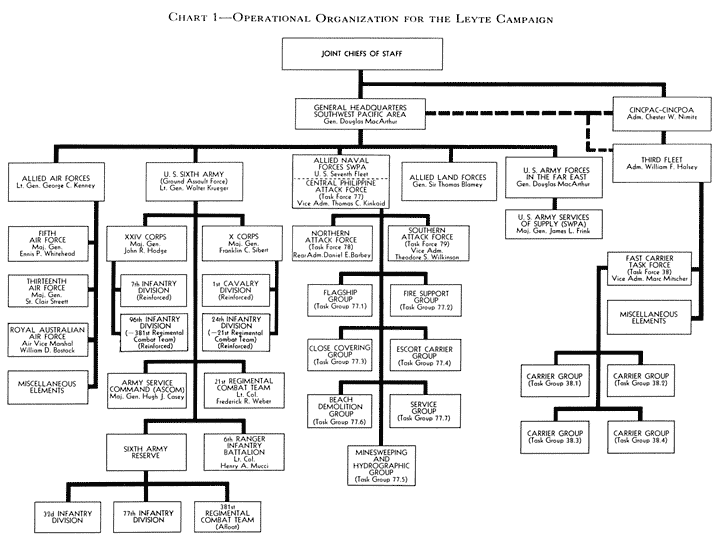
Chart 1—Operational Organization for the Leyte Campaign
The Allied Air Forces, principally the Far East Air Forces under General Kenney, was to neutralize hostile air and naval forces within range of the Philippines. The Allied Air Forces consisted of the Fifth Air Force, commanded by Maj. Gen. Ennis P. Whitehead; the Thirteenth Air Force, commanded by Maj. Gen. St. Clair Streett; the Royal Australian Air Force Command under Air Vice Marshal William D. Bostock; and miscellaneous elements. On order, the Fifth Air Force was to be prepared to take over the mission of furnishing direct air support to the ground troops.
The United States Army Services of Supply, Southwest Pacific Area, commanded by General Frink, was to furnish logistic support for the operation. The Eighth U.S. Army, commanded by Lt. Gen. Robert L. Eichelberger, and the Allied Land Forces, commanded by General Blamey, were to take over missions previously assigned the Sixth Army and to assist the latter in training, staging, and mounting the troops for the Leyte operation.
The ground troops who were to attack Leyte constituted a field army—the Sixth Army, which had fought its way up the New Guinea coast since April 1943 as Alamo Force. On 25 September 1944 Alamo Force was dissolved and Sixth Army assumed its tactical missions. General Krueger was commanding general for all these campaigns. The principal component parts of Sixth Army were X and XXIV Corps. The former consisted of the 1st Cavalry and 24th Infantry Divisions, under Lt. Gen. Franklin C. Sibert, a seasoned commander who had successfully fought the Japanese on New Guinea at Wakde-Sarmi. The XXIV Corps, under Maj. Gen. John R. Hodge, who had defeated the Japanese on Guadalcanal, New Georgia, and Bougainville, was composed of the 7th and 96th Infantry Divisions. In reserve were the 32d and 77th Infantry Divisions. The Sixth Army Service Command was to perform engineer functions on the island and give general logistic support.
General MacArthur’s Warning Instructions 5 and Operations Instructions 70 were used by each of the major commanders as a basis for his own operations orders. Although each order was derived from the one next above it, all were planned concurrently. There was need for constant intertheater, interservice, and intraservice conferences and discussions on all phases of the plans as they evolved. Frequently the planning was made easier by using the work done on plans for other operations. For example, the logistical plan for the canceled Yap operation was adapted with very little change to the Leyte operation. The general schemes of maneuver and the employment of support forces which had been found valuable in previous operations were also adapted with minor variations to the plans for Leyte.
Air Support
Naval Support
The Seventh Fleet was designated the Naval Attack Force. For the operation Admiral Kinkaid organized two attack forces: the Northern Attack Force (VII Amphibious Force), under Admiral Barbey, and the Southern Attack Force (III Amphibious Force), under Admiral Wilkinson. In addition, several subordinate units were created: a bombardment and fire support group under Rear Adm. Jesse B. Oldendorf; and a close covering group, an escort carrier group, a mine-sweeping group, and twelve underwater demolition teams. The Northern Attack Force was to transport and land the X Corps, while the Southern Attack Force was to do the same for the XXIV Corps.
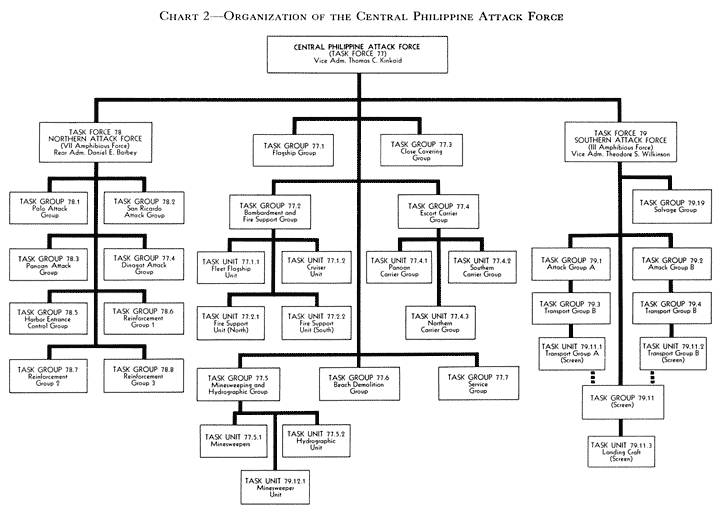
Chart 2—Organization of the Central Philippine Attack Force
On arrival in the objective area, the bombardment and fire support group was to divide into northern and southern fire support units, which were then to move to their respective target areas. The northern fire support unit consisted of 3 old battleships—the Mississippi, Maryland, and West Virginia—and 3 destroyers. The southern fire support unit was composed of 3 battleships—the Tennessee, California, and Pennsylvania—13 destroyers, 3 light cruisers, 3 heavy cruisers, and 1 small seaplane tender.
Admiral Oldendorf was to direct the bombardment and fire support. The bombardment was to start on 17 October in preparation for the landings on the island approaches. The gunfire before 20 October was for the purpose of rendering unserviceable both airfields and Japanese aircraft on the ground, in addition to destroying guns and emplacements, fuel storage and ammunition dumps, naval forces and shipping, beach defenses and strong points, troops, torpedo launching ramps, and torpedo barges. Close fire support was to be given to the underwater demolition teams and destructive fire was to be delivered against enemy forces attempting overwater movements. Finally, night harassing fire was scheduled to prevent any night attempts of the Japanese to reconstruct the fortifications and airfields.
The naval gunfire, the air support, and the artillery fire were to be carefully co-ordinated. At every level from battalion to army representatives from each support arm were to co-ordinate the use of their support arms against targets in their respective zones of action. Requests for support were to be screened as they passed through the various echelons for approval. Commanders in the field felt that the passage of requests through many channels was time consuming and consequently sometimes nullified what might have been an immediate advantage. However, requests for support were usually acted upon within an hour.
The Ground Forces
The initial assault for the island of Leyte was to begin in the dim half dawn of 17 October, when elements of the 6th Ranger Infantry Battalion were to land under the protection of naval gunfire and seize the small islands that guarded the entrance to Leyte Gulf. (Map 3) Harbor lights were to be placed on Homonhon Island and the northern tip of Dinagat Island in order to guide the passage of the convoy into the gulf. Since it was believed that there were valuable mine charts on Suluan, that island was added to the objectives of the 6th Rangers.
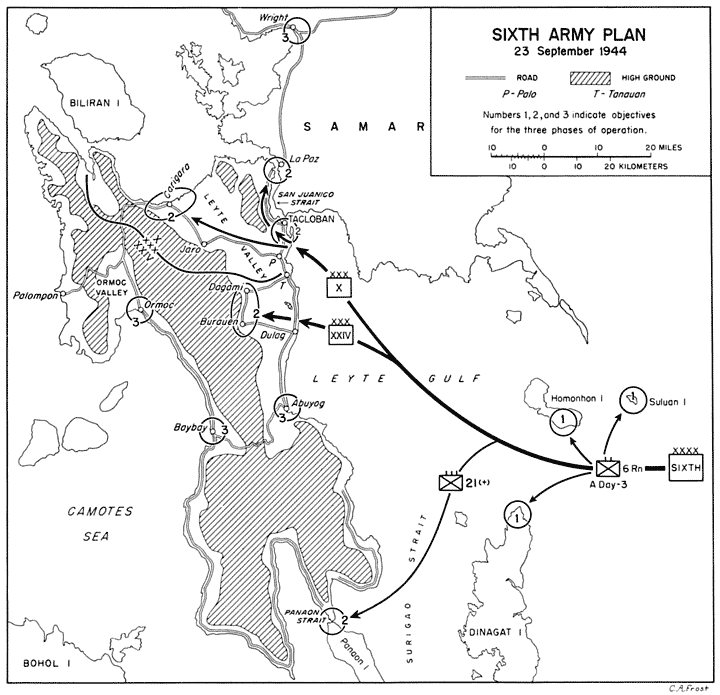
MAP 3 C. A. Frost
SIXTH ARMY PLAN
23 September 1944
While the Rangers were seizing the small islands, the mine sweepers and underwater demolition teams were to start clearing the gulf of natural and man-made obstacles. The fire support units were to move in and start softening up the beaches. The completion of these missions would conclude the first phase of the operation.
The eastern shores of Leyte were chosen for the initial landing, since the beaches on this side were the best on the island, and were the logical entrance to the important airfields, base sites, and roads in Leyte Valley.
The Logistical Plan
Construction
The construction program as planned for Leyte brought strong remonstrances from the Sixth Army engineers. On 10 August Col. William J. Ely, the executive officer, protested against the employment of Leyte as a major supply and air force base. The reasons for his objections were prophetic. The operation was to be launched during the season of heavy rains in an area where high winds and typhoons occurred. The harbor was so shallow and so obstructed by patches of coral that the approaches would have to be as much as 800 feet long. The fact that the flat Leyte Valley was interlaced by many streams and flooded with rice paddies indicated that the soil was “most unstable.” The condition of the soil and drainage would require the hauling, frequently for long distances, of considerable quantities of rock for the construction of roads. The existing roads and bridges, in most places so narrow as to permit only one-way traffic, would soon disintegrate under the constant heavy rains and the pounding of military vehicles. Colonel Ely forecast that, in the light of past experience with poor conditions of soil and drainage, the construction and enlargement of the airstrips would be difficult. The shortage of engineer troops decreased the possibility of providing major air and supply bases in sufficient time to properly support further operations. He concluded that “the construction mission cannot be satisfactorily accomplished with the engineer troops available, particularly during the first 90 days.” Colonel Ely gloomily summarized, “Perhaps we can mud and muddle through again on a shoestring but the shoestring must be frayed by this time and if it broke we may lose our shirt as well as our shoe.”