Chapter XVIII · Logistics
Reading edition
The conquest of Leyte was taking longer than had been anticipated. The decision of the Japanese to make Leyte the decisive battleground of the Philippines had forced the Americans to commit not only the reserve 32d and 77th Infantry Divisions but also the 112th Cavalry Regimental Combat Team, the 11th Airborne Division, and elements of the 38th Infantry Division. The inability of the Americans to establish considerable land-based air forces on Leyte, as well as the unexpected Japanese reinforcement program, had retarded the campaign. Not only was the timetable of future operations in the Pacific upset, but a strong possibility existed that it would not be feasible to establish a major logistical and air base on the island—the primary purpose of the operation.
The construction program on Leyte was hampered by conflicting priorities and, as had been foreseen, very poor terrain, bad weather conditions, and a shortage of service personnel.
Construction
Retelling the disagreements and describing the conflicts that arose over the everchanging needs of the Army, Navy, and Air Forces would be involved, tedious, and unprofitable. But the progress of the construction program must be recounted, since it had direct bearing not only on the Leyte Campaign but also on the Mindoro and Luzon operations.
Airfields
The importance of the development of the airfields cannot be overemphasized. The inability of the Sixth Army to meet its construction dates on the airstrips, because of poor soil conditions and heavy rains, prevented the U. S. forces from stopping the flow of Japanese reinforcements and made it impossible for the Allied Air Forces to give sufficient land-based air support to the ground troops. It also forced a postponement of the Mindoro operation. It is well, therefore, to summarize just what had been accomplished in airfield construction.
Work on the Tacloban airstrip had been handicapped at first by the heavy concentration of troops, supplies, and equipment in the area during the early stages of the operation. Thereafter, work was further hampered by the insufficient supply of coral for surfacing the runway and by the very heavy traffic concentrated on the haul road because of the necessity for unloading cargo over White Beach. By 25 December, 1 runway, 50 dispersal areas, 536,000 square feet of alert apron, 1 diagonal taxiway, 1 parallel dispersal taxiway, and 8,943 feet of additional dispersal taxiways had been constructed.
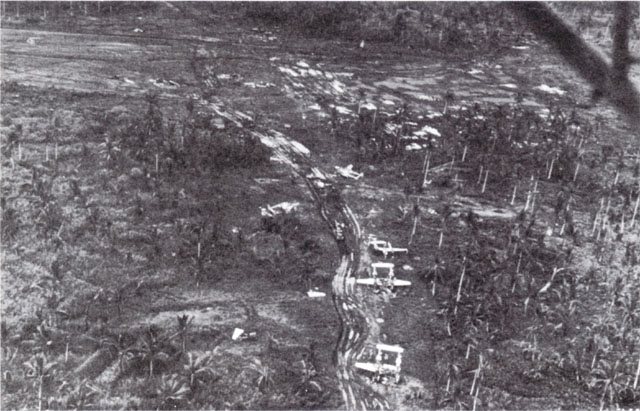
OPERATIONAL LOSSES AT THE BURAUEN AIRFIELDS forced their abandonment and the construction of the field at Tanauan.
The Dulag airfield was located on the flat flood plain of the Marabang River. The difficulties encountered were numerous: time lost because of excessive rains that amounted to thirty-five inches in forty days; air alerts; very poor drainage, which required the construction of a system of drag-line trenches to the river; and very poor access roads. The access roads required an excessive expenditure of time, labor, and material in order to maintain traffic to the airfield. One runway, 2 alert areas with gravel surface and 2 with mat surface, 1 matted transport parking area, 133 dispersal areas, and 24,200 feet of dispersal taxiways were constructed by 25 December.
Roads
Supplies
Inland Movement of Supplies
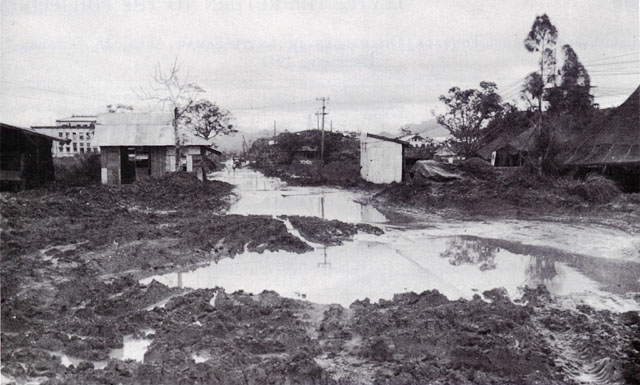
APPROACH ROAD TO QUARTERMASTER SERVICE CENTER at Tacloban after a heavy rain (above). The 7th Cavalry motor pool on 17 December 1944 (below).
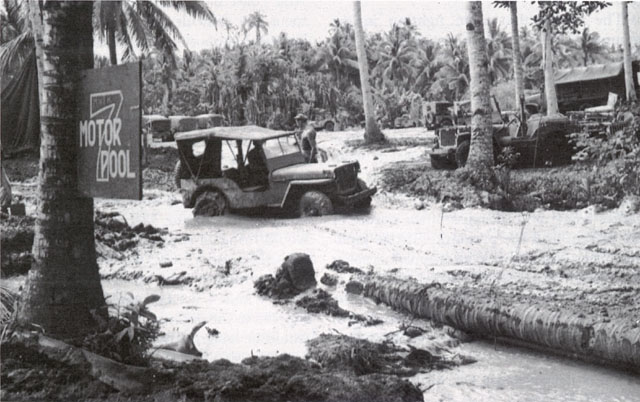
Table 2—Shipping Tonnage Discharged in Leyte-Samar Area, 28 October-25 December 1944
Period Tonnage Discharge Average Daily Rate of Discharge Lighterage on Hand
LCT’s LCM’s DUKW’s Barges
Total 571,350
28 Oct–3 Nov 33,901 4,843 11 54 107 18
4 Nov–10 Nov 32,421 4,632 35 63 315 33
11 Nov–17 Nov 141,238 20,177 26 69 219 33
18 Nov–24 Nov 110,494 15,785 18 59 253 39
25 Nov–1 Dec 47,744 6,821 28 71 289 38
2 Dec–8 Dec 56,786 8,112 24 53 297 43
9 Dec–15 Dec 53,387 7,627 21 53 294 42
16 Dec–22 Dec 68,677 9,811 39 68 300 49
23 Dec–25 Dec 26,702 8,900 39 69 287 49
Source: G-4 Report, Sixth Army Operations Report Leyte, p. 218.
Supplying the West Coast
The landing of the 77th Division on the west coast of Leyte brought into sharper focus the difficult job of giving adequate logistical support to the tactical units. The Sixth Army supply lines were tenuous. There was a shortage of shipping, and furnishing supplies to the troops fighting in the mountains was especially difficult.
Table 3—Airdrops by 11th Air Cargo Resupply Squadron, 11 November-25 December 1944
Branch Supplies Weight in Pounds Percent of Total
Total 1,167,818 100.0
Quartermaster Rations 445,916 38.3
Miscellaneous 357,061 30.4
Ordnance Ammunition 337,761 28.9
Medical Supply and Equipment 21,308 1.8
Signal Supply and Equipment 4,546 0.4
Chemical Chemical Warfare Supplies 1,226 0.2
Units Supplied Weight Percent of Total
Total 1,167,818 100.0
11th Airborne Division 388,570 33.3
1st Cavalry Division 301,058 25.8
32d Infantry Division 167,859 14.3
24th Infantry Division 126,004 10.7
Guerrillas 91,054 8.7
96th Infantry Division 52,973 4.2
77th Infantry Division 14,800 1.1
112th Cavalry Regiment 10,300 0.8
7th Infantry Division 4,200 0.3
Others 11,000 0.8
Source: Report of Transportation Officer, Sixth Army Operations Report Leyte, p. 271.
By 26 December a general level of five to ten days’ supply of all classes had been built up, a level that was maintained throughout the rest of the operation. The XXIV Corps utilized to the maximum the available space on the LSM convoys, and units on the west coast employed all available motor transportation to supplement the tonnage on the convoys. Finally, the supplies were pooled in dumps at Ipil and Ormoc and then allotted to the units.
The serious logistical situation was to affect definitely the progress of the Sixth Army as it fought its way into Ormoc Valley—the last important enemy stronghold on the island.