ARRIAN ON COURSING.
William Dansey translation
Chap. I. Preface.The advantages that accrue to mankind from hunting, and the regard of the Gods for those instructed in it by Chiron,[34] and their honourable distinction throughout Greece, have been related by Xenophon, the son of Gryllus.
Summary of Xenophon’s Cynegeticus.
He has pointed out the similitude between Cynegetical and Military science;[35] and the age, constitution, and frame of mind,[36] that essentially qualify for entering on the chase;—has given a description of purse-nets, hayes, and road-nets,[37] such as are necessary to be prepared—the mode of fixing snares for animals that may be entrapped[38]—the natural history of hares, their food, haunts, forms, and the method of searching for them—what dogs are clever at scenting, and what faulty—and how, by their shape and work, each may be ascertained. Some few remarks are also left by him on the boar-hunt, the stag, bear, and lion chases—how these animals may be taken by cunning and stratagem.
Omissions therein.
The omissions of his work (which do not appear to me to have arisen from negligence, but from ignorance of the Celtic breed of dogs,[39] and the Scythian and African horses,) I shall endeavour to fill up: being his namesake and fellow-citizen,[40] of similar pursuits with himself, as a sportsman, a general, and a philosopher—writing under the same feeling that actuated him, when he thought fit to amend the imperfections of Simon’s work on horsemanship;[41] not out of rivalry with its author, but from a conviction that his labours would be useful to mankind.
Chap. II.In my opinion no proof is required that Xenophon was ignorant of the Celtic breed of dogs, beyond this:[42] Proofs of Xenophon’s ignorance of Celtic Dogs. that the nations inhabiting that district of Europe were unknown,[43] except the parts of Italy occupied by the Greeks,[44] and those with whom they had commercial intercourse by sea. And that he was unacquainted with any other breed of dogs, resembling the Celtic in point of swiftness, is evident from these words:—“whatever hares,” he says, “are caught by dogs, become their prey, contrary to the natural shape of the animal, or accidentally.”[45] Now, if he had been acquainted with the Celtic breed, I think he would have made the very same remark on the dogs; “whatever hares the dogs do not catch at speed, they fail of catching in contradiction of their shape, or from some accidental circumstance.” For assuredly when greyhounds are in good condition, and of high courage, no hare can escape them; unless the country present some obstacles, either a covert to conceal her, or a hollow deep pit to break off the course, or a ditch to favour her escape while out of sight of the dogs.
To this ignorance, in my opinion, is to be attributed the length of his instructions on driving the hare into nets,[46] and if she pass them,[47] pursuing and recovering her by scent, till she be taken, at last, completely tired out. But he has no where said either that fleet dogs altogether supersede the necessity of a sportsman having nets,[48] or of his hunting by scent after the hare has escaped them. Indeed he has described only the mode of hunting which is practised by the Carians and Cretans.[49]
Chap. III.
Celtic Sagacious Hounds.
But such of the Celts as hunt for the beauty of the sport, and not as a means of livelihood, never make use of nets. And yet they have a variety of dog not less clever at hunting on scent than the Carian and Cretan,[50] but in shape sorry brutes.[51] In pursuit these give tongue with a clanging howl like the yelping Carians, but are more eager, when they catch the scent.[52] Sometimes, indeed, they gladden so outrageously, even on a stale trail, that I have rated them for their excessive barking,—alikeTheir Qualities. on every scent, whether it be of the hare going to form, or at speed.[53] In pursuing and recovering her, when started, they are not inferior to the Carians or Cretans, save in the one point of speed.
It is good sport, if they kill but a single hare in the winter season, so much resting-time do they give her in the chase; unless, indeed, by being frightened out of her wits at the tumultuous uproar of the pack, she become an easy prey.
Name.
These dogs are called Segusians,[54] deriving their name from a Celtic people, amongst whom, I suppose, they were first bred, and held in repute. But[55] all that can be said about them has been anticipated by the elder Xenophon. For they manifest nothing different from others in their mode of finding, or hunting their game;—having no peculiarity, unless one were inclined to speak of their shape,Shape, &c. which I scarce think worth while, except merely to say, that they are shaggy and ugly; and such as are most high-bred are most unsightly. So that the comparison of them to mendicants on the highways is popular with the Celts. For their voice is dolorous and pitiful; and they do not bark on scent of their game, as if eager and savage, but as if plaintively whining after it.
Celtic Swift-footed Hounds.
About these, then, I do not think any thing memorable can be written. But the swift-footed Celtic hounds are called in the Celtic tongue Vertragi.οὐέρτραγοι;[56]—not deriving their name from any particular nation, like the Cretan, Carian, or Spartan dogs: but, as some of the Cretans are named διάπονοι[57] from working hard, ἰταμαὶ[58] from their keenness, and mongrels from their being compounded of both; so these Celts are named from their swiftness. Their Beauty.In figure, the most high-bred are a prodigy of beauty;[59]—their eyes, their hair, their colour, and bodily shape throughout. Such brilliancy of gloss is there about the spottiness of the parti-coloured, and in those of uniform colour such glistening over the sameness of tint, as to afford a most delightful spectacle to an amateur of coursing.
Chap. IV.[60] I will specify the indications of speed and good breeding in greyhounds,[61]Marks of Speed and good Blood. and by attention to what points ill-bred and slow ones may be distinguished from them.
Derived from Shape.
In the first place, let them be lengthy from head to tail;[62] for in every variety of dog, you will find, on reflection, no one point so indicative of speed and good breeding as length; and on the other hand, no such mark of slowness and degeneracy as shortness. So that I have even seen dogs with numerous other faults, that have been, on account of their length, both swift and high-couraged. And farther, the larger dogs,[63] when in other respects equal, show higher breeding than small ones on the very score of size. But those large dogs are bad, whose limbs are unknit, and destitute of symmetry;[64] being indeed, when so formed, worse than small dogs, with an equal share of other faults attached to them.
External Character generally.
Your greyhounds should have light and well-articulated heads;[65] whether hooked[66] or flat nosed is not of much consequence: nor does it greatly matter whether the parts beneath the forehead be protuberant with muscle.[67] They are alone bad which are heavy-headed, having thick nostrils, with a blunt instead of a pointed termination. Such then are well-headed hounds. Their eyes should be large, up-raised, clear, strikingly bright. The best look fiery, and flash like lightning, resembling those of leopards, lions, or lynxes.[68] Next to these are black eyes, provided they are wide-open and grim-looking; and last of all, grey:[69] nor are these to be considered bad, nor indicative of bad dogs, provided they are clear, and have a savage look.
Chap. V.For I have myself bred up a hound whose eyes are the greyest of the grey;[70] a swift,Episode on Arrian’s dog Hormé. hard-working, courageous, sound-footed dog, and, in his prime, a match, at any time, for four hares. He[71] is, moreover, (for while I am writing, he is yet alive), most gentle, and kindly-affectioned;[72] and never before had any dog such regard for myself, and friend and fellow-sportsman, Megillus.[73] For when not actually engaged in coursing, he is never away from one or other of us. But while I am at home he remains within, by my side, accompanies me on going abroad,[74] follows me to the gymnasium, and, while I am taking exercise, sits down by me. On my return he runs before me, often looking back to see whether I had turned any where out of the road;[75] and as soon as he catches sight of me, showing symptoms of joy, and again trotting on before me. If I am going out on any government business, he remains with my friend, and does exactly the same towards him. He is the constant companion of whichever may be sick;[76] and if he has not seen either of us for only a short time, he jumps up repeatedly by way of salutation, and barks with joy, as a greeting to us. At meals he pats us first with one foot and then with the other,[77] to put us in mind that he is to have his share of food.[78] He has also many tones of speech[79]—more than I ever knew in any other dog—pointing out, in his own language, whatever he wants.
Having been beaten, when a puppy, with a whip, if any one, even at this day, does but mention a whip, he will come up to the speaker cowering and begging,[80] applying his mouth to the man’s as if to kiss him, and jumping up, will hang on his neck, and not let him go until he has appeased his angry threats.[81]
Now really I do not think that I should be ashamed to write even the name of this dog; that it may be left to posterity, that Xenophon the Athenian had a greyhound called Hormé, of the greatest speed and intelligence,[82] and altogether supremely excellent.[83]
Physical indications resumed.
Let the ears of your greyhounds be large and soft,[84] so as to appear, from their size and softness, as if broken. Such are best: but it is no bad indication if they appear erect, provided they are not small and stiff.[85] The neck should be long, round, and flexible;[86] so that if you forcibly draw the dogs backwards by their collars, it may seem to be broken, from its flexibility and softness. Broad chests are better than narrow. Let them have shoulders standing wide-apart,[87] not tied together, but as loose, and free from each other, as possible—legs round, straight, and well-jointed—sides strong—loins broad, firm, not fleshy, but sinewy—upper flanks loose and supple[88]—hips wide asunder—lower flanks hollow—tails fine, long, rough with hair, supple, flexible, and more hairy towards the tip—haunches sweeping, and firm to the touch:[89]—with regard to their legs, if the hind ones are longer than the fore, the greyhound will run best up hill; if the fore legs are longest, down hill; but if both are equal, he will run best on a flat.[90] Since, however, it is more difficult to beat a hare on an acclivity, because she runs best up hill, those are deemed the better class of dogs, whose hind legs are longer than their fore ones.[91] Round and strong feet are decidedly best.[92]
Chap. VI.The colour of greyhounds is not of any importance;[93] nor does it matterColour of no importance. if they are perfectly black, red, or white; nor is a simple, uniform colour to be suspected as ferine. The colours, such as they are, should be bright and pure; and the hair, whether the dog be of the rough or smooth sort, should be fine, close, and soft.[94] The best dogs are such as are large and well put together, and resemble bitches in point of suppleness; and the best bitches are such as resemble dogs in spirit, and muscularity of body.[95]
Now if any one pays attention to these hints, as to the shape of greyhounds, they will fully supply him, in my opinion, with the indications of good blood for his kennel, and the opposite of the reverse.
Chap. VII.Nor will the temperIndications from Temper. of greyhounds afford fewer indications of good and bad blood to a careful observer.[96] Such hounds, in the first place, as are crabbed to all persons alike, are not of a generous breed. But if you find any cross to strangers, and good-tempered to their feeder, it is rather a favourable sign than otherwise.[97]
I once knew a greyhound, who was dull and sullen at home, and took no pleasure in any of the persons about him; but, when led out hunting, was beyond measure delighted, and showed, by smiling and fawning at every body that came near him, that he was vexed at staying at home. This may be held a good sign.
The best dogs, however, are those of most attachment to man, and to whom no human countenance is strange.[98] Such, on the other hand, as are afraid of people, and astounded at noise,[99] obstreperous, and often excited without cause, are senseless brutes of no pluck. Like men that are timid and frightened out of their wits, such dogs as these can never be deemed of generous blood.From obedience in the field. Those, too, are bad, which, when let loose from couples in a field, do not come back at the call of their keeper, but gallop away.[100] If you call them in mildly, they pay no attention to you;—if threateningly, they keep aloof from fear.
For when a greyhound has had his gallop, and has run about, he ought to come back to his keeper, even without a call,[101]—showing that he is under command at will; but, if the keeper does not choose to take him up, let him again bound away, and again return. Such dogs are well broken in as, at the voice of their keeper, crouch before him;[102] not from fear, but regard and respect for their feeder, cowering like the worshippers[103] of the Great King.[104] It is no good sign for a hound to stand still, when let out of couples on an open plain, unless he happen to be advanced in age,[105] for it shows sluggishness.
From gait.
The most high-bred greyhounds have a prominent brow, and look proud.[106] Their tread is light, quick-stepping, on their toes; and they walk sideways,[107] extending their necks like horses curvetting.[108]
Chap. VIII.Some greyhounds eat voraciously, others with delicacy.[109] The latter From their mode of feeding.mode of feeding indicates a dog of better blood than the former.[110] Good dogs are not bad feeders, but fond of bread or gruel.[111] This kind of farinaceous food is most strengthening to them, and there is no fear of their gorging themselves too much with it. I prefer, however, their liking food quite dry;[112] and yet, if it be moistened with water, and they still relish it, it is no evil.
When a dog is sick, administer the broth of fat meat to him, or having roasted a bullock’s liver over some hot coals, and rubbed it abroad, sprinkle it like flour into the broth.[113] This is good also for puppies to strengthen their limbs, when they are first weaned from milk.[114] But milk is the best food for the support of puppies till the ninth month, and even longer; and is serviceable to the sick and delicate, both as drink and aliment. Fasting too is beneficial to a sick dog.[115]
Chap. IX.There is nothing like a soft and warm bed for greyhounds; but it is best for them to sleep withManagement of the Kennel. men:—as they become thereby affectionately attached—pleased with the Bedding.contact of the human body, and as fond of their bedfellow as of their feeder.[116] If any ailing affect the dog, the man will perceive it, and will relieve him in the night, when thirsty, or urged by any call of nature. He will also know how the dog has rested. For if he has passed a sleepless night,[117] or groaned frequently in his sleep,[118] or thrown up any of his food,[119] it will not be safe to take him out coursing. All these things the dog’s bedfellow will be acquainted with.
Nothing can be worse than for dogs to sleep with each other; and more especially so, if they touch one another in bed. For as all cutaneous irritation is removed by a man sleeping with them, so, when they sleep together, they generate every sort of foulness of skin by warmth and close contact, and are generally full of mange.[120] To which cause must be referred the very offensive and pungent stench on entering a kennel where many hounds are confined together.
Chap. X.Rubbing the whole bodyRubbing down. is of great service to the greyhound;[121] no less than to the horse.[122] For it is conducive to the firmness and strength of his limbs—renders his hair soft, and skin shining,[123] and cleanses it from all foulness.
The back and loins you should rub with your right hand, placing your left under the belly; lest the dog, being forcibly pressed down upon his knees, should suffer injury. The sides should be rubbed with both hands at once, and the haunches quite down to the feet, and the shoulders in the same way. When the dog seems to have had enough of it, lay hold of his tail, and lift him up by it; and then having drawn it through your hand, let him go. As soon as he is at liberty, he will shake himself, and show that he is pleased with the operation.
Chap. XI.It is a point of equal importance with any other, that greyhounds be Kennelling.confined during the day;[124] otherwise they will unavoidably become intractable, and, whenever fastened with a collar, will be impatient under the restraint, and whine, and gnaw the straps, so as even to require chains like malefactors. Besides, a hound that is at liberty must needs eat every thing that falls in his way;[125] and, from running about during the day-time, lose the acme of his speed. But, though generally at rest, they should still have their appointed times for walking out.
Chap. XII.Four times a day, at least, take your dogs out of kennel to a level and open field,Exercising. and there loose them from couples, to empty themselves, gallop, and run about.[126] But if they have quite ceased coursing, let it be done more frequently. Slip them in pairs, a brace at a time, so that by contending and playing with each other, they may enjoy their pleasure, and take their exercise together. But on no account let many loose at once, as they sometimes do great mischief by falling on each other.[127] Never slip a strong and full-grown dog with a puppy; for the old dog is an overpowering and distressing antagonist for the youngster, easily overtaking him in pursuit, and as readily running away from him, and leaving him behind; whereby the pup must of course be cowed and dispirited, having in either case the worst of the contest. And farther, such as are spiteful towards each other, never give these their liberty at one and the same time, lest they injure one another. For there are dogs, as well as men, with mutual antipathies, and others again with mutual attachments.[128] Those of the same sex are particularly inimical to each other, dogs to dogs, and bitches to bitches; and this generally from spiteful jealousy. These matters are not to be made light of.
Chap. XIII.In the winter season feed your dogs only once a day,[129] a little before evening;Feeding in winter and summer. for the days are short, and the greyhounds are to be so managed, that if you need their services for coursing till a late hour, they may be able to bear the necessary fasting. But in summer it is right to give them a little bread in addition,[130] that they may not be exhausted by the length of the day; and if thirsty, they will drink with less detriment after having eaten. To thrust down a dog’s throat a piece of salted suet is also found beneficial.[131] But if the weather be very hot, I would have you take an egg in your hand, open your dog’s mouth, and push it down, that he may swallow it at one gulp. This will be nourishment enough for him, will cherish his wind, and quench his thirst.[132]
Chap. XIV. Seasons of Coursing.You may go out coursing frequently in spring and autumn,[133] these seasons being attended with the least risk to your dogs—but rarely in summer,[134] lying by, generally,[135] when the heat is oppressive. For greyhounds are impatient of heat, and often, when pursuing a hare with all their might, have been suffocated from a stoppage of their wind.[136] To guard against which, a courser should carry eggs with him, and administer them entire, if his hound’s breathing be exceedingly distressed. For there is no better refrigerative, nothing that appeases difficulty of breathing so much. It is not unattended with danger for a dog, under these circumstances of distress, to drink immoderately.
For the reasons given, then, be cautious of coursing in hot weather. Never go out in winter when the cold is severe, and, on no account, when the ground is frozen hard. For dogs bruise themselves in frost,[137] lose their nails,[138] lacerate the soles of their feet, and if very high-couraged, break even the bones of their toes against the frozen ground from running with excessive eagerness. Whereas the hare is light, with woolly and soft feet,[139] and trips along without injury in frost.
Chap. XV.[140] Slipping law. Whoever courses with greyhounds[141] should neither slip them near the hare, nor more than a brace at a time;[142] for though the hare be remarkably swift-footed, and have often beaten many dogs, yet being just started from her form, she cannot but be fluttered at heart, and terrified at the hallooing, and the hounds pressing close upon her:—and in this way, many a noble hare has often ignobly perished without an effort, showing no diversion worth mentioning.
Let the hare, therefore, creep away from her form as if unperceived, and recover her presence of mind. And then, if she be a racer,[143] she will prick up her ears, and bound away from her seat with long strides; and the greyhounds, having capered about as if they were dancing,[144] will stretch out at full speed after her. And at this time is the spectacle worthy indeed of the pains that must necessarily be bestowed on these dogs.[145]
Chap. XVI. Hares. Those are the strongest hares which have their forms in open and exposed places;[146] for, from boldness, they do not conceal themselves, but seem to me to challenge the dogs. When coursed, they do not fly to the woods or groves, however near, for immediate liberation from danger, but stretch away to the open country;[147] and during the contest, if they are pursued by slow hounds, they moderate their own speed according as they are pressed; but if their pursuers are fast, they run with all their might.[148]
Often when they have turned aside to the champaign country, if they perceive a fleet dog following so close as to overshadow them, they throw him off by frequent ricks and turns, and again make for the woods, or wherever they know of a place of refuge; and this should be deemed a proof that the dog has beaten the hare. For coursers, such at least as are true sportsmen, do not take their dogs out for the sake of catching a hare, but for the contest and sport of coursing;[149] and are glad if the hare meet with an escape: if she fly to any thin brake for concealment, though they may see her trembling and in the utmost distress, they will call off their dogs,[150] and more particularly so, when they have run well.[151]
Often, indeed, when following a course on horseback, have I come up to the hare as soon as caught, and myself saved her alive: and then, having taken away my dog, and fastened him up, allowed her to escape.[152] And if I have arrived too late to save her, I have struck my head with sorrow, that the dogs had killed so good an antagonist.[153]
On this point alone I cannot agree with my namesake. I allow indeed that a man may forget every other object of which he is enamoured, when he sees a hare found, and pursued at speed;[154] but to see her taken is, I own, neither a pleasant nor striking spectacle; but disagreeable rather, and not at all likely to make us forgetful of other objects of attachment.[155] And yet we must not blame Xenophon, considering he was ignorant of greyhounds, if even the capture of a hare appeared to him a grand sight.
I am aware, (even if my instructions were opposed to it), how strong the inducement is to halloo, when following a course, and that even a dumb man might break forth, as is related of the son of Crœsus.[156]
Chap. XVII. Cheering greyhounds. It is proper sometimes to speak to the greyhounds; for they are pleased at hearing their master’s voice,[157] and have the consciousness of his presence, and of their brilliant running not escaping his notice, as an encouragement and reward for their exertions.
There is no objection to your cheering your hound as often as you like in his first course; but in his second or third, when it is probable that he is fagged, I think it wrong to cheer him very often by name, lest from his ardour, and desire of pleasing his master, he exert himself beyond his strength, and suffer some inward rupture; an accident which has been fatal to many a high-bred greyhound. But he should be allowed to slacken his running as he chooses. For the contest is by no means equal between the hare and greyhound:[158] the hare runs where she likes, and the dog pursues; she shifts her course,[159] throws him off, and darts forward; and if thrown out, the dog is wide of the hare, and must again stretch away after her a-head, and recover what he has lost of the course by overshooting himself.[160]
Moreover, the natural difficulties of the country are more in favour of the hare, than the dog—such as rough and stony grounds,[161] steeps and inequalities of surface—both because she is light, and because her feet, from their woolliness, are not liable to be lacerated by the roughness of the ground;[162] and the running for her life, too, takes away all sense of difficulties.
Chap. XVIII. Praising, &c. When the greyhound has caught the hare, or been otherwise victorious in the course,[163] you should dismount from your horse, pat him with your hand and praise him, kissing his head, and stroking his ears, and speaking to him by name—“Well done, Cirras!”[164]—“Well done, Bonnas!”[165]—“Bravo, my Hormé!”[166]—calling each hound by his name; for, like men of generous spirit, they love to be praised:[167] and the dog, if not quite tired out, will come up with joy to caress you. At this time, it is a good sign for him to roll himself on the ground, as we see horses do;[168] for it shows that he is not done up with the course, and, at the same time, rolling refreshes him.
Chap. XIX.[169] Celtic mode of coursing with hare-finders. The more opulent Celts,[170] who live in luxury, course in the following manner. They send out hare-finders[171] early in the morning to look over such places as are likely to afford hares in form;[172] and a messenger brings word if they have found any, and what number. They then go out themselves, and having started the hare, slip the dogs after her, and follow on horseback.[173]
Chap. XX. Without hare-finders. But others, who have no hare-finders, go out on horseback, collecting a large party of fellow-sportsmen together; and coming to likely lying-ground, when a hare is started, they slip their dogs. While others again, who are more of workmen at the sport, sally forth on foot;[174] and if any one accompanies them on horseback, it is his duty to keep up with the dogs.
Beating the ground.
They beat the ground in regular array, with an extended front, proceeding in a straight line to the completion of a certain extent of country; and then, wheeling about in a body, return in the same way by the side of their former track, omitting as far as possible none of the likely lying.[175]
But it is necessary, if many dogs are taken into the field, that they should not be left at random, and without arrangement. For when the hare is started from her form, not a man would refrain from slipping his hound after her: one from eagerness to see his own dog run, and another from being startled and beside himself at the hallooing; and the hare would be caught, in consequence of the crowd and confusion of the dogs, without a struggle, and the whole value of the spectacle destroyed. Steward.On which account a steward should be appointed over the sport,[176] should match the dogs, and give orders to the field:—if the hare start on this side, you and you are to slip, and nobody else; but if on that side, you and you: and let strict attention be paid to the orders given.[177]
Chap. XXI. Coursing with sagacious and swift hounds together. The Celts sometimes course with a mixture of sagacious and swift-footed hounds;[178] and while the dogs of scent are trying, they stand apart with the greyhounds, leading them in their hands where it is most probable the hare will direct her course, that they may slip them at her when she breaks cover.[179] And here the greyhounds answer the same purpose as Xenophon’s nets.[180] But the courses in this way are irregular and confused, and the hare, however good, is generally so terrified at the barking of the finders, that, unless she get far enough a-head to be able to recover herself, she is easily caught, being frightened out of her wits.[181]
Whoever, therefore, is a good slipper, should not let go his dog while the hare is at all bewildered, (unless he would destroy the sport,) but should allow her to make her first turns, and then slip.
Chap. XXII. Ware Leveret. Let it be deemed unlawful to slip to a young hare;[182] but rather, in obedience to my namesake, spare such for the Goddess.[183] If possible, indeed, you should endeavour to call off the dogs on scent; though they are with difficulty checked, being intractable from hunger, and so keen at devouring whatever prey they take, that you can scarce drive them away, even by beating them with sticks.
Chap. XXIII. Stag-coursing. You should course the stag, or any game of equal size in the same way, slipping high-couraged hounds;[184] for the animal is large, runs a long while, and is by no means safe to contend with;[185] indeed there is no little danger of a greyhound being destroyed by a stag.[186]
But where the plains are adapted for riding, as in Mysia, Dacia, Scythia, and Illyricum,[187] they are in the habit of coursing deer with Scythian and Illyrian horses; which, though slow at first in pursuit, and utterly despicable, as far as appearance goes, by the side of those of Thessaly, Sicily, or Peloponnesus, hold out to the last under the most severe work.[188] On such occasions you will see the huge, swift, proud-looking horse flagging, and this lean and scrubby little animal at first passing him, then leaving him behind, and at last even driving the stag away from him. He holds on indeed until the stag gives out and stops, gasping with distress;[189] when you may, if you choose, spear him at close quarters as if enfettered,[190] or throw a noose over his neck,[191] and lead him away alive.
Chap. XXIV. African Coursing of Wild Asses.In Africa there is a mode of coursing on Libyan horses,[192] called Nomades, on which the sportsmen, mounted, catch not only red and roe deer,[193] (for these are taken with little effort, and the horses are not esteemed good in consequence,[194]) but also wild asses,[195] which excel in speed, and power of holding out for the greatest length of course.
Arabian Coursing described by Xenophon.
For when the Greeks marched with Cyrus, the son of Darius, against the great king,[196] (in which expedition Xenophon was engaged, who relates the circumstance,[197]) while they were passing over the plains of Arabia,[198] there appeared herds of wild asses, but not one could be caught by any single horseman, and therefore the Greeks pursued them with relays of horsemen at stated distances; and after the asses had held out for a long while against several, they sunk at last from fatigue. Thus even Cyrus himself, the son of the great king, and the brother of the great king, had not horses good enough for this chase; and yet the Libyan boys, some at eight years of age, and others not much older, mounted on their naked steeds,[199] and guiding them with a switch, as the Greeks employ the rein, press these wild asses so closely in pursuit, that at last they throw a noose around their necks and lead them away quite subdued.[200]
Comparison of Hunting and Coursing.
Such are the methods of coursing adopted by those who have fleet hounds and horses: they neither ensnare the animals with toils, nets, or springes;[201] nor employ, in short, any other tricks or wily inventions, but contend with them in a straight-forward trial of speed.[202] And to me, the two spectacles appear nowise akin: the former being like thievish depredation; the latter, like a battle fought out with main strength: the one class of sportsmen resembling pirates in their clandestine attack, while the other are as openly victorious as were the Athenians over the Medes in the naval engagement at Artemisium,[203] or at Salamis and Psyttalia, or again at Cyprus.
Chap. XXV. Age and mode of entering bitch-puppies. As to the age at which greyhounds should begin coursing,[204] you may take a bitch out after the eleventh month;[205] or, if she be well set, and not loose-limbed, you may let go a hare from your hand before her, in an open field, a month earlier than this, starting the pup close to the hare, that she may enjoy the sight of her game, and, by seeing it quite close, may work with eagerness.[206] But presently slip another good dog to the hare, that the puppy may not suffer by too long a course, nor flag from over-fatigue; and the second dog turning the hare with ease again and again, will drive her into the puppy’s mouth, when the latter should be allowed to tear her with her teeth till she has killed her.[207]
As soon as the season arrives for taking out your puppies, let them be first walked over such roads as are rough;[208] for this exercise is conducive to forming and strengthening their feet. Then station the man who leads them upon a conspicuous and elevated spot, and be sure that he does not slip a puppy when the hare has got much a-head, and is out of sight; (notwithstanding the elder Xenophon advises it in regard to dogs that are to be practised at running on scent;[209]) for if you slip a greyhound puppy out of sight of her game, she runs wide, and jumps about, and is beside herself and bewildered. And after she is full-grown, if a hare happen to escape her, she is never at rest, neither returning to her keeper, nor obeying his call, but, from eagerness for a course, continuing to run about wildly, like a mad dog, after nothing.[210]
Let the man, then, that holds the puppy stand on such a spot as I have stated,[211] concealed from view at the point where it is most probable the tired hare[212] will come in the course of her turns; and when he sees her quite weary, let him slip the puppy close to her, neither before, nor directly opposite to her; for the bitch rushing right upon her will overshoot herself, and the hare, with a wrench, easily skimming by, will of course leave the bitch far behind; the latter with difficulty turning herself, as gallies sailing briskly a-head cannot readily tack, unless the rowing be much slackened before they are brought about. Let the hare, therefore, just pass by, and then let him slip obliquely after her. Some one should follow up quickly, as soon as the hare is caught, before the dogs are gorged with her blood. Not that the flesh of a hare is to be accounted of much worth by a person who courses for the beauty of the sport;[213] but it is a bad thing to teach a greyhound to eat a hare.[214] Many a dog, too, has been Ware dead.destroyed by gorging himself while out of breath, after a long course, and has died of suffocation.
Chap. XXVI. Age of entering dog-puppies.Dog-puppies must not be taken out coursing until they are two years old,[215] for their limbs become set at a much later period than those of bitches. Besides it is attended with no little danger to take them out earlier, many a greyhound having been prematurely destroyed by a severe course before he was full-grown, and especially those of the greatest spirit and highest breeding; for, in consequence of their spirit, they run to the very utmost of their power.
The other practical points, already insisted on in reference to bitches, are equally to be attended to in regard to the other sex. DogsAge of sexual intercourse. are to be kept from copulation within the age stated; for the seed being not yet matured in them, is generally weak and evanid, καθάπερ ἡ τῶν παίδων.[216] The puppies themselves too are so utterly ruined by it that you can never afterwards, do what you will, remedy the error. The proper and seasonable time for sexual intercourse is from the completion of the third year.[217]
Chap. XXVII. Time of sexual intercourse. And it should be thus managed:—watch the opportunity of the bitch being clear of vaginal blood; for if she receive the seed before, it generally is not retained, but is washed out by the blood,[218] καθάπερ ταῖς γυναιξί; and you must here pay her particular attention, as it is only for a short interval of time that she preserves her heat after the vaginal blood has stopped.
Suitable age in bitches for breeding.
A bitch’s age may be considered good for the purpose from the second to the seventh year.[219]
Chap. XXVIII. Mode of sexual intercourse. It is best for the dog and bitch to be shut up by themselves, and to be out of sight while together.[220] For open and public copulations, if we may believe sportsmen, are not prolific;[221] but such as are effected by dogs in private are reported to succeed.[222]
Management afterwards.
Bitches, after being warded, may be led out, as walking about is conducive to their strength;[223] but they must not be slipped again to a hare, for fear of being destroyed by overstraining or excessive fatigue. The dog likewise should not be let loose after a hare until he is recovered from his exhaustion, and invigorated by an interval of at least sixty days’ rest. After which there will be no obstacle to his being coursed.[224]
Chap. XXIX. Breeding season.The most favourable season for breeding is the spring of the year,[225] as the temperature is mediate between hot and cold. Winter is not propitious for rearing puppies, more especially on account of the want of milk:[226] and summer is distressing to the dams for suckling. Autumn is worse than spring for this reason, that the winter arrests the whelps before they are thoroughly formed.[227]
Chap. XXX. Management after whelping. If you wish a brood-bitch to recover her previous speed,[228] you must not let her suckle her whelps,[229] except merely to lighten any excess of milk,—and then put them to other bitches, selecting such as are well-bred: for the milk of degenerate curs is not congenial to high-bred puppies.[230] If, however, the dam herself appear no longer serviceable for coursing, it is best to leave the whelps with their own mother, and not to put them under a foster-parent.[231] For the growth is stinted by a stranger’s nursing, (as the other Xenophon declares,) but the mother’s milk and breath are cherishing to her puppies.
Chap. XXXI. Food of weaned puppies. When puppies can run about, Xenophon properly recommends that they be fed with milk;[232] for the filling them with heavy food distorts their legs, and occasions diseases in their bodies. And as to giving dogs short names of easy pronunciation,[233] in this we should also attend to him;Xenophon’s instructions approved. for the names which he has enumerated, (in part the invention of others, and some of his own creation), are cleverly composed.
Care of brood-bitches, not allowed to suckle.
But if you do not as yet wish your bitches to breed up any puppies, you must take the greatest possible care of them while under distress in consequence.[234] For when they have ceased to give suck, their teats become turgid and full of milk, and the parts beneath the belly distended . At which time, it is not safe to loose them after a hare,—for their flanks may be burst asunder: nor should you let them play with another dog, as, by contending and striving with him beyond their strength, they may be placed in equal danger.
It is best to wait till their teats are become flaccid. And you will have a proof that it is safe to take them out, when the hair falls off abundantly, as you stroke it with your hand. They are then, I think, free from the distress they laboured under on account of their milk, and are ready for coursing.[235]
Chap. XXXII. Estimate of Sexes. The greyhound bitch is fleeter than the dog,[236] but the dog has more bottom than the bitch;[237] and, because he can run through the whole year, is a much more valuable acquisition: and as good bitches abound, but it is no easy thing to meet with a thorough-good dog, the latter is on this account more precious: and again, it is fortunate if bitches preserve their speed to the fifth year,[238] whereas dogs retain theirs even to the tenth.[239] For all which reasons, in my opinion, a really good, high-bred dog is a great treasure[240]—one that falls not to the lot of a courser without the favour of some god.[241] For such a blessing, then, he should sacrifice to Diana Venatrix.[242] He should sacrifice, too, whenever successful in his sport, dedicate the first-fruits of his spoils to the goddess,[243] and purify his dogs and sportsmen,[244] as regulated by the established rites of the country.
Chap. XXXIII. Celtic hunting rites. Some of the Celts have a custom of annually sacrificing to Diana;[245] while others institute a treasury for the goddess,[246]—into which they pay two oboli for every hare that is caught,[247]—a drachma for a fox,[248] (because he is a crafty animal, and destroys hares,)—and four drachmæ for a roe-deer,[249] in consideration of his size, and greater value as game.
When the year comes round, on the return of the nativity of Diana,[250] the treasury is opened, and a victim purchased out of the money collected;[251] either a sheep, or kid,[252] or heifer, according to the amount of the sum: and then, after having sacrificed, and presented the first-offerings of their victims to the Goddess of the chase,[253] according to their respective rites, they give themselves up, with their hounds, to indulgence and recreation,[254]—crowning the latter on this day with garlands,[255] as an indication of the festival being celebrated on their account.[256]
Chap. XXXIV. Injunctions to the observance of religious rites. This Celtic custom I follow with my fellow-sportsmen,[257] and declare no human undertaking to have a prosperous issue without the interposition of the Gods.[258] For that Mariners, who regard their safety, supplicate the Gods at embarkation;[259] and, after dangers escaped, offer up sacrifices of gratitude to the sea-deities, Neptune, Amphitrite, and the Nereids.[260] Cultivators of the soil do the same to Ceres, her daughter, and Bacchus;[261] Artificers, to Minerva and Vulcan;[262] Professors of instruction,[263] to the Muses,[264] Apollo Musagetes,[265] Mnemosyne,[266] and Mercury;[267] Lovers, to Venus,[268] Cupid,[269] Suada,[270] and the Graces.[271] And, upon the same principle, Sportsmen should not be neglectful of Diana Venatrix,[272] nor Apollo,[273] nor Pan,[274] nor the Nymphs,[275] nor Mercury,[276] the conductor and president of the highways, nor any other mountain gods[277] that there may be: otherwise their pursuits must turn out abortive, their dogs injured, their horses lamed,[278] and themselves disappointed.[279]
Chap. XXXV. Enforced by examples from Homer. And of this, Homer gives evidence in his poem.[280] Teucer, he says, the best bowman of the Greeks, in the archery-contest hit the cord only, and cut it asunder, because he had offered no vow toIliad. L. xxiii. 852. seqq. Apollo;[281] but that Merion, who was no archer at all, by having invoked Apollo, struck the bird when on the wing.
Again, the posterity of those, who fought against Thebes with Polynices, captured the city,[282]
Iliad. L. iv. 406. seqq.
To omens trusting, and the aid of Jove;
whereas their fathers, not at all inferior to them in valour, had perished before it, because they were disobedient to the signs vouchsafed to them by the Gods.
Iliad. L. xii. 216. seqq.
And lastly, Hector, inattentive to Polydamas when he objected to an attack on the Grecian fleet,[283] (because the Trojans would not return from it with honour to themselves, as he inferred from a serpent dropped by an eagle,) was soon afterwards taught otherwise by experience, that no good comes of being refractory towards the Deity.[284]
Following these examples, it is right in field-sports, as in every thing else, to begin with adoration of the Gods;[285] and, after having obtained success, to offer thanksgiving-sacrifices[286] and libations,[287] with auspicious words,[288] and crowns,[289] and hymns,[290] and to dedicate the first-fruits of the captured game,[291] as the conqueror does of the spoils of war.[292]
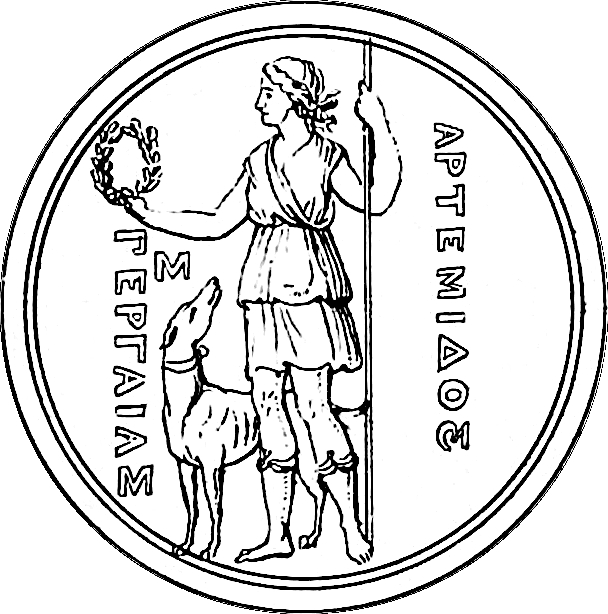
BEGER.
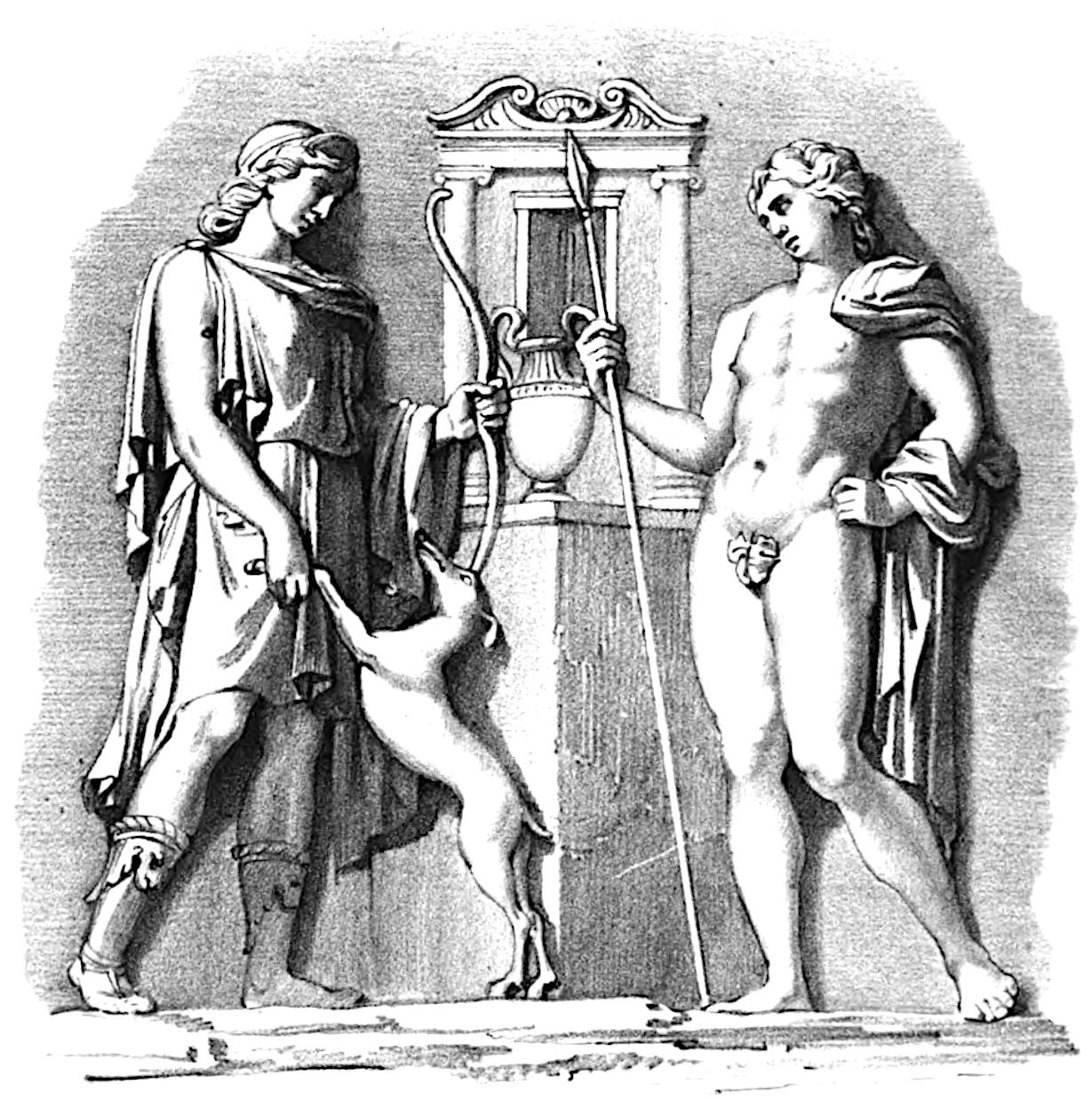
BARTOLI.
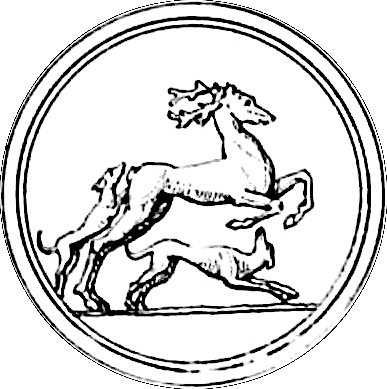
VAILLANT.