DICTIONARY OF ISLĀM. (continued 31)
Reading edition
When those who have risen shall have waited the limited time, the Muḥammadans believe God will at length appear to judge them, Muḥammad undertaking the office of intercessor, after it shall have been declined by Adam, Noah, Abraham, Moses, and Jesus, who shall beg deliverance only for their own souls. (Mishkāt, book xxiii. ch. xii.) On this solemn occasion God will come in the clouds, surrounded by angels, and will produce the books wherein the actions of every person are recorded by their guardian angels, and will command the prophets to bear witness against those to whom they have been respectively sent. Then everyone will be examined concerning all his words and actions, uttered and done by him in this life; not as if God needed any information in those respects, but to oblige the person to make public confession and acknowledgment of God’s justice. The particulars of which they shall give an account, as Muḥammad himself enumerated them, are: of their time, how they spent it; of their wealth, by what means they acquired it, and how they employed it; of their bodies, wherein they exercised them; of their knowledge, what use they made of it. It is said, however, that Muḥammad has affirmed that no less than seventy thousand of his followers should be permitted to enter Paradise without any previous examination; which seems to be contradictory to what is said above. To the questions, it is said, each person shall answer, and make his defence in the best manner he can, endeavouring to excuse himself by casting the blame of his evil deeds on others; so that a dispute shall arise even between the soul and the body, to which of them their guilt ought to be imputed: the soul saying, “O Lord, my body I received from thee; for thou createdst me without a hand to lay hold with, till I came and entered into this body; therefore punish it eternally, but deliver me.” The body on the other side will make this apology, “O Lord, thou createdst me like a stock of wood, having neither hand that I could lay hold with, nor foot that I could walk with, till this soul, like a ray of light, entered into me, and my tongue began to speak, my eye to see, and my foot to walk; therefore punish it eternally, but deliver me.”
But God will propound to them the following parable of the blind man and the lame man, which, as well as the preceding dispute, was borrowed by the Muḥammadans from the Jews. (Gemara, Sanhedr., ch. xi.)
A certain king having a pleasant garden, in which were ripe fruits, set two persons to keep it. One of them was blind, and the other lame, the former not being able to see the fruit nor the latter to gather it. The lame man, however, seeing the fruit, persuaded the blind man to take him upon his shoulders, and by that means he easily gathered the fruit, which they divided between them. The lord of the garden coming some time after, and inquiring after his fruit, each began to excuse himself: the blind man said he had no eyes to see with, and the lame man that he had no feet to approach the trees. But the king, ordering the lame man to be set on the blind, passed sentence on and punished them both. And in the same manner will God deal with the body and the soul. As these apologies will not avail on that day, so will it also be in vain for anyone to deny his evil actions, since men and angels and his own members, nay, the very earth itself, will be ready to bear witness against him.
Though the Muḥammadans assign so long a space for the attendance of the resuscitated before their trial, yet they tell us the trial itself will be over in much less time, and, according to an expression of Muḥammad, familiar enough to the Arabs, will last no longer than while one may milk an ewe, or than the space between two milkings of a she-camel. Some, explaining those words so frequently used in the Qurʾān, “God will be swift in taking an account,” say that he will judge all creatures in the space of half a day, and others that it will be done in less time than the twinkling of an eye.
At this examination they also believe that each person will have the book wherein all the actions of his life are written delivered to him, which books the righteous will receive in their right hand, and read with great pleasure and satisfaction; but the ungodly will be obliged to take them against their wills in their left, which will be bound behind their backs, their right hand being tied up to their necks.
To show the exact Justice which will be observed on this great day of trial, the next thing they describe is the mīzān or “balance,” wherein all things shall be weighed. They say it will be held by Gabriel, and that it is of so vast a size that its two scales, one of which hangs over Paradise, and the other over hell, are capacious enough to contain both heaven and earth. Though some are willing to understand what is said in the Qurʾān concerning this balance allegorically, and only as a figurative representation of God’s equity, yet the more ancient and orthodox opinion is that it is to be taken literally; and since words and actions, being mere accidents, are not capable of being themselves weighed, they say that the books wherein they are written will be thrown into the scales, and according as those wherein the good or the evil actions are recorded shall preponderate, sentence will be given; those whose balances laden with their good works shall be heavy will be saved, but those whose balances are light will be condemned. Nor will anyone have cause to complain that God suffers any good action to pass unrewarded, because the wicked for the good they do have their reward in this life, and therefore can expect no favour in the next.
The old Jewish writers make mention as well of the books to be produced at the last day, wherein men’s actions are registered, as of the balance wherein they shall be weighed, and the Scripture itself seems to have given the first notion of both. But what the Persian Magi believe of the balance comes nearest to the Muḥammadan opinion. They hold that on the day of judgment two angels, named Mihr and Surush, will stand on the bridge aṣ-Ṣirāt̤, to examine every person as he passes; that the former, who represents the divine mercy, will hold a balance in his hand, to weigh the actions of men; that according to the report he shall make thereof to God, sentence will be pronounced, and those whose good works are found more ponderous, if they turn the scale but by the weight of a hair, will be permitted to pass forward to Paradise; but those whose good works shall be found light will be by the other angel, who represents God’s Justice, precipitated from the bridge into hell.
This examination being past, and everyone’s works weighed in a just balance, that mutual retaliation will follow, according to which every creature will take vengeance one of another, or have satisfaction made them for the injuries which they have suffered. And since there will be no other way of returning like for like, the manner of giving this satisfaction will be by taking away a proportionable part of the good works of him who offered the injury, and adding it to those of him who suffered it. Which being done, if the angels (by whose ministry this is to be performed) say, “Lord, we have given to every one his due, and there remaineth of this person’s good works so much as equalleth the weight of an ant,” God will of his mercy cause it to be doubled unto him, that he may be admitted into Paradise. But if, on the contrary, his good works be exhausted, and there remain evil works only, and there be any who have not yet received satisfaction from him, God will order that an equal weight of their sins be added unto his, that he may be punished for them in their stead, and he will be sent to hell laden with both. This will be the method of God’s dealing with mankind.
As to brutes, after they shall have likewise taken vengeance of one another, as we have mentioned above, He will command them to be changed into dust, wicked men being reserved to more grievous punishment, so that they shall cry out, on hearing this sentence pronounced on the brutes, “Would to God that we were dust also!”
As to the genii, many Muḥammadans are of opinion that such of them as are true believers will undergo the same fate as the irrational animals, and have no other reward than the favour of being converted into dust, and for this they quote the authority of their Prophet. But this, however, is judged not so very reasonable, since the genii, being capable of putting themselves in the state of believers as well as men, must consequently deserve, as it seems, to be rewarded for their faith, as well as to be punished for their infidelity. Wherefore some entertain a more favourable opinion, and assign the believing genii a place near the confines of Paradise, where they will enjoy sufficient felicity, though they be not admitted into that delightful mansion. But the unbelieving genii, it is universally agreed, will be punished eternally, and be thrown into hell with the infidels of mortal race. It may not be improper to observe that under the denomination of unbelieving genii the Muḥammadans comprehend also the devil and his companions.
The trials being over and the assembly dissolved, the Muḥammadans hold that those who are to be admitted into Paradise will take the right-hand way, and those who are destined to hell-fire will take the left, but both of them must first pass the bridge, called in Arabic aṣ-Ṣirāt̤, which they say is laid over the midst of hell, and described to be finer than a hair and sharper than the edge of a sword; so that it seems very difficult to conceive how anyone shall be able to stand upon it, for which reason most of the sect of the Muʿtazilites reject it as a fable, though the orthodox think it a sufficient proof of the truth of this article that it was seriously affirmed by him who never asserted a falsehood, meaning their Prophet; who, to add to the difficulty of the passage, has likewise declared that this bridge is beset on each side with briars and hooked thorns, which will, however, be no impediment to the good, for they shall pass with wonderful ease and swiftness, like lightning, or the wind, Muḥammad and his Muslims leading the way, whereas the wicked, what with the slipperiness and extreme narrowness of the path, the entangling of the thorns, and the extinction of the light which directed the former to Paradise, will soon miss their footing, and fall down headlong into hell, which is gaping beneath them.
RETALIATION. [QISAS.]
REUBEN. Heb. רְאוּבֵן Reubain. Jacob’s first-born son. Referred to in the Qurʾān, Sūrah xii. 10: “A speaker from amongst them said, ‘Slay not Joseph, but throw him into the bottom of the pit: some of the travellers may pick him up.’”
Al-Baiẓāwī, the commentator, says the name of Joseph’s oldest brother was either Yahūẕā, or Rūbīl. Josephus gives the name as Roubel, and explains it as the “pity of God.” (Ant. i. 19, s. 8.)
REVELATION. [INSPIRATION, PROPHETS.]
REVENGE. [QISAS.]
RIBĀ (ربا). “Usury.” A term in Muslim law defined as “an excess according to a legal standard of measurement or weight, in one or two homogeneous articles opposed to each other in a contract of exchange, and in which such excess is stipulated as an obligatory condition on one of the parties without any return.”
The word ribā appears to have the same meaning as the Hebrew נֶשֶׁךְ neshec, which included gain, whether from the loan of money, or goods, or property of any kind. In the Mosaic law, conditions of gain for the loan of money or goods were rigorously prohibited. See Exod. xxii. 25; Lev. xxv. 36. [USURY.]
RIBĀT̤ (رباط). A station or fort on the frontier of an enemy’s country, erected for the accommodation of Muslim warriors (Hamilton’s Hidāyah, vol. ii. p. 357.)
RICHES. Arabic daulah (دولة), Qurʾān lix. 7, māl (مال), kas̤ratu ʾl-māl (كثرة المال), “Great wealth.” Muḥammad is related to have said, “Whoever desires the world and its riches in a lawful manner, in order to withhold himself from begging, or to provide a livelihood for his family, or to be kind to his neighbours, will appear before God in the Last Day with his face as bright as a full moon. But whoever seeks the riches of the world for the sake of ostentation, will appear before God in his anger. (Mishkāt, book xxii. ch. xxiii.)
In the Qurʾān it is said:—
Sūrah xviii. 44: “Wealth (māl) and children are an adornment of this world, but enduring good works are better with thy Lord as a recompense, and better as a hope.”
Sūrah viii. 28: “Know that your wealth and your children are but a temptation.”
In the IIIrd Sūrah, 12, 13, the possessions of this world are contrasted with those of the world to come in the following language: “Seemly unto men is a life of lusts, of women, and children, and hoarded talents of gold and silver, and of horses well-bred, and cattle, and tilth:—that is the provision for the life of this world; but God, with Him is the best resort. Say, ‘But shall we tell you of a better thing than this?’ For those who fear are gardens with their Lord, beneath which rivers flow; they shall dwell therein for aye, and pure wives and grace from God; the Lord looks on His servants, who say, ‘Lord, we believe; pardon Thou our sins and keep us from the torment of the fire,’—upon the patient, the truthful, the devout, and those who ask for pardon at the dawn.”
RIKĀZ (ركاز). Treasures buried in the earth, particularly those treasures which have been buried at some remote period.
In the Hidāyah, the word rikāz includes kanz, “treasure,” or other property buried in the earth, and maʿdin, “mines.” Such treasures are subject to a zakāt of a fifth. (Hamilton’s Hidāyah, vol. i. p. 39.)
RINGS. Arabic k͟hātim (خاتم), pl. k͟hawātim. Silver signet-rings are lawful, but a gold ring is not allowed. (See Ṣaḥīḥu ʾl-Buk͟hārī, p. 871.)
Ibn ʿUmar says, “The Prophet took a gold ring and put it on his right hand, but he afterwards threw it away, and took a silver ring, on which was engraved Muḥammadun Rasūlu ʾllāh, i.e. ‘Muḥammad the Messenger of God,’ and he said, ‘Let none of you engrave on your ring like mine.’ And when he wore the ring he used to have the signet under his finger and close to the palm of his hand.” ʿAlī says the ring was on the little finger of the left hand, and that Muḥammad forbade a ring being worn upon the fore or middle finger.
Anas says the Prophet’s ring was of silver and on his right hand.
Modern Muslims usually wear a silver ring on the little finger of the right hand, with a signet of cornelian or other stone, upon which is engraved the wearer’s name, with the addition of the word ʿabdu (عبد), “His servant,” meaning the servant or worshipper of God. This signet-ring is used for signing documents, letters, &c. A little ink is daubed upon it with one of the fingers, and it is pressed upon the paper—the person who uses the ring having first touched the paper with his tongue and moistened the place upon which the impression is to be made. There is no restriction in Muslim law regarding rings for women. They are generally of gold, and are worn on the fingers, in the ears, and in the nose.
RIQQ (رق). The servitude of a slave. [SLAVERY.]
RISĀLAH (رسالة). Apostleship. The office of an apostle or prophet. [PROPHETS.]
RISING UP. Arabic qiyām (قيام). It is a subject of discussion amongst students of the Traditions, as to whether or not it is incumbent on a Muslim to rise up when a visitor or stranger approaches.
Abū Umāmah says: “The Prophet came out of his house leaning on a stick, and we stood up to meet him, and he said, ‘Do not stand up like the Gentiles who give honour to others.’ ”
Anas says: “There was no one more beloved by the Companions than the Prophet; but when they saw him, they used not to rise, for they knew he disliked it.”
Abū Hurairah says: “The Prophet used to sit with us in the mosque and talk, and when he rose up, we also rose, and remained standing till we saw him enter his house.”
The general practice amongst Muḥammadans is according to the last tradition, but it is held to be very overbearing for a person to require others to rise for him.
Muʿāwiyah says that “the Prophet said, ‘He who is pleased at other people rising for him, does but prepare a place for himself in the fire of hell.’” (Mishkāt, book xxii. ch. iv.) [SALUTATION.]
RITES. Arabic mansak, mansik (منسك), pl. manāsik. The rites and ceremonies attending religious worship in general. Qurʾān, Sūrah xxii. 35: “To every nation we appointed rites (mansak) to mention the name of God over the brute beasts which he has provided for them.
The term mansik is more frequently used for a place of sacrifice, while mansak applies to religious observances, but the plural manāsik is common to both, and rendered by Professor Palmer and Mr. Rodwell in their translations of the Qurʾān, “rites.”
The principal rites of the Muslim religion are the Hajj, or Pilgrimage to Makkah, with the ceremonies at the Makkan Temple [HAJJ]; the daily ritual of the liturgical prayers [PRAYER]; the marriage and funeral ceremonies; and, with the Shīʿahs, the ceremonies of the Muḥarram. The sacrifice on the great festival, although primarily part of the Makkan Pilgrimage ceremonies, is celebrated in all parts of Islām on the ʿĪdu ʾl-Aẓḥā, or Feast of Sacrifice. [IDU ʾL-AZHA.] The ceremony of Ẕikr can hardly be said to be one of the rites of orthodox Islām, although it is common in all parts of the Muslim world; it belongs rather to the mystic side of the Muḥammadan religion. [SUFI, ZIKR.]
RIVER. Arabic nahr (نهر), pl. anhār; Heb. נָהָר nahar. The word بحر baḥr, “sea,” being also used for a large river. [SEA.]
According to Muḥammadan law rivers are of three descriptions:
1. Those which are not the property of any, and of which the waters have not been divided, like the Tigris and the Euphrates. The care of these rivers, being the duty of the State, and the charge of keeping them in order must be defrayed from the public treasury, but these expenses must be disbursed from the funds of tribute and capitation-tax, and not from those of tithe and alms.
2. Rivers which are appropriated and divided, and yet at the same time public rivers on which boats sail. The clearing of such rivers must be done at the expense of the proprietors, although its waters are used for the public benefit.
3. Water-courses which are held in property and divided, and on which no boats sail. The keeping of such streams rests entirely with the proprietors.
In countries where much of the cultivation of land depends upon irrigation, the right to water, or as it is called in Arabic shirb, is a subject of much litigation, and chapters are devoted to the consideration of the subject in the Hidāyah, Fatāwā-i-ʿAlamgīrī, Durru ʾl-Muk͟htār, and other works on Muslim law.
For the Rivers of Paradise, see EDEN.
RIWĀYAH (رواية). Relating the words of another. A word used for both an ordinary narrative, and also for an authoritative tradition. [TRADITION.]
RIYĀʾ (رياء). “Hypocrisy; dissimulation.” Condemned in the Qurʾān.
Sūrah ii. 266: “O ye who believe! make not your alms void by reproaches and injury, like him who spendeth his substance to be seen of men, and believeth not in God, and in the Last Day, for the likeness of such an one is that of a rock with a thin soil upon it, on which rain falleth, but leaveth it hard.”
Sūrah iv. 41, 42: “We have made ready a shameful chastisement for the unbelievers, and for those who bestow their substance in alms to be seen of men, and believe not in God and in the Last Day.”
RIẒĀʿ (رضاع). A legal term, which means sucking milk from the breast of a woman for a certain time. The period of fosterage. [FOSTERAGE.]
RIẒWĀN (رضوان). The name of the gardener or keeper of Paradise.
ROAD OF GOD. Arabic sabīlu ʾllāh (سبيل الله). An expression used in the Qurʾān and Traditions for any good act, but especially for engaging in a religious war. [SABILU ʾLLAH.]
ROMAN. [GREEKS.]
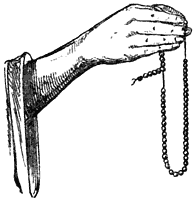
ROSARY. Arabic subḥah (سبحة). The rosary amongst Muḥammadans consists of 100 beads, and is used by them for counting the ninety-nine attributes of God, together with the essential name Allāh [GOD]; or the repetition of the Tasbīḥ (“O Holy God!”), the Taḥmīd (“Praised be God!”), and the Takbīr (“God is Great!”), or for the recital of any act of devotion. It is called in Persian and in Hindūstānī the Tasbīḥ (تسبيح).
The introduction of the rosary into Christendom in ascribed by Pope Pius V., in a Bull, A.D. 1596, to Dominic, the founder of the Black Friars (A.D. 1221), and it is related that Paul of Pherma, an Egyptian ascetic of the fourth century, being ordered to recite 300 prayers, collected as many pebbles which he kept in his bosom, and threw out one by one at every prayer, which shows that the rosary was probably not in use at that period.
ʿAbdu ʾl-Ḥaqq, the commentator on the Mishkātu ʾl-Maṣābiḥ, says that in the early days of Islām the Muḥammadans counted God’s praises on small pebbles, or on the fingers, from which the Wahhābīs maintain that their Prophet did not use a rosary. It seems probable that the Muslims borrowed the rosary from the Buddhists, and that the Crusaders copied their Muslim opponents and introduced it into Christendom.
ROZAH (روزه). The Persian word for the Arabic ṣaum, or fasting. [FASTING, RAMAZAN.]
RUBʿ (ربع). A fourth. A legal term used in Muḥammadan law, e.g. “a fourth,” or the wife’s portion when her husband dies without issue.
RUḤ (روح), pl. arwāḥ; Heb. רוּחַ ruakh, “spirit; soul; life.” Ibnu ʾl-As̤īr, author of the Nihāyah, says it is the nervous fluid or animal spirit. A vaporous substance, which is the principle of vitality and of sensation, and of voluntary motion.
In the Kitābu ʾt-Taʿrifāt, it is defined as a subtle body, the source of which is the hollow of the corporeal heart, and which diffuses itself into all the other parts of the body by means of the pulsing veins and arteries. See also Gen. ix. 4: “Flesh with the life thereof, which is the blood thereof.” Many of the ancients believed the soul to reside in the blood. (See Virgil’s Æn., ix. p. 349.) The breath which a man breathes and which pervades the whole body. Called in Persian jān (جان). The philosophers say it is the blood, by the exhausting of which life ceases. The word is generally rendered in Hindūstānī as of the feminine gender, but Arabic authors render it as often masculine as feminine. (See Lane’s Arabic Dictionary, in loco.)
In the Qurʾān the word is sometimes used for Jesus, who is known as Rūḥu ʾllāh (“the Spirit of God”), for the angel Gabriel, and also for life, grace, soul, and the Spirit of Prophecy. (A complete list of texts is given in the article SPIRIT.)
According to the Kitābu ʾt-Taʿrīfāt, p. 76, spirit is of three kinds:—
(1) Ar-Rūḥu ʾl-Insānī (الروح الانسانى), “the human spirit,” by which is understood the mind of man, which distinguishes him from the animal, and which is given to him, by the decree of God, from heaven, of the true essence of which we know nothing. It is this spirit which is sometimes united to the body and sometimes separated from it, as in sleep or death.
(2) Ar-Rūḥu ʾl-Ḥaiwānī (الروح الحيوانى), “the animal spirit,” by which is understood the life, the seat of which is in the heart, and which moves in the veins with the pulsations of the body.
(3) Ar-Rūḥu ʾl-Aʿz̤am, (الروح الاعظم), “the exalted spirit,” that human spirit which is connected with the existence of God, but the essence of which is unknown to all but the Almighty. The spiritual faculty in man. It is called also al-ʿAqlu ʾl-Awwal, “the first intelligence”; al-Ḥaqīqatu ʾl-Muḥammadīyah, “the essence of Muḥammad”; an-Nafsu ʾl-Wāḥidah, “the single essence”; al-Ḥaqīqatu ʾl-Samāwīyāh, “The original spirit of man first created by God.”
The following terms are also found in Muslim works:—
Ar-Rūḥu ʾn-Nabātī (الروح النباتى), “the vegetable spirit.”
Ar-Rūḥu ʾt̤-T̤abiʿī (الروح الطبعى), “the animal spirit.”
Ar-Rūḥu ʾl-Ilāhī (الروح اللهى), “the divine spirit.”
Ar-Rūḥu ʾs-Suflī (الروح السفلى), “the lower spirit,” which is said to belong merely to animal life.
Ar-Rūḥu ʾl-ʿUlwī (الروح العلوى), “the lofty or heavenly spirit.”
Ar-Rūḥu ʾl-Jārī (الروح الجارى), “the travelling spirit,” or that which leaves the body in sleep and gives rise to dreams.
Ar-Rūḥu ʾl-Muḥkam (الروح المحكم), “the resident spirit,” which is said never to leave the body, even after death.
Rūḥu ʾl-Ilqāʾ (روح الالقاء), “the spirit of casting into.” Used for Gabriel and the spirit of prophecy. [SPIRIT.]
AR-RŪḤU ʾL-AMĪN (الروح الامين). “The faithful spirit.” Occurs in the Qurʾān, Sūrah xxvi. 193: “Verily from the Lord of the Worlds hath this book come down; the faithful spirit hath come down with it upon thy heart, that thou mayest become a warner in the clear Arabic tongue.” It is supposed to refer to the Angel Gabriel. [SPIRIT.]
RŪḤU ʾLLĀH (روح الله). “The Spirit of God.” According to Muḥammad, it is the special Kalimah, or title of Jesus. See the Qurʾān.
Sūratu ʾn-Nisāʾ (iv.), 169: “The Messiah, Jesus, the son of Mary, is only an Apostle of God, and His Word, which He conveyed into Mary and a spirit proceeding from Himself.” (Rūḥun min-hu).
Sūratu ʾl-Ambyāʾ (xxi.), 91: “Into whom (Mary) we breathed of our spirit.”
Sūratu ʾt-Taḥrīm (lxvi.), 12: “Into whose womb we breathed of our spirit.”
It is also used in the Qurʾān for Adam, Sūratu ʾs-Sajdah (xxxii.), 8; Sūratu ʾl-Ḥijr (xv.), 29; and Sūratu Ṣād (xxxviii.), 72; where it is said that God breathed his spirit into Adam, but Adam is never called Rūḥu ʾllāh in any Muḥammadan book. [SPIRIT, JESUS.]
RŪḤU ʾL-QUDUS (روح القدس). “The Holy Spirit” (lit. “Spirit of Holiness”). The expression only occurs three times in the Qurʾān:—
Sūrah ii. 81: “We gave Jesus the Son of Mary manifest signs and aided him with the Holy Spirit.”
Sūrah ii. 254: “Of them is one to whom God spoke (i.e. Moses); and we have raised some of them degrees; and we have given Jesus the son of Mary manifest signs, and strengthened him by the Holy Spirit.”
Sūrah v. 109: “When God said, ‘O Jesus, son of Mary! remember my favours towards thee and towards thy mother, when I aided thee with the Holy Spirit, till thou didst speak to men in the cradle, and when grown up.’”
Al-Baiẓāwī says the meaning of the expression Rūḥu ʾl-Qudus is the Angel Gabriel, although some understand it to refer to the spirit of Jesus, and others to the Gospel of Jesus, whilst some think it is the Ismu ʾl-Aʿz̤am, or “the exalted name of God,” whereby Jesus raised the dead. (See Tafsīru ʾl-Baiẓāwī, p. 65.) [SPIRIT, HOLY SPIRIT.]
RUINOUS BUILDINGS. The owner of a ruinous wall in any building is responsible for any accident occasioned by its fall, after having received due warning and requisition to pull it down, and a person building a crooked wall is responsible for the damage occasioned by its falling. But the owner of a ruinous house is not responsible for accidents occasioned by the fall of any article from it, unless such article belong to him. (Hidāyah, Grady’s Ed., pp. 664, 665.)
RUK͟H (رخ). The name of a monstrous bird, which is said to have power sufficient to carry off a live elephant. (G͟hīyas̤u ʾl-Lug͟hah, in loco.)
AR-RUKNU ʾL-YAMĀNĪ (الركن اليمانى). The Yamānī pillar. The south corner of the Kaʿbah, said to be one of the most ancient parts of the temple. [MASJIDU ʾL-HARAM.]
Burkhardt says: “In the south-east corner of the Kaʿbah, or as the Arabs call it, Rokn el Yamany, there is another stone about five feet from the ground; it is one foot and a half in length, and two inches in breadth, placed upright, and of the common Meccah stone. This the people walking round the Kaʿbah touch only with the right hand; they do not kiss it.” (Captain Burton says he had frequently seen it kissed by men and women.)
Burton remarks: “The Rukn el Yamani is a corner facing the south. The part alluded to (by Burkhardt) is the wall of the Kaʿbah, between the Shami and Yemani angles, distant about three feet from the latter, and near the site of the old western door, long since closed. The stone is darker and redder than the rest of the wall. It is called El Mustajab (or Mustajab min el Zunub, or Mustajab el Dua, “where prayer is granted”). Pilgrims here extend their arms, press their bodies against the building, and beg pardon for their sins.” (El Medinah and Mecca, vol. ii. p. 160.)
RUKŪʿ (ركوع). A posture in the daily prayers. An inclination of the head with the palms of the hands resting upon the knees. [PRAYERS.]
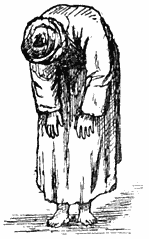
THE RUKUʿ.
RULE OF FAITH. The Muḥammadan rule of faith is based upon what are called the four foundations of orthodoxy, namely, the Qurʾān, or, as it is called, Kalāmu ʾllāh, “the Word of God; the Ḥadīs̤ (pl. Aḥādīs̤), or the traditions of the sayings and practice of Muḥammad; Ijmāʿ, or the consent of the Mujtahidūn, or learned doctors; and Qiyās, or the analogical reasoning of the learned.
In studying the Muḥammadan religious system, it must be well understood that Islām is not simply the religion of the Qurʾān, but that all Muḥammadans, whether Sunnī, Shīʿah, or Wahhābī, receive the Traditions as an authority in matters of faith and practice. The Sunnī Muḥammadans arrogate to themselves the title of traditionists; but the Shīʿahs also receive the Ḥadīs̤ as binding upon them, although they do not acknowledge the same collection of traditions as those received by their opponents. [QURʾAN, TRADITIONS, IJMAʿ, QIYAS, RELIGION, ISLAM.]
RULERS. The ideal administration of the Muslim world, as laid down in the Traditions, is that the whole of Islām shall be under the dominion of one Imām or leader, who is the K͟halīfah (خليفة), or vicegerent, of the Prophet on earth. The rulers of provinces under this Imām are called Amīr (امير) (pl. Umarāʾ). The Eastern titles of Sult̤ān and Shāh are not established in the Muḥammadan religion. The word Malik, Heb. מֶלֶךְ Melekh, occurs in the Qurʾān for a “king” and is used for King Saul (Sūrah ii. 248). The word is still retained in Asia for the chiefs of villages.
In the Qurʾān (Sūrah iv. 62), believers are enjoined to “obey the Apostle and those in authority,” but the chief injunctions are found in the Traditions.
In the Mishkātu ʾl-Maṣābiḥ, book xvi. ch. i., the following sayings of Muḥammad regarding rulers are recorded:—
“Whoever obeys me obeys God, and whoever disobeys me disobeys God. Whoever obeys the Amīr obeys me. An Imām is nothing but a shield to fight behind, by which calamities are avoided; and if he orders you to abstain from that which is unlawful, he will have great regard; but if he enjoins that which God has forbidden, he will bear the punishment of his own acts.”
“If God appoints as your Amīr a man who is a slave, with his ears and nose cut off, and who puts people to death according to God’s book, then you must listen and obey him in all things.”
“If a negro slave is appointed to rule over you, you must listen to him and obey him, even though his head be like a dried grape.”
“It is indispensable for every Muslim to listen to and approve the orders of the Imām, whether he likes or dislikes, so long as he is not ordered to sin and act contrary to law. When he is ordered to sin, he must neither attend to it nor obey it.”
“There is no obedience due to sinful commands, nor to any order but what is lawful.”
“He who shall see a thing in his ruler which he dislikes, let him be patient, for verily there is not one who shall separate a body of Muslims the breadth of a span, and he dies, but he dies like the people of ignorance.”
“The best Imāms are those you love, and those who love you, and those who pray for compassion on you, and you on them; and the worst of Imāms are those you hate, and those who hate you; and those whom you curse, and who curse you. Auf said, “O Prophet of God! when they are our enemies and we theirs, may we not fight against them?” He said, “No, so long as they keep on foot the prayers amongst you.” This he repeated. “Beware, he who shall be constituted your ruler, see if he does anything in disobedience to God, and if he does, hold it in displeasure, but do not withdraw yourselves from his obedience.”
“There will be Amīrs among you, some of whose actions you will find conformable to law, and some contrary thereto; then when anyone who shall say to their faces, ‘These acts are contrary to law,’ verily he shall be pure; and he who has known their actions to be bad, and has not told them so to their faces, has certainly not remained free from responsibility, and he who has seen a bad act and obeyed it, is their companion in it.” The Companions said, “May we not fight them?” The Prophet said, “No, so long as they perform prayers.”
“He who is disobedient to the Imām will come before God on the Day of Resurrection without a proof of his faith, and he who dies without having obeyed the Imām, dies as the people of ignorance.”
“Prophets were the governors of the children of Israel, and when one died, another supplied his place; and verily there is no prophet after me, and the time is near when there will be after me a great many K͟halīfahs.” The Companions said, “Then what do you order us?” The Prophet said, “Obey the K͟halīfah, and give him his due; for verily God will ask about the duty of the subject.”
“When two K͟halīfahs have been set up, put the last of them to death, and preserve the other, because the second is a rebel.”
“Whoever wishes to make divisions amongst my people, kill with a sword.”
“He who acknowledges an Imām must obey him as far as in his power, and if another pretender comes, kill him.”
“Verily the time is near that you will be ambitious of ruling; and it is at hand that this love of rule will be a cause of sorrow at the Resurrection, although the possession of it appears pleasant, and its departure unpleasant.”
“That is the best of men who dislikes power.”
“Beware! you are all guardians of the subject, and you will all be asked about your obedience. The Imām is the guardian of the subject, and he will be asked respecting this. A man is as a shepherd to his own family, and will be asked how they behaved, and about his conduct to them; and a wife is a guardian to her husband’s house and children and will be interrogated about them; and a slave is a shepherd to his master’s property, and will be asked about it, whether he took good care of it or not.”
“There is no Amīr who oppresses the subject and dies, but God forbids Paradise to him.”
“Verily the very worst of Amīrs are those who oppress the subject.”
“O God! he who shall be ruler over my people and shall throw them into misery, O God! cast him into misery; and he who shall be chief of my people and be kind to them, then be kind to him.”
“Verily, just princes will be upon splendid pulpits on the right hand of God; and both God’s hands are right.”
“God never sent any Prophet, nor ever made any K͟halīfah, but had two counsellors with him, one of them directing lawful deeds (that is, a good angel), and the other sin (that is, the devil). He is guarded from sin whom God has guarded.” [KHALIFAH.]
AR-RŪM (الروم). The Arabic form of the Latin Roma, or Romanus. The ancient Byzantine, or Eastern Roman Empire. Still used in Eastern countries as a name for the Turkish Empire.
The title of the XXXth Sūrah of the Qurʾān, which opens with the word. “The Greeks are overcome in the highest parts of the land; but after being overcome they shall overcome in a few years.” [GREEKS.]
RUQAIYAH (رقية). A daughter of Muḥammad by his wife K͟hadījah. She was married to ʿUtbah, the son of Abū Lahab, but being divorced by her husband, she was married to ʿUs̤mān, the third K͟halīfah.
RUQBĀ (رقبى). Lit. “Waiting.” Giving a thing on condition that if the donor die before the receiver it shall become the property of the receiver and his heirs; but if the receiver die first, the property given shall return to the donor. It is forbidden in Muslim law, because it exposes each of the parties to the temptation of wishing for the other’s death.
RUQYAH (رقية). “Enchanting.” The use of spells. The word used in the Ḥadīs̤ for exorcism and incantation. [EXORCISM.]
RŪYĀʾ (روياء). “A dream; a vision. A term used in the Qurʾān for the visions of the Prophets. It occurs five times. Once for the vision of Joseph (Sūrah xii. 5); twice for the dream of the Egyptian king (Sūrah v. 43); once for the vision of Abraham (Sūrah xxxvii. 105); once for Muḥammad’s vision (Sūrah xvii. 62.). [DREAMS.]
S.
ṢĀʿ (صاع) or ṢUWĀʿ (صواع). A certain measure used for measuring corn, and upon which depend the decisions of Muslims relating to measures of capacity. It occurs in the Qurʾān, Sūrah xii. 72, for the drinking-cup placed by Joseph in his brother’s pack.
The compiler of the Tāju ʾl-ʿArūs, says that according to five different readers of the Qurʾān, it is given ṣuwāʿ in that verse, but in the majority of texts it is ṣāʿ.
The Qāmūs explains ṣuwāʿ as a certain vessel from which one drinks, and ṣāʿ, a measure of capacity. Its invariable measure being, according to ancient authorities, four times the quantity of corn that fills two hands of a man of moderate size.
Al-Baiẓāwī records, besides ṣuwāʿ and ṣāʿ, the reading ṣauʿ and ṣuwāg͟h.
SABAʾ (سبا). (1) A tribe of Yaman, whose dwelling-places are called Maʾrib, mentioned in the XXXIVth Sūrah of the Qurʾān (entitled the Sūratu Sabaʾ), verse 14:—
“A sign there was to Sabaʾ in their dwelling places:—two gardens, the one on the right hand and the other on the left:—‘Eat ye of your Lord’s supplies, and give thanks to him: Goodly is the country, and gracious is the Lord!’
“But they turned aside: so we sent upon them the flood of Iram; and we changed them their gardens into two gardens of bitter fruit and tamarisk and some few jujube trees.
“Such was our retribution on them for their ingratitude.”
M. Caussin de Perceval, Hist. des Arabes, vol. iii., as well as M. de Sacy, fix this event in the second century of the Christian era.
(2) Also the name of a province referred to in the Qurʾān, Sūrah xxvii. 21, where it seems to be identical with the Sheba שֵׁבָא of the Bible, or the country of the Queen of Sheba:—
“Nor tarried it (the lapwing) long ere it came and said, ‘I have gained the knowledge that thou knowest not, and with sure tidings have I come to thee from Sabaʾ:
“ ‘I found a woman reigning over them, gifted with everything, and she hath a splendid throne;
“And I found her and her people worshipping the sun instead of God; and Satan hath made their works fair seeming to them, so that he hath turned them from the Way: wherefore they are not guided,
“To the worship of God, who bringeth to light the secret things of heaven and earth, and knoweth what men conceal and what they manifest:
“God: there is no god but He! the lord of the glorious throne!”
For a discussion of the identity of the Sabaʾ of Arabia with the Sheba of the Bible, refer to the word Sheba in Smith’s Dictionary of the Bible.
SABʿATU-AḤRUF (سبعة احرف). [SEVEN DIALECTS.]
SABAʿU ʾL-MAS̤ĀNI (سبع المثانى). Lit. “The Seven Repetitions.” A title given to the Introductory Chapter of the Qurʾān by Muḥammad himself. (Mishkāt, book viii. ch. i.) There are three reasons assigned for this title:—
(1) Because it is a chapter of seven verses, which is said to have been revealed twice over.
(2) Because it contains seven words twice repeated, namely, Allāh, God; Raḥmān, Compassionate; Raḥīm, Merciful; Iyākā, Thee and to Thee; Ṣīrāt̤, Way; ʿAlaihim, to whom and with whom; G͟hair, Not, and Lā, Not.
(3) Because the seven verses are generally recited twice during an ordinary prayer. (See Majmaʿu ʾl-Biḥār, in loco; and ʿAbdu ʾl-Ḥaqq.)
SABBATH. The term used in the Qurʾān for the Jewish Sabbath is Sabt (سبت), a corruption of the Hebrew שַׁבָּת Shabbāth. It occurs five times in the Qurʾān:—
Sūrah ii. 61: “Ye know, too, those of you who transgressed on the Sabbath, and to whom We (God) said, ‘Become scouted apes.’ ”
Sūrah iv. 50: “Or curse you as We (God) cursed the Sabbath breakers.”
Sūrah iv. 153: “We (God) said to them (Israel), ‘Break not the Sabbath.’ ”
Sūrah vii. 163: “And ask them (the Jews) about the city that stood by the sea when its inhabitants broke the Sabbath; when their fish came to them appearing openly on their Sabbath-day, but not to them on the day when they kept no Sabbath.”
Sūrah xvi. 125: “The Sabbath was only ordained for those who differed about it.”
In explanation of these verses, the commentator, al-Baiẓāwī relates the following traditions. Moses gave orders for the observance of the Day of Rest on Friday; but the Jews would not obey, and declared that they would observe Saturday, as it was on that day that God rested from creation, so it came to pass that “the Sabbath was ordained for those who differed about it.” But in the time of King David, certain people began to break the Sabbath by fishing in the Red Sea near the town of Ailah (Elath), and as a punishment they were turned into apes.
For an account of the Muḥammadan Sabbath, see FRIDAY.
SABEANS. Arabic Ṣābiʾ (صابىء), pl. Ṣābiʾūn. Probably from the Hebrew צָבָא tsābā, “a host.” Gen. ii. 1, i.e. “Those who worship the hosts of heaven.” According to some Arabic writers, the Ṣābiʾūn were a certain sect of unbelievers who worshipped the stars secretly, and openly professed to be Christians. According to others, they are of the religion of Ṣābiʾ, the son of Seth, the son of Adam; whilst others say their religion resembled that of the Christians, except that their qiblah was towards the south, from whence the wind blows. In the Qāmūs it is said they were of the religion of Noah. The word ṣābiʾ also means one who has departed from one religion to another religion, and the Arabs used to call the Prophet aṣ-Ṣābiʾ, because he departed from the religion of the Quraish to al-Islām. (See Lane’s Dict. in loco.) Al-Baiẓāwī says some assert they were worshippers of angels, others that they were the worshippers of the stars.
They are mentioned three times in the Qurʾān, and from the following verses it would appear that Muḥammad regarded them as believers in the true God.
Sūrah ii. 50: “They who believe and they who are Jews, and the Christians, and the Sabeans—whoever believeth in God and the Last Day, and doeth that which is right, shall have their reward with their Lord.”
Sūrah v. 73: “They who believe, and the Jews and the Sabeans, and the Christians—whoever of them believeth in God, and in the Last Day, and doeth what is right, on them shall no fear come; neither shall they be put to grief.”
Sūrah xxii. 17: “They who believe, and the Jews, and the Sabeans, and the Christians, and the Magians, and those who join other gods with God, verily God shall decide between them on the Day of Resurrection.”
ṢĀBIʾ (صابىء). [SABEANS.]
SABĪLU ʾLLĀH (سبيل الله). “The road of God.” A term used for religious warfare and other meritorious deeds; e.g. Qurʾān, Sūrah ii.:—
Verse 149: “And say not of those who are slain in the road of God that they are dead, but rather that they are living.”
Verse 263: “Those who expend their wealth in the road of God.” [JIHAD.]
SABT (سبت). [SABBATH.]
SACRAMENTS, CHRISTIAN. [EUCHARIST, BAPTISM.]
SACRIFICE. There are six words used in the Muḥammadan religion to express the idea of sacrifice.
(1) ذبح ẕabḥ, Hebrew זֶבַח zebach. Like the Hebrew word (Gen. xxxi. 54), the Arabic is used generally for slaughtering animals, whether on the Great Festival of Sacrifice [ʿIDU ʾL-AZHA], or, at ordinary times, for food. In the Qāmūs, the word ẕabḥ is defined “to split or pierce; to cut the throat of any creature.” In the Qurʾān, the word is used for the slaughtering of the heifer by Moses (Sūrah ii. 63), for the slaying of the sons of Israel by Pharaoh (Sūrah ii. 46), for sacrificing to idols (Sūrah v. 4); and for the intention of Abraham to sacrifice his son (Sūrah xxxvii. 101).
(2) قربان qurbān, Hebrew קָרְבָּן korbān (Lev. ii. 14), Lit. “Approaching near.” It occurs twice in the Qurʾān, for the sacrifice to be devoured by fire from heaven, which the Jews demanded of Muḥammad (Sūrah iii. 179), and for the offering of the sons of Adam (Sūrah v. 30). It is a word frequently employed in Islām to express the ordinary sacrifice, and the great festival is called in Persia the ʿĪd-i-Qurbān, or “Feast of Sacrifice.”
(3) نحر naḥr. Lit. “To injure the jugular vein.” Used for stabbing the breast of a camel, as in sacrifice, hence the sacrifice itself. It occurs once in the Qurʾān, Sūrah cviii. 1, 2: “Verily we have given thee al-Kaus̤ar, so pray to thy Lord and sacrifice,” which al-Baiẓāwī says means to sacrifice a camel, the most costly victim of the Arabians. The ʿĪdu ʾl-Aẓḥā is called the Yaumu ʾn-Naḥr. [ʿIDU ʾL-AZHA.]
(4) اضحية uẓḥīyah. A word which does not occur in the Qurʾān, but in the Traditions it is the subject of a Chapter in Mishkātu ʾl-Maṣābīḥ (book iv. ch. xlix.). According to the Qāmūs, it is derived from ẓaḥw, ẓuḥā, a word which expresses that time of the day when the sun has risen to a considerable height, about 10 A.M. (Ṣalātu ʾẓ-Ẓuḥā, being a voluntary prayer at that hour). Uẓḥīyah is therefore the sacrifice offered about 10 o’clock on the day of the Great Festival.
(5) هدى Hady, or, according to another reading, Hadī. Occurs four times in the Qurʾān, Sūrahs ii. 193, v. 2, 96, 98, for offering of an animal for sacrifice sent to the temple at Makkah, when the pilgrim is not able to reach in time. The Qāmūs defines it as that “which is presented.” Al-Baiẓāwī (Tafsīr, p. 100) gives Hady as the plural form of Hadyah and Hadī as that of Hadīyah. The latter occurs in the Qurʾān, Sūrah xxvii. 35, for an offering or gift, and seems to have the same meaning as the Hebrew מִנְחָה minchah, which is used in the Old Testament for a gift or tribute (Gen. iv. 3), and also for the unbloody sacrifice or “meat offering” (Lev. ii. 1).
(6) منسك mansak. Occurs in the Qurʾān, Sūrah xxii. 35: “We have appointed to every nation a rite (mansak).” Sūrah ii. 122: “Show us our rites” (manāsik): also verse 196. Al-Baiẓāwī (Tafsīr, p. 91), to the first passage, says the word means a place of devotion, or a sacrifice which draws a man near to God, and mentions another reading, mansik, a place of worship, of which manāsik is likewise the plural. The word, as quoted above, as well as the plural form, is translated by the late Professor Palmer “rites.” [RITES.]
II. There are only two occasions upon which Muḥammadans sacrifice, namely, on the Great Festival held on the 10th day of Ẕū ʾl-Ḥijjah [ʿIDU ʾL-AZHA] and on the birth of a child [AQIQAH].
(1) The great sacrifice recognised by the Muslim faith is that on the Great Festival, called the ʿĪdu ʾl-Aẓḥā, or “Feast of Sacrifice.” This sacrifice is not only offered by the pilgrims at Makkah, but in all parts of Islām, upon the day of sacrifice. In the first place, this sacrifice is said to have been established in commemoration of Abraham having consented to sacrifice his son (most Muslims say it was Ishmael), as recorded in the Qurʾān, when it is said God “ransomed his (Abraham’s) son with a costly victim” (Sūrah xxxvii. 107); but Shaik͟h ʿAbdu ʾl-Ḥaqq, in his commentary on the Mishkāt, also says that al-Uẓḥīyah, “the sacrifice,” is that which at the special time (i.e. on the festival) is slaughtered with the object of obtaining nearness to God.
(2) The teaching of the Qurʾān on the subject of sacrifice is conveyed in the following verses (Sūrah xxii. 37):—
“The bulky (camels) we made for you one of the symbols of God (Shaʿāʾiri ʾllāhi), therein have ye good. So mention the name of God over them as they stand in a row (for sacrifice), and when they fall down (dead), eat of them and feed the easily contented and him who begs. Thus have we subjected them to you: haply ye may give thanks. Their flesh will never reach to God, nor yet their blood, but the piety from you will reach Him.”
Al-Baiẓāwī on this verse says, “It, the flesh of the sacrifice, does not reach unto God, nor its blood, but the piety (taqwā) that is the sincerity and intention of your heart.” (Tafsīru ʾl-Baiẓāwī, vol. ii. p. 52.)
(3) In the Traditions (Mishkāt, book iv. ch. xlix.) we have the following:—
Anas says: “The prophet sacrificed two rams, one was black, and the other was white, and he put his foot on their sides as he killed them, and cried out, ‘Biʾ-smi ʾllāhi, Allāhu akbar! In the name of God! God is most great!’ ”
ʿĀyishah says: “The Prophet ordered a ram with horns to be brought to him, and one that should walk in blackness, sleep in blackness, and look in blackness” (by which he meant with black legs, black breast and belly, and black eyes), “and he said, ‘O ʿĀyishah, give me a knife and sharpen it!’ And I did so. Then the Prophet took hold of the ram and threw him on his side and slew it. And when he was killing it he said, ‘In the name of God! O God accept this from Muḥammad, and from his children, and from his tribe!’ Afterwards he gave to the people their morning meal from the slaughtered ram.”
Jābir says: “The Prophet sacrificed two rams on the day of the Festival of Sacrifice, which were black or white, and had horns, and were castrated; and when he turned their heads towards the Qiblah, he said, ‘Verily I have turned my face to Him who brought the heavens and the earth into existence from nothing, according to the religion of Abraham, and I am not of the polytheists. Verily my prayers, my worshipping, my life, and my death, are for God, the Lord of the universe, who hath no partner; and I have been ordered to believe in one God, and to abandon associating any other god with Him; and I am one of the Muslims. O God! this sacrifice is of Thee, and for Thee; accept it then from Muḥammad and his people!’ And he added, ‘In the name of God! the Great God!’ and then killed them.”
ʿAlī said: “The Prophet has ordered me to see that there be no blemish in the animal to be sacrificed; and not to sacrifice one with the ears cut, either at the top or the bottom, or split lengthways, or with holes made in them. The Prophet prohibited sacrificing a ram with broken horns, or slit ears.”
ʿĀyishah relates that the Prophet said: “Man hath not done anything, on the day of sacrifice, more pleasing to God than spilling blood; for verily the animal sacrificed will come on the Day of Resurrection, with its horns, its hair, its hoofs, and will make the scales of his actions heavy; and verily its blood reacheth the acceptance of God before it falleth upon the ground; therefore be joyful in it.”
Zaid Ibn Arqam relates: “The Companions said, ‘O messenger of God! what are these sacrifices, and whence is their origin?’ He said, ‘These sacrifices are conformable to the laws of your father Abraham.’ They said, ‘O Prophet! what are our rewards therefrom?’ He said, ‘There is a reward annexed to every hair.’ The Companions then said, ‘O Prophet! what are the rewards from the sacrifices of camels and sheep, that have wool?’ He said, ‘There is a good reward also for every hair of their wool.’ ”
(4) The following is the teaching of the Hidāyah regarding the nature and conditions of the sacrifice:—
It is the duty of every free Muslim arrived at the age of maturity to offer a sacrifice, on the ʿĪdu ʾl-Aẓḥā, or “Festival of the Sacrifice,” provided he be then possessed of a Niṣāb (i.e. sufficient property), and be not a traveller. This is the opinion of Abū Ḥanīfah, Muḥammad, Zufar, and Ḥasan, and likewise of Abū Yūsuf, according to one tradition. According to another tradition, and also according to ash-Shāfiʿī, sacrifice is not an indispensable duty, but only laudable. At-Tahāwī reports that, in the opinion of Abū Ḥanīfah, it is indispensable, whilst the disciples hold it to be in a strong degree laudable. The offering of a sacrifice is incumbent on a man on account of himself, and on account of his infant child. This is the opinion of Abū Ḥanīfah in one tradition. In another he has said that it is not incumbent on a man to offer a sacrifice for his child. In fact, according to Abū Ḥanīfah and Abū Yūsuf, a father or guardian is to offer a sacrifice at the expense of the child (when he is possessed of property), eating what parts of it are eatable, and selling the remaining parts that are valuable in their substance, such as the skin, &c. Muḥammad, Zufar, and ash-Shāfiʿī have said that a father is to sacrifice on account of his child at his own expense, and not at that of the child. The sacrifice established for one person is a goat; and that for seven, a cow or a camel. If a cow be sacrificed for any number of people fewer than seven, it is lawful; but it is otherwise if sacrificed on account of eight. If for a party of seven people the contribution of any one of them should be less than a seventh share, the sacrifice is not valid on the part of any one of them. If a camel that is jointly and in an equal degree the property of two men should be sacrificed by them on their own account, it is lawful; and in this case they must divide the flesh by weight, as flesh is an article of weight. If, on the contrary, they distribute it from conjectural estimation, it is not lawful, unless they add to each share of the flesh part of the head, neck, and joints. If a person purchase a cow, with an intent to sacrifice it on his own account, and he afterwards admit six others to join with him in the sacrifice, it is lawful. It is, however, most advisable that he associate with the others at the time of purchase, in order that the sacrifice may be valid in the opinion of all our doctors, as otherwise there is a difference of opinion. It is related from Abū Ḥanīfah that it is abominable to admit others to share in a sacrifice after purchasing the animal, for, as the purchase was made with a view to devotion, the sale of it is therefore an abomination.
The time of offering the sacrifice is on the morning of the day of the festival, but it is not lawful for the inhabitants of a city to begin the sacrifice until their Imām shall have finished the stated prayers for the day. Villagers, however, may begin after break of day. The place, in fact, must regulate the time. Thus, where the place of celebration is in the country, and the performers of it reside in the city, it is lawful to begin in the morning; but if otherwise, it must be deferred until the stated prayers be ended. If the victim be slain after the prayers of the Mosque, and prior to those offered at the place of sacrifice [IDGAH], it is lawful, as is likewise the reverse of this. Sacrifice is lawful during three days—that is, on the day of the festival, and on the two ensuing days. Ash-Shāfiʿī is of opinion that it is lawful on the three ensuing days. The sacrifice of the day of the festival is far superior to any of the others. It is also lawful to sacrifice on the nights of those days, although it be considered as undesirable. Moreover, the offering of sacrifices on these days is more laudable than the custom of omitting them, and afterwards bestowing an adequate sum of money upon the poor. If a person neglect the performance of a sacrifice during the stated days, and have previously determined upon the offering of any particular goat, for instance; or, being poor, have purchased a goat for that purpose,—in either of these cases it is incumbent on him to bestow it alive in charity. But if he be rich, it is in that case incumbent on him to bestow in charity a sum adequate to the price, whether he have purchased a goat with an intent to sacrifice it or not. It is not lawful to sacrifice animals that are blemished, such as those that are blind, or lame, or so lean as to have no marrow in their bones, or having a great part of their ears or tail cut off. Such, however, as have a great part of their ears or tail remaining may lawfully be sacrificed. Concerning the determination of a great part of any member, there are, indeed, various opinions reported from Abū Ḥanīfah. In some animals he has determined it to be the third; in others more than the third; and in others, again, only the fourth. In the opinion of the two disciples, if more than the half should remain, the sacrifice is valid, and this opinion has been adopted by the learned Abū ʾl-Lais̤. If an animal have lost the third of its tail, or the third of its ears or eye-sight, it may be lawfully sacrificed; but if, in either of these cases, it should have lost more than a third, the offering of it is not lawful. The rule which our doctors have laid down to discover in what degree the eye-sight is impaired is as follows. The animal must first be deprived of its food for a day or two that it may be rendered hungry, and having then covered the eye that is impaired, food must be gradually brought towards it from a distance, until it indicate by some emotion that it has discovered it. Having marked the particular spot at which it observed the food, and uncovered the weak eye, the perfect eye must then be bound, and the same process carried on, until it indicate that it has observed it with the defective eye. If, then, the particular distance from those parts to where the animal stood be measured, it may be known, from the proportion they bear to each other, in what degree the sight is impaired.
It is not lawful to offer a sacrifice of any animal except a camel, a cow, or a goat; for it is not recorded that the Prophet, or any of his companions, ever sacrificed others. Buffaloes, however, are lawful as being of the species of a cow. Every animal of a mixed breed, moreover, is considered as of the same species with the mother.
If a Christian or any person whose object is the flesh, and not the sacrifice, be a sharer with six others, the sacrifice is not lawful on the part of any. It is lawful for a person who offers a sacrifice either to eat the flesh or to bestow it on whomsoever he pleases, whether rich or poor, and he may also lay it up in store. It is most advisable that the third part of the flesh of a sacrifice be bestowed in charity. It is not lawful to give a part of the sacrifice in payment to the butcher. It is abominable to take the wool of the victim and sell it before the sacrifice be performed, but not after the sacrifice. In the same manner, it is abominable to milk the victim and sell the milk. It is most advisable that the person who offers the sacrifice should himself perform it, provided he be well acquainted with the method, but if he should not be expert at it, it is then advisable that he take the assistance of another, and be present at the operation. It is abominable to commit the slaying of the victim to a Kitābī (a Jew or Christian). If, however, a person order a Kitābī to slay his victim, it is lawful. It is otherwise where a person orders a Magian, or worshipper of fire, to slay his victim, for this is inadmissible. (Hamilton’s Hidāyah, vol. iv. 76.)
(5) From the foregoing references to the Qurʾān, the Traditions, ʿAbdu ʾl-Ḥaqq, al-Baiẓāwī, it will appear that whilst the Muḥammadan sacrifice is (1) Commemorative, having been instituted in commemoration of Abraham’s willingness to offer his son; (2) Self Dedicatory, as expressed in the Traditional sayings of Muḥammad; and (3) Eucharistic, according to the verse in the Qurʾān already quoted, “Haply ye may give thanks”; that the expiatory character of the sacrifice is not clearly established, for there is no offering for, or acknowledgment of, sin, connected with the institution. Muḥammadanism, true to its anti-Christian character, ignores the doctrine that “without shedding of blood there is no remission.” (Lev. xvii. 11; Heb. ix. 22.)
(6) At the birth of a child it is incumbent upon the Muslim father to sacrifice a goat (one for a girl and two for a boy) at the ceremony called ʿAqīqah, which is celebrated on either the seventh, fourteenth, twenty-first, twenty-eighth, or thirty-fifth day after birth, when the hair is first shaved and its weight in silver given to the poor. ʿAbdu ʾl-Ḥaqq says ʿAqīqah comes from ʿaqq, “to cut,” and refers to cutting the throat of the animal. Others refer it to cutting the hair. The idea of the sacrifice on this occasion is dedicatory and eucharistic. Buraidah says, “We used, in the time of ignorance, when children were born to us, to slay sheep and rub the child’s head with the blood; but when Islām came we sacrificed a sheep on the seventh day, and shaved the child’s head and rubbed saffron on it.”
ṢĀD (صاد). The fourteenth letter of the Arabic alphabet. The title of the XXXVIIIth Sūrah of the Qurʾān, which begins with the letter.
ṢADAQAH (صدقة), pl. ṣadaqāt. From ṣadq, “to be righteous, truthful”; Hebrew צֶדֶק tsedek. A term used in the Qurʾān for “Almsgiving,” e.g. Sūrah ii. 265: “Kind speech and pardon are better than almsgiving (ṣadaqah) followed by annoyance, for God is rich and clement.”
Ṣadaqatu ʾl-Fit̤r is the alms given on the lesser Festival, called the ʿĪdu ʾl-Fit̤r, which consists of half a ṣāʿ of wheat, flour, or fruits, or one ṣāʿ of barley. This should be distributed to the poor before the prayers of the festival are said. (Hidāyah, vol. i. p. 62.) [ʿĪDU ʾL-FITR.]
SAʿD IBN ABĪ WAQQĀṢ (سعد بن ابى وقاص). Called also Saʿd ibn Malik ibn Wahb az-Zuhrī. He was the seventh person who embraced Islām, and was present with Muḥammad in all his battles. He died at ʿAtīq A.H. 55, at the age of 79, and was buried at al-Madīnah.
SAʿD IBN MUʿĀẔ (سعد بن معاذ). The chief of the Banū Aus. He embraced Islām at al-Madīnah after the first pledge at ʿAqabah. He died of wounds received at the battle of the Ditch, A.H. 5. (See Muir’s Life of Mahomet, vol. iii. 282.)
SAʿD IBN ʿUBĀDAH (سعد بن عبادة). One of the Companions, and an Anṣārī of great reputation. He carried the standard at the conquest of Makkah. Died A.H. 15.
ṢADR (صدر), or Ṣadru ʾṣ-Ṣudūr. The chief judge. Under Muḥammadan rule, he was especially charged with the settlement of religious grants and the appointment of law officers.
SADŪM (سدوم). [SODOM.]
AṢ-ṢAFĀ (الصفا). A hill near Makkah. One of the sacred places visited by the pilgrims during the Ḥajj. [PILGRIMAGE.]
ṢAFAR (صفر). Lit. “The void month.” The second month of the Muḥammadan year. So called because in it the ancient Arabs went forth on their predatory expeditions and left their houses ṣifr, or empty; or, according to some, because when it was first named it occurred in the autumn, when the leaves of the trees were ṣufr, or “yellow.” (G͟hiyās̤u ʾl-Lug͟hah, in loco.) [MONTHS.]
ṢAFF (صف). An even row or line of things.
(1) A term used for a row of persons standing up for prayers.
(2) Aṣ-Ṣaff, the title of the LXIth Sūrah of the Qurʾān, in the 6th verse of which the word occurs for the close unbroken line of an army.
AṢ-ṢĀFFĀT (الصافات), pl. of ṣāffah, “Ranged in ranks.” The title of the XXXVIIth Sūrah of the Qurʾān, in the first verse of which the angels are mentioned as being ranged in ranks.
ṢAFĪYAH (صفية). One of the wives of Muḥammad. She was the widow of Kinānah, the Jewish chief of K͟haibar, who was cruelly put to death. In after years it is said Muḥammad wished to divorce her, but she begged to continue his wife, and requested that her turn might be given to ʿĀyishah, as she wished to be one of the Prophet’s “pure wives” in Paradise.
ṢAFĪYU ʾLLĀH (صفى الله). Lit. “The Chosen of God.” A title given in the Traditions to Adam, the father of mankind. [ADAM.]
ṢAFŪRĀʾ (صفوراء). The Zipporah of the Bible. The wife of Moses. According to Muslim Lexicons, she was the daughter of Shuʿaib. [MOSES.]
ṢAFWĀN IBN UMAIYAH (صفوان بن امية). A Ṣaḥābī of reputation. A native of Makkah. He was slain the same day as the K͟halīfah ʿUs̤mān.
ṢAḤĀBĪ (صحابى), fem. Ṣaḥābīyah. “An associate.” One of the Companions of Muḥammad. The number of persons entitled to this distinction at the time of Muḥammad’s death is said to have been 144,000, the number including all persons who had ever served as followers of the Prophet, and who had actually seen him. The general opinion being that one who embraced Islām, saw the Prophet and accompanied him, even for a short time, is a Ṣaḥābī, or “associate.” [ASHAB.]
ṢĀḤIBU ʾN-NIṢĀB (صاحب النصاب). A legal term for one possessed of a certain estate upon which zakāt, or “legal alms,” must be paid. Also for one who has sufficient means to enable him to offer the sacrifice on the great festival, or to make the pilgrimage to Makkah. The possessor of 200 dirhems, or five camels, is held to be a Ṣāḥibu ʾn-Niṣāb, as regards zakāt.
ṢĀḤIBU ʾZ-ZAMĀN (صاحب الزمان). “Lord of the Age.” A title given by the Shīʿahs to the Imām Mahdī. (G͟hiyās̤u ʾl-Lug͟hah, in loco.)
ṢAḤĪFAH (صحيفة), pl. ṣuḥuf. Lit. “A small book or pamphlet.” A term generally used for the one hundred portions of scripture said to have been given to Adam, Seth, Enoch, and Abraham, although it is used in the Qurʾān (Sūrah lxxxvii. 19) for the books of Abraham and Moses: “This is truly written in the books (ṣuḥuf) of old, the books (ṣuḥuf) of Abraham and Moses.” [PROPHETS.]
ṢAḤĪFATU ʾL-AʿMĀL (صحيفة الاعمال). The “Book of Actions,” which is said to be made by the recording angels (Kirāmu ʾl-Kātibīn) of the deeds of men, and kept until the Day of Judgment, when the books are opened. See Qurʾān:—
Sūrah l. 16: “When two (angels) charged with taking account shall take it, one sitting on the right hand and another on the left.”
Sūrah xvii. 14, 15: “And every man’s fate have We (God) fastened about his neck; and on the Day of Resurrection will We bring forth to him a book, which shall be proffered to him wide open: Read thy Book: There needeth none but thyself to make out an account against thee this day.” [KIRAMU ʾL-KATIBIN, RESURRECTION.]
ṢAḤĪḤU ʾL-BUK͟HĀRĪ (صحيح البخارى). The title of the first of the Kutubu ʾs-Sittah, or “six correct” books of traditions received by the Sunnīs. It was compiled by Abū ʿAbdu ʾllāh Muḥammad ibn Ismāʿīl al-Buk͟hārī, who was born at Buk͟hārah, A.H. 194, and died at K͟hartang, near Samarkand, A.H. 256. It contains 9,882 traditions, of which 2,623 are held to be of undisputed authority. They are arranged into 160 books and 3,450 chapters. [TRADITIONS.]
ṢAḤĪḤU MUSLIM (صحيح مسلم). The title of the second of the Kutubu ʾs-Sittah, or “six correct” books of the traditions received by the Sunnīs. It was compiled by Abū ʾl-Ḥusain Muslim ibn al-Ḥajjāj al-Qushairī, who was born at Naishāpūr, A.H. 204, and died A.H. 261. The collection contains 7,275 traditions, of which, it is said, 4,000 are of undisputed authority. The books and chapters of the work were not arranged by the compiler, but by his disciples. The most celebrated edition of this work is that with a commentary by Muḥyiyu ʾd-dīn Yaḥyā an-Nawawī, who died A.H. 676. [TRADITIONS.]
SAHM (سهم). Lit. “An arrow used for drawing lots.” A term in Muḥammadan law for a portion of an estate allotted to an heir. (Hamilton’s Hidāyah, vol. iv. p. 487.)
SAḤŪR (سحور). The meal which is taken before the dawn of day during the Ramaẓān. It is called in Persian T̤aʿām-i-Saḥarī. In Hindūstānī, Sahārgāhī. In Pushto Peshmani. [RAMAZAN.]
SĀʾIBAH (سائبة). Anything set at liberty, as a slave, or she-camel, and devoted to an idol. Mentioned once in the Qurʾān, Sūrah v. 102: “God hath not ordained anything on the subject of sāʾibah, but the unbelievers have invented it.”
SAʿĪD IBN ZAID (سعيد بن زيد). A Ṣaḥābī who embraced Islām in his youth. He was present with Muḥammad in all his engagements except at Badr. He is held to be one of the ʿAsharah Mubashsharah, or ten patriarchs of the Muslim faith. Died at ʿAqīq, A.H. 51, aged 79.
SAIFU ʾLLĀH (سيف الله). “The Sword of God.” A title given by Muḥammad to the celebrated General K͟halīd ibn al-Walīd. (Mishkāt, book xxiv. ch. viii.)
SAIḤŪN (سيحون). The river Jaxartes. Said to have been one of the rivers of Eden. [EDEN.]
SAINTS. In Muḥammadan countries, reputed saints are very numerous. Very many religious leaders obtain a great reputation for sanctity even before their deaths, but after death it is usual for the followers of any well-known religious teacher to erect a shrine over his grave, to light it up on Thursdays, and thus establish a saintly reputation for their departed guide. Very disreputable persons are thus often reckoned to have died in the “odour of sanctity.” At Hasan Abdal in the Punjab (celebrated in the story of Lala Rookh), there is a shrine erected over a departed cook, who for many years lived on his peculations as keeper of the staging bungalow. When he died, about ten years ago, his family erected over his remains a shrine of some pretensions, which even in the present generation is an object of devout reverence, but which, in the next, will be the scene of reputed miracles. This is but an example of many thousands of shrines and saintly reputations easily gained throughout Islām.
It is generally asserted that according to the teachings of Islām, the Prophets (ambiyāʾ) were without sin, but there is a tradition, related by Anas, which distinctly asserts the contrary, and states that Muḥammad not only admitted his own sinfulness, but also the fall of Adam, the murder committed by Moses, and the three lies told by Abraham. (See Mishkāt, book xxiii. ch. xii.) But it is very remarkable that, according to this Ḥadīs̤, Muḥammad does not charge Jesus Christ with having committed sin. The immaculate conception and the sinlessness of Christ are admitted doctrines of Islām. [JESUS CHRIST.]
The terms pīr and walī are common titles for those who, by reputed miracles and an ascetic life, have established a reputation for sanctity, for whom in Persian the title buzurg is generally used. The titles qut̤b and g͟haus̤ are very high orders of sanctity, whilst zāhid and ʿābid are employed for persons who devote their lives to religious contemplation and worship.
The Ṣūfīs use the word sālik, “pilgrim” or “traveller,” for one who has renounced the world for the “path” of mysticism, whilst faqīr is a title of more general application to one who is poor in the sight of God. Shaik͟h and mīr, used for old men, also express a degree of reputation in the religious world; shaik͟h (in India) being a title generally conferred on a convert from Hinduism to Islām. Saiyid, or “lord,” is a title always given to the descendants of Muḥammad, mīr being sometimes used for the same. Miyān, “master” or “friend,” is generally used for the descendants of celebrated saints, or as a mere title of respect.
SAʿĪR (سعير). “A flaming fire.” The special place of torment appointed for the Sabeans. (See al-Bag͟hawī’s Commentary on the Qurʾān.) It occurs sixteen times in the Qurʾān (Sūrah iv. 11, and fifteen other places), where it does not seem to be applied to any special class.
S̤AIYIBAH (ثيبة). A legal term for a woman who departs from her husband, whether through divorce or the death of her husband, after the first connection.
SAIYID (سيد). A term used for the descendants of Muḥammad from his daughter Fāt̤imah by ʿAlī. The word only occurs twice in the Qurʾān—in Sūrah iii. 34, where it is used for John Baptist; and in Sūrah xii. 25, where it stands for the husband of Zalīk͟hah. According to the Majmu ʾl-Biḥār, p. 151, it means “lord, king, exalted, saint, merciful, meek, husband,” &c.
There are two branches of Saiyids—those descended from al-Ḥasan and those descended from al-Ḥusain (both the sons of ʿAlī.)
These descendants of Muḥammad are prayed for at every period of the daily prayers [PRAYERS], and they are held in all Muḥammadan countries in the highest respect, however poor or degraded their position may be.
The term Saiyid is also given as a name to persons who are not descended from Muḥammad, e.g. Saiyid Shāh, Saiyid Amīn, &c., although it is a mere assumption. In addition to the term Saiyid, the term Bādshāh, Shāh, Mīr, and Sharīf, are applied to those descended from Bībī Fāt̤imah.
The author of the Ak͟hlāq-i-Jalālī estimated in his day the descendants of Muḥammad to be not less than 200,000.
SAJDAH (سجدة), vulg. sijdah. Lit. “Prostration.”
(1) The act of worship in which the person’s forehead touches the ground in prostration. [PRAYER.]
(2) As-Sajdah, the title of the XXXIInd Sūrah of the Qurʾān, in the 15th verse of which the word occurs: “They only believe in our signs who, when they are reminded of them, fall down adoring and celebrate the praises of their Lord.”
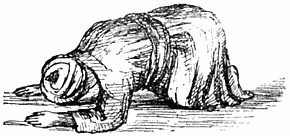
SAJDATU ʾS-SAHW (سجدة السهو). “The prostrations of forgetfulness.” Two prostrations made on account of forgetfulness or inattention in prayer. Muḥammad said, “When any of you stand up for prayer, and the devil comes to you and casts doubt and perplexity into your mind, so that you do not know how many rakʿahs you have recited, then prostrate yourself twice.
SAJDATU ʾSH-SHUKR (سجدة الشكر). “A prostration of thanksgiving.” When a Muslim has received some benefit or blessing, he is enjoined to make a prostration in the direction of Makkah, and say, “Holiness to God! and Praise be to God. There is no deity but God! God is most Great!” (Raddu ʾl-Muḥtār, vol i. p. 816.)
SAJJĀDAH (سجادة). The small carpet, mat, or cloth, on which the Muslim prays. [JAI-NAMAZ, MUSALLA.]
ṢAK͟HR (صخر). The jinn or devil who is said to have obtained possession of Solomon’s magic ring, and to have personated the King for forty days, when Ṣak͟hr flew away and threw the ring into the sea, where it was swallowed by a fish, which was afterwards caught and brought to Solomon, who by this means recovered his kingdom.
AṢ-ṢAK͟HRAH (الصخرة). “The Rock.” The sacred rock at Jerusalem on which the Temple was erected, and on which now stands the Qubbatu ʾṣ-Ṣak͟hrah, the “Dome of the Rock,” known to English readers as the Mosque of ʿUmar. This rock is said to have come from Paradise, and to be the foundation-stone of the world, to have been the place of prayer of all prophets, and, next to the Kaʿbah, the most sacred spot in the universe. Imām Jalālu ʾd-dīn as-Suyūt̤ī, in his history of the Temple of Jerusalem (Reynolds’ edition, p. 44), gives the following traditional account of the glorious Ṣak͟hrah.
“We are informed by Ibn al-Manṣūr that the Rock of the Baitu ʾl-Muqaddas, in the days of Solomon, was of the height of twelve thousand cubits; each cubit at that time being the full cubit, viz. one modern cubit, one span and one hand-breadth. Upon it also was a chapel, formed of aloes (or sandal) wood, in height twelve miles (sic); also above this was a network of gold, between two eyelet-beads of pearl and ruby, netted by the women of Balka in the night, which net was to serve for three days; also the people of Emmaus were under the shadow of the chapel when the sun rose and the people of Baitu ʾr-Raḥmah when it set, and even others of the valleys were under its shadow; also upon it was a jacinth (or ruby), which shone in the night like the light of the sun; but when the light began to dawn its brilliancy was obscured; nor did all these cease until Nebuchadnezzar laid all waste, and seized whatever he found there, and carried it into Greece.
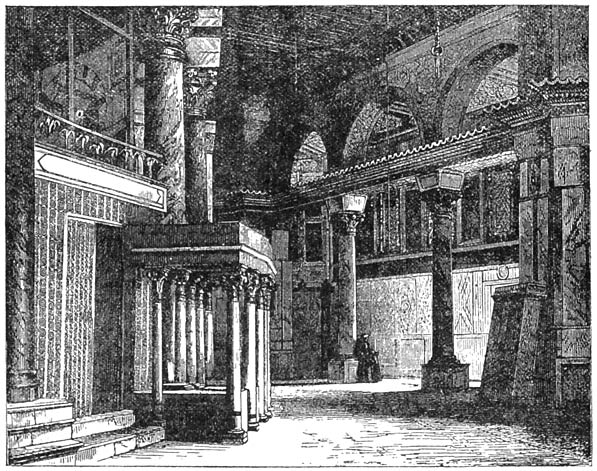
THE DOME OF THE ROCK. (Conder.)
“Again, by a tradition we learn that the Ṣak͟hrah of Baitu ʾl-Muqaddas was raised aloft into the sky, to the height of twelve miles, and the space between it and heaven was no more than twelve miles. All this remained in the same state until Greece (or Rome) obtained the mastery over it, subsequent to its devastation by Nebuchadnezzar. But when the Greeks obtained possession of it, they said, “Let us build thereupon a building far excelling that which was there before.” Therefore they built upon it a building as broad at the base as it was high in the sky, and gilded it with gold, and silvered it with silver. Then, entering therein, they began to practise their associating Paganism, upon which it turned upside-down over them, so that not one of them came out.
“Therefore, when the Grecian (king) saw this, he summoned the Patriarch and his ministers (deacons), and the chiefs of Greece, and said, ‘What think ye?’ who replied, ‘We are of opinion that our idol-gods are not well pleased, and therefore will not receive us favourably.’ Hereupon he commanded a second temple to be built, which they did, spending a great sum thereon, and having finished the second building, seventy thousand entered it as they had entered the first. But it happened to them as it had happened to the first; when they began their Paganism it turned over upon them. Now their king was not with them. Therefore, when he saw this, he assembled them a third time, and said unto them, ‘What think ye?’ who said, ‘We think that our Lord is not well pleased with us, because we have not offered unto him abundantly; therefore he has destroyed what we have done, therefore we should greatly wish to build a third.’ They then built a third, until they thought they had carried it to the greatest possible height, which having done, he assembled the Christians, and said unto them, ‘Do ye observe any defect?’ who said, ‘None, except that we must surround it with crosses of gold and silver.’ Then all the people entered it, to read and cite (sacred things). Having bathed and perfumed themselves, and having entered it, they began to practise their associating Paganism, as the others had done before them; whereupon down fell the third building upon them. Hereupon the king again summoned them together, and asked their counsel about what he should do. But their dread was very great; and whilst they were deliberating, there came up to them a very old man, in a white robe and a black turban; his back was bent double and he was leaning upon a staff. So he said, ‘O Christian people, listen to me! listen to me! for I am the oldest of any of you in years, and have now come forth from among the retired votaries of religion, in order to inform you that, with respect to this place, all its possessors are accursed, and all holiness hath departed from it, and hath been transferred to this (other) place. I will therefore point out this as the place wherein to build the Church of the Resurrection. I will show you the spot, but you will never see me after this day, for ever. Do, therefore, with a good will that which I shall tell you.’ Thus he cheated them, and augmented their accursed state, and commanded them to cut up the rock, and to build with its stones upon the place which he commended them.
“So whilst he was talking with them he became concealed; and they saw him no more. Thereupon they increased in their infidelity, and said, ‘This is the Great Word. Then they demolished the Mosques, and carried away the columns and the stones, and all the rest, and built therewith the Church of the Resurrection, and the church which is in the valley of Hinnon. Moreover, this cursed old man commanded them, ‘When ye have finished their building upon this place, then take that place whose owners are accursed, and whence all holiness hath departed, to be a common sewer to receive your dung.’ By this they gratified their Lord. Also they did this, as follows: At certain seasons, all the filth and excrement was sent in vessels from Constantinople, and was at a certain time all thrown upon the Rock, until God awoke our Prophet Muḥammad (the peace and blessing of God be with him!), and brought him by night thereunto; which he did on account of its peculiar consecration, and on account of the greatness of its super-excellence. We learn, also, that God, on the Day of Judgment, will change the Ṣak͟hrah into white coral, enlarging it to extend over heaven and earth. Then shall men go from that Rock to heaven or hell, according to that great word, ‘There shall be a time when this earth shall change into another earth, and the heaven shall turn white; the soil shall be of silver; no pollution shall ever dwell thereon.’ Now from ʿĀʾish (may the satisfying favour of God rest upon him!), I said, ‘O apostle of God, on that day when this earth shall become another earth, and this sky shall change, where shall men be on that day?’ He replied, ‘Upon the bridge aṣ-Ṣirāt̤.’ Again, a certain divine says, ‘that in the Law, God says to the Rock of the Holy Abode, “Thou art my seat; thou art near to me; from thy foundation have I raised up the heavens, and from beneath thee have I stretched forth the earth, and all the distant inaccessible mountains are beneath thee. Who dies within thee is as if he died within the world of heaven, and who dies around thee is as if he died within thee. Days and nights shall not cease to succeed, until I send down upon thee a Light of Heaven, which shall obliterate all the (traces) of the infidels of the sons of Adam, and all their footsteps. Also I will send upon thee the hierarchy of angels and prophets; and I will wash thee until I leave thee like milk; and I will fix upon thee a wall twelve miles above the thick-gathering clouds of earth, and also a hedge of light. By my hand will I insure to thee thy support and thy virtue; upon thee will I cause to descend my spirits and my angels, to worship within thee; nor shall any one of the sons of Adam enter within thee until the Day of Judgment. And whosoever shall look upon this chapel from afar shall say, ‘Blessed be the face of him who devoutly worships and adores in thee!’ Upon thee will I place walls of light and a hedge of thick clouds—five walls of ruby and pearl.” ’ Also from the Book of Psalms, ‘Great and glorious art thou, thou threshing-floor! Unto thee shall be the general assemblage: from thee shall all men rise from death.’ Moreover, from the same author, God says to the Rock of the Holy Abode, ‘Who loveth thee, him will I love; who loveth thee, loveth me; who hateth thee, him will I hate. From year to year my eyes are upon thee, nor will I forget thee until I forget my eyes. Whoso prayeth within thee two rakʿahs, him will I cause to cast off all his sins, and to be as guiltless as I brought him from his mother’s womb, unless he return to his sins, beginning them afresh.’ This is also a tradition of old standing: ‘I solemnly engage and promise to everyone who dwells therein, that all the days of his life the bread of corn and olive-oil never shall fail him; nor shall the days and the nights fail to bring that time, when, out of the supremacy of my bounty, I will cause to descend upon thee the assemblage of man for judgment—the whole company of risen mortals.’ There is a tradition that ‘Muqātil Ibn Sulaiman came to this Temple to pray, and sat by the gate looking towards the Rock; and we had assembled there in great numbers; he was reading and we were listening. Then came forward ʿAlī Ibn al-Badawī, stamping terribly with his slippers upon the pavement. This greatly afflicted him, and he said to those around him, “Make an opening for me.” Then the people opened on each side, and he made a threatening motion with his hand to warn him and prevent this stamping, saying, “Tread more gently! That place at which Muqātil is”—pointing with his hand—“and on which thou art stamping, is the very place redolent of Heaven’s breezes; and there is not a spot all around it—not a spot within its precincts a hand’s-breadth square—wherein some commissioned prophet, some near angel, hath not prayed.” ’ Now from the mother of ʿAbdu ʾllāh, daughter of K͟hālid, from her mother, ‘the moment is surely fixed, when the Kaʿbah shall be led as a bride to the Ṣak͟hrah, and shall hang upon her all her pilgrimage merits, and become her turban.’ Also it is said that the Ṣak͟hrah is the middle of the Mosque; it is cut off from every touching substance on all sides. No one supports it but He who supports and holds up the sky; so that nothing falls thence but by His good permission; also upon the upper part of the west side stood the Prophet (the blessing and peace of God be with him!) on the night when he rode al-Burāq. This side began to shake about, from veneration of him; and upon the other side are the marks of the angels’ fingers, who held it up when it shook; beneath it is a deep hole cut out on each side, over which is the gate opened to men for prayer and devotion. ‘I resolved,’ says a certain author, ‘one day to enter it, in great fear lest it should fall upon me, on account of the sins I had contracted; then, however, I looked, and saw its darkness, and some holy pilgrims entering it at the darkest part, who came forth therefrom quite free from sin. Then I began to reflect upon entering. Then I said, “Perhaps they entered very slowly and leisurely, and I was too much in a hurry; a little delay may facilitate the matter.” So I made up my mind to enter; and entering, I saw the Wonder of Wonders, the Rock supported in its position or course on every side; for I saw it separated from the earth, so that no point of the earth touched it. Some of the sides were separated by a wider interval than others; also, the mark of the glorious Foot is at present in a stone divided from the Rock, right over against it, on the other side, west of the Qiblah; it is upon a pillar. Also the Rock is now almost abutting upon the side of the crypt, only divided from it by that space which allows room for the gate of the crypt, on the side of the Qiblah. This gate, also, is disjointed from the base of the Qiblah; it is between the two. Below the gate of the crypt is a stone staircase, whereby one may descend into the crypt. In the midst of this crypt is a dark-brown leather carpet, upon which pilgrims stand when they visit the foundation of the Rock; it is upon the eastern side. There are also columns of marble abutting on the lower side upon the path of the rows of trees upon the side of the Qiblah, and on the other side forming buttresses to the extremity of the Rock; these are to hinder it from shaking on the side of the Qiblah. There are buildings besides these. There is a building in the Chapel of the Rock. Beneath the chapel, the spot marked by the angels’ fingers is in the Rock, on the western side, divided from the print of the glorious Foot above-mentioned, very near to it, over against the western gate, at the end.’ ” (Hist. Jerusalem, from the Arabic MS. of Jalālu ʾd-dīn as-Suyūt̤ī, Reynolds’ ed. 1835.)
Dr. Robinson (Biblical Researches, vol. i. p. 297) says the followers of Muḥammad under ʿUmar took possession of the Holy City A.D. 636, and the K͟halīfah determined to erect a mosque upon the site of the Jewish Temple. An account of this undertaking, as given by Muslim historians, will be found in the article on JERUSALEM. The historians of the crusades all speak of this great Ṣak͟hrah as the Templum Domini, and describe its form and the rock within it. (Will. Tyr., 8, 2, ib. 12, 7. Jac. de Vitriac, c. 62.)
Lieut. E. R. Conder, R.E., remarks that the Dome of the Rock belongs to that obscure period of Saracenic art, when the Arabs had not yet created an architectural style of their own, and when they were in the habit of employing Byzantine architects to build their mosques. The Dome of the Rock, Lieut. Conder says, is not a mosque, as it is sometimes wrongly called, but a “station” in the outer court of the Masjidu ʾl-Aqṣā.
We are indebted to this writer for the following account of the gradual growth of the present building (Tent Work in Palestine, vol. ii. p. 320):—
“In A.D. 831 the Caliph El Mamûn restored the Dome of the Rock, and, if I am correct, enclosed it with an outer wall, and gave it its present appearance. The beams in the roof of the arcade bear, as above-stated, the date 913 A.D.; a well-carved wooden cornice, hidden by the present ceiling, must then have been visible beneath them.
“In 1016 A.D. the building was partly destroyed by earthquake. To this date belong restorations of the original mosaics in the dome, as evidenced by inscriptions. The present wood-work of the cupola was erected by Husein, son of the Sultan Hakem, as shown by an inscription dated 1022 A.D.
“The place next fell into the hands of the Crusaders, who christened it Templum Domini, and established in 1112 A.D. a chapter of Canons.
“The Holy Rock was then cut into its present shape and covered with marble slabs, an altar being erected on it. The works were carried on from 1115 A.D. to 1136 A.D. The beautiful iron grille between the pillars of the dome and various fragments of carved work are of this date, including small altars with sculptured capitals, having heads upon them—abominations to the Moslem, yet still preserved within the precincts. The interior of the outer wall was decorated in the twelfth century with frescoes, traces of which still remain. The exterior of the same wall is surmounted by a parapet, with dwarf pillars and arches, which is first mentioned by John of Wurtzburg, but must be as old as the round arches of the windows below. The Crusaders would seem to have filled up the parapet arches, and to have ornamented the whole with glass mosaic, as at Bethlehem.
“In 1187 A.D. Saladin won the city, tore up the altar, and once more exposed the bare rock, covered up the frescoes with marble slabs, and restored and regilded the dome, as evidenced by an inscription in it dating 1189 A.D.
“In 1318 A.D. the lead outside and the gilding within were restored by Nakr ed Din, as evidenced by an inscription.
“In 1520 A.D. the Sultan Soliman cased the bases and upper blocks of the columns with marble. The wooden cornice, attached to the beam between the pillars, seems to be of this period, and the slightly-pointed marble casing of the arches under the dome is probably of the same date. The windows bear inscriptions of 1528 A.D. The whole exterior was at this time covered with Kishâni tiles, attached by copper hooks, as evidenced by inscriptions dated 1561 A.D. The doors were restored in 1564 A.D., as also shown by inscriptions.