Tori-no-machi. (The fête of Ōtori no Kami.)
Reading edition
On the days of the fowl, in the month of November every year, the festival of Ōtori-no-kami is celebrated at the various places in Tōkyō where the “Eagle” shrines are located. On these occasions great crowds of people visit the Yoshiwara, as the most popular “market” is held in Ryūsenji-machi, Asakusa Tambo, close to the quarter.
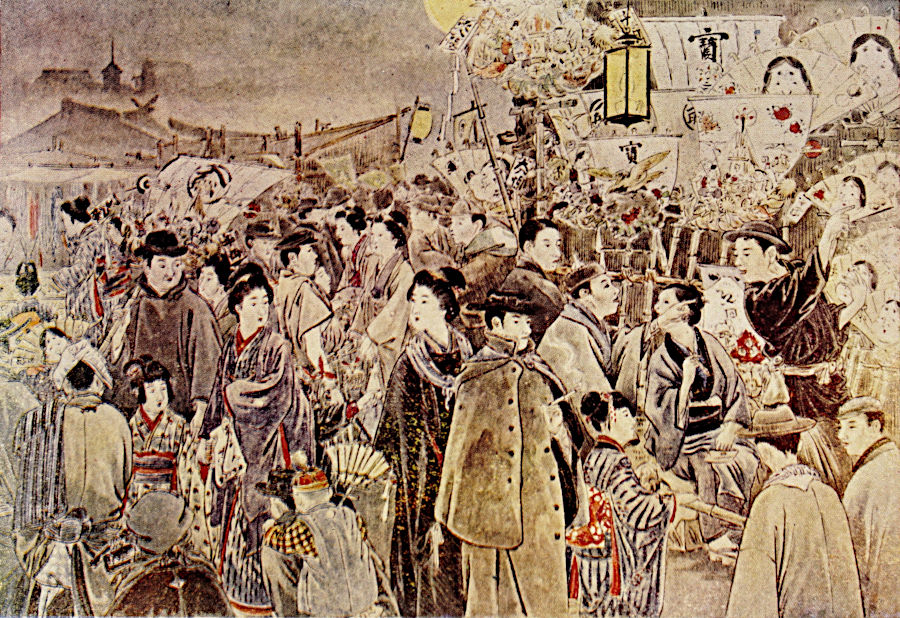
Crowds Visiting the “
Tori-no-machi
.”
These are the red-letter days for brothels and their inmates, and, as a rule, nearly all the yūjo are engaged by previous arrangement with their guests. It is considered rather a disgrace to yūjo to remain long on exhibition in their cages on such holidays. Popular women give ocular demonstration of their popularity by the means of tsumi-yagu and geisha usually obtain promises of engagement from some guests beforehand.
The three gates besides the Ō-mon, which are kept shut except on the Tori-no-machi days and in case of fire or other emergency, are thrown open from early morning for the admission of the general public. The traders erect their stalls at the back of the Examination House (kensa-ba) as far as Suidō-jiri, and yūjo appear in the cages even in the day-time. At night the bustle and confusion of the Yoshiwara becomes intensified.
Tipsy rascals “three sheets in the wind” stagger along the streets or swarm in front of the brothels, thickly bawling out unseemly ditties, while some yūjo may be heard calling to would-be guests in their broad patois. The great crowd surges hither and thither like the eddies of the ocean, and the confusion well-nigh defies description; but, paramount above all, here, there, and everywhere is the ubiquitous blue-coated little policeman with sword, spectacles, lantern, and note-book, uttering his warning cry of “koréya! koréya” (“that’ll do now:—move on”) and overawing the profanum vulgus with the majesty of the law visible and incarnate.