Classes of Brothels.
Reading edition
In ancient times the houses were classified according to the position and standing of their inmates. As we mention elsewhere, the courtesans were formerly classed as Tayū, Kōshi-joro, Tsubone, Sancha-joro, Umecha-joro (also read “Baicha-joro”) and Kirimise-joro, and in a similar manner brothels were also divided as Tayū-mise, Kōshi-mise, Tsubone-mise, Sancha-mise, Umecha-mise (or “Baicha-mise”) Kiri-mise, etc. Afterwards, the name of the Tayū-mise and Kōshi-mise was changed to “Yobidashi,” and the “Umecha-mise” having disappeared the so-called “Zashiki-mochi” and “Heya-mochi” came into existence. After the era of Kwansei (1789–1800) the following classes of brothels sprang into existence:—1st class:—Ōmagaki; 2nd class:—Ham-magaki; 3rd class:—Dai-chō ko-mise; 4th class:—Kogōshi; 5th class:—Kirimise, etc. Courtesans classed as Yobidashi, Hirusan, and Tsuke-mawashi belonged to the Ōmagaki, while the Zashiki-mochi and Heya-mochi were attached to the Dai-chō ko-mise.
The style of architecture employed in the erection of the “Tsubone-mise” is elaborately described in the “Dōbō Goyen,” (洞房語園) and the fact that the general features of the “Sancha-mise” were similar to those of the Furo-ya in the city is also mentioned in the same book. After the era of Kwansei (1789–1800) the classes of brothels, it appears, were determined according to the height of the bars of the cages. The highest magaki (籬) are said to have reached to the ceiling while the lowest were about 2 feet high. The wood used in the lattice window of an Ō-magaki (a first-class house with bars running up to the ceiling) was about 8 inches in width and was painted red. The houses themselves were generally as large as 13 ken by 22 ken (78 x 132 ft). The lattice bars of the lower class houses, on the contrary, were 3 inches in width and therefore these houses were called Ko-gōshi (small lattices). The lowest class houses had bars which ran horizontally instead of vertically. These distinctions were maintained up to the time of the general liberation of prostitutes in the 5th year of Meiji (1872) but since that time the brothels have been classified as either Ō-mise, Chū-mise, or Ko-mise (Large, medium, and small “shops.”)
At present there is no uniform style of architecture, but as the better class of houses are naturally visited by a superior class of guests, the leading establishments are fine buildings, and are noted as much for the luxurious character of their furniture and appointments as for the beauty of the women who inhabit them. The best houses do not exhibit the women in cages.
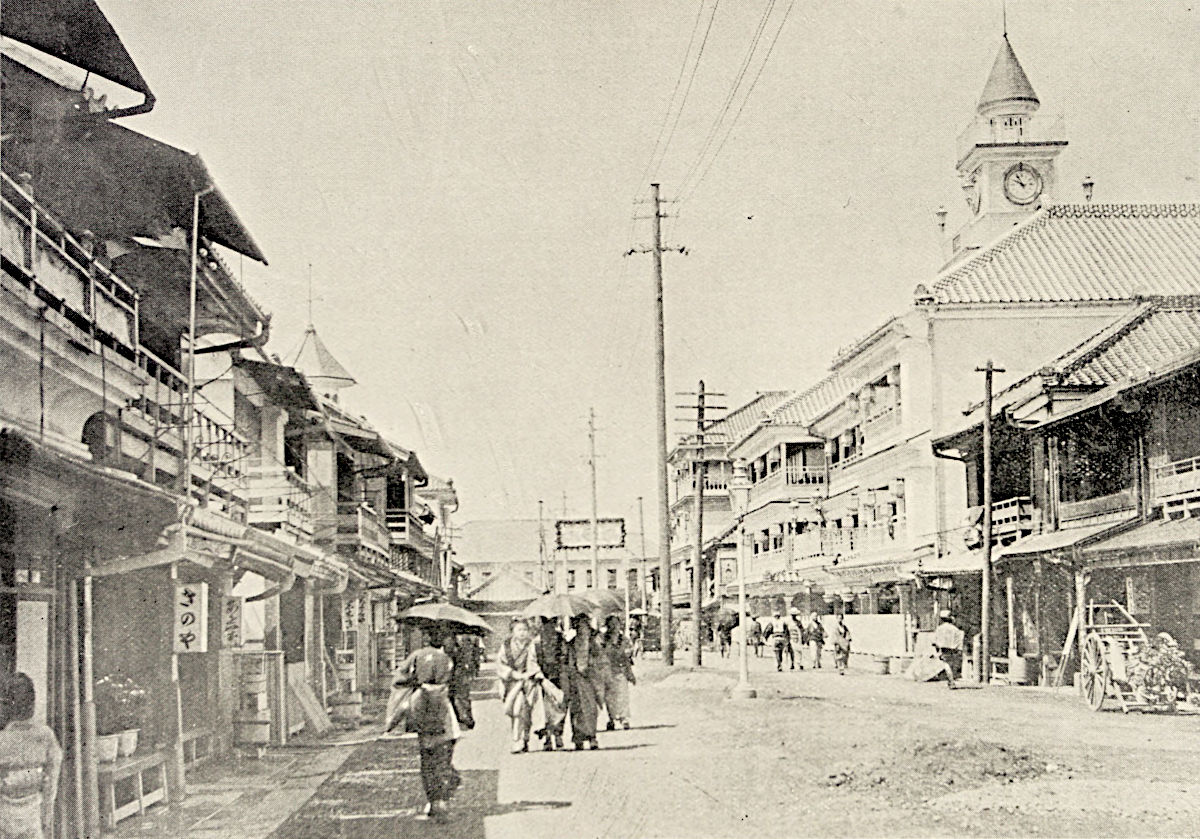
Street Scene in the “Naka-no-chō,” Yoshiwara.
The following are the names of the 126 existing brothels of the Yoshiwara (1899).
Ō-mise (First-class houses.)
Kado-ebi-rō in Kyō-machi It-chō-me
Inamoto-rō “ Sumi-chō.
Daimonji-rō “ Yedo-chō It-cho-me.
Shinagawa-rō “ Ageya-machi.
Nomura-rō “ Kyō-machi Nichō-me.
Naka-mise (Second-class houses.)
Man-kwa-rō in Yedo-chō Nichō-me.
Hōrai-rō “ Ageya-machi.
Ai-idzumi-rō “ Sumi-chō.
Naka-gome-rō “ Kyō-machi Ni-chō-me.
Ko-mise (Third-class houses.)
Shin Hanai-rō in Yedo-chō It-chō-me.
Shō-yei-rō “ “ “
Shin Ichino-rō “ “ “
Nari-hisa-rō “ “ “
Sugimoto-rō “ “ “
Kikuya-rō “ “ “
Ichino-rō “ “ “
Shin Kinkwa-rō “ “ “
Kajita-rō “ “ “
Nishihashi-rō “ “ “
Yoshi-Inaben-rō “ “ “
Fuku-Suzuki-rō “ “ “
Fukurai-rō “ “ “
Katsu Nakagome-rō “ “ “
Shō-yū-rō “ “ “
Izutsu-rō “ “ “
Seikwa-rō “ “ “
Hanaoka-rō “ “ “
Moto Fujiyoshi-rō “ “ “
Fukuyosu-rō “ “ “
Kawa-tachibana-rō “ “ “
Kyōchū-rō “ “ “
Kyō-shin-rō “ “ “
Kiku-matsu-kane-rō “ “ “
Matsu-mi-rō in Yedo-chō Ni-chō-me.
Katsu-moto-rō “ “ “
Tama Mikawa-rō “ “ “
Tama Hanai-rō “ “ “
Tsune-Matsu-kane-rō “ “ “
Hikota-rō “ “ “
Ōsaka-rō “ “ “
Kiyo Fujimoto-rō in Yedo-chō It-chō-me.
Oto Hanai-rō “ “ “
Musashi-rō “ “ Ni-chō-me.
Hisa Hanai-rō “ “ “
Yawata-rō “ “ “
Ryūgasaki-rō “ “ “
Toku Hanai-rō “ “ “
Kikkō-rō “ “ “
Matsu Yebi-rō “ “ “
Sugito-rō “ “ “
Sumi-Yawata-rō “ “ “
Suke-Komatsu-rō “ “ “
Iwa Hanai-rō “ “ “
Moto Komatsu-rō “ “ “
Hanai-rō “ “ “
Asahi-rō “ “ “
Matsu-Nakagome-rō “ “ “
Tsuru-yoshi-rō “ “ “
Chisei-rō “ “ “
Fuji-yoshi-rō “ “ “
Naka-Hanai-rō “ “ “
Nakamura-rō “ “ “
Yū-sen-rō “ “ “
Kane Koshikawa-rō “ “ “
Manji-rō “ “ “
Kinkwa-rō “ “ “
Hira Hanai-rō “ “ “
Moto Kawachi-rō “ “ “
Shin Yoshiwara-rō in Yedo-chō Ni-cho-me.
Yasu Nakagome-rō “ “ “
Masui-rō “ “ “
Shin Ryū-ga-saki-rō “ “ “
Kyōsei-rō in Ageya-machi.
Ogawa-rō “ “
Nishi-naka-rō “ “
Sei-kwa-rō “ “
Takahashi-rō “ “
Naka Inaben-rō “ “
Kikumoto-rō “ “
Shin-Fujimoto-rō “ “
Hei-Daikoku-rō “ “
Seihō-rō “ “
Nari-Yamata-rō “ “
Masu-Kawachi-rō “ “
Nishioka-rō “ “
Hōrai-rō “ “
Kin-Nakagome-rō “ “
Ise-rō “ “
Sawa-Inaben-rō “ “
Owari-rō “ “
Tama Hōrai-rō “ “
Kiku Inaben-rō “ “
Yamada-rō “ “
Sawa Nakagome-rō “ “
Sada Kawachi-rō “ “
Shin-Matsu-Daikoku-rō “ “
Ume-man-rō “ “
Shimotake-rō “ “
Tanaka-rō “ “
Takeman-rō “ “
Tama-Kawachi-rō “ “
Aichū-rō “ “
Tatsu-Inaben-rō “ “
Shin-Inaben-rō “ “
Shin-Matsu-kin-ro “ “
Kame-Inaben-rō “ “
Toku-Inaben-rō “ “
Ni-masu-rō “ “
Shō-Nakagome-rō “ “
Tsuta-Inaben-rō “ “
Fuku-Yamato-rō “ “
Hiroshima-rō “ “
Niikawa-rō “ “
Naga-Idzumi-rō “ “
Takara-rō “ “
Matsuoka-rō “ “
Koshikawa-rō “ “
Daikoku-rō “ “
Tama-Kawachi-rō “ “
Shin-Ai-idzumi-rō “ “
Inaben-rō in Kyō-machi It-chō-me.
Shin-man-rō “ “ “
Ai-man-rō “ “ “
Shin-Fukuoka-rō “ “ “
Is-shin-rō “ “ “
Hyō-Daikoku-rō “ “ “
Toyo-Matsu-Kin-rō “ “ “
Matsumoto-rō “ “ “
Shin-Hōrai-rō “ “ “
Inage-rō “ “ “
Fujimoto-rō “ “ “
Man-nen-rō “ “ “
Yedo-rō “ “ “
Shin-Okamoto-rō “ “ “
Hoku-yetsu-rō “ “ “
Mikawa-rō “ “ “
Matsu-Owari-rō “ “ “
Sen-Inaben-rō “ “ “
Kimman-rō “ “ Ni-chō-me.
Matsuyama-rō “ “ “
Matsu-Kin-rō “ “ “
Sen-Nakagome-rō “ “ “
Matsu-Daikoku-rō “ “ “
Yoshida-rō “ “ “
Kawachi-rō “ “ “
Moto-Higashi-rō “ “ “
Koiman-rō “ “ “
Bitchū-rō “ “ “
Kane-Nakagome-rō “ “ “
Shin-Nakagome-rō “ “ “
Gyokusai-rō “ “ “
Waka-take-rō “ “ “
Kin-Hōrai-rō “ “ “
Shin-Adzuma-rō “ “ “
Tatsu-Komatsu-rō “ “ “
Kado-Owari-rō “ “ “