Chapter XI · (continued 2)
Reading edition
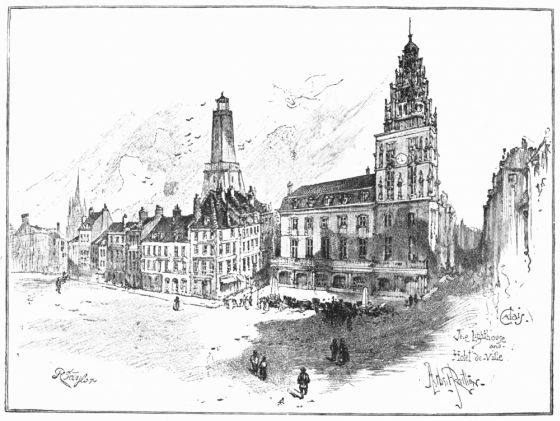
THE HÔTEL DE VILLE AND OLD LIGHTHOUSE, CALAIS.
The fall of Calais necessitated, as a matter of course, the loss of the whole Calais district. Having put Calais into a state of defence, Guise marched on the 13th of January, 1558, to Guines, about five miles distant, to reduce the town and fort there. These were defended stoutly by Lord Grey de Wilton, who had received about 400 Spanish and Burgundian soldiers from King Philip, but they were in too miserable a state of repair to be long held. The walls in a few days were knocked to pieces; the Spanish soldiers were nearly all killed, and the remaining force compelled their officers to surrender. The little castle of Hammes now only remained, and situated in the midst of extensive marshes, it might have given the enemy some trouble; but its governor, Lord Edward Dudley, the moment he heard of the surrender of Guines, abandoned it, and fled with his few soldiers into Flanders. The French were as elated at their success as the English were mortified with it, and the poor queen felt the loss so deeply, that she declared that if her body were opened after her death, the name of Calais would be found graven on her heart.
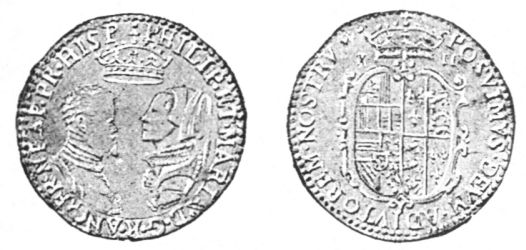
SHILLING OF PHILIP AND MARY.
In England, during the spring, preparations were made for the invasion of France. Seven thousand troops were raised and diligently drilled. One hundred and forty ships were hired, which the Lord-Admiral Clinton collected in the harbour of Portsmouth, to be ready to join the fleet of Philip, and, in conjunction, to ravage the coasts of France; whilst Philip, with an army of Spanish, French, and English, should enter the country by land. But this fleet and the English army, instead of aiming to recover Calais, sailed to make an attack on Brest. But their progress had been so dilatory that the French had made ample preparations to receive them, and despairing of effecting any impression on Brest, they fell on the little port of Le Conquêt, which they took and pillaged, with a large church and several hamlets in its immediate neighbourhood. They then marched some miles up the country, burning and plundering, and the Flemings, in the eager quest of booty, going too far ahead, were surrounded, and 400 of them cut off.
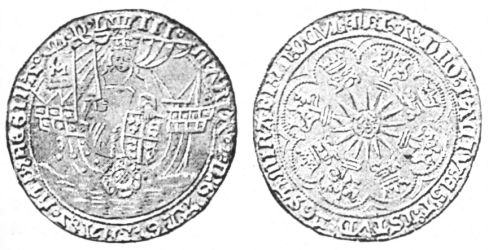
REAL OF MARY I.
It appeared as if the war would be brought to a conclusion by a pitched battle between the sovereigns of France and Spain. Philip had joined his general, the Duke of Savoy, and they lay near Dourlens with an army of 45,000 men. Henry had come into the camp of the Duke of Guise near Amiens, who had an army of nearly equal strength. All the world looked now for a great and decisive conflict. But Philip, though superior in numbers, as well as crowned with the prestige of victory, listened to offers of accommodation from Henry, and dismissing their armies into winter quarters, they betook themselves to negotiation. From the first no agreement appeared probable. Philip demanded the restoration of Calais, Henry that of Navarre, and they were still pursuing the hopeless phantom of accommodation, when the news of Queen Mary's death changed totally the position of Philip, and put an end to the attempt. She died, desolate and broken-hearted, on the 17th of November, 1558.
With all her bigotry, Mary had many excellent and amiable qualities. No English monarch ever maintained a less expensive and less corrupt court. She avoided all unnecessary taxation, and treated the cost of her war with France as largely a private charge of her own. She lived unostentatiously, went about amongst the poor with her maids, inquiring into their wants and relieving them. She was an enlightened patron of learning, and was the first to propose a hospital for old and invalid soldiers, leaving a legacy for this purpose, which was, however, never appropriated. Except in the matter of religious toleration, she showed a scrupulous regard for the maintenance of the Constitution and the law. Under her the administration of justice was pure and without respect of person. Nor were the interests of trade neglected. She was the first to make a commercial treaty with Russia, and she revoked the privileges of the Hanse Town merchants, who had exercised them to the hurt of her own people. By nature she was mild, but the persecution of her own faith in the persons of her mother and herself, and, above everything, the fatal Spanish marriage, produced a reaction which entailed all the calamities of her short and miserable reign.