Volume 1 — CHAPTER XI.
Henry Yule translation
How the Two Brothers set out from Acre, and Mark along with them.
When the Two Brothers had received the Legate’s letters, they set forth from Acre to return to the Grand Kaan, and got as far as Layas. But shortly after their arrival there they had news that the Legate aforesaid was chosen Pope, taking the name of Pope Gregory of Piacenza; news which the Two Brothers were very glad indeed to hear. And presently there reached them at Layas a message from the Legate, now the Pope, desiring them, on the part of the Apostolic See, not to proceed further on their journey, but to return to him incontinently. And what shall I tell you? The King of Hermenia caused a galley to be got ready for the Two Ambassador Brothers, and despatched them to the Pope at Acre.{1}
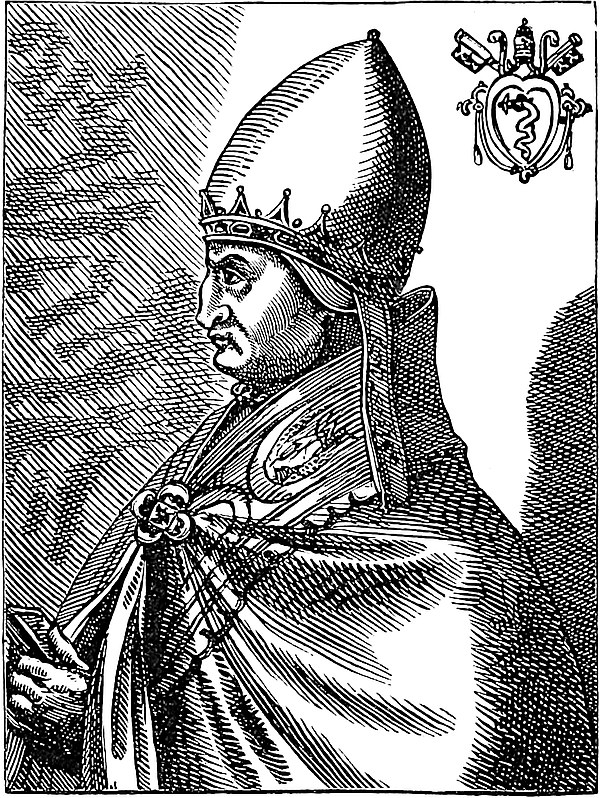
Portrait of Pope Gregory X.
“Papatûs munus tulit Archidiaconus unus Quem Patrem Patrum fecit discordia Fratrum.”
The Archdeacon, a man of great weight of character, in consequence of differences with his Bishop (of Liège), who was a disorderly liver, had gone to the Holy Land, and during his stay there he contracted great intimacy with Prince Edward of England (Edward I.). Some authors, e.g. John Villani (VIII. 39), say that he was Legate in Syria; others, as Rainaldus, deny this; but Polo’s statement, and the authority which the Archdeacon took on himself in writing to the Kaan, seem to show that he had some such position.
He took the name of Gregory X., and before his departure from Acre, preached a moving sermon on the text, “If I forget thee, O Jerusalem,” etc. Prince Edward fitted him out for his voyage.
Gregory reigned barely four years, dying at Arezzo 10th January, 1276. His character stood high to the last, and some of the Northern Martyrologies enrolled him among the saints, but there has never been canonisation by Rome. The people of Arezzo used to celebrate his anniversary with torch-light gatherings at his tomb, and plenty of miracles were alleged to have occurred there. The tomb still stands in the Duomo at Arezzo, a handsome work by Margaritone, an artist in all branches, who was the Pope’s contemporary. There is an engraving of it in Gonnelli, Mon. Sepolc. di Toscana.
(Fra Pipino in Muratori, IX. 700; Rainaldi Annal. III. 252 seqq.; Wadding, sub. an. 1217: Bollandists, 10th January; Palatii, Gesta Pontif. Roman. vol. iii., and Fasti Cardinalium, I. 463, etc.)