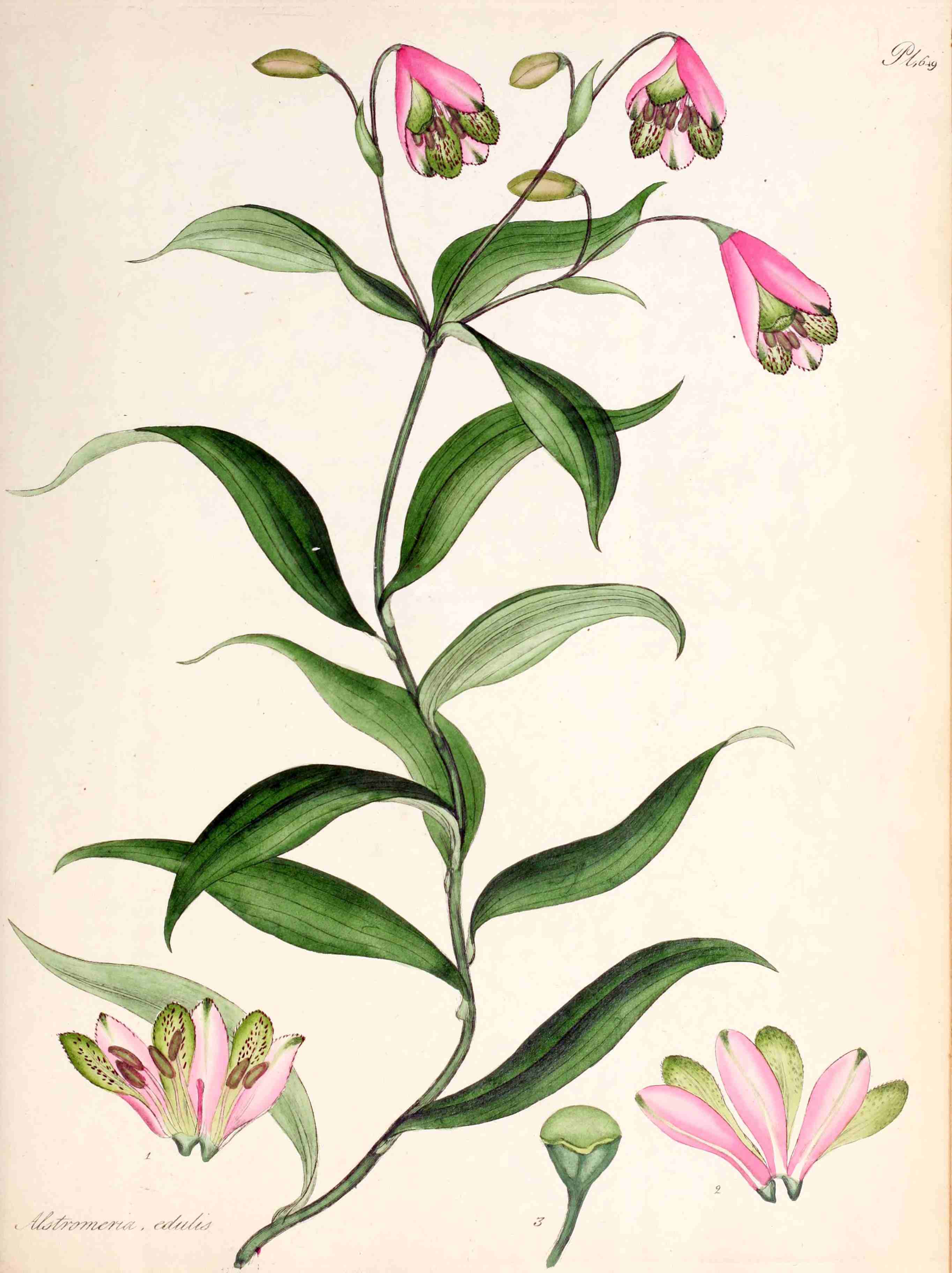
Volume 10 — PLATE DCXLIX. ALSTROMERIA EDULIS. Eatable Alstromeria.
Reading edition
CLASS VI. ORDER I.
HEXANDRIA MONOGYNIA. Six Chives. One Pointal.
GENERIC CHARACTER.
Corolla 6-petala, sub-bilabiata: petalis 2 inferioribus basi-tubulosis. Stamina declinata.
Blossom 6-petalled, nearly bilabiate: two of the lower petals are tubular at the base. Stamens standing sideways.
SPECIFIC CHARACTER.
Alstromeria foliis alternis, ellipticis, lanceolatis, acuminatis, glabris: floribus terminalibus, cernuis, pedunculis longis. Caulis volubilis. Radices tuberosæ, globosæ.
Alstromeria with alternate elliptic leaves, lance-shaped, pointed, and smooth: flowers terminate the branches upon long footstalks, nodding. Stem twining. Roots tuberous and round.
REFERENCE TO THE PLATE.
1. A flower spread open. 2. The same shown from the outer side. 3. A half ripe seed-vessel.
This elegant plant was introduced to this country by T. Evans, Esq., who received it in 1801 from the late Dr. Anderson, of the Botanic Garden in the Island of St. Vincent, and which flowered for the first time in the hot-house of the Countess de Vandes at Bayswater last autumn (1811).
The only figure of it extant is a good coloured one recently published in the Flore des Antilles, by F. R. Tussac, a colonist of Saint Domingo; who describes it as being eagerly sought after by the Negroes, not for the beauty of its flowers, but for the sake of the roots, which not only serve them for food, but for an article of commerce, which they take with them when they travel to the Cape of Good Hope, and sell under the title of white Jerusalem artichokes.
This species very much resembles the A. Salsilla. The principal and almost only distinction is, that the roots of the Salsilla are long and ligneous, while those of the edulis are round and succulent, about the size of young potatoes, and when boiled are said to be a light and delicate food. A farinaceous or mealy substance is also made of them, from which cream is made, wholesome and very agreeable to the taste.—All the species which compose this fine genus are to be found in the superb gardens of the Incas of Peru, where it is indigenous.