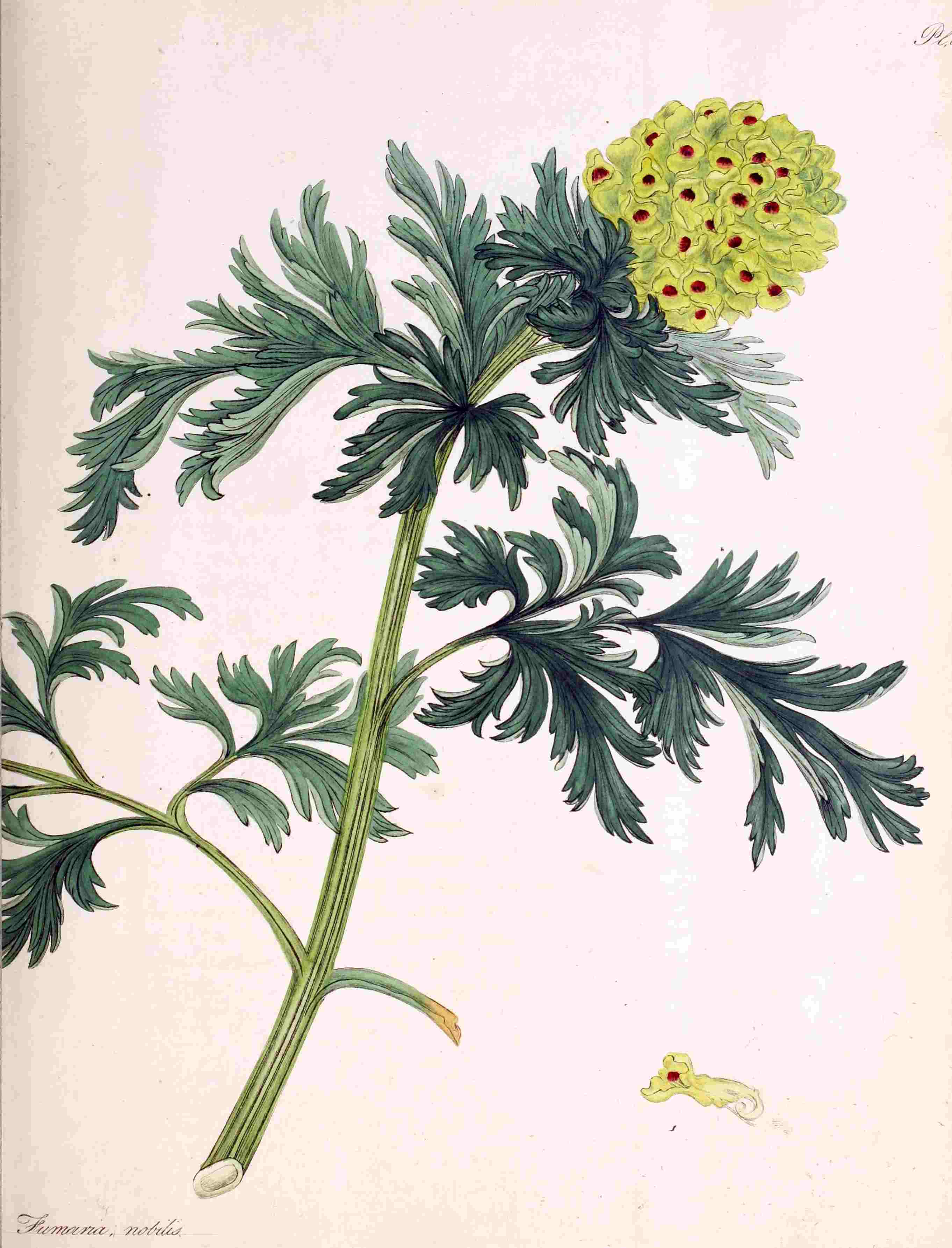
Volume 10 — PLATE DCXIV. FUMARIA NOBILIS. Noble Fumitory.
Reading edition
CLASS XVI. ORDER II.
DIADELPHIA HEXANDRIA. Two Brotherhoods. Six Stamens.
GENERIC CHARACTER.
Calyx diphyllus. Corolla ringens. Filamenta 2, membranacea, singula antheris tribus.
Cup two-leaved. Blossom gaping. Filaments two, membranaceous, each supporting three anthers.
SPECIFIC CHARACTER.
Fumaria caule simplici, racemo terminali, bracteis oblongis acutis flore brevioribus, foliis pinnatis, foliolis subtripartito-laciniatis. Willd. Sp. Pl. vol. 3. p. 858.
Fumitory with a simple stem, a terminal bunch of flowers, with oblong acute bracts shorter than the blossoms, and pinnate leaves with the leaflets jagged and three-parted.
REFERENCE TO THE PLATE.
1. A flower.
The Fumaria nobilis is a native of the Altaian mountains in Siberia, and was introduced to this country in the year 1783 by Mr. John Græffer, but appears to have been since lost, as we never saw living specimens until the beginning of last May, when that from which our drawing was taken was communicated by Mr. Donn from the Botanic garden at Cambridge. The plant appears well calculated for ornamenting rock-work or curious borders, the finely cut foliage and flowers being both very graceful. It is said to have been a great favourite with Linnæus.