Part 2 — THE SCENE INSIDE
Reading edition
The final scene in the great drama was enacted in the magnificent Hall of Mirrors. Versailles contains no more splendid chamber than this royal hall, whose three hundred mirrors gleam from every wall, whose vaulted and frescoed ceiling looms dark and high, in whose vastness the footfalls of the passer re-echo over marble floors and die away reverberatingly. It was no mere matter of convenience or accident that the Germans were brought to sign the Peace Treaty in this hall. For this same hall, which saw the German peace delegates of 1919, representing a beaten and prostrate Germany, affix their signatures to the Allied terms of peace, had witnessed in the year 1871 a very different ceremony. It was in the Hall of Mirrors that the German Empire was born. Forty-nine years ago, on a January morning, while the forts of beleaguered Paris were firing their last defiant shots, in that mirror-gleaming hall was inaugurated the reign of that German Empire the virtual end of which, so far as the concept held by its originators is concerned, was signalized in Versailles in the same spot on Saturday, June 28. And in 1871 President Thiers had signed there the crushing terms of defeat imposed by a victorious and ruthless Germany.
In anticipation of the present ceremony carpets had been laid and the ornamental table, with its eighteenth century gilt and bronze decorations, had been placed in position on the daïs where the plenipotentiaries were seated. Fronting the chair of M. Clemenceau was placed a small table, on which the diplomatic instruments were laid. It was to this table that each representative was called, in alphabetical order by countries, to sign his name to the treaty and affix to it his Governmental seal. The four hundred or more invited guests were given places in the left wing of the Hall of Mirrors, while the right wing was occupied by about the same number of press representatives. Sixty seats were allotted to the French press alone. Besides the military guards outside the palace, the grand stairway up which the delegates came to enter the hall was controlled by the Republican Guards in their most brilliant gala uniform.
THE PEACE TABLE
The peace table—a huge hollow rectangle with its open side facing the windows in the hall—was spread with tawny yellow coverings blending with the rich browns, blues, and yellows of the antique hangings and rugs; these, and the mellow tints of the historical paintings, depicting scenes from France's ancient wars, in the arched roof of the long hall, lent bright dashes of color to an otherwise austere scene. Against the sombre background also stood out the brilliant uniforms of a few French guards, in red plumed silver helmets and red, white, and blue uniforms, and a group of Allied Generals, including General Pershing, who wore the scarlet sash of the Legion of Honor.
But all the diplomats and members of the parties who attended the ceremony of signing wore conventional civilian clothes. All gold lace and pageantry was eschewed, the fanciful garb of the Middle Ages was completely absent as representative of traditions and practices sternly condemned in the great bound treaty-volume of Japanese paper, covered with seals and printed in French and English, which was signed by twenty-seven nations that afternoon.
As a contrast with the Franco-German peace session of 1871, held in the same hall, there were present some grizzled French veterans of the Franco-Prussian war. They took the place of the Prussian guardsmen of the previous ceremony, and gazed with a species of grim satisfaction at the disciples of Bismarck, who sat this time in the seats of the lowly, while the white marble statue of Minerva looked stonily on.
ENTRANCE OF CHIEF ACTORS
The ceremony of signing was marked only by three minor incidents: a protest by the German delegation at the eleventh hour over the provision of separate entrance, the filing of a document of protest by General Jan Smuts of the South African delegation, and the deliberate absence of the Chinese delegates from the ceremony, due to dissatisfaction over the concessions granted to Japan in Shantung.
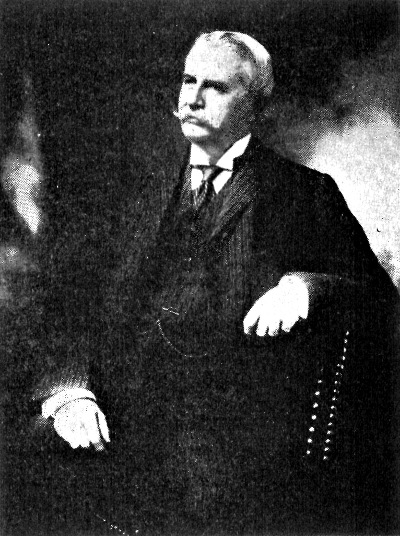
Copyright Underwood & Underwood
Henry White
Former Ambassador to France and Italy and one of the United States delegates to the Peace Conference.
The treaty was deposited on the table at 2:10 p.m. by William Martin of the French Foreign Office; it was inclosed in a stamped leather case, and bulked large. Because of the size of the volume and the fragile seals it bore, the plan to present it for signing to Premier Clemenceau, President Wilson, and Premier Lloyd George had been given up. A box of old-fashioned goose quills, sharpened by the expert pen pointer of the French Foreign Office, was placed on each of the three tables for the use of plenipotentiaries who desired to observe the conventional formalities.
Secretary Lansing, meanwhile, had been the first of the American delegation to arrive in the palace—at 1:45 p.m. Premier Clemenceau entered at 2:20. Three detachments each consisting of fifteen private soldiers—from the American, British, and French forces—just before 3 o'clock and took their places in the embrasures of the windows overlooking the château park, a few feet from Marshal Foch, who was seated with the French delegation at the peace table. Marshal Foch was present only as a spectator, and did not participate in the signing. These forty-five soldiers of the three main belligerent nations were present as the real "artisans of peace" and stood within the inclosure reserved for plenipotentiaries and high officials of the conference as a visible sign of their rôle in bringing into being a new Europe. These men had been selected from those who bore honorable wounds. Premier Clemenceau stepped up to the poilus of the French detachment and shook the hand of each, expressing his pleasure at seeing them, and his regrets for the suffering they had endured for France.
PRESIDENT WILSON ENTERS
Delegates of the minor powers made their way with difficulty through the crowd to their places at the table. Officers and civilians lined the walls and filled the aisles. President Wilson entered the Hall of Mirrors at 2:50. All the Allied delegates were then seated, except the Chinese representatives, who were conspicuous by their absence. The difficulty of seeing well militated against demonstrations on the arrival of prominent statesmen. The crowd refused to be seated and thronged toward the center of the hall, which is so long that a good view was impossible from any distance, even with the aid of opera glasses. German correspondents were ushered into the hall just before 3 o'clock and took standing room in a window at the rear of the correspondents' section.
At 3 o'clock a hush fell over the hall. There were a few moments of disorder while the officials and the crowd took their places. At 3:07 the German delegates, Dr. Hermann Müller, German Secretary for Foreign Affairs, and Dr. Johannes Bell, Colonial Secretary, were shown into the hall; with heads held high they took their seats. The other delegates remained seated, according to a prearranged plan reminiscent of the discourtesy displayed by von Brockdorff-Rantzau, who at the ceremony of delivery of the peace treaty on May 7th, had refused to rise to read his address to the Allied delegates. The seats of the German delegates touched elbows with the Japanese on the right and the Brazilians on the left. They were thus on the side nearest the entrance, and the program required them to depart by a separate exit before the other delegates at the close of the ceremony. Delegates from Ecuador, Peru, and Liberia faced them across the narrow table.
THE GERMANS SIGN
M. Clemenceau, as President of the Peace Conference, opened the ceremony. Rising, he made the following brief address, amid dead silence:
"The session is open. The allied and associated powers on one side and the German Reich on the other side have come to an agreement on the conditions of peace. The text has been completed, drafted, and the President of the Conference has stated in writing that the text that is about to be signed now is identical with the 200 copies that have been delivered to the German delegation. The signatures will be given now, and they amount to a solemn undertaking faithfully and loyally to execute the conditions embodied by this treaty of peace. I now invite the delegates of the German Reich to sign the treaty.'
There was a tense pause for a moment. Then in response to M. Clemenceau's bidding the German delegates rose without a word, and, escorted by William Martin, master of ceremonies, moved to the signatory table, where they placed upon the treaty the sign-manuals which German Government leaders had declared over and over again, with emphasis and anger, would never be appended to this treaty. They also signed a protocol covering changes in the documents, and the Polish undertaking. All three documents were similarly signed by the Allied delegates who followed.
WILSON SIGNS NEXT
When the German delegates regained their seats after signing, President Wilson immediately rose and, followed by the other American plenipotentiaries, moved around the sides of the horseshoe to the signature tables. It was thus President Wilson, and not M. Clemenceau, who was first of the Allied delegates to sign. This, however, was purely what may be called an alphabetical honor, in accordance with which the nations were named in the prologue to the treaty. Premier Lloyd George, with the British delegation, came next. The British dominions followed. M. Clemenceau with the French delegates, was next in line; then came Baron Saionji and the other Japanese delegates, and they in turn were followed by the representatives of the smaller powers.
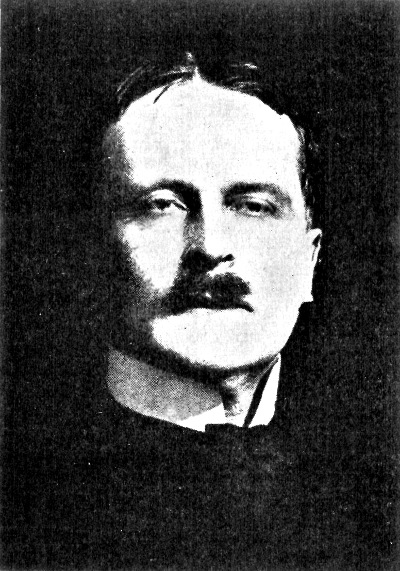
Copyright Underwood & Underwood
Count von Brockdorff-Rantzau
Foreign Minister of Germany and President of the German Peace delegates.
During the attaching of the signatures of the great powers and the Germans a battery of moving picture cameras clicked away so audibly that they could be heard above the general noise and disorder of the throng. The close of the ceremony came so quickly and quietly that it was scarcely noticed until it was all over. M. Clemenceau arose almost unremarked, and in a voice half lost amid the confusion and the hum of conversation which had sprung up while the minor powers were signing declared the conference closed, and asked the Allied and associated delegates to remain in their seats for a few moments—this to permit the German plenipotentiaries to leave the building before the general exodus.
THE GERMANS DEPART
None arose as the Germans filed out, accompanied by their suite of secretaries and interpreters, just as all the plenipotentiaries had kept their seats when Dr. Müller and Dr. Bell entered. The Germans went forth evidently suffering strong emotion. Outside an unsympathetic crowd jammed close to the cars which took them away. There was no aggression, but the sentiment of the throng was unmistakable.
Meanwhile the great guns that announced the closing of the ceremony were booming, and their concussion shook the old palace of Versailles to its foundations. Amid confusion the assembly dispersed, and the most momentous ceremony of the epoch was at an end.
The great war which for five long years had shaken Europe and the world was formally ended at last. It was a war which had cost the belligerents over $200,000,000,000; which had caused the deaths of 8,000,000 human beings, and which had left the world a post-war burden of debt amounting to $135,000,000,000. It was a war which had changed the whole face of Europe, which had brought many new nations into existence, which had revolutionized the organization of all national and international life. It was a war which had brought the world the consciousness of its common obligation to unite against all war. The booming of the great guns of Versailles seemed to proclaim a new epoch.