Part 15 — PEACE BY CONGRESSIONAL ENACTMENT FAILS
Reading edition
President Wilson Vetoes Knox Resolution Declaring State of War Ended
The failure of the Peace Treaty of ratification for the second time on March 19, 1920, with the Lodge reservations attached, and the determined refusal of the Republican majority to ratify it in the form desired by President Wilson, showed quite conclusively that under existing political alignment no peace might be expected for the country through the Treaty of Versailles. The Republicans, therefore, turned their efforts in a new direction to bring about peace without yielding to the President.
On April 1st the Foreign Affairs Committee of the House of Representatives reported favorably a joint resolution declaring the state of war between Germany and the United States at an end and terminating the operation of all Congressional acts and Presidential proclamations dependent for their duration on the termination of the war or of the "present or existing emergency." It gave Germany forty-five days in which similarly to declare the ending of the war with the United States, and to waive all claims against this country, which she would not have had the right to assert had the United States ratified the Treaty of Versailles. For failure to comply with this provision, all commercial intercourse and the furnishing of loans and other financial assistance by this country to Germany were prohibited, except by license of the President. In answer to Democratic criticisms that the resolution was not only insincere, but also unconstitutional in arrogating to Congress the treaty-making power of the President, the Republican leaders conceded that, while the negotiation of peace terms rested with the President, the declaration of a status of peace was quite within the proper functions of Congress.
TEXT OF HOUSE RESOLUTION
The original resolution, as introduced in the House, read as follows:
Whereas the President of the United States, in the performance of his constitutional duty to give to Congress information of the state of the Union, has advised Congress that the war with the Imperial German Government has ended;
Resolved, by the Senate and the House of Representatives of the United States of America in Congress assembled, That the state of war declared to exist between the Imperial German Government and the people of the United States by a joint resolution of Congress, approved April 6, 1917, is hereby declared at an end.
Section 2—That in the interpretation of any provision relating to the date of the termination of the present war, or of the present or existing emergency in any acts of Congress, joint resolutions or proclamations of the President containing provisions contingent upon the date of the termination of the war, or of the present or existing emergency, the date when this resolution becomes effective shall be construed and treated as the date of the termination of the war, or of the present or existing emergency, notwithstanding any provision in any act of Congress or joint resolution providing any other mode of determination of the date of the termination of the war, or of the present or existing emergency.
Section 3—That, with a view to securing reciprocal trade with the German Government and its nationals, and for this purpose, it is hereby provided that unless within forty-five days from the date when this resolution becomes effective the German Government shall duly notify the President of the United States that it has declared a termination of the war with the United States and that it waives and renounces on behalf of itself and its nationals any claim, demand, right or benefit against the United States, or its nationals, that it or they would not have the right to assert had the United States ratified the Treaty of Versailles, the President of the United States shall have the power, and it shall be his duty, to proclaim the fact that the German Government has not given the notification hereinbefore mentioned, and thereupon, and until the President shall have proclaimed the receipt of such notification, commercial intercourse between the United States and Germany and the making of loans or credits, and the furnishing of financial assistance or supplies to the German Government or the inhabitants of Germany, directly or indirectly, by the Government or the inhabitants of the United States, shall, except with the license of the President, be prohibited.
Section 4—That whoever shall willfully violate the foregoing prohibition, whenever the same shall be in force, shall upon conviction be fined not more than $10,000, or, if a natural person, imprisoned for not more than two years, or both; and the officer, director or agent of any corporation who knowingly participates in such violation shall be punished by a like fine, imprisonment, or both, and any property, funds, securities, papers, or other articles or documents, or any vessel, together with her tackle, apparel, furniture, and equipment, concerned in such violation, shall be forfeited to the United States.
Section 5—That nothing herein contained shall be construed as a waiver by the United States of its rights, privileges, indemnities, reparations or advantages to which the United States has become entitled under the terms of the armistice signed November 11, 1918, or which were acquired by or are in the possession of the United States by reason of its participation in the war or otherwise; and all fines, forfeitures, penalties, and seizures imposed or made by the United States are hereby ratified, confirmed, and maintained.
MINORITY OPPOSITION
The Democratic members of the Foreign Affairs Committee presented a minority report severely arraigning the Republican majority both for the spirit and the provisions of the resolution, which, the report contended, "outrageously surrendered" American rights and, by the spirit in which it was conceived, laid open its authors to the charge of "sharp practice." The chief points made in the minority report were:
"The preamble states that the President of the United States, in the performance of his constitutional duty to give to Congress information of the state of the Union, has advised Congress that the war with the Imperial German Government has ended. At no time and under no circumstances has the President made any such assertion.
"It is true that, on the signing of the armistice, the President, in the course of an address to Congress, used the words, 'the war thus comes to an end.' But he spoke of actual hostilities, as every one knew, and not of the technical state of war.
"It takes a treaty to end a war. Hostilities had ceased, but the war had not ended, and will not end until it is terminated in a constitutional manner. The drafters of the resolution and the members of the Committee on Foreign Affairs who voted for it knew that this was the case.
"By quoting this statement of the President as the basis for this resolution the authors of the resolution lay themselves open to the charge of insincerity and sharp practice. The President never declared that the technical state of war which this resolution undertakes to declare at an end had come to an end, and the Supreme Court of the United States has recently declared that what the President had done did not announce the termination of the war. [32]
"This resolution contains some provisions that are within the power of Congress, and others that are not. So far as it seeks to declare peace, and so far as it seeks to direct the President to issue a proclamation to the German Government, it trenches upon the treaty-making powers and is not within the power of Congress.
"So far as it prohibits the United States citizens and residents from commercial intercourse with Germany or its nationals, and provides penalties for the violation of such restriction, it is valid. So far as it attempts to repeal war legislation, it is, of course, within the power of Congress."
With regard to Section 2, which fixed the date of the termination of the war as the date when the resolution shall become effective, the report said:
"There is much war and emergency legislation that should be repealed. This section does not repeal this legislation, however, and it gives no relief from the burdens, inconveniences, extravagances and losses which come from the existence of this legislation. Much of this legislation is burdensome, and oppressive in time of peace.
"Congress has the power to repeal it, and it should address itself to this task instead of frittering away its time in attempting to pass unconstitutional legislation for the purpose of embarrassing the executive department of the Government, or for some other political purpose."
Objection was raised against Section 3 for not adequately protecting American rights. The report, which was presented by Representative Flood, observed on this subject:
"The first thought which comes to one's mind in connection with this section is that it gives to Germany and her nationals all the rights they would have had if the United States had ratified the Treaty of Versailles. Without the provisions of the treaty great uncertainty prevails as to the title to and right to use German ships. The Versailles Treaty contains Germany's assent to the use of the property seized by the Alien Property Custodian, amounting to more than $500,000,000, to pay claims of the United States against Germany. This resolution does not pretend to accomplish this result.
"If we are dependent for a status of peace upon this resolution, I fail to see how we could be able to demand reimbursement for the cost of our army of occupation.
"Under the treaty Germany can become a League of Nations member, and, having under this resolution all the rights it would have had under the treaty when it became a member of the League, it would be entitled to assert against the United States the same rights which any other nation could assert, had our country ratified the treaty. We would thus be in the position of being compelled to protect the independence and territorial integrity of Germany against the aggressions of any or all of our allies.
"Section 5 is an attempt to preserve something out of the wreck of American rights which have been so outrageously surrendered in former sections of the resolution."
RESOLUTION PASSES HOUSE, 242 TO 150
The first test of strength between the supporters and the opponents of the resolution came on April 8th, when a rule limiting debate was adopted by a nearly strict party vote of 214 to 155, the Republicans, as were to be expected, supporting, and the Democrats opposing the rule. The vote on the resolution itself came next day, April 9th, when, after a flow of oratory characterized chiefly by bitterly partisan attacks from both sides of the House, the resolution was adopted by a vote of 242 to 150. Twenty-two Democrats joined the Republicans in voting for it, and two Republicans broke party lines in opposing it. Despite the comfortable majority, however, the result showed that without the President's approval efforts to declare peace by Congressional action would prove futile, since the vote lacked twenty of the two-thirds majority necessary to override a veto.
SENATE TAKES UP FIGHT TO FORCE PEACE
The scene now shifted to the Senate. Here the fortunes of the resolution were placed in the hands of Senator Philander C. Knox, of Pennsylvania, Secretary of State in President Taft's cabinet and a recognized authority on international law. Senator Knox redrafted the House resolution so as to repeal specifically the joint resolutions of war against Germany on April 6, 1917, and against Austria-Hungary on December 7, 1917, and thus, by annulling Congressional action declaring a state of war, to re-establish status quo ante bellum.
Such a solution of the problem, it was felt, did not encroach at all upon the President's right of making treaties. In fact, the resolution specifically requested the President to open negotiations for the purpose of establishing friendly relations and commercial intercourse between the United States and Germany, and the United States and the successors of the Austro-Hungarian government. The resolution also provided for the retention by the United States government of all enemy property seized during the war until all American claims against enemy governments had been settled, and declared further that, although the United States had not ratified the Treaty of Versailles, nevertheless it did not waive any of the "rights, privileges, indemnities, reparations or advantages" stipulated for its benefit in the terms of that document.
TEXT OF ORIGINAL KNOX RESOLUTION
The text of the Knox resolution, as favorably reported to the Senate on April 30th by the Senate Foreign Relations Committee, read:
Joint resolution repealing the joint resolution of April 6, 1917, declaring a state of war to exist between the United States and Germany, and the joint resolution of December 7, 1917, declaring that a state of war exists between the United States and the Austro-Hungarian Government.
Resolved by the Senate and House of Representatives of the United States of America, in Congress assembled, that the joint resolution of Congress passed April 6, 1917, declaring a state of war to exist between the Imperial German Government and the Government and people of the United States, and making provisions to prosecute the same, be, and the same is hereby declared at an end.
Provided, however, that all property of the Imperial German Government or its successor or successors, and of all German nationalists which was on April 6, 1917, in or has since that date come into the possession or under control of the Government of the United States or of any of its officers, agents, or employees, from any source or by any agency whatsoever, shall be retained by the United States and no disposition thereof made, except as shall specifically be hereafter provided by Congress, until such time as the German Government has by treaty with the United States, ratification whereof is to be made by and with the advice and consent of the Senate, made suitable provisions for the satisfaction of all claims against the German Government of all persons wheresoever domiciled, who owe permanent allegiance to the United States, whether such persons have suffered through the acts of the German Government or its agents since July 31, 1914, loss, damage or injury to persons or property, directly or indirectly, through the ownership of shares of stock in German, American, or other corporations, or otherwise, and until the German Government has given further undertakings and made provisions by treaty, to be ratified by and with the advice and consent of the Senate, for granting to persons owing permanent allegiance to the United States, most favored nation treatment, whether the same be national or otherwise, in all matters affecting residence, business, profession, trade, navigation, commerce, and industrial property rights, and confirming to the United States all fines, forfeitures, penalties, and seizures imposed or made by the United States during the war, whether in respect to the property of the German government or German nationalists, and waiving any pecuniary claim based on events which occurred at any time before the coming into force of such treaty, any existing treaty between the United States and Germany to the contrary notwithstanding.
To these ends, and for the purpose of establishing fully friendly relations and commercial intercourse between the United States and Germany, the President is hereby requested immediately to open negotiations with the Government of Germany.
Section 2—That in the interpretation of any provision relating to the date of the termination of the present war or of the present or existing emergency in any acts of Congress, joint resolutions or proclamations of the President containing provisions contingent upon the date of the termination of the war or of the present or existing emergency, the date when this resolution becomes effective, shall be construed and treated as the date of the termination of the war or of the present or existing emergency, notwithstanding any provision in any act of Congress or joint resolution providing any other mode of determining the date of the termination of the war or of the present or existing emergency.
Section 3—That until by treaty or act or joint resolution of Congress it shall be determined otherwise, the United States, although it has not ratified the Treaty of Versailles, does not waive any of the rights, privileges, indemnities, reparations, or advantages to which it and its nationals have become entitled under the terms of the armistice signed November 11, 1918, or any extensions or modifications thereof or which, under the Treaty of Versailles, have been stipulated for its benefit as one of the principal allied and associated powers and to which it is entitled.
Section 4—That the joint resolution of Congress, approved December 7, 1917, declaring that a state of war exists between the Imperial and Royal Austro-Hungarian Government and the Government and people of the United States, and making provisions to prosecute the same, be and the same is hereby repealed, and said state of war is hereby declared at an end, and the President is hereby requested immediately to open negotiations with the successor or successors of said Government for the purpose of establishing fully friendly relations and commercial intercourse between the United States and the Governments and peoples of Austria and Hungary.
A DEMOCRAT PAYS HIS RESPECTS TO REPUBLICANS
The attitude of leaders of the Democratic party on Republican maneuvers to force peace by Congressional action was indicated by a statement issued by Homer S. Cummings, chairman of the Democratic National Committee, in which the Knox resolution was characterized as "renewed evidence of the moral leprosy which is eating out the heart of the Republican party," and which, according to Mr. Cummings, proposed dishonor in the name of peace. As reported in the press, the statement said:
"The so-called Knox peace resolution, which has just been reported by the Senate Committee on Foreign Relations, is renewed evidence of the moral leprosy which is eating out the heart of the Republican party. In the name of peace it proposes dishonor.
"An analysis of the resolution discloses that:
"First, it recognizes the defect in the recent House resolution, which attempted to make a separate treaty with Germany by act of Congress.
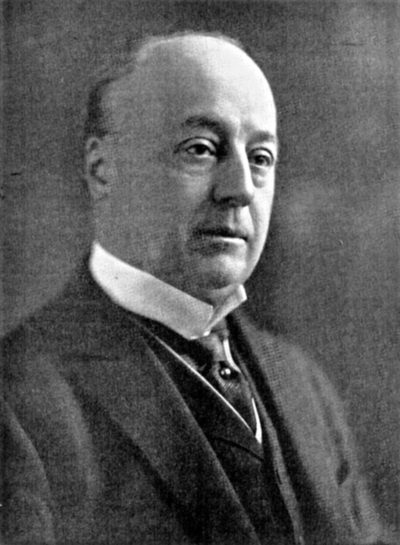
Senator Philander C. Knox of Pennsylvania
A former United States Attorney-General and Secretary of State, and one of the "irreconcilable" opponents of the League of Nations and Treaty of Versailles. He was the author of the peace resolution declaring war with Germany ended which was passed by Congress but vetoed by President Wilson
Click for a larger image.
"Second, as an alternative proposition, it requests the President to commence negotiations for a separate peace with Germany.
"Third, it seeks to terminate, by a paper resolution, a state of war without protecting American rights.
"Fourth, it attempts to take advantage of the provisions of the Treaty of Versailles without becoming a party to that treaty and,
"Fifth, it requests the President to negotiate a separate peace with Austria.
"These are the outstanding features of the resolution. If any group of leaders a year ago had dared to suggest that we should abandon our allies and negotiate a separate treaty of peace, they would have found themselves isolated and discredited. Republican leaders have lost their moral sense in their mad lust for power.
"There has not been one moment since November, 1918, during which America has not suffered in honor, prestige, and power, as the result of the elections of that year. Since that time everything has been in confusion, and the frantic attempt of Republican leaders to find a legal method in which to do the dishonorable thing merely adds to the confusion. There is but one clear path of duty. It is likewise the path of honor and of peace and of permanent security.
"The path lies straight before us, and consists simply in ratifying the treaty of peace which our companions in arms have already ratified. The more the matter is debated the more it will become apparent that there are no substitutes for the requirements of plain duty and American honor."
KNOX URGES SEPARATE PEACE WITH GERMANY
On May 5th the debate on the resolution was opened in the Senate with a carefully prepared speech by Senator Knox, which outlined in detail arguments not only for the propriety and validity of the resolution, but for the absolute necessity of its adoption. Senator Knox contended that the war had ended, in fact and in law; that the objects for which the United States had entered the struggle had been achieved; that a "power-maddened administration" was continuing the technical state of war solely for the purpose of coercing the Senate into ratifying the Versailles Treaty, which had been universally discredited in all its parts; and that, since there was no hope of co-operation from the President, Congress must find means of ending the technical state of war independently of him. Said Senator Knox:
"The welfare and safety of the nation imperatively demands that we know we have peace. The whole world seethes with revolution. Our own nation is in ferment and turmoil. Force and strife are rampant and threaten the destruction not only of our property, but of our free institutions and even of our very lives. And yet we stand, and have stood for months, as a rudderless ship foundering in the trough of tremendous seas. We must not dare longer to delay a return to the ordered government of peace. As a preliminary step, the Executive must be returned to his peace-time powers and prerogatives. Need, propriety, wisdom, cannot question this. The resolution before us is designed to bring us to this.
WILSON TO BLAME
"The course of the President ever since he cruised to Europe to participate in the Peace Conference leaves no chance for doubt that he will continue hereafter as heretofore to thwart, so far as he is able, every attempt on the part of the Senate, the Congress, or the people, to take any action immediately or remotely affecting, in however slight a degree, through change or modification, the provisions of the Treaty of Versailles as it came to us fresh from his signature. He preferred to keep the country in an alleged state of war for now almost a year rather than abate one jot or tittle of the full measure his isolated will had set for the nation. Constitutional order, lawful functions, rights and duties of position, oaths of office as affecting the members of this body, he has noticed only to bring into contempt. He has conjured up every power within the whole vast executive domain in his efforts to compel this Senate to surrender its will and judgment to him, to become mere automatons to register his mandate—to approve this treaty in its last minutiæ of detail as he sent it to us.
"Now, in the face of this situation, it will be idle for us to pass any resolution looking to the immediate establishment of peace that does not contemplate the unqualified acceptance of the treaty, if that resolution requires from the President the performance of any act or duty in order to secure peace, because if we do, he will, if the statements of his representatives are accepted, so delay or ignore that act or duty as to defeat the end and purpose of our action, for in his opinion wisdom lies only in following the behests of his will. Therefore, if the resolution is to be effective, it must be self-operative. Nothing necessary to the bringing of peace must be left for his accomplishment.
WHY UNITED STATES WENT TO WAR
"Our purposes, as stated by the President, were three-fold:
"First, the defeat and elimination of the Imperial German Government and Prussian autocracy;
"Next, the liberation from their yoke of despotism of the Germans themselves—for whom we had nothing but sympathy and friendship—to the end that they might be masters of their own fates and fortunes; and
"Lastly, the establishment, as sincere friends of the German people, of intimate relations of mutual advantage between them and us.
"In so far as my information goes, the German Government never declared war against the United States. They merely accepted the status which this declaration recognized and probably created; for it must be remembered that while we interpreted, and rightly so, that German submarine warfare, as directed against the United States, was illegal, constituting acts of war, the German Government never acquiesced in that view and, on the contrary, maintained the legality of all general measures taken.
"The Imperial German Government, against whom we declared war, did cease to exist at the time of the signing of the armistice, leaving us from thence on without any titular enemy against which to wage a war unless we were warring with the German people, and we have clearly estopped ourselves to make such a contention.
"Thus from this point of view also the armistice brought us not alone the end of hostilities, but the actual peace. There remained only the making of arrangements covering the ordinary peace-time intercourse.
WAR AT END, IN FACT AND IN LAW
"As a matter of law and of fact we are at peace with Germany; first, because of the terms of the armistice of November 11, 1918, its amendments and renewals; second, because of the 'silent ceasing' of hostilities; third, because of the disappearance, the extinction of the Government against which we declared war, and fourth, because of the negotiation by us and our allies or associates in the war with the people who were lately our enemies, and the ratification by our allies or associates and our enemies, of a treaty of peace which specifically provides both for the termination of hostilities to be followed by a resumption of diplomatic relations, and also for the status that should exist during our future peace-time intercourse; which treaty is now in force and observed everywhere except in the United States, and has in fact and in international law brought peace to the whole world, including ourselves.
"Having thus in law and in fact international peace, having nothing left but a domestic status of war created by a legislative declaration of war, with no hostilities heretofore or now existent or possible in the territory over which this paper-war status exists, it is not only legally sound, but economically, morally, and patriotically necessary and indispensable that we at once repeal the declaration of war and so immediately end the despotic war powers with which a power-maddened administration continues to misrule this great people.
VERSAILLES TREATY IMPOSSIBLE
"To what end has all this juggling with obvious facts and universally recognized principles been maintained? The answer is easy and known to all. The purpose has been to coerce the Senate to approve the Treaty of Versailles—a treaty that is almost universally discredited in all its parts. The majority of its negotiators concede this. Its economic terms are impossible; its League of Nations is an aggravated imitation of the worst features of the ill-fated and foolish Holy Alliance of a century ago. It promises little but mischief unless recast on such radical lines as will entirely obliterate its identity.
"Wisdom requires the negotiation of a separate treaty between the United States and Germany, which should provide reciprocal rights and obligations between us and that country alone."
KNOX RESOLUTION PASSES BOTH HOUSES
In the course of its consideration in the Senate, the provision of the resolution requesting the President to negotiate a separate treaty with Germany was eliminated, but the request for a treaty with the successors of the Austro-Hungarian government was retained. In its amended form the resolution was brought to a decision in the Senate on May 15th, and adopted by a vote of 43 to 38, three Democrats voting with its supporters and one Republican with the opposition.
As the text of the Knox resolution adopted by the Senate differed from the measure which had been passed by the House of Representatives on April 9th, the House, to expedite matters, dropped its own resolution, and passed, on May 21st, the Senate draft by a vote of 228 to 139, seventeen short of the two-thirds majority necessary to override the expected Presidential veto.
TEXT OF AMENDED RESOLUTION
The text of the peace resolution as passed by the Senate and later concurred in by the House of Representatives, read as follows:
The joint resolution of Congress, passed April 6, 1917, declaring a state of war to exist between the Imperial German Government and the Government and people of the United States, and making provisions to prosecute the same, be, and the same is hereby repealed and said state of war is hereby declared at an end.
Provided, however, that all property of the Imperial German Government, or its successor or successors, and of all German nationals which was on April 6, 1917, is or has since that date come into the possession or under control of the Government of the United States or any of its officers, agents or employees from any source or by any agency whatsoever, shall be retained by the United States and no disposition thereof made, except as shall specifically be hereafter provided by Congress, until such time as the German Government has, by treaty with the United States, ratification whereof is to be made by and with the advice and consent of the Senate, made suitable provisions for the satisfaction of all claims against the German Government of all persons, wheresoever domiciled, who owe permanent allegiance to the United States, whether such persons have suffered through the acts of the German Government or its agents since July 31, 1914, loss, damage, or injury to their persons or property, directly or indirectly, through the ownership of shares of stock in German, American, or other corporations, or have suffered damage directly in consequence of hostilities or any operations of war, or otherwise, or until the German Government has given further undertakings and made provisions by treaty, to be ratified by and with the advice and consent of the Senate, for granting to persons owing permanent allegiance to the United States, most favored nation treatment, whether the same be national or otherwise, in all matters affecting residence, business, profession, trade, navigation, commerce and industrial property rights, and confirming to the United States all fines, forfeitures, penalties, and seizures imposed or made by the United States during the war, whether in respect to the property of the German Government or German nationals, and waiving any pecuniary claim based on events which occurred at any time before the coming into force of such treaty, any existing treaty between the United States and Germany to the contrary notwithstanding.
That in the interpretation of any provision relating to the date of the termination of the war or of the present or existing emergency in any acts of Congress, joint resolutions or proclamations of the President containing provisions contingent upon the date of the termination of the war or of the present or existing emergency, the date when this resolution becomes effective shall be construed and treated as the date of the termination of the war or of the present or existing emergency, notwithstanding any provision in any act of Congress or joint resolution, providing any other mode of determining the date of the termination of the war or of the present or existing emergency.
That until by treaty or act or joint resolution of Congress it shall be determined otherwise, the United States, although it has not ratified the Treaty of Versailles, does not waive any of the rights, privileges, indemnities, reparations or advantages to which it and its nationals have become entitled under the terms of the armistice signed November 11, 1918, or any extensions or modifications thereof or which under the Treaty of Versailles have been stipulated for its benefit as one of the principal allied and associated powers and to which it is entitled.
That the joint resolution of Congress approved December 7, 1917, declaring that a state of war exists between the Imperial and Royal Austro-Hungarian Government and the Government and the people of the United States and making provisions to prosecute the same, be, and the same is hereby repealed, and said state of war is hereby declared at an end, and the President is hereby requested immediately to open negotiations with the successor or successors of said Government for the purpose of establishing fully friendly relations and commercial intercourse between the United States and the Governments and peoples of Austria and Hungary.
PRESIDENT'S VETO
The resolution now came before the President for his signature. On May 27th he returned it to the House without his approval, and in an accompanying message explained the reasons for his veto. The President did not touch upon the question of constitutionality which had been raised frequently during the debates, but gave as his chief reason refusal to become party to an action which, he felt, would place "ineffaceable stain upon the gallantry and honor of the United States."
Following is the text of President Wilson's message vetoing the peace resolution:
"To the House of Representatives:
"I return herewith, without my signature, House Joint Resolution 327, intended to repeal the Joint Resolution of April 6, 1917, declaring a state of war to exist between the United States and Germany, and the Joint Resolution of December 7, 1917, declaring a state of war to exist between the United States and the Austro-Hungarian Government, and to declare a state of peace. I have not felt at liberty to sign this resolution because I cannot bring myself to become party to an action which would place ineffaceable stain upon the gallantry and honor of the United States.
"The resolution seeks to establish peace with the German Empire without exacting from the German Government any action by way of setting right the infinite wrongs which it did to the peoples whom it attacked and whom we professed it our purpose to assist when we entered the war. Have we sacrificed the lives of more than one hundred thousand Americans and ruined the lives of thousands of others and brought upon thousands of American families an unhappiness that can never end for purposes which we do not now care to state or take further steps to attain?
"The attainment of these purposes is provided for in the Treaty of Versailles by terms deemed adequate by the leading statesmen and experts of all the great peoples who were associated in the war against Germany. Do we now not care to join in the effort to secure them?
"We entered the war most reluctantly. Our people were profoundly disinclined to take part in a European war, and at last did so, only because they became convinced that it could not in truth be regarded as only a European war, but must be regarded as a war in which civilization itself was involved and human rights of every kind as against a belligerent Government. Moreover, when we entered the war we set forth very definitely the purposes for which we entered, partly because we did not wish to be considered as merely taking part in a European contest. This Joint Resolution which I return does not seek to accomplish any of these objects, but in effect makes a complete surrender of the rights of the United States so far as the German Government is concerned.
"A treaty of peace was signed at Versailles on the twenty-eighth of June last which did seek to accomplish the objects which we had declared to be in our minds, because all the great Governments and peoples which united against Germany had adopted our declarations of purpose as their own and had in solemn form embodied them in communications to the German Government preliminary to the armistice of November 11, 1918. But the treaty, as signed at Versailles, has been rejected by the Senate of the United States, though it has been ratified by Germany. By that rejection and by its methods we had in effect declared that we wish to draw apart and pursue objects and interests of our own, unhampered by any connections of interest or of purpose with other Governments and peoples.
"Notwithstanding the fact that upon our entrance into the war we professed to be seeking to assist in the maintenance of common interests, nothing is said in this resolution about the freedom of navigation upon the seas, or the reduction of armaments, or the vindication of the rights of Belgium, or the rectification of wrongs done to France, or the release of the Christian populations of the Ottoman Empire from the intolerable subjugation which they have had for so many generations to endure, or the establishment of an independent Polish State, or the continued maintenance of any kind of understanding among the great powers of the world which would be calculated to prevent in the future such outrages as Germany attempted and in part consummated.
"We have now, in effect, declared that we do not care to take any further risks or to assume any further responsibilities with regard to the freedom of nations or the sacredness of international obligations or the safety of independent peoples. Such a peace with Germany—a peace in which none of the essential interests which we had at heart when we entered the war is safeguarded—is, or ought to be, inconceivable, as inconsistent with the dignity of the United States, with the rights and liberties of her citizens, and with the very fundamental conditions of civilization.
"I hope that in these statements I have sufficiently set forth the reasons why I have felt it incumbent upon me to withhold my signature."
Woodrow Wilson.
The White House, May 27, 1920.
Next day, May 28th, the resolution was brought before the House in an attempt to repass it over the veto, but the vote, 219 to 152, lacked twenty-nine of the necessary two-thirds majority. On the original House resolution, passed April 9th, the vote had been 242 to 150, and on the Knox resolution, passed by the House on May 21st, 228 to 139. A few days later Congress adjourned until the winter session in December.