ARABIAN NIGHTS’ (continued 19)
Reading edition · Edition 2
In order to persuade the lady to repose a confidence in him, he, in the first place, told her who he was, and what accident had brought him into that place. Next he acquainted her with the coming of the three slaves, and how they had buried the chest. The lady, who had covered her face with her veil as soon as Ganem appeared, was extremely sensible of the obligations she owed him. I return thanks to God, said she, for having sent so worthy a person as you are to deliver me from death, but since you have begun so charitable a work, I conjure you not to leave it imperfect. Let me beg of you to go into the city, and provide a muleteer, to come with his mule, and carry me to your house in this chest; for, should I go with you on foot, my dress being different from that of the city ladies, some one might take notice of it, and follow me, which it highly concerns me to prevent. When I shall be in your house, I will give you an account of myself; and in the mean time be assured that you have not obliged an ungrateful person.
Before the young merchant left the lady, he drew the chest out of the pit, which he filled up with earth, laid her again in the chest, and shut it in such a manner, that it did not look as if the padlock had been forced off; but for fear of stifling her, he did not put it quite close, leaving room for the air to get in. Going out of the burial-place, he drew the door after him; and the city gate being then open, soon found what he sought for. He returned with speed to the burial-place, and helped the muleteer to lay the chest across his mule, telling him, to remove all cause of suspicion, that he came to that place the night before, with another muleteer, who, being in haste to return home, had laid down the chest in the burial-place.
Ganem, who, since his arrival at Bagdad, had minded nothing but his business, was still unacquainted with the power of love, and now felt the first attacks of it. It had not been in his power to look upon the young lady without being dazzled; and the uneasiness he felt at following the muleteer at a distance, and the fear lest any accident might happen by the way, that should deprive him of his conquest, taught him to unravel his thoughts. It was an extraordinary satisfaction to him, when, being arrived safe at home, he saw the chest unloaded. He dismissed the muleteer, and having caused a slave to shut the door of his house, he opened the chest, helped the lady out, gave her his hand, and conducted her to his apartment, lamenting how much she must have endured in that close confinement. If I have suffered, said she, I have satisfaction sufficient in what you have done for me, and in the pleasure of seeing myself out of danger.
Though Ganem’s apartment was very richly furnished, the lady did not so much regard that as she did the handsome presence and engaging mien of her deliverer, whose politeness and obliging behaviour heightened her gratitude. She sat down on a sofa, and to begin to give the merchant to understand how sensible she was of the service done her, she took off her veil. Ganem, on his part, was sensible of the favour so lovely a lady did in uncovering her face to him, or rather felt he had already a most violent passion for her. Whatever obligations she owed him, he thought himself more than requited by so singular a favour.
The lady dived into Ganem’s thoughts, yet was not at all alarmed, because he appeared very respectful. He, judging she might have occasion to eat, and not willing to trust any but himself with the care of entertaining so charming a guest, went out with a slave to an eating-house, to give directions for a treat. From thence he went to a fruiterer, where he chose the finest and best fruit; buying also the choicest wine, and the same bread that was eaten at the caliph’s table.
As soon as he returned home, he, with his own hands, made a pyramid of the fruit he had bought, and serving it up himself to the lady in a large dish of the finest china-ware. Madam, said he, be pleased to make choice of some of this fruit, while a more solid entertainment, and more worthy yourself, is made ready. He would have continued standing before her, but she declared she would not touch any thing, unless he sat down and eat with her. He obeyed; and when they had eaten some small matter, Ganem observing that the lady’s veil, which she laid down by her on a sofa, was embroidered along the edge with golden letters, begged her leave to look on that embroidery. The lady immediately took up the veil, and delivered it to him, asking him whether he could read. Madam, replied he, with a modest air, a merchant would be ill qualified to manage his business if he could not at least read and write. Well, then, said she, read the words which are embroidered on that veil, which gives me an opportunity of telling you my story.
Ganem took the veil, and read these words, ‘I am yours, and you are mine, thou descendant from the prophet’s uncle.’ That descendant from the prophet’s uncle was the caliph Haroun Alraschid, who then reigned, and was descended from Abbas, Mahomet’s uncle.
When Ganem perceived the meaning of these words, Alas! madam, said he in a melancholy tone, I have just saved your life, and this writing is my death! I do not comprehend all the mystery; but it convinces me I am the most unfortunate of men. Pardon, madam, the liberty I take of telling you this. It was impossible for me to see you without giving you my heart. You are not ignorant yourself, that it was not in my power to refuse it you, and that makes my presumption excusable. I proposed to myself to touch your heart by my respectful behaviour, my care, my complaisance, my assiduity, my submission, my constancy; and no sooner had I formed the flattering design, than I am robbed of all my hopes. I cannot long survive so great a misfortune. But, be that as it will, I shall have the satisfaction of dying entirely yours. Proceed, madam, I conjure you, and give me full information of my unhappy fate.
He could not utter those words without letting fall some tears. The lady was moved, but was so far from being displeased at the declaration he made, that she felt secret joy; for her heart began to yield. However, she concealed it, and as if she had not regarded what Ganem said, I should have been very cautious, answered she, of showing you my veil, had I thought it would have given you so much uneasiness; and I do not perceive that what I have to say to you can make your condition so deplorable as you imagine.
You must understand, proceeded she, in order to acquaint you with my story, that my name is Fetnah (which signifies torments,) which was given me at my birth, because it was judged that the sight of me would one day occasion many calamities. You cannot be a stranger to it, since there is nobody in Bagdad but knows that the caliph Haroun Alraschid, my sovereign lord and yours, had a favourite so called.
I was carried into his palace in my tenderest years, and I have been brought up there with all the care that is usually taken with such persons of my sex as are destined to reside there. I made no little progress in all they took the pains to teach me; and that, with some share of beauty, gained me the affection of the caliph, who allotted me a particular apartment adjoining to his own. That prince was not satisfied with such a mark of distinction; he appointed twenty women to wait on me, and as many eunuchs; and ever since he has made me such considerable presents, that I saw myself richer than any queen in the world. You may judge by what I have said, that Zobeide, the caliph’s wife and kinswoman, could not but be jealous of my happiness. Though Haroun has all the regard imaginable for her, she has taken every possible opportunity to ruin me.
Hitherto I had secured myself against all her snares, but at length I fell under the last effort of her jealousy, and, were it not for you, I had now been exposed to inevitable death. I question not but she had corrupted one of my slaves, who last night, in some lemonade, gave me a drug, which causes such a dead sleep, that it is easy to dispose of those who have taken it; for that sleep is so profound, that nothing can dispel it for the space of seven or eight hours. I have the more reason to judge so, because naturally I am a very bad sleeper, and apt to wake at the least noise.
Zobeide, the better to put her design in execution, has laid hold of the opportunity of the absence of the caliph, who went lately to put himself at the head of his troops, to chastise some neighbouring kings, who have formed a league to make war on him. Were it not for this opportunity, my rival, outrageous as she is, durst not have presumed to attempt any thing against my life. I know not what she will do to conceal this action from the caliph, but you see it highly concerns me that you should keep my secret. My life depends on it I shall be safe in your house, as long as the caliph is from Bagdad. It concerns you to keep my adventure private; for should Zobeide know the obligation I owe you, she would punish you for having saved me.
When the caliph returns I shall not need to be so much upon my guard. I shall find means to acquaint him with all that has happened, and I am fully persuaded he will be more earnest than myself to requite a service which restores me to his love.
As soon as Haroun Alraschid’s beautiful favourite had done speaking, Ganem began, and said, Madam, I return you a thousand thanks for having given me the information I took the liberty to desire of you; and I beg of you to believe, that you are here in safety; the sentiments you have inspired in me are a pledge of my secrecy.
As for my slaves, I own there is cause to suspect them; they may perhaps fail of the fidelity they owe me, should they know by what accident, and in what place I had the happiness to find you; but it is impossible they should guess at that. Nay, I dare assure you, that they will not have the curiosity to inquire after it. It is so natural for young men to purchase beautiful slaves, that it will be no way surprising to them to see you here, as believing you to be one, and that I have bought you. They will also believe that I had some particular reasons for bringing you home as they saw I did. Set your heart, therefore, at rest, as to that point, and remain satisfied that you shall be served with all the respect that is due to the favourite of so great a monarch as ours is. But how great soever he is, give me leave, madam, to declare, that nothing will be capable of making me recall the present I have made you of my heart. I know, and shall never forget, that ‘what belongs to the master is forbidden to the slave,’ but I loved you before you told me that you were engaged to the caliph; it is not in my power to overcome a passion which, though now in its infancy, has all the force of a love strengthened by a perfect correspondence. I wish your august and most fortunate lover may avenge you of the malice of Zobeide, by calling you back to him; and when you shall be restored to his wishes, that you may remember the unfortunate Ganem, who is no less your conquest than the caliph. Powerful as that prince is, I flatter myself he will not be able to blot me out of your remembrance. He cannot love you more passionately than I do; and I shall never cease to sigh for you, into whatever part of the world I go to expire, after having lost you.
Fetnah perceived that Ganem was under the greatest of afflictions, and it affected her; but considering the uneasiness she was likely to bring upon herself, by prosecuting the discourse upon that subject, which might insensibly lead her to discover the inclination she felt in herself for him; I perceive, said she, that this conversation gives you too much uneasiness; let us change the discourse, and talk of the infinite obligation I owe you. I can never sufficiently express my satisfaction, when I reflect that, without your assistance, I should never again have beheld the light of the sun.
It was happy for them both that somebody just then knocked at the door: Ganem went to see who it was, and found it was one of his slaves, to acquaint him that the entertainment was ready. Ganem, who by way of precaution, would have none of his slaves come into the room where Fetnah was, took what was brought, and served it up himself to his beautiful guest, whose soul was ravished to behold what attention he paid her.
When they had eaten, Ganem took away as he covered the table; and having delivered all things at the chamber-door to his slaves, Madam, said he to Fetnah, you may now perhaps desire to take some rest; I will leave you, and when you have reposed yourself, you shall find me ready to receive your commands.
Having spoken these words, he left her, and went to purchase two women-slaves. He also bought two parcels, one of fine linen, and the other of all such things as were proper to make up a toilet fit for the caliph’s favourite. Having conducted home the two women-slaves, he presented them to Fetnah, saying, Madam, a person of your quality cannot be without two waiting maids, at least, to serve you; be pleased to accept of these.
Fetnah admiring Ganem’s attention, My lord, said she, I perceive you are not one that will do things by halves: you add by your courtesy, to the obligations I owe you already: but I hope I shall not die ungrateful, and that Heaven will soon put me into a condition to return all your acts of generosity.
When the women-slaves were withdrawn into a chamber adjoining, where the young merchant sent them, he sat down on the sofa where Fetnah was, but at some distance from her, in token of the greater respect. He then began again to discourse of his passion, and said very moving things on the invincible obstacles which robbed him of all his hopes. I dare not so much as hope, said he, by my passion, to excite the least sensibility in a heart like yours, destined for the greatest prince in the world. Alas! it would be a comfort to me in my misfortunes, if I could flatter myself that you have not looked upon the excess of my love with indifference. My lord, answered Fetnah —Alas! madam, said Ganem, interrupting her at the word lord, this is the second time you have done me the honour to call me lord: the presence of the women-slaves hindered me the first time from taking notice of it to you: in the name of God, madam, do not give me this title of honour; it does not belong to me: treat me, I beseech you, as your slave: I am, and shall never cease to be so.
No, no, replied Fetnah, interrupting him in her turn, I shall be cautious how I treat after that manner a man to whom I owe my life. I should be ungrateful, could I say or do any thing that did not become you. Leave me, therefore, to follow the dictates of my gratitude, and do not require it of me that I misbehave myself towards you, in return for the benefits I have received. I shall never be guilty of it; I am too sensible of your respectful behaviour to abuse it; and I will not hesitate to own, that I do not look upon all your care with indifference. You know the reasons that condemn me to silence.
Ganem was ravished at that declaration; he wept for joy, and not being able to find expressions significant enough, in his own opinion, to return Fetnah thanks, was satisfied with telling her, that as she knew what she owed to the caliph, he, on his part, was not ignorant that ‘what belongs to the master is forbidden to the servant.’
Night drawing on, he rose up to fetch a light, which he brought in himself, as also some collation, as is the custom in the city of Bagdad, where, having made a good meal at noon, they passed the evening with eating some fruit, and drinking a glass of wine, and agreeable conversation till bed-time.
They both sat down at table, and at first complimented each other on the fruit as they presented it reciprocally. The excellency of the wine insensibly drew them both on to drink; and having drank two or three glasses, they agreed that neither should take another glass without singing some air first. Ganem sung verses he composed extempore, expressive of the vehemence of his passion; and Fetnah, encouraged by his example, composed and sung verses relating to her adventure, and always containing something which Ganem might take in a sense favourable to him; except this, she most exactly observed the fidelity due to the caliph. The collation held till very late, and the night was far advanced before they thought of parting. Ganem then withdrew to another apartment, leaving Fetnah where she was, the women-slaves he had bought coming in to wait upon her.
They lived together after this manner several days. The young merchant went not abroad, unless upon business of the utmost consequence, and even for that took the time when the lady was at her rest; for he could not prevail upon himself to lose a moment that might be spent in her company. All his thoughts were taken up with his dear Fetnah, who, on her side, giving way to her inclination, confessed she had no less affection for him than he had for her. However, fond as they were of each other, their respect for the caliph kept them within due bounds, which still heightened their passion.
Whilst Fetnah, thus snatched from the jaws of death, passed her time so agreeably with Ganem, Zobeide was not without some apprehensions in Haroun Alraschid’s palace.
No sooner had the three slaves, entrusted with the execution of her revenge, carried away the chest, without knowing what was in it, or having the least curiosity to inquire into it (as being used to pay a blind obedience to her commands), than she was seized with a tormenting uneasiness; a thousand perplexing thoughts disturbed her rest; sleep fled from her eyes, and she spent the night in contriving how to conceal her crime. My consort, said she, loves Fetnah more than ever he did any of his favourites. What shall I say to him at his return, when he inquires of me after her? Many contrivances occured to her, but none were satisfactory. Still she met with difficulties, and knew not where to fix. There lived with her an ancient lady, who had bred her up from her infancy. As soon as it was day she sent for her, and having entrusted her with the secret, said, My good mother, you have always assisted me with your advice; if ever I stood in need of it, it is now, when the business before you is to still my thoughts, distracted by a mortal anxiety, and to show me some way to satisfy the caliph.
My dear mistress, replied the old woman, it had been much better not to have run yourself into the difficulties you labour under; but since the thing is done, the best is to say no more of it. All that must now be thought of is how to deceive the commander of the believers; and I am of opinion, that you immediately cause a wooden image resembling a dead body to be carved. We will shroud it up in old linen, and when shut up in a coffin, it shall be buried in some part of the palace; then shall you immediately cause a marble monument to be built, in the form of a dome, over the burial-place, and erect a figure, which shall be covered with a black cloth, and set about with great candlesticks and large wax tapers. There is another thing, added the old lady, which ought not to be forgot: you must put on mourning, and cause the same to be done by all your own and Fetnah’s women, your eunuchs, and all the officers of the palace. When the caliph returns, and sees you all and the palace in mourning, he will not fail to ask the occasion of it. Then will you have an opportunity of insinuating yourself into his favour, by saying it was out of respect to him that you paid the last honours to Fetnah, snatched away by sudden death. You may tell him you have caused a mausoleum to be built, and in short, that you have paid all the last honours to his favourite, as he would have done himself had he been present. His passion for her being extraordinary, he will certainly go to shed tears upon her grave; and perhaps, added the old woman, he will not believe she is really dead. He may, perhaps, suspect you have turned her out of the palace through jealousy, and look upon all the mourning as an artifice to deceive him, and prevent his making search after her. It is likely he will cause the coffin to be taken up and opened, and it is certain he will be convinced of her death, as soon as he shall see the figure of a dead body buried. He will be pleased with all you shall have done, and express his gratitude. As for the wooden image, I will undertake to have it cut myself by a carver in the city, who shall not know what use it is to be put to. As for your part, madam, order Fetnah’s woman, who yesterday gave her the lemonade, to give out, among her companions, that she has just found her mistress dead in her bed; and to the end that they may only think of lamenting, without offering to go into her chamber, let her add, she has already acquainted you with it, and that you have ordered Mesrour to cause her to be buried.
As soon as the old lady had spoken these words, Zobeide took a rich diamond ring out of her casket, and putting it on her finger, and embracing her in a transport of joy, said, How infinitely am I beholden to you, my good mother! I should never have thought of so ingenious a contrivance. It cannot fail of success, and I begin to recover my peace of mind. I leave the care of the wooden figure to you, and will go myself to order the rest.
The wooden image was got ready with as much expedition as Zobeide could have wished, and then conveyed by the old lady herself into Fetnah’s bed-chamber, where she dressed it like a dead body, and put it into a coffin. Then Mesrour, who was himself deceived by it, caused the coffin and the representation of Fetnah to be carried away, and buried with the usual ceremonies, in the place appointed by Zobeide, the favourite’s women weeping and lamenting, she who had given her the lemonade setting them an example by her cries and howlings.
That very day Zobeide sent for the architect of the palace and of the caliph’s other houses, and, according to the orders he received from her, the mausoleum was finished in a very short time. Such potent princesses as the consort of a monarch, whose power extended from east to west, are always punctually obeyed in whatsoever they command. She soon put on mourning with all the court; so that the news of Fetnah’s death was quickly spread all over the city.
Ganem was one of the last who heard of it, for, as I have before observed, he hardly ever went abroad. Being, however, at length informed of it, Madam, said he to the caliph’s fair favourite, you are believed in Bagdad to be dead, and I do not question but that Zobeide herself believes it. I bless Heaven that I am the cause, and the happy witness of your being alive: and would to God, that, taking the advantage of this false report, you would share my fortune, and go far from hence to reign in my heart! But whither does this pleasing transport carry me? I do not consider that you are born to make the greatest prince in the world happy; and that only Haroun Alraschid is worthy of you. Supposing you could resolve to give him up for me, and that you would follow me, ought I to consent to it? No, it is my part always to remember, that ‘what belongs to the master is forbidden to the slave.’
The lovely Fetnah, though moved by the tenderness of the passion he expressed, yet prevailed with herself not to answer it. My lord, said she to him, we cannot obstruct Zobeide’s triumphing. I am not at all surprised at the artifice she makes use of to conceal her guilt: but let her go on; I flatter myself that sorrow will soon follow her triumph. The caliph will return, and we shall find the means privately to inform him of all that has happened. In the mean time, let us be more cautious than ever, that she may not know I am alive. I have already told you the consequences.
At the end of three months the caliph returned to Bagdad with glory, having vanquished all his enemies. He entered the palace with impatience to see Fetnah, and to lay all his new laurels at her feet; but was amazed to see all the officers he had left behind him in mourning. He was struck without knowing the cause; and his concern was redoubled, when coming into the apartment of Zobeide, he espied that princess coming to meet him in mourning, with all her women. He immediately asked her the cause of it with much agitation. Commander of the believers, answered Zobeide, I am in mourning for your slave Fetnah; who died so suddenly, that it was impossible to apply any remedy for her distemper. She would have proceeded, but the caliph did not give her time, being so surprised at the news, that he cried out, and fainted in the arms of Giafar, his grand vizier, who attended him. But soon recovering himself, he with a feeble voice, which sufficiently expressed his extreme grief, asked where his dear Fetnah had been buried. Sir, said Zobeide, I myself took care of her funeral, and spared no cost to make it magnificent. I have caused a marble mausoleum to be built over her grave, and will attend you thither, if you desire it.
The caliph would not permit Zobeide to take that trouble, but contented himself to have Mesrour conduct him. He went thither just as he was, that is, in his camp dress. When he saw the figure covered with a black cloth, the wax lights round it, and the magnificence of the mausoleum, he was amazed that Zobeide should have performed the obsequies of her rival with so much pomp; and being naturally of a jealous temper, he suspected his wife’s generosity, and fancied his mistress might perhaps be yet alive; that Zobeide, taxing the advantage of his long absence, might have turned her out of the palace, ordering those she had entrusted to conduct her, to convey her so far off that she might never more be heard of. This was all he suspected; for he did not think Zobeide wicked enough to have attempted the life of his favourite.
The better to discover the truth himself, this prince ordered the figure to be removed, and caused the grave and the coffin to be opened in his presence; but when he saw the linen wrapped round the wooden image, he durst not proceed any farther. This religious caliph thought it would be an irreligious act to suffer the body of the dead lady to be touched; and this scrupulous fear prevailed over his love and curiosity. He doubted not of Fetnah’s death. He caused the coffin to be shut up again, the grave to be filled, and the figure to be placed as it was before.
The caliph, thinking himself obliged to pay some respect to the tomb of his favourite, sent for the ministers of religion, the officers of the palace, and the readers of the Koran; and, whilst they were collecting together, he remained in the mausoleum, moistening with his tears the earth that covered the phantom of his mistress. When all the persons he had sent for were come, he stood before the figure, and they about it recited long prayers; after which, the readers of the Koran read several chapters.
The same ceremony was performed every day for a whole month, morning and evening, the caliph being always present, with Giafar the grand vizier, and the principal officers of the court, all of them in mourning, as well as the caliph himself, who all the time ceased not to honour the memory of Fetnah with his tears, and would not hear of any business.
The last day of the month, the prayers and reading of the Koran lasted from morning till break of day the next morning; and at length, when all was done, every man returned home. Haroun Alraschid, being tired with sitting up so long, went to take some rest in his apartment, and fell asleep on a sofa, between two of the court ladies, one of them sitting at the bed’s head, and the other at the feet, who, whilst he slept, were working some embroidery, and observed a profound silence.
She who sat at the bed’s head, and whose name was Nouron-Nihar (that is, Dawn of the Day,) perceiving the caliph was asleep, whispered to the other, called Negmatos Sohi (signifying Morning-Star,) There is great news! The commander of the believers, our master, will be overjoyed when he awakes, and hears what I have to tell him: Fetnah is not dead; she is in perfect health. O heavens! cried Morning-Star, in a transport of joy, is it possible that the beautiful, the charming, the incomparable Fetnah, should be still among the living? Morning Star uttered these words with so much vivacity, and so loud, that the caliph awaked. He asked why they had disturbed his rest? Alas! my sovereign lord, answered Morning-Star, pardon me this indiscretion; I could not without transport hear that Fetnah is still alive; it caused such emotion in me, that I could not conceal it. What then is become of her, said the caliph, if she is not dead? Chief of the believers, replied Dawn of the Day, I this evening received a note, not signed, from a person unknown, but written with Fetnah’s own hand, who gives me an account of her melancholy adventure, and orders me to acquaint you with it. I thought fit, before I fulfilled my commission, to let you take some few moments’ rest, believing you must stand in need of it, after your fatigue; and— Give me that note, said the caliph, interrupting her eagerly; you were wrong to defer delivering it to me.
Dawn of the Day immediately presented to him the note, which he opened with much impatience, and in it Fetnah gave a particular account of all that had befallen her, but enlarged a little too much on the care Ganem took of her. The caliph, who was naturally jealous, instead of being provoked at the inhumanity of Zobeide, was more concerned at the infidelity he fancied Fetnah had been guilty of towards him. Is it so? said he, after reading the note; the perfidious wretch has been four months with a young merchant, and has the effrontery to boast of his attention to her. Thirty days are past since my return to Bagdad, and she now bethinks herself of sending me news of herself. Ungrateful creature! whilst I spend the days in bewailing her, she passes them in betraying me. Go to; let us take vengeance of a false woman, and that bold youth who affronts me. Having spoken these words, that prince rose up, and went into a great hall where he used to appear in public, and give audience to the great men of his court. The first gate was opened, and immediately all the courtiers, who were waiting without, entered. The grand vizier came in, and prostrated himself before the throne the caliph sat on. Then rising, he stood before his master, who, in a tone which denoted he would be instantly obeyed, said to him, Giafar, your presence is requisite for putting in execution an important affair I am about to commit to you. Take four hundred men of my guards along with you, and first inquire where a merchant of Damascus lives, whose name is Ganem, the son of Ayoub. When you have learnt it, repair to his house, and cause it to be razed to the foundation; but first secure Ganem, and bring him hither, with my slave Fetnah, who has lived with him these four months. I will punish her, and make an example of that insolent man, who has presumed to fail in respect to me.
The grand vizier having received this positive command, made a low bow to the caliph, having his hand on his head, in token that he would rather lose it than disobey him, and departed. The first thing he did was to send to the syndic of the dealers in foreign stuffs and fine silks for the new ones bought of Ganem, with strict orders, above all things, to find out the street and house he lived in. The officer he sent with these orders brought him back word, that he had scarce been seen for some months, and no man knew what could keep him at home, if he was there. The same officer likewise told Giafar where Ganem lived, and the name of the widow who had let him the house.
Upon this exact information, that minister, without losing time, marched with the soldiers the caliph had ordered him to take, went to the judge of the police, whom he caused to bear him company, and attended by a great number of carpenters and masons, with the necessary tools for razing a house, came to that where Ganem lived; and finding it stood single, he posted his soldiers round it, to prevent the young merchant’s making his escape.
Fetnah and Ganem had just dined: the lady was sitting at a window next the street; hearing a noise, she looked out through the lattice, and seeing the grand vizier draw near, with all his attendants, she concluded she was their object as well as Ganem. She perceived her note had been received, but had not expected such an answer, having hoped that the caliph would have taken the matter in a different light. She knew not how long that prince had been come home; and though she was acquainted with his jealous temper, yet she apprehended nothing on that account. However, the sight of the grand vizier and the soldiers made her tremble, not indeed for herself, but for Ganem; she did not question clearing herself, provided the caliph would but hear her. As for Ganem, whom she loved less out of gratitude than inclination, she plainly foresaw that his incensed rival would see, and might be apt to condemn him, upon account of his youth and person. Full of that thought, she turned to the young merchant, and said, Alas! Ganem, we are undone! it is you and I that are sought after. He presently looked through the lattice, and was seized with dread when he beheld the caliph’s guards, with their naked scimitars, and the grand vizier, with the civil magistrate, at the head of them. At that sight he stood motionless, and had not power to utter one word. Ganem, said the favourite, there is no time to be lost; if you love me, put on the habit of one of your slaves immediately, and daub your face and arms with soot; —then put some of these dishes on your head, you may be taken for a servant belonging to the eating-house, and they will let you pass. If they happen to ask you where the master of the house is, answer, without any hesitation, that he is within. Alas! madam, answered Ganem, less concerned for himself than for Fetnah, you only take care of me —what will become of you? Let not that trouble you, replied Fetnah; it is my part to look to that. As for what you leave in this house, I will take care of it, and I hope it will be one day faithfully restored to you, when the caliph’s anger shall be over; but do you avoid his fury. The orders he gives in the heat of passion are always fatal. The young merchant’s affliction was so great, that he knew not what course to fix upon, and would certainly have suffered himself to have been seized by the caliph’s soldiers, had not Fetnah pressed him to disguise himself. He submitted to her persuasions, put on the habit of a slave, daubed himself with soot; and it was high time, for they were knocking at the door, and all they could do was to embrace each other tenderly. They were both so overwhelmed with sorrow, that they could not utter one word. Thus they parted. Ganem went out with some dishes on his head; he was taken for the servant of an eating house, and nobody offered to stop him. On the contrary, the grand vizier, who was the first that met him, gave way and let him pass, little thinking that he was the man he looked for. Those who were behind the grand vizier made way as he had done, and thus favoured his escape. He got speedily to one of the city gates, and so clear away.
Whilst he was making the best of his way from the grand vizier Giafar, that minister came into the room where Fetnah was sitting on a sofa, and where there were many chests full of Ganem’s clothes, and of the money he had made of his goods.
As soon as Fetnah saw the grand vizier come into the room, she fell flat on her face, and continuing in that posture, as it were, ready to receive her death, My lord, said she, I am ready to undergo the sentence passed against me by the commander of the believers; you need only make it known to me. Madam, answered Giafar, falling also down till she had raised herself, God forbid any man should presume to lay profane hands on you. I do not intend to offer you the least harm. I have no farther orders than to entreat you will be pleased to go with me to the palace, and to conduct you thither, with the merchant that lives in this house. My lord, replied the favourite, let us go; I am ready to follow you. As for the young merchant, to whom I am indebted for my life, he is not here; he has been gone about a month since to Damascus, whither his business called him, and he has left these chests you see under my care till he returns. I conjure you to cause them to be carried to the palace, and order them to be secured, that I may perform the promise I made him to take all possible care of them.
You shall be obeyed, said Giafar; and immediately sent for porters, whom he commanded to take up the chests, and carry them to Mesrour.
As soon as the porters were gone, he whispered the civil magistrate, committing to him the care of seeing the house razed, but first to cause diligent search to be made for Ganem, who, he suspected, might be hid, notwithstanding what Fetnah had told him. Then he went out, taking this young lady with him, attended by the two slaves that waited on her. As for Ganem’s slaves, they were not regarded; they ran in among the crowd, and it was not known what became of them.
No sooner was Giafar out of the house, than the masons and carpenters began to raze it, and did their business so effectually, that, in a few hours, none of it remained. But the civil magistrate, not finding Ganem, after the strictest search, sent to acquaint the grand vizier with it, before that minister reached the palace. Well, said Haroun Alraschid, seeing him come into his closet, have you executed my orders? Yes, sir, answered Giafar; the house Ganem lived in is levelled with the ground, and I have brought you your favourite Fetnah; she is at your closet door, and I will call her in, if you command me. As for the young merchant, we could not find him, though every place has been searched; and Fetnah affirms that he has been gone a month to Damascus.
Never was any man in such a passion as the caliph, when he heard that Ganem had made his escape. As for his favourite, being possessed that she had been false to him, he would neither see nor speak to her. Mesrour, said he to the chief of the eunuchs, who was then present, take the ungrateful, the perfidious Fetnah, and go shut her up in the dark tower. That tower was within the precinct of the palace, and commonly served as a prison for the favourites who any way offended the caliph.
Mesrour being used to execute his sovereign’s orders, though never so unjust, without making any answer, obeyed this with some reluctance. He signified his concern to Fetnah, who was the more grieved at it, because she had reckoned that the caliph would not refuse to speak to her. She was obliged to submit to her hard fate, and to follow Mesrour, who conducted her to the dark tower, and there left her.
In the mean time, the enraged caliph dismissed his grand vizier, and, only hearkening to his passion, writ the following letter with his own hand to the king of Syria, his cousin and tributary who resided at Damascus:—
The Letter from the Caliph Haroun Alraschid to Mohammed Zinebi, King of Syria.
‘Cousin,
‘This letter is to inform you, that a merchant of Damascus, whose name is Ganem, the son of Abou Ayoub, has seduced the most amiable of my women slaves, called Fetnah, and is fled. It is my will, that when you have read my letter, you cause search to be made for Ganem, and secure him. When he is in your power, you shall cause him to be loaded with irons, and, for three days successively, let him receive fifty strokes with a bull’s pizzle. Then let him be led through all parts of the city, with a crier, crying, This is the smallest punishment the commander of the believers inflicts on him that offends his lord, and debauches one of his slaves. After that, you shall send him to me under a strong guard. It is my will that you cause his house to be plundered; and when it shall be razed, order the materials to be carried out of the city into the middle of the plain. Besides this, if he has father, mother, sister, wives, daughters, or other kindred, cause them to be stripped; and when they are naked, expose them three days to the whole city, forbidding any person, on pain of death, to afford them any shelter. I expect you will without delay execute my command.
‘Haroun Alraschid.’
The caliph having written this letter, sent it away by an express, ordering him to make all possible speed, and to take pigeons along with him, that he might the sooner hear what had been done by Mohammed Zinebi.
The pigeons of Bagdad have this peculiar quality, that, though they be carried never so far, they return to Bagdad as soon as they are turned loose, especially when they have young ones. A letter rolled up is made fast under their wing, and by that means, advice is speedily received from such places as it is desired.
The caliph’s courier travelled night and day, as his master’s impatience required; and being come to Damascus, went directly to king Zinebi’s palace, who sat upon his throne to receive the caliph’s letter. The courier having delivered it, Mohammed, looking upon it, and knowing the hand, stood up to show his respect, kissed the letter, and laid it on his head, to denote he was ready submissively to obey the orders contained in it. He opened it, and having read it, immediately descended from his throne, and, without losing time, mounted on horseback, with the principal officers of his household. He also sent for the civil magistrate, who came to him; and then he went directly to Ganem’s house, attended by all his guards.
That young merchant’s mother had never heard or received any letter from him since he left Damascus; but the other merchants with whom he went to Bagdad were returned, and all of them told her they had left her son in perfect health. However, seeing he did not return himself, and neglecting to write, the tender mother could not but be persuaded that he was dead, and was so fully convinced of it in her imagination, that she went into mourning. She bewailed Ganem as if she had seen him die, and had herself closed his eyes; never mother expressed greater sorrow; and so far was she from seeking any comfort, that she delighted in indulging her sorrow. She caused a dome to be built in the middle of the court belonging to her house, in which she placed a figure representing her son, and covered it with black cloth. She spent the greatest part of the days and nights in weeping under that dome, as if her son had been buried there; the beautiful Alcolomb, or Ravisher of Hearts, her daughter, bore her company, and mixed her tears with hers.
It was now some time since they had thus devoted themselves to sorrow, and since the neighbourhood, hearing their cries and lamentations, pitied such tender relations, when king Mohammed Zinebi knocked at the door, which being opened by a slave belonging to the family, he went briskly into the house, inquiring for Ganem, the son of Abou Ayoub.
Though the slave had never seen king Zinebi, she easily guessed by his retinue that this must be one of the principal officers in Damascus. My lord, said she, that Ganem you inquire for is dead; my mistress, his mother, is in that monument you see there, actually lamenting the loss of him. The king, not regarding what was said by the slave, caused all the house to be diligently searched by his guards for Ganem. Then he advanced towards the monument, where he saw the mother and daughter sitting on a mat by the figure which represented Ganem, and their faces appeared to him bathed in tears. These poor women immediately veiled themselves as soon as they beheld a man at the door of the dome; but the mother, knowing the king of Damascus, got up, and ran to cast herself at his feet. My good lady, said he, I was looking for your son Ganem; is he here? Alas! sir, cried the mother, it is a long time since he has ceased to be; would to God I had at least put him into his coffin with my own hands, and had the comfort of having his bones in this monument! O my son, my dear son! She would have said more, but was oppressed with so violent sorrow, that she was not able.
Zinebi was moved, for he was a prince of a mild nature, and had much compassion for the sufferings of the unfortunate. If Ganem alone is guilty, thought he to himself, why should the mother and the daughter, who are innocent, be punished? Ah! cruel Haroun Alraschid! what a mortification do you put upon me, in making me the executioner of your vengeance, obliging me to persecute persons who have not offended you!
The guards whom the king had ordered to search for Ganem came and told him their search was without any success. He was fully convinced of this —the tears of those two women would not leave him any room to doubt. It distracted him to be obliged to execute the caliph’s order. My good lady, said he to Ganem’s mother, come out of this monument with your daughter; it is no place of safety for you. They went out, and he, to secure them against any insult, took off his own robe, which was very large, and covered them both with it, bidding them keep close to him. Then he ordered the populace to be let in to plunder, which was performed with the utmost rapaciousness, and with shouts, which terrified Ganem’s mother and sister the more, because they knew not the reason of it. The rabble carried off the richest goods, chests full of wealth, the fine Persian and Indian carpets, cushions covered with cloth of gold and silver, fine china ware; in short, all was taken away; nothing was left but the bare walls of the house; and it was a dismal spectacle for the unhappy ladies to see all their goods plundered, without knowing why they were so cruelly treated.
When the house was plundered, Mohammed ordered the civil magistrate to raze the house and monument; and while that was doing, he carried away Alcolomb and her mother to his palace. There it was he redoubled their affliction, acquainting them with the caliph’s will. He commands me, said he to them, to cause you to be stripped, and exposed stark naked for three days to the view of the people. It is with the utmost reluctance that I execute that cruel and ignominous sentence. The king delivered these words with such an air, as plainly made it appear his heart was really pierced with grief and compassion. Though the fear of being dethroned prevented his following the dictates of his pity, yet he in some measure moderated the rigour of Haroun Alraschid’s orders, causing large shifts, without sleeves, to be made of coarse horsehair for Ganem’s mother and his sister Alcolomb.
The next day, these two victims of the caliph’s rage were stripped of their clothes, and their horse-hair shifts put upon them; their head-dress was also taken away, so that their dishevelled hair hung floating on their backs. Alcolomb had the finest hair in the world, and it hung down to the ground. In that condition they were exposed to the people. The civil magistrate, attended by his officers, went along with them, and they were conducted through the city. A crier went before them, who every now and then cried, ‘This is the punishment due to those who have drawn on themselves the indignation of the commander of the believers.’
Whilst they walked in this manner along the streets of Damascus, with their arms and feet naked, clad in such a strange garment, and endeavouring to hide their confusion under their hair, with which they covered their faces, all the people were dissolved in tears; more especially the ladies, looking on them as innocent persons, through their lattice-windows, and being particularly moved by Alcolomb’s youth and beauty, made the air ring with their dreadful shrieks as they passed before their houses. The very children, frightened at those shrieks, and at the spectacle that occasioned them, mixed their cries with that general lamentation, and added new horror to it. In short, had an enemy been in Damascus, putting all to fire and sword, the consternation could not have been greater.
It was near night when that dismal scene concluded. The mother and daughter were both conducted back to king Mohammed’s palace. Not being used to walk barefoot, they were so spent, that they lay a long time in a swoon. The queen of Damascus, highly afflicted at their misfortune, notwithstanding the caliph’s prohibition to relieve them, sent some of her women to comfort them, with all sorts of refreshments and wine to recover their spirits.
The queen’s women found them still in a swoon, and almost past receiving any benefit by what they offered them. However, with much difficulty, they were brought to themselves. Ganem’s mother immediately returned them thanks for their courtesy. —My good ladies, said one of the queen’s ladies to her, we are highly concerned at your affliction, and the queen of Syria, our mistress, has done us a favour in employing us to assist you. We can assure you, that princess is much afflicted at your misfortunes, as well as the king her consort. Ganem’s mother entreated the queen’s women to return her majesty a thousand thanks from her and her daughter Alcolomb; and then directing her discourse to the lady that spoke to her, Madam, said she to her, the king has not told me why the chief of the believers inflicts so many outrages on us; pray be pleased to tell us what crimes we have been guilty of. My good lady, answered the other, the origin of your misfortunes proceeds from your son Ganem. He is not dead, as you imagine. He is accused of having stolen the beautiful Fetnah, the best beloved of all the king’s favourites; and he having, by timely flight, withdrawn himself from that prince’s indignation, the punishment is fallen on you. All the world condemns the caliph’s resentment, but all the world fears him; and you see king Zinebi himself dares not resist his orders, for fear of incurring his displeasure. All we can do is to pity you, and exhort you to have patience.
I know my son, answered Ganem’s mother; I have educated him very carefully and in that respect which is due to the commander of the believers. He has not committed the crime he is accused of: I dare answer for his innocence. But I will give over murmuring and complaining, since it is for him that I suffer, and he is not dead. O Ganem! added she, in a transport of love and joy, my dear son Ganem! is it possible that you are still alive? I am no longer concerned for the loss of my goods; and how extravagant soever the caliph’s orders may be, I forgive him all the severity of them, provided Heaven has preserved my son. I am only concerned for my daughter; her sufferings alone afflict me: yet I believe her to be so good a sister as to follow my example.
At hearing these words, Alcolomb, who, till then, had appeared insensible, turned to her mother, and clasping her arms about her neck, Yes, dear mother, said she, I will always follow your example, whatever extremity your love for my brother brings you to.
The mother and daughter thus interchanging their sighs and tears, continued a considerable time in such moving embraces. In the mean time the queen’s women, who were much moved at that spectacle, omitted no persuasions to prevail with Ganem’s mother to take some sustenance. She eat a morsel out of complaisance, and Alcolomb did the like.
The caliph having ordered that Ganem’s kindred should be exposed three days successively to the sight of the people in the condition already mentioned, Alcolomb and her mother afforded the same spectacle the second time next day, from morning till night. But that day and the following, things did not pass after the same manner: the streets, which at first had been full of people, were now quite empty. All the merchants, incensed at the ill usage of Abou Ayoub’s widow and daughter, shut up their shops and kept themselves close within their houses. The ladies, instead of looking through their lattice windows, withdrew into the back parts of their houses. There was not a soul to be seen in the public places those unfortunate women were carried through. It looked as if all the inhabitants of Damascus had abandoned their city.
On the fourth day, king Mahommed Zinebi, who was resolved punctually to obey the caliph’s orders, though he did not approve of them, sent criers into all quarters of the city to make proclamation, strictly forbidding all the inhabitants of Damascus, and strangers, of what condition soever, upon pain of death, and having their bodies cast to the dogs to be devoured, to receive Ganem’s mother and sister into their houses, or to give them a morsel of bread or a drop of water, and, in a word, to afford them the least support, or hold the least correspondence with them.
When the criers had performed what the king had enjoined them, that prince ordered the mother and the daughter to be turned out of the palace, and left to their choice to go where they thought fit. As soon as they appeared, all persons fled from them, so great an impression had the late prohibition made upon them all. They easily perceived that every body shunned them; but not knowing the reason of it, were much surprised; and their amazement was the greater, when coming into any street, or among many persons, they recollected some of their best friends, who presently vanished with as much haste as the rest. What is the meaning of this? said Ganem’s mother; do we carry the plague about us? Must the unjust and barbarous usage we have received render us odious to our fellow-citizens? Come, my child, added she, let us depart from Damascus with all speed; let us not stay any longer in a city where we are become frightful to our very friends.
The two wretched ladies, discoursing after this manner, came to one of the extremities of the city, and retired to a ruined house, there to pass the night. Thither some Musselmen, out of charity and compassion, resorted to them after the day was shut in. They carried them provisions, but durst not stay to comfort them, for fear of being discovered, and punished for disobeying the caliph’s orders.
In the mean time king Zinebi had let fly a pigeon to give Haroun Alraschid an account of his exact obedience. He informed him of all that had been done, and conjured him to direct what he would have done with Ganem’s mother and sister. He soon received the caliph’s answer the same way, which was, that he banish them from Damascus for ever. Immediately the king of Syria sent men to the old house, with orders to take the mother and daughter, and to conduct them three days journey from Damascus, and there to leave them, forbidding them ever to return to the city.
Zinebi’s men executed their commission, but being less exact than their master, in the strict performance of every tittle of Haroun Alraschid’s orders, they in pity gave Alcolomb and her mother some small pieces of money to buy them some subsistence, and each of them a bag, which they hung about their necks, to carry their provisions.
In this miserable condition they came to the first village. The peasants’ wives flocked about them, and as it appeared through their disguise that they were people of some fashion, they asked them what was the occasion of their travelling after that manner, in a habit that did not seem to belong to them. Instead of answering the question put to them, they fell to weeping, which only served to heighten the curiosity of the peasants, and to move their compassion. Ganem’s mother told them what she and her daughter had endured; at which the good countrywomen were sensibly afflicted, and endeavoured to comfort them. They treated them as well as their poverty would permit, took off their horse-hair shifts, which were very uneasy to them, and put on them others which they gave them, with shoes, and something to cover their heads, and save their hair.
Having expressed their gratitude to those charitable women, Alcolomb and her mother departed from that village, taking short journeys towards Aleppo. They used at night to retire near or into the mosques, where they passed the night on the mat, if there was any, or else on the bare pavement; and sometimes put up in the public places appointed for the use of travellers. As for sustenance, they did not want it, for they often came to places where bread, boiled rice, and other provisions, are distributed to all travellers who desire it.
At length they came to Aleppo, but would not stay there, and continuing their journey towards the Euphrates, crossed that river, and entered into Mesopotamia, which they traversed as far as Moussoul. Thence, notwithstanding all they had endured, they proceeded to Bagdad. That was the place they had fixed their thoughts upon, hoping to find Ganem there, though they ought not to have fancied that he was in the city where the caliph resided: but they hoped, because they wished it; their affection for him increasing instead of diminishing, in spite of their misfortunes. Their conversation was generally about him, and they inquired for him of all they met. But let us leave Alcolomb and her mother, and return to Fetnah.
She was still confined close in the dark tower, ever since the day that had been so fatal to Ganem and her. However, as disagreeable as her prison was to her, it was much less grievous than the thoughts of Ganem’s misfortune, the uncertainty of whose fate was a killing affliction to her. There was scarce a moment in which she did not lament him.
The caliph was accustomed to walk frequently at night within the enclosure of his palace, for he was the most inquisitive prince in the world, and sometimes by those night-walks, he came to the knowledge of things that happened in his palace, which would otherwise never have come to his ear: one of those nights, in his walk, he happened to pass by the dark tower, and fancying he heard somebody talk, he stopt, and drew near the door to listen, and distinctly heard these words, which Fetnah, whose thoughts were always on Ganem, uttered with a loud voice: O Ganem, too unfortunate Ganem! where are you at this time? whither has thy cruel fate led thee? Alas! it is I that have made you wretched! Why did you not let me perish miserably, rather than afford me your generous relief? What melancholy reward have you received for your care and respect! The commander of the faithful, who ought to have rewarded, persecutes you; and in return for having always regarded me as a person reserved for his bed, you lose all your goods, and are obliged to seek for safety in flight. O caliph, barbarous caliph, what will you say for yourself, when you shall appear with Ganem before the tribunal of the Supreme Judge, and the angels shall testify the truth before your face? All the power you are now invested with, and which makes almost the whole world tremble, will not prevent your being condemned and punished for your violent and unjust proceedings. Here Fetnah ceased her complaints, her sighs and tears putting a stop to her utterance.
This was enough to make the caliph reflect. He plainly perceived, that if what he heard was true, his favourite must be innocent, and that he had been too hasty in giving such orders against Ganem and his family. Being resolved to be rightly informed in an affair which so nearly concerned him in point of equity, on which he valued himself, he immediately returned to his apartment, and that moment ordered Mesrour to repair to the dark tower, and bring Fetnah to him.
By this command, and much more by the caliph’s manner of speaking, the chief of the eunuchs guessed that his master designed to pardon his favourite, and take her to himself again. He was overjoyed at it, for he loved Fetnah, and had been much concerned at her disgrace; and therefore flying instantly to the tower, Madam, said he to the favourite, with such an air as expressed his satisfaction, be pleased to follow me; I hope you will never more return to this vile dark tower: the commander of the faithful wishes to speak with you, and I draw from it a happy omen.
Fetnah followed Mesrour, who conducted her into the caliph’s closet. She prostrated herself before that prince, and so continued, her face bathed in tears. Fetnah, said the caliph, without bidding her rise, I think you charge me with violence and injustice. Who is he, that notwithstanding the regard and respect he had for me, is in a miserable condition? Speak freely; you know the natural goodness of my disposition, and that I love to do justice.
By these words the favourite saw plainly that the caliph had heard what she had said, and laying hold on so favourable an opportunity to clear her dear Ganem, Commander of the true believers, said she, if I have let fall any word that is not agreeable to your majesty, I most humbly beseech you to forgive me; but he whose innocence and wretched state you desire to be informed of, is Ganem, the unhappy son of Abou Ayoub, merchant of Damascus. He is the man that saved my life, and afforded me a safe sanctuary in his house. I must own, that, from the first moment he saw me, he perhaps designed to devote himself to me, and conceived hopes of engaging me to admit his services. I guessed at this, by the eagerness he showed in entertaining me, and doing me all the good offices which I wanted under the circumstances I was then in; but as soon as he heard that I had the honour to belong to you, Ah, madam, said he, that which belongs to the master is forbidden to the slave. From that moment, I owe this justice to his virtue, his behaviour was always suitable to his words. However, you, commander of the true believers, well know with what rigour you have treated him, and you will answer for it before the tribunal of God.
The caliph was not displeased with Fetnah for the freedom of those words; but may I, answered he, rely on the assurance you give me of Ganem’s virtue? Yes, replied Fetnah, you may. I would not for the world conceal the truth from you: and to prove to you that I am sincere, I must make a confession to you, which perhaps may displease you; but I beg pardon of your majesty beforehand. Speak, daughter, said Haroun Alraschid; I forgive you all, provided you conceal nothing from me. Well, then, replied Fetnah, let me inform you, that Ganem’s respectful behaviour, joined to all the good offices he did me, gained him my esteem. I went farther yet: you know the tyranny of love. I felt some tender inclination rising in my breast. He perceived it, but far from availing himself of my frailty, and notwithstanding the flame which consumed him, he still remained steady in his duty; and all that his passion could force from him was those words I have already told your majesty; ‘That which belongs to the master is forbidden to the slave.’
This ingenuous confession might have provoked any other man than the caliph; but it completely appeased that prince. He commanded her to rise, and making her sit by him, Tell me your story, said he, from the beginning to the end. She did so with much art and spirit, passing slightly over what regarded Zobeide and enlarging on the obligation she owed to Ganem; the expense he had been at for her; and above all, she highly extolled his discretion, endeavouring by that means to make the caliph sensible that she had been under the necessity of remaining concealed in Ganem’s house, to deceive Zobeide. She concluded with the young merchant’s escape, which she plainly told the caliph she had compelled him to, that he might avoid his indignation.
When she had done speaking, that prince said to her, I believe all you have told me; but why was it so long before you let me hear from you? Was there any need of staying a whole month after my return, before you sent me word where you were? Commander of the true believers, answered Fetnah, Ganem went abroad so very seldom, that you need not wonder we were not the first that heard of your return. Besides that, Ganem, who took upon him to deliver the letter I wrote to Nouron Nihar, was a long time before he could find an opportunity of putting it into her own hands.
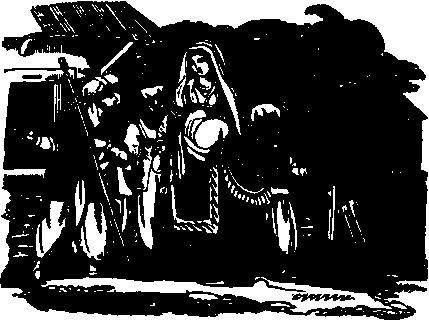
It is enough, Fetnah, replied the caliph; I acknowledge my fault, and would willingly make amends for it, by heaping favours on that young merchant of Damascus. Consider, therefore, what I can do for him. Ask what you think fit, and I will grant it. Hereupon the favourite fell down at the caliph’s feet, with her face to the ground; and rising again, said, Commander of the true believers, after returning your majesty thanks for Ganem, I most humbly intreat you to cause it to be published throughout your dominions, that you pardon the son of Abou Ayoub, and that he may safely come to you. I will do more, rejoined that prince; in requital for having saved your life, and the respect he has shown me, to make amends for the loss of his goods, and in short, to repair the wrong I have done to his family, I give him to you for a husband. Fetnah had not words expressive enough to thank the caliph for his generosity: she then withdrew into the apartment she had occupied before her melancholy adventure. The same furniture was still in it; nothing had been removed: but that which pleased her most, was to find there Ganem’s chests and packs, which Mesrour had taken care to convey thither.
The next day Haroun Alraschid ordered the grand vizier to cause proclamation to be made throughout all his dominions, that he pardoned Ganem, the son of Abou Ayoub; but this proved of no effect, for a long time elapsed without any news of that young merchant Fetnah concluded, that he had not been able to survive the pain of losing her. A dreadful uneasiness seized her mind; but as hope is the last thing which forsakes lovers, she entreated the caliph to give her leave to seek for Ganem herself; which being granted, she took a purse with a thousand pieces of gold out of her casket, and went one morning out of the palace, mounted on a mule she had out of the caliph’s stables, very richly accoutred. Black eunuchs attended her, with their hands on each side upon the mule’s rump.
Thus she went from mosque to mosque, bestowing her alms among the devotees of the Mahometan religion, desiring their prayers for the accomplishment of an affair, on which the happiness of two persons, she told them, depended. She spent the whole day and the thousand pieces of gold in giving alms at the mosques, and returned to the palace in the evening.
The next day she took another purse of the same value, and, in the like equipage as the day before, went to the place where all the jewellers’ shops were, and stopping at the door without alighting, sent one of her black eunuchs for the syndic or chief of them. That syndic, who was a most charitable man, and spent above two-thirds of his income in relieving poor strangers, whether they happened to be sick or in distress, did not make Fetnah wait, knowing by her dress that she was a lady belonging to the palace. I apply myself to you, said she, putting the purse into his hands, as a person whose piety is cried up throughout the city. I desire you to distribute that gold among the poor strangers you relieve; for I know you make it your business to assist poor strangers who apply to your charity. I am also satisfied that you prevent their wants, and that nothing is more agreeable to you than to have an opportunity of relieving their misery. Madam, answered the syndic, I shall obey your commands with pleasure, but if you desire to exercise your charity in person, and will be pleased to step to my house, you will there see two women worthy of your compassion: I met them yesterday as they were coming into the city; they were in a deplorable condition, and it moved me the more, because I thought they were persons of rank. —Through all the rags that covered them, notwithstanding the impression the sun has made on their faces, I discovered a noble air, not to be commonly found in those poor people I relieve. I carried them both to my house, and delivered them to my wife, who was of the same opinion with me. She caused her slaves to provide them good beds, whilst she herself washed their faces, and gave them clean linen. We know not as yet who they are, because we wish to let them take some rest before we trouble them with our questions.
Fetnah, without knowing why, felt a curiosity to see them. The syndic would have conducted her to his house, but she would not give him the trouble, and was satisfied that a slave of his should show her the way. She alighted at the door, and followed the syndic’s slave, who was gone before to give notice to his mistress, she being then in the chamber with Alcolomb and her mother; for they were the persons the syndic had been speaking of to Fetnah.
The syndic’s wife, being informed by the slave that a lady from the palace was in her house, was going out of the room to meet her; but Fetnah, who had followed the slave close, did not give her time: and coming into the chamber, the syndic’s wife prostrated herself before her, to express the respect she had for all that belonged to the caliph. Fetnah took her up, and said, My good lady, I desire you will let me speak with those two strangers that arrived at Bagdad last night. Madam, answered the syndic’s wife, they lie in those two little beds you see close by each other. The favourite immediately drew near the mother’s, and viewing her carefully, Good woman, said she, I come to offer you my assistance: I have a considerable interest in this city, and may be of service to you and your companion. Madam, answered Ganem’s mother, I perceive by your obliging offers, that Heaven has not quite forsaken us, though we had cause to believe it, after so many misfortunes as have befallen us. Having uttered these words, she wept so bitterly that Fetnah and the syndic’s wife could not forbear letting fall some tears.
The caliph’s favourite having dried up here, said to Ganem’s mother, Be so kind as to tell us your misfortune, and recount your story. You cannot give the relation to any persons better disposed than we are to use all possible means to comfort you. Madam, replied Abou Ayoub’s disconsolate widow, a favourite of the commander of the true believers, a lady whose name is Fetnah, is the occasion of all our misfortunes. These words were like a thunderbolt to the favourite; but suppressing her agitation and concern, she suffered Ganem’s mother to proceed in the following manner:— I am the widow of Abou Ayoub, a merchant of Damascus: I had a son called Ganem, who coming to trade at Bagdad, has been accused of having carried off that Fetnah. The caliph has caused search to be made for him every where, to put him to death; and not finding him, has written to the king of Damascus, to cause our house to be plundered and razed, and to expose my daughter and me three days successively stark-naked to the populace, and then to banish us out of Syria for ever. But how unworthy soever our usage has been, I should still be comforted, were my son alive, and I could meet with him. What a pleasure would it be for his sister and me to see him again! Embracing him, we should forget the loss of our goods, and all the evils we have suffered for him. Alas! I am fully persuaded he is only the innocent cause of them, and that he is no more guilty towards the caliph than his sister and I.
No doubt of it, said Fetnah, interrupting her there, he is no more guilty than you are: I can assure you of his innocence; for I am that very Fetnah you so much complain of; who, through some fatality in my stars, have occasioned you so many misfortunes. To me you must impute the loss of your son, if he is no more; but if I have occasioned your misfortune, I can in some measure relieve it. I have already justified Ganem to the caliph; that prince has caused it to be proclaimed throughout his dominions, that he pardons the son of Abou Ayoub; and doubt not he will do you as much good as he has done you harm. You are no longer his enemies. He waits for Ganem to requite the service he has done me, by uniting our fortunes; he gives me to him for his consort; therefore look on me as your daughter, and permit me to vow eternal friendship to you. Having so said, she bowed down on Ganem’s mother, who was so astonished, that she could return no answer. Fetnah held her a long time in her arms, and only left her to run to the other bed to embrace Alcolomb, who sitting up, held out her arms to receive her.
When the caliph’s charming favourite had given the mother and daughter all the tokens of affection they could expect from Ganem’s wife, she said to them, Cease both of you to afflict yourselves: the wealth Ganem had in this city is not lost; it is in my apartment in the palace: I know all the treasure of the world cannot comfort you without Ganem: I judge so of his mother and sister, if I may judge of them by myself. Blood is no less powerful than love in great minds; but why should we despair of seeing him again? We shall find him; the happiness of meeting with you makes me conceive fresh hopes. Perhaps this is the last day of your sufferings, and the beginning of a greater felicity than you enjoyed in Damascus, when Ganem was with you.
Fetnah would have gone on, when the syndic of the jewellers came in: Madam, said he to her, I come from seeing a very moving object; it is a young man, whom a camel-driver has just carried to the hospital at Bagdad: he was bound with cords on a camel, because he had not strength enough to sit on him. They had already unbound him, and were carrying him into the hospital, when I happened to pass by. I went up to the young man, viewed him attentively, and fancied his countenance was not altogether unknown to me. I asked him some questions concerning his family and his country; but all the answers I could get were only sighs and tears. I took pity on him, and by being so much used to sick people, perceived that he had need to have particular care taken of him. I would not permit him to be put into the hospital; for I am too well acquainted with their way of managing the sick, and am sensible of the incapacity of the physicians. I have caused him to be brought home to my house, by my slaves; and they are now, by my orders, in a private room where I placed him, putting on some of my own linen, and treating him as they would do me.
Fetnah’s heart leaped at these words of the jeweller, and she felt a sudden emotion, for which she could not account: Show me, said she to the syndic, into that sick man’s room; I should be glad to see him. The syndic conducted her, and whilst she was going thither, Ganem’s mother said to Alcolomb, Alas! daughter, wretched as that sick stranger is, your brother, if he be living, is not perhaps in a more happy condition.
The caliph’s favourite, coming into the chamber where the sick man was, drew near the bed, in which the syndic’s slaves had already laid him. She saw a young man, whose eyes were closed, his countenance pale, disfigured, and bathed in tears. She gazed earnestly on him, her heart beat, and she fancied she beheld Ganem; but yet she would not believe her eyes. Though she found something of Ganem in the object she beheld, yet in other respects he appeared so different, that she durst not imagine it was he that lay before her. Unable, however, to withstand the earnest desire of being satisfied, Ganem, said she, with a trembling voice, is it you I behold? Having spoken these words, she stopped to give the young man time to answer; but observing that he seemed insensible, Alas! Ganem, added she, it is not you that I talk to. My imagination being overcharged with your image, has given this stranger a deceitful resemblance. The son of Abou Ayoub, though never so sick, would know the voice of Fetnah. At the name of Fetnah, Ganem (for it was really he) opened his eyes, and turned his face towards the person that spoke to him; and knowing the caliph’s favourite, Ah! madam, said he, by what miracle —He could say no more; such a sudden transport of joy seized him, that he fainted away. Fetnah and the syndic did all they could to bring him to himself; but as soon as they perceived he began to revive, the syndic desired the lady to withdraw, for fear lest the sight of her should heighten Ganem’s distemper.
The young man, having recovered his senses, looked all around, and not seeing what he looked for, cried out, What is become of you, charming Fetnah? Did you really appear before my eyes, or was it only an illusion? No, sir, said the syndic, it was no illusion. It was I that caused that lady to withdraw, but you shall see her again, as soon as you are in a condition to bear her sight. You now stand in need of rest, and nothing ought to obstruct your taking it. The situation of your affairs is altered, since you are, as I suppose, that Ganem, in favour of whom the commander of the true believers has caused a proclamation to be made in Bagdad, declaring that he forgives him what is passed. Be satisfied for the present with knowing so much; the lady who just now spoke to you will acquaint you with the rest, therefore think of nothing but recovering your health; I will contribute all in my power towards it. Having spoken these words, he left Ganem to take his rest, and went himself to provide for him all such medicines as were proper to recover his strength, exhausted by hard living and toil.
During that time Fetnah was in the room with Alcolomb and her mother, where almost the same scene was acted over again; for when Ganem’s mother understood that the sick stranger whom the syndic had just brought into his house was Ganem himself, she was so overjoyed, that she also swooned away; and when, with the assistance of Fetnah and the syndic’s wife, she was again come to herself, she would have got up, to go and see her son; but the syndic coming in, hindered her, representing that Ganem was so weak and emaciated, that it would endanger his life to excite in him those emotions which must be the consequence of the unexpected sight of a beloved mother and sister. There was no occasion for the syndic’s saying any more to Ganem’s mother; as soon as she was told that she could not converse with her son, without hazarding his life, she ceased insisting to go and see him. Then Fetnah said, Let us bless Heaven for having brought us all together into one place. I will return to the palace to give the caliph an account of all these adventures, and to-morrow morning I will return to you. This said, she embraced the mother and the daughter, and went away. As soon as she came to the palace, she sent Mesrour to request a private audience of the caliph, which was immediately granted; and being brought into that prince’s closet, where he was alone, she prostrated herself at his feet, with her hands on the ground, according to custom. He commanded her to rise, and having made her sit down, asked whether she had heard any news of Ganem? Commander of the true believers, said she, I have been so successful, that I have found him, as also his mother and sister. The caliph was curious to know how she could find them in so short a time, and she satisfied his curiosity, saying so many things in commendation of Ganem’s mother and sister, that he desired to see them, as well as the young merchant.
Though Haroun Alraschid was passionate, and in his heat sometimes guilty of cruel actions; yet in return, he was just, and the most generous prince in the world, as soon as his anger was over, and he was made sensible of the wrong he had done. Having therefore no longer cause to doubt but that he had unjustly persecuted Ganem and his family, and having publicly wronged them, he resolved to make them public satisfaction. I am overjoyed, said he to Fetnah, that your search has proved so successful; it is a mighty satisfaction to me, not so much for your sake as for my own. I will keep the promise I have made you. You shall marry Ganem, and I here declare you are no longer my slave; you are free. Go back to that young merchant, and as soon as he has recovered his health, you shall bring him to me, with his mother and sister.
The next morning early Fetnah repaired to the syndic of the jewellers, being impatient to hear of Ganem’s health, and to tell the mother and daughter the good news she had for them. The first person she met with was the syndic, who told her that Ganem had rested very well that night; and that his distemper proceeded altogether from melancholy, and the cause being removed, he would soon recover his health.
Accordingly the son of Abou Ayoub was much amended. Rest, and the good medicines he had taken, but, above all, the different situation of his mind, had wrought so good an effect, that the syndic thought he might without danger see his mother, his sister, and his mistress, provided he was prepared to receive them; because there was ground to fear, that, not knowing his mother and sister were at Bagdad, the sight of them might occasion too great surprise and joy. It was therefore resolved, that Fetnah should first go alone into Ganem’s chamber, and then make a sign to the two other ladies to appear, when she thought it was proper.
Matters being so ordered, the syndic announced Fetnah’s coming to the sick man, who was so transported to see her, that he was again near fainting away. Well, Ganem, said she, drawing near to his bed, you have again found your Fetnah, whom you thought you had lost for ever. Ah, madam, eagerly interrupting her, what miracle has restored you to my sight? I thought you were in the caliph’s palace; that prince has doubtless listened to you. You have dispelled his jealousy, and he has restored you to his favour.
Yes, my dear Ganem, answered Fetnah, I have cleared myself before the commander of the true believers, who, to make amends for the wrong he has done you, bestows me on you for a wife. These last words occasioned such an excess of joy in Ganem, that he knew not for a while how to express himself, otherwise than by that passionate silence so well known to lovers. At length he broke out in these words: Beautiful Fetnah, cried he, may I give credit to what you tell me? May I believe that the caliph really resigns you to Abou Ayoub’s son? Nothing is more certain, answered the lady. That prince, who before caused search to be made for you, to take away your life, and who in his fury caused your mother and your sister to suffer a thousand indignities, desires now to see you, that he may reward the respect you had for him; and there is no question to be made but that he will load your family with his favours.
Ganem asked what the caliph had done to his mother and sister, which Fetnah told him; and he could not forbear letting fall some tears at that relation, notwithstanding the thoughts which arose in his mind at the news of being married to his mistress. But when Fetnah informed him that they were actually in Bagdad, and in the same house with him, he appeared so impatient to see them, that the favourite could no longer defer giving him that satisfaction; and accordingly called them in. They were at the door, only waiting for that moment. They came in, went up to Ganem, and embracing him in their turns, kissed him a thousand times. What tears were shed amidst those embraces! Ganem’s face was bathed with them, as well as his mother’s and sister’s; and Fetnah let fall abundance. The syndic himself and his wife were so moved at the spectacle, that they could not forbear weeping, nor sufficiently admire the secret workings of Providence, which brought together into their house four persons, whom fortune had so cruelly parted.
When they had all dried up their tears, Ganem drew fresh torrents, by the recital of all he had suffered from the day he left Fetnah till the moment the syndic brought him to his house. He told them, that having taken refuge in a small village, he there fell sick; that some charitable peasants had taken care of him, but finding he did not recover, a camel-driver had undertaken to carry him to the hospital at Bagdad. Fetnah also told them all the uneasiness of her imprisonment; how the caliph, having heard her talk in the tower, had sent for her into his closet, and how she had cleared herself. In conclusion, when they had related what accidents had befallen them, Fetnah said, Let us bless Heaven, which has brought us all together again, and let us think of nothing but the happiness that attends us. As soon as Ganem has recovered his health, he must appear before the caliph, with his mother and sister; but as they are not in a condition to be seen, I will make some provision for them. I desire you to stay a moment.
This said, she went away to the palace, and soon returned to the syndic’s with a purse containing a thousand pieces of gold, which she delivered to the syndic, desiring him to buy clothes for the mother and daughter. The syndic, who was a man of good taste, chose such as were very handsome, and had them made up with all speed. They were finished in three days, and Ganem finding himself strong enough to go abroad, prepared for it; but on the day he had appointed to pay his respects to the caliph, when he was making ready, with his mother and sister, the grand vizier Giafar came to the syndic’s house.
That minister came on horseback, attended by a great number of officers. Sir, said he to Ganem, as soon as he came in, I am come from the commander of the true believers, my master and yours; the orders I have differ very much from those which I do not care to revive in your memory; I am to bear you company, and to present you to the caliph, who is desirous to see you. Ganem returned no other answer to the vizier’s compliment, than by profoundly bowing his head, and then mounted a horse brought from the caliph’s stables, which he managed very gracefully. The mother and daughter were mounted on mules belonging to the palace, and whilst Fetnah on another mule led them a by-way to the prince’s court, Giafar conducted Ganem another way, and brought him into the hall of audience. The caliph was there sitting on his throne, encompassed with emirs, viziers, and other attendants and courtiers, Arabs, Persians, Egyptians, Africans, and Syrians, of his own dominions, not to mention strangers.
When the vizier had conducted Ganem to the foot of the throne, that young merchant paid his obeisance, prostrating himself with his face to the ground, and then rising, made a handsome compliment in verse, which, though extempore, met with the approbation of the whole court. After his compliment, the caliph caused him to draw near, and said to him, I am glad to see you, and desire to hear from your own mouth where you found my favourite, and all that you have done for her. Ganem obeyed, and appeared so sincere, that the caliph was convinced of his sincerity. That prince ordered a very rich vest to be given him, according to the custom observed with those who are admitted to audience. After which he said to him, Ganem, I will have you live in my court. Commander of the true believers, answered the young merchant, a slave has no will but his master’s, on whom his life and fortune depend. The caliph was highly pleased with Ganem’s answer, and assigned him a considerable pension. Then the prince came down from his throne, and causing only Ganem and the grand vizier to follow him, went into his own apartment.