Chapter VII · INSTRUMENTS
Reading edition
TYPES, VARIETIES, USES, THEIR SELECTION AND CARE
No comprehensive monograph has yet been written discussing at any length the instruments of the podiatrist, and in compiling the following data there must necessarily be omissions. Up to the present moment no great amount of standardization has been accomplished along this line, either in the general use of a given instrument or in its name. It is the object of the author of this chapter to at least build a foundation upon which a complete and standardized line of instruments may be developed.
Many special instruments developed by practitioners who have refrained, for reasons best known to themselves, from giving their ideas and discoveries to the profession at large, must necessarily be omitted, and it is to be greatly desired that the next few years will be rich in the development and standardization of our instruments and appliances.
The instruments in general use today and manufactured by several companies, are all made practically of the same material and in the same manner, the differences between them, being due principally, to the finish. All such instruments as chisels, scalpels, spatulas, curettes, etc., are made from Sheffield steel, and are hand forged. The handles of these instruments are made of a silver or aluminum composite. Scissors, nail clips, thumb forceps, etc., are made also of Sheffield steel, but are drop forged.
Most instrument makers today have discarded the older method of finishing, known generally as the “crocus” polish. This has come about principally for the reason that the application of the crocus polish or finish demands that the instrument be subjected to extreme heat. In accomplishing this, many instruments are rendered useless owing to the fact that the temper of the blade is ruined by the added heat.
What is commonly known as a “satin” finish, accomplished by buffing, is now generally employed and does not tend in any way to injure the already highly tempered steel.
HISTORY OF INSTRUMENTS
With the exception of possibly two or three, it is doubtful, if chiropody has developed any really individual instruments. Our scalpels are similar to or are modifications of those of the surgeon; the nail chisels and excavators in general use have been borrowed from the realms of the dentist, as has the rotary drill; the nail clips, of course, are instruments which are purely for the purposes coming within the jurisdiction of the podiatrist; so, also are the various forms of the nail file.
The chisel used by a great number of practitioners for the surgical removal of helomata, is one of the oldest of chiropody instruments and is one which was unquestionably developed by the chiropodist for his own needs. There is no instrument in use by the surgeon which bears any resemblance to the chisel, and for this reason we can safely say that it is a true chiropody instrument and may therefore safely be called the helotomon—the podiatry surgical instrument. This also, in a measure, can be said of the soft corn spoon. This is, to be sure, nothing but a very shallow curette, but nevertheless no instrument in use in general surgery can be rated as being similar to it; it is therefore properly styled the podiatrist’s curette.
Prior to 1909, the chiropodist found it necessary to select his own manufacturer and have his instruments made according to his own ideas, or to select them from the catalog of the surgical supply house. This condition of affairs resulted in a wide diversity of styles. No two practitioners had similar instruments, and it seemed to furnish keen delight to one chiropodist to outdo his neighbor as to the size, finish and appearance of his instruments. Pearl handled scalpels were much in evidence and, when so, served to prove, without question, that the owner did no sterilization by boiling. Gold-plated blades and inlaid handles were frequently to be seen, proving nothing, unhappily, but the eccentricities of their owners.
In the year 1909, however, the manufacture of instruments as individual appliances for the chiropodist was started at the instigation of the late George Erff, by an instrument maker in Jersey City, N. J. His wares found such instant approval and the sales of his product so increased that it was not long before several other firms embarked in the business of manufacturing instruments solely for chiropodical work.
This has done much to standardize instruments and today men and women in all parts of the world are beginning to use similar instruments made from standard patterns.
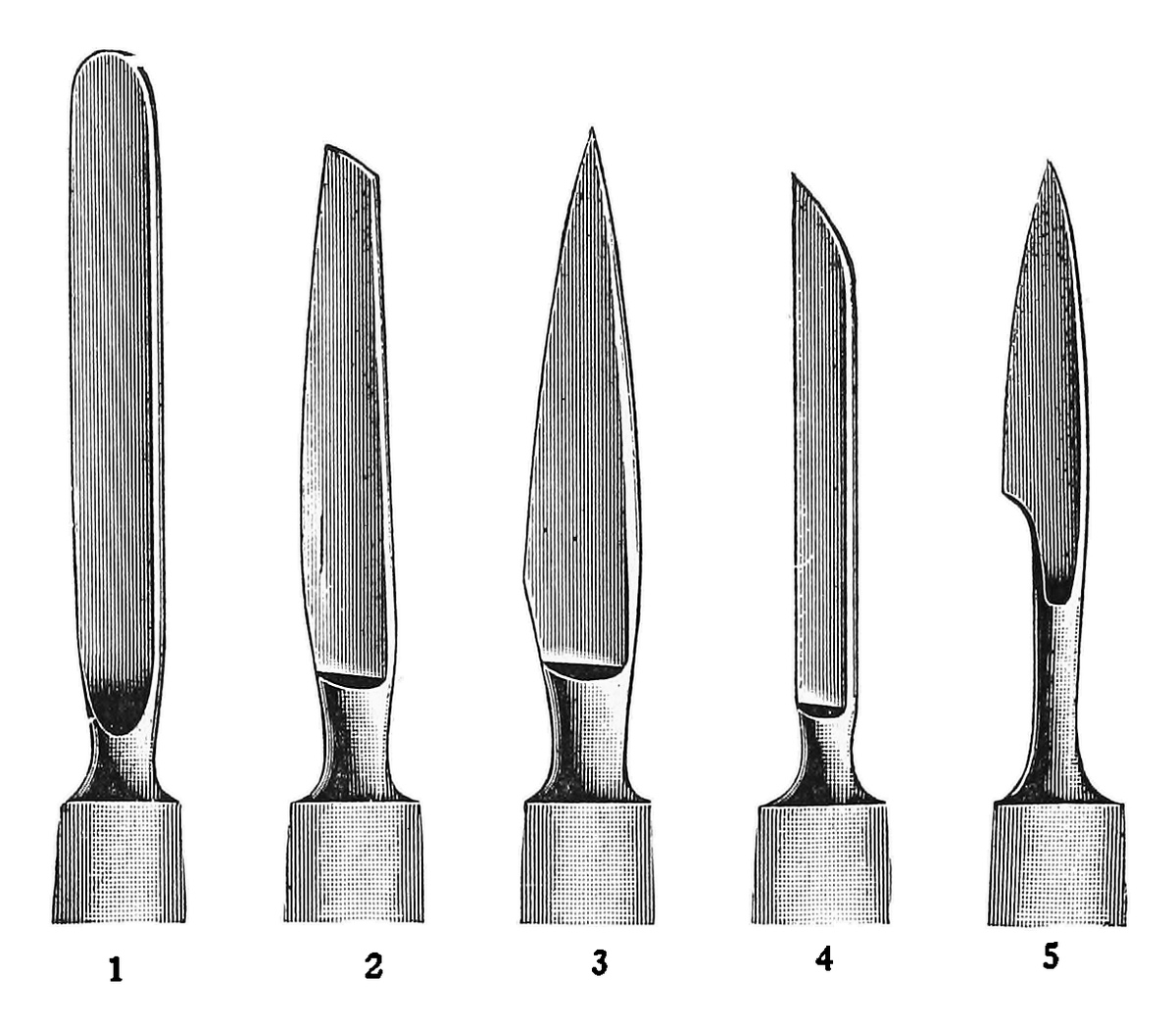
Fig. 1. SCALPELS
The Scalpel. Several varieties of scalpel are used in podiatry today. Some of them have been developed from an absolute need and some from the personal desire of the practitioner. The scalpel should be about five-and-one-half inches long, having a blade length of from one-and-one-half inches to one-and-three-quarters inches. Made from these dimensions, the instrument is practical as to size and has a working surface sufficient for any purpose.
Fig. 1 shows several varieties of scalpel. No. 2 in this group is a practically shaped blade to be used for work on callositas or heloma. This instrument will maintain a good shape with honing and is used by a great number of practitioners.
This No. 2 is used for the removal of heavy callous and general work. Nos. 3 and 5 may be successfully used for the dissection and removal of helomata. These pointed scalpels are indicated whenever delicate work on small surfaces is demanded.
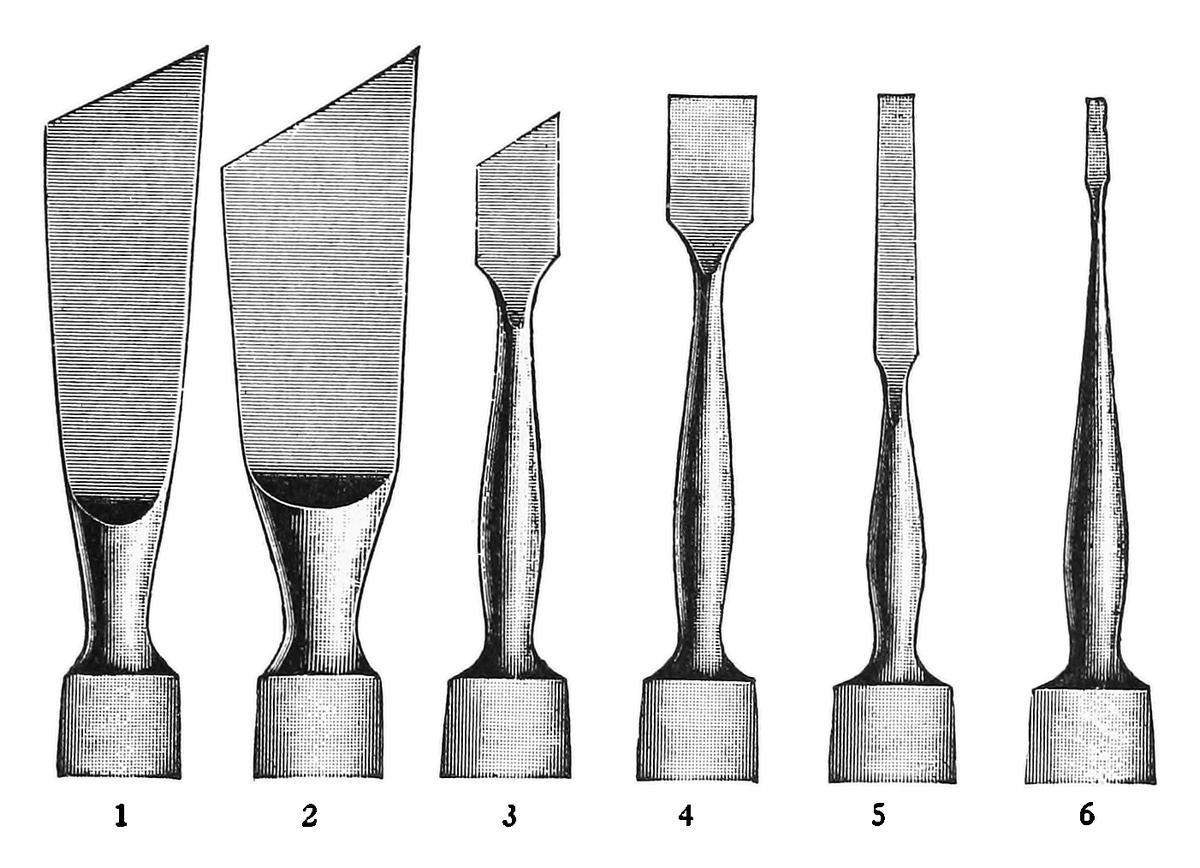
Fig. 2. CHISELS
The Chisel. The heloma and callosity chisels, Nos. 1, 2 of Fig. 2, are about five-and-one-half inches long with a blade length of one-and-one-quarter inches. Nos. 5 and 6 are nail chisels and will be discussed under that heading.
A series of chisels which are advocated by Harry P. Kenison, of Boston, differ from those shown in Fig. 2 only in that the handles are one-quarter of an inch in diameter and are round, being corrugated to prevent slipping. These instruments are five-and-one-quarter inches long.
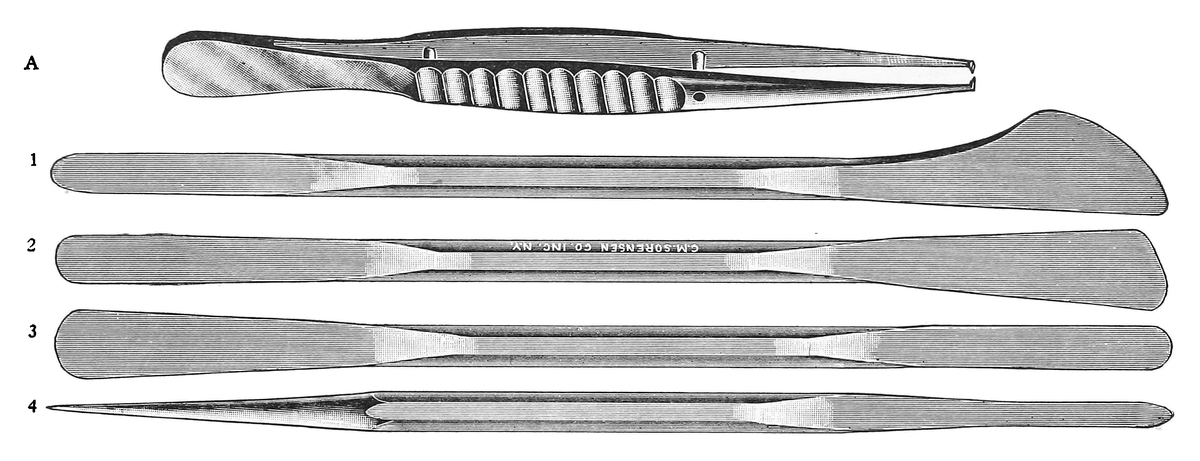
Fig. 3. HELOMA AND CALLOSITY CHISELS
Fig. 3 shows heloma and callous chisels (helotoma) recommended by E. C. Rice, M.D., of Washington, D. C. This variety of instrument is used principally for dissection work, but is also useful for shaving or paring methods. No. 1 of this group is used principally for large calloused areas on the plantar surfaces of the foot. The handles of these instruments are hexagonal and are five-and-one-quarter inches long.
The Nail Chisel. Varieties of straight chisels for the removal of ingrown portions of nail are shown in Fig. 2, Nos. 5 and 6.
Curved nail chisels are shown by Nos. 1 and 2 in Fig. 4. Their use is described in the chapter on Ingrown Nails. Nos. 3, 5, 6, in this group, are nail packers used for packing gauze or cotton in the nail groove. No. 4 in this figure is a curette excavator used for the removal of nail splinters or callous from the nail groove.
There is a newer type of nail chisel with a guard along one edge. This is to prevent the instrument from penetrating the soft tissues of the nail bed while removing an imbedded portion of nail. This flange also aids in lifting the nail from its bed and in breaking up adhesions which may have formed in advanced cases.
No. 2, Fig. 5, is a nail groove gouge used for the removal of callous in that location.
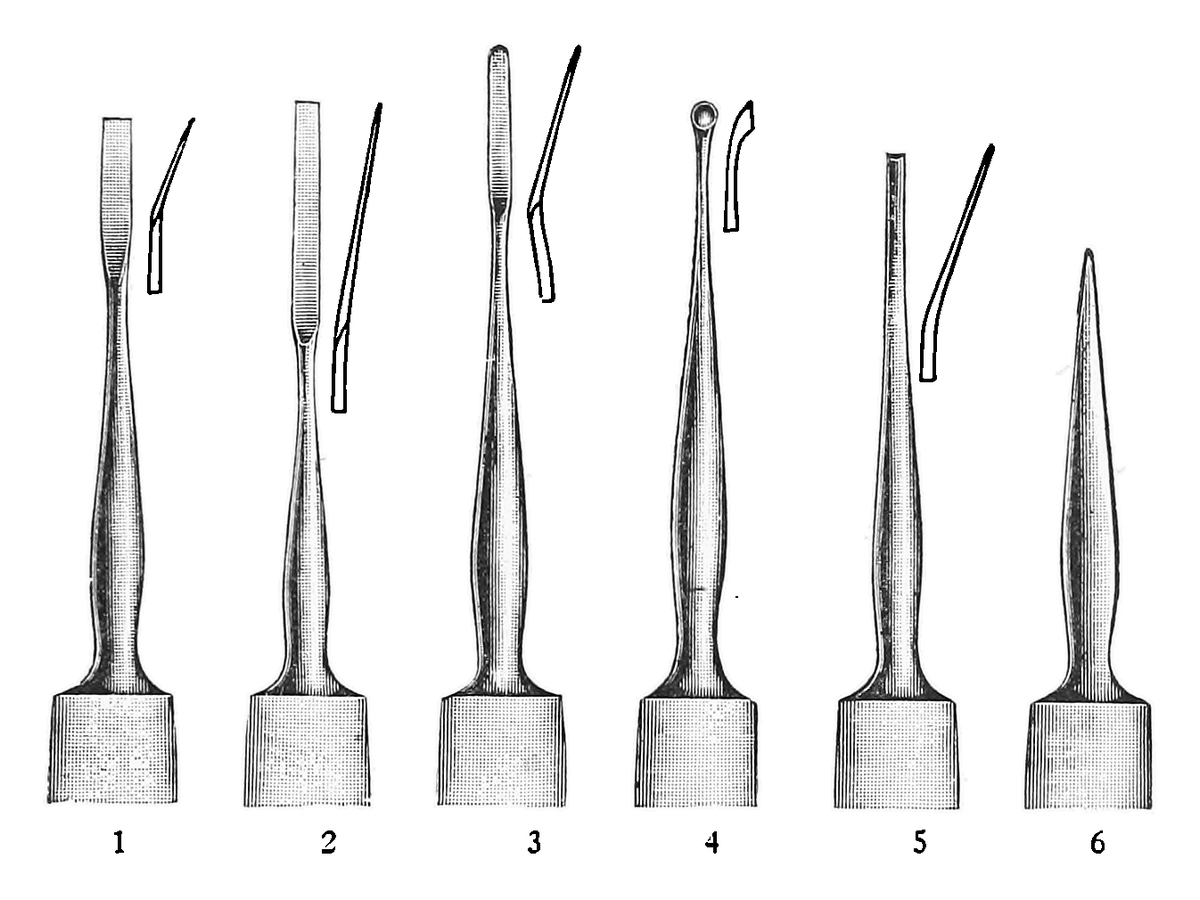
Fig. 4. NAIL CHISELS
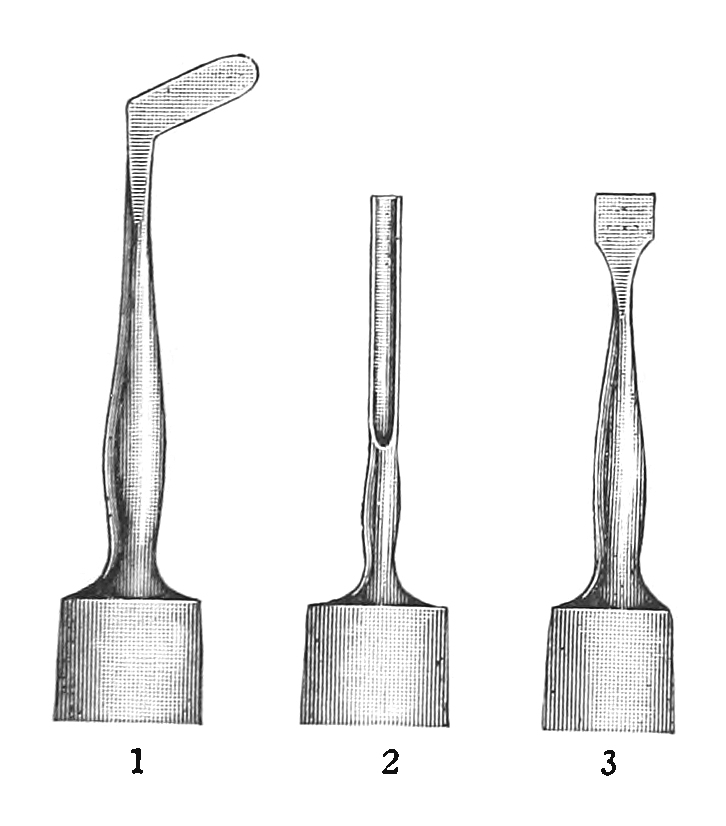
Fig. 5. MISCELLANEOUS INSTRUMENTS

Fig. 6. SOFT CORN SPOON
Soft Corn Spoon. (Podiatrist Curette.) The soft corn spoon, Fig. 6, is in reality a shallow curette used for the purpose of dissecting an epithelial growth between the toes. The working edge of the instrument is sharp.
A modification of this spoon is shown in Fig. 5, No. 1. This instrument is commonly known as a “golf stick.” It is used for the same purpose as the soft corn spoon. These instruments are of the same length, in fact, are uniform in every way to the scalpel and nail chisel.
The Spatula. This is an instrument used almost entirely for the mixing of ointments and their application to a part. It is not sharp. (Fig. 7, No. 1.)
The Nail Scraper. The scraper is used for cleaning around the nail, and for the removal of any callous which may be adherent to the nail body in or about the grooves. Two varieties are shown in Fig. 7, Nos. 2 and 3.
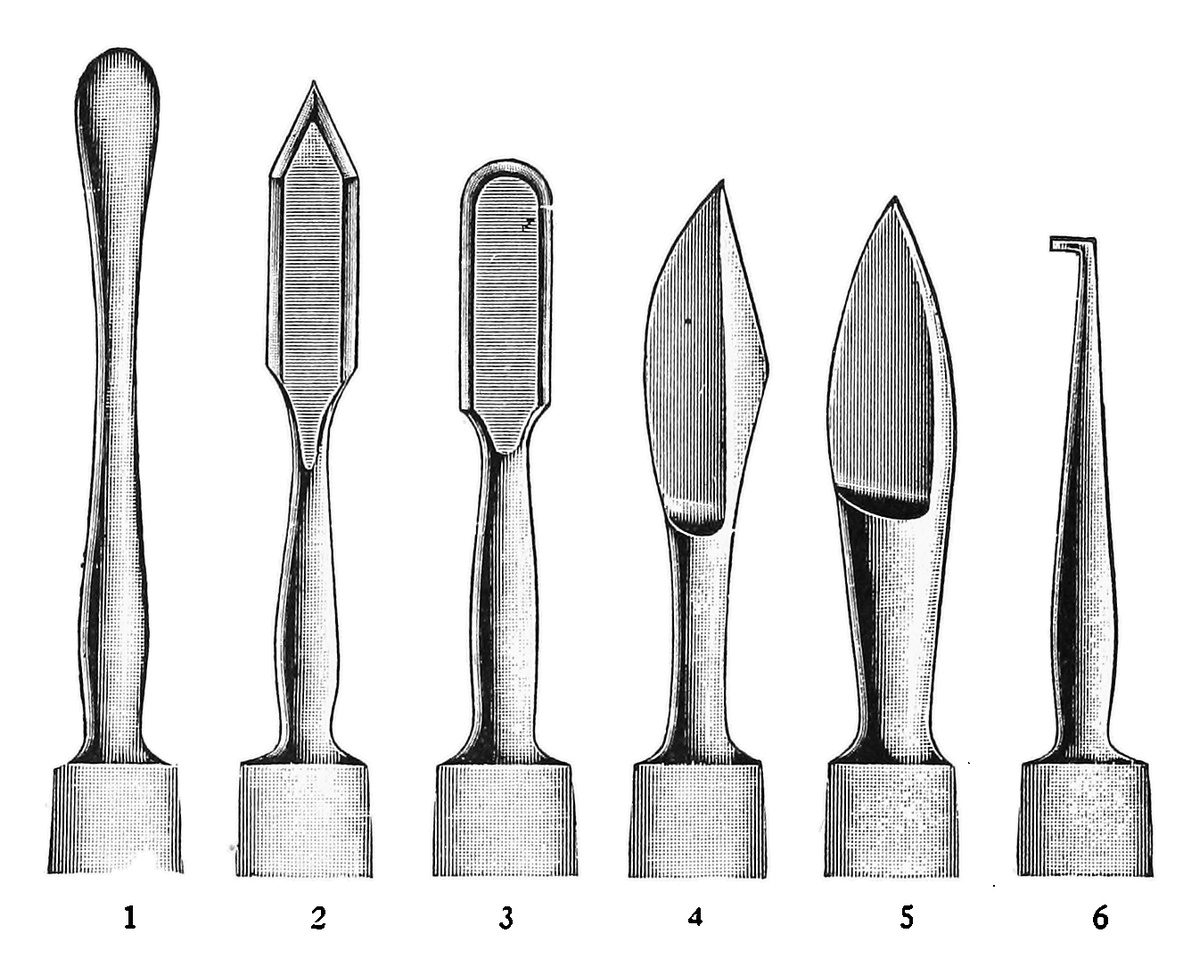
Fig. 7. MISCELLANEOUS INSTRUMENTS
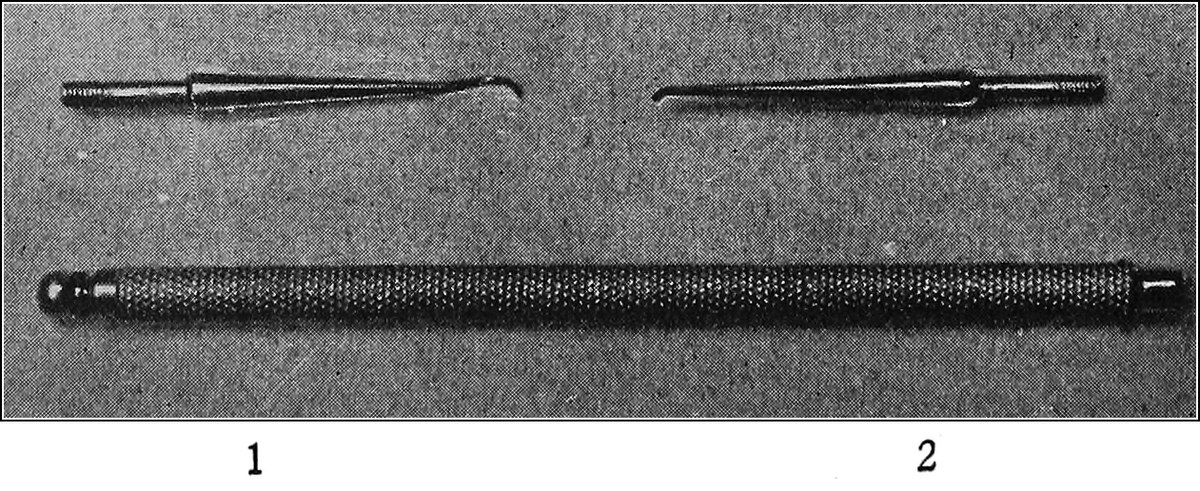
Fig. 8. EXCAVATORS WITH DETACHABLE HANDLE
The Excavator. Excavators for use in the nail grooves are of great service to the podiatrist. Probably the most practical variety of this instrument is that borrowed from the dentist. This form of excavator is composed of two parts, a handle, called commercially a cone socket handle, and an excavator point which screws into the hand piece. These points may be obtained in a great number of styles but the two shown in Fig. 8 are practical in all cases. No. 2 has a small semi-sharp point, while No. 1 has a larger point and is dull. These instruments can also be used as packers for placing gauze or cotton under the nail and in the grooves.
Other forms of excavators are shown in Fig. 9. No. 1 is a combination excavator and packer; No. 2, a packer; No. 3 an excavator; No. 4 a combination spatula and packer.
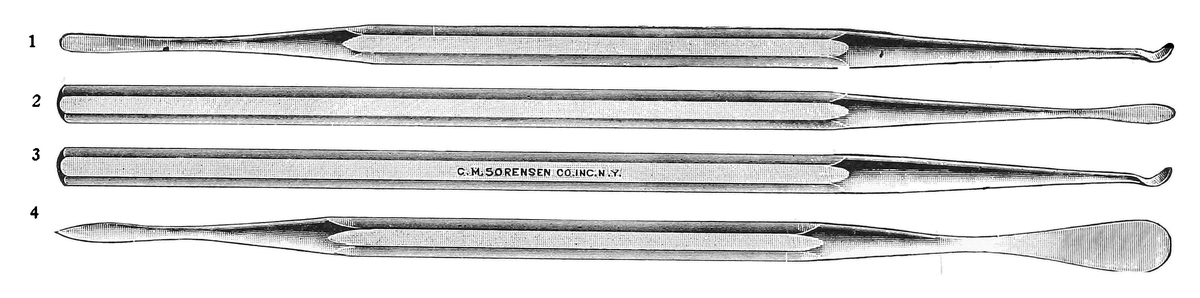
Fig. 9. EXCAVATORS
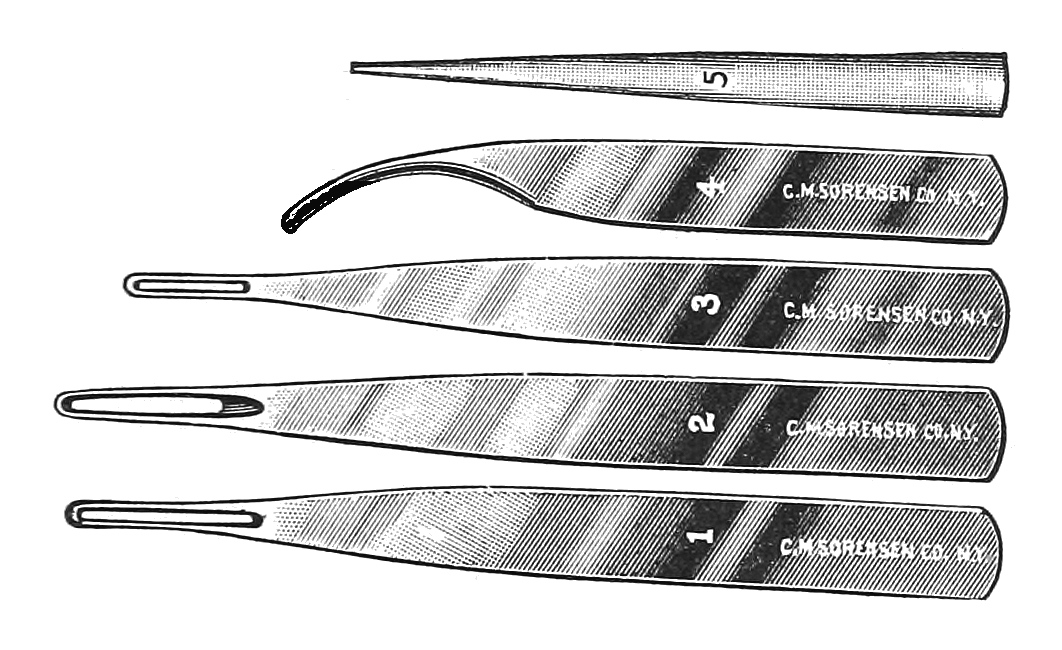
Fig. 10. INGROWING NAIL INSTRUMENTS
Special Ingrown Nail Instruments. A set of special instruments for use in surgical procedures in ingrown nail cases is shown in Fig. 10. Nos. 1, 2, and 3 are used for the removal of ragged edges of nail. No. 4 is a nail elevator, used for pre-operative examination, and No. 5 is a special oil stone used for sharpening Nos. 1, 2, and 3.
Ingrown Nail Forceps. Two types of forceps for the removal of the imbedded portion of the nail after it has been loosened from the nail body, are in general use. One is of a curved variety and is particularly practical; the other has a straight point and a locking device and is in reality a small artery forceps. Fig. 11 shows the straight point forceps.
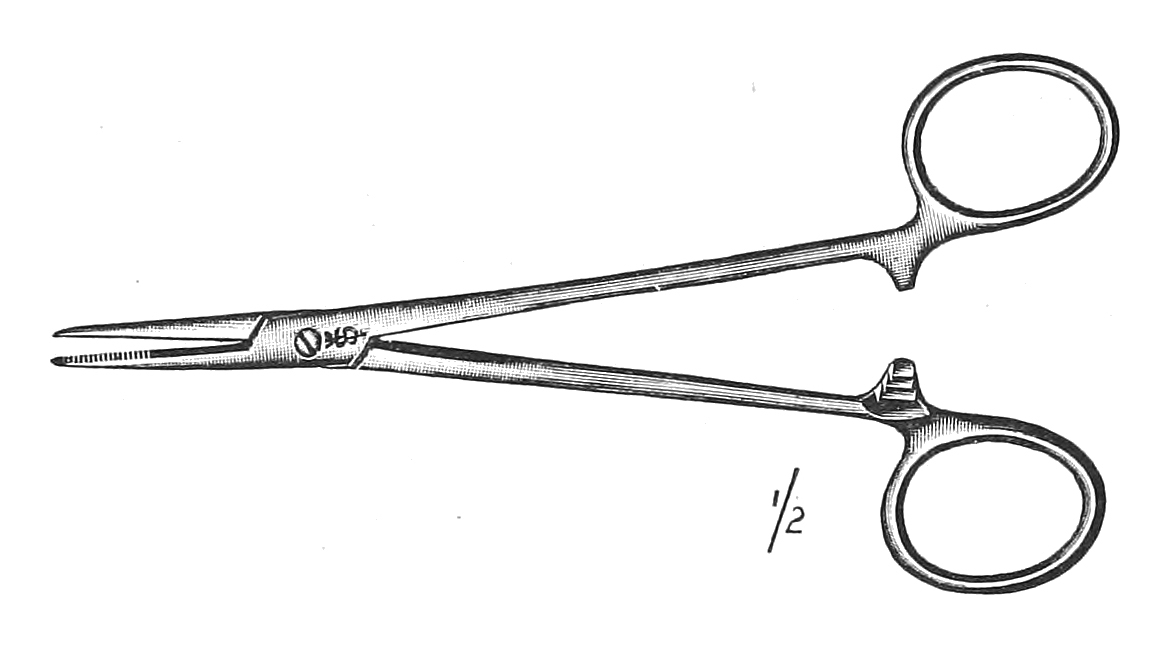
Fig. 11. STRAIGHT NAIL FORCEPS
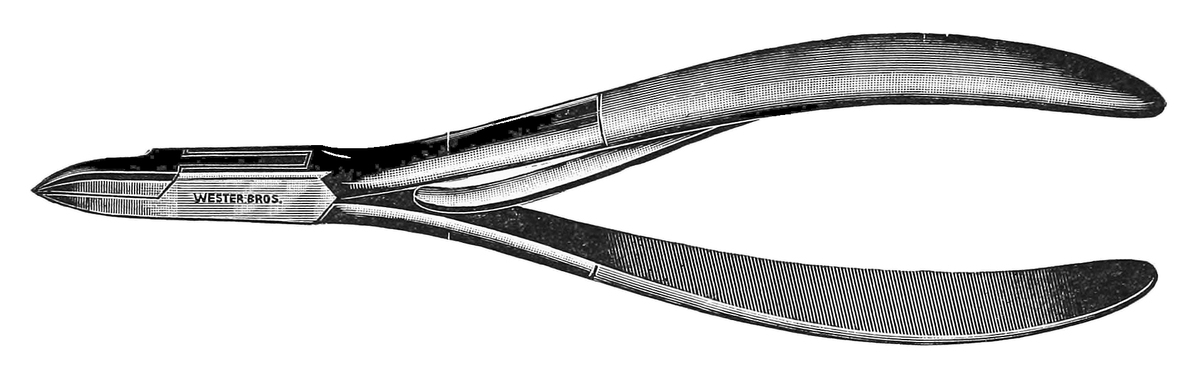
Fig. 12. NAIL SPLITTER
Ingrown Nail Clippers. The clipper shown in Fig. 12 is used almost entirely in ingrown nail operations. It is extremely light and if used in the general cutting of nails will surely be sprung. The clipper illustrated is more correctly a nail “splitter.” These clippers may be obtained in two sizes, four and one-half and five inches.
Nail Clippers. The nail clipper should be of heavy stock so that all nails may be easily cut without injury to the instrument or pain to the patient. A heavy nail clip, even though it be dull, will do much more efficient work in general, than will a sharp light clipper.
Two styles of nail clippers are shown here. Fig. 13 is a clip for general work while Fig. 14 finds its particular efficacy in club nail cases. Notice the angle of the blade in this type of instrument.
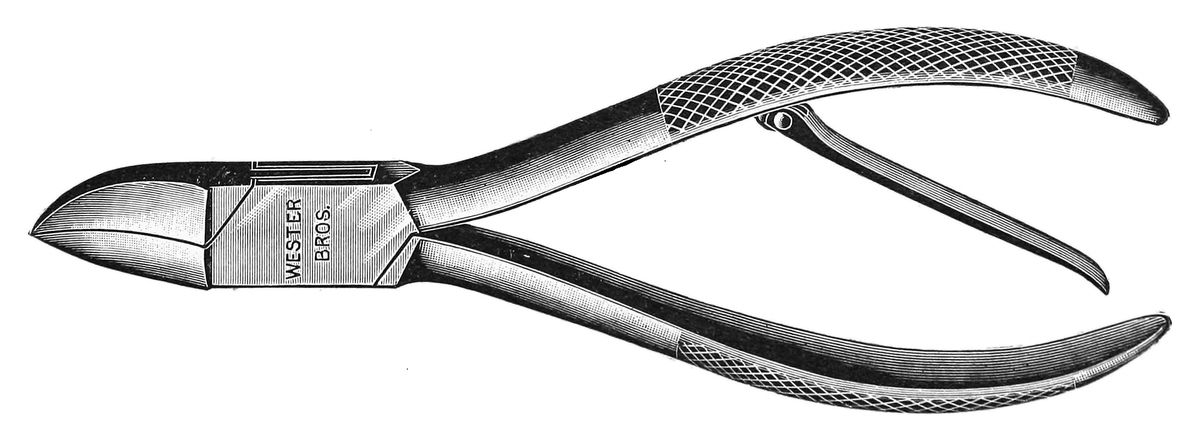
Fig. 13. NAIL CLIPPERS
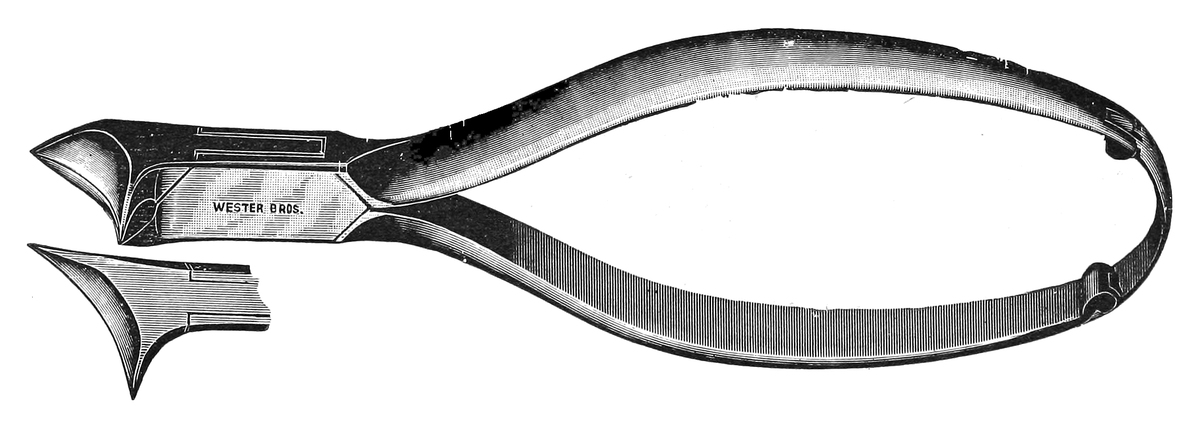
Fig. 14. CLUB NAIL CLIPPERS
Thumb Forceps. Thumb forceps are used extensively in podiatry practice. All sterile dressings are handled with these instruments to insure immunity from the contamination of the hands.
Three varieties of thumb forceps are shown in Fig. 15. No. 1 has needle point corrugated jaws; No. 2 has curved, corrugated needle jaws; and No. 3 is a heavy pointed corrugated jawed instrument. These three styles are all four inches in length.
Iris Tooth Forceps. This instrument is used where the dissection method of treatment is employed. The sharp teeth at the end of the jaws, grasp the thickened mass as it is loosened from its bed. (Fig. 3-A.) The ordinary thumb forceps may also be used in this connection but they are much more liable to slip than are those of the iris tooth variety.
Fig. 15. THUMB FORCEPS
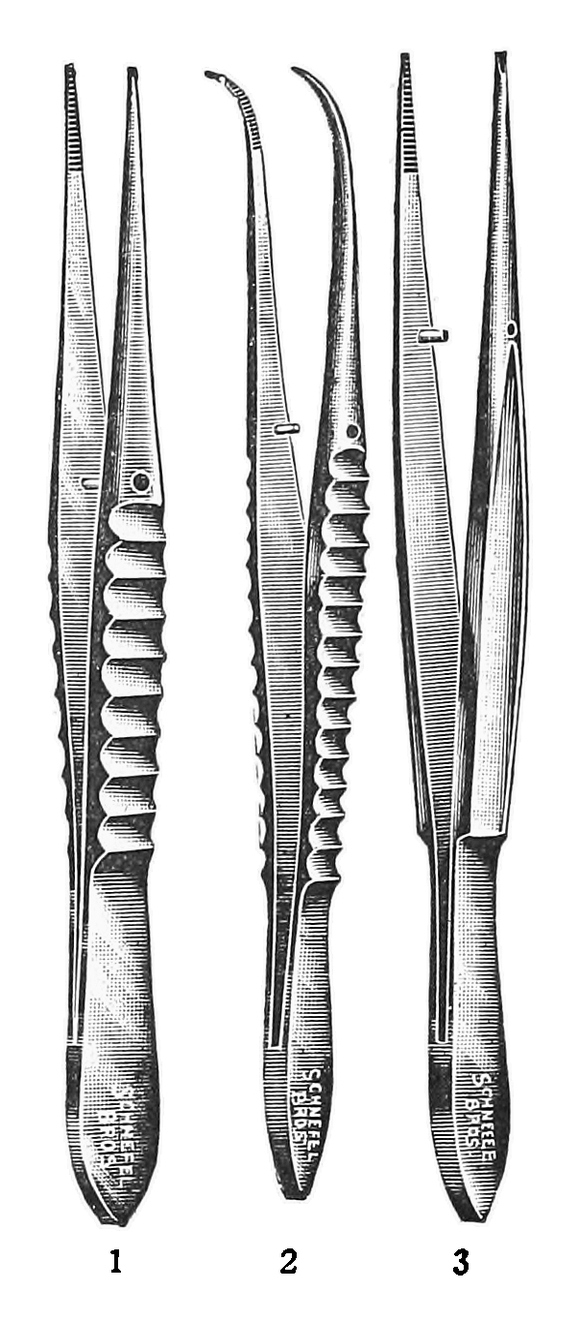
Fig. 16. HEAVY STRAIGHT SCISSORS
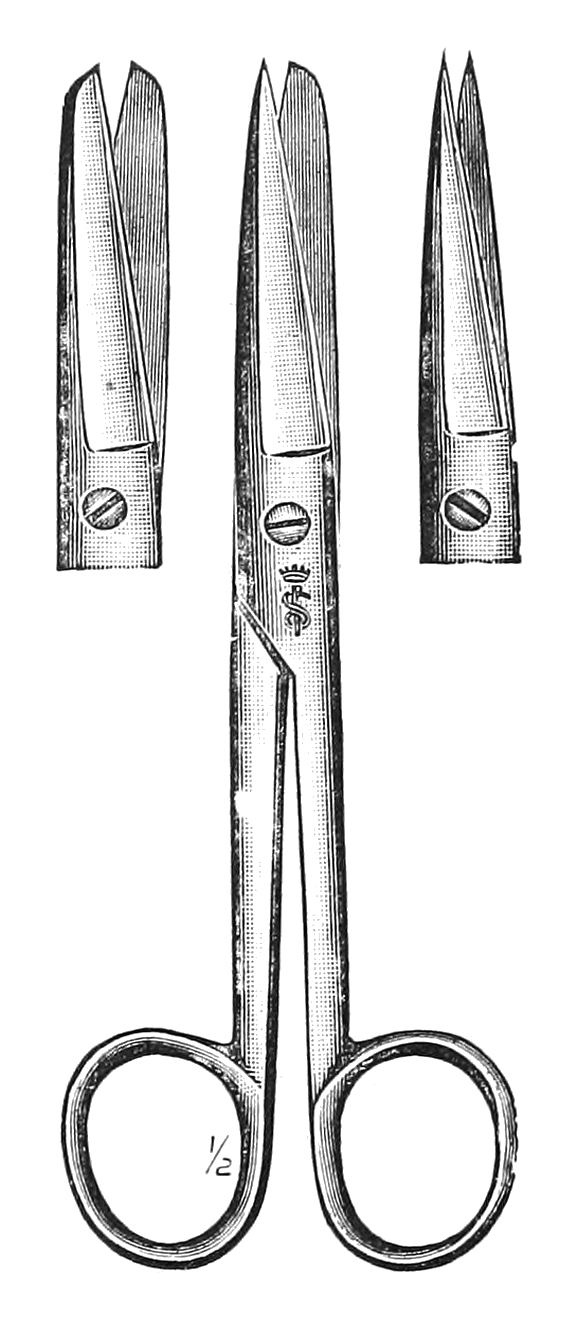
Fig. 17. HEAVY CURVED SCISSORS
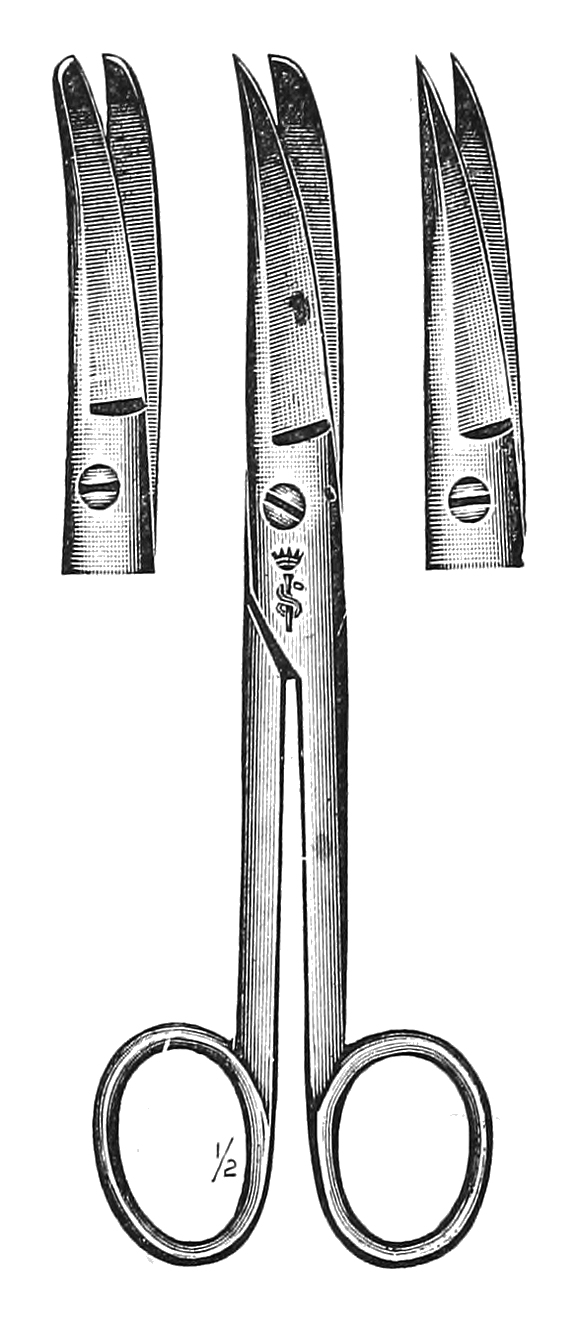
Scissors. The podiatrist needs at least four styles of scissors in his general practice.
For buckskin, felt and adhesive plaster a heavy scissors with straight blades is necessary. This scissors should be six or six and one-half inches in length and should preferably have round ends (Fig. 16).
A pair of heavy, curved scissors is also useful for shaping shields, cutting apertures and for other similar work. It is suggested that these be not too large for they are apt to be unwieldy. Four and one-half or five inches is ample size, and one point should be rounded, and one pointed (Fig. 17).
Fig. 18. CUTICLE SCISSORS (Curved Blades)
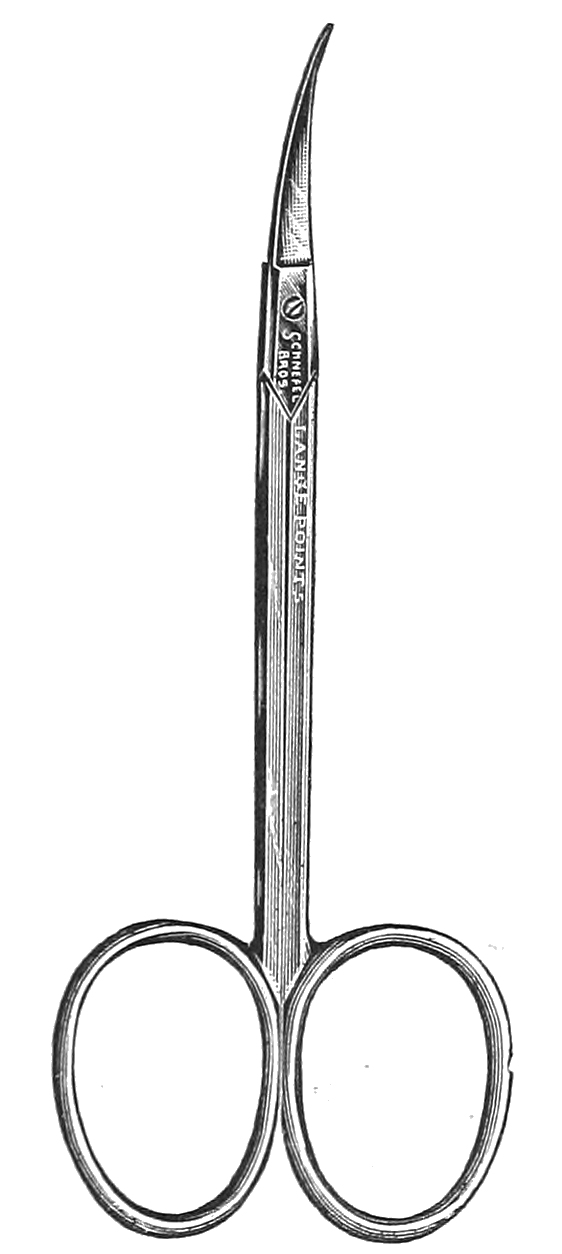
Fig. 19. CUTICLE SCISSORS (Straight Blades)
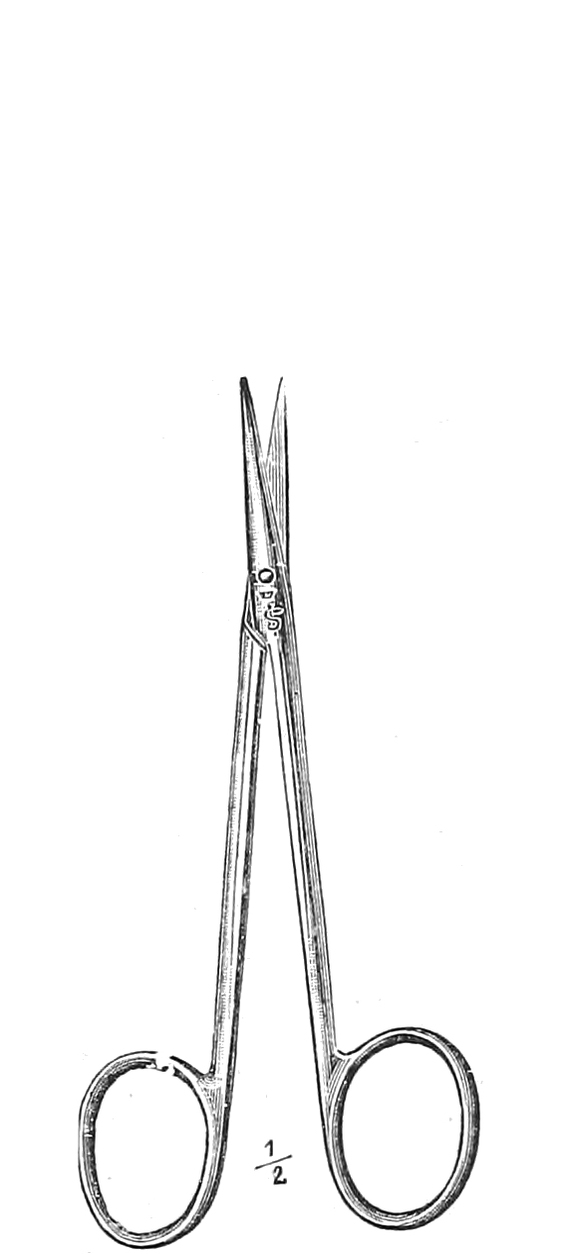
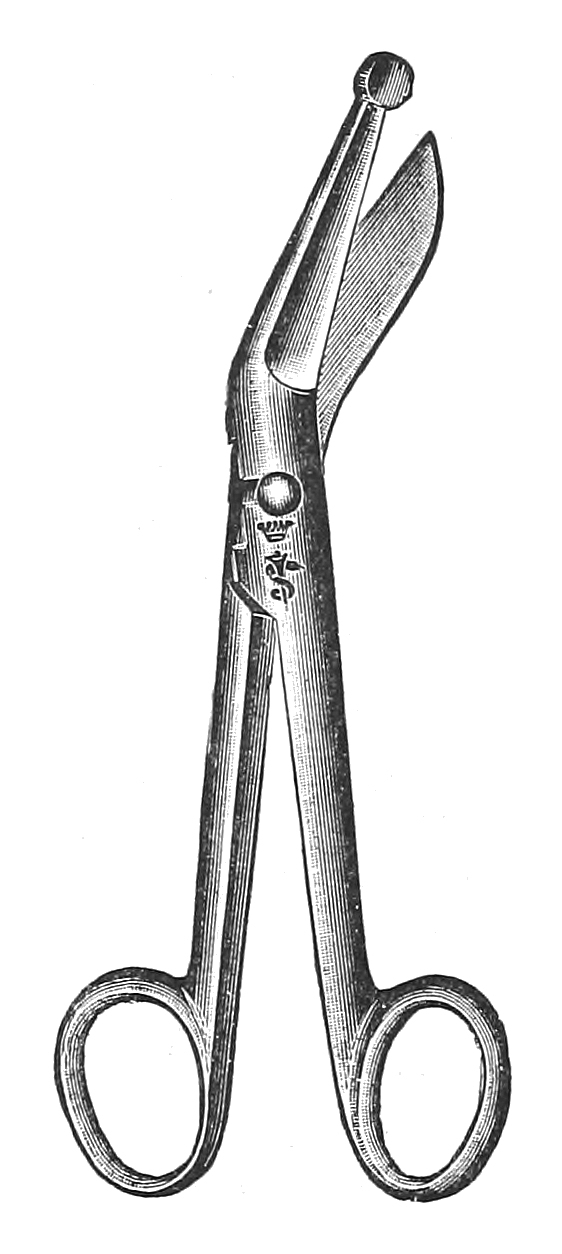
Fig. 20. BANDAGE SCISSORS
Cuticle scissors are useful in many chiropodical procedures. Fig. 18 shows a four-inch, lance point curved scissors. Fig. 19 shows a four and three-quarters inches straight pointed cuticle scissors.
A small bandage scissors, (Fig. 20) should be included among the podiatrists’ instruments. It is not necessary to have a large pair, but one about four and one-half or five inches in size is very useful.
The Hypodermic Syringe. The choice of the hypodermic syringe is purely a matter of preference, but certainly an all-glass syringe (both barrel and piston) appears to be more practical from the standpoint of use and of sterilization. The metal barrel syringe is fast going out of use excepting of the type in which no washers are employed. A syringe having a capacity of 2 c.c. is ample for the use of the podiatrist (Fig. 21).
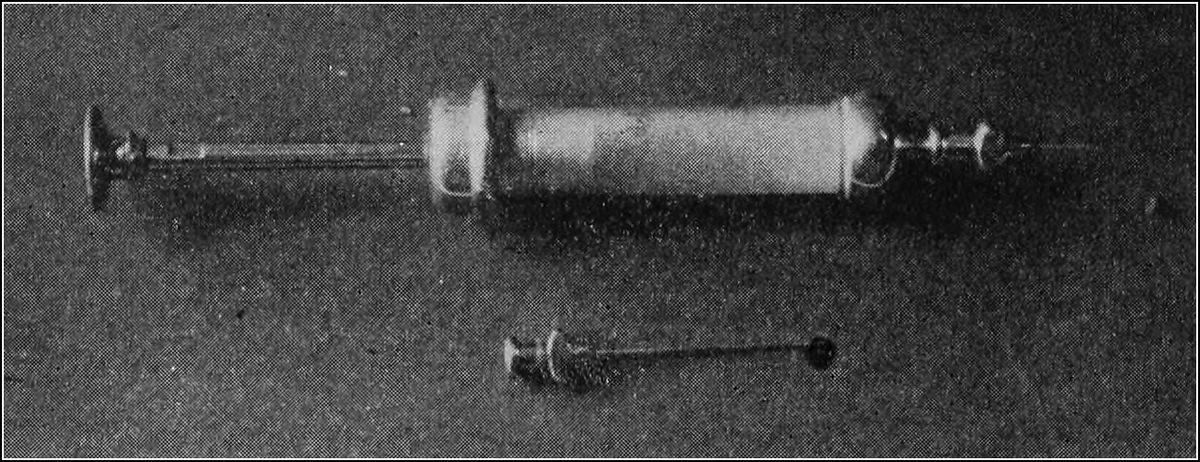
Fig. 21. HYPODERMIC SYRINGE
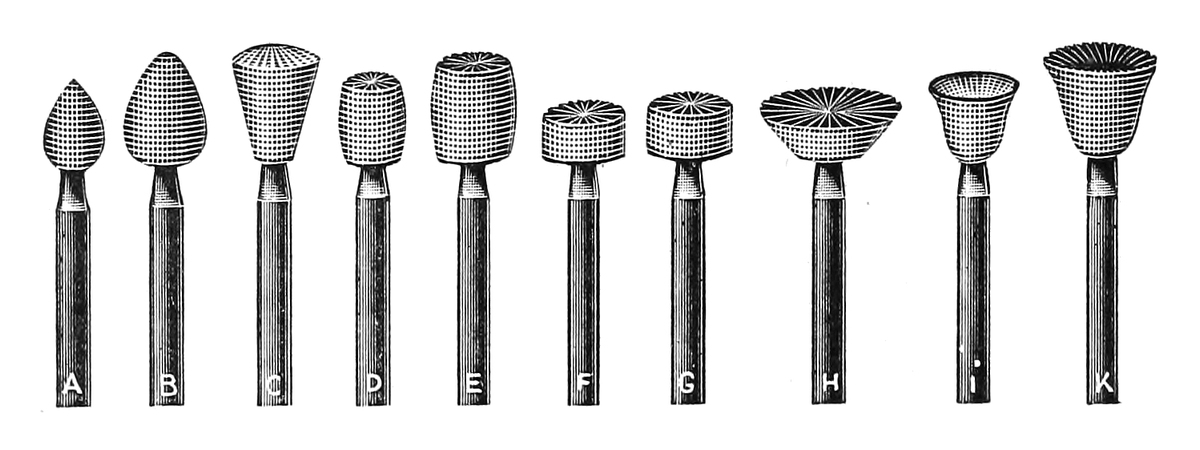
Fig. 22. ROUGH CUTTING BURS
The Rotary Drill. One of the greatest boons to modern podiatry is the development of the rotary file or drill for their use. This instrument has become so all important in the treatment of many nail diseases, and, in fact, in the prophylactic treatment of the normal nail, that we may well wonder how any results were obtained before its advent.
It is not the purpose of this chapter to go into the mechanism of the drill, but the selection of burrs is a subject which is of such importance as to merit mention.
Fig. 22 shows several varieties of rough or “cutting” burs for use in grinding down club nails. In this group “B,” “D” and “E” are particularly practical.
Finishing burs are those used to smooth off the nail after the use of a cutting bur, for filing the edges of a normal nail, or for thinning the nail in prophylactic treatments (Fig. 23).
The Nail File. The hand file, for smoothing the edge of a nail after clipping (Fig. 24), should have a smooth and a rough side. The rough side is used in cases where the use of a drill is impossible.
Toe Separators. These are appliances used for the purpose of holding the toes apart while operating between them. The implement shown in Fig. 25, depends upon the tension of the heavy wire for its efficacy. There is also an appliance used for similar purposes which is dependent upon a screw adjustment.
Fig. 23. FINISHING BURS
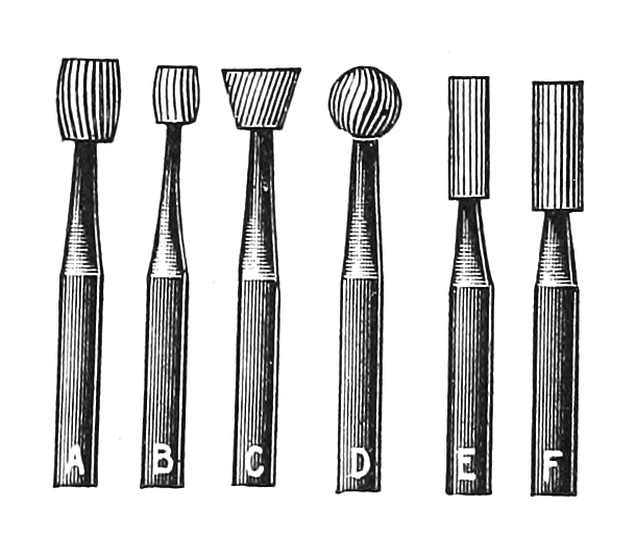
Fig. 25. TOE SPREADER
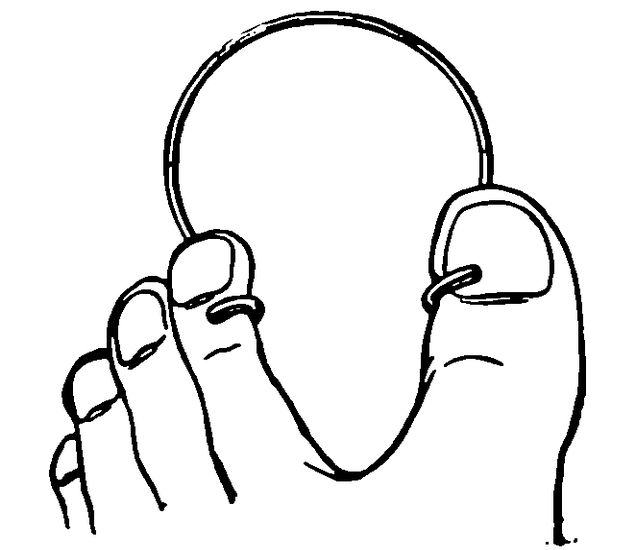

Fig. 24. HAND FILE (SHOWING ROUGH SURFACE)
Applicators. Applicators, used for solutions, may be obtained in metal and in wood. Those of metal have a short hexagonal handle and are corrugated at the distal end so that cotton may be wound about them.
The wooden applicator is a small round stick about six inches long. Such applicators are more practical than those of metal, for they may be thrown away after use. The metal applicators corrode after several applications of a corrosive drug and soon become useless.
The Skiving Knife. The choice of a knife for the manufacture of shields of felt or buckskin depends principally upon the fancy of the user. Some prefer an all-metal, flat-handled knife similar to those used by leather workers (Fig. 26); others find it more practical to employ a blade set in a larger wooden handle, claiming that more purchase can be brought to bear upon the material to be cut, and consequently more accuracy is obtained. An instrument, known commercially as the “Murphy” knife, is a practical example of this latter variety. It has a wooden handle about four inches long, and a blade of similar length. The cutting edge is narrow toward the point and gives the operator a bias edge with which to do his cutting. The all-metal knife blade is similarly slanted. Skiving knives need not be made of the finest, highly tempered steel, and the edge placed upon them, when honed, need by no means be a “razor” edge.
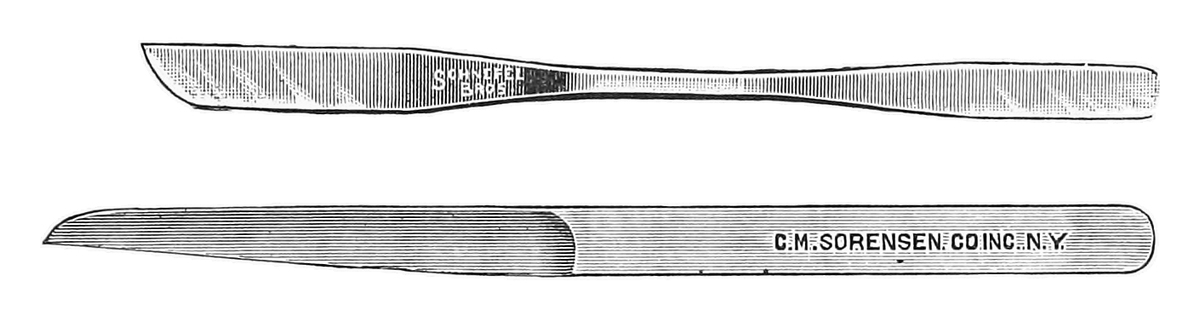
Fig. 26. SKIVING KNIVES
CARE OF INSTRUMENTS
Instruments need care just as do any fine machine. Knives and other pieces of fine metal will rapidly lose their usefulness unless proper and unceasing care is taken of them.
Honing. Nearly every chiropodist at the present time hones his own knives or chisels. This is an art which comes naturally to some but usually is only developed through constant practice. The first important point that needs to be considered in this connection is the selection of a hone. A hone is a plane true block of fine compact stone for sharpening edged tools, and there are a number of these which may be used for podiatry instruments.
The Belgian Hone is in all probability the most popular of the sharpening stones and when genuine and of fine quality, they are superior to all other forms of stone. One of the principal drawbacks in the purchase of a hone of this variety is the fact that many are manufactured of a composite substance which is extremely hard and upon whose surface no impression can be made with the instrument. All hones should be fairly soft, so that the knife blade, as it is drawn across the surface, will take hold, and not “rough” or “gritty.” Any stone which has a tendency to roughness or coarseness will never put a real fine “razor” edge on a delicate instrument.
The Swatty Hone has been popular for years among barbers and others who are called upon to use razor-like blades. The one disadvantage in the use of this variety of stone is that they are hard, and considerable honing is needed to place a proper edge upon the instrument.
The Oil Stone is used more particularly for heavy instruments not demanding a fine surface for finishing. Skiving knives and the like may be successfully sharpened on stones of this kind. Some practitioners prefer to “rub down” an instrument on an oil stone or a “carborundum” stone and then smooth the edge or “finish” it on a genuine old rock Belgian hone. Carborundum hones cannot be obtained, as a rule, fine or smooth enough for real delicate work on podiatry instruments, but they are efficient for heavier instruments.
Technic of Honing. Having selected a stone the block is placed before you on a table. The knife is grasped firmly by the handle with the thumb and the third, fourth and fifth fingers. The second or index finger is placed at the junction of the blade with the handle on the upper surface. The blade of the knife is now laid upon the hone in such a manner that it is flat upon the stone’s surface, and, using the whole forearm, the fingers and wrist remaining stationary so that the angle of the blade remains unchanged, the blade is drawn in an oblique (right to left) direction toward the operator’s body. It must be remembered that the blade be drawn obliquely for if it be drawn straight no edge will be placed upon the instrument.
Having completed this oblique stroke, the whole instrument is turned in the hand and laid upon the stone so that the other side of the blade is now upon its surface. An oblique (left to right) stroke is then made toward the operator using, as before, the whole forearm. This stroke having been completed the whole procedure is recommenced.
The marks appearing on the blade of the knife caused by contact with the hone, plainly tell the operator whether or not he has the proper angle or whether he is holding the blade at the proper level through its long axis. Testing the sharpness of the blade on the finger-nail or skin, or judging from the appearance of the contact marks, tells the operator whether or not the instrument be sufficiently sharp.
Do not overhone! This is a bad fault and will develop a “wire” edge on the instrument which may take hours to remove. An edge may be “wired” also by continued heavy pressure during the honing process. This should also be avoided. Usually several heavy strokes on either side of the blade, followed by a series of lighter ones, is sufficient to place an instrument in serviceable condition for a considerable period of time.
Polishing. Instruments which are subjected to boiling sterilization are bound to become discolored (not rusted) no matter what chemical may be put in the water to prevent this condition. For this reason it is found necessary, if the brightness of an instrument is to be retained, to clean or polish it from time to time.
Scrubbing with sapolio or some similar substance, not too gritty, will serve to remove most of the stains but the labor occasioned by a procedure of this kind is considerable and is greatly lessened by the use of a motor buffer or polisher. In cases where rust stains are present, this machine is indispensable, for no amount of manual rubbing will remove these marks. The buffer wheel should be of some soft material, usually chamois, bound firmly. Machine buffing can never be used on delicate, sharp blades, as it will ruin whatever edge may be present. Handles may be cleaned efficiently as can scissors, thumb forceps, and similar instruments by this method.
Wiping. After an instrument is removed from boiling water it must be thoroughly dried if it is to be kept in good condition. The ideal sterilizer is one combining a superheated steam chamber, or a water boiling receptacle, and a dry hot air chamber for drying the instruments after sterilization. If such an apparatus is not included in the podiatrist’s equipment, the instruments must be thoroughly wiped until dry. This must be done with a sterile wipe to maintain surgical cleanliness and the process must be thorough.
Care must be exercised in using superheated steam as a sterilizing agent that the instrument does not remain for too great a length of time in the vapor. Boiling water can only reach 212° F., and an instrument will stand subjection to this degree of heat for a considerable time, but steam is often heated to twice this degree and this terrific temperature is bound to untemper an instrument which is allowed to remain in the vapor over 30 or 40 seconds.