Chapter XXIII · LOCOMOTION AS AN AID IN DIAGNOSIS
Reading edition
One need not be a very experienced physician to know that there is a group of diseases, mostly of the nervous system, which at a certain point of their evolution, stamp the sufferer with a characteristic mode of locomotion. To observe such a modification of the normal walk is often sufficient to make a correct diagnosis.
It is strange, however, how little attention this important subject has received from the medical profession. In fact, other than the work of the brothers Weber, who established the physiology and mechanism of human locomotion, of Neugebauer and of Gilles de la Tourette, who developed the ichnogram method of gait study, scarcely anything of importance has been done along these lines for the last quarter of a century. The study of the mode of locomotion in various diseases and ailments remains, therefore, a fertile field of research for the podiatrist.
Elements of Locomotion. The act of locomotion or the power of progression is not a simple one. Various co-related movements combine to form what we ordinarily term the walk. The three chief elements are: (1) Posture, (2) Station, and (3) Gait. These three factors may be influenced by local or general diseases, either separately or together.
Posture. Posture is the term applied to the position of the body in space and is not of much interest to the podiatrist except as corroborative of the two other elements of locomotion. It has, however, its value in diagnosis and the new practitioner of podiatry will do well to learn to observe the position of the body at various angles and in various diseases. One should learn early, for instance, that immobility is not always due to paralysis. It may be due to pain, as in rheumatism or to a disinclination to move as in scurvy, rickets or any condition causing dyspnea. The restlessness in fevers and in large hemorrhages, as well as the throwing about in renal, gallstone or intestinal colics, is known to all. Equally characteristic are the agitation and irregular movements in chorea and hysteria; the gun-hammer posture in cerebrospinal meningitis, and the opisthotonos in tetanus and strychnine poisoning.
Station. Station is the power of standing more or less firmly on one’s feet. It includes attitude which is the manner of standing, i.e., the relation of the rest of the body to the erect position. The carriage of the head and shoulders should be noted; the shape of the entire body whether bending forward, as in “stooped shoulders” (faulty attitude habit) and in paralysis agitans, or bending backward, as in ascites and abdominal tumors, should be closely studied and differentiated from the actual lordosis which is seen in spinal diseases, in advanced pregnancy, in pseudo-hypertrophic paralysis and in cretinism. The strictest attention should be paid to the attitude of the lower limbs, their individual shapes and their relation to each other when the erect position is assumed. The degree of firmness with which the individual stands should always be taken into consideration before a final diagnosis is made. Swaying is the term applied to any departure from the ideally rigid erect attitude and perpendicular station. The normal individual, with eyes open and heels close together, sways about one inch forward and three-quarters of an inch from side to side. In functional and static ataxias, the swaying may become so extreme as to produce absolute incapacity to stand.
Gait. This term means the specific manner of walking. It is a narrower term than locomotion which is the power of walking. It is, however, the chief factor in the act of progression and in the majority of cases it is characteristic enough to stamp itself indelibly on the normal as well as on the diseased individual. While in character reading, gait expression may not be as popular as face expression, it is often more reliable and in certain diseases it is simply invaluable as an aid in diagnosis.
METHODS OF DIAGNOSIS
A.—The Observation Method. This is the usual method of ascertaining the gait of an individual. It is practised by the average physician and podiatrist and consists in observing the patient while he or she walks up and down the room, taking notice of the peculiarities of gait which may develop. The patient may be allowed to roam freely about the room or should be directed to follow a carpet seam or a crack in the floor at right angles to a previous line of vision. This may be varied by opening or closing the eyes, stretching out the arms, with legs wide apart, or keeping them close together. Brisk walking should alternate with a slower gait and the effect of stopping abruptly and turning sharply at command should be closely observed.
It is best to have the patient uncovered from the hips down. In women, the nightgown or chemise can be pulled tightly between the thighs and fastened anteriorly with a safety pin.
Caution. Due allowance should be made for nervousness and a careful watch must be maintained against a serious fall.
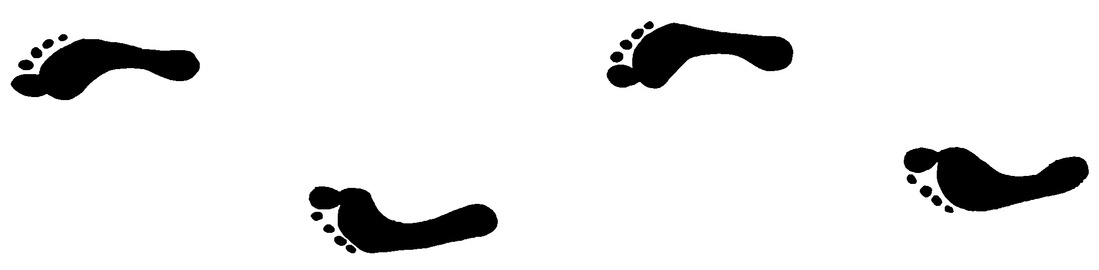
Fig. 1
ICHNOGRAM OF A NORMAL GAIT
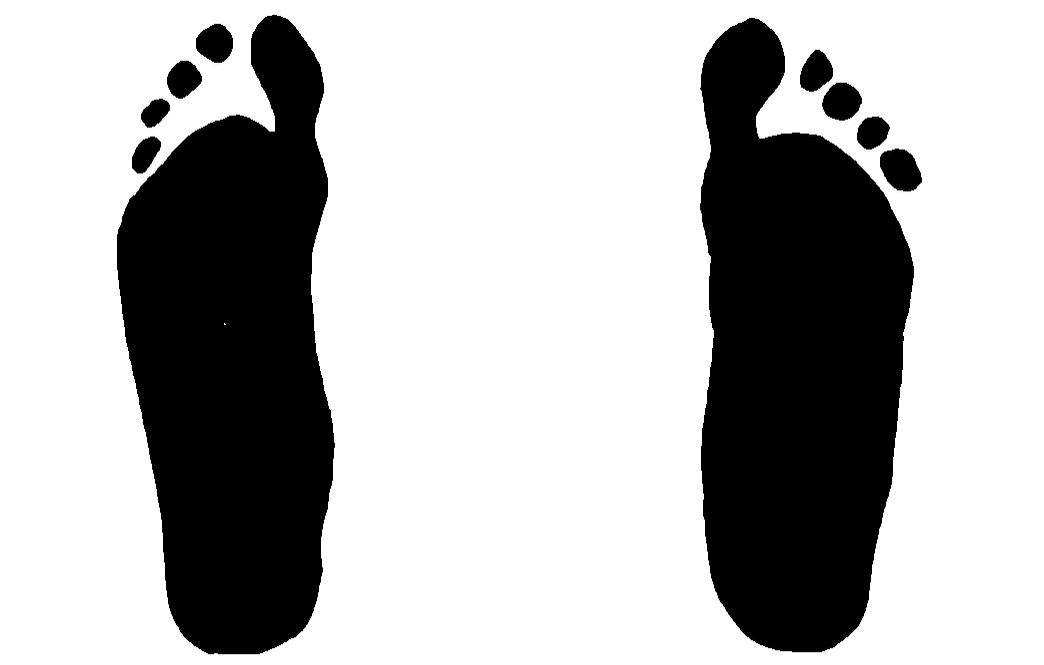
B.—The Ichnogram Method consists in studying the impressions left by both soles (previously colored) when walking on paper for a distance of about twenty-five feet. Ichnograms (from the Greek—ichnos—trace, and gramma—to write) as a method of gait diagnosis are more exact than the method of observation and should supplement it. Besides, they inform us, at the same time, of the state of the plantar arch as each pelmatogram (the impression of a single foot) shows more or less clearly a posterior oval which changes but little, and an anterior oval as well as toe marks which undergo characteristic contour changes, depending on the state of the ligaments, of the tarsal and metatarsal bones and phalanges, and the relation of these structures to the musculature and innervation of the foot.
Comparatively little has been accomplished along this line of endeavor, although it offers a vast and fruitful field for podiatric research. In fact this branch of podiatry deserves a special treatise, and it will be discussed in fuller detail in our forthcoming book on Podiatry Orthopedics.
Fig. 2 A. PELMATOGRAM OF A NORMAL FEMALE FOOT B. MODIFIED PELMATOGRAM SHOWING WEIGHT BEARING POINTS
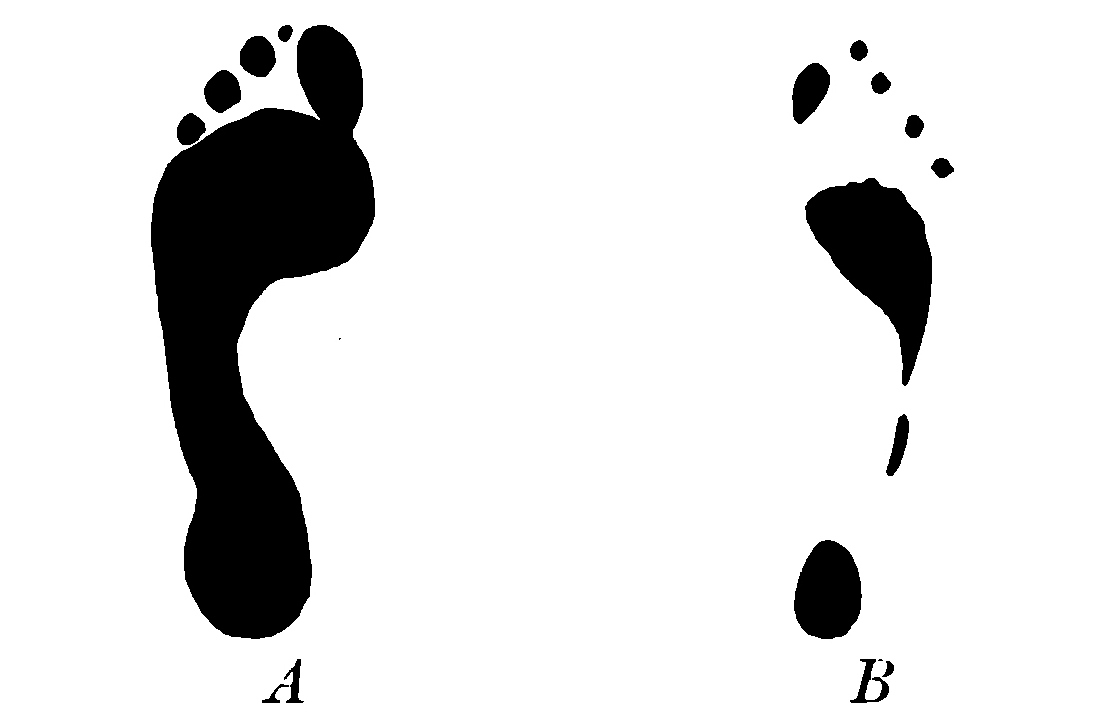
Fig. 3 PELMATOGRAM OF A MALE, SHOWING FLAT FOOT
Classification of Gaits. Strictly speaking there are only three types of gait: (1) the paretic, (2) the ataxic and (3) the choreic. In some diseases there may be a combination of the three, while in others one type of gait predominates during the early stage and another during the later developments. At times, one comes across a gait that combines characteristics of the three types and hence is difficult of classification.
I.—Paretic Gait. Paresis means a lessening of the normal motility of a muscle, while the term paralysis denotes entire absence of motor power. We may have, therefore, two or three distinct paretic gaits according to whether the muscle is slightly or severely weakened or entirely paralyzed:
A.—The mild paretic gait. B.—The moderate or flaccid paretic gait. C.—The severe or spastic paretic gait.
A.—The Mild Paretic Gait is caused by muscular weakness due to a large number of etiologic factors. It results in slowing of locomotion, the steps being shortened on account of an exaggerated flexion at the knee joint. The following are examples of mild paretic gaits:
(1) The Pompous Gait. The upper part of the body leans backward, the back is hollowed, the abdomen is protuberant, the feet are widely separated and appear to move with deliberation and dignity, giving the impression of conscious importance—hence the name. This gait may be seen in obesity, pregnancy, ascites, large abdominal tumors, cretinism and rickets.
(2) The Hobbling Gait. The pelvis tilts towards the sound side, while the trunk leans over to the affected side, causing more or less pronounced limping. This gait is seen in people afflicted with corns, rheumatism, gout, sciatica, plantar neuralgia, Morton’s neuralgia, metatarsalgia, hip or knee joint disease or injury (recent or old), sacro-iliac disease, sprains, inflammatory diseases of the lower extremity, chimatlon, short leg, paralysis of one leg, abdominal aneurism, and subacute and chronic appendicitis.
(3) Intermittent Limping (disbasia angiosclerotica or intermittent claudication) may be classified here and is a curious limping gait which develops in arteriosclerosis of the lower extremities. There are pain and fatigue on walking, which disappear after a short rest, to reappear again soon after walking is resumed. The pulse is weak or absent below the knee.
(4) The Waddling or Goose Gait. The pelvis and head of femur are jerked forward at each step, knee advanced and extended only after foot is flat upon the ground. There is more lordosis and swinging of the body from side to side at each step, than in the pompous gait. It resembles the gait of a goose. The patient cannot stand on tiptoe. It is seen in: congenital dislocation of both hip joints and in pseudo-hypertrophic muscular paralysis, a hereditary disease seen mostly in boys under ten years of age, and characterized by inability to get up from the floor.
(5) The Wobbly Gait. Resembles the above and is due to atrophy or paralysis of the three glutei muscles and prevents the patient from climbing. This inability to climb is also seen in those exhibiting the waddling gait.
(6) The Tottering Gait. Seen in those who have taken large doses of bromides for long periods; also in hydrocephalus, in Korsakoff’s disease (psychosis polyneuritica) and in idiopathic muscular atrophy.
(7) The Shuffling Gait is the gait seen in normal old age or senility and is associated with slowly progressive loss of strength and mentality. It is also seen in general paresis and is the “normal” gait of the long-term prison inmate. The patient gives the impression of being too lazy to lift his feet and instead pushes them along with his legs.
(8) The “Charlie Chaplin” Gait has been erroneously described as an ataxic gait. It is rather a combination of the “funny part” of several gaits in which the waddling, shuffling, tottering paretic gaits predominate and to which some elements of the spastic paretic, as well as the ataxic gaits, have been added. The inspiration must have come originally to the celebrated movie star from some waddling cripple whom he proceeded to imitate and later burlesqued.
B.—The Moderate or Flaccid Paretic Gait. In this form of the paretic gait there is commonly a paresis of a certain group of muscles, usually the extensors of the foot or the peronei, causing “toe drop” and apparent lengthening of the affected extremity. It corresponds to the “wrist drop” of the upper extremity. To compensate for the lengthening of the limb, overflexion at the hip or knee, or at both joints, takes place. The limb is flaccid or flabby.
The foot is lifted high up with each step in order to raise it clear off the ground and avoid tripping. As the foot is brought down, heel first, this gait may sometimes be confused with tabes and is therefore sometimes referred to as the pseudo-tabetic gait. It is, however, easily differentiated from the true tabetic gait by its characteristic “high action” or “high stepping” quality which made Charcot compare it to the gait of a horse and hence called it:
(1) The Steppage Gait, mostly seen in the chronic intoxications producing neuritis. It resembles the gait of a man walking through thick grass or brushwood and stepping over constantly recurring but non-existent obstacles. The typical steppage gait is seen in arsenical neuritis with ankle drop, also in alcoholic neuritis, polyneuritis potatorum (ataxia of drunkards) and in lead neuritis (lead palsy, plumbism, saturnism), in which first the peroneal muscles are affected, later the extensor communis digitorum and finally the extensor proprius hallucis. Phosphorus, copper and grain (ergotism) poisoning may give rise to a neuritis in the lower extremities and produce the characteristic steppage gait. Tuberculosis, malaria, diabetes and diphtheria (motor form) may sometimes produce this gait. It may also develop as a sequel of sunstroke (thermic fever, insolation) and in fact following any disease which will cause peripheral neuritis of the anterior tibial nerve.
(2) The Prancing Gait is an exaggeration of the preceding gait. It is seen in epidemic anterior poliomyelitis (infantile paralysis) when the disease affects the anterior horn cells of the lumbar cord, causing atrophy of the extensor muscles of the foot, resulting in “foot drop.” It is also seen in acute ascending paralysis (Landry’s disease), which is probably a form of poliomyelitis, and in progressive hereditary muscular atrophy of the leg (Charcot-Marie-Tooth type) where the muscles of the leg, not the foot, are primarily affected, i.e., first the peronei become atrophied, later the extensors of the toes and finally the calcaneal muscles. Finally the prancing may be seen in connection with certain tumors of the cord, unilateral hip disease, dislocation or injury and in multiple neuritis and beriberi (epidemic multiple neuritis).
C.—The Spastic or Severe Paretic Gait. The spastic gait is due to the hypertonicity of the weakened muscles, the resulting stiffness causing a slowing of locomotion and diminished excursion of the affected limb. The hypertonicity is produced either by direct stimulation of the motor cells in the anterior horn of the spinal cord, as in traumatic myelitis, or by impulses coming down from the cerebral cortex. The limb is spastic or rigid, due to the tonic spasm. When the tonic spasm is of long standing, it is termed a contracture. The lower extremity moves as a whole, the toes clinging to the ground, scraping it and very often “catching.” Contrary to the moderate paretic gait, this group presents difficulty in flexion which is partly overcome by the elevation of the pelvis on the side of the swinging leg.
(1) The Mowing or Hemiplegic Gait. This is the prototype of all spastic gaits and is encountered in its simplest form in all hemiplegias, i.e., in paralysis of one side of the body, which may be caused by cerebral hemorrhage, embolism, thrombosis, syphilis, brain tumor, multiple sclerosis of a cerebral hemisphere, meningeal hemorrhage or suppuration, Raynaud’s disease, general paresis of the insane; sometimes it may be due to hysteria (functional hemiplegia) or to uremia (transient hemiplegia). No matter what the cause of the hemiplegia, there is always the typical mowing gait. This mowing movement is due to the fact that the spastic limb swings lateralward, describing an arc of a circle (outward), and strikes the ground in a flail-like manner. Technically speaking, circumduction takes place by tilting of the pelvis and the swinging of the foot outward and around to the front. The patient afflicted with hemiplegia makes the same movement with his limb as does the reaper with the hand in which he holds the scythe. Exception: the only paralytic gait in which there is no mowing movement occurs in hysterical (functional) paraplegia, which is very rare. In this condition the leg is dragged forward instead of outward.
Important shoe sign in paraplegia. The sole of the shoe is worn down on the inner side.
(2) The Small-step Gait (la marche à petits pas). This gait is seen in cerebral softening following an apoplectic stroke, especially in pseudo-bulbar paralysis; the steps are very short and the feet are lifted from the ground with difficulty, the patient seeming to count his steps.
(3) The Cross-legged Gait. This gait is due to a spasm of the adductors of the thigh causing the knees to rub against each other, resulting in cross-legged progression, the lower limbs having a tendency to cross during locomotion. It is seen in both Little’s congenital and Erb’s syphilitic form of lateral spinal sclerosis. In the syphilitic form, a dragging and shuffling gait is often associated with the cross-legged type.
(4) The Ill-defined Spastic Gaits. Ill-defined spastic gaits are seen in tetany (paroxysmal tonic spasm) from any cause, and in amyotrophic lateral sclerosis, which is the spastic form of progressive muscular atrophy (Charcot’s disease). This involution disease, due probably to developmental defects of the lateral pyramidal tracts, has the combined symptoms of spastic spinal paralysis, anterior poliomyelitis and bulbar palsy, hence the difficulty in classifying it. Myelitis (inflammation of the spinal cord) may be due to trauma, alcoholism, syphilis, vertebral caries (compression myelitis), tumors, aneurism, hemorrhages into the cord, etc., and will exhibit various gaits according to the stage and severity of the disease. It may begin with a mild paretic gait passing through several stages of the spastic gait or to complete paraplegia (paralysis of both lower extremities). In complete paraplegia there is of course no gait, as the patient cannot walk, there being a loss of the power of locomotion but not of progression (a patient so afflicted may still move from place to place on his hands).
(5) The Dragging Gait. In hemiplegia one foot only is dragged. Dragging of both feet is seen in multiple neuritis, hereditary peroneal atrophy, spasmodic spinal paralysis and spinal and syphilitic spinal paralyses.
(6) The Dromedary Gait, so called on account of its resemblance to the gait of a camel, is seen in children suffering with progressive torsion spasm (Flatau-Sterling disease).
Finally, spastic paretic gaits are often observed in pellagra (maidism, Italian leprosy, Alpine scurvy) and in lathyrism (lupinosis), where the slow toxic spinal sclerosis finally leads to spastic paraplegia and loss of the power of locomotion; also in caisson disease (divers’ paralysis).
II.—The Ataxic Gait. The ataxic gait may be either:
A—The Static ataxic gait, or B—The Functional ataxic gait
and these are termed either (1) spinal or (2) cerebellar, according to the location of the lesion.
A.—The Static Spinal Ataxic Gait is the most easily recognized gait, and once seen, is never forgotten. There is an exaggeration of all the movements of locomotion. The hips are overflexed and rotated laterally, the foot is raised suddenly and too high, the toes are lifted and the whole limb is thrown suddenly forward with unnecessary vehemence and is then brought down heel first or flat-footed, with a stamping sound. The feet are kept wide apart and while in the air they move in an undecided manner, as if the patient was doubtful where to put them. The eyes of the afflicted person are glued to the ground or fixed to the limbs so as to supplement the lack of muscular and articular sensation by the sense of sight.
In the cerebellar type of this gait the movement excursion is not as extensive as in the spinal type. A sudden turning movement or an abrupt sitting posture is difficult or impossible to assume in this type of locomotion.
In order to test static ataxia, the patient is made to stand heels and toes together, whereupon marked swaying takes place. The swaying is increased when the eyes are closed and the patient looks like a “chicken on a clothes line.” If there is more than one inch forward swaying and more than three-quarters of an inch lateral swaying, the patient is considered ataxic.
In the disease known as tabes dorsalis, or locomotor ataxia of syphilis, the swaying may be so pronounced as to produce absolute incapability to stand or to walk.
B.—The Cerebellar (functional) Ataxic Gaits. These gaits are produced by a disturbance of the equilibrium accompanied by vertigo resulting in a very irregular swaying from side to side, resembling the gait of an intoxicated person.
The patient makes short steps, keeps his feet wide apart, staggers, rolls, sways to and fro and reaches a set point by zigzagging toward it. The swaying is relieved when support is given under the armpits.
(1) The Titubating Gait is a form of functional cerebellar ataxic gait seen in the following affections: Friedreich’s (disease) ataxia; hereditary cerebellar ataxia; dementia paralytica; ataxic paraplegia; labyrinthine disease and to some extent in vertigo; syringomyelia; and in some cases of general paresis, and various chronic intoxications like lead or arsenic or alcohol poisoning affecting the cerebrospinal system.
(2) The Reeling or Staggering Gait is seen in acute alcoholic intoxication and Mésnière’s disease (disease of the middle cerebellar lobe).
III.—The Choreic Gait. The choreic gait, sometimes called tremor gait, spasmodic or hysterical gait, is very variable in quality depending on the cause of the tremor. It consists of a series of quivering or trembling movements of varying intensity, but nearly all due to clonic spasm and disappearing during sleep or passive motion. This distinguishes it from the spastic or paraplegic gait in which the spasm is tonic in quality, lasting from one minute to one month. The clonic spasm, on the other hand, consists in rapidly alternating contractions and relaxations of the muscle.
(1) The Stumbling Gait is seen in chorea (St. Vitus’ dance) and Huntington’s (hereditary) chorea, in Friedreich’s paramyoclonus multiplex (which is not to be confounded with Friedreich’s ataxia), in Unverricht’s progressive myoclonus, and in multiple sclerosis of the spinal cord. The gait resembles that of a schoolboy, who clownishly stumbles or trips over his heel to attract attention. Technically it consists of spasmodic adduction, extension and outward rotation of the legs which soon renders locomotion impossible. When these abrupt twitchings and jerking movements, which are involuntary and purposeless, affect only one-half of the body, we speak of the condition as hemichorea. The patient appears restless, unsettled and fidgety.
(2) The Festination Gait is typical of the disease known as paralysis agitans (Parkinson’s disease, shaking palsy) and is an advanced choreic gait in which there may be observed the curious phenomena of propulsion and retropulsion, i.e., the impossibility of stopping, once the patient is pushed either forward or backward. In some instances, when pulled suddenly backward, the patient will take a few backward steps with increasing rapidity, also the body remains in the characteristic posture of paralysis agitans; namely, in the forward-leaning attitude. In festination “the body tries to overtake its centre of gravity” (Trousseau).
(3) The Saltatory Gait (“The jumpers”), is a very rare condition occurring the instant the weight of the body is put upon the feet. It consists in strong and rapid contractions of the muscles of the thigh and leg causing the patient to jump up violently. It is probably a hysterical spasm.
(4) The Myotonia Gait occurs in Thomsen’s disease and consists of tonic, painless spasms whenever a certain group of muscles begin to functionate. The steps are first checked and delayed; but this gradually wears off. This curious condition returns again when the same group of muscles are called into action. Owing to the tonic spasms, this gait might have been properly classified as a spastic paretic gait, were it not for the fleeting and irregular character of the spasticity.
(5) The Hysteria Gait, known also as astasia-abasia, is notable by the ease with which it may simulate any and all of the gaits described above, the spastic as well as the flaccid types of paralyses,—even the cross-legged gait, ending in complete inability to stand or walk. It differs from all of them, however, in the ability of the patient to perform all the nervous functions of the limb when lying in bed. The hysterical gait may also end in:
Catalepsy which is a state of muscular rigidity enabling a limb to maintain a posture in opposition to gravity for one hour or more (waxy flexibility). This curious phenomenon of retaining the leg or any other part of the body in a fixed attitude (given to it by the operator) is sometimes seen in catatonia, general paresis, brain tumors and, (rarely) in meningitis.
(The above chapter was especially prepared for “Practical Podiatry” by Paul Luttinger, M.D., Professor of Bacteriology in The First Institute of Podiatry. It is the first compilation of its kind ever published and should prove a valuable aid to both practitioners of medicine and of podiatry—Editor).