Chapter XII · VERRUCA
Reading edition
Verruca, sometimes called papilloma, is an innocent or benign tumor, containing many blood vessels, and is an overgrowth of all the layers of the skin including the derma. It is usually found on the hands and feet, but other parts of the body may become affected, particularly the face.
Verruca, like other innocent or benign tumors, does not penetrate into the surrounding tissues, and is encapsulated. Those found on the foot are divided into two classes, (1) the verruca arida, or dry wart, and (2) the verruca humida, or moist wart.
The common wart found on the hands and fingers, is a form of verruca arida and is called verruca vulgaris. There are many other names used to designate verruca, but these are only indicative of the location, shape or consistency of the growth, which, as stated, is either of the arida or humida variety, and additional nomenclature tends to confuse the student. Among these are the verruca plantaris, verruca calcis, verruca metatarsalis, verruca lobosa, verruca fibrosa, verruca digita, etc.
Synonyms. Papilloma, Wart. Fr. verrue.
Derivation. Verruca is derived from the Latin, meaning wart.
Etiology. There is no general agreement among pathologists as to the cause of verruca. The older theory held that verruca was due to want of normal power within the integument. Some claim it to be due to a microorganism, while others assert that it is caused by irritation or injury. The latter reason seems to be the most reasonable one, since the patients who have been questioned thoroughly, all seem to give a history of trauma or of some chronic irritation.
Some verrucæ seem to occur spontaneously and it becomes difficult to draw a line between those that grow in this manner and those that develop from an injury or from a chronic irritation. Predisposition seems to play an important part in the etiology of verruca, but irritation is surely a factor in most if not in all cases. This predisposition may lie in the peculiar structure of the tissues, which is of course, difficult to determine.
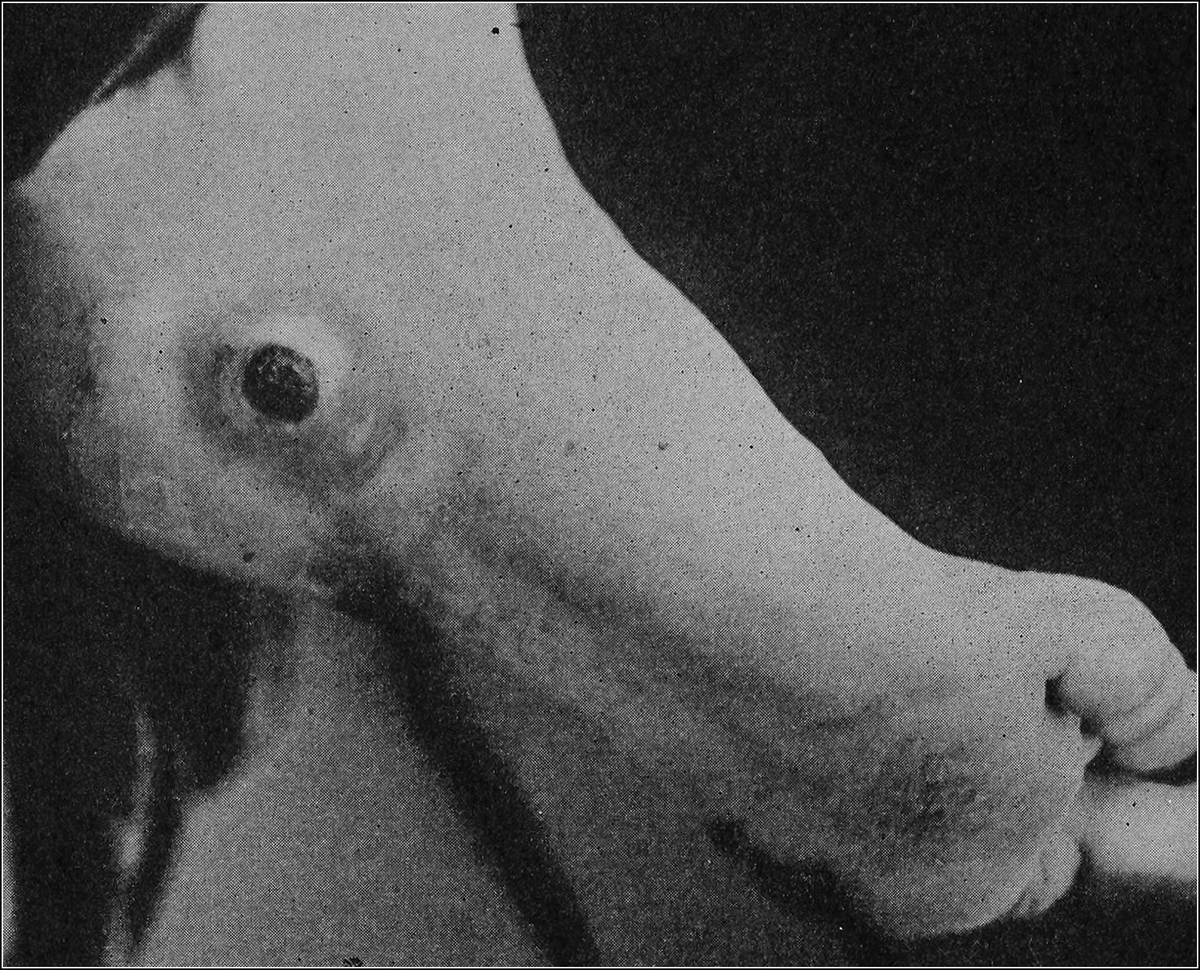
VERRUCA HUMIDA OR CALCIS
The fall and early winter, seem to be the time at which most cases appear, and their history seems to indicate that either there has been an injury or an irritation, such for instance as is produced in walking barefooted on the beaches, which occurred during the previous summer. Those who walk distances over rough roads in the mountains, or who wear thin-soled shoes and sneakers or hob-nail shoes, or who have stepped on a sharp stone, are most likely to develop verrucæ.
Verruca is found on the hands of young persons, and on the feet of adults, but only occasionally is this growth seen on the feet of children. This is undoubtedly due to the fact that young people use the hands in playing to a great extent, and in that way are subjected to irritation, whereas the shoes of adults, and the rigidity of the tissues in older persons cause the development of verrucæ on the feet.
Observation has shown that those of athletic bent, such as golfers, tennis players, base ball players, etc., are affected to a greater extent than those who follow a sedentary occupation.
Pathology. Verrucæ of all types are overgrowths of the derma covered with a somewhat hypertrophied epidermis, which is more granular and rougher than the normal skin. The wart may be only a simple, smooth, hemi-spherical elevation, or it may have a rough cauliflower-like appearance, sessile or pedunculated. These latter may be dry or moist and may be elevated above the level of the skin or flattened to the level of the normal surrounding tissue. The size varies from minute points to growths as large as a nut. They are somewhat pigmented and bleed easily.
Verruca may occur singly, as it usually does on the foot, or it may occur in groups, and there may be several such groups in widely scattered parts of the body. The most common sites are the hands, feet, neck, back and face. Warts also occur on the mucous membrane, particularly in the bladder, larynx, nasal chamber and the gastro-intestinal tract, in which locations they are commonly termed papilloma.
The structural essentials of verrucæ are the centre or ground work containing blood vessels and an epithelial covering. In the skin, the growth resembles the normal papillæ, all of these latter however, being greatly enlarged. There is hypertrophy of all the connective tissue cells, and in the growths that have a cauliflower appearance, a vertical section shows a branching arrangement. Each of the branches has a connective tissue frame work with an epithelial covering. The epithelium is of the striated-squamous type and shows a decided tendency to hornification. Distinct concentric whorls of horny epithelium, such as are seen in epithelioma of the skin, may be found in verruca. The amount of connective tissue ground work varies, in some cases being excessive, while in others the growth appears to consist entirely of proliferated epithelium. In these latter cases the resemblance to epithelioma is rather marked, but a distinction can be made by observing that the tumor grows outward while the malignant tumor grows into the deeper structures and there is always some connective tissue stroma present. This is important for the podiatrist to remember as it may often be necessary to distinguish between the benign and the malignant tumors of this type.
VARIETIES OF VERRUCA
Verrucæ of the hands and feet vary to a greater or lesser extent depending upon the location of the lesion. The shape of the growth differs with the amount of pressure brought to bear upon it, those of the hands being better defined than those of the feet.
The Verruca Vulgaris, or common wart of the hand, is found on the palmar and dorsal surfaces, more usually in children than in adults. They often appear in large numbers, and very often the forearms and elbows are affected. The lesion is an elevated, rounded, conical hypertrophy having an uneven top and resembling a cauliflower. The growth develops slowly, and in its beginning has the same color as the surrounding skin. Later in its formation it becomes darker and takes on a cracked, rough cauliflower-like shape. There is no pain manifested, but the growth bleeds easily upon being injured, due to its great vascularity.
The Verruca Arida, or dry wart of the foot, usually appears upon the plantar surface, over the metatarsals and on the ends of the toes. It is in reality a modification of the verruca vulgaris, which has been subjected to pressure. There is a distinct callous formation covering and surrounding the growth, and the entire mass has a flattened shape. At the ends of the toes on the dorsal surfaces and along the nail grooves, verrucæ which have a slight elevation often appear and are of the arida type.
The Verruca Humida, or moist wart, is found on the foot, usually on the heel and between the toes. It has a spongy, soft appearance, with a sharp line of demarcation separating it from the surrounding tissues; the centre of the growth is white and has a crater-like shape. It is sometimes covered by a layer of callous, which is spongy and blanched, much the same as that of an heloma molle. The sudoriferous excretions in those suffering with hyperidrosis or bromidrosis are the cause of the color and texture of these lesions.
Diagnosis. Verruca is an overgrowth of all the layers of the skin, and when it appears on places where it is not subjected to pressure of any great magnitude, its diagnosis is a simple matter. When, however, it appears on the foot, its true character is lost, and it may be confused with other lesions, notably epithelioma, syphilitic lesions and heloma vasculare.
The malignant epithelioma is occasionally seen as a warty growth, but it generally has adherent scabs, ulcerates superficially, and has a disagreeable odor. The surrounding tissues are infiltrated and severe and persistent pain is common. Innocent tumors of this type, after a long period, may become malignant; increase in the size of the growth, implication of neighboring glands, infiltration of adjacent tissues, plus the other symptoms of epithelioma, should be sufficient to arouse suspicion as they are indicative of the more serious developments.
Some lesions of syphilis taking on a papillary character, may be mistaken for verruca, but other indications of a specific condition are usually present so that when confusion as to diagnosis arises, the lesion may be readily distinguished if it be a luetic one. The smaller tertiary ulcers of syphilis that appear on the plantar surface of the foot often have cracked, uneven overgrowths around and on them, which upon superficial examination may be mistaken for verruca, but a negative Wassermann test (see Miscellaneous Foot Lesions—Syphilis) will make it possible for the practitioner to eliminate syphilis as a factor.
Venereal warts occur on the genitals only and need not be considered in this chapter.
Verruca and heloma vasculare are often confused, but inasmuch as the treatment is identical in both these lesions, an error in diagnosis is of no particular consequence. In heloma vasculare the affected papillæ, which are found in the hornified skin, are few in number and are confined to a limited area, whereas in verruca all the papillæ are affected and the entire growth is vascular.
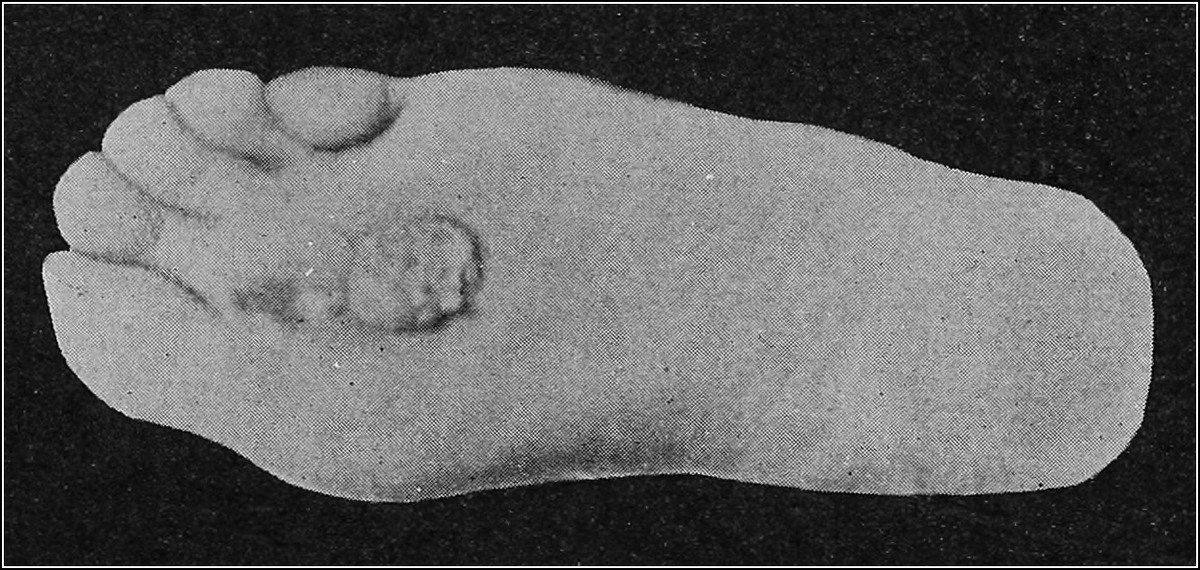
EPITHELIOMA
Prognosis. Some verrucæ disappear spontaneously, but those appearing upon the foot are persistent and painful, and require regular treatment to effect a cure. The growth will get well with proper attention and only when it changes its nature and becomes malignant, is the prognosis unfavorable.
Treatment. The treatment of verruca is more varied than the treatment of any other chiropodical lesion, and the practitioners using these different methods all seem to favor the one particular form with which they have had the most experience and the best results.
Treatment is generally effective, the percentage of failures being very small, notwithstanding the statement of those who expect immediate results, and not receiving them, claim failure on the part of the practitioner.
The various treatments are as follows:
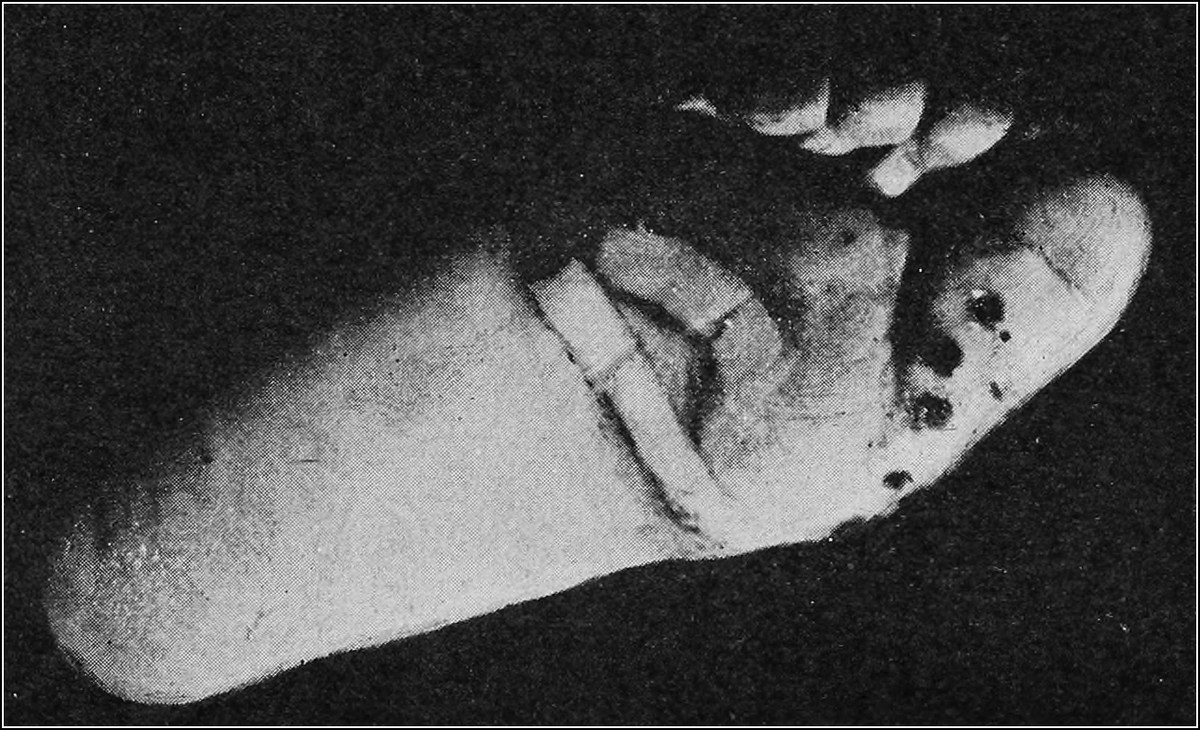
MULTIPLE VERRUCA
Potential Cautery—including the following chemicals: Nitric Acid, Acetic Acid, Monochloracetic Acid, Trichloracetic Acid, Salicylic Acid, Silver Nitrate, Potassium Hydroxide, Sodium Hydroxide and Pyrogallic Acid.
Excision. Fulguration. Electrolysis. Direct Cautery. Carbon Dioxide Pencil.
Potential Cautery. The treatment of verruca by the use of chemical agents which destroy the tissues to which they are applied, is unquestionably the most popular method of treating this lesion and is practised to a great extent by modern podiatrists. The tissues are destroyed in one of two ways, depending upon the chemical selected. The acid caustics destroy the tissues by oxidizing them, and the alkali caustics destroy the tissues by dehydrating them. Therefore the kind of tumor with which one has to deal is a factor in determining which caustic is best suited for rapid and certain cure. A verruca which is hard and dry will be easily destroyed by oxidation, whereas a verruca that is soft and moist will be easiest of removal by dehydration.
The selection of a particular chemical for removing a certain type of growth, is more or less a matter of individual choice on the part of the operator, as any one of the recognized remedies will suffice if the technic of its application be properly followed. A podiatrist who uses nitric acid for verruca arida, may just as well use trichloracetic acid and obtain equally good results.
Inasmuch as there are so many agents which one can use successfully, the authors have asked several well known practitioners of podiatry to state their technic in the treatment of verruca, and later on in this chapter their views will be found quoted verbatim.
The method of procedure for the treatment of verruca by the use of acid caustics generally is as follows:
The field of operation is rendered aseptic by means of a solution of bichloride of mercury (¹⁄₂₀₀₀) or a solution of alcohol, 60%. A sharp knife or chisel is employed to remove the callous that usually covers the growth. As soon as bleeding is observed, which is an indication that some of the capillaries of the tumor have been cut, a styptic, such as Monsel’s solution or powdered alum, is applied and readily controls the hemorrhage. The part is then thoroughly dried with sterile gauze or cotton, and the caustic selected is applied to the part. If an acid is used, a single drop is usually employed at each treatment. The patient, as a result, will complain of a burning sensation in the growth which persists from a few minutes to an hour, depending upon the amount of the acid absorbed. If the growth is dense, the absorption is lessened and more frequent treatments become necessary.
A properly fitted and skived shield of felt is then applied, with a hole large enough to prevent pressure over the affected area. No other medicament is required, nor is it necessary to cover the verruca. The acid forms an eschar which seals the lesion and prevents bacterial infection. The second treatment should take place forty-eight hours after the first, and the same procedure should be practised, including the asepsis. The treatments are continued every other day, daily, if possible, until the entire growth has been destroyed.
Unless great care is exercised, as the destruction of the growth continues and its size decreases, the acid coming in contact with the underlying healthy tissues creates pain of a throbbing character and later on pus is likely to form under the eschar. Some practitioners believe that both the pain and the pus are necessary precursors of the healing process, but neither is essential. They are both the usual concomitants of the later stages of this treatment merely because, as stated, it has been impossible to exercise the strict care desired.
When the growth has been destroyed, the eschar is entirely removed and if pus is present it is drained. Hydrogen peroxide is a most efficient agent for this purpose. The lesion is now treated much the same as any other ulceration, that is to say, by stimulants, balsam of Peru or ichthyol being the mediums usually preferred. The balsam of Peru used for this purpose should be diluted with an equal quantity of castor oil; the best method of applying ichthyol is in ointment form (25%) with vaseline as a base.
The treatment of verruca by means of the alkali caustics is much the same as with the acid caustics, except that the cauterization by the latter method may continue so as to destroy the entire growth at one treatment. This of course would prove even more painful than if done intermittently, therefore it is far better to treat the patient at several different times than to attempt anything quite so radical. The parts must be protected during the treatment and the subsequent ulcer invariably produced by this method, is treated the same as the ulcer frequently resulting from acid applications and previously described.
Nitric acid is extensively used in this condition in the pure state. The treatment of the eschar produced varies.
S. Rutherford Levy, of San Francisco, California, uses the nitric acid pure, and reports very favorable results. He removes the eschar after each treatment.
Alfred C. Moran, of Pawtucket, R. I., also favors nitric acid, but advises that the eschar be allowed to remain on the part until healing takes place or until signs of suppuration manifest themselves. He punctures the surface of the growth with a sharp instrument to assist the diffusion of the acid.
Albert E. Smallwood, a well known and busy practitioner of podiatry, of Pittsburgh, Pa., reports good results with the use of trichloracetic acid (Merck) and his modus operandi follows:
“Trichloracetic acid is a safe caustic and should be used full strength. A tooth pick is wrapped with a small piece of cotton and the latter is saturated with the acid. (The crystals of the acid are permitted to stand exposed to the air for a few minutes when they will deliquesce.) Apply the cotton thus prepared directly over the verruca, allowing it (the cotton) to remain in situ; then cover the growth and the cotton with a thin felt shield and fasten it with adhesive plaster. To prevent the acid from coming in contact with the normal tissues, the latter should be protected with oil or vaseline. Have the patient return in two days for a second treatment, and if the pains were only of short duration, the same procedure is repeated. The white eschar produced is removed, care being taken that bleeding is avoided. It is better to remove only a little of the eschar, as this saves suffering in the interim of treatments.
“Treatment is continued every other day until the entire growth is eradicated, which is usually indicated by the presence of pus. The subsequent treatment is that for ulcerations in general.”
F. S. Sargent, of Providence, R. I., prefers silver nitrate to any other of the potential caustics. He uses the pulverized salt, applied directly to the verruca, protecting the surrounding tissue with adhesive plaster and using felt shields during the treatment. When the part has suppurated he cleanses the wound, dusts with some antiseptic powder such as aristol, and to stimulate granulations he applies balsam of Peru, 50%, in castor oil.
One of the best known practitioners on the pacific coast, Helen C. Sexton, has a very interesting technic for the destruction of verrucæ, which is as follows:
“Place a small wad of cotton soaked with a 5% solution of potassium hydroxide over the growth and apply the surface electrode of the high frequency current for five minutes, or until it is uncomfortable to the patient. Then dissect out as much of the dead tissue as possible and if bleeding should occur, do not attempt to check it for a few minutes. The hemorrhage is then easily controlled by digital pressure. A piece of moleskin, about the size of a fifty cent piece, with a hole in its centre, the exact size of the verruca, is next applied, and in the aperture a sixty per cent. salicylic acid ointment is placed. The ointment is covered with fish skin and the entire dressing protected with a well skived and properly adjusted felt shield. The patient is instructed to return in one week unless pains develop, in which case he should return immediately. The treatment is continued every week until the growth is destroyed, and after the skin surface is again normal, the patient is instructed to wear a protective, such as a piece of moleskin, for at least one week. If a case does not respond to this treatment in a period of three weeks, electrolysis is resorted to.”
James Parker Buntin, of Boston, Mass., calls the following his “antiquated” treatment, but says he has had very good results with it and with very little, if any discomfort to the patient:
“Take a small piece of caustic potash (potassium hydroxide) and allow it to stand in the open air until it slacks. Then thicken it to a paste with pulverized gum arabic, which will prevent it spreading to the surrounding tissues when applied. Carefully remove the superficial layers of the verruca and apply the paste and let it remain for ten minutes. Soak the part in sharp vinegar or sweet oil, either of which will neutralize the action of the caustic potash. This treatment is continued every other day until the entire growth is removed.”
Oscar Klotzbach, of Cleveland, Ohio, is using methylene blue for the treatment of verruca, applying the drug (once a week), and protecting the part with sterile dressings. This is a painless method.
Bertha DeWolfe, of Denver, Colo., is using ethylate of soda for verruca and reports gratifying results. The drug is dampened with a drop of absolute alcohol and placed in the centre of a piece of adhesive plaster, the size of a twenty-five cent piece, and then applied so that the sodium ethylate comes in direct contact with the warty growth. The treatment is repeated daily, at first, and then every other day, until a cure is affected. The pain is slight, being limited to one or two days of slight discomfort. If the ethylate of soda is employed for verrucæ of the dorsum of the foot or of the fingers, it should be diluted, varying from 15% to a saturated solution. The full strength of the drug should be used on the plantar surface of the foot only.
Anna Moyde Savage, of Syracuse, N. Y., who has had experience with many treatments for verruca, has been using and recommends pyrogallol for this lesion. Her statement follows:
“Pyrogallol is a white, lustrous, bitter crystalline substance soluble in water, alcohol and ether. It is used extensively in diseases of the skin, and in all the cases of verruca in which it was used, a 30% ointment in a vaseline base proved sufficiently strong to remove the growth. Most of the cases respond to one treatment, and no case has ever required more than five treatments to effect a cure.
“The treatments are given at intervals of from five to seven days, and at no time is it necessary for the patients to remain in bed or refrain from their usual occupations. A fairly thick pad of felt is applied with an opening large enough to protect the verruca. In this opening the 30% ointment of pyrogallic acid is applied, a cotton or gauze dressing being placed over it, and then the entire dressing is securely fastened with adhesive plaster. There is no pain or discomfort during the treatment, and only when the pyrogallol has destroyed the tumor and penetrates into the healthy tissues, is a drawing pain noticed. This is mild and lasts but one day, and when the final dressing is removed, the verruca is eradicated. The subsequent ulceration may be treated with any stimulant, after aseptic precautions have been observed, some iodine preparation for example. The pad should be worn until the entire lesion is healed. No case so far treated with this method has shown any signs of recurrence.”
Salicylic Acid is used to a great extent for the destruction of verrucæ, and is admirably adapted for this purpose, inasmuch as it is painless and does not require frequent changes of dressings. A piece of adhesive plaster is fitted to the part with a hole cut in it exposing the verruca. A piece of felt of the required thickness is then applied to the foot, which acts as a shield. In the holed-out portion of the felt, a 60% salicylic acid ointment is applied directly over the verruca. The adhesive plaster first applied prevents the acid spreading to the surrounding normal structures. The entire dressing is protected with adhesive plaster and the patient is instructed to return in a week or ten days. By this time the therapeutic action of the acid will have manifested itself, and a suppurative process will be noted at the base of the growth. The patient complains of throbbing in the part and when the dressing is removed, the part cleansed and a sharp knife inserted into the growth, oozing of pus will occur. The entire mass can be then removed, whereupon the abscess cavity should be thoroughly cleaned. This can be done by means of peroxide of hydrogen. The pyogenic membrane can be destroyed by the use of pure phenol followed by alcohol, after which a stimulant, such as balsam of Peru or ichthyol, should be applied. These latter dressings should be changed every other day until the wound is healed. This method is particularly adaptable for verrucæ around the nails.
Excision. The removal of verruca by surgical means is a very simple procedure and, if properly done, should result in an absolute cure in every case in which it is employed.
The part to be operated upon is rendered sterile by thoroughly cleansing with soap and water, and subsequently painting it with tincture of iodine. The instruments are boiled for at least fifteen minutes in water containing a little sodium carbonate and the hands of the operator are thoroughly cleaned and dipped in alcohol.
Local anesthesia is induced by the hypodermatic injection of any approved anesthetic, preferably novocaine, 1%, and when the tissues around and beneath the verruca are thoroughly anesthetized, the operator makes a semi-elliptical incision a little outside of and beneath the growth. The flap thus produced is grasped with an artery forceps and raised. This affords room to dissect out the growth with a scalpel or with a pair of heavy, pointed scissors.
The wound produced by the removal of the verruca should now be packed with sterile gauze and a bandage applied to prevent infection. If the gap is a large one it may be closed by taking one or two sutures (interrupted) and drawing the edges of the wound together in this manner.
To afford relief from the reaction of the anesthetic, and as a precautionary measure against infection, a wet dressing of bichloride of mercury (¹⁄₅₀₀₀) should be applied for from twenty-four to forty-eight hours immediately following the operation. This, however, is unnecessary if asepsis has been practised throughout the operation. If no complications arise, the dressing should be left undisturbed for four or five days, when the bandage can be softened and removed. (Tearing a dry bandage from a granulating wound will destroy some of the newly formed granulations). If sutures have been used, they should now be removed, and a mild stimulant such as balsam of Peru, 50%, or ichthyol, 10%, should be applied to stimulate further granulation. Dressings should be changed every other day until the area is completely healed, a process requiring from one to two weeks. With proper shielding, the patient should be able to walk comfortably after the first dressing has been removed.
Fulguration. The use of electricity in the treatment of disease has greatly increased in recent years. This is particularly true of the high frequency current, examples of which are the so-called violet ray and the X-ray. This form of electricity is quite different from the usual form encountered when using the faradic or galvanic currents, and although its voltage is expressed in the thousands, it is quite harmless when one knows just how to use it.
For the purposes of the podiatrist, a small coil generator with one or two electrodes, will usually suffice. The fulguration electrode is a glass rod through the centre of which passes a piece of fine copper or platinum wire, terminating a little beyond the end of the tube. This free end of the wire is protected by a small glass cup which fits over the end of the tube. The tube itself is a vacuum. The rear of the electrode is set in a brass cup, which fits into the handle of the apparatus and makes direct contact with the wire conducting the current from the generator.
For the destruction of verruca the part is cleansed with alcohol, and the electrode is placed directly over and in close contact with the growth. A small amount of current is then passed through the apparatus, and a yellow spark will be noticed leaving the free end of the wire and entering the verruca. If this is painful to the patient, the current must be reduced. When the entire area has turned white, the current is turned off. This takes from 20 to 40 seconds, depending upon the size of the tumor.
The part should be dressed with a well skived shield, to afford protection, and should then be covered with dry, sterile gauze. This dressing is left unmolested for a few days. The growth during this time dries up completely and when the dressing is removed the growth can easily be separated. If all of the neoplasm has not been destroyed, another application of the high frequency current should be made over the remaining portion. When the entire growth has been thus removed, the tissues are protected with a piece of moleskin for one or two weeks.
Rudolph Mertin, of Boston, Mass., has used the high frequency current extensively in the treatment of verruca and he says that two or three applications of from twenty to thirty seconds duration usually suffice to effect an absolute cure for even a large sized growth of this variety. He advises that, for nervous patients, the current be reduced and if necessary the treatment be extended to six or even ten different applications. This eliminates fright and nervousness.
Electrolysis. The use of the galvanic current in the treatment of verruca is finding great favor among podiatrists, and is especially adapted to verruca vulgaris of the hands. The current may be generated in a few small wet or dry cells, and by passing it through a rheostat with a milliamperemeter attached, it can easily be regulated and controlled. There are many such machines on the market today, any one of which will answer the purposes of the practitioner. Ordinary direct lighting current, if properly reduced, is admirable.
James R. Bennie, of Philadelphia, Pa., who uses this method of treating verruca exclusively, has developed a technic that is fully described in the following:
“Eight years ago I began treating verruca with electricity and such was the success that invariably followed the use of this agent, that I quickly abandoned all other methods of treatment. I use the galvanic current, and the growth is destroyed by electrolysis. This is the quickest, the surest and the least painful method of treatment and is equally successful in treating helomata vasculare and moles.
“Electrolysis is accomplished by the use of the negative or active pole. Through the action of the negative current, caustic alkalies are formed. The action of these alkalies, in conjunction with the current itself, causes the growths to liquify and disintegrate. Any galvanic current which will give from two to ten milliamperes during the treatment, may be used. An essential point to remember is that the negative pole is the operating pole whenever tissue is to be liquified and disintegrated. The positive pole contracts and hardens the tissues.
“The procedure in the treatment of growths by electrolysis is simple, but the greatest care should be observed in carrying out all antiseptic precautions. Remove all calloused tissue on or about the growth. Saturate the positive pole, which should be a copper plate covered with felt, with an aqueous solution of common salt, then place the pole on the skin as near the seat of operation as possible. The negative pole should be a platinum needle or needles, as the case may demand. I have used as many as twelve needles at one time. The needles should be sharp, and platinum is the best metal for this work.
“With the field of operation properly prepared, transfix the growth through its base with the platinum needle, taking care not to penetrate too deeply into the true skin about the growth. The current is then turned on and applied in the strength of from one to five milliamperes. The application is continued until the verruca assumes a pearly hue. A frothy substance will form in and about the needles; this is hydrogen gas mixed with a serous exudate and is positive evidence that disintegration is completed. If the growth is exceptionally large and painful, local anesthesia may be induced by hypodermatic injection.
“The time required for each treatment varies with the character of the verruca. The more vascular the verruca, the quicker its disintegration. When the current is turned off and the needle removed, the part should be antiseptically dressed, and should be protected with a shield of felt or buckskin, properly fitted and fastened. At the expiration of one week the patient is requested to return for further treatment, when the dressing should be removed and the eschar cut away. If the verruca is not completely destroyed, the treatment is repeated.
“The appearance of the part after the verruca has been completely destroyed is not always the same; in some cases coagulation occurs; again there may be present a small quantity of purulent fluid. When the products of the destruction of the growth are removed, a healthy granulating ulcer remains, which yields readily to antiseptic treatment.
“When a large number of verruca are present, try to determine which is the original growth and treat it first. With the destruction of this lesion, the others will frequently disappear without further treatment, thus enabling the podiatrist to accomplish a brilliant result which will greatly impress the patient. I have frequently observed this singular result of the galvanic current and believe it to occur from the fact that the verruca develop within a definite nerve area, and that the current affects the enervation of this area and thus brings to completion the cure.”
Direct Cautery. The destruction of verrucæ by means of heat is practised to a greater or lesser extent by a few practitioners of podiatry, but on the whole, other methods which are available are superior to it. Any implement which can be heated sufficiently hot, so that when applied it will burn the growth, may be used in this treatment. A small piece of carbon, pointed at one end, and small enough to be easily handled with the thumb forceps, is used by some practitioners. The pointed end is placed in an alcohol or other flame until the carbon is glowing. It is then applied directly to the verruca, and allowed to remain there until the pain becomes unbearable. One or two seconds should be the limit of each application. The carbon is again heated, and the application is repeated.
For the convenience of the practitioner, an electric apparatus has been devised, which, with the aid of a platinum electrode, affords an opportunity to generate sufficient heat for this form of cautery. The platinum electrode is attached by two wires to the coil, and when the contact is made the fine metal end soon becomes red hot. The temperature is easily controlled by a little switch on the side of the handle of the electrode. The platinum point is brought in direct contact with the part to be destroyed, and after several short applications, this is easily accomplished.
This method has several disadvantages, because the pain during the operation is intense, and the smell of the burning tissue is very disagreeable to both the patient and the operator. Further, the sight of the red hot metal being applied to the foot usually frightens the patient, so that, all in all, other methods are desirable.
Carbon Dioxide Pencil. For the treatment of verruca by this method, the apparatus necessary is a small tank of liquified carbon dioxide gas, and some small cylindric receptacle in which the gas can be condensed into the solid form. A glove finger is very good for this purpose. The gas is allowed to escape into the glove finger, where it solidifies, forming carbon dioxide snow, or what is commonly called the carbon dioxide pencil. The temperature of this snow or pencil is very low, being much below the freezing point of water.
The pencil is applied directly over the verruca and is allowed to remain for a few minutes, until the entire tissue has been devitalized. The extreme cold causes the blood supply directly beneath and around the growth to cease, much the same as exposure causes local anemia in chilblains and frost bite. The tissues around the part become blanched and the growth separates from the normal structures in a few days. There is usually a slough which will respond to treatment.
Great care should be exercised, so that the application is not prolonged, as this will destroy normal tissue, and cause deeper ulcers which do not readily heal. This method is painless during the operation, but the pains of reaction are marked, varying with the duration of the application, and with the resistance of the individual. Wm. Golus considers this method of treatment extremely harsh. Monroe Redell and Irvin Mayer are similarly minded. All of these practitioners state that they give the preference to any and all other procedures whenever called upon to treat verruca—they will not use the carbon dioxide pencil because they fear the after-effects.