THE DICTIONARY OF GARDENING, (continued 8)
Reading edition
A. anguicida (snake-killing). fl. white, spotted brown; tube of perianth inflated at base, dilated and oblique at the mouth; peduncles axillary, solitary, one-flowered. December. l. on short petioles, cordate acuminate; stipules cordate-roundish. h. 10ft. New Grenada, 1845. An evergreen stove twiner.
A. barbata (bearded). fl. purple, axillary, 2½in. long; perianth straight; limb spreading; lip spathulate, bearded at the end. July. l. cordate, oblong. h. 10ft. Caraccas, 1796. Stove evergreen.
A. caudata (tailed).* fl. lurid; perianth cylindrical ventricose, and six-spurred at the base; lip cordate, cuspidate; the cusp twisted, filiform. June. l., lower ones reniform, lobed; upper ones three partite. h. 5ft. Brazil, 1828. Deciduous stove twiner.
A. ciliosa (fringed).* fl. purple-yellow; tube of perianth obliquely ventricose at base, stretched out, from the middle to the apex cylindrical, fringed; peduncles one-flowered. September. l. cordate reniform. Plant glabrous. h. 6ft. Brazil, 1829.
A. Clematitis (Clematis-like). fl. pale yellow, upright; lip oblong, shortly acuminate. July. l. cordate. Stem erect. h. 2ft. A hardy herbaceous perennial, naturalised here and there in Britain.
A. clypeata (shielded). fl. axillary; tube yellowish, cylindrical; limb elliptic, white, blotched with purple, long and large, funnel-shaped. l. subcordate-ovate, acuminate. Columbia, 1871.
A. cordiflora (cordate-flowered). fl. axillary, very large, with broad cordiform limb, creamy yellow, with blotchy purple veining. May. l. cordate acuminate. h. 30ft. Mexico, 1860.
A. deltoidea variegata (deltoid variegated variety). l. variegated with white. h. 6ft. Columbia, 1870.
A. Duchartrei (Duchartre's).* fl. racemose; tube brown; limb cream colour, with purple blotches. January. l. reniform-cordate, acuminate. Upper Amazons, 1868. h. 5ft. This stove species flowers from the old wood. SYN. A. Ruiziana.
A. floribunda (free-flowering).* fl. numerous; limb purplish-red, with yellow veins, centre yellow. July. l. cordate ovate, acuminate. h. 10ft. Brazil, 1868. Stove species.
A. galeata (helmeted). fl. creamy, with reticulated veins. August. l. cordate, with broad open sinus. h. 20ft. New Grenada, 1873.
A. gigas (giant). fl. purple; perianth large, cordate ribbed outside, reticulated, downy; tube inflated, contracted in the middle; limb large, cordate ovate, with a long tail. June. l. downy, cordate, acuminate; peduncles solitary, bracteate. h. 10ft. Guatemala, 1841.
A. Goldieana (Goldie's).* fl. greenish outside, deep yellow with chocolate veins inside, bent into two unequal portions, the lower portion surmounting the ovary about 8in. in length, somewhat cylindrical, terminating in a club-shaped curved knob; the upper portion, commencing from this knob, is about a foot long, funnel-shaped, ribbed, dilated above into a somewhat three-lobed limb. Stamens twenty-four—a very unusual number in the whole family. The enormous flowers are 26in. long by 11in. in diameter. July. l. ovate, or triangular-cordate, acuminated. Old Calabar River, 1867. This noble climber should be repotted in fresh soil in February or March. But little water will be necessary until the young shoots have made about 6in. of growth; the quantity should then be increased with moderation until early in September, when the old stem dies down within a few inches of the surface of the pot—at this period, and during winter, water must be entirely withheld. This species blooms freely in a temperature of 65deg. to 70deg.
A. indica (Indian). fl. purple; perianth erect; peduncle many-flowered. July. l. elliptical, blunt, somewhat emarginate, slightly cordate. h. 10ft. India, 1780. Stove evergreen.
A. labiosa (great-lipped).* fl. greenish; perianth incurved at base, saccate, two-lipped in the middle. July. l. reniform, roundish cordate, amplexicaul. h. 20ft. Brazil, 1821. Stove evergreen.
A. leuconeura (white-veined). fl. purple brown. September. l. cordate, acuminate. h. 12ft. Magdalena, 1858. Stove species.
A. odoratissima (sweetest-scented).* fl. purple, sweet-scented; peduncles one-flowered, longer than the leaf; lip cordate lanceolate, longer than the perianth. July. l. cordate, ovate, evergreen. Stem twining. h. 10ft. Jamaica, 1737. Stove evergreen.
A. ornithocephala (bird's-head).* fl. purple, very large, and extremely singular. To render any description at all lucid, this species may be said to have the head of a hawk and the beak of a heron, with the wattles of a Spanish fowl, which, however, are grey, netted with brown; head of the same colour, veined; and the beak grey. l. between cordate and reniform, obtuse. October. h. 20ft. Brazil, 1838. Stove species.
A. ringens (gaping).* fl. extremely grotesque, 7in. to 10in. long, pale green, marbled and reticulated with black purple. The perianth has an obovoid ventricose sac, or cup, 2½in. long, which is woolly inside; tube ascending obliquely from the sac, terete, dividing into two very long lips, the upper of which (lower as the flower hangs) is oblong-lanceolate, recurved, and hairy inside below the middle, while the lower one is shorter, with recurved margins, and expanding into an orbicular or almost reniform limb. Unlike many other species, the flowers are produced on the young shoots. July. l. bright green, glabrous, roundish-reniform. h. 20ft. Brazil, 1820. Stove evergreen.
A. Ruiziana (Ruiz's). A synonym of A. Duchartrei.
A. saccata (pouch-flowered). fl. purplish-red, forming a large pouch; throat circular, vertical. September. l. 12in. to 15in. long, and 4in. broad, scattered, ovate-cordate, narrowed at apex, slightly waved and sinuated, entire, more silky beneath than above. h. 20ft. Sylhet, 1829. Stove evergreen.
A. sempervirens (evergreen). fl. purple; perianth incurved. May. l. cordate, oblong, acuminate. Stem prostrate, flexuous, somewhat climbing. h. 4ft. Candia, 1727. Greenhouse species.
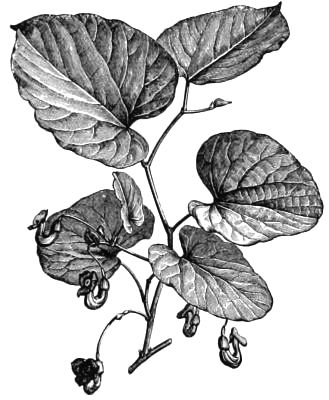
FIG. 149. FLOWERING BRANCH OF ARISTOLOCHIA SIPHO.
A. Sipho (tube-bearing).* fl. yellowish-brown; corolla ascending; limb in three equal portions, not expanding, flat, brown; bracts of the peduncle large, ovate. May and June. l. cordate, acute. Stem twining. h. 15ft. to 30ft. North America, 1763. This hardy, climbing, deciduous shrub grows freely in a deep, free, rather dry soil. See Fig. 149.
A. Thwaitesii (Thwaites'). fl. yellow. March. h. 3ft. Old Calabar, 1854. Stove species.
A. tomentosa (tomentose).* fl. purple; perianth with its tube twisted back, and much more deeply divided than in A. Sipho, expanding, flat, and yellow, with the mouth of the tube of a deep purple; peduncle solitary, without a bract. July. l. cordate, downy beneath. h. 20ft. North America, 1799. Hardy.
A. tricandata (three-tailed).* fl. dark purple-brown, solitary, split into three subulate tails. August. l. oblong acuminate, rugose, 5in. to 8in. long. Mexico, 1866. A curious, but pretty, stove shrub.
A. trilobata (three-lobed). fl. purple; perianth cylindrical, broken saccate at base; lip cordate cuspidate. June. l. three-lobed. Stem twining. h. 8ft. South America, 1775. Stove evergreen.
A. ungulifolia (claw-leaved). fl. racemose; perianth brownish-purple, stipitate at base, above which it is swollen out in a globose or oblong form, with two thickened projections near the end; upper end of tube contracted, somewhat curved, terminating in a two-lipped limb, one lip large, ovate, the other minute. June. l. 6in. to 7in. long, cordate, and pedately five-nerved at the base, three-lobed below the middle, with broad sinuses, the two lateral lobes arcuate, and blunt at the apex. Labuan, 1880. Stove species.
ARISTOLOCHIACEÆ. An order of very curious plants, with singularly inflated flowers, consisting of a calyx only, of a dull, dingy colour. It is popularly known as the Birthwort family, and has an English representative in Aristolochia clematitis.
ARISTOTELIA (said to be named in honour of Aristotle, the Greek philosopher). ORD. Tiliaceæ. A hardy evergreen shrub. Calyx campanulate; petals five, inserted in the base of the calyx, and alternating with its lobes. Easily grown, in ordinary garden soil, in the shrubbery. Propagated by ripened cuttings, which root freely if placed under a hand glass; or by layers.
A. Macqui (Macqui's).* fl. small, greenish, axillary. May. l. nearly opposite, stalked, oblong, acute, smooth, shining, dentate, permanent. h. 6ft. Chili, 1733. A shrub esteemed for its handsome foliage. The berries are about the size of a pea, very dark purple, at length becoming black. The variegated form is not so hardy as the type, but much more ornamental.
ARMENIACA (from Armenia, the native country of the Apricot). Apricot. ORD. Rosaceæ. TRIBE Drupaceæ. Small, hardy, deciduous trees. Flowers appearing before the leaves from scaly buds, solitary, or few together, almost sessile. Leaves, when young, convolute. Drupe ovate-globose, fleshy, covered with velvety skin, containing a nut, or stone, which is acute at one end and blunt at the other, with a furrow on both sides; the rest smooth, not wrinkled. For culture, &c., see Apricot and Prunus.
A. brigantiaca (Brigancon).* fl. white or pink, glomerate, almost sessile. March. l. somewhat cordate, acuminated, sharply toothed; the teeth numerous, and lapping over each other. h. 6ft. to 8ft. South Europe, 1819.
A. dasycarpa (thick-fruited).* fl. white, pedicellate; pedicels filiform. March. l. ovate, acuminate, serrated; petioles glandular. h. 10ft. to 15ft. China, 1800.
A. sibirica (Siberian). fl. rose-coloured. April. l. ovate, acuminate; petioles glandless. h. 8ft. to 20ft. Dahuria, 1788.
A. vulgaris (common).* Common Apricot. fl. pinkish-white, sessile. February. l. ovate, or cordate, glabrous, glandularly serrated. h. 15ft. Levant, 1548. Of this species numerous varieties, differing in the foliar outline, &c., are sometimes met with. See Apricot.
ARMERIA. (from Flos Armeriæ, Latin name for the flowers of a species of Pink). Thrift; Sea Pink. ORD. Plumbagineæ. A very interesting and pretty group of hardy alpine tufted perennials. Flowers pedicellate, collected in dense solitary heads; involucre scarious, sheathing the scape and turned downwards; petals cohering at the base, persistent; flower scapes leafless. Leaves linear, radical. As the majority of the species differ in mere technical details, we have given a representative group only. They are easily cultivated in a sandy loam and leaf soil, and are increased by seeds and division, separate pieces being planted as cuttings under hand glasses; or the rarer kinds should be potted and placed in a frame. The seed should be sown in spring, in pots of sandy soil, and placed in a cold frame. Although best grown as rock plants, most of them do well in pots and borders. A. vulgaris makes one of the best of edging plants.
A. cephalotes (round-headed).* fl. deep rose or crimson, in a large roundish head on erect stalk. Autumn. l. broadly lanceolate, glabrous, acute; petioles channelled, sheathing at the base. h. 12in. to 18in. South Europe, 1800. This is perhaps the finest species, and is best raised from an annual sowing of seed, as it is somewhat difficult to increase by divisions. SYNS. A. formosa, A. latifolia, A. mauritanica, and A. pseudo-armeria.
A. dianthoides (Pink-like).* fl. light pink, in close heads about 6in. high. May and June. l. spreading, flattened, nerved, slightly downy. South Europe, 1810.
A. formosa (handsome). Synonymous with A. cephalotes.
A. juncea (rush-like).* fl. rose pink, in small heads about 3in. high. June. l. small, erect, roundish, pointed, deep green. South Europe. A very pretty little alpine species.
A. juniperifolia (Juniper-leaved).* fl. deep rose, in small densely packed heads. May and June. l. short, stiff, erect, Juniper-like. h. 6in., with a dense tufted habit. Spain, 1818. Plant in a warm well-drained portion of the rockery in very sandy soil, with some nodules of sandstone intermixed.
A. latifolia (broad-leaved). Synonymous with A. cephalotes.
A. leucantha (white-flowered). A white-flowered variety of A. plantaginea.
A. maritima (sea). Synonymous with A. vulgaris.
A. mauritanica (Mediterranean). Synonymous with A. cephalotes.
A. plantaginea (Plantain-leaved).* fl. bright rose; scapes taller than in A. vulgaris. l. broader, three to five-nerved, and with a stouter growing habit than the common species. h. 1ft. South Europe, 1818. A very pretty species. SYNS. A. leucantha, which is frequently called A. p. alba, and A. scorzoneræfolia.
A. pseudo-armeria (false-Armeria). Synonymous with A. cephalotes.
A. scorzoneræfolia (Scorzonera-leaved). Synonymous with A. plantaginea.
A. setacea (bristly).* fl. light rose, in small heads about 2in. high, very freely produced from the axils of the leaves. April to June. l. in dense rosettes, erect, or nearly so, narrow, acute, the tufts having a bristly appearance. h. 3in. South Europe. Plant in a semi-perpendicular cranny of the rockery, with a sunny position.
A. vulgaris (common).* Common Thrift; Sea Pink. fl. pink, rosy red, lilac, or white (the latter known as A. v. alba), collected into a rounded head on the top of the simple scape. June to August. l. all radical, numerous, linear, usually one-nerved, more or less pubescent. h. 6in. to 12in. Britain, on the sea coasts. A. v. alpina is a dwarf alpine form of this species. The white-flowered variety is very handsome. A. v. Laucheana is also a pretty form, with deep pink flowers in dense heads about 6in. high, and a very tufted habit. Crimson Gem, of garden origin, is stronger growing, with stems about 9in. high, carrying heads of bright crimson pink flowers, also of tufted habit. SYNS. A. maritima, Statice Armeria.
ARNEBIA (its Arabian name). ORD. Boraginaceæ. Handsome hardy herbaceous perennials or annuals, allied to Lithospermum. Cuttings should be removed with a heel in autumn, dibbled in sandy soil in small pots, and placed in a cool house, where they will ultimately, though slowly, root; they should then be gradually hardened off, and finally planted out. A. echioides is also easily increased by making cuttings of the strong roots, which should be dibbled in pots of sandy soil, and placed in gentle heat; it is also raised from seed.
A. echioides (Echium-like).* fl. bright primrose yellow, with a purplish spot in the sinuses between the lobes of the corolla, which gradually disappears in a few days; spikes terminal, large, solitary, secund. May. l. sessile, alternate; margins—as well as the stems—ciliated. h. 9in. to 12in. Armenia. One of the showiest of hardy perennials for the border or rockery.
A. Griffithii (Griffith's). This differs from above in having narrower leaves, rather smaller flowers, which are of a more decided yellow, a differently shaped calyx, and a longer corolla. h. 9in. North-west India. Equally desirable, were it a perennial; but, being an annual, it must be constantly raised from seed.
ARNICA (from arnakis, lambskin; in reference to the texture of the leaves). ORD. Compositæ. Hardy, dwarf, herbaceous perennials, allied to Senecio. They thrive best in loam, peat, and sand; the plants are best divided in spring. Seeds should be procured when possible, and sown in a cold frame, in spring. The only species worth growing are described below.
A. Aronicum. Synonymous of A. scorpioides.
A. Chamissonis (Chamisso's).* fl.-heads yellow, 1½in. to 2in. across, arranged in a corymb. July to September. l. oblong-lanceolate, acuminate or acute, tomentose, tapering to the base. h. 1ft. to 2ft. North America. A rather scarce, showy species.
A. Clusii (Clusius's). fl.-heads yellow, solitary, terminal; stalks long, thickened towards the top, and covered with long hairs. Summer. l. soft, radical ones entire, or nearly so, oblong, obtuse, attenuated into the petiole; cauline ones sessile, half stem-clasping, lanceolate, toothed in the lower part. h. 1ft. Switzerland, 1819. SYN. Doronicum Clusii.
A. foliosa (leafy).* fl.-heads pale yellow, about 1in. across, from three to seven in a corymb. August. l. lanceolate, stalked, acute, denticulate, smooth. h. 1ft. to 2ft. Stems springing from slender rhizome-like shoots. United States. Closely allied to A. montana. It requires a damp situation.
A. montana (mountain).* Mountain Tobacco. fl.-heads yellow, three or four together, about 2in. in diameter; ray florets numerous. July. l. radical, except a few on the scape, oblong-lanceo-late, entire, smooth. Habit tufted. h. 1ft. Europe. 1731. A very handsome but rare plant; excellent for a rockery. It is slowly increased. See Fig. 150.
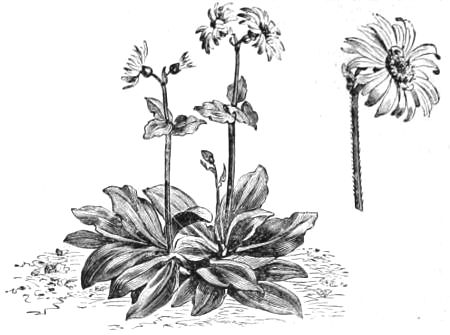
FIG. 150. ARNICA MONTANA, showing Habit and Flower-head.
A. scorpioides (scorpion-like).* fl.-heads yellow, large, solitary; scape one to three-flowered. Summer. l. pale green, denticulated; radical ones on long petioles, broadly ovate; the lower stem leaves shortly stalked, amplexicaul; the upper ones sessile. h. 6in. to 12in. South Europe, 1710. Border. SYNS. A. Aronicum, Aronicum scorpioides.
ARNOPOGON. See Urospermum.
AROIDEÆ. See Araceæ.
ARONIA. See Cratægus Aronia and Pyrus.
ARONICUM. See Arnica scorpioides and Doronicum.
ARPOPHYLLUM (from arpe, a scimitar, and phyllon, a leaf; the leaf is sword-shaped). ORD. Orchideæ. Distinct evergreen epiphytes. There are about six species known, and the genus belongs to the Epidendreæ division of orchidaceous plants; their general characters are: Flowers small, numerous, in closely packed cylindrical spikes; anther-bed broad, shorter than the broad extension of the upper edge of the stigma; pollinia eight. Stems rather long, with white sheaths. They thrive well in fibrous peat, one-third turfy loam, freely interspersed with lumps of fresh charcoal and an abundance of crocks. When growing, a liberal supply of water at the roots is essential, as is also a situation near the light, where they will blossom much more profusely than if in any way shaded. The flowers last in perfection about four weeks.
A. cardinale (cardinal). fl., sepals and petals light rose; lip deep red, on upright spikes about 1ft. high. Summer. New Grenada.
A. giganteum (gigantic).* fl. dark purple and rose, densely and symmetrically arranged on the cylindrical spikes, which are from 12in. to 14in. long. April and May. l. dark green, about 2ft. long, borne on slender pseudo-bulbs. Mexico.
A. spicatum (spike-flowered).* fl. dark red, on an upright spike about 1ft. long. During winter. Guatemala, 1839.
ARRACACHA (its Spanish name in South America). ORD. Umbelliferæ. A half-hardy tuberous perennial, highly esteemed as an esculent in South America, where it yields a food, which is prepared in the same manner as potatoes, and is said to be grateful to the palate and extremely easy of digestion. It thrives best in rich loam, and is increased by divisions of the roots.
A. esculenta (edible). fl. white; umbels opposite the leaves or terminal; involucre wanting. July. l. pinnate; leaflets broadly ovate, acuminated, deeply pinnatifid, profoundly serrated; the two lower leaflets petiolate, sub-ternate. h. 1ft. to 2ft. Mountainous districts of Northern South America, 1823. SYN. Conium Arracacha.
ARRHOSTOXYLUM. Included under Ruellia (which see).
ARROW ARUM. See Peltandra virginica.
ARROWGRASS. See Triglochin.
ARROW-HEAD. See Sagittaria.
ARROWROOT. See Maranta.
ARTABOTRYS (from artao, to suspend or support, and botrys, grapes; in reference to the way the fruit is supported by the curious tendril). ORD. Anonaceæ. A handsome stove evergreen shrub, thriving in a good sandy loam and peat, to which a little rotten dung may be added. Propagated by cuttings made of ripened wood, insert in sand under a bell glass, with bottom heat, in early spring. Seed, when procurable, should be sown as soon after receipt as possible.
A. odoratissimus (sweetest-scented).* fl. reddish brown, extremely fragrant; peduncles opposite the leaves, hooked beneath the middle. June and July. l. oblong-lanceolate, acuminated, smooth, shining. h. 6ft. Malayan Islands, 1758. In Java, the leaves are held to be invaluable as a preventive of cholera.
ARTANEMA (from artao, to support, and nema, a filament; in reference to a tooth-like process growing on the longer filaments). ORD. Scrophularineæ. An interesting and handsome greenhouse evergreen shrub, allied to Torenia. Flowers disposed in terminal racemes, and on short pedicels. Leaves opposite, sub-serrated. It may be treated as hardy during summer, for which purpose seeds should be sown in spring; but it requires the protection of a greenhouse during winter. Artanema grows freely in light rich soil, and is readily increased by cuttings and seeds.
A. fimbriatum (fringed). fl., corolla blue, large, tubularly funnel-shaped, clothed with minute glandular pubescence outside; lobes unequally serrated; racemes terminal, four to sixteen-flowered. June, November. l. lanceolate, acute, serrated, rough to the touch from numerous elevated dots. Stem smooth, glossy. h. 2ft. to 3ft. New Holland (on the banks of the Brisbane River at Moreton Bay), 1830.
ARTANTHE. See Piper.
ARTEMISIA (from Artemis, one of the names of Diana). Mugwort; Southernwood; Wormwood. ORD. Compositæ. A very large genus of mostly hardy herbaceous perennials, few of which, comparatively speaking, are worth growing. Flower-heads disposed in spikes, or racemes, and these are usually arranged in panicles; pappus none; involucre few-flowered, ovate or rounded, imbricated; florets of the disk all tubular; of the ray, if any, slender, awl-shaped. Leaves alternate, variously lobed. All the species are of the easiest possible culture in any dry soil. The shrubby kinds are best propagated by cuttings; the herbaceous ones, by dividing at the root; and the annuals, by seeds.
A. Abrotanum (aromatic herb).* Southernwood. fl.-heads yellowish. August to October. l., lower ones bipinnate; upper ones pinnate, with the segments hair-like. Stem straight. h. 2ft. to 4ft. Europe, 1548. A deciduous shrub; well known for its fragrance.
A. A. humile (low). A low spreading variety. h. 1½ft.
A. A. tobolskianum (Tobolskian). A much more vigorous growing variety than the last, and larger in all its parts than the type.
A. alpina (alpine).* fl.-heads yellow, solitary, on long slender stalks; scales of involucre lanceolate. Summer. l. pinnate, covered with whitish silky hairs; lobes linear, entire. h. 6in. to 10in. Caucasus, 1804. Dwarf, with a very tufted habit.
A. anethifolia (Anethum-leaved). fl.-heads yellowish-green, small; panicle very large, densely packed, nearly 2ft. long. Autumn. l. chiefly cauline, much divided into thread-like segments, greyish-green. Stem shrubby at the base, nearly glabrous, branching at the top. h. 3ft. to 4ft. Siberia, 1816.
A. argentea (silvery).* fl.-heads pale yellow, roundish, closely packed. July. l. ovate-oblong, very freely divided, densely clothed with soft silvery hairs. h. 1½ft. Madeira, 1777. A very pretty species, requiring a warm sunny position on the rockery.
A. cana (hoary).* fl.-heads yellow, small, uninteresting, ovate, in a close spiky panicle. August. l. silky, hoary; lower ones wedge-shaped, sharply three-cleft; cauline ones linear-lanceolate, three-nerved. Stem ascending; branches erect. h. 2ft. to 3ft. North America, 1800. This is a very distinct species, and its silvery leaves and stems render it well worthy of cultivation.
A. cœrulescens (bluish).* fl.-heads bluish, erect, cylindrical. August. l. hoary, most of them lanceolate, entire, tapering at the base; lower ones variously divided. h. 2ft. South Europe. An ornamental evergreen shrub.
A. Dracunculus.* Tarragon. fl.-heads whitish green; racemes panicled; heads sub-globose. July. l., radical ones three-fid; cauline ones sessile, linear or linear-oblong, acute, entire, toothed. h. 2ft. South Europe, 1548. See Tarragon.
A. frigida (frigid). fl.-heads yellow, uninteresting, small, roundish, racemosely panicled. August. l. pinnate; segments narrow, silvery. h. 1ft. Siberia, 1826. A pretty creeping, herbaceous plant.
A. maritima (maritime). fl.-heads brown; racemes oblong, erect or drooping. August and September. l. downy, bipinnatifid, oblong; segments linear. Britain. A much branched, erect, or decumbent plant, excellent for rough rockwork or very dry banks, etc.
A. Mutellina (Mutellina).* fl.-heads yellowish-green; lower ones stalked, upper ones sessile. July. l. all palmate, multifid, white. Stem quite simple. h. 6in. European Alps, 1815.
A. pontica (Pontine). fl.-heads yellow, roundish, stalked, nodding. September. l. downy beneath; cauline ones bipinnate; leaflets linear. h. 3ft. Austria, 1570.
A. rupestris (rock). fl.-heads brown, globose, stalked, nodding. August. l. sub-pubescent; cauline ones pinnatifid; leaflets linear, acute. h. 6in. Norway, &c., 1748.
A. scoparia (twiggy-branched). fl.-heads small, whitish; panicle broad, densely packed, about 1½ft. long. Autumn. l. much divided; segments hair-like; lower branches very slender. h. 3ft. to 5ft. East Europe.
A. spicata (spicate). fl.-heads brown, spicate. June and July. l. hoary; radical ones palmate multifid; cauline ones pinnatifid; upper linear, entire, blunt. Stem quite simple. h. 1ft. Switzerland, 1790.
A. Stelleriana (Steller's).* fl.-heads yellow, uninteresting, round, somewhat erect. Summer. l., lower ones spathulate-incised; upper ones obtusely lobed; end lobes often confluent, about 2in. long, silvery white. h. 1ft. to 2ft. Siberia.
A. tanacetifolia (Tanacetum-leaved). fl.-heads brownish; racemes simple, terminal. Summer. l. bipinnate; lobes linear sub-lanceolate, entire, acuminated, rather downy. Stem sometimes branching at the base, herbaceous. h. 1½ft. Siberia, 1768.
A. vulgaris (common).* Mugwort. fl.-heads yellow, somewhat racemed, ovate. August. l. pinnatifid; segments white, and downy beneath. Stems 3ft. to 4ft. high, furrowed. Britain. The variegated form of this species exhibits a very pleasing contrast. There is also a pretty variety with golden leaves.
ARTHROPHYLLUM MADAGASCARIENSE. See Phyllarthron Bojeriana.
ARTHROPODIUM (from arthron, a joint, and pous, a foot; the footstalks of the flowers being jointed). ORD. Liliaceæ. Very pretty greenhouse herbaceous perennials, allied to Anthericum. Flowers purplish or white, in loose racemes. Leaves grass-like, radical. They thrive well in a compost of sandy loam and peat, and may be increased freely by divisions or seeds.
A. cirratum (curled). fl. white; racemes divided; bracteas leafy. May. l. lanceolate, ensiform, spreading, 1ft. long. h. 3ft. New Zealand, 1821.
A. fimbriatum (fringed). fl. white. July. h. 1½ft. New Holland, 1822.
A. neo-caledonicum (New Caledonian).* fl. small, white, on a much-branched, many-flowered panicle. May. l. tufted, linear-lanceolate, barred with black linear markings near the base. h. 1½ft. New Caledonia, 1877.
A. paniculatum (panicled).* fl. white; racemes divided; pedicels clustered; inner sepals crenulate. May. l. narrowly lanceolate. h. 3ft. New South Wales, 1800. A. minus is a small form of this species.
A. pendulum (pendulous).* fl. white, clustered in threes, pendulous. June to August. l. linear, keeled, shorter than the branched scape. h. 1½ft. New Holland, 1822.
ARTHROPTERIS. See Nephrodium and Nephrolepis.
ARTHROSTEMMA (from arthron, a joint, and stemon, a stamen; in reference to the stamens or connectives being jointed). ORD. Melastomaceæ. Beautiful stove or greenhouse evergreen shrubs. Tube of calyx turbinate or campanulate, usually clothed with bristles, pili, or scales; lobes four, lanceolate, permanent, without any appendages between them; petals four. A mixture of loam, peat, and sand, suits them best; and cuttings of small firm side shoots will root, in April or August, under a hand glass in sandy soil. Only three or four out of the half-dozen species belonging to this genus have been as yet introduced.
A. fragile (brittle). fl. rosy; cymes loose, terminal, few-flowered; calyx glandular. July. l. ovate-cordate, acute, five-nerved, serrated; branches tetragonal, beset with glandular hairs. h. 3ft. Mexico, 1846. Stove species.
A. nitida (glossy-leaved). fl. lilac; peduncles axillary towards the top of the branches, three-flowered, longer than the petioles. June. l. ovate, acute, serrulated, glabrous on both surfaces, shining above, but glandularly hispid on the nerves beneath. Stems shrubby, erect, and are, as well as the branches, tetragonally winged, beset with coloured hairs. h. 2ft. to 3ft. Buenos Ayres, 1829 greenhouse species.
A. versicolor (changeable-flowered). fl., petals obovate, ciliated, at first white, but at length becoming reddish, terminal, solitary. September. l. petiolate, ovate, serrulated, five-nerved, discoloured beneath. Plant shrubby; hairy. h. 1ft. Brazil (on the sea shore), 1825. Stove species.
ARTHROTAXIS. See Athrotaxis.
ARTICHOKE, GLOBE. (Cynara Scolymus, a cultivated form of C. Cardunculus). As a vegetable, the Globe Artichoke is cultivated for the use of the immature flower-heads, and is highly esteemed. A good open position, free from overhanging trees, is best suited for its culture generally, but, by planting successional suckers in different aspects, the season may be considerably prolonged. The soil must be of good depth, rich, and not too heavy. It may be greatly improved for Artichoke culture by the addition of sea-weeds or salt applied as manure.
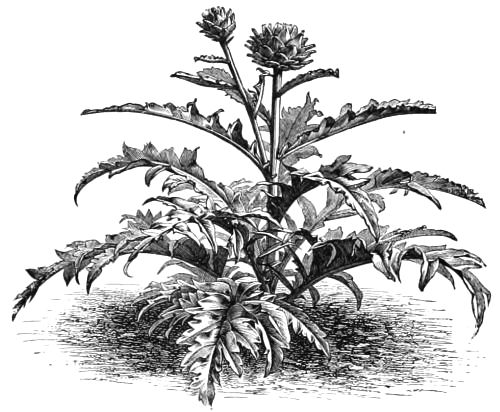
FIG. 151. GLOBE ARTICHOKE.
Preparation of Soil. Trench the ground two spits deep if possible, mixing a liberal dressing of well-rotted manure in autumn, and ridge up for the winter, to sweeten. Crude manure full of straw, leaves, and sticks, often induce fungoid growths, and are most injurious to the crowns of the plants. Clay or stiff loam is about the worst soil on which to attempt the culture of this vegetable; this drawback may, however, to some extent be alleviated by the addition and thorough amalgamation of a light free soil or liberal dressings of sandy road drifts, or similar materials. An ill-drained soil is also fatal to good results. During hot, dry weather, the plants are greatly benefited by copious applications of clear water and dilute liquid manure; and this must be especially attended to on such soils as are liable to burn or dry up in summer.
Cultivation. When the beds have been properly prepared, the plants should be put in them in April or May. Place three together in rows between 3ft. and 4ft. apart, and about 3ft. from plant to plant. Water-in carefully to settle the soil around the roots, and apply a mulching of half-decayed manure, to prevent an undue evaporation of moisture. During hot, dry weather, give liberal supplies of water, and the plants will become established as fine stools the first season. A few heads will probably be produced the first year; but there will not be much of a crop until the second season, when five or six good heads will be got from each plant, and for three or four years the produce will be large if the beds are properly attended to; after which time it will become desirable to make up new plantations. In October or November, it will be necessary to apply a good mulching of straw or fern to the beds, to protect the plants from frost. In April, all this litter should be cleaned off, a dressing of rotten manure applied, and the beds forked over and kept clean for the rest of the season, treating as before described. Great care must be taken to remove the heads as soon as they are in a fit state; and, when the whole of them are removed from the stems, cut the latter out as low as possible. Globe Artichokes will keep for some considerable time if laid in a cool place, although they will deteriorate in quality. These plants may be used in the background of flower borders in the kitchen garden, their handsome foliage being peculiarly well adapted for such purposes, whilst their economical value is also secured. See Fig. 151. Where there is plenty of room in light, warm sheds, orchard houses, or other places where frost can be kept out, some stools can be taken up with the root intact in the early part of November, placed in boxes of soil, and well watered-in. When drained, the boxes may be put in any of those positions for their winter quarters, and, if kept moist, will develop much earlier than the outdoor crops, provided they are planted out early in April on a warm border, and protected with mats when the weather is cold. Propagation may be effected by seeds, or by suckers from the old stools, the latter being the better plan. In the former case, sow the seeds in March, on a gentle hotbed, and prick the seedlings off singly, when large enough, into small pots. Harden off by the last week in May, and plant out in threes as previously recommended, protecting the plants from late frosts. During the growing season, give an abundance of water and liquid manure mulching, to prevent undue evaporation. In November, well cover with dry litter which will not heat; and, in hard frosts, or heavy snow, throw a few mats over the beds, uncovering at the same time as recommended above for the older plants. To propagate by rooted offsets or suckers, take up and divide the stools, when they have made a fair amount of growth in April or early in May, separating the suckers with as many roots and as much soil adhering to them as possible. The old woody portions are of little use, but they may be replanted to give off a fresh supply of suckers for the next year, if required. Propagation by suckers, if they are to be obtained, has many advantages; but care must be taken, in removing them from old plants, that some roots are attached, or growth will be uncertain. Seeds generally produce a large percentage of plants that are useless, and this is not found out until the flower-heads appear. On the other hand, suckers reproduce the parent plant, and if these are previously selected, the superior stock is thereby perpetuated.
Sorts. The Green and Purple are the best for ordinary purposes; and of these preference should be given to the former. See also Cynara.
ARTICHOKE, JERUSALEM (Helianthus tuberosus). A hardy tuberous-rooted herbaceous perennial, native of Brazil. The roots are used as a vegetable principally during the winter, sometimes as a dish, but more generally for flavouring purposes. Plants will grow in almost any position, but the best results and largest tubers are obtained where they receive plenty of room and liberal treatment. Their culture has been recommended as a substitute for the potato, but they are not likely to take the place of this vegetable, the flavour being disliked by many persons. A few are, however, generally acceptable.
Cultivation. To ensure the most successful results, trench over a piece of ground in autumn, and give a light dressing of manure. Fork over in March; at the same time plant good-shaped tubers (see Fig. 152) in rows about 3ft. apart, and allow from 18in. to 2ft. between the tubers in the rows. Keep clear of weeds; and, as soon as the foliage is yellow, in the latter part of the autumn, the roots will be fit for use. The best plan with this crop is to leave it in the ground till wanted, or till the end of February, and then to take up every tuber, replanting those which are wanted for stock, and storing the others away in a cold dry place. When they commence growth, they turn black, and are of little use for cooking, save for flavouring soups. This vegetable has of late years grown into favour as a marketable crop, and the demand seems to be increasing. Considering its very easy culture, it is fairly remunerative. See also Helianthus.
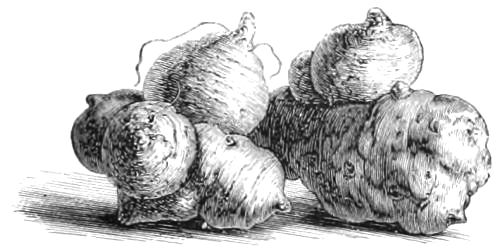
FIG. 152. TUBERS OF JERUSALEM ARTICHOKE.
ARTICULATE, ARTICULATED. Jointed; having joints.
ARTILLERY PLANT. See Pilea microphylla.
ARTOCARPEÆ. A tribe of the large order Urticaceæ.
ARTOCARPUS (from artos, bread, and carpos, fruit; the fruit, when baked, resembling bread). Bread Fruit. SYNS. Polyphema, Rademachia, Rima. ORD. Urticaceæ. TRIBE Artocarpeæ. Included in this most remarkable tribe, in addition to the Bread Fruit Tree, is the virulent poisonous Antiaris toxicaria, and the economic Cow Tree (Brosimum Galactodendron), of Caraccas. A genus of stove evergreen trees, requiring a high and very moist atmosphere, a copious supply of water, perfect drainage, and a compost of two parts rich loam and one of leaf mould, with the addition of a little silver sand. Under all conditions, this genus is difficult to propagate; the young and slender lateral growths are adapted for cuttings; and suckers may be utilised when procurable, which is very rare.
A. Cannoni (Cannon's).* l. alternate, petiolate; petiole and midrib bright red; upper surface glossy, of a rich, full bronzy crimson hue, beautifully tinted with purple; under surface bright vinous red. The leaves vary much in form; some are simple and cordate at the base, with the apex irregularly lobate; some have the apex regularly three-lobed, with short, entire lobes; and others, again, are deep three-lobed, being divided nearly to the base, the segments, of which the centre one is largest, being slightly sinuate-lobed. h. 7ft. Society Islands, 1877. This is a most distinct and handsome ornamental-leaved plant.
A. incisa (incised).* True Bread Fruit. l. from 2ft. to 3ft. long, deeply lobed or incised, deep green on the upper side, paler below. h. 50ft. South Sea Islands, 1793. This is a noble tree when full grown, and forms a most distinct and beautiful stove plant. The extraordinary fruit is produced from the axils of the leaves in large globular heads, and is highly valued as an article of food in its native country.
A. integrifolia (entire-leaved). l. oblong, undivided, sinuated, scabrous, downy beneath. h. 30ft. India, 1778.
A. laciniata metallica (laciniate, metallic). l. bronzy above, reddish purple beneath. Polynesia.
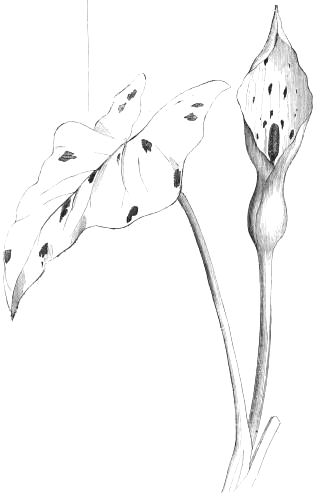
FIG. 153. ARUM MACULATUM.
ARUM (formerly aron, and probably of Egyptian extraction). ORD. Aroideæ. A large genus of ornamental or curious, hardy, greenhouse or stove perennials, with thick rhizomes and pedate or hastate leaves. Spathe large, convolute; spadix naked and club-shaped at the top. They are all of easy culture, and the indoor species will thrive with such treatment as is given to Alocasias, Caladiums, &c. Rich soil is one of the first conditions of success. Like most plants grown for the beauty of their foliage, rapid and free growth is necessary. A compost of good rich loam, with a third of sweet manure, thoroughly rotted, or leaf mould, with some sharp sand, is very suitable. Plenty of moisture is necessary during the growing season, after which the tender kinds should be kept moderately dry, warm, and at rest during the winter. The hardy kinds may be left in the ground. Propagated by seeds or division of the roots—usually the latter. The best time to divide them is just as they commence their new growth, securing as many roots as possible to each division. Any rootless pieces should be placed in heat shortly after removal; this hastens the formation of roots and excites top growth. Arums are useful in sub-tropical gardening, and are otherwise interesting plants both for indoors and outside cultivation; and the hardy kinds are very suitable for naturalising in woodlands, &c. There are many other species besides those here described, but the following list comprises the best. Sub-sections of the genus will be found treated separately, such as Amorphophallus (which see), &c.
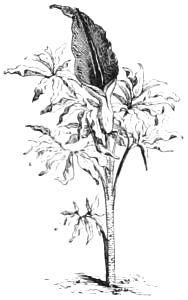
FIG. 154. ARUM DRACUNCULUS.
A. bulbosum (bulbous). Synonymous with A. ternatum.
A. Dracontium (Green Dragon). fl., spadix subulate, longer than the oblong convolute green spathe. June. l. pedate, entire. h. 2ft. North America, 1759. Hardy.
A. Dracunculus (Common Dragon).* fl., spadix lanceolate, shorter than the ovate, flat, smooth, brown spathe. July. l. pedate, entire. h. 3ft. South Europe, 1548. Hardy. SYN. Dracunculus vulgaris. See Fig. 154.
A. indicum (Indian). See Colocasia indica.
A. italicum (Italian).* fl., spathe ventricose below, opening nearly flat and very broad above; apex often falling over very shortly after expansion, sometimes greenish yellow, at others nearly white; spadix yellowish or creamy white, club-shaped, about one-third as long as the spathe. Spring. l. appearing before winter, radical, triangular-hastate. h. 9in. to 2ft. Channel Islands and Cornwall, &c. Hardy.
A. i. marmorata (marbled).* l. marbled with yellow. A very pretty and effective hardy border plant.
A. maculatum (spotted). Lords and Ladies; Cuckoo Pint. fl., spathe ventricose below and above, constricted in the middle, with inflexed edges when open, spotted with dull purple; spadix usually purple, shorter than the spathe. Spring. l. vernal radical, hastate-sagittate, with deflexed lobes. h. 9in. Britain, &c. This species is admirably adapted for a corner in the wild garden. See Fig. 153.
A. Malyi (Maly's). fl. whitish. Montenegro, 1860.
A. Nickelli (Nickel's). Levant, 1859. A form of A. italicum.
A. orientale (eastern). fl. resembling those of A. maculatum. June. l. brownish, simple, ovate, slightly sagittate. h. 1ft. Tauria, 1820. Hardy.
A. palæstinum (Palestine).* fl., spathe 7in. to 11in. long, purplish blotched or spotted outside, rich velvety black inside and yellowish white at the base of the tube; spadix much shorter than the spathe; petiole usually rising 8in. or 9in. above the leaves. May. l. four or five, triangular-hastate, acute, from 6in. to 14in. long, and from 3½in. to 7½in. broad; petioles 12in. to 18in. long. Jerusalem, 1864. Tender.
A. pictum (painted). h. 2ft. Corsica, 1801. Hardy.
A. proboscideum (proboscis-like).* fl., spathe greenish purple, navicular, horizontal, terminated by a straight tail; scapes arising from among the petioles. May. l. radical, about four, cordate-elliptic, entire. h. 6in. South Europe, 1823. Hardy.
A. spectabile (showy). fl., spathe ovate-oblong, acuminate, dark purplish inside, longer than the purplish spadix. l. broadly hastate-sagittate. h. 1ft. Asia Minor. Half-hardy.
A. spirale (spiral). fl., spadix lanceolate, shorter than the oblong-lanceolate spirally twisted brown spathe. May. l. linear-lanceolate. Plant stemless. h. 1ft. China, 1816. Tender.
A. tenuifolium (narrow-leaved).* fl., spadix subulate, longer than the white lanceolate spathe. April. l. linear-lanceolate. Plant stemless. h. 1ft. South Europe, 1570. Hardy.
A. ternatum (three-leafleted). A synonym of Pinellia tuberifera.
A. variolatum (variegated). Dalmatia, 1859. Hardy.
A. venosum (veined). A synonym of Sauromatum guttatum.
A. Zelebori (Zelebor's). A form of A. maculatum.
ARUM LILY. See Richardia æthiopica.
ARUNDINARIA (altered from arundo, a reed). ORD. Gramineæ. A small genus of hardy or nearly hardy shrubby grasses, having strong jointed stems, and frequently included under Bambusa. For sub-tropical gardening purposes more particularly it is exceedingly ornamental as an isolated tuft. It thrives best in a deep, rich soil, and requires plenty of water when in a growing state. Increased by division of the roots.
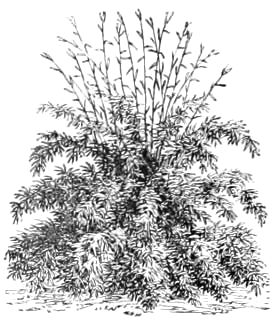
FIG. 155. ARUNDINARIA FALCATA.
A. falcata (sickle-shaped).* l. linear-lanceolate, very acute, shortly stalked, very light green. Stems freely branched, deep green, and very slender. h. 3ft. to 6ft. India. An extremely handsome species for greenhouse decoration; also for outdoor work, particularly in the South of England, &c. SYN. Bambusa gracilis, of gardens.
A. Maximowiczii (Maximowicz's). This Japanese species is believed to be allied to, if not identical with, Bambusa Simonii. Quite hardy.
A. Metake (Metake). l. lanceolate, with very sharp points, dark green, persistent, narrowed into a short leafstalk, 6in. to 12in. long; sheath ample. h. 4ft. to 6ft. Japan. A handsome, hardy, dwarf, much-branched species, forming grand specimens, and producing flowers very freely. SYN. Bambusa japonica.
ARUNDO (origin of word doubtful; stated by some authorities to be from arundo, a reed; and others as from the Celtic arn, signifying water). Reed. ORD. Gramineæ. A very ornamental group of half or quite hardy plants, of very easy culture in ordinary garden soil, preferring damp situations. Panicle loose; calyx two-valved, unequal, many-flowered; corolla of two very unequal valves; all, except the lower and imperfect one, surrounded by a tuft of hairs. Fruit free, covered by the corolla. Arundos are very valuable either for conservatory decoration, sub*-tropical gardening, or cultivation in clumps on the turf of the flower-garden or pleasure ground, and the margins of lakes. Although well worth growing, all are inferior to their ally, the Pampas Grass. Propagated by seeds or divisions, the spring being the best time to adopt either method of increase.
A. conspicua (conspicuous).* fl. silky-white, on large drooping racemes, and lasting in beauty for several months. h. 3ft. to 8ft., but in a good deep and sandy loam it sometimes attains the height of 12ft. New Zealand, 1843. This fine species grows in dense tufts, from which arise numerous leathery, narrow, smooth (or slightly rough), long curving leaves, and erect, slender culms. The plant is not sufficiently hardy to withstand a severe winter, and should, therefore, be protected with mats, or be grown in tubs, so that it can be removed under shelter before the approach of winter. These precautions are unnecessary in the more southern counties of England.
A. Donax (Donax).* Great Reed. fl. reddish, ultimately whitish, in numerous spikelets, forming a large compact panicle 12in. to 16in. long. Autumn. l. alternate, lanceolate-acute, large, and ornamental, glaucous green, arching. h. about 12ft. South Europe, 1648. This also requires protection during winter in the colder counties. See Fig. 156.
A. D. versicolor (various-coloured).* h. 3ft. South Europe. Although much smaller, this variety is far superior to the type for gardening purposes, and has its leaves ribboned with white. It requires a deep, well drained, sandy loam to thrive well, and a thorough winter protection of cocoa-fibre refuse or coal ashes. For isolated tufts or groups, few plants can equal it. It is propagated by placing a stem in water, which induces little rooted plants to start from the joints; these should be separated, potted off, and kept in frames until thoroughly established.
A. mauritanica (Mediterranean Reed). This is a rare greenhouse species, closely allied to A. Donax, but inferior to it.
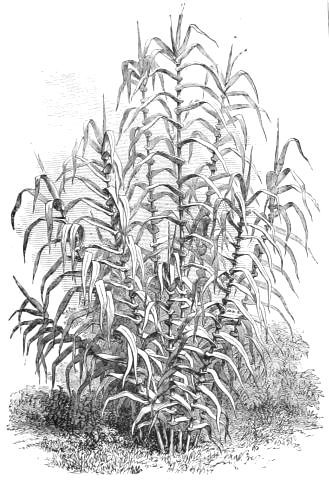
FIG. 156. ARUNDO DONAX.
ARYTERA. A synonym of Ratonia (which see).
ASAFŒTIDA. See Narthex Asafœtida.
ASARABACCA. See Asarum europæum.
ASARUM (from a, not, and saron, feminine; derivation doubtful). ORD. Aristolochiaceæ. Curious hardy herbaceous perennials, with bell-shaped, three-cleft perianths. They should be planted at the foot of the rockery, or in borders or woodlands, as they are not very showy, but are, nevertheless, worth growing, and easily propagated by divisions, in spring.
A. canadense (Canadian).* fl. brown, campanulate, on a short peduncle, sometimes nearly buried. May and June. l. in pairs, broadly reniform. h. 1ft. Canada, &c., 1713.
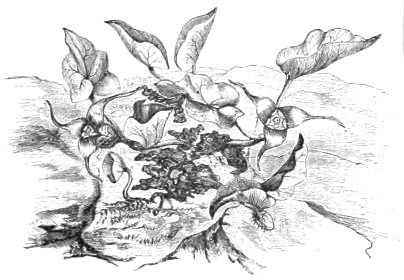
FIG. 157. ASARUM CAUDATUM.
A. caudatum (tailed).* fl. brownish-red, with attenuated or caudate calyx lobes. July. l. cordate-reniform, hooded, sub-acute, or bluntish, slightly pubescent. California, 1880. A rare and pretty species. See Fig. 157.
A. europæum (European). A sarabacca. fl. dull brown, solitary, rather large, drooping; segments of perianth incurved. May. l. two on each stem, roundish-reniform, stalked, slightly waved. h. 1ft. England.
ASCENDING. Directed upwards; as the stem, which is the ascending axis.
ASCLEPIADEÆ. A large order of, for the most part, lactescent, climbing shrubs. Flowers sub-umbellate, fascicled or racemose, interpetiolar; pollen collected in the form of waxy masses, coalescing to the cells of the anthers; follicles two, one of which is abortive. Leaves entire, usually opposite.
ASCLEPIAS (the Greek name of Æsculapius of the Latins). Swallow-wort. ORD. Asclepiadeæ. Erect, hardy, herbaceous or sub-shrubby perennials, except where otherwise specified. Corolla five-parted, reflexed; umbels interpetiolar; corona seated on the upper part of the tube of the filaments, five-leaved. Leaves opposite, verticillate, sometimes alternate. Most of the hardy species are very handsome border plants, thriving in peaty, or light rich soil, and are increased by dividing the roots in spring, and sometimes also by seeds. The doubtfully hardy or rarer species should always be grown in a peat soil, and have a little protection during severe frost, by mulching the roots. The most important of the greenhouse and stove species is A. curassavica. In order to obtain good bushy specimens of this, it will be necessary to cut the plants back annually, after keeping them slightly dry, and resting for a month or two in midwinter. When growth has sufficiently advanced, they should be shaken out and repotted. At this stage, a close, moist atmosphere will be needful to produce the usually very free growth. The points of the shoots must be nipped out, in order to promote a bushy habit. When the pots have become filled with roots, liquid manure may be applied; but it must be quite clear and not over strong. All the indoor species grow best in good fibry loam and leaf mould, and require to be potted firmly. Cuttings should be secured in spring, struck in gentle heat, under a bell glass, and as soon as they are well rooted, potted into 60-size pots. A shift must be given as often as the pots become filled with roots, up to the time when the plant commences flowering. Seeds may be sown in pots in spring, pricked out singly when large enough, and then treated similarly to cuttings.
A. acuminata (taper-pointed).* fl. red and white; umbels lateral, solitary, erect. July. l. ovate, sub-cordate, acuminated, on short petioles; superior ones sessile, glabrous, but rough on the edges. Stems erect, glabrous, simple. h. 2ft. New Jersey, 1826. Hardy, herbaceous.
A. amœna (pleasing).* fl. beautiful purple; umbels terminal, erect; appendages of corona exserted, red. July. l. opposite, almost sessile, oblong-oval, downy beneath, with a large purple middle nerve. Stem simple, with two rows of down. h. 2ft. to 3ft. New England, 1732. Hardy, herbaceous.
A. Cornuti (Cornuti's).* Synonymous with A. syriaca.
A. curassavica (Curassavian). Redhead. fl. reddish orange-scarlet; umbels erect, solitary, lateral. July to September. l. opposite, oblong-lanceolate, tapering at both ends. Stem rather downy, simple, seldom a little branched. h. 1ft. to 3ft. Tropical America, 1692. The white-flowered variety is a very pretty contrast. Stove herbaceous.
A. Douglasii (Douglas's).* fl. large, waxy, purplish-lilac, sweet-scented, in many-flowered umbels. Summer. l. opposite, ovate-cordate, acuminated, 6½in. long by 5in. or more wide, glabrous above, downy beneath. Stem thick, woolly, simple. h. 2ft. to 3ft. West America, 1846.
A. hybrida (hybrid). A synonym of A. purpurascens.
A. incarnata (flesh-coloured).* fl. red or purplish; umbels numerous, usually twin. July. l. opposite, lanceolate, rather woolly on both surfaces. Stem erect, branched and tomentose at the top. h. 2ft. Canada (on the banks of rivers), 1710. Hardy, herbaceous.
A. mexicana (Mexican). fl. white; umbels many-flowered. July. l. verticillate, linear-lanceolate, with revolute edges; lower ones four to six in a whorl; upper ones three in a whorl, or opposite. h. 2ft. to 3ft. Mexico, 1821. Greenhouse evergreen.
A. phytolaccoides (Phytolacca-like). fl. purple; corona white, with truncate leaflets; umbels lateral and terminal, solitary, on long peduncles, drooping. July. l. broad, ovate-oblong, acute, glabrous, paler beneath. Stem erect, simple, spotted with purple. h. 3ft. to 4ft. Virginia and Carolina (on the mountains), 1812.
A. purpurascens (purplish). fl. purple; umbels erect. July. l. opposite, large, ovate, with a purplish middle nerve, villous beneath. Stem simple, rather hairy at top, brownish green at bottom. h. 2ft. to 3ft. Virginia (in shady swamps), 1732. Hardy. SYN. A. hybrida.
A. quadrifolia (four-leaved).* fl. white, small, sweet-scented, with red nectaries; umbels twin, terminal, loose-flowered; pedicels filiform. July. l. ovate, acuminated, petiolate; those in the middle of the stem larger, and four in a whorl; the rest opposite. Stems erect, simple, glabrous. h. 1ft. New York, 1820. Hardy species.
A. rubra (red), fl. red; umbels compound, July, August. l. alternate, ovate, acuminated. Stem erect, simple. h. 1ft. to 2ft. Virginia, 1825.
A. Sullivanti (Sullivant's). Similar to A. syriaca, but having larger and deeper coloured flowers.
A. syriaca (Syrian).* fl. pale purple, sweet scented, in large, loose, drooping umbels. July. l. opposite, lanceolate-oblong, or oval, gradually acute, tomentose beneath. Stems simple. h. 3ft. to 5ft. North America, 1629. SYN. A. Cornuti.
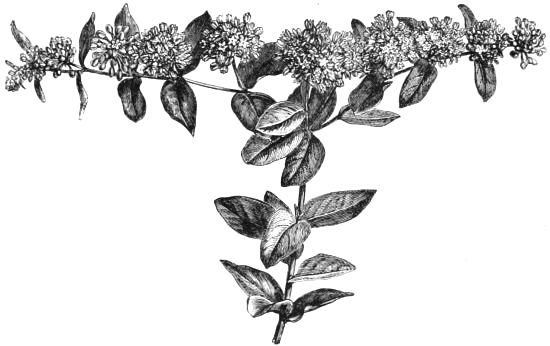
FIG. 158. FLOWERING BRANCH OF ASCLEPIAS TUBEROSA.
A. tuberosa (tuberous).* fl. bright orange, very showy; umbels disposed in a terminal sub-corymb. July to September. l. scattered, oblong-lanceolate, hairy. Stems erectish, divaricately branched at top, very hairy. h. 1ft. to 2ft. North America (in stony, sandy fields and woods), 1690. A desirable hardy herbaceous border plant. See Fig. 158.
A. variegata (variegated). fl., petals and foliola of corona white, fructification red, in dense umbels, very handsome; umbels almost sessile; pedicels hairy. July. l. opposite, ovate, petiolate, wrinkled, naked. Stems simple. erect, variegated with purple. h. 3ft. to 4ft. New York to Carolina (on dry, sandy hills), 1597.
A. verticillata (whorled). fl., corolla with yellowish green petals and white nectaries; umbels many-flowered. July and August. l. very narrow, linear, thick, quite glabrous, usually verticillate, but sometimes scattered. Stems erect, often branched, having a downy line on one side. h. 1ft. to 2ft. New Jersey, 1759.
ASCYRON. See Hypericum Ascyron.
ASCYRUM (from a, without, and skyros, hard; that is to say, a plant which is soft to the touch). ORD. Hypericinæ. A genus of elegant little herbs and sub-shrubs, with sessile, entire leaves, destitute of pellucid dots, but usually furnished with black dots beneath. Flowers resembling Hypericum. They require to be protected during winter by a frame; for this purpose they should be grown in pots, as they never exist long in the open border. A compost of peat, pure leaf soil, and sand, in equal portions, suits them well; young cuttings of the shrubby kinds will root in sand under a hand bell glass. Propagated by careful divisions of the roots in spring. All may be raised from seeds.
A. amplexicaule (stem-clasping). fl. yellow, few, axillary, and terminal; corymbs naked. July. l. stem-clasping, ovate, cordate, sinuately-curled. Stem dichotomously panicled. h. 2ft. North America, 1823. The flowers and leaves are longer in this than in any other of the species.
A. Crux Andreæ.* St. Andrew's Cross. fl., petals narrow-pale, yellow, nearly sessile, in terminal corymbs. July. l. ovate-linear, obtuse, usually in bundles in the axils. Stem shrubby, round. h. 1ft. North America (in sandy fields), 1759. This proves to be quite hardy in many situations.
A. hypericoides (Hypericum-like). fl. yellow. August. l. linear-oblong, obtuse. h. 2ft. North America, 1759.
A. stans (standing). St. Peter's Wort. fl. yellow. August. l. oval or oblong, somewhat clasping. h. 2ft. North America, 1816.
ASHES. The earthy or mineral particles of combustible substances, remaining after combustion. Ashes are amongst the most economical manures.
Vegetable Ashes are generally the best application for manuring boggy, cold, and, consequently, sour and unprofitable land, in quantities of about forty bushels per acre, thinly and evenly distributed. The annual exhaustion of salts from large crops of grain, roots, and grass, is from 180lb. to more than 250lb. per acre; and the aggregate of a few years will so far impoverish the soil in one or more of the principles necessary to sustain a luxuriant vegetation, that it will cease to yield remunerating returns. The ashes of vegetables consist of such elements as are always required for their perfect maturity, and it is evident they must furnish one of the best saline manures which can be supplied for their growth; they contain, in fact, every element, and generally in the right proportions, for insuring a full and rapid growth. Both gardener and farmer will therefore perceive the great value of Ashes to their crops.
Coal Ashes. The bituminous and anthracite coals afford Ashes, and, although inferior in quality to those made from wood and vegetables, are, like them, a valuable manure, and they should be applied to the land in a similar manner. If they contain many cinders, from not having been thoroughly burned, they are more suited to heavy than to light soils. Coal Ashes, if very fine, may be sprinkled half an inch deep on the surface, over peas and beans, &c., to preserve them from mice; they may also be used for garden and greenhouse walks, where bricks or tiles are absent, being tidy in appearance, and an excellent substitute for other and more expensive material.
Peat Ashes. Peat approaching to purity, when thrown out of its bed and thoroughly dried, may be burned to an imperfect Ash, and when it does not reach this point, it will become thoroughly charred, and reduced to cinders. The process of burning should be as slow as possible. In either form, it is a valuable dressing for the soil.
ASH-TREE. See Fraxinus.
ASIATIC POISON BULB. See Crinum asiaticum.
ASIMINA (meaning unknown). ORD. Anonaceæ. Hardy shrubs, with oblong, cuneated, usually deciduous leaves. Flowers sometimes rising before the leaves, usually solitary and axillary. They thrive freely in a mixture of sand and peat. Propagated by layers put down in the autumn, or by seed, procured from their native country. Seedlings should be raised in pots, and sheltered in winter, until they have acquired a considerable size.
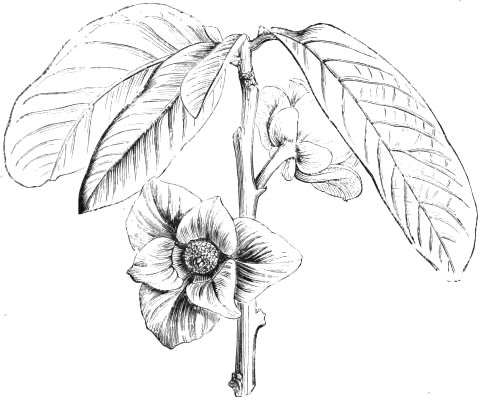
FIG. 159. FLOWERING BRANCH OF ASIMINA TRILOBA.
A. triloba (three-lobed).* fl. campanulate, the three outer petals pale purplish, and the three inner ones smaller, purplish on the outside as well as the inside at the base and apex, with the middle yellow, about 2in. diameter, produced between the upper leaves. May. l. oblong-cuneated, often acuminated, and, as well as the branches, smoothish. h. 10ft. Pennsylvania, 1736. A small tree or shrub. See Fig. 159.
ASKALLON (the Eschallot). See Allium ascalonicum.
ASPALATHUS (from a, not, and spao, to extract; in reference to the difficulty of extracting its thorns from a wound). Including Sarcophyllus. ORD. Leguminosæ. Shrubs or sub-shrubs, natives, with one exception, of the Cape of Good Hope. Flowers usually yellow, furnished with three bracteoles, or a leaf comprised of three leaflets. Leaves of three to five leaflets, disposed palmately, rarely pinnately, having scarcely any or very short petioles. All the species are pretty when in flower, and thrive in a mixture of loam, peat, and sand. Young cuttings of half-ripened wood will strike in April, in sand, under bell glasses, which must be wiped dry occasionally. But little water is needed. Over a hundred species are known; those introduced are very rarely seen in cultivation.
ASPARAGUS (from a, intensive, and sparasso, to tear; in reference to the strong prickles of some species). ORD. Liliaceæ. Erect or climbing herbs or shrubs, with very small scale-like leaves, and a profusion of numerous slender fascicled-needle, rather spiny branchlets. Flowers axillary, inconspicuous. Fruit baccate. The indoor species will all thrive well in a warm greenhouse temperature, provided they have partial shade, a good supply of moisture at the roots, and are not kept too close, in a moderately rich sandy compost. The hardy species are propagated chiefly by seeds and divisions of the roots. Rich sandy loam is necessary, and otherwise they may be treated as ordinary perennials. Some of the species belonging to this genus are among the most elegant of foliage plants for cutting purposes. A. decumbens and A. scandens make excellent plants for Wardian cases, and may be cut in freely if they exceed their limits.
ASPARAGUS (A. officinalis) AS A VEGETABLE. The value and importance of this plant as a vegetable cannot be over-estimated; it is extensively grown, and, when properly managed, produces a fairly lucrative crop.
Soil and Bed. The first thing to be done in the preparation of an Asparagus bed to stand for any length of time, is to secure an efficient drainage; and on wet soils this is best effected by placing a layer of brick rubbish over the whole of the bottom, and connecting this with a drain. On gravelly or other soils which are drained naturally, of course, this is not needed; but if really good crops are a desideratum, water should not stand within 3ft. of the surface. In all cases, the ground must be dug to a depth of 18in., and, if stiff, a goodly amount of road sweepings, or other gritty materials, should be well mixed with the staple soil. Asparagus requires a good soil, neither too heavy nor too light.
Manuring. After the soil has been well trenched, and has lain long enough to settle down, a good dressing of manure—thoroughly rotted, and not too rank, at the rate of from twenty to thirty tons to the acre, dug into the surface of the beds—will be found very beneficial. If possible, this should be introduced in January; and then, if the weather permits, the beds should be forked two or three times by the end of March, so as to render the soil as friable as possible. A very good manure, and one that is easily obtained, is common garden salt. This may be given annually to established beds. A moderate dressing should be applied just before growth commences in spring, but a little will do no harm at other times during the summer. It is best scattered on with the hand, and a showery day should be selected, as it will then soon disappear. Salt, besides acting as a manure, has also the properties of keeping the beds cool and moist in hot weather, and of preventing the growth of weeds.
Planting. Asparagus can be planted during March and April, the latter month being the best time for the work. The soil having been thoroughly prepared, the next point is to decide on the size of the beds; this depends on the size of garden, and the class of "grass" desired. When very large and fine stocks are the object in view, the best results will accrue if the plants are fully a yard apart each way; but this means a comparatively small crop. A good plan is to make the beds 3ft. wide, planting two rows, at a distance of 1ft. from each other, and allowing 18in. between each plant, placing them in alternate order. An 18in. alley should be allowed between the beds. The roots used for making the beds should be one year old, and fresh from the ground. In planting, pull out a wide drill with a hoe, or other tool, to the depth of about 3in. or 4in., and spread out the roots all round. Carefully shake the soil in amongst the roots, and, if dry, apply some water through a coarse-rosed watering pot, to settle the earth around them. At intervals, as necessary, give other waterings till September, when they should be discontinued. At all times, keep the beds free from weeds, removing them by the hand to prevent injury to the crowns of the plants. If the ground is good, no liquid manure will be needed the first year. As soon as the foliage turns yellow, cut it off, cleanly rake over the beds, and leave till about January, when a top-dressing of from 1in. to 3in. of thoroughly rotted manure may be applied with advantage. At the end of February, rake off the bed all loose straw or other debris, and throw on them a little of the soil from the alleys, raking down, and finishing off the edges squarely and neatly. During this and succeeding years, apply liquid manure and clear water, from time to time, as required; and, provided the manure is not of too great strength, there is scarcely any limit to its application; but, in many instances, beds which have only received an annual dressing have given a good return. Each year they must be cut over and dressed as before described, but care must be taken to keep them flat on the surface, otherwise the plants will die out for want of moisture. When the produce appears, the beds should be kept cut over until the 20th of June, after which, cutting should cease, or they will be rendered comparatively unproductive. Cutting can commence the second or third year, or as soon as there is any "grass" worth taking. Several methods of growing these plants could be cited, but that which we have recommended will be found most satisfactory.
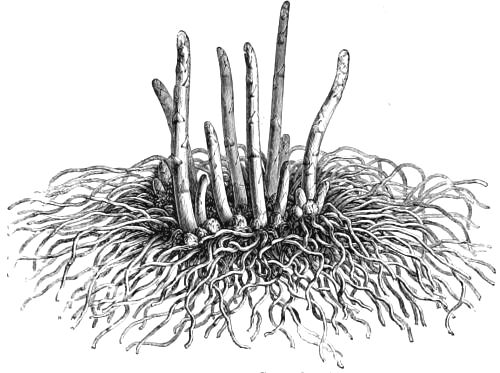
FIG. 160. ASPARAGUS, Crown for Lifting.
Seeds. Plants are raised by sowing seeds in rows across the kitchen garden, or selected quarter, about the month of April. The seedlings make a growth, and form good plants during the first season. In March or April of the following year, or the year after, they may be removed, and planted out permanently, as already alluded to. Many cultivators prefer growing their own plants from seed; because during the transit of the roots from any distance to where they are to be grown, a frequent and injurious exhaustion takes place, and particularly so when they are carelessly packed.
Forcing. Asparagus can, if properly treated, be obtained from December onwards; and at Christmas time the produce is very valuable; but, in order to obtain it at this season, it will be necessary to resort to forcing. Prepare some beds to secure a lasting heat, and on these place about 3in. of ordinary garden soil, not very stiff. Then take the roots, and place them crown upwards, and moderately close together, shaking the soil well amongst the roots, and covering about a couple of inches deep. Water well, to settle the whole, and put on the lights, allowing a little ventilation, to let out any steam which may arise. Unless the weather be very cold indeed, give a little air at all times, and only cover the lights in actual frost. From time to time, apply fresh linings of hot manure, and in cold rains, or wind, cover the outsides of the frames with old sacks, or other things which will keep in the heat. A regular and steady temperature of 60deg. will force this plant with better results than a higher one. Houses that are fitted with hot-water pipes to give bottom heat can be used equally as well as manure beds, and so long as the soil is kept moist, the heat thus obtained is as good as any for the purpose, and much less trouble than fermenting materials. To keep up a regular supply, a succession of beds will be necessary. Asparagus can be forced, or rather forwarded, in pots or boxes, in a warm greenhouse or vinery, and, of course, when the plants are done with, they can be cast away. We give an illustration (Fig. 160) of a bearing crown fit for gentle forcing; but, of course, it must not be left so bare of earth as appears here, which is done for the purpose of clearness.
Varieties. Connover's Colossal, and Giant, are the most esteemed. Strains are frequently largely advertised as improvements on the sorts above-mentioned, and the charges are higher accordingly. The difference may be generally attributed to the culture the plants receive more than to an improved variety. When saving seed for home sowing, they should be taken from the strongest growths, or deterioration will ensue.
A. æthiopicus ternifolius (ternate). fl. white, in shortly-stalked racemes, very profuse. August. l., false ones in threes, flattened, narrow, linear; prickles solitary, reversed; branches angular. h. 30ft. South Africa, 1872. A greenhouse evergreen.
A. Broussoneti (Broussonet's).* fl. very small, succeeded by small red berries. May. l., lower ones solitary, the others ternate, 1in. long, needle-shaped, persistent, distant, glaucescent; stipules with reflected spines at the base. Summer. Stem tapering, streaked, shrubby. h. 10ft. Canary Islands, 1822. A very pretty hardy climber.
A. Cooperi (Cooper's). fl. axillary, one to three, from the same nodes as the false leaves; perianth cream-coloured, one line long. April and May. l. minute, deltoid, scariose, reddish-brown; false leaves six to fifteen to a node, subulate, moderately firm, ¼in. to ⅜in. long, spreading or ascending. h. 10ft. to 12ft. Africa, 1862. A greenhouse climber, with a shrubby terete main stem, 1½in. to 2in. thick at the base, sending out crowds of spreading branches, which bear abundant slender, firm, alternate branchlets; nodes of branches and branchlets, furnished with distinct red-brown, subulate prickles, those of the main stems ¼in. long, deflexed, but not curved.
A. decumbens (decumbent).* Stem unarmed, decumbent, much branched; branches wavy; leaves setaceous, in threes. Cape of Good Hope, 1792. A greenhouse evergreen herbaceous perennial.
A. falcatus (hooked-leaved). l. fascicled, linear, falcate; branches round; prickles solitary, recurved; peduncles one-flowered, clustered. h. 3ft. India, 1792. A greenhouse evergreen perennial.
A. officinalis (officinal). Common Asparagus. fl. greenish-white, drooping. August. l. setaceous, fasciculate, flexible, unarmed. Stem herbaceous, mostly erect, rounded, very much branched. h. 1ft. Said to grow on "Asparagus Island," Kynance Cove, Lizard, but we have never found it there, and it has probably long since been exterminated.
A. plumosus (plumed).* fl. white, small, produced from the tips of the branchlets. Spring. l., true ones in the form of minute deltoid scales, with an acute ultimately reflexed point; the false ones are grouped in tufts, each being ⅛in. to ¼in. long, bristle-shaped, and finely pointed. South Africa, 1876. An elegant evergreen climber, with smooth stems and numerous spreading branches. It forms an excellent plant when trained in pots, and is invaluable for cutting.
A. p. nanus (dwarf).* A very elegant dwarf variety of above. Stems tufted, slender, and gracefully arching. South Africa, 1880. For bouquets, the cut sprays of both type and variety have the advantage of much greater persistency than any fern, retaining their freshness in water from three to four weeks. See Fig. 161, for which we are indebted to Messrs. Veitch and Sons.
A. racemosus (racemose). fl. greenish-white, in many-flowered axillary racemes. May. l. bundled, linear-subulate, falcate; branches striated; prickles solitary. h. 3ft. India, 1808. Greenhouse evergreen shrub.
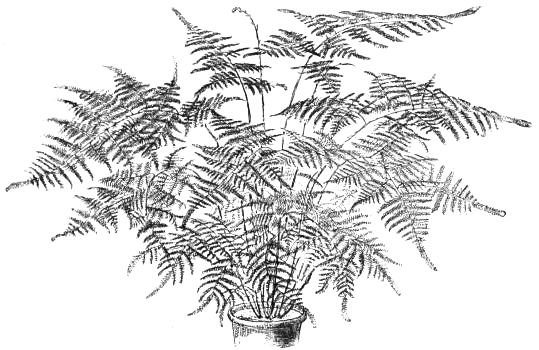
FIG. 161. ASPARAGUS PLUMOSUS NANUS.
A. ramosissimus (very branching). fl. solitary, at the tips of the branchlets; pedicels hardly perpendicular, one and a-half to two lines long; cream coloured. June. l. obscurely spurred at the base; false leaves three to eight-nate, flattened; linear-falcate acute, ¼in. to ⅜in. long, spreading. South Africa, 1862. A wide climbing, copiously branched, slender greenhouse shrub, with very numerous spreading or ascending branches and branchlets.
A. scandens (climbing).* fl. whitish, axillary on the ultimate branchlets, succeeded by round orange-coloured berries. The annual, much-branched, unarmed stems bear, usually in threes, numerous small linear-pointed leaves, which on the ultimate branches spread nearly in one plane. Cape of Good Hope, 1795. An elegant climbing greenhouse perennial.
A. virgatus (twiggy).* A remarkably elegant feathery looking plant, of shrubby habit. The stems, which issue from the crown of the stout fleshy roots, are of a dark green colour, and bear at the upper end a corymbose head of erect branches, of which the lowest is the youngest or most recently developed. These branches are again twice branched, the ultimate branchlets being furnished with needle-shaped false leaves, ½in. long, which usually grow in threes. South Africa, 1862.
ASPARAGUS BEETLE (Crioceris asparagi), or "Cross-bearer." This beautiful little insect is blue-black or greenish; the thorax is red with two black spots, and the wing-cases are yellow, with a black cross on them; the legs and antennæ are black. The short grey larva is flat underneath, arched on the back, and covered with hairs. The sides are of an olive hue, and the little legs and head are black. It ejects a drop of blackish fluid from the mouth when touched. When full grown, which takes about a fortnight, the larva measures about two lines in length; the average length of the perfect Beetle is about three lines. Although this insect does not actually destroy the plants, it inflicts much damage on the foliage, and checks the growth of the stems after they have attained some size, in consequence of which the foliage becomes much less in the next season. The eggs are fixed to the shoots, and are small, dark, pointed bodies. The larvæ do the harm, as they feed on the bark and tender portions of the plants. The mature Beetles should be picked off by hand, and, by commencing early enough in the season, their numbers will be greatly reduced. Syringing the plants with water, heated to a temperature that will not injure the plants, is found a useful method for removing the grubs.
White Hellebore. Freshly-ground White Hellebore, sprinkled over the foliage while it is damp, and repeating the operation at intervals of about eight days for a season, will generally effect a riddance; but the following will usually be found better in such cases. Neither must be applied until after cutting ceases, as they are very poisonous.
Paris Green. This, mixed and used as for Cherry Fly (see Black Fly), will generally got rid of the Beetle, if applied about thrice each season for two years. It should, however, only be used in severe cases.
Soot, applied in the same manner as White Hellebore, and in liberal quantities, will, in a season or two, clear the beds. If a bushel of salt be mixed with each twenty bushels of soot, it will enhance the effect.
ASPARAGUS KNIFE. The Asparagus Knife consists of a strong blade fixed in a handle. There are, or were, three kinds employed: In one form, the blade was blunt on both sides, straight, with a sharp tip, and not unlike a small chisel. Another had its blade slightly hooked, and serrated at one end. But the best is that now almost universally employed, and which is illustrated by Fig. 162.

FIG. 162. ASPARAGUS KNIFE.
ASPASIA (from aspazomai, I embrace; the column embraced by the labellum). ORD. Orchidaceæ. A genus of elegant stove Epidendrum-like epiphytal orchids, with the lip united to the column, and broad, thin pseudo-bulbs. The name Aspasia is now and then met with attached to a totally different genus. Salisbury gave it to a liliaceous plant which is now referred to Ornithogalum. For culture and propagation, see Stanhopea.
A. epidendroides (Epidendrum-like).* fl. whitish yellow; sepals linear oblong, acute; petals obtuse, concave, lateral lobes of lip roundish, entire, middle lobe crenated emarginate. February. Pseudo-bulbs oblong, two-edged. h. 1ft. Panama, 1833.
A. lunata (crescent-marked).* fl. green, white, and brown, solitary; sepals and petals linear obtuse, spreading; lip three-lobed, lateral lobes short, middle one flat, nearly square, wavy. February. Pseudo-bulbs oblong, two-edged. h. 1ft. Rio Janeiro, 1843.
A. papilionacea (butterfly-like).* fl., sepals and petals yellowish, mottled with brown lines on their internal inferior halves; lip fiddle-shape, its back very great, elliptic, apiculate; an orange-coloured area stands at its base, a wide violet disc before and around it. h. 9in. Costa Rica, 1876. Distinguished from A. lunata in having thirteen keels at the base of the lip, which is higher inserted, and in the echinulate anther. It is a beautiful but rare novelty.
A. psittacina (parrot-like).* fl., sepals and petals light green, with brown transverse bars, which sometimes consist of separate stripes, at other times of confluent ones; the fiddle-shaped lip shows two keels and a few purplish dots over its top; the column is brown at its top, then violet, and white at the base. Ecuador, 1878. It has a raceme of several flowers, usually one-sided, bent over.
A. variegata (variegated).* fl. green, spotted with yellowish red; sepals linear oblong; petals somewhat rhomboid, acute; lateral lobes of lip recurved, middle one fleshy, serrated. February. h. 9in. Panama, 1836. Deliciously sweet-scented in the morning.
ASPEN. See Populus tremula.
ASPERA. Rough, with hairs or points.
ASPERULA (from asper, rough; in allusion to the leaves). Woodruff. ORD. Rubiaceæ. Hardy herbs, rarely small shrubs. Flowers terminal and axillary, in fascicles. Leaves opposite, with one, two, or three stipulas on each side; they are therefore called four to eight in a whorl, but between the uppermost leaves there are no stipulas. Stems and branches usually tetragonal. Most of the species are very pretty when in flower, and are, therefore, well adapted for borders, rockwork, and shady places, in almost any garden soil. Propagated by divisions of the roots during spring and early summer. Herbaceous perennials, except where otherwise stated.
A. azurea-setosa (blue-bristly). A synonym of A. orientalis.
A. calabrica (Calabrian). A synonym of Putoria calabrica.
A. cynanchica (Cynanche-like). fl. on erect branches, forming a fastigiate corymb, white or bluish-coloured, elegantly marked with red lines, or sometimes pure white. Summer. l. four in a whorl; floral ones lanceolate-linear, acuminately awned; lower ones small, oblong, upper ones opposite. Plant glabrous, erectish. h. 9in. to 12in. England.
A. hirta (hairy). fl. white at first, changing to pink, with oblong divisions. July and August. l. usually six in a whorl, four towards the upper part, linear, hairy, deep green. h. 3in. Pyrenees, 1817. A charming but rare little alpine, thriving best in a rather damp position on the rockery.
A. longiflora (long-flowered).* fl. whitish, yellowish inside, and reddish outside; tube of corolla elongated; fascicles terminal, pedunculate; bracteas small, subulate. Summer. l. four in a whorl, linear; lower ones small, obovate; upper ones opposite. Stems weak, numerous, from the same neck, erectish, glabrous. h. 6in. Hungary, 1821.
A. montana (mountain).* fl., corollas pink, four-cleft, scabrous externally; in fascicles. June, July. l. linear; lower ones six in a whorl; middle ones four; upper ones opposite; floral leaves linear. Stem weak, glabrous. h. 6in. to 8in. Hungary, 1801.
A. odorata (sweet-scented).* Sweet Woodruff. fl. snowy white; corymbs terminal, pedunculate, usually trifid, each division bearing about four flowers. May, June. l. eight in a whorl, lanceolate, smooth, with serrulately scabrous edges. Stems tetragonal, simple, erect, or ascending. h. 6in. to 12in. Britain. This very pretty little plant is scentless when fresh, but, when dried, it diffuses an odour like that of spring grass; and when kept among clothes, it not only imparts an agreeable perfume to them, but preserves them from insects.
A. orientalis (Oriental).* fl. sky blue, in terminal heads; bracts of involucre shorter than the flowers. Summer. l. lanceolate, bristly, about eight in a whorl. h. 1ft. Caucasus, 1867. A charming little, profuse blooming, hardy annual, bearing clusters of fragrant flowers, admirably adapted for bouquet making. SYN. A. azurea-setosa. See Fig. 163.
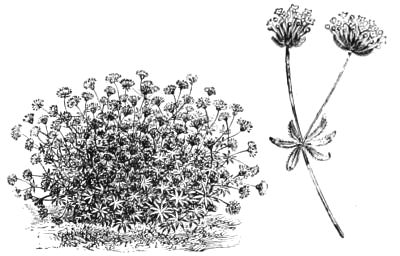
FIG. 163. ASPERULA ORIENTALIS, showing Habit and Portion of Inflorescence.
A. taurina (bull). fl., corollas white, elongated; corymbs pedunculate, axillary, fasciculately umbellate, involucrated; bracteas ciliated. April to June. l. four in a whorl, ovate-lanceolate, three-nerved, with finely ciliated margins. Plant smoothish, erect. h. 1ft. South Europe, 1739.
A. tinctoria (Dyers'). fl. white, reddish on the outside; usually trifid. June. l. linear; lower ones six in a whorl; middle ones four; and the uppermost ones opposite; floral leaves ovate. Plant procumbent, unless supported. Stem 1ft. to 2ft. long, purplish. Europe, 1764.
ASPHALT. Artificial Asphalt is now generally used in England for footpaths, &c. The recipes are various, one of the best being the following: Lime rubbish two parts, coal ashes one part (both must be very dry), sifted very fine; mix them, and leave a hole in the middle of the heap, wherein pour boiling hot coal tar; mix well together. When as stiff as mortar, lay it down, 3in. thick, on a dry and previously well-levelled surface. A boy should follow with dry, finely-sifted sand, distributing just enough to prevent his boots sticking to the tar. Two men should be employed for the tarring, whilst another should attend to the boiling operation. Only just enough tar to last ten minutes must be taken from the furnace at one time, as, if it be not boiling, the walks will become soft under the action of very hot sun. This may be repeated every three years. It is imperative that the surface, lime, coal ashes and sand be perfectly dry, and that the days selected for the operation be very fine, the hotter the better. Another excellent plan is that of using gas lime and coal ashes. There must be a firm foundation and smooth surface. Spread the gas lime to about 1½in. deep, and level with the back of a spade. Over this place a thin layer of coal dust, and well roll. The work is then complete.
ASPHODEL. See Asphodelus.
ASPHODELINE. ORD. Liliaceæ. A genus of plants allied to Asphodelus, but distinguished from it by having erect leafy stems. They thrive in any ordinary garden soil. Propagated by division.
A. brevicaulis (short-stemmed). fl. in lax, often panicled racemes, yellow, veined with green. l. subulate, ascending, lower ones 4in. to 6in. long. Stem slender, often flexuose. Orient.
A. damascena (Damascene). fl. white, in dense generally simple racemes, 6in. to 12in. long. l. in dense rosette, 6in. to 9in. long, subulate. Stem simple, erect. h. 1½ft. to 2ft. Asia Minor.
A. liburnica (Liburnian). fl. yellow, striped with green, in generally simple lax racemes, 6in. to 9in. long. Stem simple, erect, strict, 1ft. to 2ft. high, upper half naked. South Europe.
A. lutea (yellow). fl. yellow, fragrant, in a dense, very long, straight, simple raceme, in the axils of buff-coloured bracts, which are nearly as long as the flowers. Summer. l. numerous, awl-shaped, triangular, furrowed, smooth, dark green, marked with lines of a paler tint; root leaves tufted. Stem 3ft. or 4ft. high. Sicily, 1596. The best known and handsomest species. SYN. Asphodelus luteus.
A. l. fl.-pl. This resembles the species, but the flowers are double, and last much longer than those of the typical form; it is a very pretty plant.
A. taurica (Taurian). fl. white, striped with green, in generally simple dense racemes, 6in. to 12in. long, 1in. to 2in. wide. Stem simple, erect, 1ft. to 2ft. high, densely leafy at base of raceme. Asia Minor, &c. SYN. Asphodelus tauricus.
A. tenuior (slenderer). fl. yellow, in simple lax-flowered racemes, 3in. to 4in. long, 2in. wide. Stem simple lower half leaf, upper naked, 1ft. Orient. SYN. Asphodelus tenuior.
ASPHODELUS (from a, not, and sphallo, to supplant; in allusion to the beauty of the flowers). Asphodel. ORD. Liliaceæ. Very pretty hardy herbaceous perennials, with fleshy fasciculated roots. Perianth white or yellow, of six equal spreading segments; stamens six, hypogynous, alternately long and short. Leaves usually radical, tufted, narrow, or triquetrous. All the species enumerated thrive in good deep sandy loam, and are very suitable for borders and shrubberies. Propagated by division of the root, which is best done in early spring.
A. æstivus (summer). fl. white. Summer. h. 2ft. Spain, 1820.
A. albus (white).* fl. white; peduncles clustered the length of the bracts. May. l. linear, keeled, smooth. Stem naked, simple. h. 2ft. South Europe, 1596.
A. creticus (Cretan).* fl. yellow. July. l. filiform, striated, toothed, ciliated. Stem leafy, naked above, branched. h. 2ft. Crete, 1821.
A. fistulosus (pipe-stalked). fl. white. July, August. l. upright, striated, subulate, fistular. Stem naked. h. 18in. South Europe, 1596.
A. luteus (yellow). A synonym of Asphodeline lutea.
A. ramosus (branchy). fl. large, white, with a reddish-brown line in the middle of each segment, springing from the axils of ovate-lanceolate bracts, and in very long dense racemes. Summer. l. sword-shaped, stiff, sharply keeled below, channelled above. Stem much branched. h. 4ft. to 5ft. South Europe, 1829.
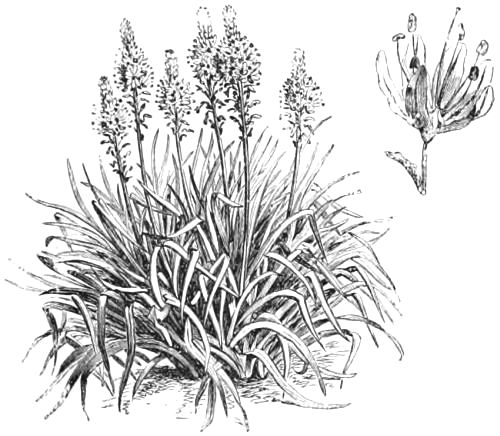
FIG. 164. ASPHODELUS VILLARSII, showing Habit and Flower.
A. Villarsii (Villars'). fl. white; raceme dense, elongated; bracts dark brown. Stem simple or rarely branched. h. 1ft. to 2ft. Eastern France. See Fig. 164.
ASPIDISTRA (from aspidiseon, a little round shield; in reference to the form of the flower). SYN. Porpax (of Salisbury). Including Plectogyne. ORD. Liliaceæ. Hardy, or nearly hardy, evergreen, foliage plants. Flowers insignificant, produced close to the ground, remarkable for the curious mushroom-like stigma, by which this genus is characterised. They thrive in almost any ordinary garden soil, but are best grown in rich loam, leaf soil, and sand; plenty of moisture being allowed. Propagated by suckers.
A. elatior (taller).* l. oblong, large, on long petioles, leathery; plant stemless. h. 1½ft. to 2ft. Japan, 1835. This very easily cultivated and quite hardy foliage plant is much grown for window gardening and other decorative purposes, for which it is well suited.
A. e. variegata (variegated).* A fine variety with alternately-striped green and white leaves.
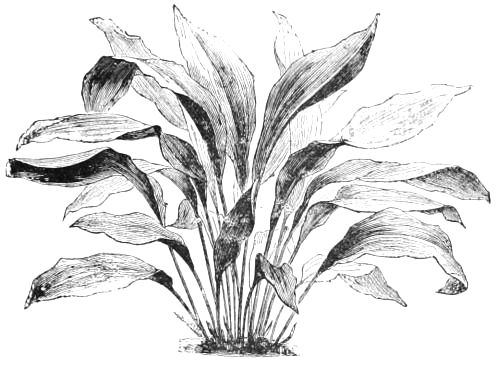
FIG. 165. ASPIDISTRA LURIDA.
A. lurida (lurid). fl. purple. July. l. oblong-lanceolate, on long petioles. h. 1ft. to 1½ft. China, 1822. A very graceful species, with long evergreen leaves. It is an effective plant for the outdoor garden during summer, and is nearly, if not quite, hardy. See Fig. 165.
A. punctata (dotted). l. lanceolate, on long stalks. h. 1ft. China. This is very closely allied to A. elatior, but of inferior value.
ASPIDIUM (from aspidion, a little buckler; in allusion to the form of the involucre). Shield Fern. ORD. Filices. Including Cyclodium, Cyclopeltis, Cyrtomium, Phanerophlebia, and Polystichum. Stove, greenhouse, or hardy ferns. Sori sub-globose, dorsal or terminal on the veinlets; involucre orbicular, fixed by the centre. They thrive in a compost of sandy peat with a little loam. Several species are admirably adapted for the indoor fernery. The hardy species are best grown in the shade; a little sandstone should be incorporated with the soil. For general culture, see Ferns.
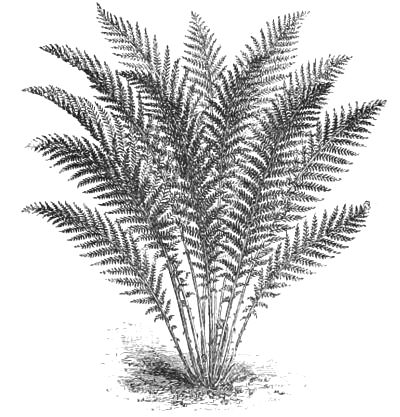
FIG. 166. ASPIDIUM ACULEATUM.
A. acrostichoides (Acrostichum-like).* sti. 6in. to 8in. long, densely scaly below. fronds 1ft. to 2ft. long, 2in. to 6in. broad; pinnæ of the lower half barren, 2in. to 3in. long, ¼in. broad, spinoso-serrated throughout, auricled at the base above; the pinnæ of the upper half fertile, much smaller. sori occupying the whole under side. North America. SYN. Polystichum acrostichoides. Hardy.
A. a. grandiceps (large-crested).* A very handsome fern, having the apices of the fronds and pinnæ heavily crested; equally desirable for the hardy or temperate fernery. Of garden origin.
A. a. incisum (incised).* A variety with the pinnules deeply cut and acutely pointed.
A. aculeatum (sharp-pointed).* The Hard Shield Fern. sti. tufted, 6in. to 12in. long, more or less scaly. fronds 1ft. to 3ft. long, 6in. to 12in. broad, ovate-lanceolate; lower pinnæ close, lanceolate, 4in. to 6in. long, ½in. to ¾in. broad; pinnules ovate-rhomboidal, unequal sided, auricled on the upper base; teeth aristate. sori nearer the midrib than the edge. A variable and hardy species, common throughout the world. SYN. Polystichum aculeatum. A. a. proliferum is a proliferous Australian form. A. a. vestitum has the rachis densely clothed to the point, both with reddish-brown fibrillose and large lanceolate dark brown scales. See Fig. 166.
A. amabile (lovely). sti. scattered, 6in. to 12in. long, slightly scaly below. fronds 1ft. or more long, 6in. to 12in. broad, with a lanceolate terminal pinna, and three to six lateral ones on each side, which are 3in. to 6in. long, 1in. to 1½in. broad, the lowest sometimes divided at the base; segments sub-rhomboidal, with at least half the lower side cut away, the upper side and part of the lower lobed and sharply spinuloso-serrated. sori sub-marginal. Ceylon. Stove species. SYN. Polystichum amabile.
A. angulare (angular). The Soft Shield Fern. Botanically this is only a variety of A. aculeatum; but, to the cultivator, it is abundantly distinct. The fronds are not so tapered at the base, the pinnules are more equal in size, and the lower ones distinctly stalked, while the texture is much less rigid than in A. aculeatum, the caudex has a tendency to elongate. Almost cosmopolitan in its distribution. SYN. Polystichum angulare. There are an enormous number of varieties, many of which are not under cultivation. Amongst the best found in gardens are alatum, Bayliæ, concinnum, corymbiferum, cristatum, curtum, dissimile, grandiceps, imbricatum, Kitsoniæ, lineare, parvissimum, plumosum, polydactylon, proliferum, rotundatum, Wakeleyanum, Woollastoni.
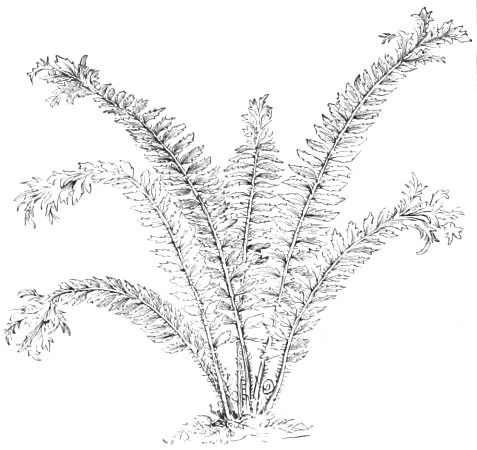
FIG. 167. ASPIDIUM ANGULARE GRANDICEPS.
A. a. grandiceps (large-crested). This is a narrow fronded variety, having the apices of the fronds branched and crested, ultimately producing a broad tasselled head. A very handsome fern. See Fig. 167.
A. anomalum (anomalous). sti. tufted, 1ft. to 2ft. long, densely scaly below. fronds 2ft. to 3ft. long, 1ft. or more broad; lower pinnæ 6in. to 9in. long, 2in. to 3in. broad; pinnules lanceolate, cut down in the lower part into oblong segments; teeth blunt or slightly mucronate. sori placed near the sinuses of the pinnules. Ceylon. Stove species. SYN. Polystichum anomalum.
A. aristatum (awned).* rhiz. creeping. sti. scattered, 9in. to 18in. long, very scaly below. fronds 1ft. to 2ft. long, 9in. to 12in. broad, ovate-deltoid, tri- or quadripinnatifid; lower pinnæ largest, 4in. to 6in. long, 2in. to 3in. broad; lowest pinnules much the largest, lanceolate-deltoid; teeth copious aristate. sori small, principally in two rows near the midrib. Japan, Himalayas, New South Wales, &c. Greenhouse species. SYN. Polystichum aristatum.
A. a. coniifolium (Conium-leaved).* fronds more finely divided; segments copiously toothed, with lower lobes distinct.
A. a. variegatum (variegated).* A handsome variety, with a broad band of green running through the bases of the pinnules along the course of the rachis.
A. auriculatum (eared).* sti. tufted, 4in. to 6in. long, scaly below or throughout. fronds 12in. to 18in. long, 2in. to 4in. broad; pinnæ numerous, sub-sessile, usually close, 1in. to 2in. long, about ½in. broad, ovate-rhomboidal, falcate, acute, spinoso-serrated, the upper base auricled, the lower one truncate. sori in two rows. India, widely distributed. Stove species. SYNS. A. ocellatum, Polystichum auriculatum.
A. a. lentum (pliant). Pinnæ cut into oblong mucronate lobes about half-way down to the rachis, the auricle sometimes quite free.
A. a. marginatum (margined).* A variety with more coriaceous texture; upper edge of the pinnæ slightly lobed.
A. capense (Cape).* sti. scattered, 1ft. to 2ft. long, densely scaly below. fronds 1ft. to 3ft. long, 12in. to 18in. broad, sub-deltoid; lowest pinnæ the largest, 6in. to 9in. long, 3in. to 4in. broad; pinnules and segments lanceolate, the latter bluntly lobed. sori very large and copious. South America, New Zealand, Cape Colony, Natal, &c. Greenhouse species. SYNS. A. coriaceum, Polystichum capense.
A. confertum (compressed). Synonymous with A. meniscioides.
A. coriaceum (leathery). Synonymous with A. capense.
A. falcatum (hooked).* sti. tufted, 6in. to 12in. long, densely scaly below. fronds 1ft. to 2ft. long, 6in. to 9in. broad, simply pinnate; pinnæ numerous, the lower stalked, ovate-acuminate, falcate, 3in. to 5in. long, 1in. to 2in. broad; edge entire or slightly undulated, the upper side narrowed suddenly, sometimes auricled, the lower rounded or obliquely truncate at the base. sori small, copious, scattered. Japan, China, Himalayas, &c. SYN. Cyrtomium falcatum.
A. f. caryotideum (Caryota-like) has pinnæ sometimes larger, sharply toothed, slightly lobed, sometimes auricled on both sides. SYN. Cyrtomium caryotideum.
A. f. Fortunei (Fortune's).* This differs from the type in having pinnæ narrower and more opaque. All are most useful house ferns, and quite hardy in many parts of the country. SYN. Cyrtomium Fortunei.
A. falcinellum (finely-hooked).* sti. tufted, 4in. to 8in. long, densely scaly. fronds 9in. to 18in. long, 3in. to 6in. broad; central pinnæ 2in. to 3in. long, ¼in. broad; point acute; edge finely serrated; the upper side bluntly auricled, the lower obliquely truncate at the base. sori in two long rows. Madeira. Greenhouse species. SYN. Polystichum falcinellum.
A. flexum (bending). rhiz. stout, wide-creeping. sti. scattered, 1ft. long, scaly. fronds 2ft. to 3ft. long, 9in. to 12in. broad; lower pinnæ lanceolate-deltoid, 4in. to 6in. long, 2in. to 4in. broad; pinnules lanceolate-deltoid, cut down to the rachis below into oblong bluntly-lobed segments. sori large, in two rows, copious. Juan Fernandez. Stove species. SYN. Polystichum flexum.
A. fœniculaceum (Fennel-leaved).* rhiz. creeping. sti. scattered, 6in. to 12in. long, densely scaly below. fronds 1ft. to 2ft. long, and 9in. to 12in. broad, lanceolate-deltoid, four to five pinnatifid; lower pinnæ 6in. to 8in. long, 3in. to 4in. broad; ultimate divisions linear, awned, with a firm texture. sori solitary. Greenhouse species. Sikkim, 7,000ft. to 10,000ft. SYN. Polystichum fœniculaceum.
A. frondosum (leafy). sti. scattered, 1ft. to 2ft. long, densely scaly below. fronds 18in. to 24in. long, 1ft. or more broad, sub-deltoid; lower pinnæ much the largest, long stalked; pinnules lanceolate; segments very unequal sided, pinnatifid, with rounded mucronate lobes, obliquely truncate at the base below. sori large, copious. Madeira. Greenhouse species. SYN. Polystichum frondosum.
A. Hookeri (Hooker's). sti. 1ft. or more long, naked. fronds 2ft. to 3ft. long; pinnæ 6in. to 8in. long, 1in. broad, cut down to a broadly-winged rachis into nearly close, spreading, entire, linear-oblong lobes ⅛in. broad. sori nearer the edge than the midrib. Malay Archipelago. Stove species. SYNS. A. nephrodioides and Cyclodium Hookeri.
A. laserpitiifolium (Laserpitium-leaved).* sti. 4in. to 6in. long, stramineous, scaly at base. fronds 12in. to 18in. long, 6in. to 9in. broad, ovate-deltoid, tripinnate; lower pinnæ the largest, with pinnules on the lower side prolonged, lanceolate, imbricated with small, distinct, bluntly-lobed segments. sori in two rows, very copious. Japan. A very desirable greenhouse species. SYNS. Lastrea Standishii (of gardens) and Polystichum laserpitiifolium.
A. lepidocaulon (scaly-stemmed). sti. tufted, 6in. to 9in. long, densely clothed with large cordate scales. fronds 1ft. or more long, 4in. to 6in. broad, sometimes elongated and rooting at the point: pinnæ 2in. to 3in. long, ½in. to ¾in. broad, lanceolate-falcate, the two sides unequal, the upper one auricled at the base. sori principally in two rows, near the midrib. Japan. Greenhouse species. SYN. Polystichum lepidocaulon.
A. Lonchitis (spar-like).* The Holly Fern. sti. densely tufted, 1in. to 4in. long, scaly at base. fronds 1ft. to 2ft. long, 1in. to 3in. broad, pinnate throughout; pinnæ ½in. to 1½in. long, ¼in. to ½in. broad, ovate-rhomboidal, sub-falcate, the two sides unequal, point mucronate, edge spinuloso-serrated, the upper side sharply auricled at the base, the lower obliquely truncate. Britain, &c. A very widely-spread hardy species. SYN. Polystichum Lonchitis.
A. meniscioides (Meniscium-like). sti. 1ft. to 2ft. long, scaly below. fronds 2ft. to 3ft. long, 1ft. or more broad, pinnate; barren pinnæ sessile, 6in. to 9in. long, 1½in. to 2in. broad, oblong-acuminate, nearly entire; fertile pinnæ much smaller. sori in two close rows between the primary veins. West Indies, &c. Stove species. SYNS. A. confertum and Cyclodium meniscioides.
A. mohrioides (Mohria-like). sti. tufted, 2in. to 6in. long, more or less densely scaly. fronds 6in. to 12in. long, 2in. to 3in. broad, bipinnate; pinnæ numerous, frequently imbricated, lanceolate, cut down below into slightly toothed, oblong-rhomboidal pinnules. sori copious. Patagonia and the Cordilleras of Chili. Greenhouse species. SYN. Polystichum mohrioides.
A. mucronatum (mucronated).* sti. tufted, 2in. to 4in. long, densely scaly. fronds 12in. to 18in. long, 1½in. to 2in. broad, pinnate throughout; pinnæ very numerous, often imbricated, ¾in. to 1in. long, ¼in. to broad, sub-rhomboidal, unequal-sided, mucronate, sub-entire, distinctly auricled at the upper base. sori in a long row on each side the midrib. West Indies. Stove or greenhouse species. SYN. Polystichum mucronatum.
A. munitum (armed).* sti. tufted, 4in. to 9in. long, densely scaly. fronds 1ft. to 2ft. long, 4in. to 8in. broad; pinnæ close, 2in. to 4in. long, about ½in. broad, acuminate, finely spinulose and serrated throughout, the upper side auricled, and the lower obliquely truncate at the base. sori in two rows near the edge. California, &c. Hardy; very fine. SYN. Polystichum munitum.
A. nephrodioides (Nephrodium-like). Synonymous with A. Hookeri.
A. ocellatum (spotted). Synonymous with A. auriculatum.
A. pungens (stinging). rhiz. stout. sti. scattered, 1ft. long, scaly below only. fronds 2ft. to 3ft. long, 9in. to 12in. broad; lower pinnæ 4in. to 6in. long, 2in. to 3in. broad; pinnules ovate-rhomboidal, unequal-sided, often deeply pinnatifid. sori principally in two rows near the midrib. Cape Colony. Greenhouse species. SYN. Polystichum pungens.
A. repandum (wavy-leaved). sti. 1ft. to 2ft. long, naked. fronds 2ft. or more long, 12in. to 18in. broad, apex deeply pinnatifid, with linear-oblong, slightly sinuated lobes; lower pinnæ four to eight on each side, 6in. to 8in. long, 1¼in. to 1½in. broad, acuminate; edge bluntly sinuated, the lowest stalked and forked. sori in two distinct rows near the main vein. Philippines. Stove species.
A. rhizophyllum (frond-rooting). sti. tufted, 1in. to 2in. long, slender. fronds 2in. to 6in. long, ¾in. broad, with the long, narrow upper half of the frond lengthened out and rooting, the lower half cut down to a flattened fibrillose rachis into oblong-rhomboidal sub-entire lobes about ½in. broad, ¼in. deep. sori scattered. Jamaica, 1820. Stove or cool house species. SYN. Polystichum rhizophyllum.
A. semicordatum (half-cordate). sti. scattered, 6in. to 12in. long. fronds 2ft. to 3ft. long, 8in. to 12in. broad, simply pinnate; pinnæ spreading, 4in. to 6in. long, ½in. to ¾in. broad, nearly entire, acuminate, cordate or truncate at the base. sori in one to three rows on each side, the inner one close to the midrib. Tropical America, &c. SYN. Polystichum semicordatum.
A. trapezioides (Trapezium-like). Synonymous with A. viviparum.
A. triangulum (triangular).* sti. tufted, 2in. to 6in. long, base scaly. fronds 1ft. or more long, 1½in. to 2in. broad; pinnæ numerous, sessile, lower ones distant, central ones ¾in. to 1in. long, about ⅝in. broad, sub-deltoid, lower side obliquely truncate; apex mucronate, edge sub-entire or slightly lobed, with blunt or spinose teeth, one or both sides auricled at the base. sori principally in two rows near the edge. West Indies. Stove or greenhouse species. SYN. Polystichum triangulum.
A. trifoliatum (three-leaved). sti. tufted, 1ft. or more long, base only scaly. fronds 12in. to 18in. long, 6in. to 12in. broad, with a large ovate-acuminate terminal pinna, narrowed or forked at the base, and one or two lateral ones on each side, the lowest mostly forked. sori in rows near the main veins. Tropical America. Stove species.
A. t. heracleifolium (Heracleum-leaved). A form with pinnæ pinnatifid on both sides at the base.
A. tripteron (three-winged). sti. 6in. to 9in. long, densely scaly at base. fronds 12in. to 18in. long, with a large terminal and two small spreading lateral pinnæ at the base of it, the former 2½ in. to 3in. broad, with very numerous spreading pinnules on each side, 1½in. long, about ½in. broad, unequal sided, acute, deeply inciso-pinnatifid, the lower lobes again toothed; lateral pinnæ 3in. to 5in. long, 1½in. to 2in. broad. sori principally in two rows midway between midrib and edge. Japan. Greenhouse species. SYN. Polystichum tripteron.
A. varium (variable).* rhiz. sub-creeping. sti. 6in. to 12in. long, densely fibrillose below. fronds 12in. to 18in. long, 9in. to 12in. broad, lanceolate-deltoid; lower pinnæ much the largest, sub-deltoid, unequal sided, 4in. to 6in. long, 3in. to 4in. broad; pinnules lanceolate, imbricated, with oblong, blunt, slightly toothed segments. sori principally in two rows near the midrib. Japan. Greenhouse species. SYNS. Lastrea varia and Polystichum varium. It is frequently met with in gardens under the former name.
A. viviparum (bud-producing). sti. tufted, 4in. to 6in. long, scaly at the base. fronds 12in. to 18in. long, 4in. to 6in. broad; pinnæ numerous, nearly lanceolate, the central ones 2in. to 3in. long, about ½in. broad, mucronate, sometimes bud-bearing, the edge more or less deeply lobed, in the lower part sometimes quite down to the rachis, the upper side auricled. sori in two or four rows. West Indies. Stove or greenhouse species. SYNS. A. trapezioides and Polystichum viviparum.
ASPLENIUM (from a, not, and splen, spleen; referring to the medicinal properties formerly attributed to the genus). Spleenwort. ORD. Filices. Including Anisogonium, Athyrium, Ceterach, Cænopteris, Darea, Diplazium, Hemidictyum, Neottopteris. A very large and widely-spread genus, including species suitable for the stove, temperate, and hardy ferneries. Sori dorsal or submarginal, linear or oblong. Involucre similar in shape, straight or occasionally curved, single or double, plane or tumid, bursting along the outer edge. The tropical species should be grown in a compost of peat, loam, and sand; the hardy sorts in a mixture of fibrous peat and sand. Good drainage is at all times required. For general culture, see Ferns.
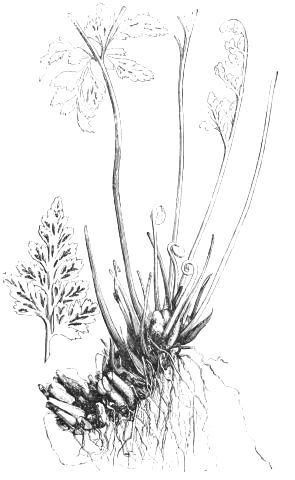
FIG. 163. ASPLENIUM ADIANTUM-NIGRUM, showing Rootstock and back of Fertile Fronds.
A. abscissum (clipped). sti. tufted, 4in. to 8in. long. fronds 6in. to 12in. long, 3in. to 4in. broad, sometimes proliferous at the apex, with twelve to twenty horizontal pinnæ on each side, which are 1½in. to 2in. long, about ½in. broad, bluntish; edge inciso-crenate, the upper one narrowed suddenly at the base, the lower one obliquely truncate. sori short, in two regular rows, falling short of both midrib and edge. Tropical America. Stove species. SYN. A. firmum.