THE DICTIONARY OF GARDENING, (continued 3)
Reading edition
Æ. discolor (two-coloured-leaved).* fl. scarlet, borne on a loose, branched panicle. June. l. broad, minutely toothed on the margin, deep green above, and rather purplish beneath. h. 2ft. Brazil, 1844.
Æ. distichantha (two-ranked-flowered).* fl. sepals rose-coloured; petals bright purple; spikes densely clothed with bright red bracts. l. long, glaucous, linear-oblong, tapering to a sharp point, and distinctly armed with reddish brown spines. h. 1ft. South Brazil, 1852. SYN. Billbergia polystachya.
Æ. exudans (exuding). fl. orange-coloured (exuding a white greasy substance, whence the specific name) interspersed with green bracts; scape erect, with scattered crimson lanceolate bracts, terminating in a dense head. l. oblong, spine-margined, grey-coated. h. 2ft. West Indies, 1824. SYN. Hohenbergia capitata.
Æ. fasciata (banded).* fl. scape upright, clothed with leafy bracts of a rosy-pink colour; each of the pink blossoms in the dense conical head is subtended by a narrow, spiny-edged, similarly-coloured bract, longer than its own. l. broad, recurved, banded with white. Rio Janeiro, 1826. SYN. Billbergia fasciata. Lasts in perfection for a considerable length of time.
Æ. fulgens (glowing).* fl. deep rich red, with a bluish tip, fifty or more in a large branching panicle; scape stout, erect, scarlet. August, September. l. somewhat sword-shaped, terminating rather abruptly. Cayenne, 1842. See Fig. 33.
Æ. Furstenbergi (Furstenberg's). fl. rose; flower spike dense, with overlapping showy pink bracts. l. tufted, linear, spinous at the edge, recurved. h. 1ft. Bahia, 1879.
Æ. glomerata (glomerate).* fl. violet; scape erect, stout, 8in. to 10in. high, with glomerate branches of crowded blood-red bracts. l. oblong-ligulate, cuspidate, about 18in. long, dull green; margin with short wide-set spines. Bahia, 1868. SYN. Hohenbergia erythrostachys.
Æ. hystrix (bristly).* fl. in very dense, oblong spikes; floral leaves and bracts scarlet. February. l. densely crowded, ascending, linear lanceolate, saw-toothed. h. 2½ft. Cayenne, 1880.
Æ. Legrelliana (Legrell's). A synonym of Portea Legrelliana.
Æ. Lindeni (Linden's). fl. yellow, in dense terminal heads, with lanceolate red bracts, shorter than the flowers. l. linear-oblong, rounded, apiculate; margins saw-toothed; habit tufted. h. 1ft. South Brazil, 1864.
Æ. Mariæ Reginæ (Queen Maria's).* fl. tipped with blue, changing to salmon colour with age, arranged compactly upon the upper portion of the spike; scape erect, about 2ft. high; half the length is clothed with large boat-shaped bracts, some 4in. long, intensely rich rose-pink. June, July. l. 18in. long, with a tufted habit. Costa Rica, 1873. This is perhaps the best species.
Æ. Melinoni (Melinon's). fl. bright scarlet, tipped with pink, cylindric; panicle dense, terminal. l. oblong, leathery, about 18in. in length, dark green; margin spiny. South America.
Æ. Ortgiesii (Ortgies'). fl. red, on short spikes. l. numerous, channelled, recurved, spongy, broad at the base, and tapering to a point; stem short, gouty. Tropical America, 1860. SYN. Ortgiesia tillandsioides.
Æ. paniculigera (panicled). fl. rose-coloured; petals projecting beyond the sepals, deep bright purple; panicle large, compound, 1ft. to 2ft. long; scape reddish, downy; rachides and bracts rose-coloured. l. ligulate, shortly acuminate. West Indies, 1881.
Æ. spectabilis (showy).* fl. rosy; calyx fleshy, ovate; corolla 1in. long, rosy crimson. l. spreading, channelled, ligulate, 2½ft. long, 3in. to 4in. broad. Guatemala, 1875.
Æ. Veitchii (Veitch's).* fl. scarlet; spike densely clothed with scarlet toothed bracts, closely investing flowers. l. tufted, leathery in texture, broadly strap-shaped, spotted, and minutely serrulate. h. 1ft. Columbia, 1877. SYN. Chevalliera Veitchii.
ÆGICERAS (from aix, a goat, and keras, a horn; alluding to the shape of its fruit). ORD. Myrsineæ. Small trees, with obovate entire leaves. Flowers white, fragrant, in terminal or axillary umbels. For culture, see Jacquinia.
Æ. fragrans (fragrant). fl. white, fragrant; umbels pedunculate, axillary, terminal. April. l. obovate, margin undulated, and unequally dilated, veiny; upper surface covered with saline excrescence. h. 6ft. New Holland, 1824.
ÆGILOPS. See Quercus Ægilops.
ÆGIPHILA (from aix, a goat, and philos, dear; a favourite with goats). ORD. Verbenaceæ. Stove ornamental evergreen shrubs, generally with ovate-lanceolate, acuminate, smooth leaves; and flowers in axillary and terminal panicles. They require a rich sandy loam. Propagated from cuttings, which will root in sand, under a glass, with bottom heat.
Æ. grandiflora (large-flowered).* fl. yellow, terminal, corymbose; corolla downy. November. Berry compressed, blue. l. verticillate oblong, entire, sub-cordate at base. h. 3ft. Havannah, 1843. The other species are probably not now in cultivation, and this one is not generally so.
ÆGLE (from Ægle, one of the Hesperides). Bengal Quince. ORD. Rutaceæ. A stove evergreen tree, producing very large fruit, which much resembles an orange in general appearance, very delicious to the taste, and exquisitely fragrant. This genus differs principally from Citrus by its numerous disunited stamens. The pulp of the fruit is an aperient, and a valuable remedy in dysentery, the thick rind and the dried unripe fruit are astringent. It thrives best in a rich loamy soil. Propagated by ripe cuttings, which, if not deprived of any of their leaves, will root in sand under a hand glass, in heat.
Æ. Marmelos (Marmelos). fl. white, very fragrant; panicles axillary, terminal. April. fr. fifteen-celled. l. trifoliate; leaflets toothletted. h. 10ft. India, 1759.
ÆOLANTHUS (from aiollo, to vary, and anthos, a flower; referring to the variableness of the flowers). ORD. Labiatæ. A genus of few herbs, with thickish leaves. Flowers loosely panicled. They thrive in sandy loam, and increase freely from seeds sown in a similar compost.
Æ. Livingstonii (Livingstone's). fl. brown. East Africa, 1859.
Æ. suaveolens (sweet-scented). fl. lilac, secund; cymes axillary and terminal, erect, usually trifid, with floral leaves under the divisions. July. l. nearly sessile, obovate, obsoletely denticulated, thickish, pale green. h. 1ft. Brazil, 1859. A pretty stove annual, with a sweet odour.
AERANTHUS (from aer, air, and anthos, a flower; referring to the habit). ORD. Orchideæ. A genus of a couple of species of remarkable stove orchids, requiring treatment similar to Anguloa, to which they are allied.
Æ. arachnitis (spider-like). fl. green. l. linear. h. 4in. Madagascar, 1850.
Æ. grandiflora (large-flowered).* fl. yellowish-green, large, solitary, terminal. h. 8in. Madagascar, 1823.
AERATION. The exposure of the soil to the free action of the air, as essential to the growth of plants.
AERIDES (from aer, the air; in reference to the power the species have of deriving their sustenance from the atmosphere). ORD. Orchideæ. An extensive genus of epiphytal orchids, confined to the tropics of the Old World, including many large and showy-flowered species. The majority of them are extremely handsome. The thick fleshy leaves are noteworthy for their characteristically distichous arrangement—that is to say, they are arranged in two opposite rows. They are usually truncate at the apex, and for the most part deeply channelled down the centre, but in some species terete or nearly cylindrical. All of them throw out large fleshy roots from various parts of their stems, by which they absorb the moisture from the atmosphere; and, in order to grow them successfully, they must be fixed upon blocks of wood. But this method should be adopted only whilst the plants are young, as it is almost an impossibility for the cultivator to maintain a sufficient amount of atmospheric moisture to meet their requirements; and, unless this is managed, the leaves will shrivel and fall off, leaving only a few at the extremity. Therefore, as soon as the plants are established upon the blocks of wood, let them be removed and potted. Fill the pot three parts full of broken potsherds and lumps of charcoal, and then use nothing, but clean, living sphagnum, placing a few roots in the moss and leaving the others free. By this means a greater amount of moisture can be supplied to them, and thus beautiful and symmetrical specimens obtained. The Aerides are easily grown into handsome plants, which usually bloom profusely, and thus recommend themselves to all who cultivate orchids. From early spring until the end of September they should be treated liberally with water, at the same time taking care never to wet the flowers. After the above-named time, a gradual diminution in the water supply to the roots should take place; and the atmosphere, too, should be less densely charged with moisture. But drought should never be carried far enough to cause the leaves to shrivel, for, if this is done, the uniformity of the specimen is marred; and, although we are quite willing to admit the possibility of the plants producing a greater quantity of flower spikes after a thorough shrivelling, we prefer to advocate the system that gives a fair amount of flower coupled with good leafage. As before remarked, the Aerides are peculiarly eastern, and therefore are usually classed amongst the orchids which require the hottest houses. This is, in one sense, correct; yet they do not require the great amount of heat which many imagine, and which has, until recently, been given them. They must not, therefore, be excluded from the amateur's collection of orchids. During the winter season many of the species may be kept in a temperature of 58deg. to 60deg.; whilst during the growing season the temperature may run up by sun heat without limit, so long as a free circulation of air and a sufficiency of moisture are secured. The following status of temperature may be observed: In spring, from 65deg. in the night, to 70deg. or 80deg. by day; in summer, from 70deg. in the night, to 80deg. or 85deg. through the day; in winter, about 60deg. night, and 65deg. day.
A. affine (related).* fl. delicate rose, produced, in great profusion, on branching spikes, which are sometimes 2ft. in length, and continue in bloom two or three weeks; the sepals and petals equal, rounded at the apex; the lip is sharply rhomboid and three-lobed, with a short spur. l. light green, about 1ft. long. h. 3ft. A very handsome species from India, forming an excellent exhibition plant.
A. a. superbum (superb).* An improved variety, with larger and richer coloured flowers, and more compact habit.
A. Brookii (Sir A. Brooke's).* fl. purple and white; labellum bright purple; sepals and petals white, very fragrant. l. very ornamental, of a glaucous (milky green) hue. Bombay. This species, although one of the handsomest, is very rare.
A. crassifolium (thick-leaved).* This is a dwarf, densely-habited plant, with broad, thick, purple-dotted obliquely-bilobed leaves. The flowers, which are borne on long and drooping spikes, are bare—larger than those of A. falcatum, which they resemble in form, and have the segments tipped with rich purple or amethyst, the centre or throat of the flower being ivory-white. Compared with A. falcatum, the spur is here bent under at an angle, while in that plant it is straight; the side laciniæ of the lip are much broader and shorter in the present plant, and the two keels on the lip here stand close together at the base, and become divergent, whilst in falcatum they are distant at the base, and become convergent near the middle of the lip. This species is described as being the best in the genus. It may be grown near the glass, suspended in a basket. Burmah, 1877.
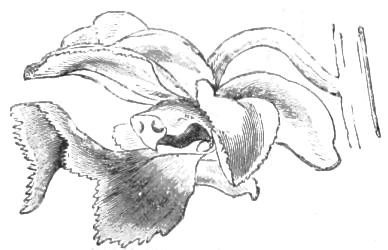
FIG. 34. FLOWER OF AERIDES CRISPUM.
A. crispum (curled).* fl. white, suffused with purplish rose, nearly 2in. in diameter; sepals and petals ovate, acute; lip three-lobed, the middle lobe being very large, toothed at the base, and fringed at the margin; the horn-like spur is slightly incurved; racemes ascending, more than double the length of the leaves, many-flowered. l. deep green, flat and broad, blunt at the ends, and two-lobed, about 4in. or 5in. long. Bombay, 1840. Lasts a long time in beauty. See Fig. 34.
A. c. Lindleyanum (Lindley's). A robust-growing variety, producing a large, much-branched panicle of flowers; sepals and petals white; lip large, bright rich rose-coloured.
A. c. Warneri (Warner's).* The leaves are smaller, and more slender than in the species; the sepals and petals are white, with a soft, rich, rose-coloured lip.
A. cylindricum (cylindric).* fl. white and pink, as large as those of A. crispum; sepals and petals crispy. l. elongate, subulate, terete, 4in. to 6in. long. East Indies. A very rare and distinct species. SYN. A. vandarum.
A. dasycarpum (thick-fruited). fl. brownish, rosy. India, 1865.
A. dasypogon. See Sarcanthus erinaceus.
A. difforme (deformed). fl. green and brown. India, 1865.
A. Dominiana (Dominy's).* This is a garden hybrid between A. Fieldingii and A. affine, with the colour of the former, but markings and shape of the latter. Very rare.
A. falcatum (sickle-leaved).* fl. sepals and petals white, dotted with reddish crimson, and tipped with soft rose; lip white at the sides, with a rosy-crimson centre; spur short, parallel with the lip; racemes pendulous, many flowered. l. closely set upon the stem, peculiar blue-green, coriaceous, obtuse and mucronate. This species is very closely allied to A. crassifolium. SYN. A. Larpentæ.
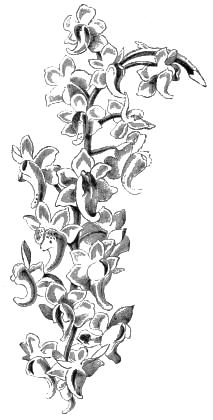
FIG. 35. AERIDES ODORATUM.
A. Fieldingii (Fielding's).* The Fox-brush Ærides. fl. white, numerous, large, beautifully mottled with bright rose colour; the much branched racemes are 2ft. to 3ft. long, and continue blooming three or four weeks. l. 8in. to 10in. long, in some plants light green, and in others dark green; long, broad, thick, and fleshy, obliquely two-lobed at the apex. h. 3ft. to 4ft. Assam.
A. Houlletianum (Houllet's).* fl. sepals and petals buff, shading off into cream white at the base, with a purplish eye-spot at their tips; lip white; front part dark purplish, with some lines of the same colour on the sides; on densely crowded spikes. l. and growth similar to A. virens. Cochin China. SYN. A. Mendelii.
A. japonicum (Japanese).* fl. white, with the lateral sepals slightly barred with brown purple; several on the pendent racemes; lip purple, spotted, marked with a dark violet central ridge. l. short, linear-oblong, obtusely bilobed. Stems short, about 4in. high. A pretty cool house species from Japan, 1862.
A. Larpentæ (Lady Larpent's). Synonymous with A. falcatum.
A. Lobbii (Lobb's).* fl. white in the centre, slightly tinted with blush-rose towards the outside, somewhat spotted with violet; lip marked with a whitish central bar, and stained with a deep violet on either side; on long, dense, cylindrical, pendent spikes. l. ligulate, obliquely two-lobed at the apex, thick and fleshy in texture, about 18in. long, and of a light green hue. Moulmein, 1868. This elegant plant, of which many distinct varieties are in cultivation, is one of the most delicate of the genus.
A. maculosum (spotted). fl. large, with obtuse pale rose-coloured sepals and petals, which are spotted with purple; lip flat and undivided, bluntly ovate, and of a deep rosy-purple; racemes pendulous, proceeding from among the upper leaves, somewhat lax and branching. l. ligulate, thick, and fleshy, obtuse at the apex, 8in. or 9in. long, dark green. A somewhat slow growing species, with a rather stiff, dwarf habit. Bombay, 1840.
A. m. Schrœderi (Schrœder's).* fl. very delicate white, tinged with lilac and spotted with rose; labellum beautiful rose coloured. l. dark green, 10in. long. h. 18in. East Indies. A very free growing and handsome variety, superior to the species, but rare in cultivation.
A. Mendelii (Mendel's). Synonymous with A. Houlletianum.
A. mitratum (mitred).* fl. waxy-white; lip violet coloured, on numerous dense erect racemes. April. l. cylindrical, attenuated, about 2ft. long, dark green. Moulmein, 1864. A rare but elegant species.
A. nobile (noble).* fl. sepals and petals white tipped, and spotted with bright rose; lip three-lobed, the side lobes creamy yellow, and the middle lobe slightly bifid at the apex, white, dotted with rose-purple, very fragrant; racemes 2ft. to 3ft. long, pendulous, much branched, many flowered. l. strap-shaped, obliquely emarginate at the apex, light green, slightly spotted with brown. Not unlike A. suavissimum, but with larger and better coloured flowers, and more robust growth. East Indies.
A. odontochilum (tooth-lipped). h. 2ft. Sylhet, 1837.
A. odoratum (fragrant).* fl. sepals and petals creamy and white, tipped with pink; lip cucullate, with even side lobes, the middle lobe being ovate and inflexed, the spur conical and incurved, of the same colour as the sepals, very fragrant; racemes longer than the leaves, many-flowered, pendulous. l. oblique, obtuse, mucronate at the apex, and dark green. East Indies, 1800. See Fig. 35.
A. o. cornutum (horned). fl. pink and white. Distinct.
A. o. majus (greater).* Like A. odoratum in growth, but with larger and longer spike of flowers.
A. o. purpurascens (purplish).* A very robust variety, with broad dark green leaves and massive spike of large flowers, which are white, tipped with bright pink.
A. pachyphyllum (thick-leaved). fl. light crimson lake; spur and column white, the small laciniæ of the blade of the lip on front part of spur painted with more or less warm purple (these laciniæ are just as insignificant as the spur is preponderant); raceme short, few-flowered. l. fleshy, short; apex obtuse, and unequally two-lobed. Burmah, 1880.
A. quinquevulnerum (five-wounded).* fl. fragrant; sepals and petals obtuse, white, marked with five reddish crimson blotches, and tipped with purple; lip cucullate and funnel-shaped, the side lobes being erect and the centre lobe oblong, incurved and serrated, of the same colour as the sepals; spur conical, green, large; racemes longer than the leaves, pendulous, and many-flowered. Late summer and early autumn. l. ligulate, about 12in. long, tightly clasping the stem at the base, obliquely mucronate at the apex, bright shining green. Philippines, 1838.
A. q. Farmeri (Farmer's).* A very rare variety of the above, with similar habit, but the flowers are pure white throughout, and fragrant.
A. Reichenbachii (Reichenbach's).* fl., sepals neatly striped (not blotched); lip deep orange colour; racemes densely crowded. Borneo, 1858. A very rare species.
A. roseum (rose-coloured).* fl., sepals and petals narrow, acute, pale rose colour, with darker spots; lip flat, entire, and acute, of a bright rose, freckled—like the sepals and petals—with spots of a darker hue; raceme pendulous, dense, and many-flowered, upwards of 1ft. in length. l. coriaceous, recurved, and channelled above with a blunt two-lobed apex. Moulmein, 1840. As this does not root freely, it requires less moisture than any other species.
A. r. superbum (superb).* A fine variety, with stronger growth and larger and richer-coloured flowers. The spikes of this, as well as the typical species, are apt to die off if much water is given.
A. rubrum (red). A synonym of Sarcanthus erinaceus.
A. suavissimum (sweetest). fl. sepals and petals obtusely ovate, white, tipped or tinged throughout with deep lilac; lip three-lobed, pressed to the column, the side lobes being oblong and denticulate, the middle lobe linear and bifid, the whole lip being of a pale lemon colour, and the spur rosy-eyed; the numerous racemes are half pendulous and branched, bearing a profusion of deliciously fragrant flowers. l. flaccid, about 10in. long, light green, profusely freckled with brown dots. Malacca, 1848. There are one or two varieties.
A. tesselatum (chequered). fl. lined and streaked with green, white, and purple. East Indies, 1838. A scarce species.
A. testaceum (testaceous). A synonym of Vanda testacea.
A. Thibautianum (Thibaut's). A synonym of Saccolabium Huttoni.
A. vandarum (Vanda). A synonym of A. cylindricum.
A. virens (vigorous). fl. deliciously fragrant; sepals and petals ovate, obtuse, soft white, tipped with rosy-purple; lip large; side lobes toothed at the apex, white, dotted with crimson; middle lobe bearing a red inflated tongue; racemes long, drooping, many-flowered, commencing to bloom early in April, and lasting until July. l. broad, oblique, rounded at the apex, with a depression in the centre, and very bright green, about 8in. long.
A. v. Ellisii (Ellis's).* fl. sepals and petals large, white, suffused with rose, and tipped with amethyst; the lower sepals very round and broad; lip large; side lobes white, beautifully freckled towards the base, with short lines of amethyst; middle lobe broad, and deep rich amethyst in colour; spur stout, curved upwards, and tipped with brown; racemes about 18in. long, bearing generally from thirty to forty, or more, large flowers. l. pale green. A splendid variety.
A. Wightianum. See Vanda testacea.
A. Williamsii (Williams's).* fl. delicate pinkish white, produced in great abundance; spikes 2ft. to 3ft. long, and branched, l. broad, dark green, drooping. A very scarce and pretty species.
AEROBION. See Angræcum.
AEROPHYTES. Plants that are grown entirely in the air.
ÆSCHYNANTHUS (from aischuno, to be ashamed, and anthos, a flower). ORD. Gesneraceæ. A genus of very beautiful twining, radicant or parasitical stove shrubs, with opposite, simple, entire leaves, and axillary, terminal, few flowered, umbellate peduncles. They possess all the qualifications worthy of extensive cultivation—handsome flowers, fine deep green leaves, an agreeable fragrance, and are easily grown on blocks, which must be covered with green moss, fastened on with small copper wire. Preparatory to fastening them on, the roots should be covered with moss, and the plants secured to the block also by wire. After this, but little attention is requisite, except duly syringing and occasionally dipping in tepid water. As pot plants they are very beautiful, and in this method perfection is only obtained by growing them on fast and strong by generous treatment, which consists in frequently repotting in light rich compost till they are large enough to be trained up a trellis, formed of slender rods of willow or hazel. Propagated by seeds and cuttings. The former are very unsatisfactory; the latter root readily during spring in a well-drained pot, filled with a light compost, and having a surface of pure white sand, about 1in. deep. The best are obtained from half-ripened wood, cut into 2in. or 3in. lengths, and all leaves, with the exception of one or two at the top, removed. The cuttings should then be covered over with a bell glass, and placed in moderate bottom heat. So soon as rooted, transfer them singly to small pots, and again place under hand glasses, until they are thoroughly established, then gradually harden off. When about twelve months old, place the plants in their permanent quarters. Baskets are commonly and very effectively employed. Line these with moss, and fill with a light rich compost; place the plant as near the centre as possible, and, to promote a uniform growth, fasten down the branches with small neat pegs, at equal distances. During the summer, give copious supplies of water, to produce a liberal growth, which is of the utmost importance the first season, when they should not be permitted to flower. The following winter they should be kept cool and rather dry, thus giving them a rest. The year following, if properly managed, they will bloom profusely.
Æ. atrosanguinea (dark-red).* fl. dark red; corolla 1½in. long, cylindrical, saccate at base, pilose; peduncle one-flowered. July. l. pilose, oblong, sub-cordate, serrated, unequal. h. 1½ft. Guatemala, 1848.
Æ. Aucklandi. (Lord Auckland's). Synonymous with Æ. speciosus.
Æ. Boschianus (Bosch's).* fl. scarlet, axillary, clustered; corolla tubular, with wide throat; calyx tubular, smooth, purplish-brown. July. l. ovate, obtuse, entire. h. 1ft. Java, 1844. See Fig. 36.
Æ. cordifolius (heart-leaved).* fl. deep red, striped with black, inside of the tube orange, axillary, clustered. Summer. l. cordate, quite smooth, dark green on the upper side, paler below. h. 1ft. Borneo, 1858.
Æ. fulgens (shining).* fl. bright crimson, very long; throat and the under side of the tube orange; lobes striped with black, disposed in terminal umbels. October. l. large, oblong-lanceolate, acuminate, thick and fleshy, bright dark green. h. 1ft. East Indies, 1855.
Æ. grandiflorus (large-flowered).* fl. deep crimson and orange, large; corolla clavate; segments obtuse, with a dark mark at top, equal; umbels many-flowered. August. l. oblong-lanceolate, acuminated, serrated, obscurely-nerved, fleshy, dark green, h. 5ft. East Indies, 1838.
Æ. javanicus (Java). fl. bright red, stained with yellow in the throat; corolla downy, tubular; corymbs terminal, bracteate. June. l. small, ovate, slightly toothed, with sunk veins. Java, 1848. Plant scandent.
Æ. Lobbianus (Lobb's).* fl. rich scarlet; calyx large, campanulate; corolla downy; corymbs terminal, bracteate. June. l. elliptic, entire or slightly serrated, glaucous. Java, 1845. Plant subscandent.
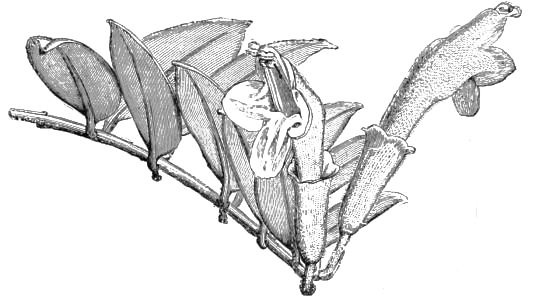
FIG. 36. ÆSCHYNANTHUS BOSCHIANUS.
Æ. longiflorus (long-flowered).* fl. scarlet, erect, fascicled; corolla with a long clavate curved tube, and oblique constructed bilobed mouth; upper lobe bifid. Summer. l. broad-lanceolate, acuminate, entire. Java, 1845. Plant pendulous.
Æ. miniatus (vermilion).* fl. rich vermilion; corolla tomentose; upper lip bilobed, lower one tripartite; peduncles axillary, three-flowered. June. l. oval acute, entire. h. 1½ft. Java, 1845. SYN. Æ. radicans.
Æ. pulcher (fair).* fl. bright scarlet; corolla three times larger than the calyx; corymbs terminal, bracteate. June. l. ovate, obscurely toothed. Java, 1845. Scandent.
Æ. radicans (stem-fibred). Synonymous with Æ. miniatus.
Æ. speciosus (showy).* fl. rich orange-coloured; corolla with long clavate curved tube, and obliquely four-lobed limb; upper lobe bifid, terminal, numerous, downy. Summer. l. upper ones always verticillate, ovate-lanceolate, acuminate, slightly serrate. h. 2ft. Java, 1845. SYN. Æ. Aucklandi.
Æ. splendidus (splendid).* fl. bright scarlet, spotted with black on the margins; corolla clavate, 3in. long, in terminal fascicles. Summer, lasting in perfection for a considerable time. l. elliptic lanceolate, acuminated, entire, rather undulated. h. 1ft. Hybrid.
Æ. tricolor (three-coloured).* fl. deep blood red, usually twin; throat and base of the lobes bright orange, the three upper lobes being striped with black. July. l. cordate, dark green above, paler on the under side; edges, under surface, and stem, slightly hairy. h. 1ft. Borneo, 1857.
Æ. zebrinus (zebra-marked). fl. green, brown. Autumn. Java, 1846.
ÆSCHYNOMENE (from aischuno, to be ashamed; in reference to the leaves of some of the species falling on the slightest touch, like those of the Sensitive plant). ORD. Leguminosæ. Stove herbs and shrubs, with impari-pinnate leaves, having many pairs of leaflets, and axillary racemes of usually yellow flowers. They thrive well in a good rich loam. Propagated by cuttings, placed in sand under a bell glass, in a brisk heat. Seeds of the herbaceous species require a good heat to start them into growth. The annuals are not worth growing. There are about forty other species known besides those mentioned, some of which may prove worthy of cultivation when introduced.
Æ. aristata (awned). A synonym of Pictatia aristata.
Æ. aspera (rough-stemmed). fl. yellow; racemes compound; peduncles, bracteas, calyces, and corollas, hispid. June. l. with thirty to forty pairs of linear leaflets, which (as well as the legumes) are smooth. Stem herbaceous, erect. h. 6ft. to 8ft. East Indies, 1759. Perennial.
Æ. sensitiva (sensitive).* fl. white; legumes and racemes glabrous; peduncles branched, few-flowered. June. l. with sixteen to twenty pairs of linear leaflets. Stem smooth. h. 3ft. to 6ft. Jamaica, 1733. This shrub requires a sandy soil.
ÆSCULUS (a name given by Pliny to a kind of oak having an edible fruit; derived from esca, nourishment). The Horse Chestnut. ORD. Sapindaceæ. A genus of hardy showy trees, well adapted for lawns or parks, having a beautiful appearance when in flower. They will do well in any soil, but the more loamy the better. Increased by layers, put down in the spring, or by grafting or budding on the common horse chestnut. Seeds, where procurable, should be sown singly in rows in spring, where they may remain until they are of sufficient size to be permanently planted out. This genus is distinguished from Pavia, in having its capsules echinated, i.e., covered with prickles, like a hedgehog; but this character is not always consistent.
Æ. carnea (flesh-coloured). Synonymous with Æ. rubicunda.
Æ. glabra (smooth-leaved).* fl. greenish yellow; corolla of four spreading petals, with their claws about the length of the calyx; stamens longer than the corolla. June. l. with five leaflets, very smooth; foliage larger than the common species. h. 20ft. North America, 1821. SYNS. A. ohioensis, A. pallida.
Æ. Hippocastanum (Common Horse-Chestnut). fl. white, tinged with red, on very handsome terminal racemes, which are produced in great profusion; petals five. April and May. l. with seven obovately-cuneated, acute, toothed leaflets. Asia, 1629. This, the common horse chestnut, is well known by the beautiful parabolic form in which it grows, and during the period of its flowering no tree possesses greater beauty. It has two or three unimportant varieties, differing in the variation of their leaves, and one also with double flowers. These are increased by grafting only.
Æ. ohioensis (Ohio). A synonym of A. glabra.
Æ. pallida (pale-flowered). A synonym of A. glabra.
Æ. rubicunda (red-flowered).* fl. scarlet, in very fine terminal racemes; petals four, having the claws shorter than the calyx; stamens eight. June. l. with five to seven obovately-cuneated, acute, unequally serrated leaflets. h. 20ft. North America, 1820. This is a very distinct and beautiful tree when in flower, and does not attain so large a size as Æ. Hippocastanum. SYN. Æ. carnea.
ÆSTIVATION. The manner of the folding of the calyx and corolla in the flower bud.
ÆTHIONEMA (from aitho, to scorch, and nema, a filament; apparently in allusion to some tawny or burnt appearance in the stamens). ORD. Cruciferæ. A genus of elegant little plants, distinguished from allied genera in having the four larger stamens winged, and with a tooth. Herbs or sub-shrubs, perennial or annual, branched from the base, diffuse or erect. Flowers in crowded terminal racemes. Leaves fleshy, sessile. They are well worth cultivating in sunny situations, where they form a freer flowering habit than when growing in a wild state. Some of the more hardy species may be planted on rock work, which, by their dwarf growth, they are well adapted for. The annual and biennial species may either be sown on rockwork or in the front of the flower-border. A light dry soil suits them best. The shrubby kinds of this genus should be kept in pots, which should be well drained with potsherds, and treated like other alpine plants. Propagated by seeds, sown in May; or by cuttings, planted in summer.
Æ. Buxbaumii (Bauxbaum's). fl. pale red; racemes crowded, aggregate. June. l. oblong-spathulate, glaucous. h. 6in. Thrace, 1823. A pretty annual, with erect branched stems. SYN. Thlaspi arabicum.
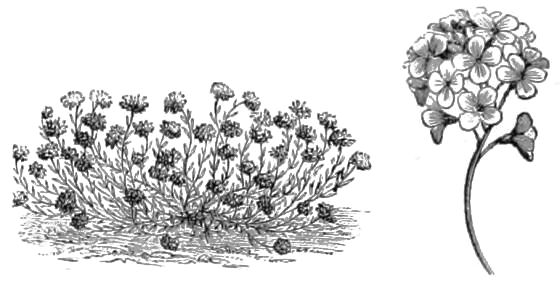
FIG. 37. ÆTHIONEMA CORIDIFOLIUM, showing Habit and Flowers.
Æ. coridifolium (Coris-leaved).* fl. rosy lilac, small, in terminal dense rounded racemes. June. l. linear, glaucous, crowded. Asia Minor, 1871. A pretty perennial, shrubby below, with erect stems 6in. to 8in. high. See Fig. 37.
Æ. gracile (slender). fl. purplish; racemes crowded, terminal; when in fruit, loose. June. l. lanceolate, pointed. h. 8in. Branches and branchlets slender, elongated. Sandy hills in Carniola, 1820. Shrubby perennial.
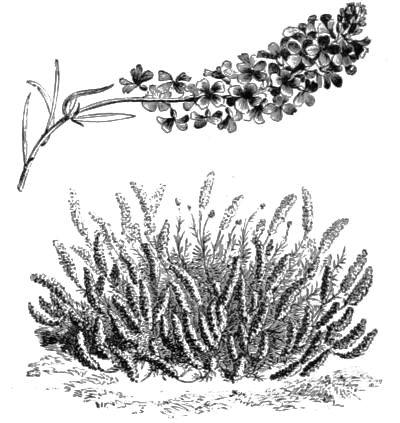
FIG. 38. ÆTHIONEMA GRANDIFLORUM, showing Habit and Flowers.
Æ. grandiflorum (large-flowered).* fl. of a warm shaded rose; racemes crowded, terminal, numerous. May to August. l. ovate-oblong, glaucous. Mount Lebanon, 1879. This perennial species forms a spreading bush about 1½ft. high, and is perhaps the handsomest of the genus. It succeeds well in the ordinary border, but is far better suited for the rockery. See Fig. 38.
Æ. membranaceum (membranous-podded). fl. purplish, in terminal racemes. June. l. linear, distant, somewhat fleshy, strictly appressed. h. 3in. to 6in. Persia, 1828. A small shrub, with filiform branches.
Æ. monospermum (one-seeded). fl. purple, largish, in terminal racemes. July. l. oval or obovate, blunt, coriaceous; pods one-celled, one-seeded. h. 3in. to 6in. Spain, 1778. A pretty little biennial, with hardish branches.
Æ. pulchellum (pretty).* This is said to be a new species, but it much resembles Æ. coridifolium. It is scarcely in full cultivation yet, but it proves one of the hardiest as well as one of the most handsome kinds.
Æ. saxatilis (rock).* fl. purplish; racemes loose, terminal. May and June. l. lanceolate, acutish. h. 8in. Spain, 1820. A pretty annual.
AFRICAN ALMOND. See Brabejum.
AFRICAN BLADDER NUT. See Royena lucida.
AFRICAN FLEABANE. See Tarchonanthus.
AFRICAN HAREBELL. See Roella ciliata.
AFRICAN LILY. See Agapanthus.
AFRICAN LOTUS. See Zizyphus.
AFRICAN MARIGOLD. See Tagetes erecta.
AFRICAN OAK OR TEAK. See Vitex Doniana.
AFRICAN SATIN-BUSH. See Podalyria sericea.
AFZELIA (named after Adam Afzelius, M.D., Professor of Botany in the University of Upsal, and for many years resident at Sierra Leone). ORD. Leguminosæ. A pretty stove evergreen tree. For culture, see Ægiphila.
A. africana (African).* fl. crimson, disposed in racemes; petals four (furnished with claws), upper one largest. June. Legume ligneus, many-celled; seeds black, with scarlet aril. l. abruptly pinnate. h. 30ft. Sierra Leone, 1821.
AGALMYLA (from agalma, an ornament; and hule, a wood; the species are great ornaments to the woods in which they grow wild). ORD. Gesneraceæ. A small but very handsome genus of climbing or radicant herbs, with simple alternate leaves and axillary fascicles of flowers, something like the blooms of a Gesnera. Corolla limb oblique, five-lobed, scarcely two-lipped. A. staminea, the most generally cultivated species, is best grown in a basket, planted in a compost of rough peat, a little leaf soil, fresh sphagnum moss, and nodules of charcoal. Give an abundance of moisture when growing, which should be lessened after flowering, and allow the plant to rest during winter. It may be planted out on rockwork in the stove. Half-ripened cuttings will root freely in heat under a glass. The temperature in summer should not be less than 75deg. by day, and 65deg. by night.
A. longistyla (long-styled). fl. crimson. Java, 1873.
A. staminea (long-stamened).* fl. scarlet, disposed in axillary fascicles; corolla tubular, incurved, with a dilated throat. Summer. l. alternate, oblong, acuminated, denticulated, nearly equal at the base, downy beneath, and on the edges. Stem and petioles hairy. h. 2ft. Java, 1846. Stove species.
AGANISIA (from aganos, desirable; in reference to the beauty of these neat little plants). ORD. Orchidaceæ. A small genus of epiphytal orchids, requiring to be grown upon a block of wood suspended from the rafters of the stove. A damp atmosphere, syringing the roots and leaves freely when in a growing state, and shade during very bright sunshine, are primary points to be observed in their cultivation. Increased by dividing the pseudo-bulbs just previous to starting into new growth.
A. cœrulea (dark blue).* fl. peduncles axillary, few flowered. "The colour is the well known one of Vanda cœrulea. There are, however, darker blue blotches quasi-tesselated over the flower. The lip is veiled, and has two very small basilar teeth, and then a veiled middle lacinia, that is sacciform, bordered with most remarkable long bristles, and with a deep violet blotch on its middle part beneath. The white column has two cartilaginous quadrate arms close to the stigmatic hollow." l. cuneate, oblong, acuminate. Pseudo-bulbs distichous, depresso-ovoid. Brazil, 1876.
A. fimbriata (fringed).* fl. white; lip blue. Demerara, 1874. This species has also a sacciform, fimbriate lip, but, when compared with the foregoing, its flowers, leaves, and bulbs are much smaller, and the lip is not slit up to the apex, but the sac is round.
A. graminea (grass-leaved). A weedy looking species, of no garden value. Guiana, 1836.
A. ionoptera (violet-winged). The flowers, not very much larger than those of the lily of the valley, are white, with violet petals, and violet tips and streaks on the sepals. Peru, 1871.
A. pulchella (pretty).* fl. white, with a blotch of yellow in the centre of the lip; the spike is produced from the bottom of the bulb. h. 8in. Demerara, 1838. It blossoms at different times of the year, and lasts two or three weeks in perfection. This species is very rare and pretty, and is best grown in a pot, with peat, and good drainage; requires a liberal supply of water at the roots, and the hottest house.
AGANOSMA (from aganos, mild, and osme, a smell; scent of flowers). ORD. Apocynaceæ. A genus of showy stove or warm greenhouse shrubs, with opposite leaves and terminal corymbs of large funnel-shaped flowers, the coronet of which is cup-shaped or cylindrical, "having its parts so united that they appear only as lobes around the mouth of the cup." All the species mentioned are well worth cultivating. They thrive best in a mixture of loam, sand, and peat, in equal proportions. Propagated by cuttings in sand, under glass, and with bottom heat.
A. acuminata (pointed-leaved).* fl. large, white, fragrant; petals linear, falcate, curled; panicles axillary, longer than the leaves, scattered. l. from oblong to broad-lanceolate, acuminated, glabrous. Sylhet. Shrubby climber.
A. caryophyllata (clove scented).* fl. pale yellow, tinged with red, deliciously clove scented; corymbs terminal. October. l. oval, acutish at both ends, tomentose beneath as well as the branches. India, 1812. Shrubby twiner.
A. cymosa (cymose-flowered).* fl. small, whitish, fragrant; calyx and corolla hoary outside; cymes terminal, shorter than the leaves. l. elliptic, acuminated. Sylhet. Shrub.
A. elegans (elegant).* fl. small, purple; corolla downy outside, as well as the calyces, bracteas, and pedicels; sepals longer than the tube of the corolla; corymbs terminal, crowded. l. elliptic, short-acuminated, glabrous. India. Shrubby twiner.
A. marginata (bordered).* fl. numerous, large, white, fragrant; petals linear, falcate; panicles terminal, loose, corymbose, glabrous. l. lanceolate, smooth. Sylhet. Shrubby climber.
A. Roxburghii (Roxburgh's).* fl. pure white, large, fragrant; calyx and corolla hoary outside; petals triangular; corymbs terminal. October. l. ovate-cordate, acuminated; petioles and veins red, glabrous, pale beneath, and shining above. India, 1812. Shrubby twiner.
A. Wallichii (Wallich's).* fl. white, fragrant; calyx and corolla downy outside; corymbs terminal. l. elliptic-acuminated, shining above and pale beneath, glabrous. India. This species differs from the last in the veins of the leaves being parallel, not longitudinal, from the base to the apex. Shrubby twiner.
AGAPANTHUS (from agape, love, and anthos, a flower). ORD. Liliaceæ. African Lily. A genus, with numerous varieties, of very handsome greenhouse or conservatory herbaceous plants. Flowers large, scapose; perianth tubular, tube short; stamens six, having the filaments somewhat declinate. Leaves linear or lorate, arching, radical. They are of easy culture, and thrive best in strong turfy loam, leaf mould, decomposed manure, and river sand. They may be grown in large pots or tubs outside, to be removed in autumn, and placed under the stage in the greenhouse, or where they will be protected from frost, and kept moderately dry. If planted and left outside, the crowns should be well covered with cocoa-nut fibre in winter. During the summer, and especially in dry weather, the plants can hardly be over watered. They thrive admirably on the margins of lakes or running streams, and few plants, alike in flower and foliage, are more effective. Clear manure water may be given previous to or when the plants are in flower, and, after flowering, gradually lessen the quantity of water, until they are stowed away for the winter. They increase very rapidly, by offsets, and, if necessary, the old plants may be divided in early spring, to any extent required. In the more southern parts of this country they are quite hardy.
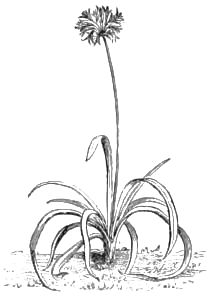
FIG. 39. AGAPANTHUS UMBELLATUS.
A. umbellatus (umbelled).* fl. bright blue; perianth funnel-shaped, regular, deeply six-parted; tube short; scape tall, naked, bearing a many-flowered umbel. Summer and autumn. l. numerous, radical, linear, somewhat fleshy. h. 2ft. to 3ft. Cape of Good Hope, 1692. See Fig. 39.
A. u. albidus (whitish).* fl. pure white, on large full-sized umbels, smaller than those of the species, but very showy. Cape of Good Hope. This requires carefully drying off during the winter.
A. u. aureus (golden). A variety in which the leaves are marked longitudinally with yellow. 1882.
A. u. flore-pleno (double-flowered).* Identical in all respects with the species, except that it has double flowers, which are therefore, much more lasting than the single ones. A very handsome variety.
A. u. Leichtlinii (Leichtlin's).* fl., perianth deep bright hyacinthine blue, 1¼in. long; scape about 1½ft. long, with a more compact umbel than any other known form. June. l. similar in size to the species. Cape of Good Hope, 1878.
A. u. maximus (larger).* fl. bright blue, in immense umbels. This is larger in all its parts than the type, and when well grown is truly a noble plant. There is also a white-flowered form of this variety, which is most desirable, being equally as large.
A. u. minor (smaller).* This is smaller in all its parts, with narrow leaves, and slender scapes of deep blue flowers. A very elegant variety.
A. u. Mooreanus (Moore's).* fl. dark blue. h. 1½ft. 1879. A new variety, with shorter, narrower, and more upright leaves than the species; it has a dwarf habit. Perfectly hardy.
A. u. variegatus (variegated).* Where variegated-leaved plants are desired, few could be more useful than this; its leaves are almost entirely white, with a few green bands, but they are neither so broad nor so long as in the type. It is an excellent subject for the domestic garden.
AGAPETES (from agapetos, beloved; in reference to the showy character of the plants). ORD. Vacciniaceæ. A genus containing about eighteen species of warm greenhouse or stove evergreen shrubs. Flowers corymbose and racemose; corolla tubular. Leaves alternate, coriaceous. They are all worthy of cultivation, but only two or three species are grown in England. Peat, turfy loam, and sand, in equal parts, is the best compost for them; and young hardened cuttings will strike in sandy soil, under a hand glass, in stove temperature.
A. buxifolia (box-leaved).* fl. bright red, about 1in. long, tubular, wax-like, disposed in corymbs. April. l. small, oval oblong, bright green, leathery; branches spreading, twiggy. h. 5ft. Bootan.
A. setigera (bristly). fl. red, about 1in. long, tubular, numerous, in lateral and corymbose racemes, furnished with bristly hairs. l. scattered, lanceolate, acuminated, on very short robust petioles. Pundua Mountains, 1837.
A. variegata (variegated). fl. scarlet, about 1in. long, tubular, lateral, corymbose. l. on short petioles, lanceolate, acuminated, denticulated, attenuated at the base, veiny. Khasia, 1837.
AGARICUS (derived from Agaria, the name of a town in Sarmentosa). Mushroom. ORD. Fungi. The most extensive genus known. It, however, contains but one or two species of cultural value. The most important ones are the common field mushroom, A. campestris (Fig. 44), the Fairy Ring mushroom, A. pratensis, and A. vaginatus. Familiar species are the Parasol mushroom, A. procerus (Fig. 43); St. George's mushroom, A. gambosus (Fig. 42); and the deadly Fly Agaric, A. muscarius (Fig. 41). For practical purposes the majority of this genus are poisonous, and many virulently so. Great care must be exercised in experimenting with unknown species, even by experienced fungologists. See Mushroom.
AGASTACHYS (from agastos, admirable, and stachys, a spike). ORD. Proteaceæ. A greenhouse evergreen shrub, with four sepalled apetalous flowers, which are disposed in numerous spikes. It thrives in a compost of equal parts loam, sand, and peat. Cuttings of ripened wood will strike in sandy soil under a glass, in a cool house.
A. odorata (fragrant).* fl. pale yellow, sweet scented, crowded; spikes 4in. to 5in. long. April. l. bluntly lanceolate, sub-sessile, thickish, about 2in. long. h. about 3ft. New Holland, 1826.
AGATHÆA (from agathos, excellent; in reference to the beauty of the flowers). ORD. Compositæ. Allied to Cineraria, and requiring the same greenhouse treatment. It makes a very pretty object for summer decoration in the flower garden. Young cuttings root freely, in a gentle heat, at all times; and the plant may be had in bloom all the year round.
A. cœlestis (sky-blue).* fl.-heads blue; peduncle one-headed. June. l. opposite, ovate, naked. h. 1½ft. Cape of Good Hope, 1753. Herbaceous perennial. See Fig. 40.
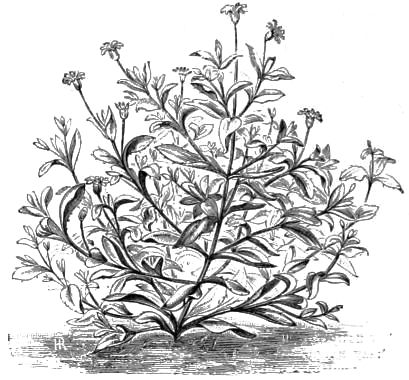
FIG. 40. AGATHÆA CŒLESTIS.
AGATHA ROSE. See Rosa gallica Agatha.
AGATHIS. See Dammara.
AGATHOPHYLLUM (from agathos, pleasant, and phyllon, a leaf; referring to the pleasant clove-like smell of the leaf). Madagascar Nutmeg. ORD. Lauraceæ. A stove evergreen tree, of economic value only, having the fruit enclosed by the persistent calyx; thriving in peat and light rich loam. Of easy propagation by cuttings in sand, with a moderate bottom heat.
A. aromaticum (aromatic). fl. white. l. stalked, alternate, obovate, obtuse, leathery, entire, smooth. h. 30ft. Madagascar, 1823.
AGATHOSMA (from agathos, pleasant, and osme, smell; the plants contained in this genus have a pleasant smell). SYNS. Bucco, Dichosma. ORD. Rutaceæ. Beautiful small heath-like greenhouse shrubs, from the Cape of Good Hope. Flowers in terminal heads, or umbels; petals five, divided, with long claws, and scattered, short, narrow leaves, usually with revolute edges. They are of easy culture, thriving best in a mixture of sand and peat, with the addition of a little turfy loam. Young cuttings will strike root freely in a pot of sand, under a bell glass, in a cool house. They require to be shaded somewhat in the summer. Winter temperature, 40deg. to 45deg. About forty-six species are known.
A. acuminata (taper-pointed leaved).* fl. violet; calyces smooth, glandular, on terminal subcapitate heads. April. l. ovate, somewhat cordate, long acuminated, fringed, at length spreading. h. 1ft. to 2ft. 1812.
A. bruniades (Brunia-like).* fl. lilac or white, on terminal sub-umbellate heads; peduncles fastigiate, elongated. April. l. scattered, linear-trigonal, awl-shaped, dotted, and a little fringed; branches hairy. h. 1ft. to 2ft. 1820.
A. cerefolia (chervil-leaved). fl. white, small; pedicels and calyces beset with glandular hairs; heads terminal sub-umbellate. April. l. crowded, lanceolate, acute, spreading, keeled, fringed. h. 1ft. to 2ft. 1794.
A. ciliata (ciliated).* fl. white; pedicels smoothish; heads terminal sub-umbellate. April. l. scattered, lanceolate, acute, with toothletted-fringed, revolute edges, dotted beneath, and bearing hairs on the middle nerve, becoming at length reflexed. h. 1ft. to 2ft. 1774.
A. erecta (upright).* fl. pale violet, terminal, sub-umbellate; peduncles short, villous. April. l. imbricate, trigonal, blunt, dotted beneath, a little fringed. h. 1ft. to 2ft. 1818.
A. hirta (hairy). fl. purple, densely capitate; petals bearded at the claws. April. l. somewhat imbricate, linear, awl-shaped, channelled, hairy on the back, decurrent. h. 1ft. to 2ft. 1794.
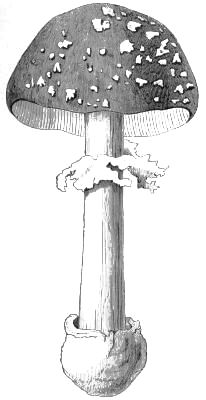
FIG. 41. AGARICUS MUSCARIUS (FLY AGARIC).
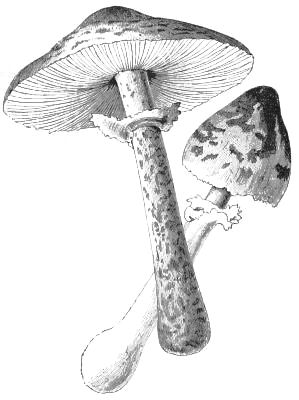
FIG. 43. AGARICUS PROCERUS (PARASOL MUSHROOM).
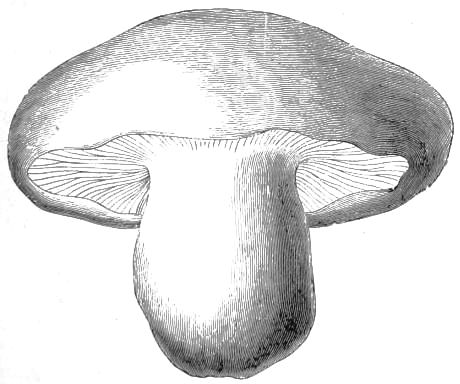
FIG. 42. AGARICUS GAMBOSUS (ST. GEORGE'S MUSHROOM).
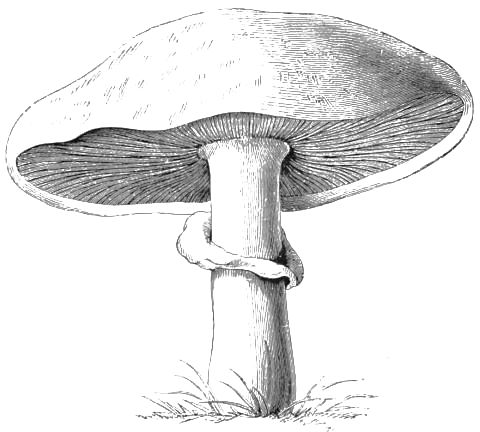
FIG. 44. AGARICUS CAMPESTRIS (COMMON MUSHROOM).
A. hispida (rough-haired). fl. violet, on terminal sub-umbellate heads; pedicels and sepals pubescent; petals quite smooth. May. l. crowded, linear, trigonal, blunt, spreading, hispid, keeled, and two-furrowed beneath. h. 1ft. to 2ft. 1786.
A. imbricata (imbricated). fl. pale purple, in terminal sub-capitate heads; petals with a roundish limb; sepals smoothish; pedicels pubescent. April. l. imbricate, crowded, ovate, acuminated, dotted, fringed. h. 1ft. to 2ft. 1774.
A. orbicularis (round-leaved). fl. white, on terminal sub-umbellate heads; stamens twice as long as the corolla; pedicels pubescent. April. l. scattered, spreading, orbicular, ovate, or reniform, smooth, reflexed, small, thickish, without any dots beneath; branches villous. h. 1ft. to 2ft. 1790.
A. prolifera (proliferous). fl. white, on terminal sub-umbellate heads; sepals smooth; pedicels somewhat fastigiate, pubescent. April. l. spreading, lanceolate, cuspidate; keel and edges fringed, dotted; branches whorled, proliferous. h. 1ft. to 3ft. 1790.
A. pubescens (downy). fl. white; umbels terminal; peduncles and sepals villous. April. l. lanceolate, trigonal, pointless, with margins and rib ciliated. h. 1ft. to 2ft. 1798.
A. rugosa (coarsely-wrinkled). fl. white, on terminal sub-umbellate heads; sepals pubescent; pedicels capillary, clothed with glandular hairs. April. l. spreading, oblong or ovate, blunt, keeled, wrinkled, villous beneath, reflexed. h. 1ft. to 2ft. 1790.
A. vestita (clothed). fl. lilac, on terminal sub-capitate heads; pedicels quite smooth. May. l. closely imbricated, ovate, acuminated, keeled, fringed. h. 1ft. to 2ft. 1824.
AGATHYRSUS. See Mulgedium.
AGATI (its Sanscrit name). ORD. Leguminosæ. Ornamental stove trees from India, with lanceolate stipulas, abruptly-pinnate leaves, having many pairs of leaflets. Flowers large, few, racemose. Legumes 1½ft. long. A mixture of loam, peat, and sand is most suitable. Young cuttings will root in a pot of sand, with a hand glass over them, placed in heat.
A. coccinea (scarlet).* fl. red, rather smaller than the next species. Legumes rather terete. l. leaflets powdery. July. h. 20ft. to 30ft. 1768.
A. grandiflora (large-flowered). fl. rosy red. July. Legumes evidently compressed. l. leaflets glabrous. h. 14ft. to 26ft. 1768.
A. g. flore-albo (white flowered). fl. white, double. N. Australia, 1869.
AGAVE (from agauos, admirable; referring to the stately form in which some of them flower). ORD. Amaryllidaceæ. Flower-scape tall, proceeding from the centre of the rosette of leaves; perianth funnel-shaped, six-parted. Leaves large, fleshy, tufted. Mr. B. S. Williams describes them as follows: "They are noble, massive-growing plants, and form magnificent ornaments in the greenhouse or conservatory; whilst, from their slow growth, they do not rapidly get too large, even for a small greenhouse. Indeed, some of the real gems of this genus are neat, compact-growing plants, seldom exceeding 2ft. in height. Besides being fine ornamental plants for indoor decoration, the larger growing kinds are unquestionably the finest objects for the embellishment of terrace-walks, or surmounting flights of steps in the open air during the summer season, and also for plunging in rockwork, or about any rustic nooks in the pleasure-grounds, as, in such situations, they are quite in keeping, and thrive admirably. As is well known, they attain maturity very slowly; but when this condition is reached, the plant sends up a flower spike, and, after perfecting this, dies." A. Sartorii, and a few others are, however, exceptional, and go on flowering year after year. It is certainly fallacious to suppose it takes them a hundred years to flower. Agaves succeed well potted in good loam and river sand, to which may be added a little peat and leaf mould for some of the smaller-growing kinds. The drainage should be good, as they enjoy a liberal supply of water during the summer season, but during winter considerably less will be required. They can be increased by suckers when these are to be obtained, and also by seeds, to secure the production of which, in the species that do not yield suckers, the flowers should be carefully impregnated. In the following descriptive list of species, only those of horticultural value are mentioned, some of which are still rare; and in describing them we have availed ourselves of Mr. J. G. Baker's excellent monograph, which appeared in the columns of the Gardener's Chronicle. Many are omitted, not from any deficiency in horticultural beauty, but because, in several instances, only one plant of a species is known to exist in cultivation, and such cannot, therefore, hope to become in general cultivation for many years hence.
A. albicans (whitened). Probably a variety of A. micrantha.
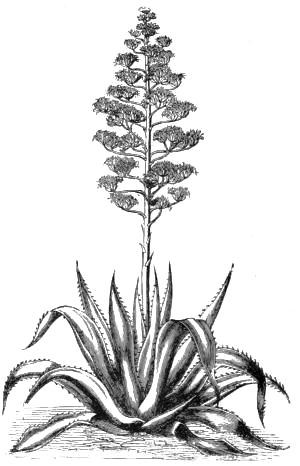
FIG. 45. AGAVE AMERICANA.
A. americana (American).* fl. yellowish green, 2in. to 3½in. long; in very dense globose clusters, on pedicels ¼in. to ½in. long; scape, including the thyrsoid panicle, 24ft. to 36ft. August. l. usually thirty to forty, sometimes more, in a rosette, oblanceolate-spathulate, 3ft. to 6ft. long, 6in. to 9in. broad above the middle, glaucous green, more or less concave all down the face, the outer leaves recurved, the dark brown pungent point 1in. to 2in. long; prickles brown tipped, 1/6in. to ¼in. long. S. America, 1640. See Fig. 45.
A. a. mexicana (Mexican). A variety much shorter in the leaves than the species, of which it may be regarded as one of the many small forms.
A. a. picta (painted).* l. 2ft. to 3ft. long, about 4in. wide, lower ones recurved, upper ones erect, moderately thick, rich golden yellow on both sides, bordered with dark green. A very splendid variety. SYN. A. ornata.
A. a. variegata (variegated). l. 6ft. or more in length, 6in. or 8in. wide, dark green in the centre, broadly margined with rich yellow. A very desirable variety.
A. amœna (pleasing). Referred to A. Scolymus.
A. amurensis (Amur River). Synonymous with A. xylacantha.
A. applanata (plano-convex-leaved). fl. unknown. l. twenty to forty in a dense sessile rosette, reaching a couple of feet in diameter, oblong-spathulate, 8in. to 12in. long, 2in. to 3½in. broad, the lower half of the face flat, the upper half concave, suddenly terminating in a pungent brown spine above 1in. long, blue-green bordered with brown; prickles ¼in. to ⅓in. long, bright brown. Mexico, 1869.
A. atrovirens (dark-green). Synonymous with A. Salmiana.
A. attenuata (attenuated).* fl. greenish-yellow, 2in. long; pedicels about ¼in. long, on a dense spike, 6ft. to 8ft. long, and 6in. in diameter; bracts overtopping the perianth. l. ten to twenty, in a dense rosette at the top of the stem, oblong-spathulate, 2ft. to 2½ft. long, 8in. to 9in. broad two-thirds of the way up, narrowed to 2½in. to 3in. above the base, persistently glaucous, one of the most fleshy of all in texture; face rather concave when young; tip not pungent, edge quite entire. Stem 4ft. to 7ft. high, 3in. to 4in. thick. Mexico, 1834. A most distinct species.
A. Beaucarnei (Beaucarne's). Synonymous with A. Kerchovei.
A. Botterii (Botteri's).* fl. greenish-yellow, about 1in. long, on a dense spike, longer than the leaves; primary bracts lanceolate, with a long point, the lower ones as long as the flowers; scape covered with adpressed lanceolate bracts. l. about fifty in a rosette, oblong-spathulate, about 2ft. long, 6in. broad above the middle, narrowed to 4½in. above the base; pale green, concave in the centre; spine hard, pungent, about ½in. long; marginal teeth crowded, ⅛in., upcurved at the tip. Stemless. Mexico, about 1865.
A. bulbifera (bulb-bearing). Synonymous with A. vivipara.
A. cæspitosa (tufted). Synonymous with A. Sartorii.
A. cantula. Synonymous with A. vivipara.
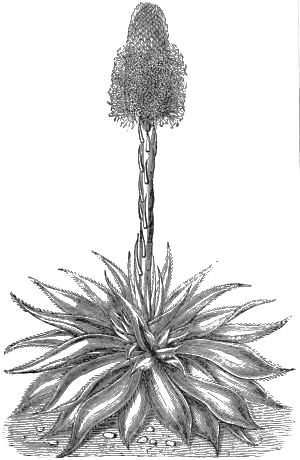
FIG. 46. AGAVE CELSIANA.
A. Celsiana (Cels's).* fl. tinged purplish-brown, 2in. long, in a dense spike, 1ft. or more long, and 6in. to 8in. in diameter when expanded; scape 4ft. long, the lower bract leaves lanceolate, the upper ones subulate. l. twenty to thirty in a rosette, oblong-spathulate, 1½ft. to 2ft. long, 4in. to 5in. broad at the middle, narrowed to 2½in. to 3in. above the base, persistently glaucous, the point hardly at all pungent; spines very unequal in size and shape, green, largest brown and horny at the top. Mexico, 1839. This is a beautiful species, the stem of which scarcely rises off the surface of the ground. See Fig. 46.
A. coccinea (scarlet). fl. unknown. l. twenty to thirty in a dense rosette, oblanceolate-spathulate, 1½ft. to 2ft. long, 4in. to 6in. broad two-thirds of the way up, narrowed to 3in. above the dilated base, where it is 1in. to 1¼in. thick, deep heavy green; terminal spine 1½in. or more in length, red; side prickles irregular, deltoid, unequal, nearly straight, 1/6in. to ¼in. long, red. Mexico, 1859.
A. cochlearis (cochleate). fl. yellowish green, above 4in. long, in dense clusters. l. forming a sessile rosette 10ft. broad, oblong-spathulate, 5ft. to 6ft. long, above 1ft. broad, 5in. thick at the base, opaque green, with a deeply excavated face; terminal spine very stout, pungent; side prickles curved variously, middle sized, deltoid. Stems 26ft. high. Mexico, previous to 1867.
A. Consideranti (Considerant's). Synonymous with A. Victoriæ Regina.
A. Corderoyi (Corderoy's).* fl. unknown. l. forty to fifty in a dense rosette, rigidly erecto-patent, ensiform, 1½ft. long, ¾in. to 1in. broad, bright green; terminal spine hard, brown, 1in. long; side prickles moderately close, erecto-patent, dark brown, 1/6in. long. Mexico, 1868. A very distinct and pretty species.
A. crenata (crenated). Referred to A. Scolymus.
A. cucullata (hooded). Referred to A. Scolymus.
A. dasylirioides (Dasylirion-like).* fl. yellow, about 1½in. long; spike as long as the scape, often decurved; lower bracts much longer than the flowers; pedicels obsolete; scape 6ft. long, densely clothed with spreading subulate bract leaves, the lower ones 1ft. long. l. eighty to a hundred in a dense rosette, linear-ensiform, 1½ft. to 3ft. long, about 1in. broad, narrowing gradually from the middle to a short brown pungent point, pale glaucous green, rigidly leathery; edge minutely denticulate. Mexico, 1846.
A. d. dealbata (whitened). A variety of preceding, but with more glaucous foliage.
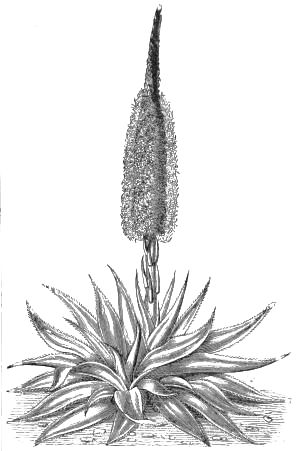
FIG. 47. AGAVE DENSIFLORA.
A. densiflora (close-flowered).* fl. yellowish-red, 1½in. to 2in. long, on a dense spike, 2ft. long; pedicels very short; scape, including the spike, 6ft. long, the lower bracts ascending, the upper ones spreading. l. thirty to forty in a stemless rosette, oblanceolate-spathulate, 2ft. to 3ft. long, and 2½in. to 5in. broad, bright green when mature; terminal spine ½in. long, thick, pungent, slightly decurrent; side spines crowded, short, bright chestnut brown. Mexico (previous to) 1857. See Fig. 47.
A. Deserti (Desert's).* fl. yellow, under 2in. long, on a thyrsoid panicle, the branches very short, the lower horizontal, the upper ascending; pedicels short; scape 4ft. to 10ft. high, 1in. to 2in. thick at the base, furnished with distant lanceolate acuminate toothed bracts. l. few, in a rosette, oblanceolate, 6in. to 12in. long, 1½in. to 2in. broad above the middle, thick, fleshy, very glaucous; face deeply concave; terminal spine 1in. to 2in. long, slender; prickles crowded, strong, hooked, horny, nearly ¼in. long. California, 1877.
A. Desmetiana (De Smet's). Probably synonymous with A. miradorensis.
A. Elemeetiana (Elemeet's).* fl. yellowish-green, 1in. to 1½in. long, in a dense spike 8ft. to 9ft. long, 7in. to 8in. in diameter when expanded; pedicels ¼in. long; scape, including the spike, 12ft. to 13ft. high, stiffly erect, lower 3ft. to 4ft., barren, with squarrose lanceolate bracts. l. twenty to twenty-five in a rosette, lanceolate-oblong, 1½ft. to 2ft. long, 3in. to 6in. wide, slightly glaucous; face flat above the middle terminal spine, not pungent, the margin pale and quite entire. Stemless. A very distinct species. Mexico, 1864.
A. Fenzliana (Fenzl's). Synonymous with A. Hookeri.
A. ferox (fierce). fl. unknown. l. about twenty in a rosette, oblong-spathulate, 4in. to 8in. broad; face nearly flat, except at the top, slightly glaucous green; terminal spine above 1in. long, hard, pungent; margin slightly wavy between the large dark brown teeth, which are about ¼in. long, and curved at the top. Mexico, 1861.
A. filifera (thread-bearing).* fl. greenish, about 2in. long; pedicels very short and stout, in a dense spike 2ft. to 3ft. long; scape 3ft. to 4ft. long, its bract-leaves subulate, the lower ones ascending, the upper squarrose. l. sixty to a hundred in a dense rosette, stiff, straight, ensiform, 6in. to 9in. long, 1in. broad at the middle, gradually narrowing to a grey pungent tip; face flat, the continuous grey edge splitting off copiously into irregular spreading grey wiry threads; outer leaves of the rosette not all recurved, but spreading stiffly. Mexico.
A. f. filamentosa (thready).* A form with larger leaves and scape; including the spike, 10ft. to 12ft. high. A well-known, handsome variety.
A. Galeotti (Galeotti's). fl. unknown. l. thirty to forty in a dense rosette, 2ft. to 3ft. broad, oblong-spathulate, 1ft. to 1½ft. long, 2in. to 6in. broad; face rather flat or convex, green; terminal spine hard, pungent; prickles close, straight, or slightly hooked, purplish-black. Mexico, 1877.
A. Ghiesbreghtii (Ghiesbreght's). fl. unknown. l. thirty to forty in a dense rosette, rigid, lanceolate, 9in. to 12in. long, 2in. to 3in. broad, bright glossy green; terminal spine ½in. long, pungent; border narrow, red-brown till a late stage; side prickles numerous, irregular, two to three lines long. Mexico, 1862. Very handsome dwarf species. A. Rohanii and A. Leguayana are mere varieties.
A. heteracantha (various-spined).* fl. greenish, 1½in. long, on a dense spike 3ft. long; scape 3ft. to 4ft. long. l. fifty to eighty in a rosette, rigid, ensiform, 1½ft. to 2ft. long, 2in. to 2½in. broad in the middle, dull green, with numerous darker green lines on the back; terminal point 1in. long; side spines numerous, strongly hooked, lanceolate. Stemless. Mexico.
A. Hookeri (Hooker's).* fl. large, yellow, very numerous, in stalked panicled cymes. l. thirty to forty in a sessile rosette, 8ft. or 9ft. in diameter, oblanceolate-spathulate, bright green on the face, rather glaucous on the back, 4ft. to 5ft. long, 5in. to 9in. broad, 2in. to 3in. thick; terminal spine 2in. long, and decurrent for nearly half a foot; face flattish or slightly concave; side prickles irregular, brown and horny, about ¼in. long, and curved in different directions. Mexico. SYN. A. Fenzliana. A rare and noble species, very massive.
A. horrida (horrid).* fl. unknown. l. thirty to forty in a dense rosette, rigid, lanceolate-spathulate, 8in. to 12in. long, 1in. to 2in. broad, bright green; terminal spine pungent, nearly 1in. long; margin furnished with a continuous broad grey border, with copious prickles ⅜in. to ½in. long.
A. h. Gilbeyi (Gilbey's).* l. about thirty, 3in. to 4in. long, 2in. broad, dark green with a pale stripe down the middle, three to four large spines on each side. Mexico, 1873.
A. h. lævior (smoother). l. somewhat narrower, longer, with marginal spines less strongly developed, and of a paler colour. Mexico, 1870.
A. h. macrodonta (long-toothed). l. fifty to sixty, 2½in. broad; spines larger than in the typical form. Mexico, 1876.
A. h. micrantha (small-toothed). Border of leaf narrower, and spines smaller, than in the typical form.
A. Jacobiana (Jacob's). Synonymous with A. Salmiana.
A. Kerchovei (Kerchove's).* fl. unknown. l. thirty to forty in a stemless rosette, stiff, rigid, typically ensiform, 6in. to 12in. long, 1½in. to 2in. broad, narrowing gradually to a pungent spine 1in. long, dull green, with a distinct pale central band, rounded on the back, without any stripes of dark green, the margin with a continuous moderately broad grey border; side prickles irregular, grey, lanceolate, curved, ⅙in. to ¼in. long. SYN. A. Beaucarnei.
There are several varieties of A. Kerchovei, of which the following are the most important:—
A. K. diplacantha (double-spined).* With very few distant, small teeth, often collected or united in pairs.
A. K. inermis (unarmed). Dwarf, with spines entirely obsolete.
A. K. macrodonta (long-toothed). l. 1½ft. long, without any distinct central band, and with copious irregular grey lanceolate prickles, about ⅓in. long.
A. K. pectinata (comb-like). l. 1ft. long, 2¼in. broad, without any central band.
A. lophantha (crest-flowered).* fl. greenish, arranged in a dense spike 4ft. to 5ft. long; scape 7ft. to 8ft. long, its leaves brown, the lower ones 6in. long. l. thirty to forty in a rosette, rigid, ensiform, 2ft. to 3ft. long, 1½in. broad at the middle, rather concave down the face, rounded on the back, not marked with any lines, dull green; terminal spine 1in. long; margins bordered by a very narrow continuous grey hoary line, furnished with distant linear falcate teeth, about ¹/₁₂in. long, sessile. Mexico.
A. l. cœrulescens (bluish).* l. with a decided glaucous bloom.
A. l. longifolia (long-leaved). A mere variety of above species.
A. macracantha (long-spined).* fl. greenish, 2in. long, ten to twelve in a loose raceme 6in. long, all solitary on ascending pedicels ¼in. to ½in. long; scape 2ft. to 3ft. long; bracts erect. l. thirty to fifty in a stiff rosette 1ft. to 2ft. broad, oblanceolate, 6in. to 12in. long, 1in. to 1½in. broad, very stiff and rigid, very glaucous; face rather thicker in the lower half; terminal spine nearly black, very pungent, ½in. long; side prickles purplish-black, sub-distant, ⅛in. long, with a large point straight or slightly hooked. With a short stem, or stemless. Mexico, 1830. It has many varieties, among which are A. Bessereriana and A. flavescens.
A. Maximiliana (Maximilian's).* fl. unknown. l. about twenty in a sessile rosette, oblanceolate-spathulate, 1½ft. to 2ft. long, 1¾in. to 3in. broad; face slightly glaucous green; terminal spine pungent, brown, 1in. broad; side prickles bright chestnut brown, larger and more irregular than in A. americana, more hooked, and furnished with longer and sharper points, reaching ¼in. long. Mexico. A very distinct species.
A. micracantha (small-spined). fl. yellowish, 1½in. long, in a dense spike 3ft. to 4ft. long, 6in. to 7in. broad when expanded. l. twenty to thirty in a shortly stalked rosette, oblanceolate oblong, 15in. to 18in. long, 3in. to 5in. broad above the middle, narrowed to 2in. to 3in. above the base, bright green; face flattish above the centre; terminal spine red brown, moderately firm; the copious close reddish-brown horny teeth about ¹/₁₂in. long, the upper ones ascending, the lower deflexed. Mexico, 1860.
A. miradorensis (Mirador).* fl. unknown. l. about thirty in a sessile rosette, oblanceolate-spathulate, 1½ft. to 2ft. long, 2in. to 2½in. broad above the middle, thin but firm in texture, very glaucous, with a firm red-brown terminal spine 1in. long; side prickles very minute, crowded, colourless, five or six to an inch in the centre of the leaf. Mexico, 1869. SYN. (probably) A. Desmetiana.
A. Noackii (Noack's). A synonym of A. Sartorii.
A. ornata (adorned). A synonym of A. americana picta.
A. Ortgiesiana (Ortgies'). A dwarf form of A. schidigera with a pale central band to the leaf. Mexico, 1861. A widely-distributed and desirable species.
A. pendula (pendulous). Synonymous with A. Sartorii.
A. polyacantha (many-spined).* fl. greenish-yellow, 1½in. to 2in. long; flowering-stem 8ft. to 12ft. high, including the dense spike, which is 3ft. to 4ft. long. l. about thirty in a sessile rosette, oblanceolate-spathulate, rigid, 1ft. to 2ft. long, 2½in. to 5in. broad above the middle, bright green, slightly glaucous when young; terminal spine dark brown, pungent, ½in. to ¾in. long; side prickles crowded, deltoid, dark chestnut brown, irregular, ¹/₁₂in. or ⅛in. long, all sub-patent. Mexico, 1800. SYNS. A. uncinata, A. xalapensis.
A. Poselgerii (Poselger's). fl. purplish, rather more than 1in. long; scape, including the spike, 6ft. to 10ft. l. twenty to thirty in a dense rosette, rigid, ensiform, 1ft. to 1½ft. long; 1½in. to 2in. broad at the middle, dull green, with a broad pale band down to the face, rounded and marked with numerous distinct green lines down the back; margin furnished with a continuous straight, moderately broad edge; terminal spine 1in. long, brown, pungent; side prickles moderately close, lanceolate, hooked, 1/6in. long. Trunk, 4in. to 6in. long. Texas.
A. potatorum (drinkers'). fl. greenish yellow, 3in. long; scape 12ft. high, including the thyrsoid panicle, which is 4ft. to 5ft. long. l. about twenty in a dense sessile rosette, 4ft. to 5ft. broad, oblong-spathulate, 2ft. to 2½ft. long, 7in. to 9in. broad above the middle, a dull glaucous green; face slightly concave; terminal spines hard, pungent, 1½in. to 2in. long; side prickles deltoid-cuspidate, about ¼in. long, with the edge slightly wavy between them. Mexico, 1830.
A. pruinosa (frosty).* fl. unknown. l. ten to twenty in a dense rosette, spreading, oblanceolate-oblong, 1½ft. to 2ft. long, 4in. to 5in. broad above the middle, soft and fleshy in texture, pale glaucous green; terminal spine very weak; edge furnished with minute irregular spreading deltoid serrations, not more than quarter line long. Mexico, 1863. A very distinct species.
A. Roezliana (Roezl's). fl. unknown. l. twenty to thirty in a sessile rosette, stiff, ensiform, 6in. to 7in. long, 1in. to 1½in. broad at the middle, bright glossy green, with a distinct pale band down the centre, broadly rounded on the back, without any darker green lines, margined with a continuous moderately broad border, red brown at first, fading into grey when old; terminal spines bright reddish brown, pungent, ½in. to ¾in. long; side prickles copious, spreading, lanceolate, curved, ¼in. long. Mexico, 1869.
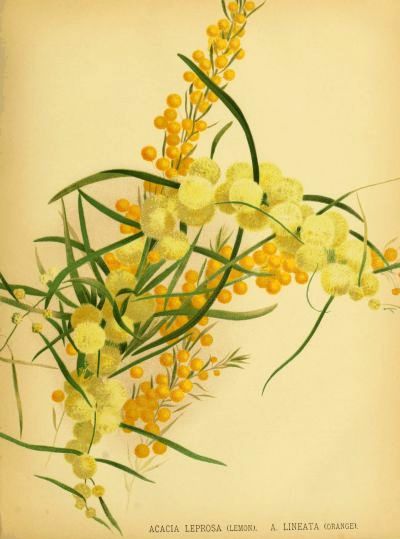
ACACIA LEPROSA (LEMON). A. LINEATA (ORANGE).
[See larger version]
A. Salmiana (Prince Salm-Dyck's).* fl. greenish yellow, 4in. long; panicle thyrsoid, 6ft. to 8ft. long, with erecto-patent branches and flowers in dense clusters; scape, exclusive of the panicle, 20ft. high. l. twelve to thirty in a dense rosette, which is often 5ft. to 6ft. broad, oblanceolate-spathulate, 2ft. to 4ft. long, 4in. to 6in. broad above the middle, a dull, slightly glaucous green; face more or less concave; terminal spine 1½in. to 2in. long, hard and pungent; side prickles ¼in. long, chestnut brown, hooked up or down. Mexico, 1860. SYNS. A. atrovirens, A. Jacobiana, A. tehuacensis.
A. S. latissima (very broad). l. 2ft. to 3ft. long, by 8in. to 9in. broad above the middle.
A. Sartorii (Sartor's). fl. greenish, 1½in. long; pedicels very short, in a dense spike about 3ft. long, 5in. to 6in. broad when expanded; scape 3ft. to 4ft. long, the green linear ascending bracts 2in. to 4in. long. l. thirty to forty spaced out in a loose rosette, ensiform, 1½ft. to 2ft. long, 3in. broad at the middle, bright green, with a pale band down the middle; face flat; terminal spine small, not pungent; side prickles minute, crowded, spreading, tipped with red-brown. Caudex 1ft. to 2ft. long, sometimes forked. SYNS. A. cæspitosa, A. Noackii, A. pendula.
A. schidigera (spine-bearing).* fl. almost identical with A. filifera. l. fifty to eighty in a dense sessile rosette, stiff, ensiform, 12in. to 15in. long, ¾in. to 1in. broad at the middle, similar in colour and texture to those of A. filifera, but the grey marginal border, and splitting off into flat shavings, not mere threads.
A. Schnittspahni (Schnittspahn's). Referred to A. Scolymus.
A. Scolymus (Scolymus). fl. greenish yellow, 2½in. to 3in. long; branches few, with the flowers at the end in very dense clusters; scape 14ft. to 16ft. high, including the thyrsoid panicle, which is 4ft. long and 2ft. broad, furnished with green bracts. l. twenty to thirty in a dense rosette 1½ft. to 3ft. broad, oblong-spathulate, 9in. to 18in. long, 3in. to 6in. broad above the middle, very glaucous, abruptly terminating in a pungent spine, 1in. or more long; side prickles chestnut brown, about ¼in. long; edge wavy between them; those on the lower half smaller and directed downwards. Mexico, 1830. Other so-called species referred to this are A. amœna, A. crenata, A. cucullata, A. Schnittspahni, and A. Verschaffeltii.
A. S. Saundersii (Saunders'). fl. about 1ft. long; teeth very large.
A. Seemanni (Seemann's).* fl. unknown. l. twenty in a sessile rosette, 1ft. to 1½ft. broad, oblong-spathulate, 6in. to 9in. long, 3in. to 3½in. broad at the middle, narrowed to 2in. above the dilated base, slightly glaucous; face flat, except close to the top; terminal spine pungent, dark brown, ½in. long; side prickles large, moderately close, slightly curved upwards or downwards. Guatemala, 1868. There are two or three garden forms of this species.
A. Shawii (Shaw's).* fl. greenish yellow, 3in. to 3½in. long; panicle thyrsoid, about 2ft. long and broad; clusters dense, composed of thirty to forty flowers, surrounded by large foliaceous fleshy bracts. l. fifty to sixty, or more, forming a dense globose sessile rosette 2ft. in diameter, oblong-spathulate, 8in. to 10in. long, 3½in. to 4½in. broad at the middle, deep green; terminal spine brown, 1in. long, the upper third or quarter entire, the rest furnished with crowded upcurved lanceolate prickles, ¼in. to ½in. long. California, 1877. This species is very rare at present, but is a most distinct and handsome plant.
A. sobolifera (soboliferous). fl. greenish yellow, 2in. to 2½in. long, in a deltoid panicle, of which the lower panicles are 9in. to 12in. long, and bear a hundred flowers each; pedicels ¼in. to 1in. long; scape 8ft. to 10ft. high, 2½in. thick at the base. l. twenty to forty in a shortly caulescent rosette, oblanceolate-oblong-spathulate, 2ft. to 3ft. long, 3in. to 5in. broad at the middle, very bright green; face deeply channelled, the border much raised and tip often recurved; terminal spine sub-pungent, chestnut brown, ½in. long; side prickles distant, brown, hooked, ¹/₁₂in. to ⅛in. long. West Indies, 1678.
A. striata (striated-leaved).* fl. brownish green outside, yellow inside, 1in. to 1½in. long; pedicels very short; spike dense, 2ft. to 3ft. long; bracts linear, shorter than the flowers; scape 6ft. to 8ft. high, including the spike, furnished with numerous spreading subulate bracts, which are 2in. to 3in. long. l. 150 to 200 in a dense rosette, linear-ensiform, 2ft. to 2½ft. long, ¼in. to ⅜in. broad above the deltoid dilated base, where they are ¼in. thick and 1in. broad, narrowed gradually from the top of the base to the point, rigid in texture, glaucous green; face rather keeled, and the back more so; point brown, pungent, ½in. long; edges minutely serrulate. Mexico, 1856.
A. s. echinoides (Echinus-like). l. about 6in. long, ⅓in. broad at the middle; face flat. Mexico, 1869. Dwarfer and stiffer in habit than the variety stricta.
A. s. recurva (recurved-leaved). l. longer than in the type, 3ft. to 4ft., more or less falcate, narrower, and decidedly convex on both surfaces.
A. s. stricta (upright). l. about 1ft. long, very stiff, ¼in. broad at the middle, both faces convex. A. Richardsii comes near to this variety.
A. tehuacensis (Tehuan). Synonymous with A. Salmiana.
A. uncinata (hooked). Synonymous with A. polyacantha.
A. univittata (one-striped).* fl. green, 1½in. long (or less); spike 10ft. to 12ft. long, 6in. to 7in. thick; pedicels ¼in. long; scape 4ft. long, exclusive of the spike, its bracts dense and squarrose. l. fifty to eighty in a stemless rosette, rigid, ensiform, 2ft. to 2½ft. long, 2in. to 3in. broad at the middle, narrowed slightly downwards, and very gradually upwards, dull green, with a broad pale band down the face, faintly lineate on the back; margin bordered by a narrow, continuous grey horny line, furnished with hooked lanceolate prickles, ⅛in. long, from ½in. to 1in. apart; terminal spine brown, pungent, 1in. long. Mexico, 1830.
A. utahensis (Utahan).* fl. yellowish, about 1in. long; peduncles ultimately ¼in. long; scapes, 5ft. to 7ft. high, including the 1ft. to 2ft. spike. l. stemless, ensiform, 6in. to 12in. long, 1in. to nearly 2in. broad, thick, glaucous; terminal spine channelled, pungent, about 1in. long; marginal prickles, ⅛in. to ½in. long, white, with a darker base. Southern Utah, 1881. This is a true alpine species, perfectly hardy, and of very easy culture.
A. Vanderdonckii (Vanderdonck's). Synonymous with A. xylacantha.
A. variegata (variegated).* fl. greenish, about 1½in. long; spike about 1ft. long, fifteen to twenty flowered; bracts minute, deltoid; scape 2ft. long, exclusive of the spike, bearing about twelve lanceolate bract leaves. l. fifteen to eighteen in a sessile rosette, spreading, ligulate-lanceolate, finally 12in. to 15in. long, 1in. to 2in. broad below the middle, narrowed slightly downwards, and gradually to the point, deeply channelled down the face, and copiously spotted with brown on a green ground; edge hard and tough, very obscurely serrulate. Texas, 1865. This very desirable variegated species is extremely rare in cultivation.
A. Verschaffeltii (Verschaffelt's). Referred to A. Scolymus.
A. Victoriæ Regina (Queen Victoria).* l. forty to fifty in a sessile rosette, stiff, rigid, lanceolate, 6in. long, 1½in. to nearly 2in. broad above the dilated base, narrowed gradually to a rather obtuse point, dead green, margined with a continuous white border, like that of A. filifera, not splitting up into threads, but leaving distinct white vertical bands where it is pressed against the neighbouring leaves; terminal spine ½in. long, black, pungent, with usually one or two small spines on each side of it. Mexico, 1875. This is also much too rare a plant. SYN. A. Consideranti.
A. virginica (Virginian).* fl. greenish yellow, 1in. to 1¼in. long; spike very loose, 1ft. to 1½ft. long; lower flowers with very short pedicels and lanceolate bracts, about ¼in. long; scape 2ft. to 3ft. high, exclusive of the spike, with only a few distant small bract leaves. l. ten to fifteen in a sessile rosette, spreading, lanceolate, 6in. to 12in. long, 1in. to 1½in. broad below the middle, narrowed gradually to the point and a little downwards; face channelled, undulated, pale green, or mottled with brown spots, the narrow hard and tough margin very obscurely serrulate. North America, 1765. A. conduplicata is said to be allied to this species.
A. vivipara (viviparous).* fl. greenish yellow, 1½in. to 2in. long, often changed into bulbillæ, which bear lanceolate leaves 6in. long before they fall and take root; inflorescence reaching a height of 20ft. or more, the deltoid panicle about a quarter of the length of the scape; corymbs on stout peduncles, pedicels short. l. twenty to fifty in a dense, shortly caulescent rosette, ensiform, 2ft. to 3ft. long, 1½in. to 2in. broad at the middle, whence it gradually narrows to the point, dull green when mature, thin but firm in texture, flat or channelled down the face; terminal spine firm, brown, ½in. long; side teeth brown, hooked, ¹/₁₂in. or less long. A very widely spread species throughout tropics of the Old World, 1731. SYNS. A. cantula, A. bulbifera.
A. Warelliana (Warell's).* l. about thirty in a rosette, oblong-spathulate, 9in. to. 10in. long, 3in. broad above the middle, narrowed to 2in. above the dilated base; face nearly flat, green, scarcely at all glaucous, tipped with a strong brown channelled spine 1in. long; border margined with close, very short teeth, dark purple when mature. Mexico. A rare but very handsome species.
A. Wislizeni (Wislizenius's). fl. 2½in. long; panicle thyrsoid, its branches 3in. to 6in. long; pedicels very short; scape 12ft. high. l. about thirty in a dense, rigid, sessile rosette, which is under 2ft. broad, oblong-spathulate, 3in. to 3½in. broad above the middle, very glaucous, concave in the upper part; terminal spine hard, pungent, dark brown, 1in. long, and decurrent down the border a little; side prickles ⅛in. long, dark purple, moderately close, those below the middle of the leaf smaller and curved downward. Mexico, 1847.
A. xalapensis. Synonymous with A. polyacantha.
A. xylacantha (woody-spined).* fl. green, 1½in. long; spike dense, rather shorter than the scape, its bracts linear-subulate; scape 5ft. to 6ft. long, its bracts subulate, all ascending, the lower ones 6in. to 8in. long. l. not more than twenty in a stemless rosette, ensiform, diverging irregularly and often curving, 1½ft. to 3ft. long, 2in. to 3in. (rarely 4in.) broad at the middle, narrowed gradually upwards, a slightly glaucous dead green, marked with a few darker green lines on the back, furnished with a broad continuous horny border and a few very large irregular hooked teeth, often united or collected in pairs, ½in. to ¾in. long, and ⅜in. to ½in. broad; terminal spine brown, pungent, 1in. long. Mexico. A long-known, widely-spread, and distinct species. SYNS. A. amurensis and A. Vanderdonckii.
A. x. hybrida is a striking dwarf variety with vittate leaves, and smaller, more crowded deltoid-cuspidate prickles than in the type. It is also commonly known as A. x. vittata and A. perbella.
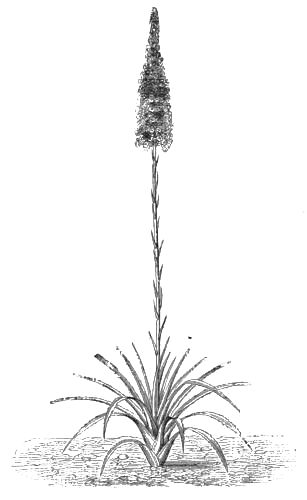
FIG. 48. AGAVE YUCCÆFOLIA.
A. yuccæfolia (Yucca-leaved).* fl. greenish yellow, 1¼in. to 1½in. long, in a dense spike 6in. to 15in. long, about 14in. in diameter, sessile, solitary, or in pairs; scape 12ft. to 20ft. high. l. twenty to forty in a dense, shortly-stemmed rosette, linear, much recurved, 1½ft. to 2½ft. long, ¾in. to 1in. broad at the middle; face deeply channelled, dull, rather glaucous green, with a pale band down the centre, the tip not at all pungent, the back broadly rounded, edge entire, or obscurely serrulate. Mexico, 1816. A most distinct species. See Fig. 48.
AGERATUM (from a, not, and geras, old; in reference to the flowers being always clear). SYN. Cœlestina. ORD. Compositæ. This genus includes several American species, for the most part half-hardy annuals and biennials; or, if the seed is not allowed to ripen, they become perennials. Involucre cup-shaped, of many imbricated linear bracts; receptacle naked. Leaves opposite. A light rich soil is most suitable. Very easily increased by cuttings or seeds; if required true, the former is the only sure method of propagation. To grow large plants for greenhouse decoration, sow the seeds in January, in heat, in sandy soil, barely covering them. As soon as the young plants are large enough, prick them off into thumb pots, and keep in heat till they grow freely, then place them into a cooler house. Transfer into larger pots as soon as the others are full of roots, until they are finally shifted into 10in. or 12in. pots. When these are full of roots, the plants should be watered with liquid manure twice a week, and they soon flower well, making fine specimens. During hot weather especially, they should be well syringed with clear water daily, to keep down red spider. The plants required for bedding (for which purpose the dwarf garden varieties are mostly used) should be raised about the same time, kept in small pots, gradually hardened off, and planted out in the middle or end of June. Cuttings of all the varieties strike readily in heat, treated like most soft-wooded plants, and, when rooted, may be managed as recommended for the seedlings.
A. Lasseauxii (Lasseaux's). fl.-heads rose-coloured, small, disposed in corymbose heads. Summer. l. lanceolate-elliptic. h. 1½ft. to 2ft. Monte Video, 1870. A much-branched plant, requiring greenhouse protection in winter, and suitable for planting out in summer.
A. latifolium (broad-leaved). A synonym of Piqueria latifolia.
A. mexicanum (Mexican).* The commonest and most useful species, with a profusion of lilac-blue flowers. h. 2ft. Mexico, 1822. When used for bedding purposes it may be pegged down like the Verbena, or be allowed to grow its full height. Several very dwarf varieties of it have originated under cultivation, which supersede the species for bedding, the best of which are:—CUPID,* rich blue, very dwarf and floriferous; IMPERIAL DWARF, about 9in. high, with porcelain blue flowers; LADY JANE, of the same colour, very free; QUEEN,* silvery grey, about 9in. high; SNOWFLAKE,* white, very free and showy; SWANLEY BLUE,* very deep blue, 6in. to 8in. high. There is also a white-flowered variety of Mexicanum, which is very showy; and a variegated form, sometimes grown for the sake of its pretty foliage.
AGGLOMERATE, AGGLOMERATED. Collected into a heap or head.
AGGLUTINATED. Glued together.
AGGREGATE, AGGREGATED. Gathered together; usually applied to the inflorescence.
AGLAIA. (mythological: from Aglaia, the name of one of the Graces, and given to this genus on account of its beauty and the sweet scent of the flowers). ORD. Meliaceæ. Stove evergreen trees or shrubs having very small flowers, disposed in branched axillary panicles. Leaves alternate, trifoliate, or impari-pinnate. There are several species, but the undermentioned is the only one worth growing yet introduced. It thrives well in a mixture of turfy loam and peat. Young cuttings ripened at the base, and taken off at a joint, will root in sand under a hand glass, in heat.
A. odorata (sweet-scented). fl. yellow, small, in axillary racemes, very sweet-scented, said to be used by the Chinese to scent their teas. February to May. l. pinnate, with five or seven glossy leaflets. h. 8ft. to 10ft. China, 1810.
AGLAOMORPHA. See Polypodium.
AGLAONEMA (from aglaos, bright, and nema, a thread; supposed to refer to the shining stamens). ORD. Aroideæ. Stove perennials, allied to Arum, and requiring similar treatment to the stove species of that genus.
A. commutatum (changed).* fl. white. l. greyish-blotched. h. 1ft. Philippines, 1863. SYN. A. marantæfolium maculatum.
A. Mannii (Mann's).* fl., spathe 2in. long, whitish, with a spadix one-third shorter, bearing white anthers and scarlet ovaries. l. elliptic-oblong, dark green. Stems thickish, erect. h. 1½ft. Victoria Mountains, 1868.
A. marantæfolium maculatum (Maranta-leaved, spotted). A synonym of A. commutatum.
A. pictum (painted).* fl., spathe pale creamy yellow, folded round so as to appear globular-oblong, opening at top; spadix projecting, white. August. l. elliptic-acuminate, light green, blotched irregularly with broadish angulate patches of grey. Stems slender, erect. h. 1ft. to 2ft. Borneo.
AGNOSTUS. See Stenocarpus.
AGRAPHIS. Included under Scilla (which see).
AGRIMONIA (from argos, white; the cataract of the eye being white. Once reputed to contain medicinal qualities). Agrimony. ORD. Rosaceæ. A genus of hardy herbaceous perennials, with interruptedly pinnate leaves, each accompanied by a pair of stipules united to the petioles. Flowers small, numerous, spiked; calyx turbinate, involucrated by bristles; petals five. They are all of the easiest culture, growing in ordinary soil. Readily increased by root-division. The most showy species in cultivation are described below.
A. Eupatoria (Eupatoria). fl. yellow, on an elongated spike. l. with elliptic-oblong, coarsely serrated leaflets, odd one stalked. h. 1ft. to 2ft. Britain.
A. nepalensis (Nepaul). fl. yellow, on erect, slender racemes. l. with ovate, serrated leaflets, odd one stalked, villous. h. 1ft. to 2ft. Nepaul, 1820.
A. odorata (sweet-scented).* fl. yellow; spikes several. l. with oblong lanceolate, deeply crenate-toothed leaflets, hairy. h. 2ft. to 3ft. Italy, 1640.
AGRIMONY. See Agrimonia.
AGRIOTES. See Wireworm.
AGROSTEMMA (from agros, a field, and stemma, a crown; alluding to the beauty of the flowers, which were formerly made into crowns or garlands). Rose Campion. ORD. Caryophyllaceæ. Hardy evergreen perennials and annuals, with broadish leaves, and one-flowered peduncles. Of easy culture, and well adapted for borders. They will all grow freely in common garden soil. Increased by division of the roots, and seed. A. cœli-rosa, and A. flos-Jovis are, perhaps, species of Lychnis, but the generic name which we have adopted is the most common one. All the species of this genus are exceedingly pretty free-flowering plants, and both annuals and perennials are well worth growing.
A. cœli-rosa (rose of Heaven).* fl. delicate rose, white, or bright purple, solitary, terminal. Summer. Levant, &c., 1713. An annual species about 1ft. high, not tomentose; should be grown in patches. Sow the seed in April.
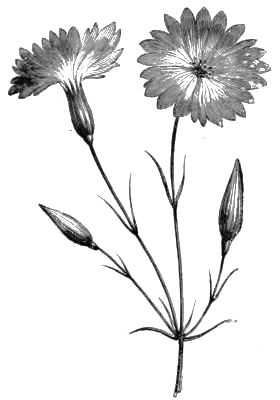
FIG. 49. AGROSTEMMA CŒLI-ROSA FIMBRIATA.
A. c.-r. fimbriata (fimbriate). A form having fimbriated petals. Known also as nana. h. 9in. See Fig. 49.
A. c.-r. purpurea (purple).* A very pretty form, having dark purple flowers, and compact habit. See Fig. 50.
A. coronaria (crowned).* fl. white, with the middle red; petals emarginate, crowned, serrated; peduncles elongated, one-flowered. July. l. lanceolate, very broad, leathery; plant woolly throughout. h. 1ft. to 2ft. South Europe, 1596. This species is admirably adapted for naturalising on dry hill sides, and in the wild garden. There are several varieties seen in gardens with a great diversity of colour, including dark crimson, white, and sometimes double flowers. See Fig. 51.
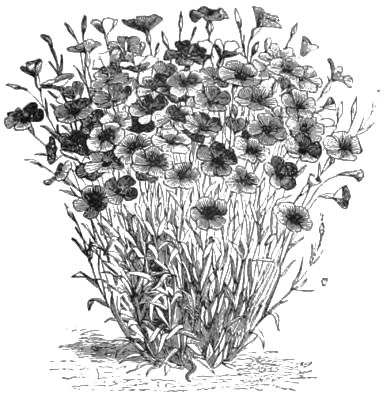
FIG. 50. AGROSTEMMA CŒLI-ROSA PURPUREA.
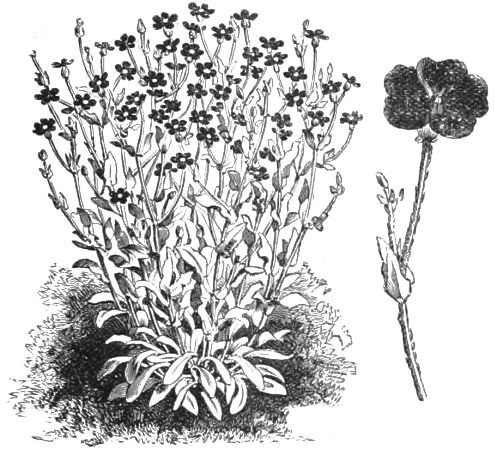
FIG. 51. AGROSTEMMA CORONARIA, showing Habit and Flower.
A. flos-Jovis.* Flower of Jove. fl. purple or scarlet, in umbellate heads; peduncles short, rather branched. July. l. lanceolate, stem-clasping, silky, tomentose. h. 1½ft. Switzerland, 1726. Plant white from tomentum. See Fig. 52.
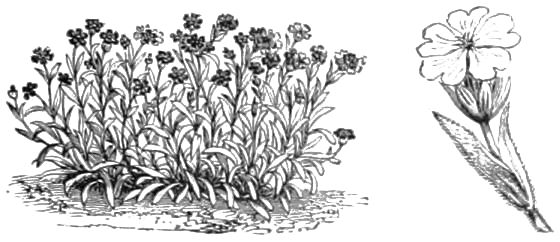
FIG. 52. AGROSTEMMA FLOS-JOVIS, showing Habit and Flower.
AGROSTIS (from agros, a field; the Greek name for a kind of grass). Bent Grass. ORD. Gramineæ. Annual or perennial grasses. Panicle loose; spikelets compressed. Several of the species are very effective, and well worth growing; and the spikes are pretty objects, when dried, for window vases, &c. They are of easy culture, in ordinary garden soil. Sow seeds during spring in the open border, in tufts, among ferns, &c., or in pots for decorative purposes.
A. elegans (elegant). h. 1ft. Russia, 1834.
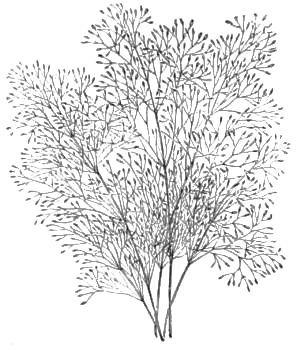
FIG. 53. AGROSTIS NEBULOSA.
A. nebulosa (cloud).* Cloud Grass. fl. panicles resemble, when developed, a cloud resting over the ground. h. 1½ft. Very light and elegant. Annual. See Fig. 53.
A. pulchella (pretty).* Dwarfer, and with a more rigid habit than A. nebulosa. It is, nevertheless, a most graceful plant, and valuable for bouquet making, and for winter decorative purposes. h. 6in. to 12in. Russia. Annual.
A. spica-venti (windward-spiked). fl. panicle large, silky looking, loosely spreading. England. Annual.
AGROTIS. See Pot-herb Moths and Turnip Moth.
AILANTUS (from ailanto, referring to its lofty growth). Tree of Heaven. ORD. Xanthoxylaceæ. Tall deciduous trees. The stove species will grow freely in a mixture of loam and peat; and the best way to increase these is by pieces of the roots, planted in a pot with their points above the ground, and placed in a hotbed, where they will soon make fine plants.
A. excelsa (tall). fl. whitish green, disposed similar to the following. l. abruptly pinnate, 3ft. long, with ten to fourteen pairs of leaflets coarsely toothed at the base, without glands. h. 66ft. India, 1800. A stove tree.
A. glandulosa (glandulous).* fl. whitish green, disposed in large branched, terminal, fascicled panicles, exhaling a disagreeable smell. August. l. impari-pinnate; leaflets coarsely toothed at the base with glands. (The leaves on vigorous young trees are sometimes 6ft. in length.) h. 60ft. China, 1751. This tree grows with great rapidity for the first ten or twelve years, in favourable situations, afterwards its growth is much slower. It is quite hardy, and thrives in almost any soil, though one that is light and somewhat humid, and a sheltered situation, suits it best. It is a very desirable tree for plantations, or to stand singly on lawns, and is easily increased by slips of the roots.
AINSLÆA (in honour of Dr. Whitelaw Ainslie, author of a work on Indian drugs). ORD. Compositæ. Herbaceous perennials, of recent introduction. Although, no doubt, both species will prove tolerably hardy, they should have slight protection during winter. They thrive in light rich soil. Propagated by divisions of the root.
A. aptera (wingless). fl.-head purple, disposed in an elongated spike-like panicle. l. deeply cordate, sinuately toothed; petioles wingless, whence the name. Sikkim Himalayas, 1882.
A. Walkeræ (Mrs. Walker's).* fl.-heads slender, distant, shortly stalked, borne in erect or somewhat nodding racemes; the white corolla-lobes and the red purple anthers make a pretty contrast. h. about 1ft. Hong Kong, 1875. A very rare and graceful species.
AIR. Pure atmospheric air is composed of nitrogen, oxygen, and a very small quantity of carbonic acid gas, all of which are essential to the growth of plants. Air-giving is a term used by gardeners to lessen the temperature of a greenhouse, or to equalise it with that outside. See Ventilation.
AIRA (from aira, applied by the Greeks to Lolium temulentum). Hair Grass. ORD. Gramineæ. Chiefly hardy grasses, of agricultural value. Panicle loose; spikelet compressed, with two perfect flowers, and sometimes a neuter. Of easy culture, in ordinary garden soil. Sow seeds in spring.
A. flexuosa (waved).* The Waved Hair Grass. fl. shining brown; panicle erect, spreading, with waved angular branches and flower-stalks. l. short. Stem upwards of 1ft. high, erect, smooth. England. A very pretty and graceful perennial.
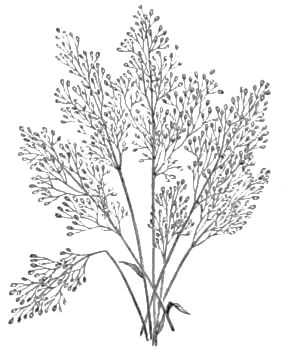
FIG. 54. AIRA PULCHELLA.
A. pulchella (pretty).* fl. panicles loose, very delicate and graceful. l. very short. h. 6in. to 8in. South Europe. An elegant plant, with tufted filiform stems. One of the best of dwarf-growing ornamental grasses. See Fig. 54.
AIR-PLANT. See Aerides, also Epiphytes.
AITONIA (in honour of W. Aiton, once Head Gardener at Kew). ORD. Meliaceæ. A small and rather interesting greenhouse evergreen shrub from the Cape of Good Hope, and thriving well in an equal mixture of sandy loam and peat. Young cuttings will root in sand, under a bell glass, with bottom heat. The cuttings must not be put in very close together, and the glass should be wiped frequently, as they are apt to damp off.
A. capensis (Cape). fl. pink; petals four, shorter than the projecting stamens. July. h. 2ft. 1777.
AIZOON (from aei, always, and zoos, alive; tenacious of life). ORD. Portulacaceæ. Greenhouse annuals, biennials, or evergreen shrubs. Flowers apetalous; calyx five-cleft, coloured on the inner surface. The undermentioned species is the only one worth growing. It requires no shade, a dry atmosphere, and light sandy soil. Propagated by seeds and cuttings.
A. sarmentosum (sarmentose). fl. greenish, sessile. Summer. l. opposite, linear-filiform, rather connate, glabrous; branches rather villous, three-flowered at the apex, the two lateral flowers are bracteated, and spring from the sides of the middle one. Sub-shrub, erect, diffuse, glabrous, branched. South Africa, 1862.
AJAVA SEED. See Ptychotis.
AJAX MAXIMUS. See Narcissus.
AJOWAN. See Ptychotis.
AJUGA (from a, not, and zugon, a yoke; in reference to the calyx being equal, not bilabiate). Bugle. ORD. Labiatæ. Hardy annual or perennial herbaceous plants, usually procumbent or ascending, sometimes stoloniferous. Whorls two or many flowered, dense, sometimes all axillary, when the floral leaves conform to those of the stem; sometimes the superior whorls are approximate into spikes, then the floral leaves are small, and of a different form from the stem ones. All the species are of easy cultivation in ordinary garden soil. Perennials increased by divisions, or by seeds sown in the open border, during spring or autumn. The seeds of annual kinds may be sown in the open border in spring, where they are intended to remain.
A. alpina (alpine). Synonymous with A. genevensis.
A. australis (southern). fl. blue; whorls six or more flowered; lower whorls remote, upper ones sub-spicate, floral leaves similar to the stem ones, exceeding the flowers. May to July. l. narrow-oblong, narrowed at the base, quite entire or sinuated, thickish, rather villous. Stem ascending, or erect. h. 6in. New Holland, 1822. Perennial.
A. Chamæpitys (ground-pine). fl. yellow, dotted with red, pubescent outside; whorls two-flowered; floral leaves similar to the others, exceeding the flowers. April. l. deeply trifid, with linear, quite entire, or trifid lobes. Stem procumbent at the base, much branched, beset with long hairs, like the leaves. h. about 6in. England (rare). Annual.
A. genevensis (Geneva).* fl. varying from blue to rose colour and white; upper whorls spicate, lower ones distant, six or more flowered. May. l. stem ones oblong-elliptic or obovate, narrowed at the base; lower ones petiolate; floral ones ovate or cuneated; superior ones scarcely equalling the flowers or shorter, all usually coarsely toothed, membranaceous, green on both surfaces, and beset with scattered hairs. Stem erect, pilose. h. 6in. to 1ft. Europe. A very variable species, admirably adapted as an alpine plant, and succeeds best in bog soil, where its roots will have plenty of room; it increases rapidly. Perennial. SYNS. A. alpina, A. rugosa.
A. orientalis (oriental).* fl. blue; whorls six or more flowered, distant, or the upper ones are approximate. May. l. lower ones large, petiolate; ovate, coarsely and sinuately toothed, narrowed at the base; floral ones sessile, broad ovate, deeply lobed or toothed, exceeding the flowers. Stem ascending, pilosely woolly. h. 1ft. to 1½ft. Eastern Europe, 1732. This species should be grown in a dry, sunny spot.
A. pyramidalis (pyramidal).* fl. blue or purple; whorls many-flowered, upper ones or all spicate. May and June. l. stem ones approximate, scarcely petiolate, obovate; floral ones broad-ovate, clasping the flowers, tetragonally pyramidate; the upper ones often coloured, all quite entire or obscurely sinuated. Stem erect. h. 6in. Scotland. Perennial. Of this there are several handsome garden varieties.
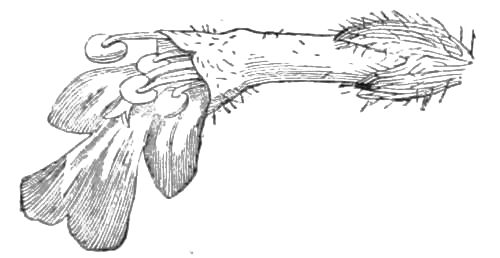
FIG. 55. FLOWER OF AJUGA REPTANS.
A. reptans (creeping).* fl. varying from blue to rose-colour; lower whorls remote; upper ones spicate, six to twenty flowered. May. l. ovate or obovate, quite entire or sinuated, and are, as well as the stem, nearly glabrous; radical one petiolate, stem ones nearly sessile. Stem creeping. The variegated and darkest leaved forms of this are superior to the type for horticultural purposes. Britain. Perennial. See Fig. 55.
A. rugosa (wrinkled). Synonymous with A. genevensis.
AKEBIA (its Japanese name). SYN. Rajania. ORD. Lardizabalaceæ. A pretty twining shrub, succeeding well in the south-western counties of England, or in Scotland, trained to a trellis, or rambling over other shrubs in the open; but, when so grown, it requires the protection of a mat in winter. It makes an excellent twiner for the cool greenhouse. Sandy loam, leaf soil, and peat are most suitable for its culture. Increased by root divisions and cuttings.
A. quinata (five-leafletted).* fl. purplish brown, small, in axillary racemes, very fragrant. March. l. on very slender petioles, and palmately divided into usually five distinct petiolulate oval or oblong emarginate leaflets, the bottom pair smallest. h. 10ft. Chusan, 1845.
AKEE-TREE. See Blighia sapida.
ALA. A lateral petal of a papilionaceous flower.
ALANGIACEÆ. A very small order of trees or shrubs, usually with inconspicuous flowers, in axillary fascicles. Fruit succulent, eatable. The two genera best known in this country are Alangium and Nyssa.
ALANGIUM (from Alangi, the Malabar name of the first species). ORD. Alangiaceæ. Very showy stove evergreen trees, with alternate, exstipulate, entire leaves. Flowers few, sessile, in axillary fascicles; calyx campanulate; petals linear, spreadingly reflexed. They thrive well in a mixture of loam and peat, or any light rich soil. Cuttings root readily if planted in a pot of sand, with a hand glass placed over them, in heat.
A. decapetalum (ten-petaled).* fl. pale purple, with a grateful scent, solitary, or two to three together in the axils of the leaves; petals ten or twelve. June. l. alternate, oblong-lanceolate, quite entire; branches glabrous, spinescent. h. 30ft. Malabar, 1779.
A. hexapetalum (six-petaled). fl. purple, six-petaled. l. ovate-lanceolate, acuminated, velvety beneath. h. 30ft. Malabar, 1823.
ALATUS. Furnished with a membranous or thin wing or expansion.
ALBESCENT. Growing white.
ALBICANT. Growing whitish.
ALBINISM. A pale condition due to the absence of chlorophyl.
ALBIZZIA (named after an Italian). ORD. Leguminosæ. Ornamental greenhouse or hardy trees or shrubs. For culture, see Acacia, to which they are often referred.
A. Julibrissin (Julibrissin). fl. white; heads pedunculate, forming a terminal somewhat corymbose panicle. August. l. with eight to twelve pairs of pinnæ, each pinna bearing about thirty pairs of dimidiate-oblong, acute, rather ciliated leaflets. h. 30ft. to 40ft. Hardy. Levant, 1745. SYN. A. Nemu.
A. lophantha (crest-flowered).* fl. yellow; racemes ovate-oblong, axillary, twin. May. l. with eight to ten pairs of pinnæ, each pinna bearing twenty-five to thirty pairs of linear, bluntish leaflets; petioles and calyces clothed with velvety down. h. 6ft. to 10ft. New Holland, 1803. A very distinct unarmed greenhouse species, and one of the best for window gardening.
A. Nemu. A synonym of A. Julibrissin.
ALBUCA (from albicans, or albus, white; the colour of the earlier species). ORD. Liliaceæ. A rather extensive genus of Cape of Good Hope bulbs, requiring ordinary greenhouse culture. Closely allied to Ornithogalum. Perianth six-cleft, three outer segments spreading; three inner ones closed over the stamens. They, however, succeed admirably when grown in a warm sunny position out of doors, if covered with a hand glass, or litter, during winter. A light loamy soil, with leaf mould and sand, suits them well. Propagated by offsets from the old bulb, or seeds. There are but few species worthy of cultivation.
A. angolensis (Angolan). fl. yellowish, large, in cylindrical racemes 1ft. to 1½ft. long. l. linear-lorate, sub-erect, fleshy, pale green, 1½ft. to 2ft. long. h. 3ft. Angola.