THE DICTIONARY OF GARDENING, (continued 13)
Reading edition
Gas Liquor. If this can be obtained from a gas-house, it should be diluted with twice its bulk of water, and applied in the same manner as Paris Green, being washed off with clean water in a few hours. If the process be repeated on two or three consecutive nights, it will be found certain in its effects; moreover, it is not very poisonous. The finger or thumb, or the Aphis brush, applied early, will often exterminate these obnoxious insects at once. The first of the methods above described is perhaps the most accessible and the safest to use. Poisonous insecticides are more or less dangerous, especially in the hands of the inexperienced. Black Fly is, however, one of the most difficult insects to eradicate, especially if allowed to multiply. A syringing of clean water should follow either of the above applications. See also Aphides.
BLACK JACK OAK. See Quercus nigra.
BLACK MAIDENHAIR SPLEENWORT. See Asplenium Adiantum-nigrum.
BLACK PINE. See Pinus austriaca.
BLACKTHORN. See Prunus spinosa.
BLACK VARNISH TREE. See Melanorrhœa.
BLACK WATTLE. See Callicoma serratifolia.
BLADDER CATCHFLY. See Silene inflata.
BLADDER KETMIA. See Hibiscus Trionum.
BLADDER NUT. See Staphylea.
BLADDER SENNA. See Colutea.
BLADDER WORT. See Utricularia.
BLADE. The lamina or expanded part of a leaf.
BLÆRIA (named after Patrick Blair, M.D., F.R.S., who practised medicine at Boston, in Lincolnshire, and was author of "Miscellaneous Observations," 1718; "Botanic Essays," 1820, &c.). ORD. Ericaceæ. Pretty little greenhouse evergreen shrubs, natives of Southern and Tropical Africa. Flowers terminal, glomerate; corolla short-tubular, with a four-cleft limb, very freely branched. Leaves verticillate, with revolute margins. For culture, see Erica.
B. articulata (jointed).* fl. reddish; heads drooping. May. l. four in a whorl, ovate or linear, glabrous, and shining; bracts solitary. h. 1ft. 1795.
B. ericoides (Heath-like). fl. purplish-red. August. l. four in a whorl, oblong, obtuse, ringed; bracts three, length of the calyx. h. 2ft. 1774. SYN. Erica orbicularis. (L. B. C. 153.)
B. purpurea (purple). fl. purple; heads drooping. June. l. four in a whorl, ovate, sub-ciliated. Stem flexuous, erect. h. 2ft. 1791.
BLAKEA (named after Martin Blake, of Antigua, a great promoter of useful knowledge). ORD. Melastomaceæ. Handsome stove evergreen shrubs or trees. Flowers red, large, showy; peduncles axillary, terete, one-flowered, naked, opposite or solitary, shorter than the leaves, usually with brown tomentum. Leaves petiolate, three to five-nerved, coriaceous, glabrous above and shining, but usually densely clothed with rusty tomentum beneath. They thrive well in peat, or a mixture of loam and peat, and require to be liberally supplied with water, particularly in spring and summer. Cuttings root freely if taken from shoots that are quite ripe (otherwise they are apt to rot), planted in a pot of sand, and plunged in a moist heat, under a hand glass.
B. quinquenervia (five-nerved). fl. flesh-coloured, large, with white disks; peduncles twin, shorter than the petioles. June. l. elliptic, acuminated, naked, and shining on both surfaces, five-nerved. h. 10ft. to 16ft. Guiana, 1820. (A. G. 210.)
B. trinervia (three-nerved). fl. rose colour, large; peduncles solitary, longer than the petioles. June. l. oval-oblong, three-nerved, glabrous and shining on both surfaces in the adult state, and when young serrulated; petioles and branchlets clothed with rusty tomentum. Roots issuing from the branches and stems. h. 4ft. to 8ft. Jamaica, 1789. (B. M. 451.)
BLANCHING. This process is effected for the purpose of obtaining crispness, and for converting what would, under ordinary circumstances, be a dangerous plant—in the case of Celery especially so—into a highly popular delicacy. Blanching can only be accomplished by entirely excluding the light from the plants, thus depriving the colouring matters of their power to decompose water and carbonic acid gas. It is also termed Etiolation.
BLANDFORDIA (named after George, Marquis of Blandford). ORD. Liliaceæ. A very beautiful genus of greenhouse bulbous plants, natives of Australia. Flowers solitary, on recurved pedicels; perianth funnel-shaped, six-cleft; stamens six. Leaves linear, elongate, striate; radical ones dilated, and somewhat sheathing at the base; others shorter and more distant, appearing on the flower-stem. The best soil in which to grow them is loam and peat in equal proportions, with a little rough silver sand added. They should be repotted moderately firm in the autumn, allowing good drainage, and should then be placed under the greenhouse stage, or in any other position where they will be free from water drippings. Water must only be given when dry, until they commence to grow, when it may be gradually increased, and they may be introduced into a higher temperature, if necessary, there to remain till after flowering. When the foliage is ripened off, they may be stored away until the time for repotting. Propagated by seeds and offsets, or by division of the old plants, which must be done when repotting.
B. aurea (golden).* fl. 1½in. to 2in. long; scape bearing an umbellate cluster of three to five pure golden-yellow drooping bell-shaped flowers. Summer. l. narrow, linear, keeled or channelled, from the base of which the flower-scape arises. h. 1ft. to 2ft. New South Wales, 1870. (B. M. 5809.)
B. Cunninghamii (Cunningham's).* fl. rich coppery red, the upper part yellow; about 2in. long, bell-shaped, pendulous; from twelve to twenty, terminating in a stout scape 3ft. high. June. l. linear, slightly keeled at the back, about ⅓in. broad. New South Wales. This magnificent species should have a little charcoal mixed with the soil already mentioned. (B. M. 5734.)
B. C. hybrida (hybrid). fl. red, margined with clear yellow, bell-shaped, in a dense drooping umbel.
B. flammea (fiery).* fl. dullish yellow, in dense umbel-like clusters; bracts ovate-lanceolate, stiff; perianth inversely conical. June. l. linear, bluntly keeled. h. 2ft. Australia, 1849.
B. f. elegans (elegant).* fl. crimson, tipped with yellow, large, funnel-shaped. Summer. l. long, linear-ensiform. This very handsome form is often taken for the type.
B. f. princeps (magnificent).* fl. rich orange-red externally, and bright yellow within, about 3in. long, tubular, borne on a scape about 1ft. high, slightly pendulous, and arranged near the summit. Summer. l. stiff, sub-erect, long, bright green, disposed in a distichous manner. This is a very splendid greenhouse plant, and should be in every collection. Australia, 1873. SYN. B. princeps. See Fig. 255. (B. M. 6209.)
B. grandiflora (large-flowered).* fl. crimson, very large; bracts as long as the pedicels, the inner much the shortest. July. h. 2ft. New South Wales, 1812. (B. R. 924.)
B. intermedia (intermediate). fl. yellow, pendulous, funnel-shaped, in sixteen to twenty-flowered racemes; bracts leaf-formed. September. l. channelled, acutely keeled, scabrous on the margins. h. 1½ft. Australia.
B. marginata (margined). fl. orange-red, conical, in long pendulous racemes; bracts narrow, foliaceous, about equalling in length the pedicels. July. l. stiff, sub-erect, with scabrous margins. h. 2ft. Tasmania, 1842. (B. R. 31, 18.)
B. nobilis (noble).* fl. orange with yellow margins, on long pedicels, drooping, disposed in a terminal raceme; bracts twice as short as the pedicels. July. l. very narrow. h. 2ft. New South Wales, 1803. (B. M. 2003.)
B. princeps (magnificent). Synonymous with B. flammea princeps.
BLATTA. See Cockroaches.
BLEABERRY. See Vaccinium Myrtillus.
BLEACHING POWDER. See Chloride of Lime.
BLECHNUM (from Blechnon, the Greek name of a fern). ORD. Filices. A very attractive genus of stove and greenhouse ferns, thriving in a compost of peat, leaf soil, and loam. Sori linear, continuous, or nearly so, parallel with, and usually contiguous to, the midrib. Involucre distinct from the edge of the frond. Fronds uniform, generally pinnate or pinnatifid. Veins usually free. For general culture, see Ferns.
B. australe (southern).* cau. stout, creeping, scaly; sti. erect, 4in. to 6in. long. fronds 9in. to 18in. long, and from 2in. to 3in. broad, lanceolate, narrowed towards both ends; pinnæ numerous, the barren ones 1in. to 1½in. long, ¼in. to ⅜in. broad, linear, hastate-cordate, or auricled at the base, especially on the upper side, with a very coriaceous texture; fertile pinnæ narrower. sori in a continuous or slightly broken line, close, but not contiguous, to the midrib. South Africa, &c., 1691. Greenhouse species.
B. boreale. See Lomaria Spicant.
B. braziliense (Brazilian).* cau. erect, stout, sub-arborescent, 1ft. or more long, densely clothed at the crown with dark brown scales. sti. short, stout, densely scaly. fronds oblong-lanceolate, 2ft. to 4ft. long, 6in. to 16in. broad, narrowing downwards very gradually; pinnæ close, linear, 4in. to 8in. long, ½in. to ¾in. broad, narrowed gradually towards the point, finely toothed or undulated, connected at the base. Brazil and Peru, 1820. See Fig. 256. (H. S. F. 3, 157.) There is a very pretty variety met with in gardens under the name of Corcovadense crispum, which is not quite so strong-growing as the type, with wavy, crispy edges. They will all thrive in the cool of a stove fernery.
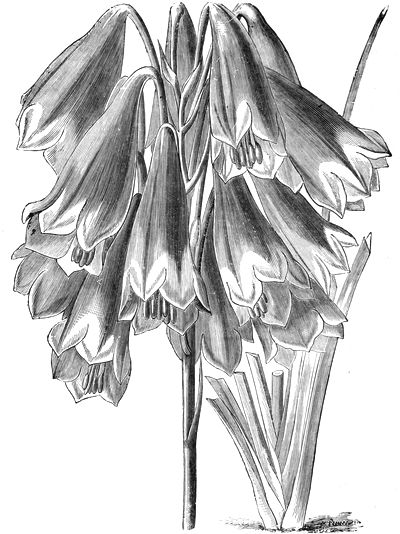
FIG. 255. BLANDFORDIA FLAMMEA PRINCEPS.
B. cartilagineum (cartilaginous). cau. oblique, densely scaly at top. sti. strong, erect, 4in. to 6in. long, scaly, muricated in the lower part. fronds ovate-oblong, 2ft. to 3ft. long, 6in. to 12in. broad; pinnæ numerous, linear, 4in. to 6in. long, about ½in. broad, narrowed gradually towards the point, margin finely toothed, dilated, and connected at the base. sori in a broad line close to the midrib. Temperate Australia, 1820. Greenhouse species.
B. hastatum (halbert-shaped).* rhiz. short, stout, scaly. sti. 4in. to 6in. long, nearly naked. fronds from 9in. to 18in. long, and 2in. to 4in. broad, lanceolate, with twenty to forty pinnæ on each side; the barren ones 1in. to 1½in. long, lanceolate, falcate, narrowed gradually to a point, the lower side slightly truncate, and slightly lobed, the upper cordate, with a large hastate auricle; fertile pinnæ narrower. sori midway between the midrib and margin; rachis and surfaces naked or slightly pubescent; texture coriaceous. Temperate South America, 1841. Greenhouse species.
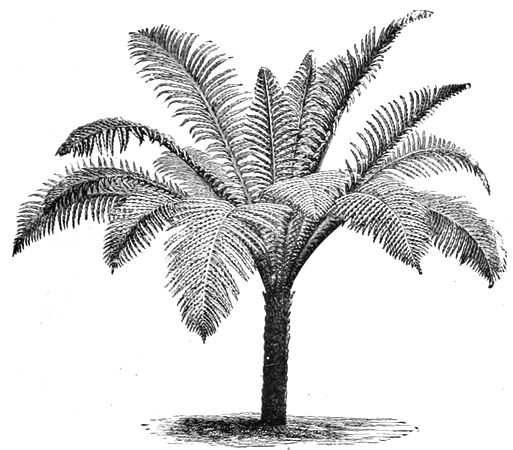
FIG. 256. BLECHNUM BRAZILIENSE.
B. Lanceola (lance-leaved). rhiz. slender, creeping, stoloniferous. sti. slender, erect, 2in. to 4in. long. fronds lanceolate, undivided, 4in. to 6in. long, ½in. broad, or less, narrowed gradually from the centre towards each end. Tropical America, 1820. Stove species.
B. L. trifoliatum (three-leaved). fronds furnished with one or two pairs of small oblong-obtuse lateral pinnæ at the base of the large terminal one. Stove variety. (H. S. F. 3, 94.)
B. longifolium (long-leaved).* rhiz. slender, creeping. sti. firm, erect, nearly naked, 6in. to 12in. long. fronds 6in. to 9in. long, with a terminal pinna, and three to six lateral ones on each side, which are 3in. to 5in. long, and ½in. broad, narrowed gradually towards the point. sori in broad lines close to the midrib; texture coriaceous. Tropical America, 1820. B. l. fraxineum is a variety found in gardens under the name of B. fraxiniifolium, with a habit more close than the type; pinnæ six to eight on a side, sometimes 1in. broad. B. intermedium (Link.) and B. gracile (Kaulf.), often seen in gardens, are slender-growing varieties of this rather variable stove species.
B. nitidum (shining).* sti. stout, erect, naked, 3in. to 4in. long. fronds oblong-lanceolate, 1ft. or more long, 4in. to 6in. broad; pinnæ numerous, sub-falcate, linear, 3in. to 4in. long, ¼in. to ½in. broad, narrowed gradually towards the point, dilated and connected at the base; edge undulate-dentate; texture coriaceous; both surfaces smooth. Stove species. The variety contractum, often seen in gardens, has its pinnæ contracted, and the edge much undulated. Brazil. (H. S. F. 3, 55.)
B. occidentale (western).* cau. stout, erect, scaly at the top. sti. 6in. to 12in. long, erect, scaly below. fronds ovate-acuminate, 9in. to 18in. long, 4in. to 8in. broad, with twelve to twenty-four linear pinnæ on each side, which are 2in. to 4in. long, and about ¾in. broad, narrowed gradually to a point, truncate or cordate; texture coriaceous. West Indies, southwards to Chili and South Brazil, 1823. A very handsome stove or greenhouse fern.
B. o. multifidum (much-cut).* A pretty variety, said to have been introduced from Dominica; the apices of the pinnæ are copiously crested and tasselled, rendering it very desirable. Stove variety.
B. orientale (oriental).* cau. stout, erect, clothed at the crown with dark brown scales. sti. 4in. to 8in. long, strong, erect, scaly below. fronds 1ft. to 3ft. long, 6in. to 12in. broad, ovate, with very numerous nearly contiguous pinnæ on each side, which are 4in. to 8in. long, and about ¾in. broad, narrowed to a long point. Australia, northwards to South China and the Himalayas. Greenhouse.
B. polypodioides (Polypodium-like). A synonym of B. unilaterale.
B. serrulatum (saw-edged).* cau. elongated, stout, ascending. sti. 6in. to 12in. long, strong, erect, smooth, nearly naked. fronds oblong-acuminate, 1ft. to 2ft. long, 6in. to 9in. broad, with twelve to twenty-four pairs of quite distinct articulated linear oblong pinnæ on each side, which are about 4in. to 5in. long, ½in. broad, narrowed gradually towards the point, and downwards to a narrow base, the margins finely incised. Florida, &c., 1819. Stove or greenhouse. SYN. B. striatum. (H. S. F. 3, 159.)
B. striatum (striped). A synonym of B. serrulatum.
B. unilaterale (one-sided).* cau. elongated, densely scaly at the crown. sti. slender, erect, 1in. to 4in. long, slightly scaly below. fronds lanceolate, 6in. to 12in. long, 1½in. to 2in. broad; pinnæ numerous, spreading horizontally, linear, ¾in. to 1in. long, central ones ¼in. to ⅜in. broad, point usually mucronate; edge entire, or nearly so, the lower part dilated to a broad base. sori in a line close to the midrib. Tropical America, 1829. Widely distributed. Stove or greenhouse species. SYN. B. polypodioides, under which name it is usually found in gardens.
BLECHUM (a Greek name for an unknown plant, supposed to resemble Marjoram). ORD. Acanthaceæ. Stove herbaceous perennials. For culture, &c., see Justicia.
B. Brownei (Browne's). fl. white, in a dense bracteated spike, which is four-cornered; bracts ovate, downy. Summer. l. ovate elliptical, somewhat toothed. h. 2ft. West Indies, 1780. The other species introduced are: angustifolium, blue; braziliense, blue; and laxiflorum, white.
BLEPHARIS (from blepharis, the eyelash; in reference to the fringed bracts of the calyx). ORD. Acanthaceæ. Dwarf shrubs or herbs, often spiny and woody, allied to Acanthus. Flowers in bracteate spikes; calyx cruciately four-parted, bracteate; upper segment entire, three-nerved; lower, two-nerved; corolla-tube very short; lip five-lobed, three lobes often much larger than the others; stamens four, sub-didynamous. For culture, &c., see Acanthus.
B. boerhaaviæfolia (Boerhaavia-leaved). fl. blue. July. l. usually four in a whorl, elliptic, toothed. h. 1ft. India, 1829. Stove annual.
B. capensis (Cape Colony).* fl. blue. July. l. narrow, lanceolate, spinose. h. 1ft. Cape of Good Hope, 1816. Greenhouse biennial.
B. furcata (forked-spined). fl. blue. July. l. lanceolate, entire or spiny; bracts large, strongly spinose. h. 2ft. Cape of Good Hope, 1846. Greenhouse evergreen shrub.
B. linearifolia (narrow-leaved). fl. blue. July. l. long, entire, linear, glabrous or hairy, not spiny. h. 2ft. Guinea, 1823. Stove annual.
B. procumbens (trailing).* fl. blue. July. l. linear lanceolate, spiny. h. 1ft. Cape of Good Hope, 1825. Greenhouse evergreen trailer.
BLEPHILIA (from blepharis, the eyelash; in allusion to the ciliated bracts). ORD. Labiatæ. Ornamental hardy perennials, closely allied to Monarda, but differing from it in the calyx tube having thirteen instead of fifteen nerves, and being naked in the throat, while the corollas are much smaller and more dilated. They are of easy culture in ordinary soil. Increased readily by dividing the roots in early spring.
B. ciliata (ciliated). fl. blue; whorls all distinct; bracts ciliated, reddish at top. July. l. almost sessile, ovate-oblong, narrowed at the base, canescent beneath. h. 1ft. to 2ft. North America, 1798.
B. hirsuta (hairy). fl. purple or blue; whorls more numerous than in the preceding; upper ones approximate. July. l. petiolate, ovate, roundly cordate at the base, hairy on both surfaces. h. 1ft. to 2ft. Virginia, 1798. Habit more branched and loose than in B. ciliata.
BLESSED THISTLE. See Cnicus benedictus, properly Carbenia benedicta.
BLETIA (in honour of Don Louis Blet, a Spanish botanist). ORD. Orchideæ. A large genus of, for the most part, stove terrestrial orchids. Flowers purple or whitish, in terminal racemes. Leaves narrow, grass-like. Pseudo-bulbs round, flattened. The flowers are freely produced when the plants are thoroughly established, and are valuable for bouquets, as well for their pleasing colour as for the time they last in perfection. Bletias thrive best in a compost of loam and leaf mould. About 2in. of crocks, covered with a layer of moss, should be placed in the bottom of the pot, which should be filled to within 1in. of the top with soil. The bulbs should then be inserted, and just covered. A good supply of water during the growing season is necessary, and only a moderate amount of heat. After growth has ceased, a period of rest is required, during which time very little water should be given. Propagation is effected by divisions, which should be made after the plants have finished flowering, or previous to their starting into growth.
B. campanulata (bell-shaped). fl. deep purple, with a white centre, lasting a considerable time in perfection. Mexico.
B. florida (florid).* fl. pale rose-coloured; lip not spurred. July and August. h. 2ft. West Indies, 1786. A very pretty species. (B. R. 1401.)
B. gracilis (slender). fl. pale greenish-white; sepals and petals nearly equal, lanceolate, acuminate; lip red and yellow; scape simple. l. oblong, lanceolate, plicate. h. 1½in. Mexico, 1830. (B. R. 1681.)
B. hyacinthina (Hyacinth-like).* fl. purple, racemose; lip not spurred, beardless; scape about as long as the leaves. March to June. l. lanceolate. h. 1ft. China, 1802. This pretty species has proved to be quite hardy. (Garden, Nov., 1879.)
B. patula (spreading-flowered). fl. purple, spreading; scape tall, branched. March. l. lanceolate. h. 2ft. Hayti, 1830. (B. M., 3518.)
B. Shepherdii (Shepherd's).* fl. on branching spikes, purple, marked down the centre of the lip with yellow. Winter. l. long, lanceolate, dark green. Jamaica, 1825. (B. M. 3319.)
B. Sherrattiana (Sherratt's).* fl. about a dozen on a spike, rich rosy purple; petals very broad, twice the breadth of the sepals; lip deep purple in front, marked with white and yellow down the centre. l. three to four-plicate. Pseudo-bulbs depressed. New Grenada, 1867. (B. M. 5646.)
B. verecunda (modest). fl. purple; lip not spurred. January. h. 3ft. West Indies, Mexico, &c., 1733. (B. M. 930.)
BLIGHIA SAPIDA. The Akee Tree. This is now included under the genus Cupania (which see).
BLIGHT, or BLAST. Applied to various diseases of plants which are caused or accelerated either by the presence of parasitic fungi or insects, or by atmospheric influence. Blight generally proves fatal to the whole or part of the subject attacked.
BLIND. A term applied to plants which fail to produce central buds. The defect is frequently noticeable in the Cabbage, and other plants of the Brassica tribe; and is, perhaps, mainly due to the attacks of insects in a very early stage. Great care should therefore be exercised in keeping the seed beds clear of insect pests, by the application of ashes, lime, and soot, or spent hops.
BLOOD FLOWER. See Hæmanthus.
BLOODROOT. See Sanguinaria canadensis.
BLOOM. A fine powder-like substance found on Grapes, Cucumbers, Plums, &c., and varying in colour in the different subjects. It should be carefully protected, as it improves the appearance of the fruit. The term is also generally used—although incorrectly—as the plural of blossom.
BLOSSOM. The flower of a plant, or the essential organs of reproduction, with their appendages.
BLUE-BELLS. See Campanula rotundifolia and Scilla nutans.
BLUE-BOTTLE. See Centaurea Cyanus.
BLUE GUM TREE. See Eucalyptus globulus.
BLUETS. The French name for Centaurea Cyanus. See also Houstonia cœrulea and Vaccinium angustifolium.
BLUMENBACHIA (in honour of John Frederick Blumenbach, M.D., Professor of Medicine at Göttingen, and distinguished as a comparative anatomist). ORD. Loasaceæ. Elegant branched, climbing or trailing, annual, biennial, or perennial herbs, generally covered with stinging hairs, which are very objectionable. Flowers axillary, solitary, bracteate, very pretty and interesting. Leaves opposite, lobed. They are of easy culture in ordinary garden soil. Propagated by seeds, which should be sown in pots, in spring, and placed in a gentle heat, where they will germinate in about a fortnight. When the seedlings are large enough, and after having been previously hardened off, they may be planted out in their blooming quarters, or potted on and trained to a trellis.
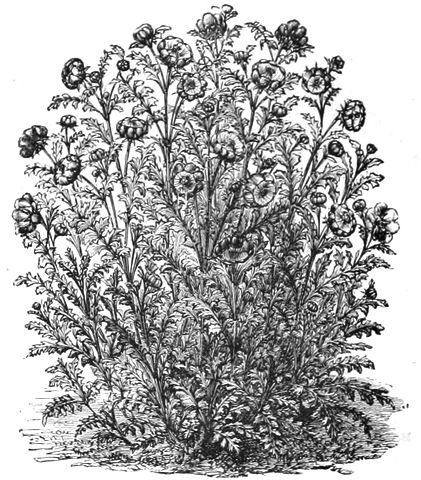
FIG. 257. BLUMENBACHIA CHUQUITENSIS.
B. chuquitensis (Chuquitan).* fl. solitary, axillary, with five to ten boat-shaped red petals, which are yellow within. September. l. oblong-lanceolate, pinnate; segments pinnatifidly lobed. Peru, 1863. Half-hardy climbing perennial. See Fig. 257. (B. M. 6143.)
B. contorta (twisted).* fl. orange-red, with cup-shaped green scales within. July. l. oblong-ovate, pinnatifid; lobes incisely toothed. Peru. Greenhouse climber, but may be grown against a wall, out of doors, during the summer. (B. M. 6134.)
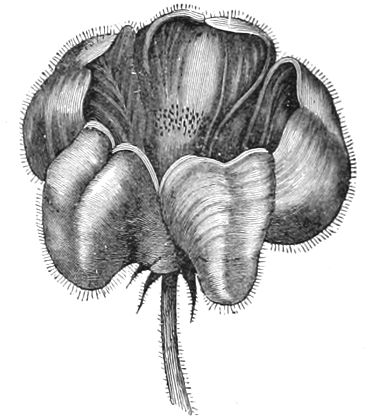
FIG. 258. FLOWER OF BLUMENBACHIA CORONATA.
B. coronata (crowned).* fl. of pure glossy whiteness, quadrangular, crown-shaped, 2in. in diameter each way. June. l. narrow, bipinnatifid, cut into small segments. h. 1½ft. Chili, 1872. This is an elegant dwarf, tufted, erect biennial, with the pure white blooms imbedded in the metallic lustrous foliage. SYN. Caiophora coronata. See Fig. 258.
B. insignis (remarkable).* fl. with whitish petals and reddish-yellow scales, axillary, on long peduncles, about 1in. in diameter. July. l., lower ones five to seven-lobed; upper ones deeply bipinnatifid. h. 1ft. Chili, 1826. Hardy annual trailer. SYN. Loasa palmata. (B. M. 2865.)
BOBARTIA (named after Jacob Bobart, Professor of Botany at Oxford in the seventeenth century). ORD. Irideæ. A small genus of greenhouse or hardy bulbous plants, closely allied to Sisyrinchium. The species in cultivation are very pretty hardy plants, but require protection from severe frosts and excessive rains. They thrive best in a warm, light soil, and make pretty plants for rockwork. Propagated by separating the offsets during autumn. This genus has been much misunderstood. Among the plants which have been referred to it are some which now find places in the genera Aristea, Sisyrinchium, Homeria, Marica, Moræa, &c., &c.
B. aurantiaca. See Homeria aurantiaca.
B. gladiata (sword-shaped). fl. yellow, thinly sprinkled with purple dots near the centre, handsome, nearly 2in. across. l. linear, ensiform, narrow, slightly glaucous, 1ft. or more in length. 1817. SYN. Marica gladiata. (B. R. 229.)
B. spathacea (rush-like). l. rush-like, several feet in length; flower-stem as long as leaves, bearing near extremity a cluster of pale yellow flowers, with narrow segments. Each flower lasts but one day; as a good many, however, are developed in each spathe, there is a succession which lasts some time. 1832. SYN. Xyris altissima. (L. B. C. 1900.)
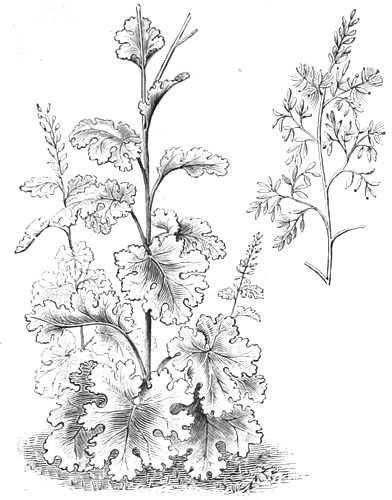
FIG. 259. BOCCONIA CORDATA, showing Habit and Flower.
BOCCONIA (named after Paolo Bocconi, M.D., a Sicilian botanist, author of the "Museum des Plantes," and "Histoire Naturelle de l'Ile de Corse," &c.). ORD. Papaveraceæ. Two of the species are greenhouse or half-hardy shrubs. Flowers inconspicuous, in terminal panicles, with the branches and branchlets each furnished with one bract. Leaves stalked, glaucous, large, lobed. This genus does not well agree with the rest of Papaveraceæ, from its having one-seeded capsules and apetalous flowers. B. cordata is a handsome, hardy, herbaceous plant, with a stately habit and finely-cut foliage, and, where bold subjects are desired, few will be found superior to it. As an isolated specimen on the lawn, or by frequented walks, where it will not be too closely surrounded by tall plants, it may be grown with marked effect. It also forms a good subject for pot culture, and is largely used for sub-tropical bedding. The soil most suitable for its culture is a good fat loam, of considerable depth. Propagated by cuttings, taken from the axils of the larger leaves, during early summer; or by young suckers, taken from established plants, during summer, as they will then flower the following season. If the former method is employed, the cuttings should be pushed on, so that there are plenty of roots before the winter sets in. The other two species require greenhouse culture; but both are eminently suited for sub-tropical gardening, in any light rich soil, or well-drained and airy situation. They are best propagated by seeds, sown in a hotbed in spring, the seedlings being placed out from June to September.
B. cordata (cordate).* fl. buff-coloured, very numerous, borne in very large terminal panicles; individually they are not showy, but the fully grown inflorescence has a very distinct and pleasing appearance. Summer. l. large, reflexed, deeply-veined, roundish-cordate; margins lobed or sinuated. Stems growing rather close together, thickly set with leaves. h. 5ft. to 8ft. China, 1795, and 1866. Mr. Robinson recommends its being grown in the angle of two walls which shelter it from the north and east. It runs quickly at the roots, and the suckers may be cut off to the benefit of the parent plant; each sucker will form a strong plant in a year's time. SYNS. B. japonica and Macleaya yedoënsis. See Fig. 259. (B. M. 1905.)
B. frutescens (shrubby).* fl. greenish. October. l. large, sea-green, oval-oblong, cuneated at the base, pinnatifid. h. 3ft. to 6ft. Mexico, 1739. (L. B. C. 83.)
B. integrifolia (entire-leaved). fl. greenish; panicle crowded. l. flat, oblong, tapering towards each end, entire, or scarcely crenated. h. 9ft. Peru, 1822.
B. japonica (Japanese). Synonymous with B. cordata.
BŒBERA (named after Bœber, a Russian botanist). ORD. Compositæ. A genus of evergreen greenhouse shrubs, now generally referred to Dysodia. They are of easy culture, thriving in ordinary garden soil. Propagated by cuttings, made of young, rather firm, shoots, and placed in sand, under a glass. There are several other species besides the one given below, but they are not of much horticultural value.
B. incana (hoary).* fl.-heads golden; peduncles one-headed. November. l. pinnate, rather hairy; leaflets linear acute, channelled, some entire, and some trifid. Stem hairy. h. 1½ft. Mexico, 1828. (B. R. 1602.)
BŒHMERIA (named after George Rudolph Bœhmer, a German botanist). ORD. Urticaceæ. A genus of shrubs or herbaceous plants, allied to Urtica, from which it is distinguished in not having stinging hairs. B. nivea is the only species having any horticultural value. This thrives best in a warm, sandy soil; and is increased by divisions.
B. nivea (snowy). fl. greenish, disposed in spikes. l. broadly cordate, about 6in. long by 4in. broad, terminating in a long slender point; edges serrate, covered on the under side with a dense coating of white down. h. 3ft. to 4ft. China. A shrub-like perennial, rather more curious than beautiful.
BOG BEAN. See Menyanthes trifoliata.
BOG-EARTH. See Peat.
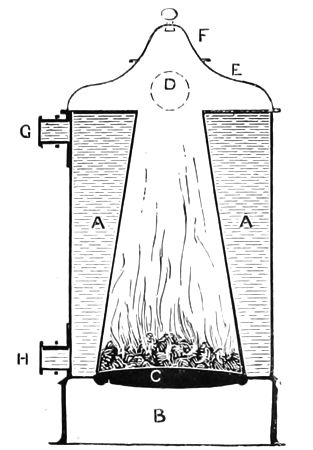
FIG. 260. VERTICAL SECTION OF CYLINDER BOILER.
A A, Wrought-iron Boiler, the shaded space showing the Waterway; B, Ashpit inside the cast base of Boiler; C, Fire-bars; D, Flue; E, Domed Top; F, Feeding Lid; G, Flow, and H, Return Pipe Sockets.
BOILERS. These are very important articles in all gardens where there are glass houses, and the best should always be selected. They are made in cast and wrought iron, both of which have their special advantages and disadvantages. The former are less liable to burn through when encrusted with any deposit from the water, but will crack with sudden changes of temperature, by reason of the granular form of the metal not allowing gradual contraction; the latter may burn through where there is any deposit of mud or other matter, but they will not crack, and will stand a greater pressure than those made of cast metal. It is, however, the better plan to use Boilers of wrought iron, as, with careful usage, they are less liable to break down in hard frosts than are the others. As the value of the plants, as well as that of the Boiler, has to be considered, should such a contingency occur, it is certainly advisable to reduce all risks to a minimum; and as the average life of a Boiler is from ten to fifteen years, a slightly larger first cost is not of very serious moment. The forms of Boilers are very diverse, and, in some of the patented forms, complicated. But, whatever the shape, the following points are essential: A clear and unrestricted waterway of not less than 2in. in thickness; the greatest exposure of surface to the direct action of the fire; a sufficient fire space; and a fire-bar area calculated to supply enough fresh air to the fire to support thorough combustion. The forms generally used for horticultural work are the following, or some modifications of them; and, however grand the name, their chief value consists in the attested heating capacity at a given cost: The Saddle Boiler, which is made of various sizes, with or without check ends, cross tubes, and other devices for increasing the heating surface, and also of a tubular form; the Upright Cylinder (a vertical section of which is shown in Fig. 260); the Upright Tubular Cylinder; the Horizontal Tubular; and the Cornish or Horizontal Cylinder. Combinations of the various forms, and complicated patterns of different kinds, are made for particular purposes; but in no case should large Boilers be used, unless they are recommended, by one competent to judge, as suitable for the purpose they are needed to fulfil. In every case, it is necessary that the Boiler should be fixed in a proper manner. It is also good policy to have Boilers about 30, or even 50 per cent., more powerful than is actually required, when they are new, as, from various causes, their heating power falls off in a year or two in many places; and, under ordinary work, it is not desirable to stimulate the action in order to command sufficient heat. There is no doubt that, for general purposes, some modification of the Saddle or Cylinder Boiler is by far the best, all things duly considered; but it is impossible to give any practical advice without a thorough knowledge of the requirements of any particular place. Gas Boilers are also useful for small places. These are made in many forms, and are, as a rule, in the shape of a cylinder, with a coned inside, against which the flames play. Some Gas Boilers have also a superheater attached; this exhausts the heat from the air which has passed through the Boiler. Another good form is made of horizontal tubes, which contain the water, the flames playing over and amongst them. An atmospheric burner of approved construction should be used where gas is the heating power. A sufficient supply of gas should be assured by using supply pipes of a good size. Care should be taken to keep these pipes free from water, and protected from frost by silicate cotton lagging, or some other good non-conductor. Except for very small places, however, gas apparatus is almost useless, and will never supersede fuel Boilers. For other particulars regarding Boilers, see Heating and Stoking.
BOIS-PERDRIX. See Heisteria.
BOLBOPHYLLUM. See Bulbophyllum.
BOLETUS (from bolos, a mass; in reference to its massy or globular form). ORD. Fungi. The only species of this rather large genus demanding mention is B. edulis (see Fig. 261), which is considered an excellent article of food. It is easily distinguished, and is often of large size and somewhat unshapely; the pileus is usually of a dusky yellow or brownish hue, but sometimes brighter and more of a chestnut colour; the flesh is white, and does not change to a blue colour when cut (this is a very important characteristic, and should always be noticed). It is a species common in most districts, usually growing in woods, and appearing chiefly in the autumn.
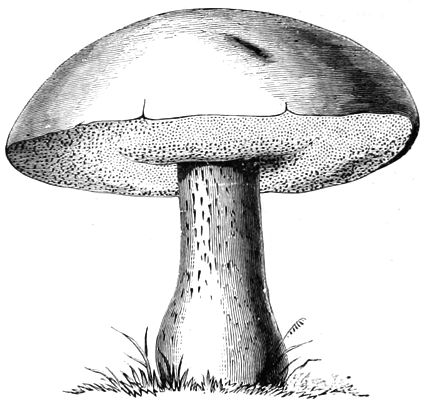
FIG. 261. COMMON BOLETUS (BOLETUS EDULIS).
BOLEUM (from bolos, a ball; in reference to the shape of the seed-pods). ORD. Cruciferæ. An ornamental, hardy, evergreen shrub, well adapted for rockwork, in ordinary soil. It requires slight protection in winter if planted in very exposed situations. Propagated by seed, sown in a pot, in spring, and placed in a frame, or in the open border during summer.
B. asperum (rough).* fl. cream-coloured; racemes erect, elongated; pedicels very short, the lower ones bracteate. April. l. alternate, oblong, linear; lower ones somewhat divided. A suffruticose, erect, branched plant, hispid from stiff hairs. h. 6in. to 1ft. France. 1818.
BOLLEA. See Zygopetalum.
BOLTED. A term used in reference to plants that have prematurely run to seed.
BOLTONIA (named after J. B. Bolton, an English professor of botany). ORD. Compositæ. A genus of rather pretty hardy herbaceous perennials. Flower-heads with white or purplish rays. Leaves pale green, lanceolate, sessile. They thrive in common garden soil. Propagated by divisions of the roots, in March.
B. asteroides (Aster-like).* fl.-heads flesh-coloured, stellate, disposed in a rather large terminal panicle. August. l. all entire, somewhat broadly lanceolate, narrowed at both ends. h. 2ft. North America, 1758. (B. M. 2554.)
B. glastifolia (woad-leaved).* fl.-heads pink. September. l., lower ones serrated. h. 1½ft. North America, 1758. (B. M. 2381.)
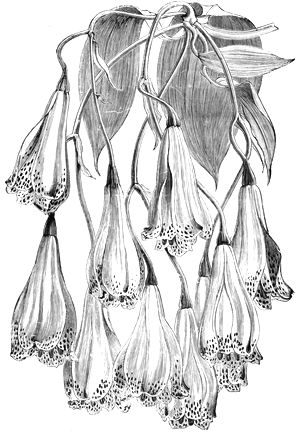
FIG. 262. FLOWERS OF BOMAREA CARDERI.
BOMAREA (derivation of name doubtful). ORD. Amaryllidaceæ. A genus of handsome half-hardy twiners, closely allied to Alströmeria, from which it is chiefly distinguished by its twining habit and some difference in the capsule. They are of comparatively easy culture, thriving in a compost of peat, leaf mould, loam, and sand, with good drainage. Manure water should be given during the season of growth. Although they make fine pot plants, their full beauty is only developed when planted out in the conservatory or greenhouse border. Propagated by seeds, or by careful divisions of the underground stem. In making a division, it is necessary to observe that the part taken has some roots by which to live till new ones are formed. It should be potted at first, and may, when established, be planted out or shifted on. Seeds may be raised in a warm house without difficulty. They germinate in a few weeks; and when the young plants are 2in. or 3in. high, they should be placed separately in small pots, shifting them on as necessary, or planting them out. In favoured southern localities, several species have proved hardy, but they are much the best when grown in a greenhouse.
B. acutifolia Ehrenbergiana (Ehrenberg's acute-leaved). fl. undulate, outer segments deep orange, the inner ones paler and spotted. Spring. l. lanceolate acute, smooth. Mexico, 1878. (B. M. 6444).
B. Caldasiana (Caldas's).* fl. orange yellow, spotted crimson. l. ovate-lanceolate, acute. Peruvian Andes, 1863.
B. Carderi (Carder's).* fl. 2½in. long by 1⅛in. in breadth at the widest part, regularly bell-shaped, with six segments, the three outer rose-coloured, the three inner nearly equal in length, crenulate, and spotted with purplish-brown; inflorescence pendulous, and consisting of a large terminal umbellate cyme, surrounded at the base by a series of crowded leaves. l. oblong lanceolate, acuminate, about 7in. by 2¾in. Columbia, 1876. See Fig. 262, for which we are indebted to Mr. Bull.
B. chontalensis (Chontalese). fl. 1½in. long, sub-campanulate, obtusely trigonous; outer segments thick, fleshy, wavy, rose-red, with a few brown spots round the margin at the tip, very convex; inner segments a little shorter, pale yellow blotched with brown; umbels surrounded by a whorl of leaves, and composed of several peduncles, each bearing four to six nodding flowers. August. l. lanceolate or ovate oblong, acuminate. Nicaragua, 1871. (B. M. 5927).
B. conferta (dense-flowered).* A synonym of B. patococensis.
B. edulis (edible). fl., outer segments rose, green tipped; inner spotted with rose. St. Domingo, &c. One of the oldest species in cultivation. The tubers are said by Tussac to be eaten in St. Domingo, like those of the Jerusalem Artichoke. See Fig. 263.
B. frondea (leafy). fl. 2in. long, tubulate-campanulate; outer segments narrow, oblong, yellow; inner segments ½in. longer than the outer ones, canary yellow, spotted with red; cymes umbellate, many-flowered, about 8in. across, base leafy. l. lanceolate, acuminate. Bogota, 1881. (G. C. n. s. 17, p. 669.)
B. oligantha (few-flowered).* fl. regularly funnel-shaped, about 1in. long; outer segments slightly shorter than the inner, oblanceolate, under ¼in. abroad, obtuse, unspotted, reddish on the outside, yellow within; one or two to an umbel, on simple, flexuous, glabrous pedicels, about 1in. long. l. long, acute, about 2in. long, bright green on the upper surface, ciliated on the ribs beneath. Peru, 1877. See Fig. 264.
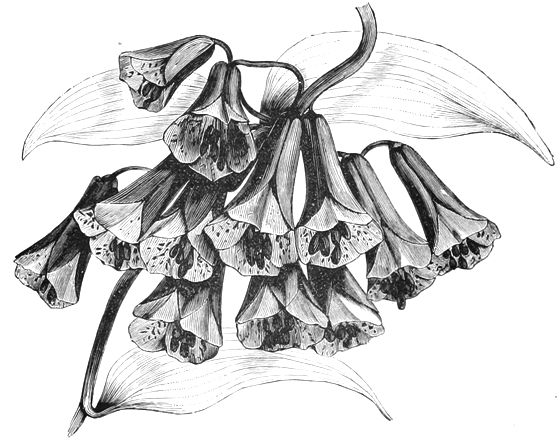
FIG. 263. FLOWERING BRANCH OF BOMAREA EDULIS.
B. patococensis (Patococha). fl. 2in. to 2½in. long, elongate-funnel-shaped; the three outer segments ovate lanceolate, about one-fourth shorter than the inner segments, both of a rich crimson colour; numerously borne in drooping, contracted tufts at the ends of the shoots; peduncles about 2in. to 2½in. long, intermixed at the base with broadly ovate-acute, leafy bracts. August and September. l. scattered, shortly stalked, broadly lanceolate, tail pointed. Bogota, 1881. (G. C. n. s. 17, p. 187.)
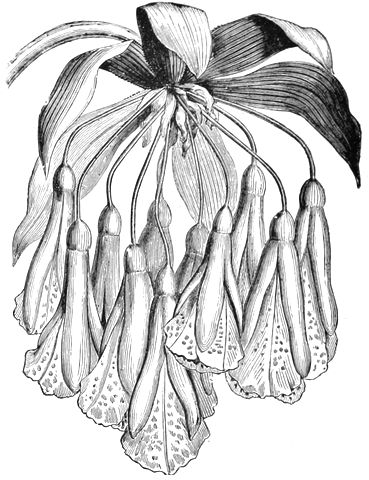
FIG. 264. FLOWERING BRANCH OF BOMAREA OLIGANTHA.
B. salsilla (Salsilla). fl. purple, about ½in. long, the two inner segments having a darker spot at the base, and all of them tinged with green towards the points; collected into a terminal umbel. June. l. few, lanceolate. South America, 1806. This has proved quite hardy under various conditions.
B. Shuttleworthii (Shuttleworth's).* fl., perianth about 2in. long, funnel-shaped or elongate bell-shaped; segments nearly equal, oblong acute, outer ones orange vermilion, slightly tinged with green and dotted with small dark spots at the tips; inner ones more acutely pointed, canary yellow, with a red midrib, and green with dark spots at the tips; cymes umbellate, pendulous. l. ovate lanceolate, 5in. to 6in. by 2in., glabrous. Bogota, 1881. (G. C. n. s. 17, p. 77.)
B. Williamsii (Williams's).* fl. rose-coloured, about 2in. long, elongate funnel shape; disposed in a compound umbellate cyme. l. lanceolate, very acute, and tapering to a very short twisted petiole. New Grenada, 1882.
BOMBACEÆ. A division of Sterculiaceæ.
BOMBAX (from bombax, one of the Greek names for cotton; the pods are filled with a fine silky substance like cotton, but which it is impossible to spin into thread, in consequence of the edges being perfectly smooth). Silk Cotton Tree. ORD. Malvaceæ. A genus of large soft-wooded stove trees. Flowers scarlet or white, large, usually rising laterally from the trunk or branches, either singly or in clusters. They grow best in a rich loamy soil. Cuttings, not too ripe, taken off at a joint, placed in sand under a bell glass, in moist heat, will root readily; but plants raised from seeds brought from their natural habitats make finer trees.
B. Ceiba (Ceiba). fl. pale red, large. l. palmate, with five leaflets. fr. turbinate, concave at the apex. h. 100ft. South America, 1692.
BOMBYX NEUSTRIA. See Lackey Moth.
BONA-NOX. See Ipomæa Bona-Nox.
BONAPARTEA. See Tillandsia.
BONAPARTEA JUNCEA. A synonym of Agave geminiflora.
BONATEA. (in honour of M. Bonato, a distinguished Italian botanist, and a Professor of Botany at Padua). ORD. Orchideæ. A handsome terrestrial stove orchid, allied to Habenaria, and requiring similar culture.
B. speciosa (showy).* fl. white, galeate; petals bipartite; raceme many-flowered, compact; bracts cucullate, acuminate. August. l. oblong, sub-undulate. Stem leafy. h. 2ft. Cape of Good Hope, 1820. (B. M. 2926; L. B. C. 284.)
BONGARDIA. (named after Heinrich Gustav Bongard, a German botanist). ORD. Berberideæ. A very pretty hardy tuberous-rooted perennial, requiring a sandy soil, and good drainage, with protection at all seasons from excessive wet, otherwise it will rot. It should be carefully planted in a compost of loam, peat, leaf soil, and sand, in equal proportions, and covered with a handlight.
B. Rauwolfii (Rauwolf's). fl. golden yellow, on pyramidal branched panicles; stamens and petals nearly equal in length. May. l. radical, pinnate; leaflets sessile, oval-oblong, three to five-cleft at the apex, glaucous, each with a dark purple blotch at the base. h. 6in. Syria, Persia, 1740. SYN. Leontice Chrysogonum. (B. M. 6244.)
BONNAYA (named after Bonnay, a German botanist). ORD. Scrophulariaceæ. A small genus of usually glabrous, rarely pilose, slender, creeping or erect, annual, biennial, or perennial stove plants, almost unknown in cultivation. Flowers axillary, opposite, or alternate from abortion, usually pedicellate, the upper ones sometimes racemose, pinkish, or blue. Leaves opposite, quite entire, or toothed. They thrive in a rich sandy loam. The annual species are propagated by seeds, the others by divisions and cuttings.
BONNETIA (commemorative of Charles Bonnet, a French naturalist, who wrote some botanical papers in 1754). ORD. Ternstrœmiaceæ. A genus of elegant middle-sized stove trees or shrubs. Flowers large, terminal; peduncles one or many-flowered. Leaves scattered, exstipulate, coriaceous, entire, one-nerved, marked with transverse veins, sub-sessile, narrowed to the base. They thrive well in a mixture of loam and peat. Cuttings of firm young shoots will root if placed in sand under a hand glass, in a moderate heat.
B. sessilis (stalkless). fl. purplish, terminal. l. oblong, coriaceous, entire. h. 15ft. Guiana, 1819.
BORAGE. See Borago officinalis.
BORAGINACEÆ. A large order of herbs or shrubs, having spirally-coiled inflorescence; corolla usually regular and five-lobed, with an imbricated æstivation; throat generally hairy; stamens five, inserted in the corolla. Leaves alternate, rough. Among other genera belonging to this order may be named Anchusa, Borago, Cynoglossum, Echium, Lithospermum, and Myosotis.
BORAGO (derivation very uncertain; probably a corruption of some eastern name). Borage. ORD. Boraginaceæ. A genus of hardy herbaceous perennials or annuals, excellently adapted for naturalising in dry stony places. Flowers blue, panicled, drooping; corolla rotate; throat furnished with emarginate vaulted processes; anthers distinct, oblong or lanceolate, awned, fixed by the inner side, conniving into a cone. Nuts four, one-celled, turbinate, fixed to the bottom of the calyx. Leaves oblong or lanceolate. All the species are easily cultivated, thriving in any common soil. Propagated by divisions, in spring, or by striking the young cuttings in a cold frame. They may also be raised from seed, which should be sown from March to May, in any good garden soil, and the plants, when large enough, thinned out to 1ft. or more apart. In hot weather, Borage is generally in demand for claret cup and other drinks.
B. laxiflora (loose-flowered).* fl. on long pedicels, racemose, drooping; corolla pale blue; segments ovate, bluntish, erectly spreading. May to August. l. oblong, and rough from strigæ; radical ones rosulate; cauline ones half stem-clasping. Stem decumbent, many from the same root, hispid from retrograde bristles. Corsica, 1813. (B. M. 1789.)
B. longifolia (long-leaved).* fl. disposed in a terminal bracteate panicle; corolla blue; segments ovate, acute, spreading. July and August. l. linear-lanceolate, scabrous and downy beneath; cauline ones half stem-clasping. h. 1ft. Numidia, 1825.
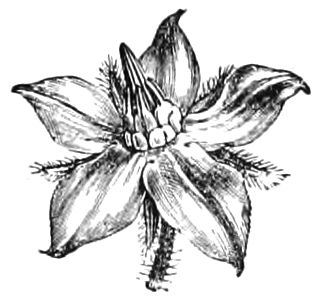
FIG. 265. FLOWER OF BORAGO OFFICINALIS.
B. officinalis (officinal).* Common Borage. fl. blue, purple, or white; segments of the corolla limb ovate, acute, spreading. June to September. l., lower ones obovate, attenuated at the base; cauline ones oblong, sessile, sub-cordate at the base. h. 1ft. to 2ft. Britain. This is the kind most cultivated in gardens for flavouring. See Fig. 265. (Sy. En. B. 36.)
BORASSUS (a name applied by Linnæus to the spathe of the Date Palm). ORD. Palmaceæ. A very small genus of stove trees, containing two noble species, which are distinguished by unisexual flowers, produced upon distinct plants, the males being borne in dense branching catkins, and the females on simple, or, more rarely, slightly branched spikes. Fruit very large, brown, three-seeded. Leaves fan-shaped, with spiny petioles. Trunks unarmed, often 70ft. high. They may be grown in good fibrous loam, leaf mould, and sand, mainly the former. Increased by seeds only, which require to be sown in strong bottom heat. Rarely seen in cultivation.
B. æthiopicum (African). l. nearly circular, and plaited, supported upon stout petioles, 6ft. to 7ft. long. Western Tropical Africa. This handsome, but rare, species is remarkable for the bulging out or swelling in its stem, near the middle, or about two-thirds of its height from the ground.
B. flabelliformis (fan-shaped).* l. nearly circular, and plaited like a partially-open fan, with about seventy ribs, which radiate from a common centre. h. 30ft. India, 1771.
BORBONIA (named after Gaston de Bourbon, Duke of Orleans, son of Henry IV. of France, a great lover and patron of botany). ORD. Leguminosæ. A genus of very ornamental greenhouse evergreen shrubs, natives of the Cape of Good Hope. Flowers yellow, disposed in terminal heads, axillary. Leaves simple, amplexicaul, alternate, exstipulate, pungent. They thrive well in a mixture of peat, loam, and sand, with good drainage. Cuttings, half-ripened, obtained in April, will root freely in sandy soil if placed under a bell glass, in a cool house.
B. barbata (bearded).* fl. sessile, villous on the outside. July. l. narrow, lanceolate, many-nerved, complicated, ciliately-bearded, and very much acuminated; branches diverging. h. 3ft. to 4ft. 1823.
B. cordata (heart-shaped). fl., corolla densely villous, with the vexillum obcordate. July. l. cordate, many-nerved, quite entire, glabrous. Branches villous. h. 3ft. to 6ft. 1759.
B. crenata (crenated).* fl. less villous than in the rest of the species. July. l. cordate, roundish, acute, denticulated, many nerved and reticulated between the nerves, and are, as well as the branches, glabrous. h. 3ft. to 6ft. 1774. (B. M. 274.)
B. lanceolata (lance-shaped). fl. densely villous. July. l. ovate-lanceolate, pungent, many nerved, quite entire, sessile, glabrous, as well as the stem. h. 2ft. to 3ft. 1752. (L. B. C. 81.)
B. ruscifolia (Ruscus-leaved). fl. sparingly villous. July. l. cordate, many-nerved, minutely ciliated, but are otherwise glabrous as well as the branches. h. 2ft. to 4ft. 1790. (B. M. 2128.)
BORDERS, FLOWER. Small beds, or a continuous bed, of greater length than width, skirting a wall or shrubbery, and containing plants of a heterogeneous character. They should be slightly raised above the surrounding level, and thoroughly drained. In the first preparation of the Border, it is most essential to deeply dig or trench the ground, thoroughly incorporating a large amount of well-bodied manure; and if the soil is very stiff, wood ashes or coarse sand should be well worked in with the manure. The best time to plant such Borders is in early autumn or in March.
Where, as is frequently the case, the Borders are only 2ft. or 3ft. wide, not more than two rows of plants, either in groups or singly, will be allowable. The tall plants or shrubs should constitute the background, with dwarfer subjects in front; but formal arrangements must be avoided. The object should be to secure a continuous succession of flowers. This would entail some little trouble at first, which, however, would be amply repaid by results.
No hard-and-fast rules can be laid down as to the arrangement of the plants, which depends on individual taste and means; but the best results are obtained when the border is mainly made up of hardy herbaceous perennials, as permanent occupants, assisted by liberal quantities of summer bedding plants, such as Dahlias, Fuchsias, Geraniums, Heliotrope, Tropæolums, &c., as well as many hardy annuals and biennials. By this means, a very varied and beautiful display may be maintained, especially if bulbs are used for early spring effect, such as Narcissi, Scillas, Snowdrops, Tulips, &c. Of course, the herbaceous perennials should be selected with much care, all weedy subjects being avoided, and variety in colour and time of flowering secured. Anything like a full list of these would occupy too much space for repetition here, but the following will be found very showy and useful: Achilleas, Aconitums, Anemones, Aquilegias, Armerias, Asters, Campanulas, Carnations and Picotees, Delphiniums, Dodecatheons, Doronicums, Fritillarias, Funkias, Gaillardias, Geraniums, Geums, Hollyhocks, Iberises, Irises, Liliums, Pæonies, Papavers, Pyrethrums, double and single, Ranunculus, Trolliuses, &c.
BORDERS, FRUIT. These should be well drained, and if not naturally so, the soil should be excavated from 3ft. to 5ft. deep, in order to form a bottom of stones, pieces of brick, clinkers, &c. Where it is convenient, draining pipes should be added, if an outfall in the vicinity can be secured. The base of the Border should be sloped to the front, where the pipes should be laid, and the bottom covered with draining material, thereby effectually preventing the fruit trees rooting deep, which is detrimental to healthy growth. Gross-feeding vegetables or flowers should not be grown on the surface, but shallow-rooting crops will generally do no harm. Many advocate the surface being kept free from crops of any sort, simply letting it be freely exposed; whilst others equally as strenuously condemn this plan. Where necessary, chalk or some other mineral constituent of good soil which is naturally absent, may be added; but much animal manure is rarely required. The depth and width of Border may vary for different fruit trees, but efficient drainage is in all cases important.
BORECOLE (Brassica oleracea fimbriata). An important division of the Brassica tribe, often cultivated in gardens under the name of Kale. It comes in very useful when hard weather has rendered cabbages, &c., unfit for use, as it endures cold better than most other green vegetables. Some are also grown as ornamental foliaged plants. Like all other plants of a similar description, they require rich soil, and they should be put out in June or early in July, as it is almost useless to plant this kind of vegetable after the middle of the latter month. To obtain the best results, the ground should be deeply dug and well manured; but it must not be full of crude manure at planting time, or it will make the plants too tender and succulent in wet seasons, with the result that the first sharp frost would cause them to rot. Good hard-stemmed plants are the kinds most needed, especially for crops required in spring, when green vegetables are scarce. Cultivation: Early in April, and again a month later for succession, the seeds should be sown thinly in nursery beds, not covering them too deeply. The soil should be in a friable condition, and it is an advantage if the first beds be made under a south wall. As soon as the seedlings appear, if they are too thick, they should be thinned, as those which are drawn up weak and spindly are useless. When large enough, they should be carefully planted out, choosing showery weather, if possible, for the operation. If it is necessary to plant them in dry weather, they must be well watered-in. The rows should be from 2ft. to 3ft. apart, according to the variety, and the plants 2ft. apart in the rows; or, if potatoes are planted wide apart, the Borecole may be arranged between them. Dead leaves must be cleared away from time to time, but no green ones should be broken off. When the tops are cut for use, the stems should not be denuded of foliage, as they will soon break again and form successional crops. The plants must be kept free from weeds. After April, the Kales are of little use; the stems may therefore be pulled up, and the ground planted with some other crop. They all require the same treatment, and at their various seasons come in equally useful.
Sorts. The distinct forms are somewhat limited, but being largely cultivated on the Continent as well as all parts of Britain on account of its hardy nature, the varieties of Borecole receive a large number of names that are either synonymous with, or indistinct from, a few well-known types. Dwarf Green Curled or Scotch is probably the best and most grown; other good hardy sorts are Asparagus Kale (this name is applied to several different kinds, the best one being in use very late in spring), Buda, Cottagers', Dwarf Purple, Imperial Hearting, Ragged Jack, and Tall Green Curled. Melville's Variegated and Variegated Borecole, amongst others, have fine ornamental foliage.
BORONIA (named after Francis Boroni, an Italian servant of Dr. Sibthorp, who perished from an accident at Athens; he collected specimens of many of those plants which are figured in the "Flora Græca"). ORD. Rutaceæ. Very elegant and useful shrubs, requiring similar treatment to ordinary greenhouse hard-wooded subjects, and much aided with a little extra heat in spring, when breaking into growth. Flowers pretty, pink-purplish, or white; peduncles terminal, but usually axillary on the extreme branches, one to many-flowered; pedicels furnished at the base and middle with two opposite, short bracts, jointed, commonly dilated under the calyx. Leaves opposite, simple, or impari-pinnate, entire, or a little serrulated, full of pellucid dots. They should be placed out of doors from July to the middle of September; the most convenient place for them is in pits, as there are then greater facilities for protecting them from heavy rains and thunderstorms. When first put out, Boronias should not be fully exposed, but in the course of a week they may remain open to the full influence of both sun and air. Potting should be performed once a year, as soon as the top growth ceases, as the roots then extend themselves in preparation for their next year's functions. The best compost for them is one of peat and maiden loam in equal parts, and about one-sixth sharp silver sand. Many cultivators, however, prefer a compost consisting of good fibry peat and silver sand, together with some pieces of charcoal, smaller or larger, according to the size of the pots used. The soil should be rammed firmly in the pots, which must be well drained. The leading shoots should be pinched, to ensure good bushy specimens. Propagation may be effected by young cuttings, or those made from the half-ripened wood; these should be put into a thoroughly drained pot of sandy soil, with 1in. of sand on the surface, and covered with a bell glass, which must be frequently taken off and wiped dry. When in the cutting state, water must be very carefully given around the rim of the pot, without taking off the glass. If placed in a temperature of about 50deg., and shaded from bright noonday sun, they soon root, when they may be potted off singly into small pots, and plunged in sawdust, or cocoa-nut fibre refuse, in which situation but little water is needed. Pinching repeatedly, when young, is the only means to secure good ultimate growth. Air must be given on all possible opportunities.
B. alata (winged). fl. pale rose-colour, small; peduncles dichotomous, usually three-flowered; bracts fringed. May. l., leaflets three to five pairs, or more, crenate, revolute, pilose on the nerves beneath, as well as the rachis. h. 2ft. to 6ft. New Holland, 1823. (L. B. C. 1833.)
B. anemonifolia (Anemone-leaved). fl. pink; peduncles axillary, solitary, one-flowered. May. l. stalked, trifid; segments narrow, wedge-shaped, furnished with two or three teeth at the apex, or quite entire. h. 1ft. to 3ft. New Holland, 1824. (P. M. B. 9, 123.)
B. crenulata (crenulate).* fl. red, small, with a fringed calyx; pedicels axillary and terminal, one-flowered. July. l. obovate, mucronulate, crenulated. h. 1ft. to 4ft. King George's Sound. (B. M. 3915.)
B. denticulata (finely-toothed). fl. rose-coloured; bracts deciduous; peduncles corymbose. March to August. l. linear, retuse, toothleted, terminated by a small point. h. 2ft. to 6ft. King George's Sound, 1823. (B. R. 1000.)
B. Drummondi (Drummond's).* fl. pretty rosy pink, freely produced during spring and summer. l. pinnatifid. h. 2ft. New Holland. A very pretty species, with a slender but compact habit of growth. There is a white-flowered variety of this species (F. d. S. 9, 881.)
B. elatior (tallest).* fl. pendulous, rosy carmine, very fragrant, disposed in long dense clusters along the ends of the branches. May. l. very prettily pinnately cut into linear segments. h. 4ft. Western Australia, 1874. (B. M. 6285.)
B. ledifolia (Ledum-leaved). fl. red; peduncles axillary, one-flowered, each bearing two bracts in the middle. March. l. linear-lanceolate, quite entire, downy beneath. h. 1ft. to 2ft. New Holland, 1814. (P. M. B. 8, 123.)
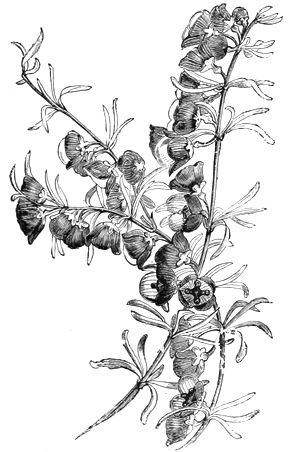
FIG. 266. FLOWERING BRANCHES OF BORONIA MEGASTIGMA.
B. megastigma (large-stigma).* fl. numerous, axillary, fragrant, drooping, ½in. in diameter, sub-globose, campanulate; petals nearly orbicular, concave, maroon purple outside, and yellow within. l. sessile, pinnate, with three to five narrow linear rigid leaflets. h. 1ft. Of slender habit, with twiggy branches. South-western Australia, 1873. See Fig. 266.
B. pinnata (pinnate).* fl. pink, with a scent like that of Hawthorn; peduncles dichotomous. February to May. l., leaflets two, three or four pairs, linear, acute, quite smooth. h. 1ft. to 3ft. New Holland, 1794. (B. M. 1763.)
B. polygalæfolia (Polygala-leaved). fl. red; peduncles axillary, solitary, one-flowered. March to July. l. linear-lanceolate, quite entire, opposite, alternate, and three in a whorl. h. 1ft. to 3ft. Port Jackson, 1824.
B. serrulata (serrulate).* fl. of a deep rose colour, very fragrant; peduncles aggregate, terminal. July. l. trapeziform, acute, serrulated in front, smooth, full of glandular dots. h. 1ft. to 6ft. Port Jackson, 1816. (B. R. 842.)
B. tetrandra (four-stamened). fl. pale purple; pedicels short, one-flowered. May. l. impari-pinnate; leaflets four to five pairs, linear, obtuse, smooth; branches pilose. h. 1ft. to 4ft. New Holland, 1824. (P. M. B. 16, 227.)
BORRERIA (named after William Borrer, F.L.S., a profound botanist and cryptogamist). ORD. Rubiaceæ. A large genus of stove herbs or sub-shrubs, now referred to Spermacoce. Flowers small, white, rarely blue, disposed in verticillate heads, in the axils of the leaves, or on the tops of the branches, rarely cymose or corymbose. Leaves opposite, or the young ones disposed in fascicles in the axils of the old ones, and therefore appearing verticillate; stipules joining with the petioles, more or less sheathing, fringed by many bristles. Stems and branches usually tetragonal. The species are of easy culture, thriving in a light soil. Cuttings of the perennial kinds strike root readily in the same kind of soil, in heat. The annual kinds require a similar treatment to other tender annuals.
B. stricta (straight). A dwarf shrub, but closely allied to the next species. Porto Rico.
B. verticillata (whorled-flowered). fl. white. July. l. linear lanceolate, acuminated, opposite, but appearing verticillate from the fascicles of young leaves in the axils. h. 2ft. West Indies, 1732.
BOSCIA (named after Louis Bosc, a French professor of agriculture). SYN. Podoria. ORD. Capparidaceæ. A small genus of stove plants, requiring a soil of lumpy, fibry loam and peat. Propagated by cuttings of firm wood, placed in sand, under a glass, in heat.
B. senegalensis (Senegal). fl. white, small, apetalous, corymbose. h. 3ft. Senegal, 1824. An unarmed evergreen shrub. (L. E. M. 395.)
BOSSIÆA (named after M. Bossier Lamartinière, a French botanist, who accompanied the unfortunate La Peyrouse round the world). ORD. Leguminosæ. A genus of elegant Australian greenhouse shrubs. Flowers yellow, axillary and solitary, the base of the vexillum or the keel generally blotched or veined with purple. Leaves simple, of various forms. A mixture of turfy loam, leaf mould, peat, and sand, with very free drainage, suits these plants best. Half-ripened cuttings will root freely if placed in a pot of sand with a bell glass over them, in a cool house. Seeds should be sown, in March, on a slight hotbed.
B. cinerea (ashy-grey). fl. yellow, the vexillum furnished with a purple circle at the base, and the keel dark purple. May. l. nearly sessile, cordate acute, ending in a spiny mucrone, scabrous above, but pilose on the nerves beneath, with recurved margins. Branches terete, crowded with leaves, vinous. h. 1ft. to 3ft. 1824. SYNS. B. cordifolia, B. tenuicaulis. (B. M. 3895.)
B. cordifolia (heart-leaved). A synonym of B. cinerea.
B. disticha (two-ranked).* fl. yellowish-red; peduncles solitary, axillary, one-flowered, longer than the leaves. March to May. l. distichous, ovate, obtuse. Young branches terete. h. 1½ft. Swan River, 1840. (B. R. 1841, 55.)
B. ensata (sword-shaped). fl. yellowish, with the back and base of the vexillum of a brownish orange-purple colour; keel brownish-purple. April. Branches flat, linear, leafless, toothed, the teeth bearing the flowers; upper bracts distant from the lower ones, shorter than the pedicel. h. 1ft. to 2ft. 1825. (S. F. A. 51.)
B. foliosa (leafy). fl. yellow and orange. May to June. l. alternate, small, orbicular, retuse, scabrous, with revolute margins, silky beneath; stipules permanent, hooked, longer than the petioles. Branches straight, terete, villous. h. 1ft. to 3ft. 1824.
B. lenticularis (lentil-leaved). A synonym of B. rhombifolia.
B. linnæoides (Linnæa-like).* fl. yellow; keel dark brown; corolla about twice the length of the calyx; pedicels solitary one-flowered, elongated. May. l. elliptic, mucronate. Branches terete, prostrate, puberulous. 1824. A procumbent shrub.
B. linophylla (Flax-leaved).* fl. orange and purple. July to August. l. linear, with recurved margins. Branches compressed, leafy. h. 1ft. to 4ft. 1803. (B. M. 2491.)
B. microphylla (small-leaved). l. cuneiformly obcordate, glabrous. Branches terete, leafy, spinescent; young branches rather compressed and pubescent. h. 1ft. to 2ft. 1803. (L. B. C. 656.)
B. rhombifolia (diamond-leaved).* fl. yellow, the vexillum having a dark red zonate mark at the base; wings red at the base; keel brownish-purple. April. l. rhomboidal-orbicular, somewhat emarginate and mucronate. Branches terete; branchlets compressed, leafy. h. 1ft. to 3ft. 1820. SYN. B. lenticularis. (L. B. C. 1238.)
B. rotundifolia (round-leaved). l. roundish, or broadly obovate, somewhat mucronate, flat, four to five lines long and five to six broad. Branches and branchlets leafy, compressed. h. 1ft. to 2ft. 1824.
B. scolopendrium (plank-plant). fl. yellow, with the back of the vexillum and keel brownish-red. May. l. (when present) ovate and smooth. Branches flat, linear, leafless, toothed, with the teeth bearing the flowers; keel naked; superior bracts permanent, imbricate, equal in length to the peduncles. h. 3ft. to 10ft. 1792. (B. M. 1235.)
B. tenuicaulis (slender-stemmed). Synonymous with B. cinerea.
BOSWELLIA (named after Dr. Boswell, formerly of Edinburgh). Olibanum Tree. ORD. Burseraceæ. Ornamental and economic evergreen stove trees. Flowers hermaphrodite; calyx five-toothed, permanent; petals five, obovate-oblong, spreading, with the margins incumbent in æstivation; disk cup-shaped, crenate; stamens ten; capsule trigonal. They are of easy culture, thriving well in loam and peat soil. Cuttings root readily if placed in sand under a glass.
B. glabra (glabrous). fl. white, small, with a red nectary and yellow anthers; racemes aggregate, simple, terminal, shorter than the leaves. l. impari-pinnate; leaflets broad, lanceolate, blunt, serrated, smooth. h. 30ft. Coromandel, 1823. (B. F. S. 124.)
B. serrata (saw-edged-leaved).* fl. whitish-yellow; racemes axillary, simple. l. impari-pinnate; leaflets ovate-oblong, taper-pointed, serrated, pubescent. h. 20ft. India, 1820. (T. L. S. xv., 4.)
BOTANY BAY GUM. See Xanthorrhæa arborea.
BOTANY BAY TEA (and TREE). See Smilax glycyphylla.
BOTHY. A residence for under-gardeners, usually built behind the hothouses, or some high wall, in what is called a back shed. The place is too frequently a cramped, ill-ventilated hovel. A Bothy proper should be an independent structure, and fitted with modern conveniences; for, of all people, gardeners are the most susceptible to colds, &c. A library of standard horticultural and botanical works, as well as a few on other scientific subjects, and a moderate number of high-class books of fiction, one or more weekly gardening and other papers, should be supplied by the employer. During the winter months, for mutual improvement, lectures should be delivered, or papers read, by each gardener, on various subjects, after which a free discussion should take place upon the paper or lecture, by which means a great amount of good would be accomplished.
BOTRYCHIUM (from botrys, a bunch; in reference to the bunch-like disposition of the indusia). Moonwort. ORD. Filices. A genus of very interesting and pretty little hardy ferns. Capsules sessile, arranged in two rows on the face of spikes which form a compound panicle. They require a compost of sandy loam; perfect drainage is most essential. For general culture, see Ferns.
B. australe (southern). A variety of B. ternatum.
B. daucifolium (Daucus-leaved). sti. stout, 6in. to 12in. long; petiole of sterile segments 1in. to 6in. long, the latter 6in. to 12in. each way, deltoid, tripinnatifid or tripinnate, the lower pinnæ largest; segments lanceolate-oblong, ¼in. to ⅜in. broad, finely toothed. fertile peduncle equalling the sterile segments when mature; panicle 2in. to 4in. long; tripinnate, not very close. Himalayas, &c. Greenhouse species. SYN. B. subcarnosum.
B. Lunaria. Common Moonwort.* sti. 1in. to 4in. long. sterile segments sessile, or nearly so, 1in. to 3in. long, ½in. to 1in. broad, base much broader than the middle, cut down to a flattened rachis into several distinct, close, entire, or notched cuneate-flabellate pinnæ on both sides. fertile peduncle equalling or exceeding the sterile portion; panicle close, 1in. to 2in. long. England, &c. Hardy. See Fig. 267.
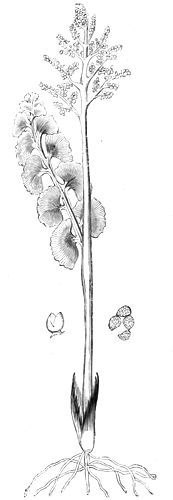
FIG. 267. BOTRYCHIUM LUNARIA, showing Habit, Capsule, and Spores.
B. lunarioides (Lunaria-like). A variety of B. ternatum.
B. obliquum (oblique). A variety of B. ternatum.
B. subcarnosum (sub-fleshy). A synonym of B. daucifolium.
B. ternatum (ternate).* sti. 1in. to 2in. long. petiole of the sterile segments 2in. to 4in. long, the latter 3in. to 6in. each way, deltoid, tri- or quadripinnatifid; lower pinnæ much the largest. fertile peduncle 6in. to 9in. long; panicle 1in. to 6in. long; deltoid, very compound. Nootka and Hudson's Bay territory. Several so-called species come very close to this, including australe, lunarioides, and obliquum, which are only geographical varieties. Greenhouse species.
B. virginianum (Virginian).* sti. 3in. to 18in. long. sterile segments sessile, 4in. to 12in. each way, deltoid, quadripinnatifid; lower pinnæ much the largest; pinnules oval-oblong, close, cut down to the rachis into finely cut linear-oblong segments. fertile peduncle equalling or exceeding the sterile part of the plant when mature; panicle 1in. to 4in. long, loose, oblong. Oregon, and North United States, 1790. A hardy species in sheltered places. (H. G. F. 29.)
BOTTLE-GOURD. See Lagenaria.
BOTTLE-TREE. See Sterculia rupestris.
BOTTOM HEAT. This is usually secured by passing hot-water pipes through an air chamber, or a water tank, beneath a bed of plunging material. The covering of the tank or chamber is best made of slate. The heat must be regulated according to the requirements of the subjects grown; this is easily accomplished by using the valve. A thermometer should be placed in the tank or bed. Bottom-heat is indispensable for propagating plants from seeds and cuttings, especially in spring. See Heating and Hotbeds.
BOUCEROSIA (from boukeros, furnished with buffaloes' horns; in reference to the curved lobes of the corona) ORD. Asclepiadaceæ. A genus of greenhouse succulent perennials, allied to Stapelia, and requiring the same culture. Flowers numerous, terminal, umbellate; corolla sub-campanulate, five-cleft; segments broadly triangular, with acute recesses; stramineous corona fifteen-lobed; lobes disposed in a double series; the five inner ones opposite the stamens and lying upon the anthers; the rest exterior, erect, or a little incurved at apex, adhering to the back of the inner ones. Branches and stems tetragonal, with toothed angles.
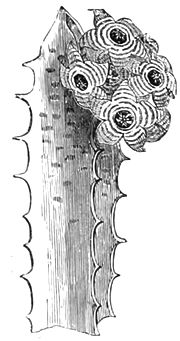
FIG. 268 BOUCEROSIA EUROPÆA.
B. europæa (European). fl. purple-brown, yellow. Summer. h. 4in. Sicily, 1833. SYNS. Apteranthes and Stapelia Gussoniana. See Fig. 268. (B. R. 1731.)
B. maroccana (Morocco).* fl. dark red purple, with yellow concentric lines. Summer. l. minute, trowel-shaped, deflexed at tip of stem angles. h. 4in. Morocco, 1875. (B. M. 6137.)
BOUCHEA (named after C. and P. Bouche, German naturalists). ORD. Verbenaceæ. A small genus of stove or greenhouse evergreen herbs or sub-shrubs. Flowers sub-sessile, in spicate racemes, which are either terminal or in the forking of two branches; corolla funnel-shaped. Leaves opposite, toothed. They thrive in a well-drained compost of loam and sandy peat. Propagated by cuttings, placed in sand, under a glass, and in a gentle heat, during spring.
B. cuneifolia (wedge-shaped-leaved). fl. white. April. h. 4ft. Cape of Good Hope, 1821. A greenhouse evergreen shrub. SYN. Chascanum cuneifolium.
B. pseudogervao (false-gervaô). fl. purplish, with white throat; spike terminal, 6in. to 10in. long, slender. September. l. opposite, ovate, or elliptic-ovate, acuminate, serrated. Stems tetragonous. h. 2ft. to 5ft. Brazil, 1874. A stove perennial. (B. M. 6221).
BOUGAINVILLEA (named after De Bougainville, a French navigator). ORD. Nyctagineæ. Gorgeous warm greenhouse or conservatory plants, comprising some of the most showy climbers in cultivation. Their beauty lies in the bracts, which envelop the small greenish flowers. B. glabra may be grown in pots, or planted out in the greenhouse borders; the others are best planted out, as they root very freely, and plenty of space would be occupied if allowed, but it is best to limit it, as they bloom much better. Strict training and pinching are not desirable, being prejudicial to the free production of bloom; indeed, the best plan is to allow the plants to ramble freely over the roof of a moderately high house, or along the upper portion of a back wall; they will then bloom profusely for several months in the year, provided proper attention be paid to watering, and that the plants are in a well-drained situation. In preparing a border for their reception, the first point to be considered is the drainage, which must be perfect. This is best effected by placing a layer of brick rubbish, 6in. to 9in. in thickness, communicating with the drain, by which means all sourness and stagnancy of the soil will be obviated. The bed should be excavated to a depth of 18in. or 2ft. Three parts turfy loam, and one part leaf soil, with the admixture of a liberal quantity of sharp gritty sand, will form a suitable compost for the culture of Bougainvilleas. The amount of sand incorporated must depend upon the quality of the other components, heavy loam requiring more than that which is more friable. The occasional incorporation of manure in the compost is not to be recommended; but a liberal application of liquid manure will be of material advantage, especially if the root space is limited. When the plants cease blooming each year—about November or December—they should be dried off and rested; and in February they should be closely spurred in, the same as with vines, and all weak leaders removed, so that strong wood only is left. When grown in pots, they must be started in brisk heat. They are easily increased by cuttings prepared from the half-ripened wood; these should be placed in sandy soil, in a brisk bottom heat, when they will soon root. Scale, red spider, and mealy bug are the only insects likely to infest the plants, and recipes for their destruction will be found under each individual name.
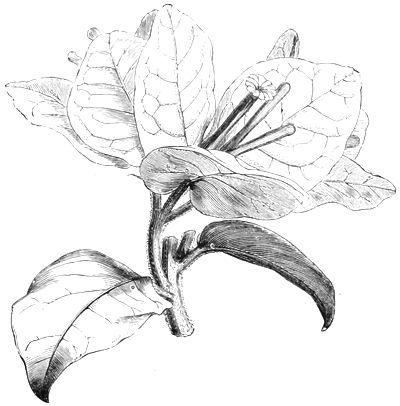
FIG. 269. FLOWERING BRANCH OF BOUGAINVILLEA SPECTABILIS.
B. glabra (smooth).* fl., inflorescence panicled, smaller than that of B. speciosa, each branchlet producing cordate-ovate acute rosy bracts, in threes. Summer. l. bright green, smooth. Brazil, 1861. This is by far the best species for pot culture, and forms a very showy plant when well grown.
B. speciosa (beautiful).* fl., bracts large, cordate, delicate lilac rose, produced in immense panicles, which, in well grown specimens, are so freely produced as to entirely shroud the whole plant. March to June. l. ovate, very dark green, covered on the upper surface with small hairs. Stems branched, abundantly furnished with large recurved spines. Brazil, 1861. (F. M. i., 62.)
B. spectabilis (showy). fl., bracts of a dull brick-red, shaded with scarlet. South America, 1829. It is very difficult to obtain bloom on this plant; and when flowers are produced, they are extremely ephemeral. The species is, for all practical purposes, much inferior to either of the foregoing. SYN. Josepha augusta. See Fig. 269.
BOURBON PALM. See Latania.
BOUSSINGAULTIA (named after Boussingault, a celebrated chemist). ORD. Chenopodiaceæ. Very pretty half-hardy, tuberous-rooted plants, requiring a rich vegetable sandy soil, and a well-drained sunny aspect, under which conditions the first-mentioned species develops into a very luxuriant trailing plant, attaining a length of 20in. or more. Propagated freely by means of the tubercles of the stem; these are, however, extremely brittle.
B. baselloides (Basella-like).* fl. white, ultimately becoming black, fragrant, small, disposed in clusters, 2in. to 4in. long, which are axillary at the ends of the branches. Late autumn. l. alternate, cordate, smooth, shining, fleshy, slightly wavy. Stems very twining, tinged red, very quick-growing, producing tubercles. South America, 1835. (B. M. 3620.)
B. Lachaumei (Lachaume's). fl. rose, constantly in perfection. Cuba, 1872. A stove species.
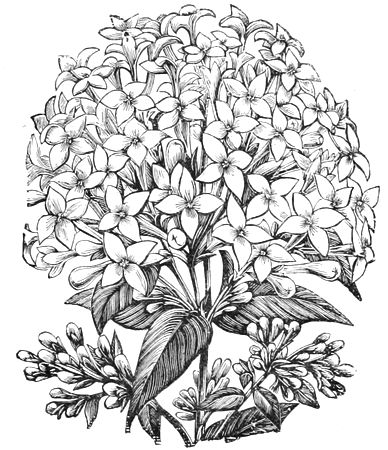
FIG. 270. FLOWERING BRANCH OF BOUVARDIA.
BOUVARDIA (named after Dr. Charles Bouvard, formerly superintendent of the Jardin du Roi, at Paris). ORD. Rubiaceæ. Handsome greenhouse evergreen shrubs. Peduncles terminal, three-flowered, or trichotomous and corymbose; corolla funnel-shaped, tubular, elongated, beset with velvety papillæ outside, and a four-parted, spreading, short limb. Leaves opposite, or in whorls; stipules narrow, acute, adnate to the petioles on both sides. These extensively cultivated plants are among the most useful for conservatory or greenhouse decoration (see Fig. 270. for which we are indebted to Messrs. Cannell and Sons), and the flowers are largely employed in a cut state. Perhaps only two are fragrant, viz., jasminiflora and Humboldtii. Cultivation: Presuming the grower to be commencing with young rooted cuttings, these should be potted off into a mixture of good fibrous loam, leaf soil, and sand, in equal proportions, to which may be added a small quantity of peat; they should then be placed in a temperature of from 70deg. to 80deg. until fully established in the small pots. It is necessary at this stage to stop the young plants back to the first joint, and as they continue to make fresh breaks, to keep on pinching them back during the whole period of cultivation, or until sufficiently bushy plants are produced. Many growers neglect stopping far too much, the result being ill-shaped and almost flowerless plants. The pinching, of course, can be regulated by the time the plants are required to flower; and it is unwise, in most cases, to stop them after the end of August. When the small pots are well filled with roots, the plants should be shifted into the flowering pots, viz., large 48-sized, which are quite commodious enough to grow very fine plants, a similar compost as in the first potting, with a little Standen's manure added, being used, and good drainage provided. A cool greenhouse, with a damp bottom for the pots to rest upon, and with a moist atmosphere, is the most suitable place in which to grow them during late spring and early summer, the moist air being very desirable as an effectual check to red spider, a pest very fond of the foliage, which it permanently disfigures. A cold pit or close frame is better during the summer months, as a moist atmosphere and cool bottom are then certain. Ventilation may be effected during the greater part of the day by tilting the lights below, and on fine nights they may be removed altogether. During bright sunshine, shading will be beneficial. All through the period of active growth, it is absolutely necessary that the plants should receive plenty of water, or they will surely suffer; and when the pots are filled with roots, occasional doses of manure water will be beneficial. Many cultivators plant them out about the end of June, in favoured situations, or in spent hotbeds, when they make very vigorous growth; and, if carefully pinched and watered, fine specimens are obtained. These are lifted in early autumn, with a good ball, potted, and kept shaded for a few days until the roots are again active, when they are taken to the house in which they are intended to bloom, and an enormous supply of flowers is secured. We have also seen Bouvardias planted out permanently in beds, in prepared pits, in which the winter temperature was not less than 55deg., with very satisfactory results; the quantity of bloom being very great. Of course, with the last-named treatment, it is essential to give the plants a rest and hardening-off after flowering, and when they are started into fresh growth to keep them well pinched and watered. Bouvardias are liable to the attacks of red spider and green fly. The former stands little chance of existence if the plants are kept well supplied with moisture; the latter may be destroyed by fumigating with tobacco. Mealy bug are also troublesome, and should be sponged off with a solution of Gishurst's Compound. Propagation: After flowering, and a slight rest and hardening-off, the old plants should be cut back, placed in heat, in a stove or cucumber pit, and freely syringed, which will cause them to break freely, and produce a good supply of cuttings. When the young shoots are from 1½in. to 2in. long., they are in the best condition for striking. It is not necessary that they should be cut off at a joint, as they will root from any surface of the stem; and, working economically, it is wiser to cut them off just above the first joint, as other shoots will speedily break out, which may, in their turn, be taken. Pots about 5in. across should have previously been prepared for the cuttings, by being well drained and filled with a mixture of good fibrous loam, leaf soil, and coarse sand, in equal parts, with a copious supply of sand upon the surface, into which the cuttings should be dibbled pretty thickly. A good watering must be given without wetting, and thereby injuring, the foliage. The pots should be plunged in the cutting case, or in any bottom heat of about 70deg. or 80deg., and covered with a bell glass. All that is then necessary is to keep them moist and shady during sunshine, until they are rooted, which, as a rule, is effected in three weeks' time. When well established, they may be removed from the case, gradually hardened off, and finally potted singly into small thumb pots.
B. angustifolia (narrow-leaved).* fl. pale red; corymbs somewhat trichotomous. September. l. three in a whorl, lanceolate, with revolute edges, glabrous above, but beset with fine hairs beneath. Branches terete, smoothish. h. 2ft. Mexico, 1838. (P. M. B. 7, 99.)
B. Cavanillesii (Cavanilles's). fl. red; peduncles terminal, trifid, three-flowered. May. l. opposite, ovate-lanceolate, acuminated, rather villous beneath. h. 1½ft. Mexico, 1846. SYN. B. multiflora. (J. H. S. 3, 246.)
B. flava (yellow).* fl. yellow, drooping; racemes three to five-flowered; pedicels downy, slender. March. l. opposite, ovate-lanceolate, ciliated; stipules setaceous. h. 1½ft. Mexico, 1845. (B. R. 32, 32.)
B. hirtella (hairy). fl. pale red or flesh-coloured, corymbose. l. whorled, lanceolate, with revoluted edges, hairy on both surfaces. Branches terete. Mexico.
B. Humboldtii corymbiflora (Humboldt's corymb-flowered).* fl. white, large, fragrant, disposed in terminal racemes; tubes long. Autumn and winter. l. ovate, oblong-acuminate, dark green. 1874. One of the finest kinds in cultivation. (G. C. 1873, 717.)
B. Jacquini (Jacquin's). A synonym of B. triphylla.
B. jasminiflora (Jasmine-flowered).* fl. white, fragrant, in compound cymes; very floriferous. Winter. l. opposite, elliptic-acuminate. South America, 1869. A very charming and largely grown species. (G. C. 1872, 215.)
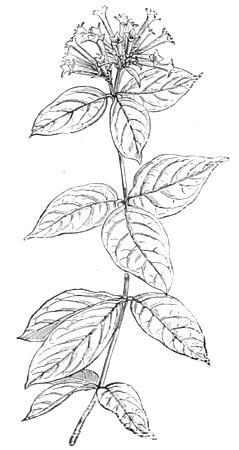
FIG. 271. BOUVARDIA LEIANTHA.
B. leiantha (smooth-flowered).* fl. scarlet; corymbs sub-trichotomous. July to November. l. ternate, ovate-acuminate, slightly hairy above, downy-villous beneath. h. 2ft. Mexico, 1850. See Fig. 271. (B. H. 2, 6.)
B. longiflora (long-flowered).* fl. white, terminal, solitary, sessile, with the tube 2in. or 3in. long. l. opposite, oblong, acute, cuneated at the base, glabrous. Branches compressedly tetragonal, glabrous. h. 2ft. to 3ft. Mexico, 1827. (B. M. 4223.)
B. multiflora (many-flowered). A synonym of B. Cavanillesii.
B. triphylla (three-leaved).* fl. scarlet, nearly 1in. long; corymbs somewhat trichotomous. July. l. smoothish above, hairy beneath, three in a whorl, oblong. Branchlets trigonal, hairy. h. 2ft. to 3ft. Mexico, 1794. There are numerous varieties of this species. SYN. B. Jacquini. (B. M. 1854.)
B. versicolor (various-coloured). fl., corolla with a scarlet tube, which is ¾in. long, but having the limb yellowish inside; corymbs three-flowered, trichotomous, drooping. July to September. l. opposite, lanceolate, ciliated. Branches terete, glabrous, velvety while young. h. 2ft. to 3ft. South America, 1814. (B. R. 245.)
The garden hybrids are very handsome. A selection is given below:
ALFRED NEUNER, flowers double, white, or slightly tinged with rose (see Fig. 272); BRILLIANT, flowers bright crimson, numerous, freely branching habit, and strong constitution; DAZZLER,* habit very bushy and compact, extremely floriferous, flowers rich scarlet, in dense clusters; HOGARTH, brilliant scarlet, very fine; LONGIFLORA FLAMMEA,* flowers long-tubed, blush-rose; MAIDEN'S BLUSH,* very free and floriferous, blush-rose; PRESIDENT GARFIELD, rich double, red-pink, very fine; QUEEN OF ROSES, rosy-pink, the tubes tinted with crimson, habit dwarf and very free; VREELANDI (=DAVIDSONI), flowers pure white, produced in great abundance; one of the most useful of them all, and grown very extensively.
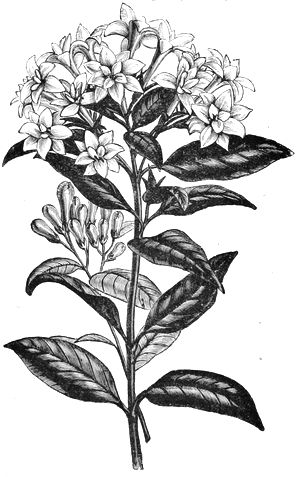
FIG. 272. BOUVARDIA ALFRED NEUNER.
BOWENIA (commemorative of Sir G. Bowen, Governor of Queensland). ORD. Cycadaceæ. A remarkable and handsome greenhouse fern-like plant, closely allied to Zamia, from which it is distinguished by having the leaflets decurrent to the petiole, instead of articulated, as in that genus. For culture, see Cycas.
B. spectabilis (showy).* fl., male cones small, ovoid, ½in. to ¾in. long; female oblong-globose, 3¾in. long. l. bipinnatisect, on tall, slender petioles; leaflets falcate-lanceolate, decurrent; stem short, thick, cylindrical. Queensland, Australia, 1863. (B. M. 5398 and 6008.)
B. s. serrulata (finely-toothed).* This differs from the type in having the margins distinctly toothed or serrated. Rockingham Bay, 1863.
BOWIEA (named after J. Bowie, a botanical collector for the Royal Gardens, Kew). ORD. Liliaceæ. A very interesting greenhouse or half-hardy twining bulbous perennial, thriving in a sunny border, under the wall of a greenhouse, where it will require protection during winter. It does well in any light well drained soil, and may be propagated by seeds or offsets.
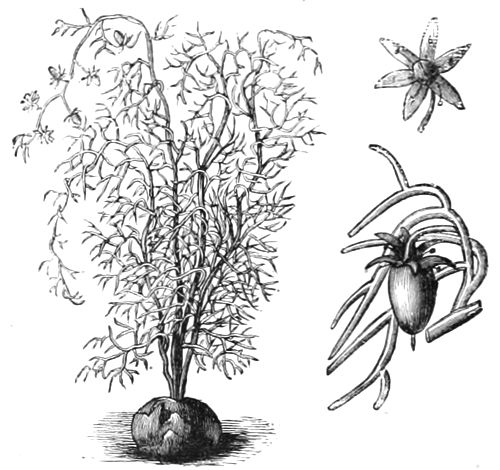
FIG. 273. BOWIEA VOLUBILIS, showing Habit, Flower, and Fruit.
B. volubilis (twining). fl. few, remote, pedicellate; perianth six-partite, persistent; segments equal, green, lanceolate, ¼in. long, at length reflexed. October. True leaves are frequently not developed for years; but the green, fleshy, mostly abortive inflorescence performs their functions. South Africa, 1866. See Fig. 273.
BOX. See Buxus.
BOX ELDER. See Negundo.
BOX THORN. See Lycium.
BRABEIUM (from brabeion, a sceptre; in reference to the racemosed flowers). African Almond. ORD. Proteaceæ. An ornamental greenhouse evergreen tree. For culture, &c., see Banksia.
B. stellatifolium (star-leaved). fl. white, sweet-scented, disposed in elegant, axillary, spiked racemes. August. l. whorled, simple, serrate. h. 15ft. Cape of Good Hope, 1731.
BRACHYCHITON (from brachys, short, and chiton, a coat of mail; plants covered with imbricated hairs and scales). ORD. Sterculiaceæ. A genus of tropical or sub-tropical Australian trees or shrubs, allied to Sterculia, from which it differs in very minor points. They are of easy culture in a loamy soil. Propagated by young cuttings, planted in sandy soil, in gentle heat.
B. acerifolium (Acer-leaved). fl. bright red. l. long-stalked, deeply five to seven-lobed. h. from 60ft. to 120ft.
B. Bidwillii (Bidwill's).* fl. bright red, arranged in axillary bunches. l. stalked, heart-shaped, entire, or three-lobed, and covered with a soft pubescence. 1851. (B. M. 5133.)
B. diversifolium (various-leaved). l. coriaceous, obtuse, lanceolate, entire, or three-lobed, glabrous; lobes acuminate. h. 20ft. to 60ft. 1824.
BRACHYCOME (from brachys, short, and kome, hair). Swan River Daisy. ORD. Compositæ. A genus of beautiful little half-hardy perennials or annuals, closely resembling Bellis in structure. Involucral bracts membranous at the margin; receptacle pitted, naked. Fruit compressed, surmounted by a very short bristly pappus. B. iberidifolia is one of the prettiest of summer annuals, and in the open border it flowers profusely, if in a dry, sunny spot. Towards the autumn, it may be removed to the greenhouse, where it will still continue flowering for several weeks. Seeds may be sown in a gentle hotbed, early in the spring, and, when large enough, planted out in borders or beds, 6in. apart; or they may be sown thinly out of doors, late in April, and thinned out, when they will flower a month later than those sown in the hotbed.
B. iberidifolia (Iberis-leaved).* fl.-heads blue or white, with a dark centre, about 1in. in diameter. Summer and autumn. l. pinnate; segments linear. Plant erect, glabrous. h. 1ft. Swan River, 1843. See Fig. 274.
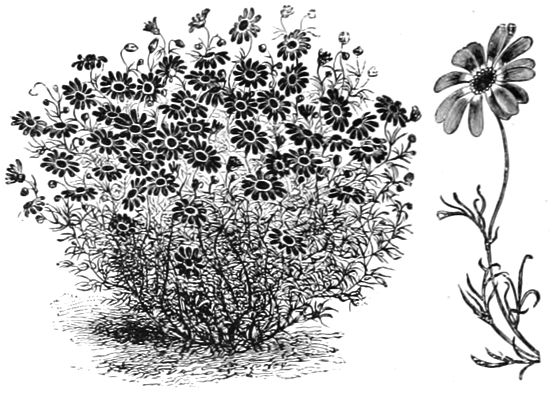
FIG. 274. BRACHYCOME IBERIDIFOLIA, showing Habit and Flowering Branch.
BRACHYLÆNA (from brachys, short, and læna, a cloak or covering; referring to the shortness of the involucre). ORD. Compositæ. A genus of South African evergreen greenhouse shrubs, nearly allied to Baccharis. They thrive in a compost of peat and loam. Propagated by cuttings, made of half-ripened shoots, placed in a well-drained pot of sandy soil, under a bell glass.
B. dentata (toothed). fl.-heads yellow. l. lanceolate, acute, entire, rusty beneath when young, when adult quite glabrous.
B. nerifolia (Nerium-leaved).* fl.-heads yellow, in branching racemes or panicles. August to November. l. lanceolate, serrated with one or two teeth forward. h. 2ft. Cape of Good Hope, 1752.
BRACHYOTUM (from brachys, short, and otos, the ear; in reference to the short appendages at the base of the anthers). ORD. Melastomaceæ. A handsome greenhouse evergreen shrub, with a bushy habit. Allied, and requiring similar culture, to Pleroma (which see).
B. confertum (crowded).* fl. purple, terminal, nodding, with cream-coloured bracts. November. l. oblong or ovate, small, three-nerved, with adpressed hairs. Andes, Peru, 1873. (B. M. 6018.)
BRACHYSEMA (from brachys, short, and sema, a standard; the standard of the flower is very short). ORD. Leguminosæ. Elegant procumbent or climbing greenhouse, evergreen shrubs. Racemes axillary and terminal, few-flowered. Leaves alternate, oval or ovate, entire, mucronate, silky on the under surface. They thrive in a compost of peat, leaf soil, and loam, in equal proportions, made porous, if necessary, by the addition of sand. Increased by cuttings, made of half-ripened shoots in summer, placed in sandy soil, under a bell glass, in a gentle bottom heat; or by layers. Seeds may be sown in March, in heat. Brachysemas require thorough drainage, whether grown in pots or planted out. B. latifolium does best under the latter treatment, when it forms a magnificent climber for pillars or the roof.
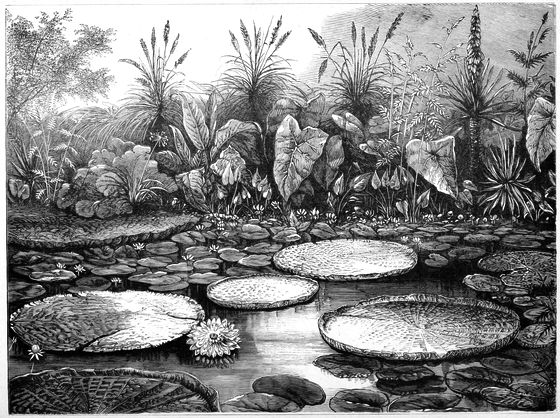
THE GIANT WATER LILY (VICTORIA REGIA).
[See larger version]
B. lanceolatum (lanceolate-leaved). fl. rich scarlet, with the margin of the vexillum white, red at the disk, with a large yellow spot in the centre, each about 1in. long, disposed in axillary, sub-compound racemes. l. opposite, rarely alternate, ovate or ovate-lanceolate, entire, silky white beneath. h. 3ft. Swan River, 1848. (B. M. 4652.)
B. latifolium (broad-leaved).* fl. crimson-scarlet, large; vexillum oblong-ovate. April. l. ovate, flat, silky beneath. New Holland, 1803. A handsome climber. (B. R. 118.)
B. melanopetalum (black-petaled). Synonymous with B. undulatum.
B. undulatum (undulated).* fl. deep violet-maroon, solitary or twin; vexillum oblong, cordate, convolute, and bluntish above. March. l. oblong-ovate, mucronate, undulated. New South Wales, 1820. A tall subscandent plant. SYN. B. melanopetalum. (B. R. 642.)
BRACHYSPATHA (from brachys, short, and spatha, a spathe; the spathe is much shorter than the spadix). ORD. Aroideæ. Stove tuberous perennial, allied to, and requiring the same cultivation as, Amorphophallus (which see).
B. variabilis (variable).* fl. exhaling an abominable fœtor, which is, however, of very short duration; spathe much shorter than the spadix, greenish-purple, sharply acuminate, and many-nerved; spadix whitish, with female flower at the base, and above contiguous to them are the males without any intermediate neutral flowers; anthers orange red; the naked apex of the spadix is very long, wrinkled, and pitted on the surface. l. solitary, 18in. across; the spotted petiole divides at the top into three main divisions, each of which is again forked and deeply pinnately cut; the segments alternate, sessile, or decurrent, very unequal in size, ovate or oval-lanceolate, acuminate, glabrous, shining. h. 3ft. India, 1876. (G. C. 1876, 129.)
BRACHYSTELMA (from brachys, short, and stelma, a crown; in reference to the short coronal processes of the flowers). ORD. Asclepiadaceæ. Extremely curious little suffruticose, tuberous, twining, greenhouse perennials. Corolla campanulate, having angular sinuses; corona simple, five-cleft, lobes opposite the anthers, simple on the back. Leaves opposite, membranous. They thrive best in fibry loam. Propagated by cuttings, which will root in sandy soil, in heat; also by divisions of the root.
B. Arnotti (Arnott's). fl. brown, green. l. in opposite pairs, nearly sessile, crisped, ovate, dull green above, densely grey, pubescent beneath. h. 4in. South Africa, 1868. (Ref. B. i., 9.)
B. Barberæ (Mrs. Barber's). fl. dingy purple, speckled with yellow. August. l. large, linear-oblong, acute. h. 6in. South Africa, 1866. (B. M. 5607.)
B. ovata (ovate-leaved). fl. yellowish-green. l. ovate, shortly-stalked, pubescent. h. 1ft. South Africa, 1872. (Ref. B. 226.)
B. spathulatum (spathulate-leaved). fl. green. June. l. spathulate, oblong, hairy. h. 1ft. Cape of Good Hope, 1826. (B. R. 1113.)
B. tuborosum (tuberous). fl. purple. June. l. linear-lanceolate, ciliate. h. 1½ft. Cape of Good Hope, 1821. (B. M. 2343.)
BRACKEN, or BRAKE FERN. See Pteris aquilina.
BRACTEATE. Having bracts.
BRACTEOLATE. Having secondary bracts between the true bracts and the flowers.
BRACTS. Modified leaves placed near the calyx on the peduncle or pedicel.
BRAHEA (named after Tycho Brahe, the celebrated astronomer). ORD. Palmeæ. A small genus of dwarf palms, with fan-shaped leaves, and hermaphrodite, greenish flowers. They require rich light loam and fibrous peat, in equal parts, to which may be added a good portion of washed sand; thorough drainage and liberal supplies of water are also absolutely necessary. Propagated by seeds. During summer, they may be removed to the greenhouse, and can be employed with much success for sub-tropical gardening.
B. dulcis (sweet).* l. nearly circular, bright shining green; petioles clothed with woolly tomentum, armed at the edges with small close-set spines, and enveloped at the base in a network of brown fibre. Stem stout. Mexico, 1865. A rare and slow developing species.
B. filamentosa (filamentose). A synonym of Washingtonia filifera.
BRAINEA (commemorative of C. J. Braine, Esq., of Hong Kong, China). ORD. Filices. Sori continuous along transverse veins, near the midrib, and also produced along the veins in the direction of the edge of the frond.
B. insignis (remarkable), which is the only species, has a trunk 3in. to 4in. thick; scales linear, nearly 1in. long. sti. firm, 3in. to 4in. long, scaly only at the base. fronds 2ft to 3ft. long, 8in. to 12in. broad, simply pinnate; pinnæ close, numerous, linear, finely serrated. Hong Kong, 1856. A very handsome and interesting greenhouse tree fern, requiring a soil of loam and peat, in equal parts, with the addition of some sharp sand, and thorough drainage.
BRAMBLE. See Rubus.
BRASSAVOLA (named in honour of A. M. Brassavola, a Venetian botanist). ORD. Orchideæ. A genus of epiphytal orchids, requiring the heat of an intermediate house. Flowers large, usually with narrow acuminate greenish petals and sepals, and a white lip, which is sometimes broad; column having a pair of great falcate ears on each side of the front, and eight pollen masses. Leaves solitary, succulent. They are of easy culture on blocks of wood, with a little moss, suspended from the roof. Water should be plentifully given during the growing season; at other times, a very small quantity will suffice. About seventeen or eighteen species have been introduced, of which the following only are worth growing:
B. acaulis (stemless). fl. large; sepals and petals long, narrow, greenish and creamy-white; lip large, heart-shaped, and pure white; base of tube spotted with dull rose. September. l. very narrow, rush-like. h. 4in. Central America, 1852. (P. F. G. ii., 152.)
B. Digbyana (Digby's).* fl. solitary, 4in. across, produced from the top of the bulb; sepals and petals creamy-white; lip same colour, streaked with purple down the centre, and beautifully fringed. Winter. h. 9in. Honduras, 1844. A compact-growing evergreen. (B. M. 4474.)
B. Gibbsiana (Gibbs's).* fl. white, spotted with chocolate, large, three on each spike. l. rather broad and very thick. This rare, erect-growing species must be potted in peat and sphagnum.
B. glauca (glaucous).* fl. solitary, produced from a sheath at the top of the bulb; sepals and petals yellow; lip orange, with a white throat. Early spring. l. of a milky-green. h. 1ft. Vera Cruz, 1837. A very handsome fragrant species, somewhat difficult to flower, but this obstacle may be overcome by liberally growing during the proper season, and giving it a severe dry rest. (B. M. 4033.)
B. lineata (lined).* fl. large, very fragrant; sepals and petals creamy-white; lip large, pure white. l. long, terete, channelled above, tapering to a point, very deep green. South America, 1850. (B. M. 4734.)
B. venosa (veined).* fl. small and compact; sepals and petals cream-coloured; lip white, strongly veined. A pretty free flowering species. Honduras, 1839. (B. R. 26, 39.)
BRASSIA (named after Mr. William Brass, who was sent by Sir Joseph Banks to Cape Coast and the neighbouring districts as a botanical collector, at the end of the last century). ORD. Orchideæ. A genus of tropical American orchids, very nearly allied to Oncidium, with which, indeed, Reichenbach unites it. From this genus, however, Brassia may be distinguished by its simple inflorescence, elongated tail-like sepals, and short column, which is quite destitute of the side lobes or ears that form a marked feature in the species of Oncidium. There are about seventeen species, of which many are not sufficiently attractive to deserve the cultivator's attention. They will succeed either in pots or in baskets, the drainage of which must be perfect. They require to be potted in good fibrous peat, broken in pieces not less in size than a walnut, placed in the warm end of a Cattleya or Brazilian house, and supplied liberally with water during summer. In winter, they must still be kept in a tolerably warm place, and given sufficient water to keep the pseudo-bulbs from shrivelling. It is useless to dry off until shrivelling takes place, for experience assures us that when a plant shrivels it is generally safe to assume that it has been tried beyond its powers of endurance, and that its constitution has given way. Propagated by dividing the plants, when growth has commenced.
B. antherotes (brilliant).* fl. 7in. in diameter from tip to tip of the sepals; sepals and petals yellow, brownish-black at the base, narrow, ⅛in. broad, tapering; petals 1½in. long; lip triangular, yellow, barred with brown; spike strong, about 2ft. in length. Tropical America, 1879.
B. caudata (tailed).* fl., sepals and petals yellow, barred with brown, from 4in. to 6in. long; lip broad and yellow, spotted with greenish-brown. When the plant is large and healthy, it produces numerous drooping spikes, 18in. long, and many-flowered. h. 1ft. West Indies, 1823 (B. R. 832.)
B. Gireoudiana (Gireoud's). fl., sepals and petals bright yellow, spotted and blotched with deep red, produced in many-flowered scapes of singular and beautiful flowers during spring and early summer. This species much resembles B. Lanceana, but has larger flowers. Costa Rica. (R. X. O. 1, 32.)
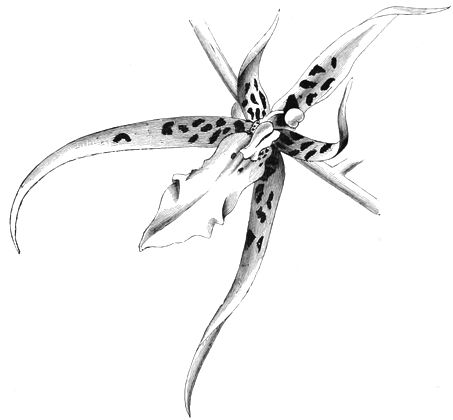
FIG. 275. SINGLE FLOWER OF BRASSIA LANCEANA.
B. Lanceana (Lance's).* fl., sepals and petals lanceolate and tapering, bright yellow, blotched with brown, or sometimes with deep red; lip wholly yellow, slightly spotted at the base, and much waved, deliciously fragrant; scapes radical, many-flowered. In the typical species, the lip is rather more than half as long as the sepals. l. rich dark green. h. 9in. Surinam, 1843. See Fig. 275. (B. R. 1754.)
B. L. macrostachya (large-spiked).* fl., sepals and petals bright rich yellow, sparingly spotted with brown, as in the type; sepals lengthened out into tail-like appendages, which are sometimes nearly 5in. in length; lip wholly of a clear pale yellow. Demerara.
B. L. pumila (dwarf). fl., sepals pale yellow, without spots or markings; petals of the same colour, tinged with purple near the base; lip about half the length of the sepals, slightly contracted in the middle, yellow, with a brownish-yellow base. Caracas.
B. Lawrenceana (Lawrence's).* fl. large, sweet-scented; sepals and petals bright yellow, spotted with cinnamon and green; lip yellow, tinged with green. June to August. h. 1ft. Brazil, 1839. (B. R. 27, 18.)
B. L. longissima (long-sepaled).* fl., sepals deep orange-yellow, blotched and spotted, especially towards the base, with reddish-purple, and lengthened out into tail-like appendages, which, in well-grown examples, measure 7in. in length; petals about 2½in. long and ¼in. broad at the base, marked in the same manner as the sepals; lip about 3in. long, pale yellow, dotted and spotted towards the base with purple. August and September. Costa Rica, 1868. A magnificent variety.
B. maculata (spotted).* fl. large; sepals and petals pale yellow, irregularly spotted with brown; the former being short compared with those of the other species; lip white, spotted about and below the centre with brown and purple. Spring and early summer. Jamaica, 1806. See Fig. 276. (B. M. 1691.)
B. m. guttata (spotted).* fl. on spikes 2ft. or 3ft. long; sepals and petals yellowish-green, blotched with brown; lip broad, yellow, spotted with brown. May to August. Guatemala, 1842. SYN. B. Wrayæ. (B. M. 4003.)
B. verrucosa (warty-lipped).* fl. large; sepals and petals greenish, blotched with blackish-purple; lip white, ornamented with numerous little green protuberances or warts, hence the specific name; scape many-flowered. May and June. Guatemala.
B. v. grandiflora (large-flowered).* fl. twice the size of, and a lighter colour than, the type. This variety is very rare, and is said to be the best of the genus.
B. Wrayæ (Wray's).* A synonym of B. maculata guttata.
BRASSICA (old Latin name used by Pliny; from Bresic, the Celtic name for Cabbage). Cabbage. ORD. Cruciferæ. Herbaceous, usually biennial, rarely annual or perennial, or suffrutescent plants, usually with a short caudex. Flowers yellow, rarely white, but never purple nor veined. Radical leaves usually stalked, lyrate, or pinnatifid; cauline ones sessile or stem-clasping, entire; racemes elongated; pedicels bractless, filiform. Full cultural details will be found under the popular garden name of each variety.