THE DICTIONARY OF GARDENING, (continued 10)
Reading edition
A. vaginatus (sheathed-stipuled). fl. rosy-purple, with white-tipped wings; calyx rather inflated, covered with soft white and black hairs; spikes dense. Summer. l. impari-pinnate, with seven or eight pairs of elongated-oblong leaflets, both surfaces covered with short silvery hairs. h. 1ft. Siberia. Perennial.
A. vesicarius (bladdery). fl., upper petal purple, the wings yellow, and the keel white, tipped with yellow; calyx clothed with black adpressed down and long white spreading hairs; peduncles longer than the leaves. July. l. with five to seven pairs of elliptic leaflets. Plant diffusely procumbent, hoary from adpressed silky down. h. 6in. to 9in. France, 1737. Perennial trailer.
A viminens (twiggy). fl., upper petal purplish rose, much longer than the pure white wings; calyx clothed with black hairs; spikes somewhat capitate, pedunculate, longer than the leaves. June. l. with four to six pairs of lanceolate acute leaflets, beset with adpressed hairs. h. 6in. to 1ft. Siberia, 1816. A handsome perennial.
A. virescens (greenish). Synonymous with A. falcata.
A. vulpinus (fox).* fl. pale yellow; spikes nearly globose, on very short peduncles. June. l. with obovate, obtuse, emarginate, rather velvety leaflets. Plant erect; stem glabrous. h. 2ft. to 3ft. Caucasus, 1815. A handsome border perennial.
ASTRANTIA (from astron, a star, and anti, in composition signifying comparison; in reference to the appearance of the umbels of flowers). ORD. Umbelliferæ. Ornamental, hardy, herbaceous perennials, natives of Europe and Caucasus. Universal umbels irregular, of few rays, surrounded by variable involucre; partial umbels regular, and containing many flowers, surrounded by many-leaved involucels. Radical leaves petiolate, palmately lobed; cauline ones few, sessile. Roots blackish. These are suited for borders, banks, and woodlands, growing well in any ordinary garden soil, but preferring a damp position. Easily increased by root divisions in autumn or spring.
A. carniolica (Carniolan).* fl. white. May. l. of involucre twelve to thirteen, quite entire, white, with a green line running along the middle of each, tinged with red; radical ones palmate; lobes five to seven, oblong, acuminated, unequally serrated. h. 6in. to 12in. Carniola, 1812. A pretty species.
A. helleborifolia (Hellebore-leaved).* fl. (and involucre) pink, pedicellate. June. l. of involucre twelve to thirteen, ovate-lanceolate, exceeding the umbel a little, bristly; radical ones palmate; lobes three, ovate-lanceolate, unequally serrated. h. 1ft. to 2ft. Eastern Caucasus, 1804. SYN. A. maxima.
A. major (greater).* fl. pinkish, pedicellate. May. l. of involucre fifteen to twenty, linear-lanceolate, quite entire, hardly longer than the umbel; radical ones palmate; lobes five, ovate-lanceolate, acute, rather trifid, toothed. h. 1ft to 2ft. Europe, 1596. Very distinct and ornamental.
A. maxima (greatest). Synonymous with A. helleborifolia.
ASTRAPÆA (from astrape, lightning; alluding to the brightness of the flowers). ORD. Sterculiaceæ. Elegant stove evergreen trees. Peduncles axillary, long, bearing on their apex an umbel of large sessile flowers, enclosed in a leafy involucre. Leaves alternate, stalked, cordate, three to five-lobed. They thrive well in a mixture of loam and peat, and require a plentiful supply of water; but the best results accrue if the bottom of the pot can be stood in a saucer or tub of water. Propagated by cuttings of young wood, made in April, placed in a compost of loam and peat, or sand, under a bell glass, in heat.
A. tiliæflora (Lime-tree leaved). fl. pink. h. 20ft. Isle of Bourbon, 1824.
A. viscosa (clammy). fl. pink. h. 20ft. Madagascar, 1823.
A. Wallichii (Wallich's).* fl. scarlet; umbels drooping. July. l. large, cordate, angularly lobed; stipulas leafy, ovate-acuminated; peduncles long, hairy. h. 30ft. Madagascar, 1820. This splendid species has often been described as being one of the finest plants ever introduced into this country; and, when in full flower, nothing can exceed it in beauty and grandeur.
ASTROCARYUM (from astron, a star, and karyon, a nut; referring to the disposition of the fruit). SYN. Phœnico-phorum. ORD. Palmaceæ. Very ornamental stove palms, allied to Cocos, having the trunk (when present), foliage, fruit-stalks, spathes, and sometimes the fruit, covered with spines. The flowers develop from the axils of the old decayed leaves. Drupes oval, one-seeded, orange or yellow, in some species fragrant. Leaves pinnate, with linear segments, dark green above, and often of a silvery white below. The species thrive in a compost of two-thirds rich loam and one-third vegetable mould; water may be given copiously. Propagation may be effected by seeds, which should be sown in spring in a hotbed; or by suckers, if they are to be obtained.
A. acaule (stemless). l. pinnate, 3ft. to 10ft. long, slender and spreading; pinnæ narrow, arranged in clusters, pendent. Spines very numerous, long, flat, black. h. 10ft. Brazil, 1820.
A. aculeatum (prickly). h. 40ft. Guiana, 1824.
A. argenteum (silvery).* l. arching, wedge-shaped, pinnate, distinctly plicate, bright green on the upper surface, the under surface, as well as the stalks, covered with a fine white scurf, which gives them a silvered appearance. Columbia, 1875. One of the best of silver palms.
A. filare (thready).* l. erect, narrowly cuneate, with two divergent lobes; petioles covered with white scurf, both on the upper and under surfaces. Distinct and elegant, with a comparatively small and slender growth. Columbia, 1875.
A. granatense (New Grenadan). l. pinnate, with oblong-acuminate segments; the rachis is spiny, like the petiole, both on the upper and lower surfaces; leafstalks brownish, armed with numerous scattered needle-shaped dark-coloured spines. Columbia, 1876.
A. mexicanum (Mexican). Mexico, 1864.
A. Muru-Muru (Murumuru). l. pinnate, 10ft. to 12ft. long; leaflets lanceolate, sub-falcate, dark green above, silvery white below. Stem 12ft. to 15ft. high, densely clothed with strong reflexed black spines, over 6in. long. h. 40ft. Brazil, 1825.
A. rostratum (beak-sheathed). l. irregularly pinnate, 3ft. to 8ft. long; pinnæ 12in. to 18in. long; terminal lobe much larger and bifid, dark green above, silvery white below; petioles broadly sheathing at the base, densely armed with black spines, sometimes 2in. long. Stem slender, densely clothed with long black spines. A slow grower, ultimately becoming 30ft. high. Brazil, 1854.
A. vulgare (common). h. 30ft. Brazil, 1825.
ASTROLOBIUM. See Ornithopus.
ASTROLOMA (from astron, a star, and loma, a fringe; in reference to the bearded limb of the corolla). ORD. Epacridaceæ. Very handsome, little, diffuse, greenhouse, evergreen shrubs. Flowers solitary, axillary; corolla tubular, distended above the middle, and with five bundles of hairs in the inside, near its base. Leaves crowded, alternate, linear, or obovate-lanceolate and mucronate. They thrive best in an equal mixture of sand, loam, and peat, with thorough drainage. Propagated by young cuttings, which root readily in sandy soil, under a bell glass, in a cool house.
A. denticulatum (finely-toothed). fl. axillary, erect; corolla pale red, with a ventricose tube. May to July. l. scattered, lanceolate, ciliated, usually procumbent, but sometimes slightly erect. h. 1ft. New Holland, 1824.
A. humifusum (trailing). fl. scarlet, similar to the foregoing. May and June. l. lanceolate-linear, rather convex above, with ciliated edges. Shrub prostrate, much branched. h. 1ft. New Holland, 1807.
ASTROPHYTUM MYRIOSTIGMA. See Echinocactus myriostigma.
ASYSTASIA (meaning not clear). ORD. Acanthaceæ. Stove evergreen shrubs. Flowers disposed in axillary or terminal clusters; corolla somewhat funnel-shaped, five-lobed; calyx five-lobed, regular. Branches slender. They require a compost of peat and loam, with a little sand, and, to induce a vigorous growth, a little dry cow-dung may be applied. Propagated by cuttings of young shoots, placed in sandy soil, under a bell glass, in April, with a brisk bottom heat.
A. chelonioides (Chelonia-like).* fl. in terminal racemes, reddish purple, the border white. l. opposite, ovate-acute. h. 34ft. India, 1871. A pretty dwarf sub-shrub.
A. coromandeliana (Coromandel). fl. deep lilac; racemes axillary, elongated, secund, strict. July. l. opposite, cordate-ovate; branches diffuse. h. 4ft. India, 1845. SYN. Justicia gangetica.
A. macrophylla (large-leaved).* fl. bilabiate, bell-shaped, rosy purple outside, and almost pure white within; spikes terminal, erect, 1ft. long. June. l. very large, obovate-lanceolate. h. 8ft. to 20ft. Fernando Po, 1867.
A. scandens (climbing).* fl. cream-coloured; tube of corolla widened and recurved above, lobes of limb crenately curved; racemes terminal, compact, thyrse-formed. July. l. obovate or ovate acute, glabrous. h. 6ft. Sierra Leone, 1845. This handsome stove climber requires a high, moist temperature after shifting. SYN. Henfreya scandens.
A. violacea (violet).* fl. violet purple, striped with white, in terminal racemes. l. shortly-stalked, ovate-acuminate, deep green, minutely hairy on both surfaces. h. 1ft. to 2ft. India, 1870. A pretty dwarf plant.
ATACCIA CRISTATA. See Tacca integrifolia.
ATALANTIA (mythological: Atalanta, the daughter of Schœneus). ORD. Rutaceæ. A genus of ornamental stove evergreen shrubs, having the eight stamens united below into a tube, and with undivided leaves. It comprises about ten species. They thrive well in a mixture of loam and peat. Propagated by means of ripened cuttings, which will root readily if planted in sand under a hand glass, in heat.
A. monophylla (one-leaved). fl. small, white, in axillary racemes. fr. golden yellow, about the size of a nutmeg. June. l. simple, ovate-oblong, emarginate at the apex. Spines small, simple. h. 8ft. India, 1777. A thorny shrub.
ATAMASCO LILY. See Zephyranthes Atamasco.
ATHAMANTA (named from Mount Athamas, in Sicily, where some species are found). ORD. Umbelliferæ. A genus of greenhouse or hardy herbaceous plants, usually velvety from villi on the stem, leaves, and fruit. Flowers white; involucra of one or few leaves; involucel of many leaves. The undermentioned is the only species in cultivation, and is a very graceful perennial, with Fennel-like foliage. It thrives well in any ordinary soil. Increased by divisions, or by seeds sown in spring.
A. Matthioli (Matthioli's). fl. white, twelve to twenty-five to an umbel. Summer. l. three or four ternate; leaflets linear-filiform, elongated, divaricate. h. 1ft. to 2ft. Alps of Carinthia, 1802.
ATHANASIA (from a, not, and thanatos, death; alluding to the length of time which the flowers last). ORD. Compositæ. Rather ornamental greenhouse evergreen shrubs with yellow flowers, from the Cape of Good Hope. They grow well in a soil consisting of three parts loam and one part peat. Propagation is effected by cuttings, taken from half-ripened wood in spring, and placed in sand, under a hand glass.
A. capitata (headed).* fl.-heads yellow. March. l. pinnati-partite; younger hoary, older smooth. h. 1½ft. Cape of Good Hope, 1774.
A. pubescens (downy). fl.-heads yellow. July. l. oblong, entire (or tridentate), softly hairy on both sides; when old, sub-glabrous. h. 6ft. Cape of Good Hope, 1768.
ATHEROSPERMA (from ather, an awn, and sperma, seed; seeds awned). ORD. Monimiaceæ. A beautiful greenhouse evergreen tree, with the aspect of a stately conifer. Flowers panicled, diœcious; perianth five to eight-fid. Leaves opposite, aromatic. A compost of loam and peat, in about equal proportions, is necessary. It can be readily propagated by cuttings.
A. moschata (Musk-scented). Plume Nutmeg. fl. white. June. h. 40ft. New Holland, 1824.
ATHEROSPERMEÆ. See Monimiaceæ.
ATHRIXIA (from a, not, and thrix, a hair; the receptacle being destitute of hairs). ORD. Compositæ. A greenhouse evergreen shrub. It succeeds best in turfy loam, peat, and sand, and requires to be potted firmly. Propagated by cuttings of young wood, placed under a bell glass in sandy soil, and treated like Ericas (which see).
A. capensis (Cape).* fl.-heads bright crimson, solitary, terminal. April. l. narrow, lanceolate, alternate, entire. h. 3ft. Cape of Good Hope, 1821.
ATHROTAXIS (from athros, crowded together, and taxis, arrangement; in reference to the disposition of the scales of the cones). ORD. Coniferæ. A small genus of Tasmanian evergreen diœcious trees or shrubs, with small scale-like leaves, and small globular cones of many imbricated scales, with from three to six carpels under each scale. In very sheltered situations they will probably prove hardy; but, otherwise, they are only suitable for botanical collections. Increased by cuttings. This genus is almost universally misspelt Arthrotaxis.
A. cupressoides (Cypress-like). l. small, thick, leathery, spirally arranged, closely imbricated, deep glossy green. h. 30ft. A small, erect, and very slow growing tree, with numerous slender branchlets.
A. Doniana (Don's). A synonym of A. laxifolia.
A. imbricata (imbricated). A garden synonym of A. selaginoides.
A. laxifolia (loose-leaved). Differing from A. cupressoides in having longer, more pointed, open, and spreading leaves, which stand out from the stem in a Juniper-like fashion. Its lateral growths are rather pendulous. h. 20ft. to 25ft. SYN. A. Doniana.
A. selaginoides (Selago-like). l. glossy green, scale-like, spirally disposed, closely appressed to the shoots, branches and their ramifications very numerous. h. variable, up to 40ft. Very interesting, and quite distinct. SYN. A. imbricata (of gardens).
ATHYRIUM. See Asplenium.
ATRAGENE (a name originally given to Clematis Vitalba by Theophrastus). ORD. Ranunculaceæ. A genus of ornamental, hardy, climbing, deciduous shrubs, closely allied to Clematis, from which they differ in having numerous petals. They are increased by cuttings, which should be pricked in light sandy soil and placed under a hand glass; also by layering in the autumn. Both methods are slow; the layers should not be separated for about a year, when they will be vigorous plants. Seeds must be sown in early spring, in gentle heat; when the seedlings are large enough to handle, they should be pricked off and grown on in pots till they are strong plants.
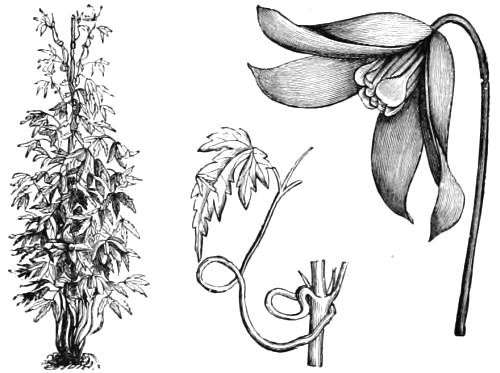
FIG. 189. ATRAGENE ALPINA, showing Habit, Twining Leafstalk, and Flower.
A. alpina (alpine).* fl. blue, varying to white; petals ten to twelve, linear at the base, but dilated at the apex; peduncles one-flowered, longer than the leaves. May. l. biternate; leaflets ovate-lanceolate, acuminated, serrate. Mountainous parts of Europe, 1792. The white-flowered variety, named alba, is in cultivation. SYNS. A. austriaca and A. sibirica. See Fig. 189.
A. americana (American).* fl. large, purplish-blue; petals acute; peduncles one-flowered. May. l. whorled, in fours, leaflets stalked, cordate, lanceolate, acuminated, entire or somewhat lobed, or serrated. North America, 1797. SYN. Clematis verticillaris.
A. austriaca (Austrian). Synonymous with A. alpina.
A. macropetala (large-petaled).* fl. blue. Manchuria, 1870.
A. sibirica (Siberian). Synonymous with A. alpina.
ATRIPLEX (from a, not, and traphein, to nourish). Orach. ORD. Chenopodiaceæ. A genus of, for the most part, uninteresting weeds, of very variable form and habit, and having the calyx, which encloses the fruit, enlarging after flowering. For culture, see Orach.
A. hortensis (garden). An annual species from Tartary, of no value as an ornamental plant, but considered a very desirable substitute for spinach. The leaves must be gathered for use when young. The variety A. h. atro-sanguinea is a very pretty form, having handsome crimson leaves, and growing to a height of about 4ft. It is well worth growing with such plants as Amaranthus, &c.
ATROPA (name of mythological origin). Belladonna; Dwale. ORD. Solanaceæ. A small genus, having a campanulate regular corolla, and a leafy persistent calyx. The berries of this native herbaceous perennial are exceedingly poisonous. The plant is of no horticultural value.
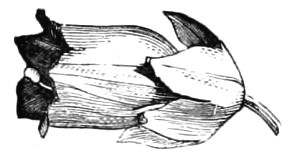
FIG. 190. FLOWER OF ATROPA BELLADONNA.
A. Belladonna. fl. green and purple, solitary, pedunculate, drooping. Summer. Berries about the size of a small cherry. l. ovate, acuminate, 4in. to 8in. long h. 2ft. to 4ft. Britain. See Fig. 190.
ATTALEA (from attalus, magnificent; referring to the beauty of the genus). ORD. Palmaceæ. A genus of handsome stove palm trees, distinguished from other genera in having the pinnæ arranged vertically, and not horizontally. The leaves spring up almost perpendicularly at the base, but in the upper part arch over. The pinnæ stand at right angles to the rachis—which is very narrow in proportion to its thickness—and while those of the lower side of the arch hang straight down, those of the upper side point straight up. They thrive well in a mixture of peat and loam in equal quantities, and enjoy a copious supply of water. Summer temperature, 65deg. to 80deg.; winter, 55deg. to 60deg. All the species are robust trees; but, although several have been introduced, few appear to be generally grown.
A. amygdalina (Almond-fruited).* l. pinnate, 3ft. to 6ft. long; pinnæ 12in. to 18in. long, and about 1in. broad; terminal lobe broad and bifid, rich dark green. Stem slender. New Grenada. One of the best. SYN. A. nucifera.
A. Cohune (Cohune).* l. erect, ultimately spreading, pinnate, furnished with from three to four dozen dark green pinnæ, sometimes 18in. in length; petioles rounded, and dark brown below, flat and green upon the upper side. Plant unarmed. h. 50ft. or more in its native habitat. Honduras.
A. compta (decked). h. 22ft. Brazil, 1820.
A. excelsa (tall).* h. 70ft. Brazil, 1826.
A. funifera (rope-bearing). The Piassaba Palm. l. vivid deep green, very ornamental, and of economic value in Brazil. 1824. The sheathing bases of the leafstalks separate into a coarse black fringe, which is collected and exported to Europe, being used in the manufacture of brooms, brushes, &c.
A. nucifera (nut-bearing). A synonym of A. amygdalina.
A. speciosa (showy).* h. 70ft. Brazil, 1825.
A. spectabilis (remarkable). h. 70ft. Brazil, 1824.
ATTENUATED. Tapering gradually to a point.
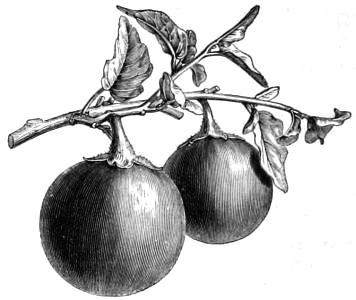
FIG. 191. FRUITING BRANCH OF ROUND AUBERGINE.
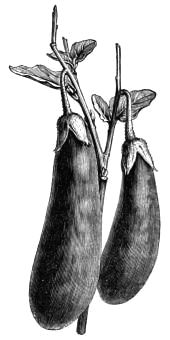
FIG. 192. FRUITING BRANCH OF LONG AUBERGINE.
AUBERGINE, or EGG PLANT (Solanum melongena, variety ovigerum). These plants, besides being useful for culinary purposes, are very ornamental, and present an attractive appearance on walls or trellises, or in the flower garden; and, as they do well in any ordinary rich garden soil, if the position is warm, they give a good variation to the general run of plants used for decorative effects. The Black-fruited kind is particularly suited for this purpose. Sow the seeds in a gentle heat, in the middle of April. As soon as the seedlings are large enough to handle, prick off into 4in. pots, replacing in heat till they root out freely. Gradually harden off by June, and then transfer to the positions where they are to grow. Let the plants be at least 2ft. apart, and place a strong stick to each one to support the fruit when it comes. For trellises, select the more moderate-sized varieties. In hot, dry weather, the application of liberal supplies of liquid manure tends to increase the size of the fruit, and also to make the foliage more vigorous and handsome. Where very large fruit are needed for show or other purposes, it is well to remove all but the best one on the plant, and, by careful feeding with liquid manure, specimens of from 10lb. to 12lb. weight can be had. The foliage should not be pinched, as this would prevent the free swelling of the fruit. Aubergines are not so much grown in England for culinary purposes as in France and Italy, where they are largely used in stews and soups. The following are the most desirable varieties: New York Purple, the largest kind grown, and although not as ornamental as the next, is quite as useful; Black-fruited, large black fruit, with blackish violet leaves; and White-fruited, the sort most generally cultivated. See Figs. 191 and 192.
AUBRIETIA (named after M. Aubriet, a famous French botanical draughtsman). ORD. Cruciferæ. A small genus of hardy evergreen trailers. Racemes opposite the leaves, and terminal, lax, few-flowered. Leaves ovate or oblong, entire or angularly toothed, hairy. They make excellent rock plants, and will thrive in a deep rich loam anywhere, excepting under the shelter of trees. Cuttings struck, or seeds sown, during April or May generally make fine, dense, cushion-like growths, if transplanted on to a somewhat cool or shaded border, and carefully lifted in the autumn; the cuttings are best "drawn," or grown until they are soft, in a frame before they are removed. Where a stock of old plants exist, layer the long slender branches any time after flowering, and cover with a mixture of sand and leaf soil; they will then root freely and establish themselves in time for spring blooming, for which purpose, when grown en masse, they are most useful. After flowering, they may be divided and transplanted.
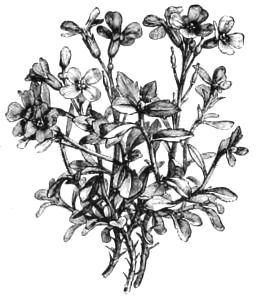
FIG. 193. AUBRIETIA DELTOIDEA.
A. deltoidea (deltoid).* fl. purple; petals twice the length of the calyx; pedicels short, filiform; racemes opposite the leaves and terminal, lax, few-flowered. Early spring. l. with one or two large teeth on each side (therefore they are rhomboidal, not truly deltoid), scabrous, with short branchy stellate hairs. h. 2in. to 4in. Naples, &c., 1710. There are several garden varieties, the best of which are described below; most of them are regarded as distinct species. See Fig. 193. (S. F. G. 628.)
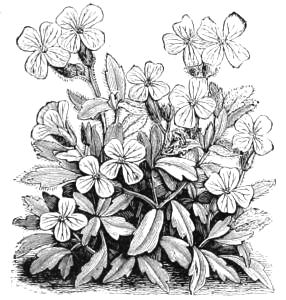
FIG. 194. AUBRIETIA PURPUREA.
A. d. Bouganvillei (Bouganville's).* fl. light violet purple, with very even imbricated petals. Habit very dwarf and compact, with short peduncles. A pretty form.
A. d. Campbelli (Campbell's).* Larger deep violet blue flowers, and of far more vigorous constitution than the typical form. Grandiflora comes very near this. SYN. A. Hendersonii.
A. d. Eyrei (Eyre's).* A very fine variety, with a free branching habit, and large flowers of a rich violet-purple colour, rather longer than broad. A. olympica is very near, if not identical with this.
A. d. græca (Grecian).* fl. light purple. h. 4in. Greece, 1872. One of the best and largest flowered forms; very vigorous grower, with neat compact habit. A variety of this, named superba, has rather deeper-coloured flowers, produced over a very extended period. (R. G. 697.)
A. d. purpurea (purple).* Larger flowers and more erect habit than the type. l. broader, with two to five teeth. Stems more leafy. There is a variegated form, which is very pleasing and effective, useful for carpeting or edging small beds. See Fig. 194.
A. d. violacea (violet).* This is a hybrid form, even finer than Campbelli, with large deep violet-purple flowers, fading to reddish-violet, and is more effective than any of the others.
A. Hendersonii (Henderson's). A synonym of A. d. Campbelli.
AUCUBA (the Japanese name of the shrub). ORD. Cornaceæ. A genus of hardy evergreen shrubs, thriving better than any other in the smoky atmosphere of dense cities. They grow in ordinary well-drained garden soil, and require no special culture. If grown in pots, they should be planted firmly in rather sandy yellow loam, with plenty of drainage. They should not be allowed too large pots, or an unfruitful growth is likely to result. During the growing season, an abundance of water is needed, which must be lessened when the plants are fully developed. If cultivated in the greenhouse or conservatory, they should be plunged out of doors during summer. To insure a good supply of the very ornamental berries, which are produced on the female plant, careful fertilising is necessary. The time for applying the pollen is when the pistil exudes a slightly gummy substance, and otherwise shows signs of maturity. When it happens, as is sometimes the case, that the male blooms are open and the pollen mature before the female blooms are ready, the pollen should be collected on a dry camel-hair pencil, transferred to a piece of glass, and covered over by another piece, both of which must also be dry. It may be applied afterwards when wanted, as it retains its power for some weeks. Propagated by cuttings, inserted in any light sandy soil, with or without a covering, in spring or autumn; or readily increased from seeds, sown as soon as ripe.
A. himalaica (Himalayan).* l. lanceolate, or lanceolate acuminate; branches of the panicle very pilose. Berries spherical, not oblong. Himalaya. (F. d. S. 12, 1271.)
A. japonica (Japanese).* l. opposite, petiolate, broad, ovate-lanceolate, acuminated, toothed, leathery, glabrous, shining, pale green, beautifully spotted with yellow, having the midrib rather prominent, the rest of the leaf reticulately veined. h. 6ft. to 10ft. Japan, 1783. The numerous varieties, both of the male and female forms, among which will be found many of great beauty, all differ, more or less, in the variegation of their leaves. They are in very general cultivation, and nearly every nurseryman has an assortment. Among the best of them are the following: albo-variegata, aurea, bicolor, latimaculata, limbata, longifolia, macrophylla, ovata, pygmæa, and pygmæa sulphurea.
AUDOUINIA (in honour of V. Audouin, a profound entomologist). ORD. Bruniaceæ. An ornamental greenhouse evergreen shrub, thriving in a mixture of peat and sandy loam. Propagated by cuttings of half-ripened wood, inserted in sand, under a bell glass, in gentle heat.
A. capitata (headed). fl. purple, crowded into oblong, spike-like, terminal heads. May. l. spirally inserted, a little keeled. Branches erect. h. 1ft. to 2ft. Cape of Good Hope, 1790.
AULACOSPERMUM. A synonym of Pleurospermum (which see).
AULAX (from aulax, a furrow; the under surface of the leaves of the original species being furrowed). ORD. Proteaceæ. Greenhouse evergreen shrubs, from the Cape of Good Hope, thriving best in a compost of fibrous loam, leaf soil, and sharp sand, with thorough drainage. Ripened cuttings, taken off at a joint, and inserted in pots of sandy soil, will root readily under a hand glass, in a cool house.
A. pinifolia (Pine-leaved). fl. yellow, racemose. July. l. filiform, channelled. h. 2ft. 1780.
A. umbellata (umbelled). fl. yellow. June. l. flat, spathulate*-linear. h. 2ft. 1774. (B. R. 12, 1015.)
AURANTIACEÆ. An order of trees or shrubs, including the Orange and Lemon trees. Flowers fragrant. Fruit fleshy, edible. Leaves alternate, articulated above the stem, filled with transparent oil cysts, giving them a dotted appearance. Well-known genera are Citrus and Limonia.
AURICULA (Primula Auricula). This favourite spring flower (see Fig. 195) was, at one time, almost universally cultivated, but has of late years fallen into much neglect; it is now, however, happily regaining enthusiastic admirers. Although its culture is not nearly so difficult as is generally understood, a few special items of treatment are nevertheless necessary to grow it successfully.
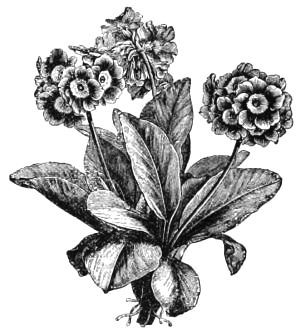
FIG. 195. A VARIETY OF PRIMULA AURICULA.
Frames for the reception of Auriculas should be prepared, with a good bottom drainage, and an inside staging, similar to the back stage of a lean-to greenhouse, arranged as near the glass as possible. If the frames are about 4ft. wide, they will be very convenient; 1ft. deep in the front, and about 3ft. at the back. This will allow for a good stage arrangement. Of course, it is not necessary to construct an expensive staging, as common boards can be laid upon pots of various heights, the same results being practically secured. These frames should face north from May to October, and south in winter, during which latter time it will be necessary to well cover the sides with straw or brake. When frosty, the lights must also be mated; but, unless there is absolute fear of frost, the glass should not be covered, as the more light the plants receive the better. On all suitable occasions, both during summer and winter, air must be freely admitted, and a good look-out kept during showery weather; hence it may be necessary to tilt the lights with blocks rather than remove them entirely. The latter plan should be adopted whenever practicable, especially during early spring, and after they are well established in their fresh pots in summer. This will greatly assist to ripen the crown, and produce hard, stout foliage, which will endure the winter much better than if grown with less air. Many cultivators prefer small span or lean-to houses to frames; and it must be admitted that these are better, more convenient, and in every way more beneficial. Simple, inexpensive structures, no higher than is absolutely necessary for convenience, with top and side ventilation, will meet all requirements; and if a 2in. hot-water pipe is arranged next the eaves inside, it will be a decided advantage during very severe weather.
Soil. The best compost that can be prepared for Auriculas is as follows: Four parts good fibrous loam, one part well-rotted cow manure, one part good leaf soil, and one part coarse river or silver sand, with a little charcoal or pounded oyster-shells added. Carefully mix the whole together before using. The loam should be stored about twelve months previous to being used, and it should be selected from districts with a fine atmosphere; the turf should be cut about 3in. thick. Cow manure that has lain for a year or so, and been subjected to sharp frosts, is most suitable, as insect life, which it very probably contains, is thereby destroyed, and the whole materially sweetened.
Potting. This operation requires to be carefully done as soon after flowering as possible, unless it is desired to save seed, when it must be deferred until the seed is ripened. May and June are the best months for general potting, and whatever the size of the pots used, they should be carefully and thoroughly drained. After a good layer of potsherds, place some charcoal, leaf mould, or spent hops. Many good growers use the last very advantageously. For good flowering plants, 48-sized pots are used, many cultivators preferring glazed pots to the unglazed; but such are not absolutely necessary to ensure success. Before repotting, remove most of the old soil, and with a sharp knife cut off any bruised or cankered portion of roots; the stout tap-root may also be cut away if devoid of fresh rootlets. Do not pot very firmly. Remove the plants to their summer quarters, withholding water for a few days, and keep the frames close. About a week after potting, water may be advantageously given, the plants will then soon resume root-action, and air may be admitted afterwards on all suitable occasions. The collar or neck of the plant must be left well above the surface of the soil.
Watering is a point that requires careful attention, as neglect in this matter will result in failure. During the growing season, Auriculas require an abundance of water; in fact, they must never be allowed to get dry. In the winter, they must only be watered when they are really dry, especially during a severe season. Care must be taken to avoid watering the leaves, particularly in early spring, as this tends to spoil the effect of the charming farinose foliage. Above all, water must not be allowed to stand in the heart of the plant, as such will inevitably cause incipient decay. Hence it is necessary to keep a sharp lookout for drippings from the glass, and to maintain tightly-glazed frames. On all occasions, decaying leaves must be removed, and especially during winter.
Top-dressing. About the middle or end of February, when the plants commence new growth, the surface soil should be removed about an inch or so deep, and the pots re-filled with a rich compost made up of the following: Two parts of turfy loam, one of rotten cow or hen manure, and one of leaf soil; if a little Standen's Manure is added, the compost will be improved. After this top-dressing, the plants may be watered freely.
Propagation by Offsets. When top-dressing, any offsets with roots should be removed, and as soon after as possible the remaining ones should be taken off, as it is much more desirable to do so early than later on, when repotting; for, when making the first growth, they are the more likely to root better, and stand a greater chance of making good plants before the season is over. Fill well-drained 3in. pots with sandy soil, and arrange about four offsets round the sides; place under a bell glass, or in a close handlight, watering very sparingly so as to prevent them damping off. They will soon establish themselves, after which air may be admitted, and the plants may ultimately be potted off singly. To induce choice varieties to make offsets, the top of the old plant should be removed and treated like the others, when, as a rule, several shoots will be produced, which in due time may be removed. By this means, a nice stock of the rarer kinds may be obtained; whereas, if such a course were not adopted, the rate of increase would be extremely slow.
Flowering. During the flowering period, watering, as already stated, must be carefully attended to, for if the plants are allowed to get dry, the flowers will quickly shrivel. They must also be kept well shaded from sunshine, which quickly destroys the delicate blossoms. As the trusses are developing, particular attention must be given to night protection. It is, perhaps, better to cover every night than to run the risk of exposing the unexpanded flowers to frost, as the effect is very prejudicial; in fact, if subject to frost, smooth even flowers may not be expected.
Seed Saving and Sowing. The only way to obtain new varieties is by seed; hence the value of careful seed-saving will be apparent. Severe discrimination must be exercised in the selection of parents, and the flowers must be very carefully crossed. The anthers should be removed from the pistillate parent, if possible, before expansion, so as to prevent any possibility of self-fertilisation; and, when the stigma is ready, the pollen must be conveyed by means of a small camel's-hair brush, care being taken not to mistake the brushes used in different classes. It has been observed in Auriculas that the issue from crossbred seed favours the pollen more than the pistillate parent; hence the necessity of selecting good pollen parents. It is best to confine hybridisation to separate classes—i.e., cross a Self with a Self, and a Green-edged variety with another of the same class. The importance of selecting the best in each class scarcely needs suggestion, having regard to constitution as well as the quality of the flowers. The seed should be sown as soon as ripe, or early in March, in well-drained pots, filled with sandy soil, which must be well watered previous to sowing. When this operation is completed, the seed must be lightly covered with coarse sand, a sheet of glass placed over the pot, and the latter stood in the hand glass, where the offsets are rooted. Some of the seedlings will appear in a month, but the bulk from that sown when ripe will not be seen until the following spring; while others will germinate even during the ensuing summer. The late comers should be particularly cared for, as they frequently produce the best varieties. When the seedlings are large enough, they must be pricked off in pots of sandy soil; and, when well established, potted off singly into small thumb pots, and afterwards encouraged as judgment suggests. Some growers allow the seedlings to remain in the store pots till they flower, when the best are kept, and those not required disposed of.
Insect Pests. Green fly are often very troublesome, and should be exterminated as speedily as possible, by tobacco fumigation, or by dipping the plants in a solution of Gishurst's Compound, or carefully prepared Fir-tree Oil, all of which are effectual. Many authorities denounce fumigation, while others advocate it. The roots are also attacked by a mealy louse, named Trama auriculæ, which clusters about the roots and collar of the plants, sucking nutriment therefrom; and although, provided they do not attack the collar, they have no greatly prejudicial effect on the plant, yet it is desirable to exterminate them. The only effectual way of accomplishing this is to remove all soil, and thoroughly cleanse the roots and collar in a solution of soft soap, with a little Fir-tree Oil added. Of course, this is most easily managed when repotting; and, unless the plants are very badly infested, it would not be advisable to run the risk of root washing later in the year.
Classes. Auriculas are now arranged in five classes, four of which constitute what are known as "show or stage Auriculas," while the other is known by the name of "Alpines." Each class is characterised by special points of distinction, which, in the opinion of the strict "florists" school, it is of the utmost importance to observe; and as there is room for systematists in this, as well as in any other branch of floriculture, we will follow the arrangement usually adopted, and describe the distinguishing features of, and enumerate some of the best varieties in, each class, with their raisers' names attached:
Green-edged. Outer edge green, or but sparingly dusted with powder; next, a zone of colour known as the body colour, which varies, the darkest being most esteemed; both edges of this zone should be even, especially the inner one, but there are few flowers perfect in this respect. Next to the body-colour is the paste, which occupies the space between the inner circle of the latter and the throat, this should be pure and dense, with a distinctly circular outline at the throat; the throat and tube should be bright yellow. Of course, this ideal standard has not yet been reached, as there are supposed defects in all or some sections of the flowers at present known. Leading Varieties: ADMIRAL NAPIER (Campbell), ALDERMAN WISBEY (Headley), APOLLO (Beeston), CHAMPION (Page), COLONEL TAYLOR (Leigh), DUKE OF WELLINGTON (Dickson), FREEDOM (Booth), GENERAL NEILL (Traill), HIGHLAND BOY (Pollitt), IMPERATOR (Litton), LADY ANN WILBRAHAM (Oliver), LORD PALMERSTON (Campbell), LOVELY ANN (Oliver), LYCURGUS (Smith), PRINCE OF GREENS (Traill), PRINCE OF WALES (Ashton).
Grey-edged. Edge heavily dusted with powder, so as almost to hide the normal green colour; other points same as the Green-edged varieties. Leading varieties: ALEXANDER MEIKLEJOHN (Kay), CHAS. E. BROWN (Headley), COMPLETE (Sykes), CONQUEROR OF EUROPE (Waterhouse), DR. HORNER (Read), F. D. HORNER (Simonite), GENERAL BOLIVAR (Smith), GEORGE LEVICK (Walker), GEORGE LIGHTBODY (Headley), JOHN WATERSTON (Cunningham), LANCASHIRE HERO (Lancashire), RICHARD HEADLEY (Lightbody), ROBERT TRAILL (Lightbody).
White-edged. Edge so heavily dusted with farina as to completely hide the green and give it a white appearance; the powder frequently as dense as on the paste portion; other points like the first. Leading varieties: ACME (Read), ANNE SMITH (Smith), ARABELLA (Headley), BEAUTY (Traill), BRIGHT VENUS (Lee), CATHERINA (Summerscales), CONSERVATIVE (Douglas), COUNTESS OF WILTON (Cheetham), EARL GROSVENOR (Lee), FAVORITE (Taylor), FRANK SIMONITE (Simonite), GLORY (Taylor), JOHN SIMONITE (Walker), NE PLUS ULTRA (Smith), REGULAR (Ashworth), SMILING BEAUTY (Heap), SYLVIA (Douglas), TRUE BRITON (Hepworth).
Selfs. Tube bright yellow, and circular at the top; paste dense, pure, with an even edge; all the rest of the flower of one colour, without shades or edging; any colour holds good. Leading varieties: APOLLO (Hay), BLACKBIRD (Spalding), C. J. PERRY (Turner), DUKE OF ARGYLE (Campbell), FORMOSA (Smith), GARIBALDI (Pohlman), HELEN LANCASTER (Pohlman), LORD OF LORNE (Campbell), MAZINNA (Pohlman), METEOR FLAG (Lightbody), METROPOLITAN (Spalding), MRS. DOUGLAS (Simonite), MRS. STURROCK (Martin), OTHELLO (Netherwood), PIZARRO (Campbell), TOPSY (Kaye).
Alpines. Centre golden yellow, or white, and destitute of powder; body colour various; edge one-coloured, shading off paler towards the margin. These are much hardier than any of the other classes, and will do well outside in most places. Leading varieties: A. F. BARRON (Turner), BEATRICE (Turner), BLACK PRINCE (Turner), BRONZE QUEEN (Turner), COLONEL SCOTT (Turner), DIADEM (Gorton), DUCHESS OF CONNAUGHT (Turner), EVENING STAR (Turner), GEORGE LIGHTBODY (Turner), JOHN LEECH (Turner), MRS. BALL (Turner), MRS. DODWELL (Turner), MRS. LLEWELLYN (Turner), MRS. MEIKLEJOHN (Meiklejohn), MRS. THOMSON (Turner), QUEEN VICTORIA (Turner), RUBENS (Turner), SAILOR PRINCE (Turner), SELINA (Turner), SPANGLE (Turner), SYDNEY (Turner), TRIUMPHANT (Turner).
AURICULATE. Having ear-like appendages.
AUSTRIAN ROSE. See Rosa lutea.
AVENA (derivation obscure). The Oat. ORD. Gramineæ. A genus of grasses with loose panicles and compressed spikelets. Of agricultural importance only, with the following exception, which is an annual of easy culture in ordinary garden soil. Propagated by seeds, sown in spring or autumn.
A. sterilis (barren). The Animated Oat. fl. in drooping panicles of large spikelets. h. 1½ft. to 2ft. Barbary, 1640. An elegant plant.
AVENS. See Geum.
AVENUES. In forming an Avenue, the plan must neither be tortuous nor of a "tedious sameness," but a gradually winding line should, above all, be obtained, which must in no way interfere with the view from the house. About 12ft. is the width usually allowed for the road, but this depends upon individual taste or idea—this remark applies to planting in double rows, the trees forming a series of triangles, or in single rows. The distance across the road from one row of trees to those opposite should be at least 24ft. The Lime is extensively used for Avenues on account of its regular growth and the shade it affords. The Cedar of Lebanon is one of the best and most suitable evergreens. The Dutch Elm is used because of its rapid growth, and forms one of the best deciduous trees for this purpose. The well-known Horse Chestnut, in sheltered spots, is very ornamental, as is also the Spanish Chestnut; the latter spreads rapidly. Where immediate effect is required, nothing gives more satisfaction than the White Poplar; it grows in a wet soil better than anything else. Deodars, Araucarias, Douglas Pine, the Mexican, Chinese, and Japanese Cypresses, and many others, are eminently suited for Avenue planting. Shrubs and herbaceous plants should be introduced between the trees, and so remove any bareness that may occur. Diervilla rosea, and its variegated form, Aucubas, Rhododendrons, Hypericums, and many others, could be mentioned to serve this purpose. A moderately good soil will be found to answer generally.
AVERRHOA (in honour of Averrhoes, of Cordova, a celebrated Arabian physician, who resided in Spain during the domination of the Moors, about the middle of the twelfth century; he translated Aristotle into Arabic). ORD. Geraniaceæ. Ornamental stove trees, thriving in loam and peat. Half-ripened cuttings will strike in sand, under a hand glass, about April, with bottom heat. The leaves of the first-named species are irritable to the touch.
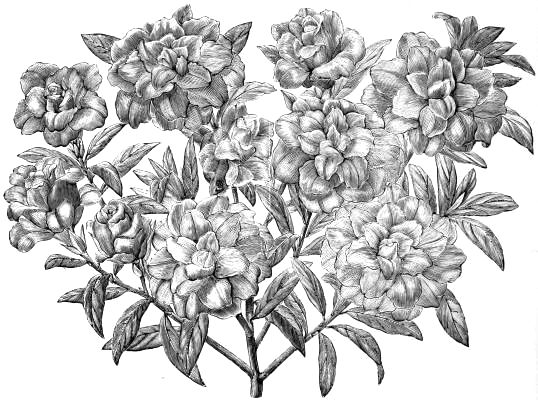
FIG. 196 AZALEA BALSAMINÆFLORA.
A. Bilimbi (Bilimbi-tree). fl. reddish purple, disposed in racemes, rising from the trunk. May. fr. oblong, somewhat resembling a small cucumber, with a thin, smooth, green rind, filled with a grateful acid juice, and the substance and seeds not unlike that of a cucumber. l. alternate, with from five to ten pairs of ovate-lanceolate, entire, smooth leaflets on short stalks. h. 8ft. to 15ft. Native country unknown, 1791. (B. F. S. 117.)
A. Carambola. Carambola-tree. fl. red, scattered, disposed in short racemes, usually rising from the smaller branches, but sometimes from the larger ones, and even the trunk. fr. the size of a hen's egg, acutely five-cornered, with a thin, yellow rind, and a clear watery pulp. l. alternate, with about four to five pairs of ovate, acuminated, entire, stalked leaflets, the outer ones largest. h. 14ft. to 20ft. 1793. This, as well as the first-named species, is cultivated throughout the hotter parts of India, but where it occurs truly wild is not known.
AVOCADO PEAR. See Persea gratissima.
AWL-SHAPED. Narrow-pointed, resembling an awl.
AWLWORT. See Subularia.
AXIL. Literally the armpit; in plants applied to the angle formed by union of the leaf and stem.
AXILLARIA. See Polygonatum.
AXILLARY. Growing in the axil of anything.
AYRSHIRE ROSE. See Rosa repens capreolata.
AZALEA (from azaleos, dry, arid; in allusion to the habitat of the plant). ORD. Ericaceæ. A genus of very popular and beautiful hardy or greenhouse plants. The species enumerated were included under Rhododendron by Don, Loudon, and others, contrary to the classification of Linnæus, but the distinctive characters are not consistent. In this genus, the stamens are usually five, but in Rhododendron ten is the typical number.
Ghent or American Azaleas. These are extremely popular hardy deciduous shrubs. When plants are grown in the open, artificial crossing will be unnecessary; but this method must be employed upon those grown in the cool greenhouse, if well fertilised seeds are required. The seed should be gathered and sown when ripe in a large shallow frame containing from 2in. to 3in. of peat, over which more peat must be laid very level by means of a fine sieve; or they may be kept until early the following spring. No covering will be necessary, but a thorough watering with a fine-rosed water-pot must be given. The lights should be darkened, and the frames kept close until the young seedlings begin to appear, when they must have air (carefully admitted), shade, and a daily sprinkling of water. By the autumn, they will be large enough to transplant in small clumps into boxes of peat and coarse sand, and to place in other frames, or in the open. In each case, they will need watering, shading, and to be kept close until growth commences. The hardier the plants are before winter commences, the better; but a protection of mats or similar material will prevent the probability of their being killed by severe frosts. During the following season, they will only require water during dry weather, and no protection need be afforded this winter. The next spring, they should be planted out singly in beds, sufficiently wide apart to allow the development of two years growth. If an upright growth is being made, the leading shoot must be shortened, in order to secure dwarf, well-branched plants. The same methods should be employed on a smaller scale where but a few are wanted. Grafting is largely practised to increase the stock of named varieties or choice seedlings, the stock employed being A. pontica. This process, of course, ensures the quicker production of flowering plants. Layering in March, encasing the part buried with moss, is also some times practised; but the layer must be left two years before separating. Cuttings of the last year's wood, 2in. or 3in. long, taken with a heel, root readily in sand; about the end of August is the best time for so doing. If they are pricked off in pots or pans of sandy soil, and kept in a cool frame until they are calloused, and afterwards introduced into a slight bottom heat, they root quicker, but this is not absolutely essential. When placed outside, they should be covered with a handlight for about two months, and, at the end of this time, air should be gradually given and increased. Ghent Azaleas are now forced extensively for the market as well as in private gardens; and, by judicious culture, they can be had in full blossom by Christmas. With this end in view, they should be grown in pots, and have the growth prematurely completed soon after flowering with the aid of a little artificial heat; after which they may be placed outside. During very hot and dry weather, the north side of a wall is necessary, to prevent their flowering in the autumn. The same plants must only be forced every alternate year. Commence to place the plants in heat in October, and keep up a succession until the following March. The best plants for forcing purposes are obtained from the Continent, where they are grown in enormous quantities. When grown permanently out of doors, the most suitable soil is peat and rough sand mixed. Failing this, leaf mould, maiden loam, and sand, will be found satisfactory. In many cases, we have known them to flourish in ordinary garden soil.
The following varieties of Ghent Azaleas are distinct, and all worth growing; ADMIRAL DE RUYTER, deep red-scarlet, very fine; ALTACLERENSIS, bright yellow; AMŒNA, light pink; CARNEA ELEGANS, pale pink, shaded sulphur; COCCINEA MAJOR, dark scarlet, very fine; CUPREA SPLENDENS, rich pink, shaded yellow; DECORATA, lovely pink; DIRECTEUR CHARLES BAUMANN, rich vermilion, spotted yellow; ELECTOR, rich orange-scarlet; GEANT DES BATAILLES, deep crimson, very fine; MADAME JOSEPH BAUMANN, bright pink, very free and good; MARIA VERSCHAFFELT, shaded pink and yellow; MIRABILIS, very lovely pink; MORTERI, rich yellow, shaded rosy-red; PONTICA MACRANTHA, rich deep sulphur, very large and fine; PRINCESSE D'ORANGE, salmon-pink, very fine; SANGUINEA, deep crimson; VISCOSA FLORIBUNDA, pure white, very fragrant.
A. arborescens (tree-like).* fl. large, reddish, not clammy, leafy; tube of corolla longer than the segments; calyx leafy, with the segments oblong and acute. May. l., of the flower buds large, yellowish-brown, surrounded with a fringed white border, obovate, rather obtuse, smooth on both surfaces, glaucous beneath, ciliated on the margins, and having the midrib almost smooth. h. 10ft. to 20ft. Pennsylvania, 1818. Deciduous species.
A. balsaminæflora (Balsam-flowered).* fl. bright salmony red, finely double and rosette-like, the segments regularly imbricated, much resembling in general appearance the blooms of a Camellia-flowered Balsam. Japan. It is a distinct species, and remains in bloom for a considerable period; the flowers are invaluable for bouquets. See Fig. 196, for which we are indebted to Mr. Bull.
A. calendulacea (Marigold-like).* fl. yellow, red, orange, and copper coloured, large, not clammy, rather naked; tube of corolla hairy, shorter than the segments. May. l. oblong, pubescent on both surfaces, at length hairy. h. 2ft. to 6ft. Pennsylvania to Carolina, 1806. This is said to be the handsomest shrub in North America. There are several varieties of it in cultivation. Hardy; deciduous. (B. M. 1721, 2143.)
A. hispida (bristly). fl. white, with a red border and a tinge of red on the tube, which is wide and scarcely longer than the segments, very clammy, leafy; stamens ten. July. l. long-lanceolate, hispid above, and smooth beneath, glaucous on both surfaces, ciliated on the margins, and having the nerve bristly beneath. Branches straight, and very hispid. h. 10ft. to 15ft. New York, &c., 1734. A hardy deciduous species. (W. D. B. 1, 6.)
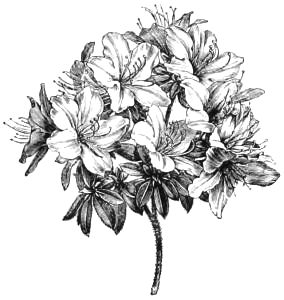
FIG. 197. FLOWER OF AZALEA LEDIFOLIA.
A. ledifolia (Ledum-leaved).* fl. pure white, showy; corolla campanulate; in threes at the extremities of the branches; calyx erect, glandular, and viscid. March. l. elliptic-lanceolate. h. 2ft. to 6ft. China, 1819. The whole shrub is very hairy. Hardy; evergreen. SYN. A. liliiflora. See Fig. 197. (B. M. 2901.)
A. liliiflora (lily-flowered). Synonymous with A. ledifolia.
A. nudiflora (naked-flowered).* fl. in terminal clustered racemes, appearing before the leaves, rather naked, not clammy; tube of corolla longer than the segments; teeth of calyx short, rather rounded; stamens much exserted. June. l. lanceolate-oblong, nearly smooth and green on both surfaces, ciliated on the margins, having the midrib bristly beneath, and woolly above. h. 3ft. to 4ft. North America, 1734. This species hybridises very freely with A. calendulacea, A. pontica, A. viscosa, &c., and descriptive lists of a host of hybrids of almost every conceivable shade, both double and single, are to be found in continental and home catalogues, to which the reader is referred. Hardy. (W. F. A., t. 36.)
A. pontica (Pontic).* fl. leafy, clammy; corolla funnel-shaped; stamens very long. May. l. shining, ovate, oblong, pilose, ciliated. h. 4ft. to 6ft. Levant, Caucasus, &c., 1793. The varieties of this species are also numerous, differing principally in the colour of the flowers and the hue of the leaves. The flowers are of all shades, and frequently striped. The name generally adopted, as above, must not be confounded with Rhododendron ponticum. If the genus Azalea is merged into Rhododendron, as is done by most systematists, this plant must be called by Don's name, Rhododendron flavum. (I. H. 1864, 415.)
A. procumbens (procumbent). See Loiseleria procumbens.
A. speciosa (showy).* fl. scarlet and orange coloured; corolla silky, with obtuse, ciliated, lanceolate, undulated segments; calyx pubescent. May. l. lanceolate, ciliated, acute at both ends. Branches hairy. h. 3ft. to 4ft. North America. The varieties of above are several, varying in the shape of the leaves and the colour of the flowers. (L. B. C. 1255)
A. viscosa (clammy).* fl. white, sweet-scented, in terminal clusters, downy, clammy, leafy; tube of corolla as long as the segments. July. l. oblong-ovate, acute, smooth, and green on both surfaces, ciliated on the margins, having the midrib bristly. h. 2ft. to 4ft. North America, 1734. Like nearly all species belonging to this genus, the varieties are many, varying in the colour of the flowers and otherwise. (T. S. M. 438.)
A. v. nitida (shining).* fl. white, tinged with red, clammy, leafy; tube of corolla a little longer than the segments. April. l. oblanceolate, rather mucronate, leathery, smooth on both surfaces, shining above, having the nerve bristly beneath, with revolute, ciliated margins. h. 2ft. to 4ft. New York, 1812. Hardy; deciduous. (B. R. 5, 414.)
Indian or Chinese Azaleas. This is a section of greenhouse evergreen varieties obtained from A. indica (which see), blooming continuously from November to June, or even later, and of the greatest value for all purposes, whether for decoration, cutting, or exhibition. Cultivation: Thorough drainage is essential, and a compost of half peat, the other half made up of fibrous loam, leaf soil, and sand, in equal quantities. They cannot have too much light and air, and may be grown to almost any size by shifting from one pot to a size larger. In repotting, the whole of the crocks should be taken away from the base of the ball of soil and roots, and the top should also be removed till the fine roots are reached. The plant should then be put in the new pot, and the additional soil rammed firm, in order to prevent the water running through it, and thus depriving the plant of any benefit therefrom. In all cases, the roots near the stem must be above the soil, so that the water may not sink in next the stem, or death will most certainly ensue. After potting, for a few days the plants should be kept close and freely syringed, and as the growth is completed, they may be well hardened off. The best time for potting is after flowering, before the new growth has been made. From October to June the plants should be in the greenhouse, and during the other months in a cold frame, or plunged in pots in the open; or, what is preferable in favoured localities, planted out in prepared beds; they will thus be kept cleaner, and the growth will be much superior. In autumn they may be lifted and repotted, placing in a shady position for a few days. Water in abundance must be given throughout the blooming and growing season; and the plants must, on no account, be allowed to become dry. At the same time, a proper amount of care is most essential, as an excessive amount of moisture is equally as fatal as drought. Cuttings should be placed in sand under a bell glass with moderate bottom heat; half-ripened ones are preferable. They must be cut up to a joint—the base of a leaf—the lower leaves for an inch stripped off, and the stem stuck into the sand, which should lay, about an inch thick, on the top of sandy peat soil; the bottom of the cuttings should reach, but not go quite into, the soil. The whole should be covered with a bell glass, which must be wiped dry every morning. Soon after the cuttings have commenced growing, place them in small pots. They are also very largely and easily increased by grafting; indeed, this is the only satisfactory method of securing standards. Seeds may be sown similar to the last section, but in the greenhouse, and, when well up, pricked out into little pots 1in. apart. Azaleas are liable to the attacks of thrips and red spider, the latter being especially troublesome if the plants are in a dry position; frequent syringing will materially help to eradicate both pests. If insufficient, syringe with a solution of Gishurst's Compound.
A. amœna (pleasing). fl. almost campanulate, rich crimson, about 1½in. across, hose-in-hose conformation, produced in great profusion. April. l. small, size of the common Box, hairy. h. 1ft. China. This is an elegant little neat and compact growing shrub, which has proved to be quite hardy in England. (B. M. 4728.) A very beautiful series of hybrids have been obtained by crossing this species with A. indica, which are most serviceable and free. The following are most desirable: LADY MUSGRAVE, light carmine; MISS BUIST, pure white; MRS. CARMICHAEL, rich magenta, shaded crimson; PRIME MINISTER, soft pink, deep shaded, very free; PRINCESS BEATRICE, light mauve, very distinct and free; PRINCESS MAUDE, rich magenta, rose shaded.
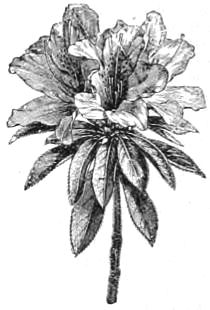
FIG. 198. FLOWER OF AZALEA INDICA.
A. indica (Indian).* fl. campanulate, terminal, solitary or twin; calycine teeth long-lanceolate, obtuse, ciliated, spreading. l. cuneate-lanceolate, finely crenelated, covered with sharp, close-pressed rigid hairs, attenuated at both ends. Branches also covered with sharp, close-pressed, rigid hairs. h. 3ft. to 6ft. China, 1808. See Fig. 198. There are a great number of garden seedlings of the Indian Azalea, including every shade and colour. A selection to any extent may be made from the nurserymen's catalogues, but, for the guidance of the amateur, we have made a rigid selection of the best double and single varieties.
Double-Flowered: A. BORSIG, pure white; ALICE, rich deep rose, blotched with vermilion, very fine; BERNARD ANDRé, dark violet-purple, large, semi-double; CHARLES LEIRENS, dark salmon, good form and substance; COMTESSE EUGENIE DE KERCHOVE, white, flaked with red-carmine, semi-double; DOMINIQUE VERVAENE, bright orange, very fine; DR. MOORE, deep rose, with white and violet shading, very fine; EMPEREUR DE BRéSIL, rich rose, banded white, the upper petals marked red; FRANCIS DEVOS, deep crimson; IMBRICATA, pure white, sometimes flaked with rose; MADAME IRIS LEFEBVRE, dark orange, shaded with bright violet, and blotched with chocolate; PRESIDENT GHELLINCK DE WALLE, intense rose, upper petals blotched with lake, and crimson-rayed; SOUVENIR DE PRINCE ALBERT, rich rose peach, broadly margined with pure white, very free and beautiful.
Single-Flowered: CHARMER, rich amaranth, very large; COMTESSE DE BEAUFORT, rich rose, the upper petals blotched with crimson; CRITERION, rich salmon pink, white-margined; DUC DE NASSAU, rich rosy-purple, very free and large; ECLATANTE, deep crimson, rose shaded; FANNY IVERY, deep salmon-scarlet, blotched magenta, very fine; FLAMBEAU, rich glowing crimson, extremely showy; JOHN GOULD VEITCH, lilac-rose, netted and bordered white, and blotched with saffron, very showy; LA SUPERBE, rich lake, bordered orange, and black spotted, a very fine variety; LA VICTOIRE, centre reddish, white towards the edge, the upper petals spotted with maroon-crimson; LOUIS VON BADEN, pure white, a grand variety; MADAME CHARLES VAN ECKHAUTE, pure white, with beautifully crisped edges, of excellent form and substance; MADAME VAN HOUTTE, richly flaked with carmine and rose, very large and free; MARQUIS OF LORNE, brilliant scarlet, of the finest form and substance; MRS. TURNER, bright pink, white-margined, and spotted with crimson; PRESIDENT VAN DEN HECKE, white, striped and speckled with crimson, with a yellow centre; PRINCESS ALICE, pure white, one of the best; REINE DES PAYS-BAS, rich violet-pink, margined with white; ROI D'HOLLANDE, dark blood-red, spotted with black; SIGISMUND RUCKER, rich rose, white bordered, with crimson blotches; WILSON SAUNDERS, pure white, striped and blotched with vivid red, very fine.
A. mollis (soft). Synonymous with A. sinensis.
A. sinensis (Chinese). fl. campanulate, downy, flame coloured; stamens equal in length to the petals. May. l. slowly deciduous, elliptic, acutish, pilosely pubescent, feather-nerved, with ciliated margins, greyish beneath. h. 3ft. to 4ft. China and Japan. A large number of seedlings and hybrids from this species are in cultivation, known under the name of Japanese Azaleas, and all are valuable for the decoration of the cool conservatory, or for outdoor work. SYN. A. mollis. (L. B. C. 885.)
AZARA (in honour of J. N. Azara, a Spanish promoter of science, but of botany in particular). ORD. Bixineæ. Showy evergreen, hardy and half-hardy shrubs, with alternate, simple, stalked stipulate leaves, and fragrant flowers. They thrive well in a compost of loam, leaf soil, and sand. Ripened cuttings root readily if placed in sand, under glass, in slight heat. It is believed that all the species enumerated will prove hardy if a slight winter protection in midland and northern counties be afforded. This precaution will be unnecessary in more southern parts.
A. dentata (toothed). fl. yellow; corymbs sessile, few-flowered. June. l. ovate, serrated, scabrous, tomentose beneath; stipules leafy, unequal in size. h. 12ft. Chili, 1830. (B. R. 1728.)
A. Gillesii (Gilles').* fl. bright yellow; panicles axillary, densely packed. Spring. l. large, Holly-like, ovate, coarsely toothed, smooth. h. 15ft. Chili, 1859. (B. M. 5178.)
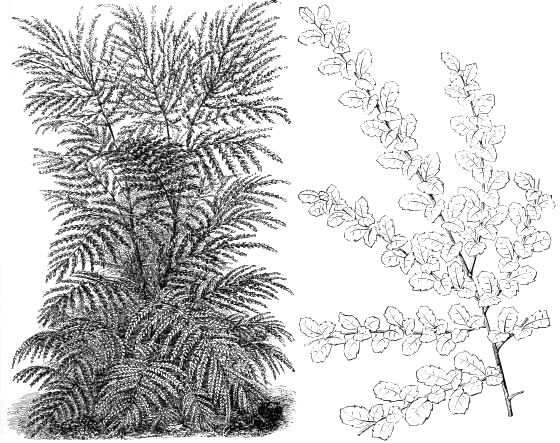
FIG. 199. AZARA MICROPHYLLA, showing Habit, and Foliage (half natural size).
A. integrifolia (entire-leaved).* fl. yellow, on numerous short axillary spikes, of an aromatic fragrance. Autumn. l. obovate or oblong, entire, smooth; stipules equal, permanent. h. 18ft. Chili (about Conception), 1832. The variegated-leaved form, although rare, is very ornamental. The variegation consists of greenish-yellow, with a blotch of dark green, and in a young state edged with deep pink.
A. microphylla (small-leaved).* fl. greenish, corymbose, succeeded by numerous small orange-coloured berries. Autumn. l. small, distichous, obovate, obtuse, dark-shining green. h. 12ft. Chiloe and Valdavia, 1873. This shrub is very ornamental as a standard, and also excellent for covering walls. Quite hardy. See Fig. 199, for which we are indebted to Messrs. Veitch and Sons.
BABIANA (from babianer, the Dutch for baboon; in reference to the bulbs being eaten by baboons). ORD. Iridaceæ. A genus of very ornamental bulbous plants confined to the Cape of Good Hope, with the exception of a single species, which is found in Socotra. Flowers occasionally fragrant, and generally characterised by their rich self-colours, or the striking contrast of very distinct hues in the same flower; perianth regular and symmetrical, with six ovate divisions (tube varying in length). Stems from 6in. to 9in. high, arising from a small bulb-like corm, and bearing tapering plaited leaves, which are usually more or less densely covered with long hairs; the scapes are racemose, each bearing about six or more simultaneously expanding flowers. They may be successfully grown in pots. By this plan there is, perhaps, less danger of loss, and their flowering season can be prolonged considerably. A light sandy compost, with a small proportion of well-decayed manure, is required, and thorough drainage is also most essential. Use 48 or 60-sized pots, placing four or five corms in the former, and two or three in the latter, and keep moderately dry until they commence to form roots. October is the best time to pot. As soon as the plants appear above ground, water may be carefully given, and the supply proportionately increased as the plants develop. Very weak liquid manure, applied twice a week, just as the spikes are pushing up, will be beneficial. When the flowers fade, and the stems show signs of decay, the supply of water must be gradually decreased, thus inducing the thorough maturation of the corms, upon which the next season's display depends. When quite down, store the pots in a dry place till the time for repotting arrives, when the corms should be carefully cleaned, and all offsets separated, the latter being potted up in the same way as the parent corms in order to produce flowering specimens; or they may be kept in a pot of sand and planted in a warm border outside in March. Outdoor culture: A sheltered, sunny, and well-drained situation is most essential to success. Although not absolutely necessary, it is preferable to replant every year in early spring, placing the bulbs about 5in. or 6in. deep, with a little sand sprinkled about them. Planting may, of course, be done in autumn, when it will be necessary to cover with cocoa nut fibre refuse to the depth of 5in. or 6in. In warm, sheltered situations, the corms may remain undisturbed; but, as a rule, it is desirable to remove them late in autumn, when the leaves are dead, and store them in dry sand through the winter in a cool, airy position, free of frost. Mixed Babianas may be purchased from dealers at a cheap rate, and, for general purposes, they are best to plant. Propagation may be effected by offsets and seeds. The former is the best and quickest method. The offsets should be grown in boxes or planted out in light rich soil until large enough for flowering. Seeds sown in pans, and placed in a gentle heat, will grow at almost any time; the young plants will require to be carefully transplanted each season until they develop into blooming corms.
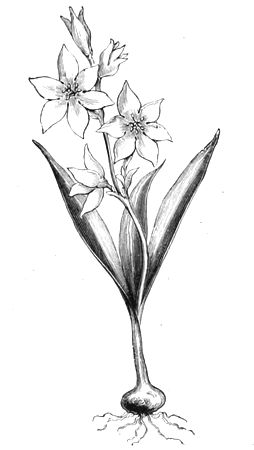
FIG. 200. BABIANA STRICTA RUBRO-CYANEA.
B. cœrulescens (bluish). Synonymous with B. plicata.
B. disticha (two-ranked).* fl. with a Hyacinth-like fragrance; perianth pale blue; divisions narrow; margins undulated or crisped. June, July. l. lanceolate, acute. h. 6in. 1774. (B. M. 626.)
B. plicata (folded).* fl. with a very fragrant clove carnation-like perfume; perianth pale violet-blue; anthers blue, and stigmas yellow. May, June. l. lanceolate, distinctly plicate. h. 6in. 1774. SYNS. B. cœrulescens, B. reflexa. (B. M. 576.)
B. reflexa (reflexed). Synonymous with B. plicata.
B. ringens (gaping).* fl. scarlet, irregular in form, gaping, very handsome. May, June. l. narrow, acute, deep green. h. 6in. to 9in. 1752. (L. B. C. 1006.)
B. sambucina (Elder-scented). fl. bluish-purple, with an Elder-like fragrance; perianth divisions spreading. April, May. l. lanceolate, slightly plicate. h. 6in. to 9in. 1799. SYN. Gladiolus sambucinus. (B. M. 1019.)
B. stricta (strict).* fl., perianth segments narrow, acute, outer three white, inner three lilac-blue, with a dark blotch near the base of each. May. l. broadly lanceolate, obtuse, ciliated. h. 1ft. 1795. (B. M. 621.)
B. s. angustifolia (narrow-leaved). fl. fragrant; perianth bright blue, slightly pink in the tube. May and June. l. linear, acute, light green. h. 1ft. 1757. (B. M. 637.)
B. s. rubro-cyanea (red-and-blue).* fl. 2in. or more in diameter; upper half of the perianth very brilliant blue, and the lower part rich crimson, forming a central zone, in striking contrast to the blue portion. May, June. l. broad, acuminated, downy on the under surface. h. 6in. to 8in. 1796. See Fig. 200. (B. M. 410.)
B. a. sulphurea (sulphur-coloured).* fl. cream-coloured or pale yellow; anthers blue, and stigmas yellow; segments spreading. April, May. l. narrow-obtuse. h. 9in. 1795. SYNS. Gladiolus sulphureus, G. plicatus. (B. M. 1053.)
B. s. villosa (villous).* fl., perianth smaller than the last, with the narrower segments rather more widely spreading than in B. s. rubro-cyanea, brilliant crimson, with violet-blue anthers. August. h. 6in. 1778. (B. M. 583.)
BABINGTONIA (named after C. C. Babington, Professor of Botany at Cambridge, and a distinguished botanical author). ORD. Myrtaceæ. A very pretty greenhouse evergreen shrub, allied to Bæckea, from which it differs in having the stamens collected in groups opposite the sepals. Cuttings of the young unflowering shoots may be planted in sand under a bell glass, and kept in a moderate heat until rooted, when they should be placed singly in small pots, in a compost of equal parts loam and peat, with the addition of a little sand. As the small pots fill with roots, the plants should be removed into larger ones, and the compost have less sand in it; but this should not be done until the next February. The established plants must have a good shift about March or April, and should be kept in a light, airy greenhouse; the first shoots may be topped to moderate their vigour, and to produce a greater profusion of less luxuriant ones. In May, when most plants are removed from the greenhouse, these should be set to grow under a frame which, while shielding them from heavy rains, and supporting some slight shading in the hottest parts of the sunny days, will not prevent a free circulation of air. To this end, the frame should be elevated from the rests or supports at its corners; the lights should be left off at night in fine, mild weather, and on dull, cloudy days, being only replaced during heavy rains, and when shading is necessary. Towards autumn, the plants must be returned to the greenhouse.
B. Camphorasmæ (camphor-smelling).* fl. pinkish-white, in little cymes, disposed in long terminal racemes. Summer. l. linear, opposite, nerved. h. 7ft. Australia, 1841. (B. R. 28, 10.)
BACCATE. Berried, fleshy; having a pulpy texture.
BACCHARIS (from Bacchus, wine; referring to the spicy odour of the roots). Ploughman's Spikenard. ORD. Compositæ. A genus of hardy, stove, or greenhouse herbs, shrubs, or trees. Flower-heads many-flowered, diœcious, terminal. Involucre sub-hemispherical or oblong, in many series, imbricated. Leaves simple, alternate, exstipulate, deciduous, oblong-lanceolate, notched, serrated, or entire. Shrubs of short duration. These plants are neither beautiful nor ornamental, but are of easy cultivation in ordinary soil. Propagated by cuttings.
B. halimifolia (Halimus-leaved). Groundsel Tree. fl.-heads white. July. l. oblong-cuneate, obovate, coarsely toothed; branches angular. h. 6ft. to 12ft. Northern United States, 1683. Hardy.
BACHELORS' BUTTONS. The double-flowered forms of Ranunculus acris, Lychnis diurna, &c.
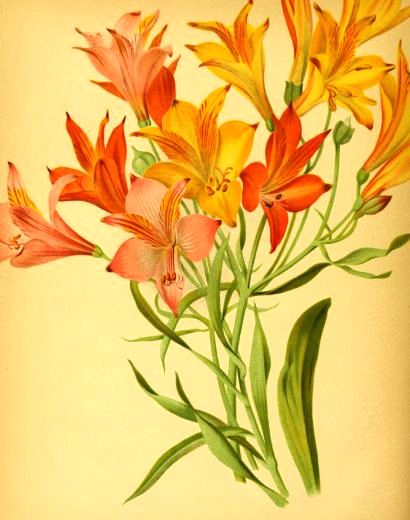
HYBRID ALSTRŒMERIAS
[See larger version]
BACKHOUSIA (commemorative of the late James Backhouse, a botanical traveller in Australia and South Africa). ORD. Myrtaceæ. A greenhouse evergreen shrub, requiring a compost of fibry peat, loam, and a little white sand. Propagated, in April, by half-ripened cuttings, inserted in sand, under a bell glass, in a cool house.
B. myrtifolia (Myrtle-leaved).* fl. white, disposed in corymbs, and often produced on cuttings soon after having struck root. May. l. ovate, acuminate, smooth. Branches slender. h. 16ft. New South Wales, 1844. (B. M. 4133.)
BACONIA. A synonym of Pavetta (which see).
BACTRIS (from baktron, a cane; the young stems being used for walking sticks). ORD. Palmaceæ. Very ornamental, slender growing, and prickly stove palms. Peduncle of the spadix bursting through about the middle of the leaf sheath. Drupes small, ovate, or nearly round, and generally of a dark blue colour. Leaves pinnatisect; segments generally linear and entire. Instead of being confined to the apex of the trunk, the leaves are scattered over nearly the whole surface, and the lower ones retain their verdure long after the upper ones have fully developed. Stems slender, varying from 2ft. to 10ft. in height. Some of the species are of easy culture in a compost of loam, peat, loaf mould, and sand, in equal parts; but most of them are very difficult to manage. Propagation may be effected by suckers, which are very freely produced. Many species are ornamental only when in a young state.
B. baculifera (cane-bearing). l. pinnate, bifid at the apex, 2ft. to 6ft. long; pinnæ arranged in clusters about 1ft. long and 2in. broad, dark green above, paler below; petioles sheathing and densely clothed with sharp brown and black spines, 1½in long. South America.
B. caryotæfolia (Caryota-leaved).* fl., spathe ovate, prickly; branches of spadix simple, flexuous. l., pinnæ wedge-shaped, three-lobed, and erose; rachis, petioles, and caudex, prickly. h. 30ft. Brazil, 1825.
B. flavispina (yellow-spined). Synonymous with B. pallidispina.
B. major (greater). fl. greenish-yellow, with a broadly ovate spathe. h. 25ft. Carthagena, 1800.
B. Maraja (Maraja). Maraja Palm. fl. yellow, with a prickly spathe. h. 30ft. to 50ft. Bahia, 1868.
B. pallidispina (pale-spined).* l. pinnate, bifid at the apex; pinnæ clustered, 6in. to 12in. long, 1in. wide, dark; petioles sheathing at the base and furnished with a profusion of long, yellow spines, which are tipped with black. Brazil. SYN. B. flavispina.
BACULARIA (from baculum, a walking-stick). ORD. Palmaceæ. A small genus containing a couple of stove species, which are amongst the smallest palms of the Old World. Both are confined to the east coast of tropical Australia. B. monostachya—in allusion to its slender stem, which rarely exceeds in thickness that of the thumb—is known as the Walking-stick Palm.
B. minor (lesser). l. attaining 3½ft. Stems, several from same rhizome, 2ft. to 5ft. high, ½in. thick. Queensland.
B. monostachya (one-spiked). l. pinnate, pendent, 6in. to 12in. long, bifid at the apex; pinnæ about 4in. across, broad, irregular in shape, with ragged and irregular ends; dark green. Stem slender, petioles sheathing. h. 10ft. New South Wales, 1824. SYN. Areca monostachya. (B. M. 6644.)
BADGER'S BANE. See Aconitum meloctonum.
BÆA (commemorative of Rev. Dr. Beau, of Toulon, brother-in-law to Commerson, the discoverer of the genus). SYN. Dorcoceras. ORD. Gesneraceæ. Curious and pretty greenhouse herbaceous perennials, requiring a rich sandy loam. They are easily propagated by seeds. Probably the only species in cultivation is the following:
B. hygrometrica (hygrometric).* fl. pale blue-coloured, yellowish at the throat; segments of the limb more or less reflexed; corolla five-lobed, somewhat resembling that of the Violet; scapes numerous, naked, few-flowered. Summer. l. in a rosette, thinly covered with coarse white hairs, ovate acute at both ends, crenate serrate. h. 6in. North China, 1868. (B. M. 6468.)
BÆCKEA (named after Abraham Bæck, a Swedish physician, and an esteemed friend of Linnæus). ORD. Myrtaceæ. Very pretty greenhouse evergreen shrubs. Flowers white, pedicellate, small. Leaves opposite, glabrous, dotted. They thrive in a compost of sandy peat, leaf soil, and lumpy, fibrous loam. Cuttings, taken from young wood, root readily, if pricked in a pot of sand, with a bell glass placed over them, in a cool house.
B. diosmæfolia (Diosma-leaved).* fl. axillary, solitary, approximate, sessile. August to October. l. oblong, rather cuneated, keeled, acute, crowded, imbricate, and are, as well as the calyces, ciliated. h. 1ft. to 2ft. New Holland, 1824.
B. frutescens (shrubby).* fl. solitary; pedicels axillary. November. l. linear, awnless. h. 2ft. to 3ft. China, 1806. (B. M. 2802.)
B. parvula (little). fl., peduncles axillary, umbelliferous. l. elliptic-oblong, obtuse, rather mucronate. h. 1ft. New Caledonia, 1877. This is very close to B. virgata. (R. G. 886, 2.)
B. virgata (twiggy).* fl., peduncles axillary, umbelliferous. August to October. l. linear-lanceolate. h. 2ft. to 3ft. New Caledonia, 1806. (B. M. 2127.)
BÆRIA (named in honour of Professor Baer, of the University of Dorpat). ORD. Compositæ. A genus consisting of about half a dozen species. Probably the only one in cultivation is that mentioned below; it is a very pretty plant, of easy culture in ordinary garden soil. Propagated by seeds, sown in spring.
B. chrysostoma (golden-mouthed). fl.-heads bright yellow, solitary, terminal, about 1in. across; involucre of about ten leaflets, in two series. Early summer. l. linear, opposite, entire. Stems erect, downy. h. 1ft. California, 1835. (S. B. F. G. ii. 395.)
BAGGED. Swelled like a sac or bag.
BAHIA (probably from Port of Bahia, or San Salvador, in South America). SYN. Phialis. ORD. Compositæ. An ornamental, hardy, herbaceous perennial, much branched from the base of the stem, and having a greyish appearance. It may be increased by seeds, or by divisions.
B. lanata (woolly). fl.-heads yellow, solitary, produced in great numbers. Summer. l. alternate, or with the lower ones sometimes opposite, deeply divided, and sometimes ligulate and entire. h. 6in. to 15in. North America. This species thrives on borders of light and well-drained sandy soil. (B. R. 1167.)
BALANIUS. See Nut Weevil.
BALANTIUM (of Kaulfuss). See Dicksonia.
BALANTIUM (of Desvaux). See Parinarium.
BALBISIA (commemorative of Giovanni Battista Balbis, a Professor of Botany at Turin). SYN. Ledocarpum. ORD. Geraniaceæ. A very ornamental half-hardy evergreen shrub, requiring a cool, dry atmosphere. As it is very liable to rot off, water must be applied with great care. Propagated by cuttings of half-ripened wood, inserted in sand, under a hand glass; or by seeds.
B. verticillata (whorled). fl. yellow, large, with a whorl of narrow bracts beneath. Autumn. l. opposite, three-parted; segments linear-oblong. Branches slender, glaucous. h. 3ft. to 6ft. Chili, 1846. (B. M. 6170.)
BALCONY. A projection from the external wall of a house, usually resting on brackets, and having the sides encompassed by a balustrade. It should at all times be prettily decorated with plants, which in the summer is a comparatively easy matter. During winter, evergreens of various kinds are most serviceable, the best being Arbutus, Aucubas, Boxes, Euonymuses, Hollies, Irish and Goldon Yew, Portugal Laurel, Retinosporas, Vincas, &c. These may be grown in pots, and when replaced by the summer occupants, should be plunged in some reserve quarter, where they should receive plenty of water; by this means, they will increase in size, and keep in a healthy condition. Very little water will be required during the winter. Climbing plants, such as Ivy, Passion Flower, Virginian Creeper, Climbing Roses, &c., are indispensable for covering the trellises, and draping the pillars and arches.
BALDINGERA. A synonym of Premna.
BALL. This term is used in reference to the roots and mass of earth as they are moulded into form and pressed into hardness by the pot. The masses of roots and earth which, in the case of fibrous-rooted subjects (such as Rhododendrons), must be taken intact when removing the plants, are also termed Balls.
BALM (Melissa officinalis). A perennial herb, often used in the manufacture of a drink for sick persons, and sometimes employed for culinary purposes. It may be grown in ordinary garden soil, and is propagated by divisions, in spring. A pretty variegated form is sometimes met with, having the additional advantage of being equal to the normal species for medicinal purposes.
BALM OF GILIAD. See Cedronella triphylla and Populus balsamifera.
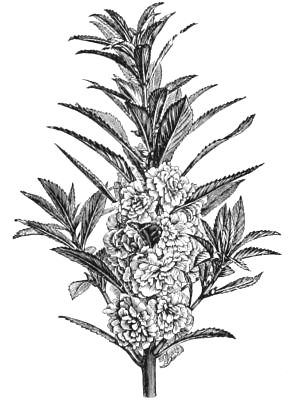
FIG. 201. CAMELLIA-FLOWERED BALSAM.
BALSAM (Impatiens Balsamina). A well-known ornamental and tender annual, native of India. It is one of the showiest of summer and autumn flowers, and well deserves a place in every garden. Although of comparatively easy cultivation, good blooms and well-grown plants are far too rarely seen. A good Balsam bloom should be quite as double as a perfect Camellia, and to show to the greatest advantage should appear like one in the arrangement of the petals. To secure this, seeds should only be saved from the finest and most perfect flowers, although the quantity must, of necessity, be small. They should be sown, about the third week in March, in properly prepared pans of rich sandy soil, and placed in a gentle bottom heat of about 65deg. As soon as the first rough leaf appears, the plants should be potted off into 3in. pots, care being taken to let the cotyledon, or seed leaves, be close to the soil. When the roots touch the sides of the pots, the plants should be moved into larger ones, and this should be repeated until they are in 8in. or 10in. pots. Some growers place one or two seeds in small pots, so as to avoid the first shift, and a good plan it is. During the time the plants are under glass, they should be kept as near the light as possible, and be frequently turned around, so that they do not draw to one side; and careful training must be given to those that are required in fine form. Disbudding is also necessary to such as are wanted at their best, removing all bloom from the main stem and base of branches until the plants are of sufficient size, and then the buds at the tops will bloom almost simultaneously. The buds that will be formed afterwards will cause a continuance of blossom for a long time, in fact, for some months, if the plants are liberally supplied with liquid manure. If it is desired for them to flower out of doors, the plants should be transferred, about May, to a frame where the heat is not above 50deg., and be kept in a steady growing state, air being admitted on all suitable occasions, cold winds and heavy rains avoided, and water supplied when needed; never allow them to get dry. They require training and disbudding the same as those grown in the greenhouse. About June, the plants should be fully exposed during the day; and, when danger of frost is over, the lights may be kept off altogether. These should bloom at the end of July. In all cases, plenty of drainage must be allowed, as the amount of water required is very great. Insects must be sharply looked after, as well as slugs and snails. There are several sections, such as Camellia-flowered (see Fig. 201), Rose-flowered, &c., each containing variously striped, spotted, and entire coloured blooms, and it is best to pay an extra figure to secure a good strain.
BALSAM APPLE. See Momordica Balsaminea.
BALSAMINA. See Impatiens.
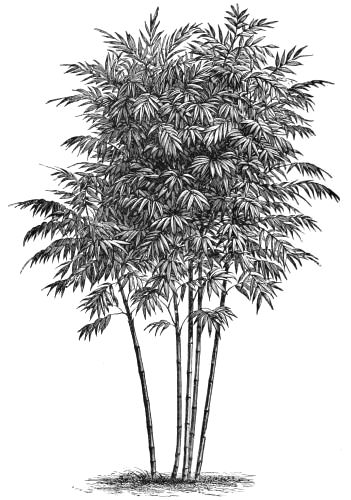
FIG. 202. BAMBUSA ARUNDINACEA.
BALSAMINEÆ. A tribe of plants belonging to the order Geraniaceæ. Sepals and petals all coloured, consisting of six segments, "two outer ones small, flat, and oblique; the next large, hood-shaped, ending below in a conical spur; the fourth opposite to it, small, very broad, concave; the two innermost very oblique, and more or less divided into two unequal lobes." The best known genus is Impatiens.
BALSAMODENDRON (from balsamon—an old Greek word used by Theophrastus—balm or balsam, and dendron, a tree). ORD. Burseraceæ. Greenhouse or stove balsamiferous trees. Flowers small, green, axillary, often unisexual; calyx four-toothed, permanent; petals four, linear-oblong, induplicately valvate in æstivation; stamens eight, inserted under the annular disk, having elevated warts between them. Berry, or drupe, ovate, acute, one to two-celled, marked with four sutures. Leaves with three to five sessile, dotless leaflets. They thrive in a compost of thoroughly drained sandy loam. Propagated by cuttings of ripe young wood, taken in April, and placed under a hand glass, in bottom heat. The species named below doubtfully belongs to this genus, as the characteristics above enumerated will show.
B. zeylanicum (Ceylon).* fl. white, three-petaled, glomerated, involucrated; racemes interrupted, downy. l. impari-pinnate, with five to seven-stalked, ovate, acute leaflets. h. 30ft. Ceylon.
BALSAM OF CAPEVI. See Copaifera.
BALSAM-TREE. See Clusia.
BAMBOO CANE. See Bambusa.
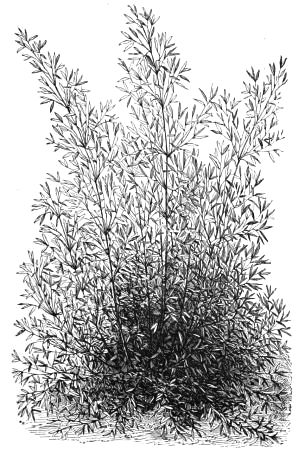
FIG. 203. BAMBUSA AUREA.
BAMBUSA (from bambu, the Malay name). Bamboo Cane. ORD. Gramineæ. A genus of ornamental, shrubby, greenhouse, half-hardy or hardy shrubs, each culm flowering but once. Flowers usually hexandrous. Leaves, as a rule, relatively shorter than the stems, lanceolate, and narrowed at the base. Stems jointed, flexuose, branching, usually hollow, and, when mature, of a hard, woody nature. In well drained, sheltered situations, in the open, with rich, loamy soil, some of the species make extremely graceful objects, particularly so in the more southern counties of England, and in parts of Scotland. Unless a very severe winter is experienced, they may be left without protection. Plants of all the species, however, should have the shelter of a cold greenhouse till about the end of April; when they should be gradually hardened off, and transferred to a warm, sheltered spot, such as in woodlands, by the margins of lakes, &c., as they like plenty of moisture during the summer. A good watering must be given after planting, to settle the soil. Propagation is effected by careful division of well-developed plants, which should be done in early spring, just as new growth is commencing; and it is advisable to establish the divisions in pots. See also Arundinaria.
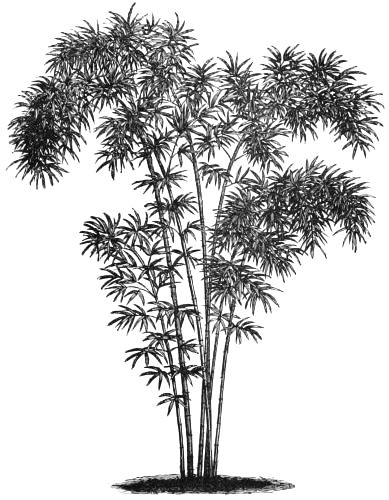
FIG. 204. BAMBUSA NANA.
B. arundinacea (reed-like).* Stem very stout, rising like a beautiful column to some 50ft. or 60ft. in height; the laterals producing a profusion of light green leaves, the whole presenting the appearance of a huge plume of feathers. India, 1730. This species is best treated as a stove plant, but it may be placed out of doors in summer. See Fig. 202. (B. F. S. 321.)
B. aurea (golden).* l. lanceolate, acute, light green, distinguished from B. nana by having their under surface less glaucescent, and the sheath always devoid of the long silky hairs. China. This very handsome species forms elegant tufts, with its slender much-branched stems, which attain a height of from 6ft. to 10ft., and are of a light green colour in a young state, ultimately changing into a yellowish hue. Hardy in most parts of the country. See Fig. 203.
B. Fortunei (Fortune's).* l. linear-lanceolate, abruptly pointed, somewhat rounded at the base, on very short hairy stalks, serrated and often fringed with long hairs on the margin, downy on both sides, and distinctly variegated, the transverse veins often of a bottle-green colour. h. 1ft. to 2ft. Japan. A dwarf tufted species, with very slender stem. Quite hardy. There are only variegated varieties of this in cultivation, viz., variegata and argenteovittata. (F. d. S. 1863, t. 1535.)
B. glauca (milky-green). A synonym of B. nana.
B. japonica (Japanese). Synonymous with Arundinaria Metake.
B. Maximowiczii (Maximowicz's). Synonymous with Arundinaria Maximowiczii.
B. Metake (Metake). Synonymous with Arundinaria Metake.
B. mitis (small). l. deep green, lanceolate, acute, striated, clasping the stem; panicle simple, erect, close; spikes long, imbricated. Stem tapering. h. 40ft. Cochin China and Japan. This vigorous-growing species can be cultivated out of doors during summer, and, in most localities, it may be left out all the year.
B. nana (dwarf).* l. lanceolate, acute, glaucous, stoutish, with the footstalks slightly downy. h. 6ft. to 8ft. India, 1826. A rather tender species, requiring to be grown in the stove or greenhouse. SYNS. B. glauca and B. viridi-glaucescens. See Fig. 204.
B. nigra (black). See Phyllostachys nigra.
B. Ragamowski (Ragamowsk's).* l. 9in. to 18in. long, and about 1in. to 3in. broad. China and Japan. This species "can readily be recognised by the tomentose line on one side of the midrib, running nearly the whole length of the leaf on the underside, this line being always on the longer side of the leaf." Hardy. SYN. B. tessellata.
B. Simonii (Simon's).* l. narrow, nearly 6in. to 10in. long, occasionally striped with white. Stems growing with great rapidity, mealy-glaucous at the joints; branchlets numerous, rather closely crowded. h. 10ft. China and Japan, 1866.
B. striata (striated).* l. linear-oblong; culms striped yellow and green. h. 6ft. to 20ft. China, 1874. A very slender and graceful, rather tender, species. May be grown in the open air during summer, and in very favoured spots it is probably hardy, especially if covered with a mat in winter. It makes an excellent pot plant. SYN. B. viridi-striata. (B. M. 6079.)
B. tessellata (tessellated).* A synonym of B. Ragamowski.
B. violescens (nearly-violet).* l. green above, bluish-grey beneath, with an elongated ligule, surrounded by a bundle of black hairs. Stems much branched, blackish-violet. China, 1869. This handsome and vigorous species is intermediate between Phyllostachys nigra and B. nana. It requires protection during winter.
B. viridi-glaucescens (glaucous-green). A synonym of B. nana.
B. viridi-striata (green-striped). A synonym of B. striata.
BANANA, or PLANTAIN. See Musa.
BANEBERRY. See Actæa.
BANISTERIA (named after John Baptist Banister, a traveller in Virginia in the seventeenth century, author of a catalogue of Virginian plants, inserted in Ray's "Historia Plantarum"). ORD. Malpighiaceæ. Stove trees or shrubs, frequently climbing. Flowers yellow; calyx five-parted; petals furnished with long stalks; stamens ten. Leaves simple, stalked. They are for the most part very ornamental, but are not often seen in flower in this country. They will grow in a mixture of loam, leaf soil, and peat, with some sharp sand added. Cuttings, made from ripened wood, will root freely in sandy soil, under a hand glass, in stove heat, taking about three or four weeks to do so.
B. chrysophylla (golden-leaved).* fl. deep orange, axillary, corymbose. l. ovate, oblong, acutish, somewhat sinuated towards the top, clothed beneath with golden shining down. Brazil, 1793. Climber.
B. ciliata (ciliated).* fl. large, orange-coloured, umbellate. June. l. cordate, orbicular, smooth, ciliated. Brazil, 1796. Twiner.
B. ferruginea (rust-coloured). fl. yellow; racemes panicled. June. l. 2in. long, ovate, acuminated, smooth above, and shining, rusty beneath, and are, as well as the petioles, clothed with close pressed hairs. Brazil, 1820. Climber.
B. fulgens (glowing).* fl. yellow, in umbellate corymbs. l. ovate, acuminated, smooth above, and clothed with silky pubescence beneath, as well as the petioles. Branches dichotomous. West Indies, 1759. Climber.
B. Humboldtiana (Humboldt's).* fl. yellow; umbels lateral and terminal, sessile. l. roundish-ovate, cordate, rather acuminated, mucronate, membranaceous, smoothish above, clothed beneath with soft hoary down as well as the branchlets. South America, 1824. Climber.
B. sericea (silky). fl. yellow, racemose. July. l. ovate, obtuse, with a mucrone; younger ones downy on both surfaces, adult ones only on the under surface; down of a golden shining colour. Brazil, 1810. Climber.
B. splendens (splendid).* fl. yellow; racemes axillary, dichotomous, umbellate. Floral leaves orbicular, and nearly sessile. l. cordate, kidney-shaped, orbicular, clothed with silky down beneath. South America, 1812. Climber.
BANKS. These are usually formed with a view to increasing the amount of surface ground, and for the acceleration or retarding of vegetable crops, such as strawberries, &c. They should be from 6ft. to 12ft. apart, according to the depth of soil, and run from east to west. In constructing Banks of a uniform size, great care, and a constant use of the garden line, will be found necessary. For the warmest side of the Banks, Dwarf French Beans, Peas, Vegetable Marrows, Cucumbers, New Zealand Spinach, Capsicums, &c., may be grown. On the opposite side, and when a prolonged supply is desired, Cauliflower, Broccoli, Lettuce, Turnip, Spinach, &c., may be sown thinly in drills, to be thinned out, and remain. It needs but little discretion to produce valuable crops by this method.
BANKSIA (named in honour of Sir Joseph Banks, once President of the Royal Society, and a distinguished patron of science, particularly of Natural History). ORD. Proteaceæ. Greenhouse evergreen shrubs, natives of Australia, principally grown for the beauty of their foliage. Leaves variable in form, usually dark green, clothed with white or rufous down beneath; margins deeply serrated or spinous, rarely entire. The following is the mode of culture recommended many years ago by Sweet. The pots should be well drained, by placing a potsherd about half way over the hole at the bottom of the pot, then laying another piece against it that it may be hollow, afterwards putting some smaller pieces all around them, and on the top of these some others broken very small. All the plants belonging to the order Proteaceæ should be drained in a similar manner, as the roots are very fond of running amongst the broken potsherds, and consequently there is less danger of their being overwatered. Care must also be taken not to allow them to flag, as they seldom recover if once allowed to get very dry. The plants should be placed in an airy part of the house when indoors. Cuttings are generally supposed to be difficult to root, but this is not the case if properly managed. Let them be well ripened before they are taken off; then cut them at a joint, and place them in pots of sand, without shortening any of the leaves, except on the part that is planted in the sand, where they should be taken off quite close. The less depth they are planted in the pots the better, so long as they stand firm when the sand is well closed round them. Place them under hand glasses in the propagating house, but do not plunge them in heat. Take the glasses off frequently to give them air, and dry them, or they will probably damp off. When rooted, transfer to small pots; after which, place them in a close, unheated frame, and harden by degrees. Seeds are a very unsatisfactory means of multiplying the stock.
B. æmula (rivalling).* l. 6in. to 10in. long, 1in. broad, linear-oblong, tapering slightly at the base; edges deeply toothed, deep green on both sides; midrib of under surface clothed with rich brown hairs. h. 20ft. 1824. SYN. B. elatior. (B. M. 2671.)
B. australis (southern). A synonym of B. marginata.
B. Caleyi (Caley's). l. 6in. to 12in. long, linear, deeply and regularly toothed from base to apex, dark green above, paler below. h. 5ft. to 6ft. 1830. Said to be an elegant species.
B. collina (hill-loving).* l. 2in. to 3in. long, ½in. broad, linear; apex præmorse, as if bitten straight off; upper surface dark green, silvery below. h. 6ft. to 8ft. 1822. This forms a dense and handsome shrub, especially with its large head of yellow flowers. SYNS. B. Cunninghami, B. ledifolia, and B. littoralis. (B. M. 3060.)
B. Cunninghami (Cunningham's). A synonym of B. collina.
B. dryandroides (Dryandra-like).* l. 6in. to 10in. long, ¼in. broad, pinnatifid, divided almost to the midrib; lobes triangular, deep green above, and reddish-brown below. Stem clothed with reddish-brown hairs. h. 6ft. 1824. This plant is extremely graceful and elegant as a table decoration.
B. elatior (taller). Synonymous with B. æmula.
B. integrifolia (whole-leaved). l. cuneate-oblong, 6in. long, nearly 1in. wide at the broadest part; edges entire; upper side dark green, silvery white beneath. h. 10ft. to 12ft. 1788. SYNS. B. macrophylla, B. oleifolia. (B. M. 2770.)
B. i. compar (well-matched). l. very densely set upon the branches, oblong, tapering at the base, blunt at the apex; edges serrulate; upper side dark olive green, silvery white beneath. h. 6ft., finely branching. 1824.
B. latifolia (broad-leaved). l. 6in. to 10in. long, 3in. broad, obovate-oblong; edges serrated; upper surface deep green, beneath clothed with woolly greyish hairs, those on the midrib bright brown. h. 20ft. 1802. (B. M. 2406.)
B. ledifolia (Ledum-leaved). Synonymous with B. collina.
B. littoralis (shore). Synonymous with B. collina.
B. macrophylla (large-leaved). Synonymous with B. integrifolia.
B. marginata (margined). l. 1in. to 2in. long, ½in. broad, blunt at the apex, armed with several short spines, and tapering at the base, deep green on the upper surface, snowy white beneath. h. 5ft. to 6ft. 1822. SYN. B. australis. (B. M. 1947.)
B. occidentalis (western).* fl. yellow, rather handsome, in spikes about 4in. long. April to August. l. 5in. to 6in. long, ¼in. broad. h. 5ft. 1803. West coast of New Holland. A beautiful species. (B. M. 3535.)
B. oleifolia (olive-leaved). Synonymous with B. integrifolia.
B. Solanderi (Solander's).* l. 4in. to 6in. long, and over 2in. wide, deeply pinnatifid, with three to six pairs of lobes on each leaf; apex as if bitten off; upper side dark green, under silvery white. h. 6ft. 1830.
B. speciosa (showy).* l. 8in. to 14in. long, about ½in. wide, pinnatifid, but divided almost to the midrib; lobes semicircular, with a spine on the end of each; upper side deep green, beneath silvery white, with the midrib clothed with ferruginous woolly hairs. h. 6ft. 1805. Both this and the preceding species are very handsome, and highly deserving of the most extensive culture.
B. quercifolia (Oak-leaved). l. cuneate-oblong, deeply incised at the margins, and having a short spine upon each lobe. h. 5ft. 1805. (B. R. 1430.)
BANKSIA (of Forster). A synonym of Pimelea.
BAOBAB-TREE. See Adansonia.
BAPHIA (from baphe, a dye; the tree produces the camwood of commerce). Camwood or Barwood. ORD. Leguminosæ. A stove tree, requiring a loam and peat soil. Cuttings, not deprived of any of their leaves, will root in a pot of sand, under a hand glass, in heat.
B. nitida (shining). fl. white; corolla with a roundish spreading vexillum, linear wings, which are about the length of the vexillum, and an acute carina; pedicels two to three together, one-flowered, axillary. June. l. entire, oval-oblong, acuminated, shining. h. 30ft. Sierra Leone, 1793. (L. B. C. 367.)
BAPTISIA. (from bapto, to dye; so named from the economical use of some of the species). ORD. Leguminosæ. North American hardy herbaceous plants, with trifoliate, rarely simple leaves, and racemes of yellowish or blue flowers. They are somewhat shy bloomers, but grow freely in a loamy soil. Propagated by divisions, or, more easily, by seed, which latter may be sown in sand and leaf mould in the open, or in pots placed in a cold frame.
B. alba (white).* fl. white; racemes terminal. June. l. stalked, glabrous; leaflets elliptic-oblong, obtuse; stipules deciduous, subulate, shorter than the petioles. Branches divaricate. h. 2ft. 1724. (B. M. 1177.)
B. australis (southern).* fl. blue; racemes few-flowered, elongated, shorter than the branches. June. l. stalked, smooth; leaflets oblong-cuneated, obtuse, four times longer than the petiole; stipules lanceolate, acute, twice the length of the petiole. Stem branched, diffuse. h. 4ft. to 5ft. 1758. (Flora, 1856, 2; B. M. 509.)
B. confusa (confused). fl. dark blue, alternate, bracteate; racemes elongated. June. l. stalked, smooth; leaflets oblong-cuneated or obovate; stipules linear-lanceolate, twice the length of the petioles. Stem branched. h. 1ft. to 2ft. 1758.
B. exaltata (exalted).* fl. deep blue; racemes many-flowered, elongated, twice the length of the branches. June. l. ternate, stalked; leaflets lanceolate-obovate, five times longer than the petioles; stipules lanceolate, acuminated, three times longer than the petioles. Stem erect, branched. h. 3ft. to 4ft. 1812. (S. B. F. G. 97.)
B. leucophæa (dusky-white). fl. cream-coloured; racemes many-flowered, lateral, with the flowers leaning to one side. July. l. sessile, somewhat villous; leaflets rhomboid-obovate; stipules and bracts ovate, acute, broad, leafy. h. 1ft. 1870. (B. M. 5900.)
B. minor (less). fl. blue; racemes axillary, bracteate. June. l., leaflets rhomboid-lanceolate; stipules lanceolate, longer than the petioles. Stem erect, solid. h. 1ft. to 2ft. 1829.
B. perfoliata (perfoliate-leaved).* fl. yellow, small, axillary, solitary. August. l. perfoliate, roundish, quite entire, rather glaucous. h. 3ft. 1793. (B. M. 3121.)
B. tinctoria (dyers').* fl. yellow, with wings each furnished with a callosity, or lateral tooth; racemes terminal. l. stalked, upper ones nearly sessile; leaflets roundish-obovate; stipules setaceous, almost obsolete. h. 2ft. to 3ft. 1759. (L. B. C. 588.)
BARBACENIA. (named after M. Barbacena, a Governor of Minas Geraes). Formerly placed in ORD. Hæmodoraceæ, but now referred by Bentham and Hooker to Amaryllidaceæ. Very singular and pretty stove evergreen herbaceous perennials, allied to Vellozia. Flowers purple, large, showy; perianth funnel-shaped, resinosely hairy on the outside; limb spreading; scapes one-flowered, usually clothed with glandular hairs. Leaves firm, spiral, spreading, acutely keeled. Lindley says that they are capable of existing in a dry, hot air without contact with the earth, on which account they are favourites in South American gardens, where, with Orchids and Bromeliads, they are suspended in the dwelling houses, or hung to the balustrades of the balconies, in which situation they flower abundantly, filling the air with their fragrance. They are rarely seen in our gardens. They may be grown in baskets of fibrous loam and peat, with some nodules of charcoal added.